Spaghetti And Meatballs Recipe is the kind of dish that feels like a hug from the inside out. I first learned to make this Spaghetti And Meatballs Recipe on a cramped weeknight, and it’s stuck with me ever since because of how reliably comforting it is. The balance of tender, browned meatballs and bright tomato sauce makes it a crowd-pleaser, and it shows up at my table more than I expected. If you want a recipe that delivers nostalgia and real flavor without fuss, this one will become a go-to.
How This Recipe Became My Rainy-Day Favorite
The first time I made this Spaghetti And Meatballs Recipe, the sky was low and heavy, and the house smelled like warm bread and garlic before dinner even began. I remember pressing the breadcrumb paste into the meat, feeling the cool mixture gather under my palms, and thinking that small, patient actions mattered in the best possible way. When the oven door opened and the browned meatballs steamed into the bubbling sauce, the whole kitchen seemed to exhale. We ate on a rectangular platter, forks clinking, and I watched everyone slow down with each bite. That evening taught me that good food slows time a little, and that this recipe will always be tied to the warm, steady rhythm of comfort.
Key Ingredients and Why They Matter
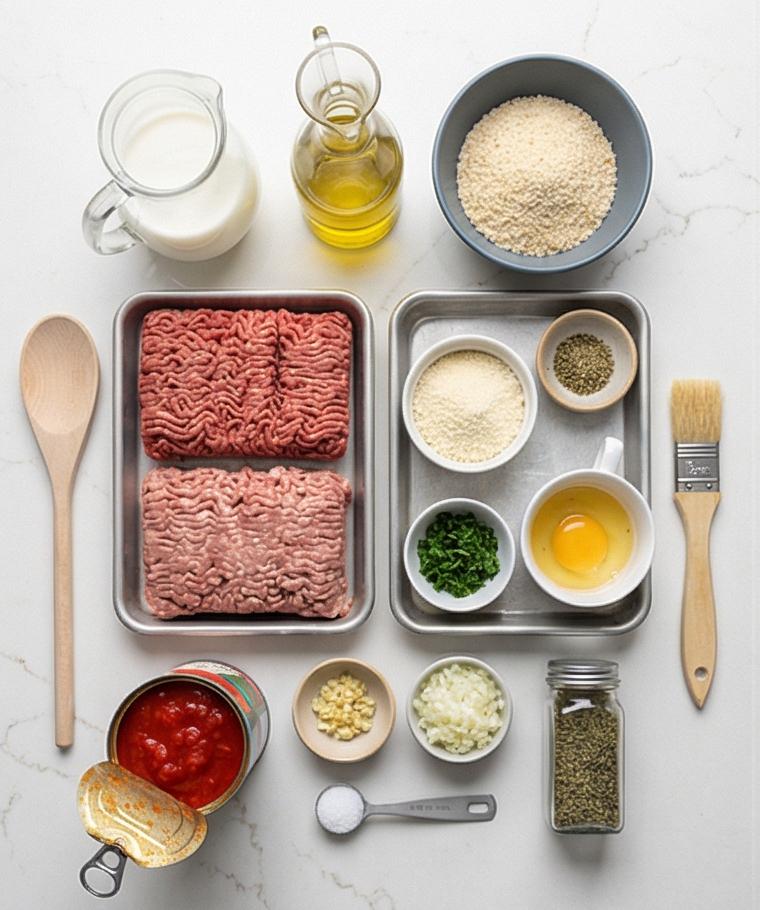
- Whole Milk and Breadcrumbs: They soak into a paste that lightens the meatballs – you can use plain yogurt or soaked stale bread instead; pick fresh, crustless crumbs for the softest texture.
- Ground Beef and Ground Pork: Beef adds depth while pork keeps meatballs tender – swap pork for veal or use all beef if preferred; chill the meat so the balls hold shape.
- Parmesan and Parsley: Cheese brings umami and parsley adds brightness – Pecorino is a bolder alternative; buy a wedge and grate fresh for best flavor.
- Onion, Garlic, and Seasonings: They build the aromatic base for both meat and sauce – substitute shallot for a milder onion; finely mince for even distribution.
- Crushed Tomatoes and Tomato Paste: Tomato paste gives concentrated backbone while crushed tomatoes give texture – San Marzano-style canned tomatoes work wonderfully.
- Spaghetti: The classic partner for the meatballs – use long pasta like linguine for a slight twist.
Essential Kitchen Tools and Why They Help
Start with a short intro: having the right tools keeps the process easy and the results consistent. A few simple, reliable implements make this recipe a pleasure.
- Large rimmed baking sheet: It gives the meatballs room to roast evenly – use two smaller sheets if you don’t have a large one.
- Matte mixing bowl: Any sturdy bowl works for mixing without turning warm – metal bowls are fine but keep ingredients chilled.
- Deep enameled pot or Dutch oven: It holds sauce and meatballs while simmering – a heavy-bottomed saucepan will do in a pinch.
- Large pot for pasta: Plenty of water prevents sticking and keeps pasta al dente – a stockpot is ideal.
- Microplane or fine grater: For fresh Parmesan – pre-grated works but fresh is brighter.
These tools help you control temperature, texture, and timing. If you need alternatives, improvise with what you have and focus on keeping meat cool and sauce gently simmering.
Step-by-Step Preparation Guide
Step 1: Prep the pan and heat the oven
Preheat the oven to 400°F (200°C). Line a large rimmed rectangular baking sheet with a single sheet of parchment paper and brush the parchment lightly with a tablespoon of extra-virgin olive oil so the surface reads slightly glossy but not wet. This small action prevents sticking later and sets the geometric stage for the whole process: a clean, rectangular working bed on the bright Calacatta-like surface.
Step 2: Soak the breadcrumbs until a thick paste forms
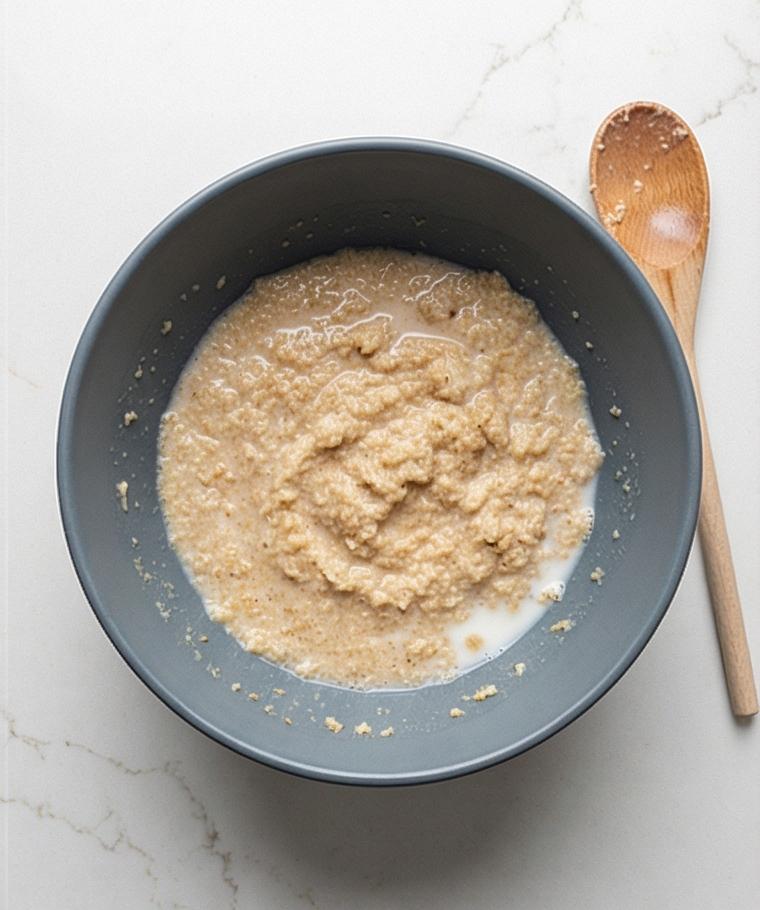
In a single matte slate ceramic mixing bowl, pour the room-temperature whole milk over the fresh crustless breadcrumbs and stir until every crumb is evenly moistened. Let the mixture sit for about five minutes until it collapses into a dense, slightly tacky paste – smooth on top with tiny crumb peaks visible around the edges. The bowl should show a little milk sheen and softened breadcrumb texture, a tactile, paste-like state ready to marry with the meat.
Step 3: Build the seasoned meat mixture
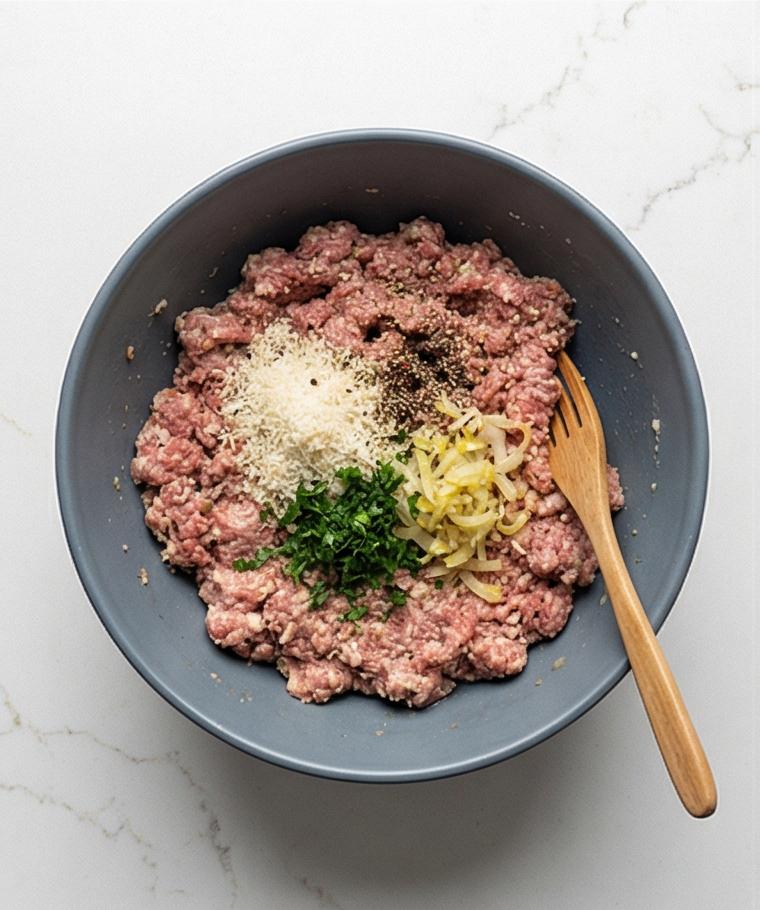
In that same matte slate ceramic bowl, add the chilled ground beef and ground pork, finely grated Parmesan, chopped flat-leaf parsley, the lightly beaten egg, very finely minced yellow onion, minced garlic, kosher salt, freshly ground black pepper and dried oregano. Use a fork or a short wooden spoon to fold the ingredients so the proteins, cheese and aromatics sit together in a coarse, pebbly mass – visibly marbled with fat flecks and herb specks, the mixture still cool and pliable.
Step 4: Incorporate the soaked crumbs and shape the meatballs
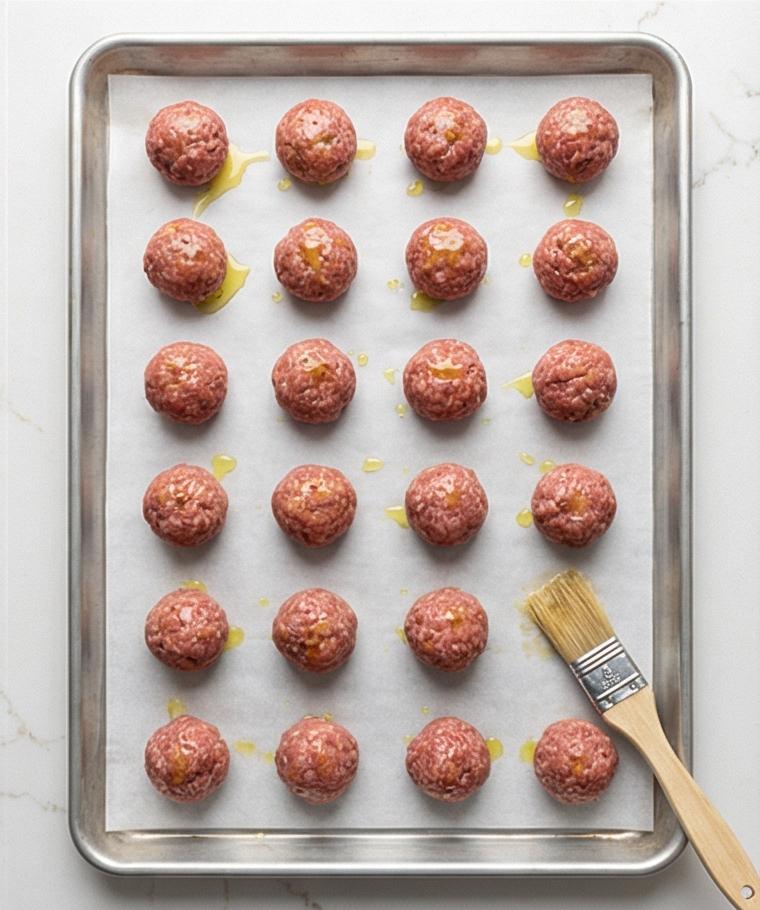
Add the soaked breadcrumb paste into the meat bowl and, with gentle, patient folding, combine until the mixture reads uniform and slightly tacky but not dense. With lightly oiled hands (not shown) form 1½-inch meatballs and arrange them in even rows on the prepared rectangular baking sheet, each one round and taut, the surface showing tiny pockets of cheese and parsley. Leave breathing space between each ball so they can brown evenly on the parchment.
Step 5: Oil and roast the meatballs until lightly browned
Lightly brush the tops of the raw meatballs with a tablespoon of extra-virgin olive oil so they roast to a golden-browned crust. Slide the baking sheet into the hot oven and roast until the tops are lightly browned and the meatballs are just cooked through – the exterior firm with a subtle crust, the interiors still moist and slightly yielding when pressed. Remove the sheet and let the juices collect on the parchment; transfer the browned meatballs to hold while the sauce begins.
Step 6: Start the tomato sauce base
In a deep matte black enameled pot set on the same surface (stove not shown), warm two tablespoons of olive oil until shimmering, then add the finely chopped yellow onion. Sauté the onion here on the surface as a visual result – translucent, glossy, softened and sitting like a golden bed. Stir in the minced garlic briefly until fragrant, then fold in two tablespoons of tomato paste and cook it down until it darkens and clings slightly to the pot’s interior, building a concentrated, savory backbone.
Step 7: Build and gently thicken the tomato sauce
Pour in the canned crushed tomatoes with half a cup of water, add a teaspoon of sugar, kosher salt and freshly ground pepper, dried oregano and basil, a pinch of red pepper flakes and the dried bay leaf. Bring the mixture just to a gentle boil and then let it settle into a soft simmer until it smells bright and rounded and the liquid begins to thicken into a spoon-coating sauce – visible reduction, glossy tomato waves and flecks of herb suspended throughout.
Step 8: Nest the roasted meatballs into the sauce and finish
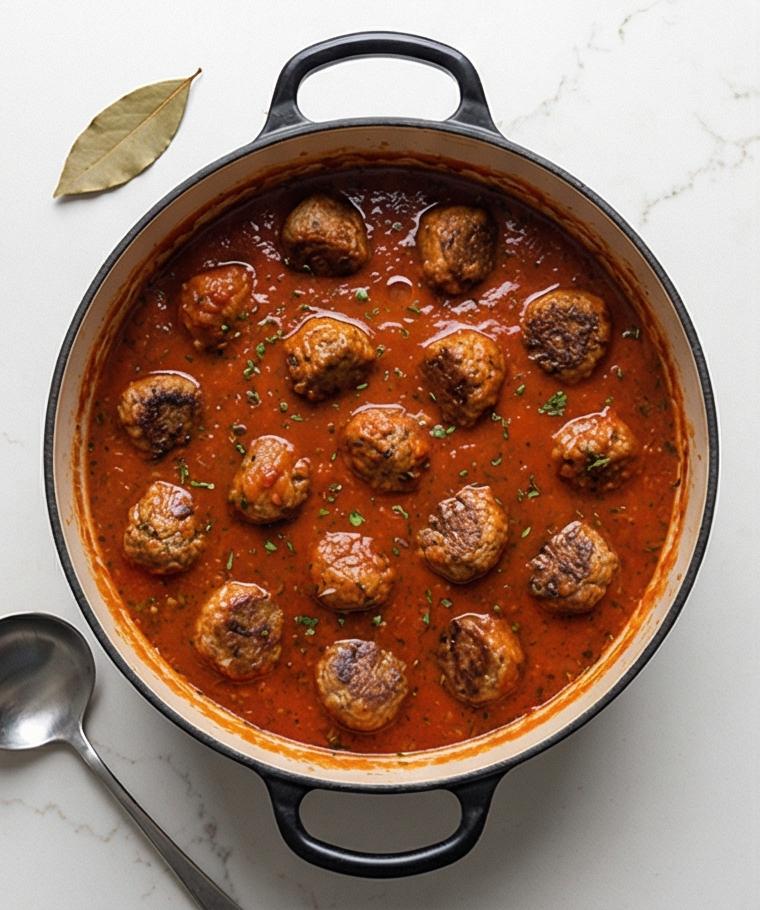
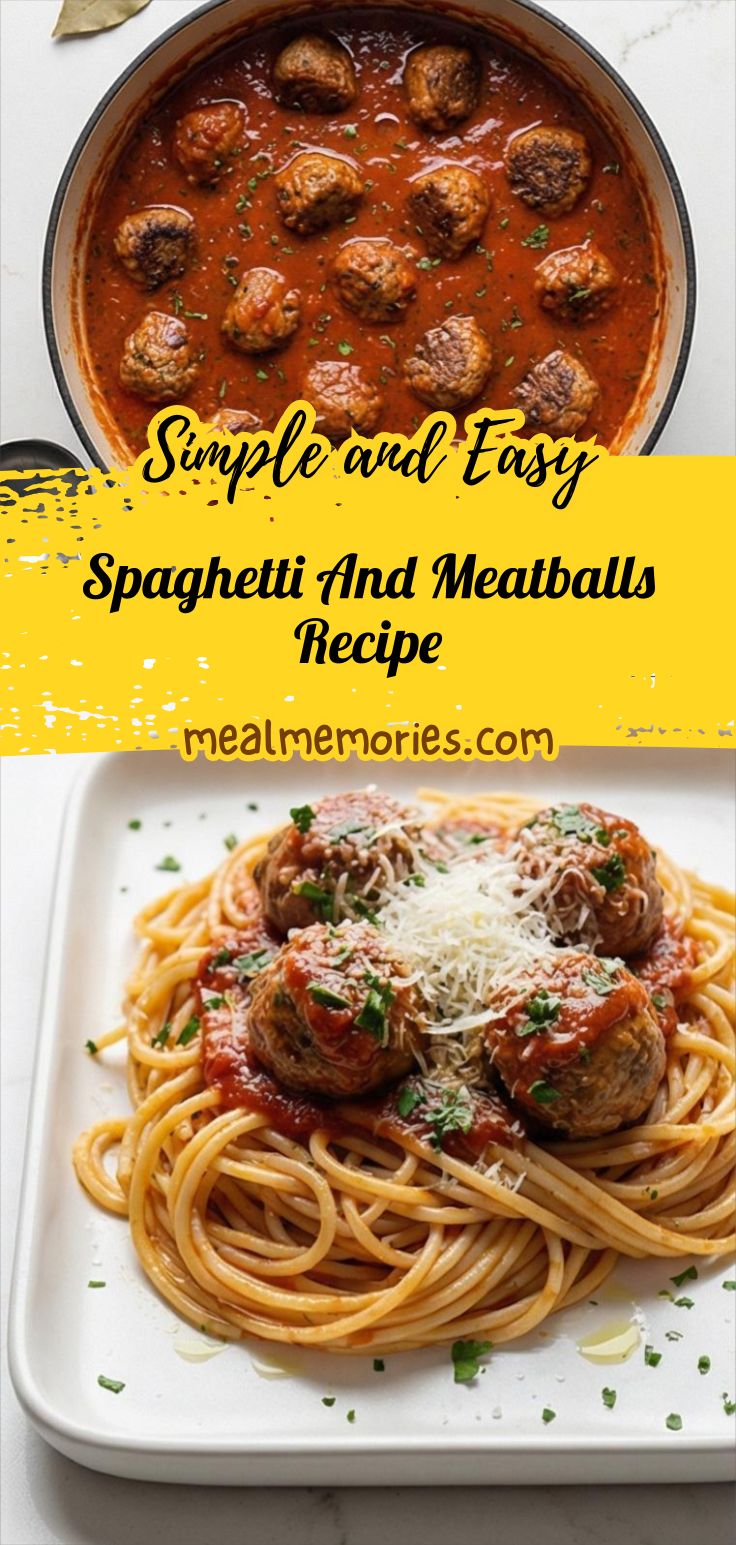
Carefully transfer the roasted meatballs and any collected pan juices into the simmering sauce so they sit mostly submerged. Let the meatballs simmer gently in the tomato bath for 15–20 minutes until they become very tender and the sauce reduces to a rich, clingy consistency. The meatballs should read glossy where sauce kisses them, with browned tops peeking through and the sauce thick enough to coat a spoon. Taste and adjust seasoning, discard the bay leaf before tossing.
Step 9: Cook the spaghetti, toss, and plate on a rectangular platter
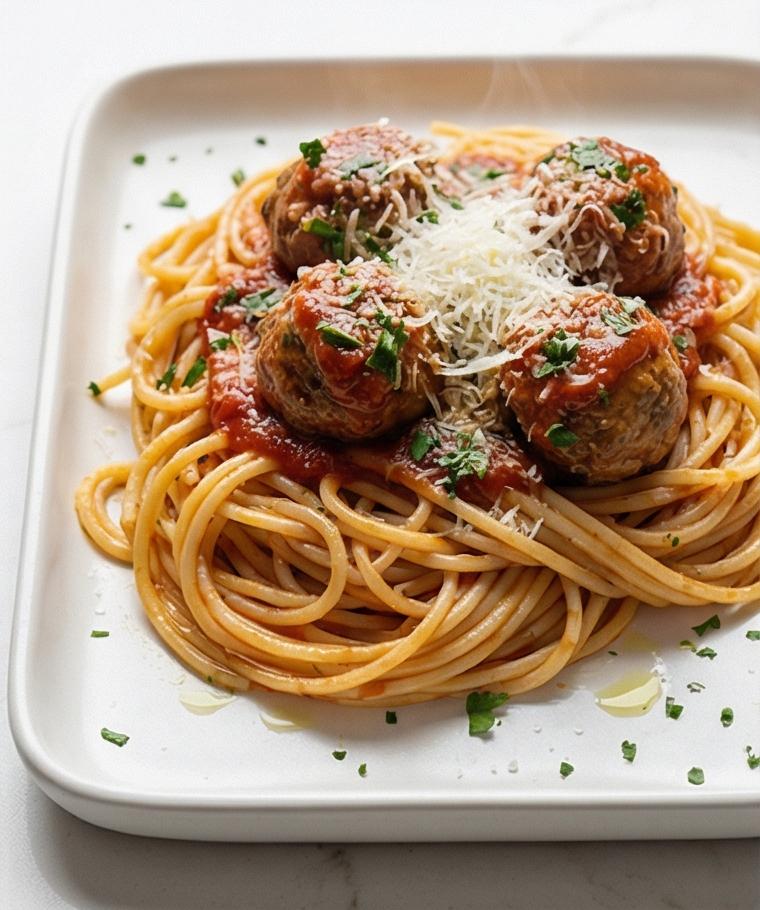
Bring salted water to a rolling boil and cook the spaghetti until al dente. Reserve half a cup of starchy cooking water, drain, then add the drained spaghetti to the pot of sauce and meatballs (or combine in a large bowl) and toss with a splash of the reserved pasta water until the strands are glossy and evenly coated. Transfer portions onto a shallow rectangular matte white serving platter that echoes the baking sheet’s geometry, giving each portion 3–4 meatballs. Finish with a generous shower of finely grated Parmesan, a sprinkle of chopped parsley and a light drizzle of olive oil for a glossy, herb-flecked crown.
Making It Your Own
I play with the ratios when I want to nudge the flavor. For a lighter texture, I sometimes swap half the pork for turkey and add a spoonful of ricotta to the mixture – it keeps meatballs tender without changing the core method.
If you need a vegetarian version, try firm, mashed lentils with chopped mushrooms, breadcrumbs, and grated cheese shaped into patties and roasted the same way – they hold up well in the sauce and carry herbs beautifully.
Seasonal tweaks are fun: add roasted red peppers to the sauce in late summer, or fold in a handful of baby spinach at the end for an iron boost. Small experiments like these make the recipe feel like it belongs to you.
How to Serve
When I host, I treat this Spaghetti And Meatballs Recipe like the centerpiece. For a casual family meal, serve portions right from the pot family-style with plenty of grated Parmesan and crusty bread for mopping up the sauce. For a dinner party, plate individually on shallow rectangular platters and finish with a flourish of parsley and a delicate drizzle of olive oil to add sheen.
To adjust serving sizes, scale the meat and sauce proportionally: the recipe as written feeds about four comfortably. For larger crowds, keep meatballs warm in a low oven and gently reheat the sauce in a wide pot while guests arrive. Pair with a simple green salad and a bright, acidic red wine to cut through the richness.
Storage and Reheating Tips
Leftover meatballs and sauce store beautifully. Refrigerate in an airtight container for up to 4 days – the flavors actually deepen after a day. For longer storage, freeze portions in a freezer-safe container for up to 3 months and thaw overnight in the fridge before reheating.
To reheat, warm gently on the stovetop over low heat, adding a splash of water if the sauce seems too thick. Reheat frozen meatballs in simmering sauce until warmed through to keep them tender. For pasta, toss briefly with a little warmed sauce rather than reheating pasta alone.
Common Mistakes and How to Avoid Them
Don’t overwork the meat mixture – mixing until it becomes dense will make meatballs tough. Fold gently and stop as soon as the ingredients are evenly combined. Keep your meat and mixing bowl cool so fat doesn’t smear and texture stays tender.
Another common slip is boiling the sauce too hard. Simmer gently so flavors round out and acids mellow. If your sauce tastes flat, a pinch of sugar and a finishing splash of olive oil can lift it.
Final Thoughts
Give this Spaghetti And Meatballs Recipe a try on a weeknight when you want something honest and comforting. It’s forgiving, crowd-pleasing, and full of small techniques that add up to big flavor. I hope it becomes a favorite in your rotation as it is in mine.
Frequently Asked Questions
- What kind of breadcrumbs work best? I use fresh, crustless white-bread crumbs for a tender meatball; dried breadcrumbs can work but may need less soaking liquid.
- Can I make the meatballs ahead? Yes, you can shape and refrigerate them for a day or freeze them uncooked for longer storage.
- How do I keep meatballs from falling apart? Chill the meat mixture and handle it gently; the soaked breadcrumbs and egg help bind them.
- Can I use another pasta? Absolutely, long pastas like linguine or thicker strands like bucatini are lovely alternatives.
- How do I adjust spice level? Reduce or omit red pepper flakes for milder sauce, or add a pinch more to taste for heat.
Spaghetti And Meatballs Recipe
Make Spaghetti And Meatballs Recipe tonight: tender roasted meatballs in a rich tomato sauce over spaghetti.
Ingredients
Instructions
Step 1: Prep the pan and heat the oven
Preheat the oven to 400°F (200°C). Line a large rimmed rectangular baking sheet with a single sheet of parchment paper and brush the parchment lightly with a tablespoon of extra-virgin olive oil so the surface reads slightly glossy but not wet. This small action prevents sticking later and sets the geometric stage for the whole process: a clean, rectangular working bed on the bright Calacatta-like surface.
Step 2: Soak the breadcrumbs until a thick paste forms
In a single matte slate ceramic mixing bowl, pour the room-temperature whole milk over the fresh crustless breadcrumbs and stir until every crumb is evenly moistened. Let the mixture sit for about five minutes until it collapses into a dense, slightly tacky paste — smooth on top with tiny crumb peaks visible around the edges. The bowl should show a little milk sheen and softened breadcrumb texture, a tactile, paste-like state ready to marry with the meat.
Step 3: Build the seasoned meat mixture
In that same matte slate ceramic bowl, add the chilled ground beef and ground pork, finely grated Parmesan, chopped flat-leaf parsley, the lightly beaten egg, very finely minced yellow onion, minced garlic, kosher salt, freshly ground black pepper and dried oregano. Use a fork or a short wooden spoon to fold the ingredients so the proteins, cheese and aromatics sit together in a coarse, pebbly mass — visibly marbled with fat flecks and herb specks, the mixture still cool and pliable.
Step 4: Incorporate the soaked crumbs and shape the meatballs
Add the soaked breadcrumb paste into the meat bowl and, with gentle, patient folding, combine until the mixture reads uniform and slightly tacky but not dense. With lightly oiled hands (not shown) form 1½-inch meatballs and arrange them in even rows on the prepared rectangular baking sheet, each one round and taut, the surface showing tiny pockets of cheese and parsley. Leave breathing space between each ball so they can brown evenly on the parchment.
Step 5: Oil and roast the meatballs until lightly browned
Lightly brush the tops of the raw meatballs with a tablespoon of extra-virgin olive oil so they roast to a golden-browned crust. Slide the baking sheet into the hot oven and roast until the tops are lightly browned and the meatballs are just cooked through — the exterior firm with a subtle crust, the interiors still moist and slightly yielding when pressed. Remove the sheet and let the juices collect on the parchment; transfer the browned meatballs to hold while the sauce begins.
Step 6: Start the tomato sauce base
In a deep matte black enameled pot set on the same surface (stove not shown), warm two tablespoons of olive oil until shimmering, then add the finely chopped yellow onion. Sauté the onion here on the surface as a visual result — translucent, glossy, softened and sitting like a golden bed. Stir in the minced garlic briefly until fragrant, then fold in two tablespoons of tomato paste and cook it down until it darkens and clings slightly to the pot’s interior, building a concentrated, savory backbone.
Step 7: Build and gently thicken the tomato sauce
Pour in the canned crushed tomatoes with half a cup of water, add a teaspoon of sugar, kosher salt and freshly ground pepper, dried oregano and basil, a pinch of red pepper flakes and the dried bay leaf. Bring the mixture just to a gentle boil and then let it settle into a soft simmer until it smells bright and rounded and the liquid begins to thicken into a spoon-coating sauce — visible reduction, glossy tomato waves and flecks of herb suspended throughout.
Step 8: Nest the roasted meatballs into the sauce and finish
Carefully transfer the roasted meatballs and any collected pan juices into the simmering sauce so they sit mostly submerged. Let the meatballs simmer gently in the tomato bath for 15–20 minutes until they become very tender and the sauce reduces to a rich, clingy consistency. The meatballs should read glossy where sauce kisses them, with browned tops peeking through and the sauce thick enough to coat a spoon. Taste and adjust seasoning, discard the bay leaf before tossing.
Step 9: Cook the spaghetti, toss, and plate on a rectangular platter
Bring salted water to a rolling boil and cook the spaghetti until al dente. Reserve half a cup of starchy cooking water, drain, then add the drained spaghetti to the pot of sauce and meatballs (or combine in a large bowl) and toss with a splash of the reserved pasta water until the strands are glossy and evenly coated. Transfer portions onto a shallow rectangular matte white serving platter that echoes the baking sheet’s geometry, giving each portion 3–4 meatballs. Finish with a generous shower of finely grated Parmesan, a sprinkle of chopped parsley and a light drizzle of olive oil for a glossy, herb-flecked crown.
Notes
- Keep meat and bowl chilled to prevent the fat from warming while mixing.
- Use fresh-grated Parmesan for brighter flavor.
- Reserve pasta water to help the sauce cling to the spaghetti.
- Simmer sauce gently; avoid a rolling boil to preserve flavor clarity.
- Freeze extra meatballs in sauce for easy future meals.