Lemon Shrimp Linguine has been my go-to weeknight showstopper for years. I remember the first time I served this Lemon Shrimp Linguine at a small dinner for friends — the room filled with the bright scent of lemon and garlic and everyone reached for seconds. It’s a dish that feels both relaxed and a little bit fancy, which is exactly my style when I want to impress without fuss. This version balances briny capers and olives with a silky lemon cream that clings to every strand of linguine.
How This Recipe Became My Rainy-Day Favorite
The first time I cooked Lemon Shrimp Linguine it started as a pantry rescue: a lonely jar of artichokes, a bag of frozen shrimp, and a half-used bottle of white wine. As the garlic softened and the wine began to reduce, the kitchen filled with a warm, tangy perfume that instantly lifted my mood on a gray afternoon. When the cream joined the pan the sauce turned satin-smooth and the bright lemon juice cut through it with a happy snap. I remember feeling a small, private thrill when my friends leaned in and asked for the recipe; it felt like sharing a tiny comfort secret. The shrimp stayed plump and tender, the linguine slippery and glossy, and that evening the rain sounded like applause.
Ingredient Spotlight
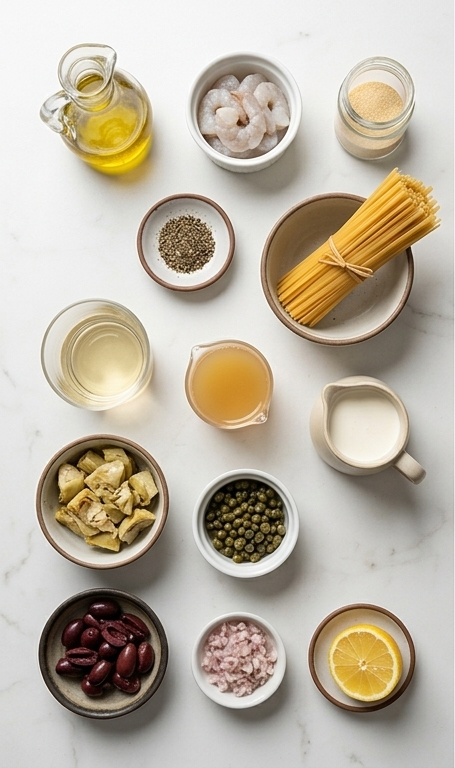
This Lemon Shrimp Linguine leans on bright, salty, and creamy flavors that play together. Choose the freshest shrimp you can find for the best texture and swap frozen shrimp in a pinch—just thaw and pat very dry. A good-quality olive oil makes a noticeable difference; if you need a substitute, use a neutral oil with a tablespoon of butter for flavor. For the artichokes and olives, jarred options are convenient and add immediate depth. If you prefer no alcohol, replace the white wine with extra broth and a splash of lemon. Pick a sturdy linguine so each strand holds the sauce.
- Extra Virgin Olive Oil: Adds richness and carries flavors; substitute light olive oil or a mix of butter and oil.
- Shrimp: The star protein; use fresh or thawed frozen, pat dry for good searing.
- Garlic Powder: Boosts savory notes; fresh garlic works, reduce quantity.
- Linguine: The pasta base that holds sauce well; spaghetti or fettuccine are fine swaps.
- Shallots: Provide a sweet, mild onion flavor; use yellow onion in a pinch.
- Lemon: Brightens and balances the cream; use lemon zest for extra lift.
- White Wine: Adds acidity and complexity; use extra broth if avoiding alcohol.
- Grilled Artichoke Hearts, Capers, Kalamata Olives: Provide briny, savory contrast—reduce capers if you prefer less salt.
- Chicken Bone Broth: Deepens the sauce; use vegetable broth for a lighter base.
- Heavy Cream: Makes the sauce silky; half-and-half can work with a small flour slurry.
Essential Kitchen Tools You’ll Want
A few simple tools make this Lemon Shrimp Linguine easy and stress-free. A large pot is essential so the linguine can move freely and cook evenly; don’t skimp on salt in the water. A roomy skillet gives you space to sear shrimp and reduce the sauce without crowding. Tongs are my favorite for tossing pasta into sauce and delivering portions to plates.
- Large pot: For boiling pasta; alternatives include a wide stockpot.
- Large skillet: For searing and sauce; use a sauté pan if you prefer deeper sides.
- Tongs: Perfect for tossing and serving; a pasta fork works too.
- Measuring spoons and cups: For consistent seasoning and liquid ratios.
- Small bowl: To rest cooked shrimp and keep timing smooth.
Step-by-Step Preparation Guide
Step 1: Cook the linguine
Bring a large pot of generously salted water to a rolling boil and add the linguine, cooking it until just al dente according to the package directions. Drain the pasta, reserving a small cup of the starchy cooking water, then toss the drained strands lightly with a drizzle of olive oil to keep them glossy and separate. Set the warm pasta aside so it’s ready to be folded into the sauce later.
Step 2: Season and sear the shrimp
While the pasta cooks, toss the peeled, deveined shrimp with garlic powder, kosher salt, and black pepper so each shrimp is evenly coated. Heat 2 tablespoons of extra virgin olive oil in a skillet until shimmering, then sear the shrimp briefly—about 2–3 minutes per side—until the flesh is opaque and the edges gain a faint golden crust. Remove the shrimp and let them rest in a small bowl; they should look plump, pink, and just cooked through.
Step 3: Build and reduce the sauce
Add 2 tablespoons of olive oil to the same cooking vessel and gently sweat the minced shallots with a little more garlic powder until fragrant and translucent. Pour in the white wine and the chicken bone broth and let the mixture simmer and reduce by roughly half so it concentrates and becomes slightly syrupy. Stir in the chopped grilled artichoke hearts, capers, and halved Kalamata olives and simmer a few more minutes so the flavors fuse and the sauce thickens to a glossy, olive-speckled base.
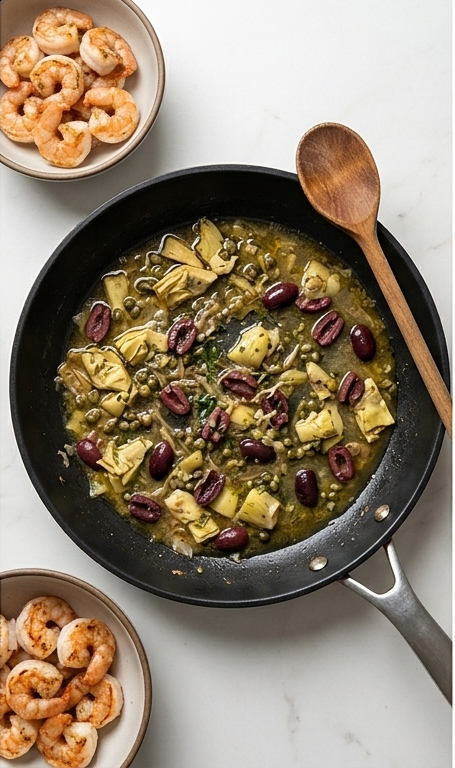
Step 4: Finish, toss, and serve
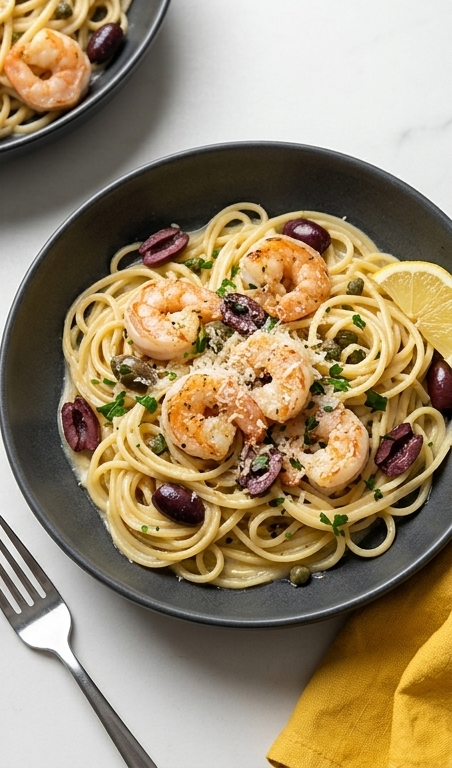
Remove the reduced sauce from heat and swirl in the heavy cream and the juice of half a lemon to create a silky, pale lemon-tinged cream that clings to pasta strands. Return the seared shrimp to the sauce, add the cooked linguine, and toss gently to coat—add a splash of reserved pasta water if you need to loosen the sauce for a silky finish. Plate the linguine into a shallow pasta bowl, top with the plump shrimp, a scattering of capers and halved olives, a generous grating of cheese, and a bright shower of chopped parsley before serving.
Making It Your Own
I love tweaking this Lemon Shrimp Linguine depending on the season and who I’m cooking for. For a lighter summer version I swap heavy cream for half Greek yogurt and half milk, stir it in off-heat, and add extra lemon zest for brightness.
For a dairy-free take, use full-flavored coconut milk and a splash of extra broth; the artichokes and capers keep the dish savory enough to stand up. If you want more heat, a pinch of red pepper flakes during the shallot step wakes everything up.
To stretch the meal for more guests, add a can of drained chickpeas with the artichokes or double the pasta and make a bigger skillet of sauce; both keep the balance of briny and creamy intact.
How to Serve
Treat Lemon Shrimp Linguine like the main event at a relaxed dinner party. Serve on shallow bowls so the sauce pools around the pasta and the shrimp sits proudly on top. Finish with a lemon wedge, chopped parsley, and a wide grating of Parmigiano-Reggiano. Offer crusty bread or herbed focaccia to sop up any remaining sauce.
For intimate meals, plate individual portions and garnish each with a few halved olives and extra capers. If serving a crowd buffet-style, keep the sauce warm over very low heat and toss with freshly cooked linguine just before guests arrive so it stays glossy and saucy. Pair with a crisp Sauvignon Blanc or a bright Vermentino.
Storage and Reheating Tips
Leftovers keep well if you separate the pasta from the sauce when possible. Store the sauce and shrimp in an airtight container in the refrigerator for up to 3 days. If you leave the pasta tossed in sauce, it will absorb liquid and thicken, so expect a firmer texture.
To reheat, warm the sauce gently in a skillet over low heat and add a splash of water or broth to loosen it. Add the pasta and toss quickly to recoat, heating just until warmed through so the shrimp stay tender. Avoid high heat and long cooking to prevent the cream from breaking.
Common Mistakes and How to Avoid Them
One frequent mistake is overcooking the shrimp; they go from tender to rubbery very fast. Sear them briefly and pull them off heat while the sauce reduces so they finish in the sauce without overcooking.
Another trap is letting the sauce get too thin or too salty. Reduce the wine and broth slowly, taste as you go, and remember you can always add lemon to brighten the flavor instead of more salt. Reserve a cup of pasta water to adjust texture without diluting flavor.
Final Thoughts
I hope this Lemon Shrimp Linguine invites you to cook something bright and a little elegant without stress. Try the variations, make it yours, and share it—this dish rewards small adjustments and tastes even better the second time.
Frequently Asked Questions
- Q: Can I use frozen shrimp for Lemon Shrimp Linguine? A: Yes, just thaw completely and pat very dry so they sear properly.
- Q: What can I substitute for heavy cream? A: Try half-and-half with a small flour slurry or use Greek yogurt stirred in off-heat for a lighter finish.
- Q: Is there a non-alcoholic option? A: Replace the white wine with extra chicken or vegetable broth and a tablespoon of lemon juice for acidity.
- Q: How do I prevent the sauce from splitting? A: Heat gently and add the cream off the boil; if it looks close to separating, remove from heat and stir in gradually.
- Q: Can I make this ahead for a dinner party? A: Make the sauce and shrimp ahead, keep them cool, and finish by warming gently and tossing with freshly cooked linguine.
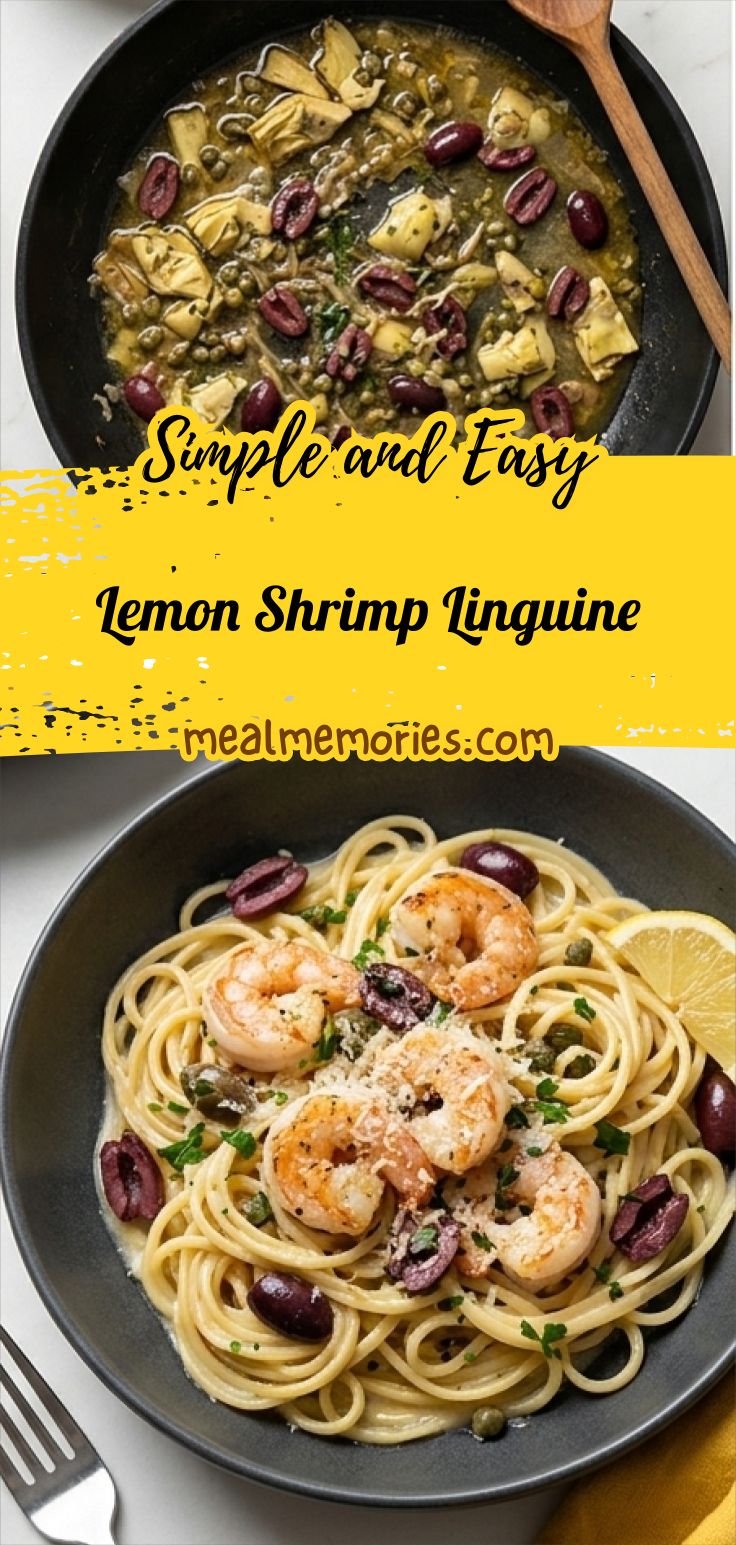
Lemon Shrimp Linguine
Make Lemon Shrimp Linguine tonight: bright lemon, plump shrimp, and a silky cream sauce for easy weeknight entertaining.
Ingredients
Instructions
Step 1: Cook the linguine
Bring a large pot of generously salted water to a rolling boil and add the linguine, cooking it until just al dente according to the package directions. Drain the pasta, reserving a small cup of the starchy cooking water, then toss the drained strands lightly with a drizzle of olive oil to keep them glossy and separate. Set the warm pasta aside so it’s ready to be folded into the sauce later.
Step 2: Season and sear the shrimp
While the pasta cooks, toss the peeled, deveined shrimp with garlic powder, kosher salt, and black pepper so each shrimp is evenly coated. Heat 2 tablespoons of extra virgin olive oil in a skillet until shimmering, then sear the shrimp briefly—about 2–3 minutes per side—until the flesh is opaque and the edges gain a faint golden crust. Remove the shrimp and let them rest in a small bowl; they should look plump, pink, and just cooked through.
Step 3: Build and reduce the sauce
Add 2 tablespoons of olive oil to the same cooking vessel and gently sweat the minced shallots with a little more garlic powder until fragrant and translucent. Pour in the white wine and the chicken bone broth and let the mixture simmer and reduce by roughly half so it concentrates and becomes slightly syrupy. Stir in the chopped grilled artichoke hearts, capers, and halved Kalamata olives and simmer a few more minutes so the flavors fuse and the sauce thickens to a glossy, olive-speckled base.
Step 4: Finish, toss, and serve
Remove the reduced sauce from heat and swirl in the heavy cream and the juice of half a lemon to create a silky, pale lemon-tinged cream that clings to pasta strands. Return the seared shrimp to the sauce, add the cooked linguine, and toss gently to coat—add a splash of reserved pasta water if you need to loosen the sauce for a silky finish. Plate the linguine into a shallow pasta bowl, top with the plump shrimp, a scattering of capers and halved olives, a generous grating of cheese, and a bright shower of chopped parsley before serving.
Notes
- Pat shrimp very dry before searing to get a good crust.
- Reserve pasta water to loosen the sauce for a silky finish.
- Taste the sauce as it reduces to control salt and acidity.
- Serve immediately after tossing for the best texture and gloss.
- Use fresh lemon zest for extra brightness if desired.