I still remember the first time I made Grilled Garlic Dijon Herb Salmon for a small get-together; it felt like a small victory when guests reached for seconds. The combination of bright Dijon, garlicky heat, and the grassy pop of herbs made the salmon sing in a way that felt both simple and elevated. Over the years I kept tweaking the paste and the sear until it hit that perfect glossy, slightly caramelized finish. Now Grilled Garlic Dijon Herb Salmon is my go-to when I want something impressive that does not steal the whole evening.
What makes this Grilled Garlic Dijon Herb Salmon worth trying is how quickly it comes together and how at-home it feels at the table. You get bold, layered flavor from a few pantry staples and a short time on the grill pan. It works for weeknight dinners and for the kind of relaxed dinner parties where everyone feels like family.
How This Dish Became My Rainy-Day Favorite
When rain pattered against the windows on a chilly evening, I pulled out a simple piece of salmon and decided to experiment with what I had: garlic, a stubborn jar of Dijon, and a sprinkle of Herbs de Provence. The kitchen filled with the scent of warm garlic and tangy mustard as I mashed the paste by hand, pressing the flavor into the fish. There was something quietly comforting about spooning that glossy paste onto the hot salmon and watching it bubble and brown. I plated it with lemon wedges, sat by the window with a bowl of roasted potatoes, and felt the mood of the night lift. That evening turned a basic salmon supper into a reliable recipe that now sits in my mental rota for cozy dinners, celebrations, and last-minute invites.
Primary Ingredients and Why They Matter
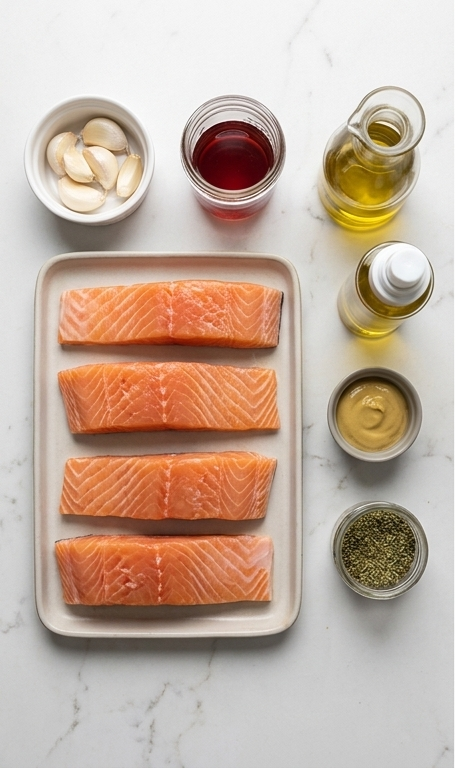
- Garlic: The backbone of the paste, providing pungent, toasty notes when mashed. Substitute with garlic powder in a pinch but reduce quantity and expect milder depth.
- Dried Herbs de Provence: Adds floral, herbal complexity. Fresh thyme or a pinch of herbes de Provence mix works if you do not have the exact blend.
- Red Wine Vinegar: Brightens the mustard and balances oiliness. Lemon juice can be used as a substitute for a fresher, citrusy tang.
- Olive Oil: Helps emulsify the paste and adds gloss when basting. Use a neutral oil if you prefer a lighter flavor.
- Dijon Mustard: The flavor engine with sharpness and depth – whole grain mustard can add texture.
- Wild Salmon Fillets: The central element, rich and meaty; choose firm, bright fillets with no fishy smell. Farmed salmon works if wild is unavailable.
- Salt and Pepper: Essential for seasoning and highlighting the paste.
- Lemon Wedges: For finishing brightness and balance.
Essential Kitchen Tools and Why They Help
A few simple tools make a big difference when you cook Grilled Garlic Dijon Herb Salmon. A mini food processor or mortar and pestle helps you transform raw garlic and mustard into a cohesive paste quickly and evenly – use a fork and bowl if you do not have either. A heavy-bottomed grill pan or cast iron gives that deep sear that creates flavor; if you do not have one, a nonstick skillet over high heat will do the job with a touch more care. A small ramekin keeps the paste handy and looks nice on the table as a condiment. Finally, a sturdy spoon for basting helps you control how much glaze you apply without making a mess.
- Mini food processor or mortar and pestle: For smooth, emulsified paste – substitute with a fork and small bowl.
- Grill pan or cast iron skillet: For high, even heat and great sear – use a heavy nonstick pan as an alternative.
- Small ramekin and spoon: For easy access to the paste while cooking and for serving.
- Tongs or spatula: To turn fillets without breaking them.
Step-by-Step Preparation Guide
Step 1: Mash the garlic-herb Dijon paste
In a mini food processor or mortar and pestle, mash the peeled garlic cloves together with the dried Herbs de Provence, red wine vinegar, a drizzle of olive oil, and the Dijon mustard until everything becomes a cohesive paste – glossy, slightly grainy from the herbs, and bright with garlicky aroma. Scrape the mixture into a small matte ceramic ramekin and set it aside; this paste is the flavor engine, thick enough to cling to fish but wet enough to spoon. Keep the ramekin on the white quartzite surface so it can reappear later.
Step 2: Season and sear the salmon
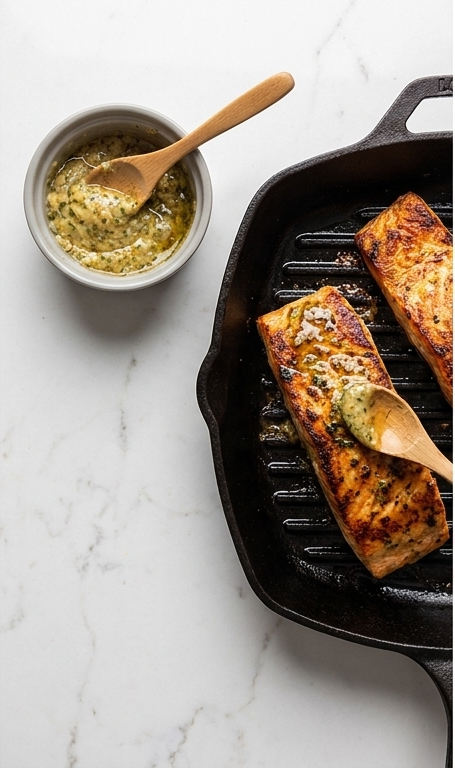
Pat the wild salmon fillets dry, season each simply with a pinch of salt and freshly cracked black pepper, then place them flesh-side down on a very hot, lightly oiled grill pan for a long initial sear: let each fillet cook without moving for about five minutes so a golden-brown crust and defined grill marks form while the interior begins to firm. Reduce the heat briefly if needed – the goal here is a deep caramelized surface with the edges showing the first hint of flake.
Step 3: Turn, baste with the garlic-herb mustard, and finish cooking
Turn the fillets and immediately spoon half of the garlic-herb Dijon paste over the hot flesh, letting the mustard blister and gloss the surface as you cook for another 3-4 minutes. Turn once more, spoon the remaining paste onto the other side and continue in short bursts – one minute, then another turn and a final minute – until the salmon is cooked through but still tender and flaky at the edges (about 9-10 minutes per inch thickness as a guide). Use a spoon resting on the ramekin or the pan rim; keep utensil and ramekin nearby to show continuity of tools.
Step 4: Plate and serve with lemon wedges
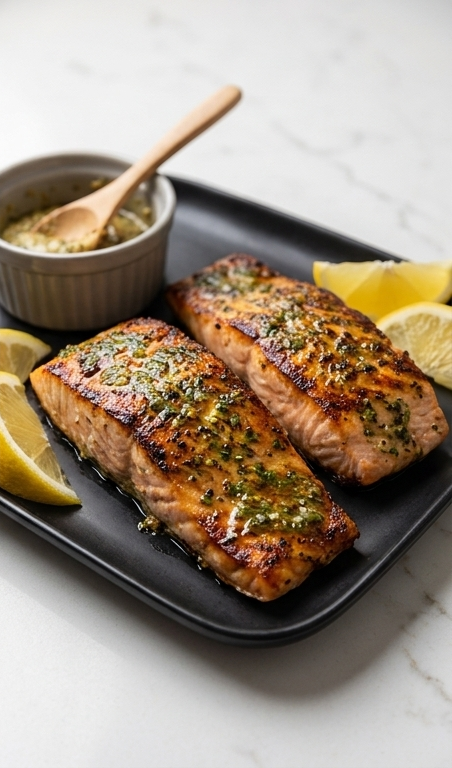
Transfer the fillets to a serving plate, arranging them to display the seared sides and the vibrant green flecked mustard crust; place fresh lemon wedges alongside for squeezing. Leave a small ramekin of the remaining garlic-Dijon paste on the surface as a condiment. Serve immediately while glossy and just flaky.
Making It Your Own
Try a smoky twist by adding a pinch of smoked paprika to the garlic-Dijon paste and finishing the salmon with a quick blowtorch for extra char. For a citrus-forward version, swap the red wine vinegar for orange or lemon juice and add a little orange zest to the paste – it brightens the Grilled Garlic Dijon Herb Salmon in unexpected ways.
If you need a dairy-free or paleo option there is no problem – this recipe is naturally compatible. For a vegan take, substitute thick, firm tofu steaks and press them before searing; the paste still works beautifully. Regional spins include adding a touch of miso or soy to the paste for an umami-rich Japanese influence, or stirring in capers for a brinier, Mediterranean note.
How to Serve
If you are hosting, plate the Grilled Garlic Dijon Herb Salmon on a large platter with lemon wedges and a ramekin of extra paste so guests can add more. Pair it with buttery new potatoes, a simple green bean almondine, or a boldly dressed arugula salad. For larger groups, scale the paste and use a hot oven to hold finished fillets at a low temperature so everyone can be served warm.
For a lighter meal, serve the salmon over a bed of quinoa or farro, spooning any residual pan juices over the grains. For date-night presentation, slice the fillets and fan them over a pool of lemony herb butter or a warm lentil salad – the Grilled Garlic Dijon Herb Salmon takes center stage and keeps the plate elegant.
Storage and Reheating Tips
Cool any leftover salmon to room temperature for no more than two hours, then store in an airtight container in the refrigerator for up to two days. Keep any remaining garlic-Dijon paste separate in a small jar to preserve its texture and brightness.
To reheat, gently warm in a 275 F oven for 8-10 minutes or until just warmed through – this helps retain moisture and prevents overcooking. You can also flake leftover salmon into salads or grain bowls cold; the paste makes a lovely dressing when thinned with a touch of olive oil and lemon juice.
Common Mistakes and How to Avoid Them
Overcooking is the usual culprit – remove salmon from the heat when the center is still slightly translucent and allow carryover heat to finish it. Use a timer and watch the first sear closely so you get a great crust without drying the fish.
Another mistake is using too much paste at once and overpowering the fish. Spoon modest amounts, taste as you go, and keep some paste aside for serving so guests can add more if they like.
Final Thoughts
Give Grilled Garlic Dijon Herb Salmon a try the next time you want something quick, impressive, and reliably delicious. Its combination of garlic, mustard, and herbs elevates simple salmon into a memorable meal that is at once cozy and elegant. I hope it becomes one of your easy go-to recipes too.
Frequently Asked Questions.
- Can I use frozen salmon for Grilled Garlic Dijon Herb Salmon? Yes, just thaw completely and pat dry before seasoning and searing to ensure an even crust.
- How do I know when the salmon is done? The salmon should flake at the edges and be slightly translucent in the center; temperature around 125-130 F for medium.
- Can I make the garlic-Dijon paste ahead of time? Yes, make it up to 2 days ahead and store it in a small airtight container in the refrigerator.
- What if I do not have Herbs de Provence? Substitute with a mix of dried thyme, rosemary, and a pinch of lavender or use a simple thyme-only option.
- Is this recipe suitable for a dinner party? Absolutely – scale the recipe, keep finished fillets warm in a low oven, and offer extra paste and lemon on the side.
Grilled Garlic Dijon Herb Salmon
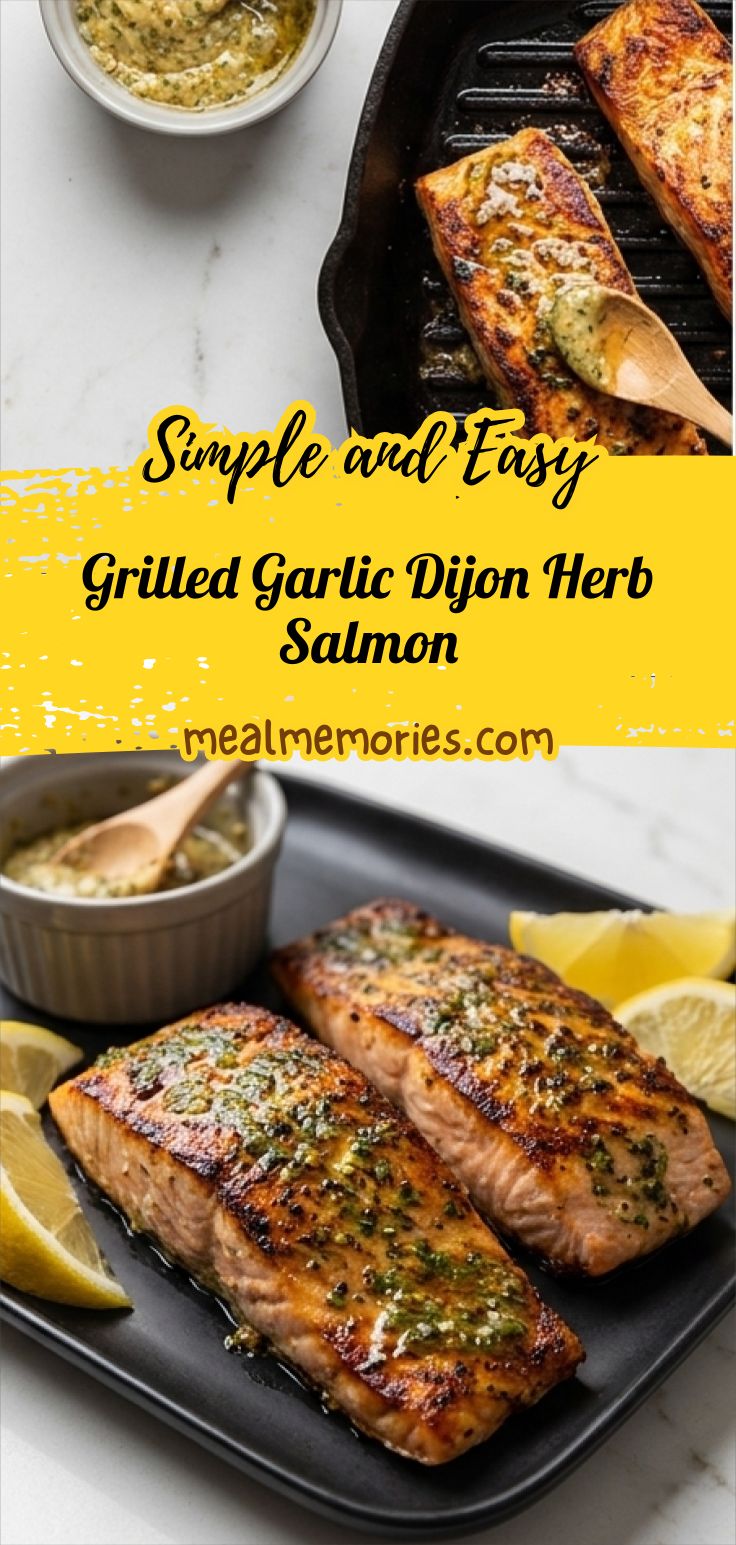
Sear and baste Grilled Garlic Dijon Herb Salmon for a glossy, herb-crusted dinner in under 25 minutes.
Ingredients
Instructions
Step 1: Mash the garlic-herb Dijon paste
In a mini food processor or mortar and pestle, mash the peeled garlic cloves together with the dried Herbs de Provence, red wine vinegar, a drizzle of olive oil, and the Dijon mustard until everything becomes a cohesive paste — glossy, slightly grainy from the herbs, and bright with garlicky aroma. Scrape the mixture into a small matte ceramic ramekin and set it aside; this paste is the flavor engine, thick enough to cling to fish but wet enough to spoon. Keep the ramekin on the white quartzite surface so it can reappear later.
Step 2: Season and sear the salmon
Pat the wild salmon fillets dry, season each simply with a pinch of salt and freshly cracked black pepper, then place them flesh-side down on a very hot, lightly oiled grill pan for a long initial sear: let each fillet cook without moving for about five minutes so a golden-brown crust and defined grill marks form while the interior begins to firm. Reduce the heat briefly if needed — the goal here is a deep caramelized surface with the edges showing the first hint of flake.
Step 3: Turn, baste with the garlic-herb mustard, and finish cooking
Turn the fillets and immediately spoon half of the garlic-herb Dijon paste over the hot flesh, letting the mustard blister and gloss the surface as you cook for another 3–4 minutes. Turn once more, spoon the remaining paste onto the other side and continue in short bursts — one minute, then another turn and a final minute — until the salmon is cooked through but still tender and flaky at the edges (about 9–10 minutes per inch thickness as a guide). Use a spoon resting on the ramekin or the pan rim; keep utensil and ramekin nearby to show continuity of tools.
Step 4: Plate and serve with lemon wedges
Transfer the fillets to a serving plate, arranging them to display the seared sides and the vibrant green flecked mustard crust; place fresh lemon wedges alongside for squeezing. Leave a small ramekin of the remaining garlic-Dijon paste on the surface as a condiment. Serve immediately while glossy and just flaky.
Notes
- Pat salmon dry before searing to get a better crust.
- Keep some garlic-Dijon paste aside for serving to avoid overpowering the fish.
- Reheat gently in a low oven to prevent drying out.
- Use a heavy skillet or grill pan for best sear.
- Substitute lemon juice for red wine vinegar in a pinch.