I grew up around slow-cooked dinners and my kitchen still smells like that kind of comfort. The Beef Bourguignon Recipe has been my barometer for cozy nights and special gatherings; it feels like a warm blanket on a plate. I make it when friends come over, when I need a low-stress showstopper, or when it is simply Wednesday and deserves to be celebrated. Over the years I tuned little details so the Beef Bourguignon Recipe is reliably glossy, deep, and richly flavored every time.
The magic of this Beef Bourguignon Recipe is patience plus simple ingredients. Browning, a long braise, and a splash of good red wine build layers of flavor you can almost taste hours before serving. If you love dishes that improve as they sit and reward the slow cooker of time, this is for you.
How This Beef Bourguignon Recipe Became My Cozy-Friday Staple
I remember the first time I made this Beef Bourguignon Recipe for a group of college friends who were tired, hungry, and skeptical of my early attempts at French cooking. The house filled with the smell of searing meat and red wine, and we all sat on mismatched chairs around a small table. When I lifted the lid and steam rolled out, everyone fell quiet as if the pot had announced a truce. The beef was melting, the sauce was glossy, and the bacon gave everything a whisper of smoke. That night I learned that good food turns strangers into family and dull evenings into stories. The memory of the warm kitchen light, the clink of spoons, and the way the sauce stuck to crusty bread keeps me making this recipe over and over. It is the kind of dish that asks for time but pays back in full with comfort and connection.
The Ingredients That Make It Sing
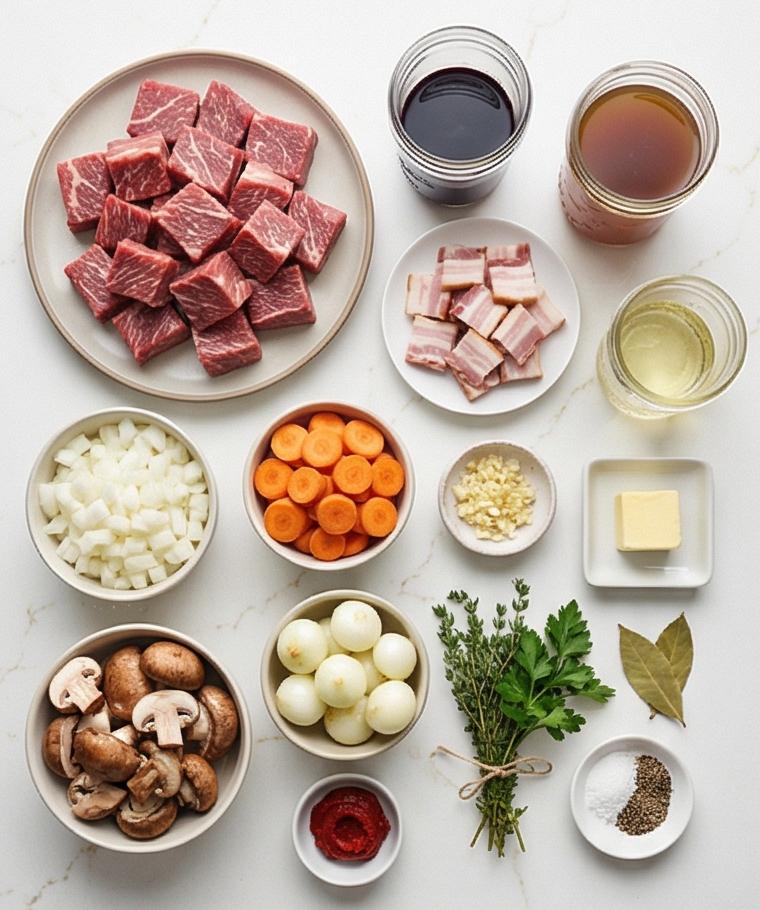
- Beef chuck: The backbone of the dish. Choose well-marbled pieces for collagen that breaks down into silk; substitute brisket in a pinch.
- Bacon: Adds smoky fat and texture. Pancetta works well as a substitute.
- Onion and carrots: Aromatics that sweeten and support the sauce; pearl onions are for finishing.
- Tomato paste and garlic: Concentrates flavor and adds savory depth; use less paste if you prefer a lighter tomato note.
- Red wine and beef stock: Build the braising liquid; choose a full-bodied dry red and tasted beef stock for richness.
- Mushrooms and butter: Finish with an earthy, glossy lift; use cremini or button mushrooms.
Essential Kitchen Tools
Start with a quick note: good tools make the process easier, not harder. A heavy, oven-safe pot is the single most important piece for even browning and steady braising. A long-handled spoon helps you scrape fond. A wide skillet is useful for finishing mushrooms and onions.
- Heavy oven-safe Dutch oven: For even heat and reliable braising; replace with a heavy-bottomed oven-safe pot if needed.
- Large skillet: To brown mushrooms and glaze onions; a stainless steel pan works best.
- Tongs and slotted spoon: For handling meat and removing bacon crisps.
- Sharp knife and cutting board: For neat, consistent cuts on beef and vegetables.
- Fine-mesh strainer or spoon: To skim fat and control sauce texture.
Step-by-Step Preparation Guide
Step 1: Prepare and season the beef
Pat the well-marbled beef cubes dry on paper towels until the surfaces look satin and the flesh has a clean, slightly tacky feel. Season all over with kosher salt and freshly ground black pepper, then dust the pieces lightly with all-purpose flour, tossing so each cube carries a thin, even coat and any excess flour falls away. Let the beef rest at room temperature while you move on to rendering the bacon — the light flour film will encourage a deeply caramelized crust when seared.
Step 2: Render bacon and brown the beef
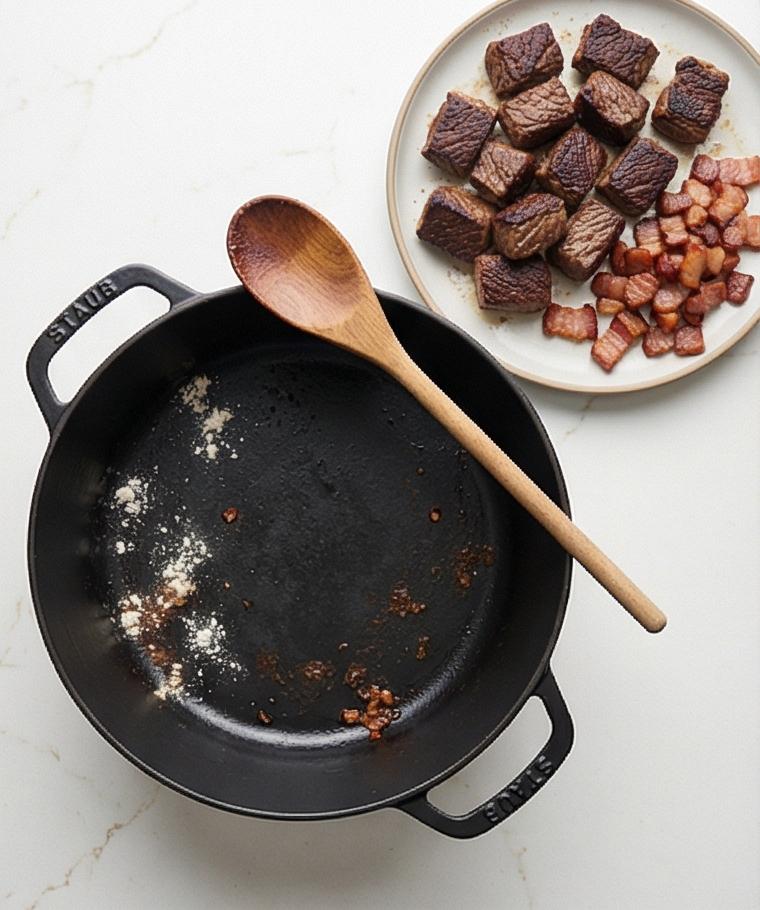
Cook the bacon pieces until the fat is fully rendered and the bits are crisp and mahogany; transfer them to a plate so they stay crunchy. In the same heavy pot, add a splash of neutral oil if needed and sear the floured beef in a single layer, working in batches so each cube develops a dark, crunchy crust on at least two sides — the contrast between the dry, browned exterior and the rosy interior is key. Keep the resulting browned beef and crisp bacon together on the plate, letting the fond (dark sticky browned bits) cling to the pot to build deep flavor.
Step 3: Soften the vegetables and deepen with tomato paste
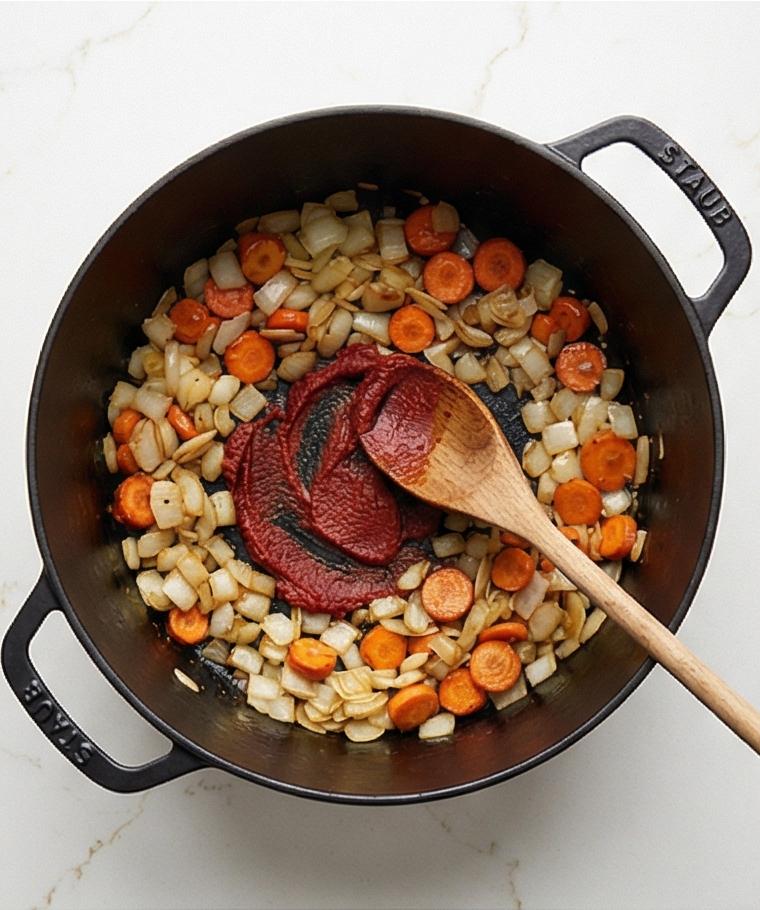
Spoon off excess fat until about two tablespoons remain, then add the diced yellow onion and sliced carrots. Cook them until the onion shimmers translucent and begins to take on pale gold edges and the carrots show the first amber color — they should feel tender but still hold structure. Stir in the minced garlic, then vigorously stir in the tomato paste and cook until it darkens to a deep brick red and begins to cling to the pot, taking on a concentrated, slightly caramelized aroma that promises depth.
Step 4: Deglaze with wine and assemble the stew base
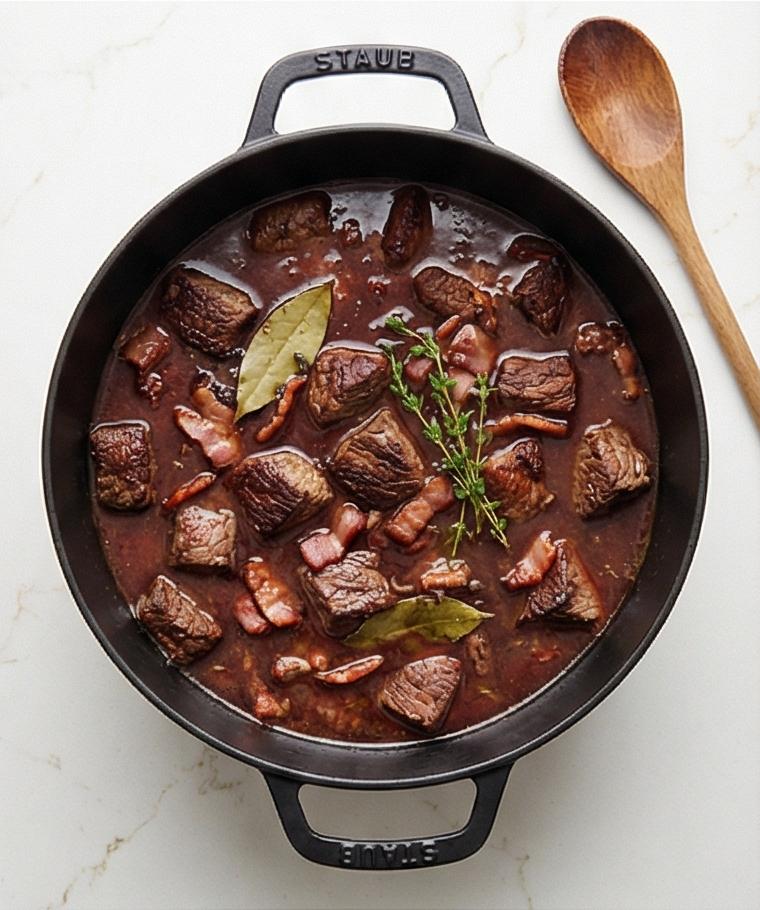
Pour in the dry red wine and bring it to a strong simmer, using a wooden spoon to scrape every bit of the fond into the liquid until the wine reduces and the alcoholic sharpness softens into a glossy, concentrated base. Return the browned beef and crispy bacon to the pot, pour in beef stock (and a little water if needed) so the liquid just covers the meat, nestle in bay leaves, thyme sprigs, and parsley stems, and bring the whole pot just to a gentle simmer before braising. Taste and gently adjust seasoning so the braise starts balanced and savory.
Step 5: Braise until meltingly tender
Cover the heavy oven-safe pot tightly and transfer it to a low oven to braise slowly until the beef becomes fork-tender and the connective tissue has dissolved into silky threads — the meat should yield easily when pierced and the sauce should smell rounded and deeply savory. Once tender, remove the herbs and, if the sauce is thin, reduce it gently on the stovetop (or in the pot on the surface) until it coats a spoon with a glossy, viscous sheen; if it’s too thick, loosen with a splash of stock. This is the moment the stew base becomes luxurious and spoonable.
Step 6: Brown mushrooms and glaze pearl onions
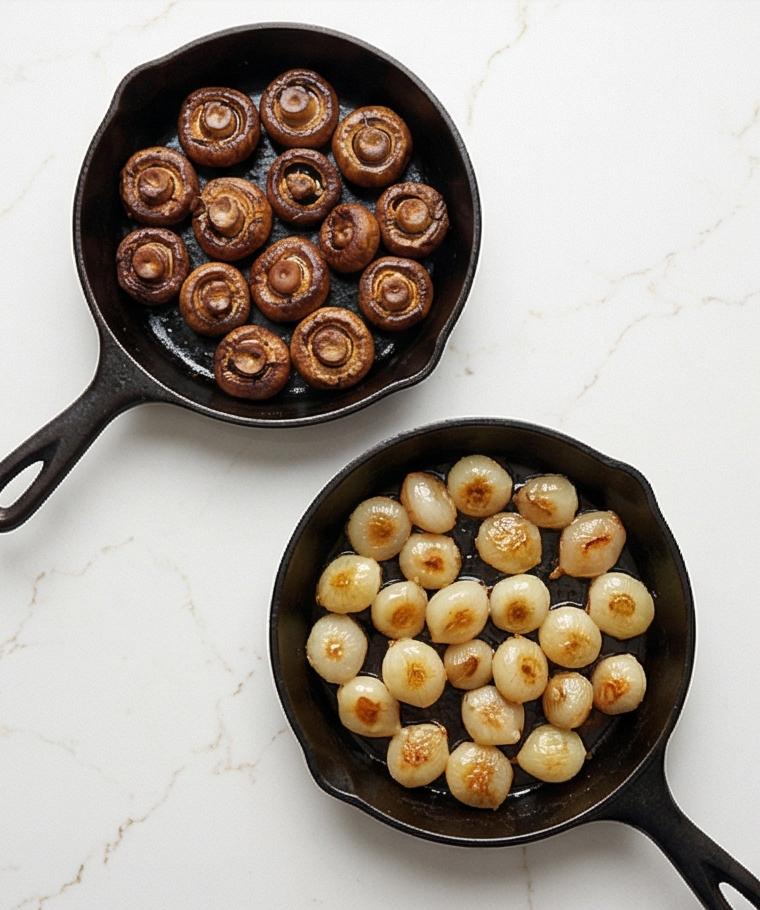
In the same skillet used for quick sauté work (kept nearby and consistent), melt butter with a little vegetable oil and sear cleaned cremini mushrooms in a single layer until deeply browned and all released liquids have evaporated — the surface should be mahogany and slightly plush. In the same pan (wiped if needed), combine pearl onions with butter, a little water and sugar, then simmer covered until tender; uncover and cook until they are glossy, lightly browned and lacquered. These two preparations should look distinctly finished — bronzed mushrooms and shiny, translucent pearl onions ready to join the braise.
Step 7: Fold mushrooms and onions into the stew and finish seasoning
Gently stir the browned mushrooms and glazed pearl onions into the reduced stew, then let everything warm together very gently so the flavors marry and the sauce smooths around the chunks of beef. Taste and adjust with the remaining kosher salt and black pepper, skim any excess fat for a clean finish, and stir in chopped fresh parsley so the dish brightens with herbaceous flecks.
Step 8: Final hold and serving suggestions
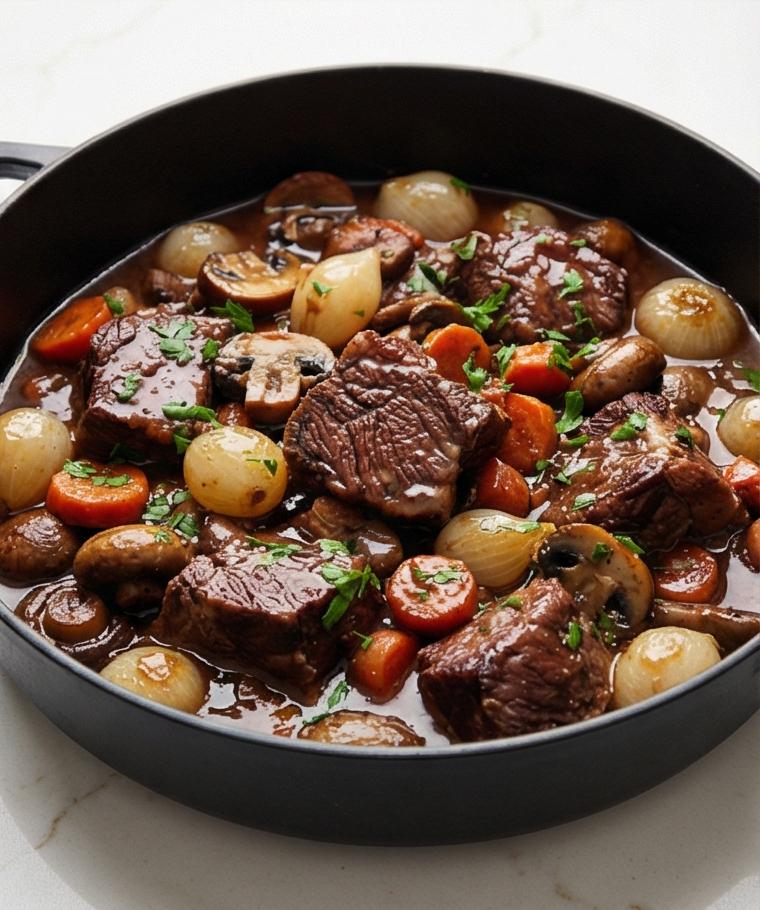
Keep the finished Beef Bourguignon warm over very low heat, ensuring it never boils hard; if holding, add a splash of water to maintain a silky, spoon-coating consistency. Serve ladled into a wide, round serving vessel with plenty of beef, mushrooms, pearl onions and carrots bathed in the glossy mahogany sauce — it pairs beautifully with buttered egg noodles, creamy mashed potatoes, or crusty bread.
Making It Your Own
I often swap in pancetta for bacon when I want a slightly cleaner pork note. It keeps the dish familiar but shifts the smoke profile. For a winter twist, add a few peeled chestnuts near the end for sweetness and texture.
If you want this Beef Bourguignon Recipe to be lighter, use a leaner cut and shorten the braise by 20 to 30 minutes while watching tenderness; the dish will be less gelatinous but still comforting.
To make a vegetarian take, replace beef with hearty mushrooms and use vegetable stock, adding smoked paprika and soy sauce for depth so the program of flavors echoes the original without the meat.
How to Serve
When I host, I ladle Beef Bourguignon Recipe into shallow bowls so each guest gets a generous portion of meat, mushrooms, and sauce. For a family-style spread, serve in the pot on a trivet with crusty bread and a green salad to cut through the richness.
For larger gatherings, keep the stew warm in a low oven and offer mashed potatoes or buttered egg noodles on the side so guests can help themselves. Garnish with chopped parsley just before serving to brighten both color and flavor.
If you need to stretch the dish, serve with creamy polenta or roasted root vegetables; both soak up the sauce and make the meal feel abundant.
Storage and Reheating
Leftovers are forgiving. Cool the Beef Bourguignon Recipe to room temperature within two hours and transfer to airtight containers. It keeps well in the fridge for up to 4 days and freezes for up to 3 months.
To reheat, thaw overnight if frozen, then warm gently on the stovetop over low heat until just simmering; finish with a splash of stock if the sauce tightens. Reheating slowly preserves texture and keeps the meat tender.
Common Pitfalls and How to Avoid Them
Overcrowding the pan when browning prevents a good crust; brown in batches and be patient so you get that savory fond. Underseasoning early can leave the final dish flat, so season in layers and taste as you go.
Skipping the reduction step can leave the sauce thin; if that happens, reduce it on the stovetop or whisk in a small beurre manié to lend body without losing flavor.
Ready, Set, Cook
If you love deep, slow-cooked flavors, give this Beef Bourguignon Recipe a try. It asks for time and a little attention, but it rewards you with a dinner that feels like a celebration of simple ingredients done very well.
Frequently Asked Questions.
- What wine should I use for Beef Bourguignon Recipe? Use a full-bodied dry red like Burgundy or Pinot Noir; avoid sweet wines.
- Can I make Beef Bourguignon Recipe ahead of time? Yes, it often tastes better a day later—just cool and refrigerate overnight.
- How do I thicken the sauce if it is too thin? Reduce gently on the stovetop or whisk in a small bit of beurre manié (butter plus flour).
- Can I use a slow cooker for Beef Bourguignon Recipe? Yes, brown the meat and vegetables first, then transfer to the slow cooker and cook on low for 6 to 8 hours.
- What sides pair best with Beef Bourguignon Recipe? Mashed potatoes, buttered egg noodles, crusty bread, or polenta all work beautifully.
Beef Bourguignon Recipe
Make Beef Bourguignon Recipe now for tender, wine-braised beef in a glossy sauce perfect for cozy dinners.
Ingredients
Instructions
Step 1: Prepare and season the beef
Pat the well-marbled beef cubes dry on paper towels until the surfaces look satin and the flesh has a clean, slightly tacky feel. Season all over with kosher salt and freshly ground black pepper, then dust the pieces lightly with all-purpose flour, tossing so each cube carries a thin, even coat and any excess flour falls away. Let the beef rest at room temperature while you move on to rendering the bacon — the light flour film will encourage a deeply caramelized crust when seared.
Step 2: Render bacon and brown the beef
Cook the bacon pieces until the fat is fully rendered and the bits are crisp and mahogany; transfer them to a plate so they stay crunchy. In the same heavy pot, add a splash of neutral oil if needed and sear the floured beef in a single layer, working in batches so each cube develops a dark, crunchy crust on at least two sides — the contrast between the dry, browned exterior and the rosy interior is key. Keep the resulting browned beef and crisp bacon together on the plate, letting the fond (dark sticky browned bits) cling to the pot to build deep flavor.
Step 3: Soften the vegetables and deepen with tomato paste
Spoon off excess fat until about two tablespoons remain, then add the diced yellow onion and sliced carrots. Cook them until the onion shimmers translucent and begins to take on pale gold edges and the carrots show the first amber color — they should feel tender but still hold structure. Stir in the minced garlic, then vigorously stir in the tomato paste and cook until it darkens to a deep brick red and begins to cling to the pot, taking on a concentrated, slightly caramelized aroma that promises depth.
Step 4: Deglaze with wine and assemble the stew base
Pour in the dry red wine and bring it to a strong simmer, using a wooden spoon to scrape every bit of the fond into the liquid until the wine reduces and the alcoholic sharpness softens into a glossy, concentrated base. Return the browned beef and crispy bacon to the pot, pour in beef stock (and a little water if needed) so the liquid just covers the meat, nestle in bay leaves, thyme sprigs, and parsley stems, and bring the whole pot just to a gentle simmer before braising. Taste and gently adjust seasoning so the braise starts balanced and savory.
Step 5: Braise until meltingly tender
Cover the heavy oven-safe pot tightly and transfer it to a low oven to braise slowly until the beef becomes fork-tender and the connective tissue has dissolved into silky threads — the meat should yield easily when pierced and the sauce should smell rounded and deeply savory. Once tender, remove the herbs and, if the sauce is thin, reduce it gently on the stovetop (or in the pot on the surface) until it coats a spoon with a glossy, viscous sheen; if it’s too thick, loosen with a splash of stock. This is the moment the stew base becomes luxurious and spoonable.
Step 6: Brown mushrooms and glaze pearl onions
In the same skillet used for quick sauté work (kept nearby and consistent), melt butter with a little vegetable oil and sear cleaned cremini mushrooms in a single layer until deeply browned and all released liquids have evaporated — the surface should be mahogany and slightly plush. In the same pan (wiped if needed), combine pearl onions with butter, a little water and sugar, then simmer covered until tender; uncover and cook until they are glossy, lightly browned and lacquered. These two preparations should look distinctly finished — bronzed mushrooms and shiny, translucent pearl onions ready to join the braise.
Step 7: Fold mushrooms and onions into the stew and finish seasoning
Gently stir the browned mushrooms and glazed pearl onions into the reduced stew, then let everything warm together very gently so the flavors marry and the sauce smooths around the chunks of beef. Taste and adjust with the remaining kosher salt and black pepper, skim any excess fat for a clean finish, and stir in chopped fresh parsley so the dish brightens with herbaceous flecks.
Step 8: Final hold and serving suggestions
Keep the finished Beef Bourguignon warm over very low heat, ensuring it never boils hard; if holding, add a splash of water to maintain a silky, spoon-coating consistency. Serve ladled into a wide, round serving vessel with plenty of beef, mushrooms, pearl onions and carrots bathed in the glossy mahogany sauce — it pairs beautifully with buttered egg noodles, creamy mashed potatoes, or crusty bread.
Notes
- Brown meat in batches to develop a deep crust and avoid steaming.
- Use a full-bodied dry red wine you would enjoy drinking for best flavor.
- Cool completely before refrigerating for safer storage and cleaner reheating.
- Reheat gently and add a splash of stock if sauce tightens.
- Freeze in portioned containers for easy future meals.