Chicken Tikka Masala Recipe has been my go-to comfort dinner for years. I remember the first time I nailed the balance of charred chicken and silky sauce: it felt like discovering a secret. I’ve cooked this Chicken Tikka Masala Recipe for weeknight dinners, for friends, and for holidays, and it never fails to make the room smell warm and inviting. The spice mix is straightforward, the technique forgiving, and the result is deeply satisfying without feeling precious.
What makes this Chicken Tikka Masala Recipe worth trying is the contrast between smoky, broiled chicken and a plush tomato-cream sauce that clings to every bite. It hits savory, tangy, and slightly sweet notes at once, so it appeals to crowds and picky eaters alike. You’ll find the steps calm and rhythmic: marinate, char, build the sauce, and bring it all together. If you love bold flavors that still feel homey, this is a recipe you will return to again and again.
Why This Became My Cozy-Weeknight Classic
The first time I made this Chicken Tikka Masala Recipe, it was raining and I had a craving for something both bright and soothing. I chopped the onions while the smell of garlic and ginger filled the kitchen, and the sizzle when the tomato paste hit the pan felt like a small, triumphant drumroll. When the broiled chicken came out with little charred edges, I remember standing at the stove, grateful for its caramelized aroma. Serving it over steaming basmati with a scattering of cilantro felt like a warm hug after a long day. That memory keeps me coming back; the recipe is as much about the comfort it brings as it is about the flavor.
The Ingredients That Make the Magic
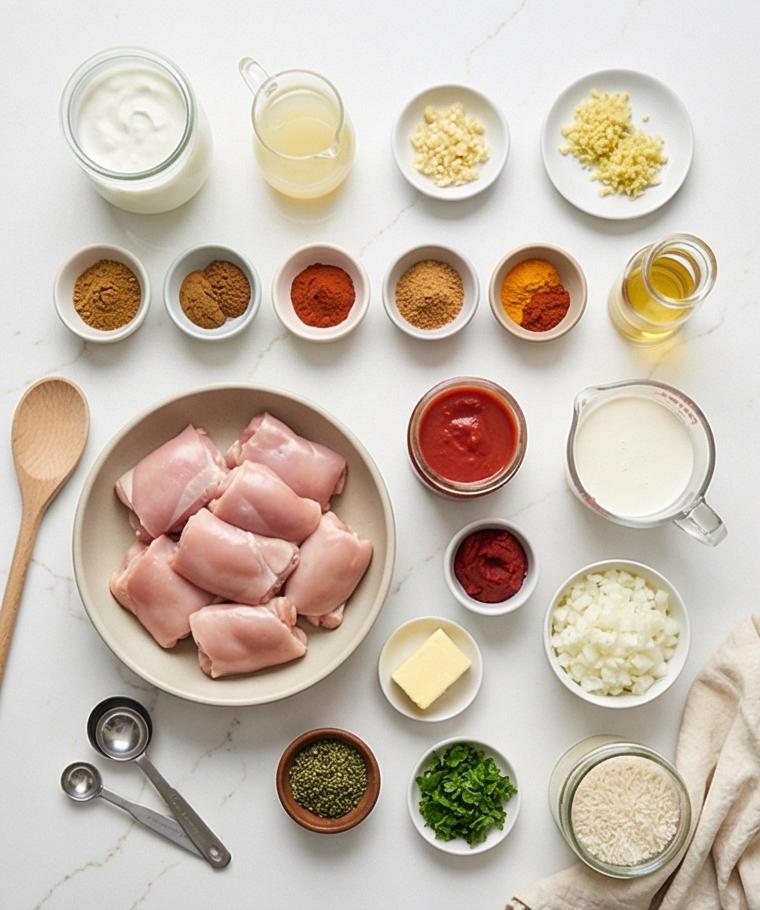
- Plain full-fat yogurt: Tenderizes and carries the marinade spices; use Greek or regular whole-milk yogurt. For a lighter option, try low-fat yogurt but expect slightly less creaminess.
- Chicken thighs: The star for juicy, forgiving meat; boneless, skinless thighs stay tender. Substitute with chicken breast for leaner meat but watch doneness.
- Tomato purée / passata: Builds the sauce body and sweetness; use a good-quality purée for smoothness. Canned crushed tomatoes are a substitute.
- Heavy cream: Adds silk and richness; coconut cream can replace it for a dairy-free twist, adjusting seasoning.
- Onion, garlic, ginger: Aromatics that form the flavor base; pick firm onions and fresh ginger for brightness.
- Spice blend: Cumin, coriander, paprika, turmeric, garam masala and Kashmiri chili give color and warmth; use fresh spices for the best aroma.
Essential Kitchen Tools and Why They Matter
A short intro: Having the right tools makes this Chicken Tikka Masala Recipe easier and more reliable. Each item helps a particular stage from marinating to finishing.
- Mixing bowl: For the marinade; choose a nonreactive stainless or glass bowl so the lemon doesn’t affect flavor.
- Baking sheet with rack: For broiling the chicken so air circulates and the edges char evenly. If you do not have a rack, use a foil-lined sheet and flip often.
- Heavy-bottomed sauté pan or Dutch oven: For building the sauce; it distributes heat and prevents scorching.
- Immersion blender or regular blender: Optional for an extra-smooth sauce texture. A sieve also works if you prefer a hand-strained finish.
- Sharp knife and cutting board: Good prep saves time and keeps pieces even so chicken cooks uniformly.
Step-by-Step Preparation Guide
Step 1: Make and combine the yogurt marinade
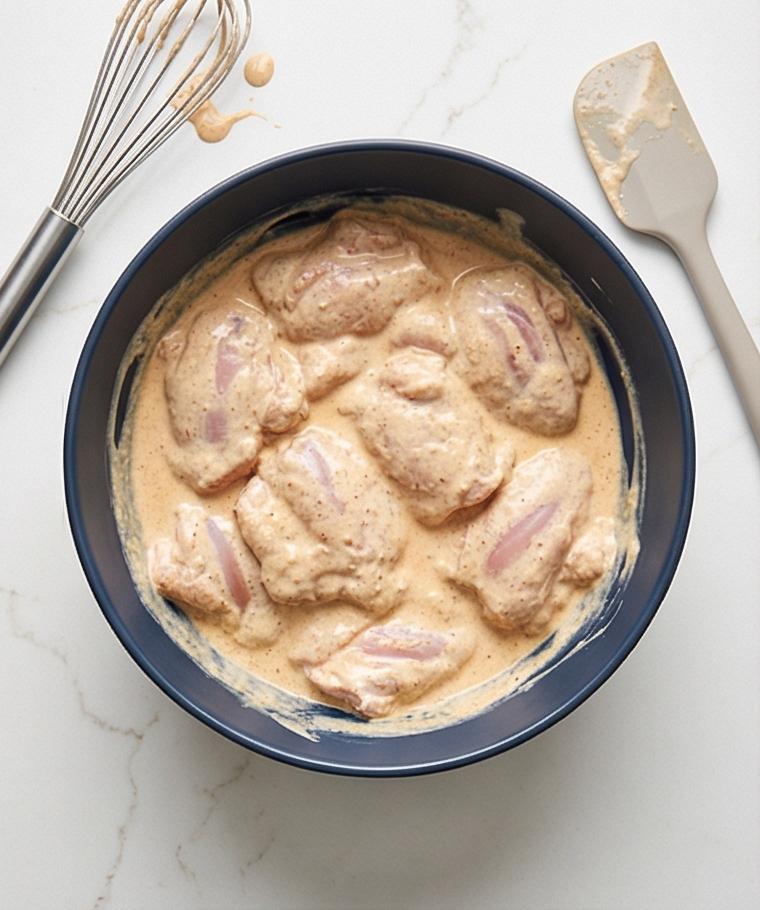
Whisk the yogurt, lemon juice, minced garlic, grated ginger, ground cumin, garam masala, sweet paprika, ground coriander, turmeric, kosher salt and a tablespoon of neutral oil until smooth and homogenous, tasting for balanced warmth and acidity. Fold the trimmed chicken thigh pieces into the marinade, turning each piece so the thick, spicy yogurt clings evenly—every crevice coated in a glossy, pale-orange paste flecked with ground spice. Cover and chill; the short description of texture here is important: the chicken should sit suspended in a cream-like marinade that softens and tenderizes the meat while taking on color from the paprika and spices.
Step 2: Bring the marinated chicken toward room temperature and broil to charred edges
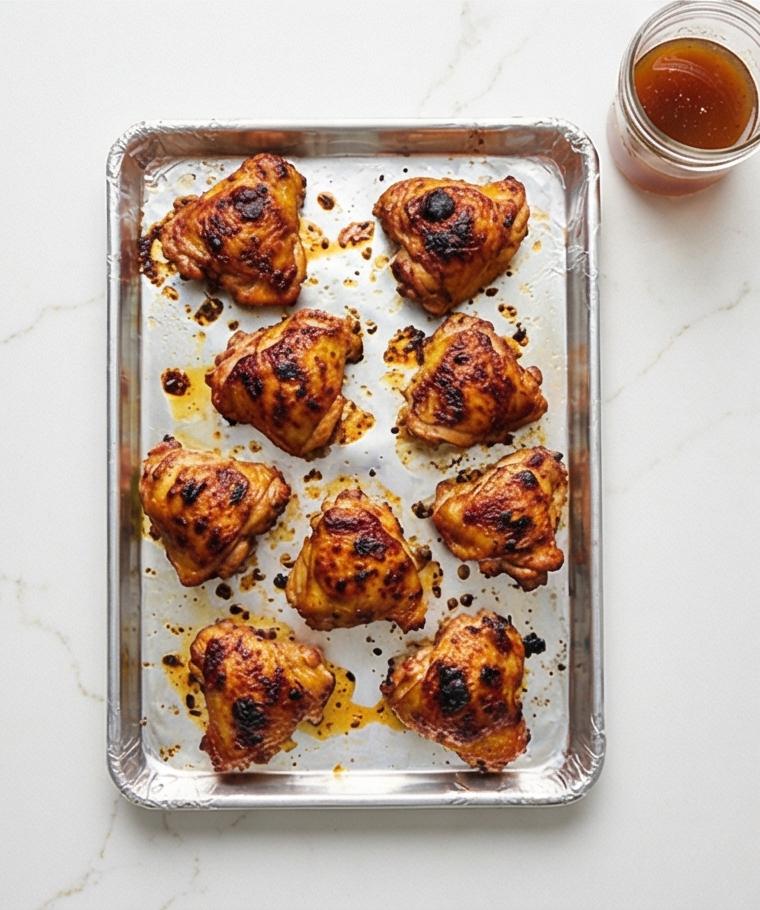
About 20 minutes before cooking, let the marinated pieces relax toward room temperature so they cook evenly. Shake off excess marinade (leave a visible thin coating) and arrange the pieces in a single layer so air can kiss their surfaces; after broiling they should show concentrated char, small crisped edges and a slightly mottled, deepened red-brown spice crust. Transfer the finished pieces to a tray and reserve the juices; the end-state is a cluster of plump, slightly blistered thigh pieces with caramelized spots and opaque, juicy interiors.
Step 3: Build the deeply caramelized onion and spice base
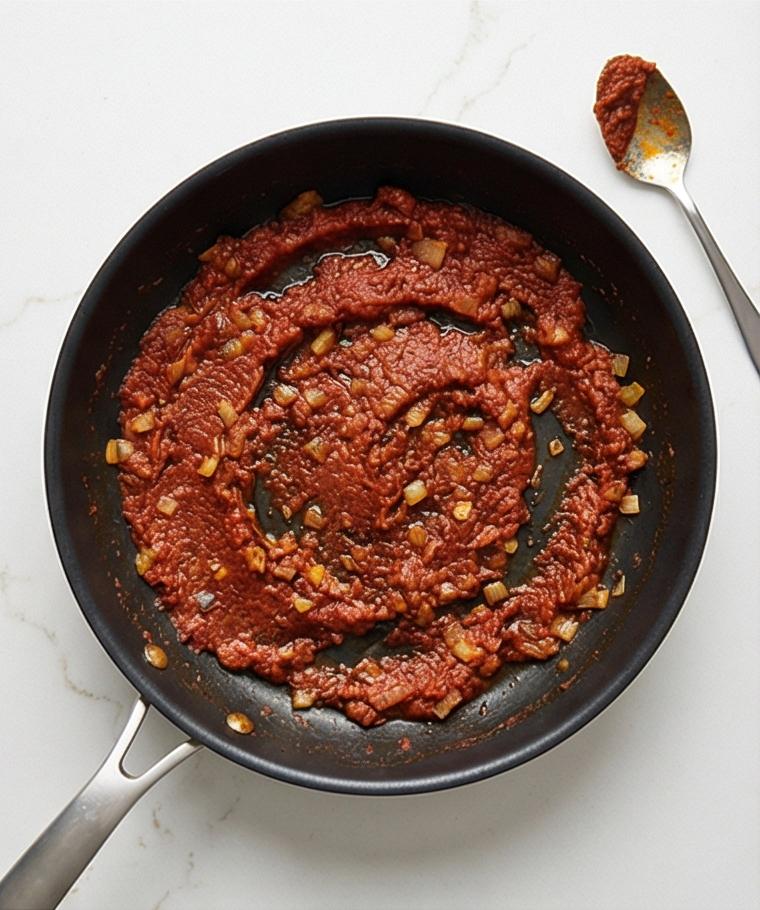
Melt butter and oil, soften diced onion slowly until very golden with browned fringes, then stir in garlic and ginger briefly until aromatic. Add the measured ground coriander, cumin, paprika, turmeric, Kashmiri chili powder, garam masala and a generous spoonful of tomato paste and toast until the paste darkens to a deep brick red and the mixture looks thick, slightly oily, and studded with softened onion bits. The visual result is a glossy, nearly paste-like bed of toasted tomato and spices in which the oils have separated and shimmer, carrying concentrated roasted aromas.
Step 4: Transform the paste into a silky tomato-cream sauce
Stir in smooth tomato purée and water, season with salt and sugar, and reduce until the sauce turns cohesive and slightly reduced, with small pools of oil appearing on the surface. Lower the heat and temper in heavy cream slowly until the sauce becomes a velvety, luminous orange that ribbons off a spoon. Finish by crushing and folding in kasuri methi and stirring in any reserved broiler juices—this is the moment the sauce deepens in flavor and sheen, the texture moving from granular tomato to pillowy, clingy cream that will coat chicken pieces beautifully.
Step 5: Combine chicken with sauce, finish and rest
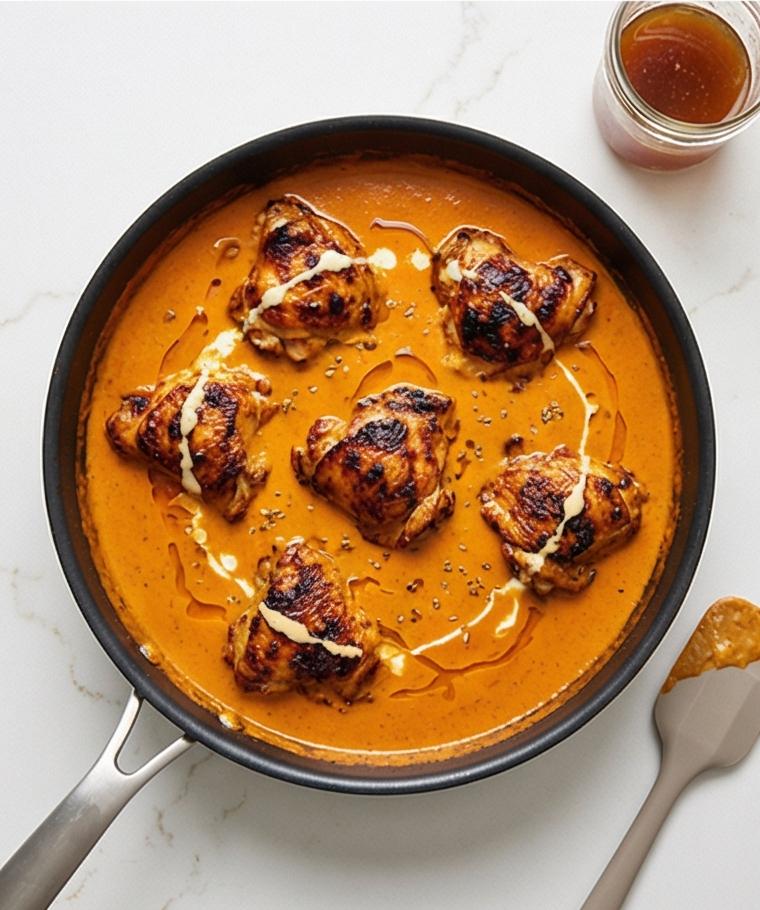
Nestle the broiled chicken pieces into the creamy sauce and simmer gently until the chicken is tender and the sauce clings glossy and thick. Adjust seasoning, add a final whisper of cream for richness if desired, and let the pot rest briefly so the sauce tightens and flavors settle. The finished state before plating should show plump, lacquered chicken pieces haltingly submerged in a dense, orange-tinted sauce dotted with tiny oil pools and sprinkles of crushed fenugreek and chopped cilantro.
Step 6: Plate and garnish for service
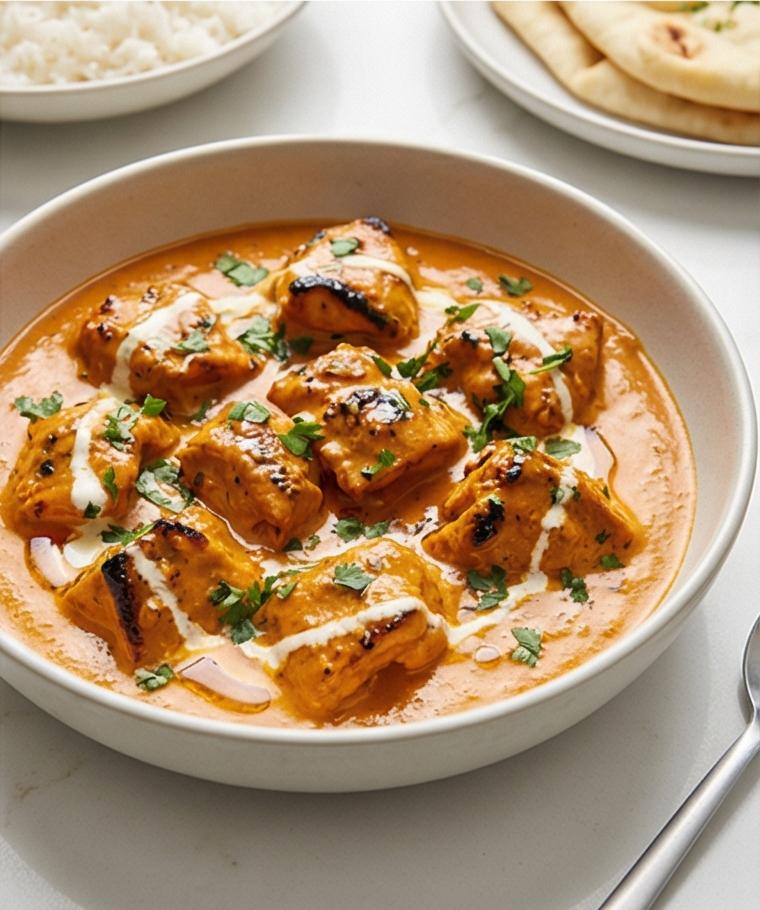
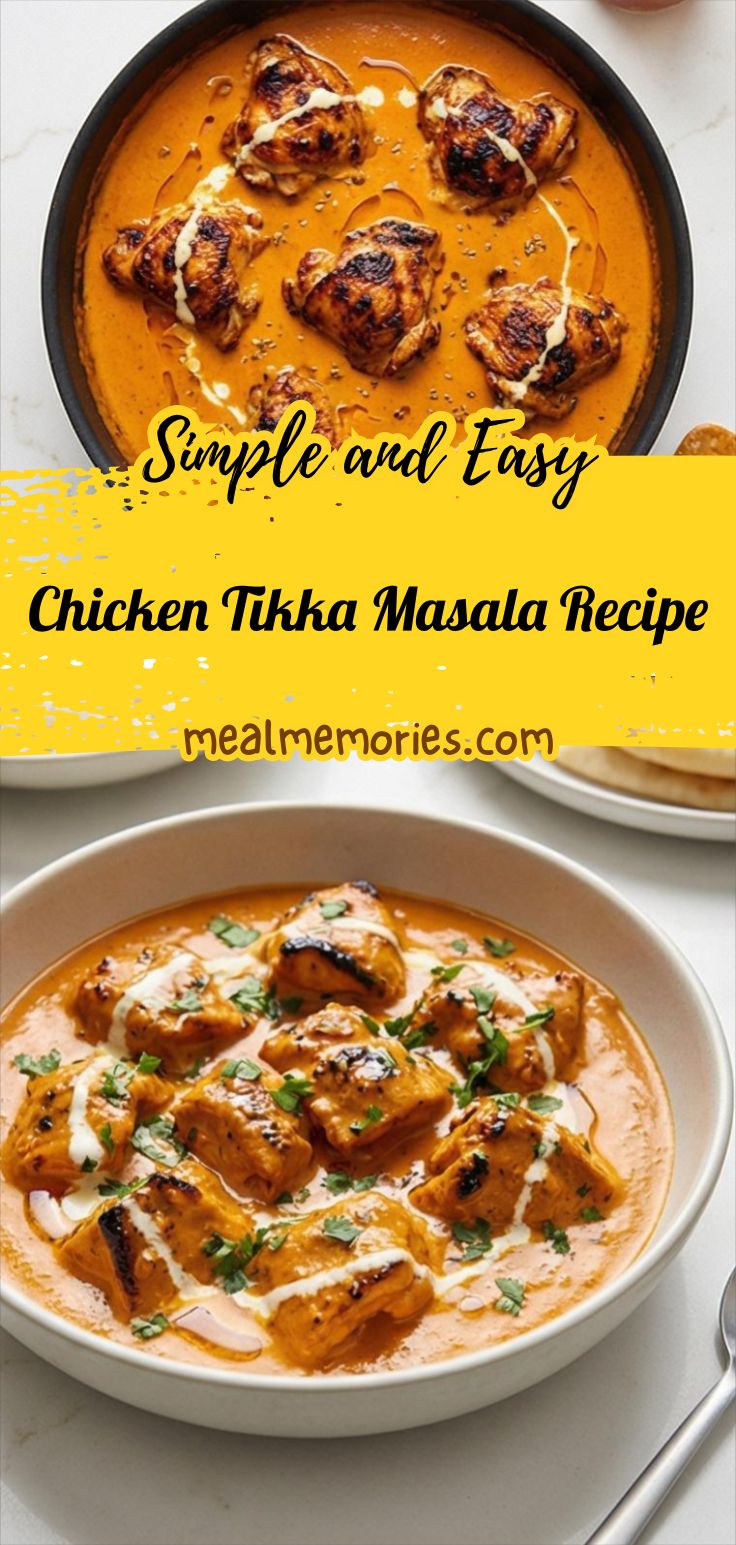
Spoon generous portions into a shallow serving bowl, arranging pieces to reveal charred edges and glossy sauce. Garnish with roughly chopped cilantro and a delicate cream drizzle for contrast; optionally show a neat mound of basmati rice or a warm naan nearby for serving. The final photograph emphasizes texture and gloss—the tender, seared chicken, the creamy, spoon-coating sauce and the flecks of fresh cilantro against the bright, minimal marble-like surface.
Making It Your Own
I like to experiment with heat levels and textures. For a milder version of my Chicken Tikka Masala Recipe, I halve the Kashmiri chili and add a teaspoon of smoked paprika for color without extra heat. When I want it lighter, I swap half the heavy cream for coconut milk and finish with a squeeze of lemon to lift the flavors.
Regionally, I have swapped chicken for paneer or roasted cauliflower to make vegetarian variations that still feel indulgent. In winter I add a pinch more garam masala and a couple of whole cloves in the onion stage for deeper warmth; in summer, I keep it bright with extra lemon and fresh cilantro.
How to Serve
Plan the plating as if you are welcoming guests: set out warm naan, a bowl of fluffy basmati, and small dishes of pickled red onion or cucumber raita for contrast. For 4 people, serve generous portions with about 1 cup of cooked rice per person and a piece of naan.
If you are hosting a larger group, keep the sauce slightly looser during simmering; it will thicken while resting. For an elegant family-style presentation, use a shallow oval dish, arrange the lacquered chicken pieces on top, finish with a cream drizzle and a scattering of cilantro and thinly sliced chilies.
Storage and Reheating Tips
Let leftovers cool completely before refrigerating in an airtight container. Properly stored, the Chicken Tikka Masala Recipe keeps for up to 3 days in the fridge. If you plan to freeze, portion into freezer-safe containers and label with the date; it will keep well for up to 2 months.
For reheating, warm gently on the stove over low heat and add a splash of water or cream to loosen the sauce and restore silkiness. Avoid boiling as it can break the cream. Reheat only the portion you will eat for best texture.
Oops-Proofing: Common Mistakes and How to Avoid Them
A frequent slip is overcooking the chicken. Prevent this by cutting pieces evenly and removing them from high heat as soon as the edges char; they will finish cooking in the sauce. Another misstep is not toasting the tomato paste long enough; give it time to darken so the sauce has depth.
Also, be cautious when adding cream; add it off the highest heat and stir gently to prevent splitting. Taste and adjust salt and sugar at the end so the sauce sings.
Final Thoughts and an Invitation
Try this Chicken Tikka Masala Recipe this week and make it your own. Start with the base as written, then tweak the heat and creaminess to suit your mood. I can almost guarantee it will become a favorite in your rotation.
Frequently Asked Questions
-
How long should I marinate the chicken for best results?
Marinate at least 1 hour, though overnight gives the best tenderness and deeper flavor. If short on time, 30 minutes will still improve the chicken. -
Can I use chicken breast instead of thighs?
Yes, but reduce broil time and watch closely so breast pieces do not dry out; they cook faster than thighs. -
Is there a dairy-free version of this recipe?
Yes, substitute coconut yogurt in the marinade and use coconut cream instead of heavy cream for a rich, dairy-free sauce. -
Why is my sauce grainy and how do I fix it?
Graininess often comes from under-toasting the tomato paste or not reducing properly. Cook the paste until it deepens in color and the sauce reduces to a cohesive texture; blend if needed. -
Can I make this ahead for a party?
Absolutely. Make the sauce and broiled chicken the day before; rewarm gently and combine before serving. Flavors often improve with a short rest.
Chicken Tikka Masala Recipe
Make Chicken Tikka Masala Recipe tonight: tender marinated chicken in a silky tomato-cream sauce that’s perfect for dinner.
Ingredients
Instructions
Step 1: Make and combine the yogurt marinade
Whisk the yogurt, lemon juice, minced garlic, grated ginger, ground cumin, garam masala, sweet paprika, ground coriander, turmeric, kosher salt and a tablespoon of neutral oil until smooth and homogenous, tasting for balanced warmth and acidity. Fold the trimmed chicken thigh pieces into the marinade, turning each piece so the thick, spicy yogurt clings evenly—every crevice coated in a glossy, pale-orange paste flecked with ground spice. Cover and chill; the short description of texture here is important: the chicken should sit suspended in a cream-like marinade that softens and tenderizes the meat while taking on color from the paprika and spices.
Step 2: Bring the marinated chicken toward room temperature and broil to charred edges
About 20 minutes before cooking, let the marinated pieces relax toward room temperature so they cook evenly. Shake off excess marinade (leave a visible thin coating) and arrange the pieces in a single layer so air can kiss their surfaces; after broiling they should show concentrated char, small crisped edges and a slightly mottled, deepened red-brown spice crust. Transfer the finished pieces to a tray and reserve the juices; the end-state is a cluster of plump, slightly blistered thigh pieces with caramelized spots and opaque, juicy interiors.
Step 3: Build the deeply caramelized onion and spice base
Melt butter and oil, soften diced onion slowly until very golden with browned fringes, then stir in garlic and ginger briefly until aromatic. Add the measured ground coriander, cumin, paprika, turmeric, Kashmiri chili powder, garam masala and a generous spoonful of tomato paste and toast until the paste darkens to a deep brick red and the mixture looks thick, slightly oily, and studded with softened onion bits. The visual result is a glossy, nearly paste-like bed of toasted tomato and spices in which the oils have separated and shimmer, carrying concentrated roasted aromas.
Step 4: Transform the paste into a silky tomato-cream sauce
Stir in smooth tomato purée and water, season with salt and sugar, and reduce until the sauce turns cohesive and slightly reduced, with small pools of oil appearing on the surface. Lower the heat and temper in heavy cream slowly until the sauce becomes a velvety, luminous orange that ribbons off a spoon. Finish by crushing and folding in kasuri methi and stirring in any reserved broiler juices—this is the moment the sauce deepens in flavor and sheen, the texture moving from granular tomato to pillowy, clingy cream that will coat chicken pieces beautifully.
Step 5: Combine chicken with sauce, finish and rest
Nestle the broiled chicken pieces into the creamy sauce and simmer gently until the chicken is tender and the sauce clings glossy and thick. Adjust seasoning, add a final whisper of cream for richness if desired, and let the pot rest briefly so the sauce tightens and flavors settle. The finished state before plating should show plump, lacquered chicken pieces haltingly submerged in a dense, orange-tinted sauce dotted with tiny oil pools and sprinkles of crushed fenugreek and chopped cilantro.
Step 6: Plate and garnish for service
Spoon generous portions into a shallow serving bowl, arranging pieces to reveal charred edges and glossy sauce. Garnish with roughly chopped cilantro and a delicate cream drizzle for contrast; optionally show a neat mound of basmati rice or a warm naan nearby for serving. The final photograph emphasizes texture and gloss—the tender, seared chicken, the creamy, spoon-coating sauce and the flecks of fresh cilantro against the bright, minimal marble-like surface.
Notes
- Marinate at least 1 hour for best tenderness; overnight is ideal.
- Reserve broiler juices and add to the sauce for extra depth.
- To avoid broken cream, add cream off high heat and stir gently.
- Freeze portions in airtight containers for up to 2 months.
- Adjust Kashmiri chili or paprika to control color and heat.