Lasagna Soup Recipe has a special place in my weeknight rotation. I fell for this Lasagna Soup Recipe years ago when I wanted all the comfort of lasagna without the assembly time, and it quickly became a favorite for busy nights. I love how it fills the kitchen with tomato and herb scents while the ricotta topping cools on the counter. This version is forgiving, bold, and built to be tweaked depending on what you have in the fridge.
I still remember the first time I made this Lasagna Soup Recipe for friends – the way the steam rose when we lifted the lids, how everyone reached for crusty bread, and how the ricotta slowly softened into the hot broth. That evening taught me that technique matters, but warmth and timing matter more – a good pot of soup is as much about the company as the ingredients. Since then I’ve refined the recipe a little each winter, learning how long to brown the meat for extra depth, when to add the noodles so they stay al dente, and how to coax the ricotta into a silky dollop. The sensory memories are strong: the snap of celery under the knife, the sizzle of meat hitting the pan, and the satisfying spoon that pierces a creamy ricotta mound to swirl into a bowl of tomato bliss.
How This Recipe Became My Rainy-Day Favorite
The first rainy afternoon I tested this recipe I remember the kitchen fogging up and the radio playing softly in the background. I had just a couple of hours to turn what felt like a complicated lasagna into something cozy and spoonable. As the meat browned and the tomato paste darkened, the scent wrapped around me like a warm blanket. My roommate at the time wandered in and stayed for dinner, and we both agreed it tasted like a hug. Over the years that memory pushed me to dial in small changes – a touch more Parmesan, a hint of red pepper flakes some nights, or the occasional splash of red wine for depth. That bowl became shorthand for comfort; I started making extra to freeze so a single rainy day never caught me unprepared.
The Main Ingredients and Why They Matter
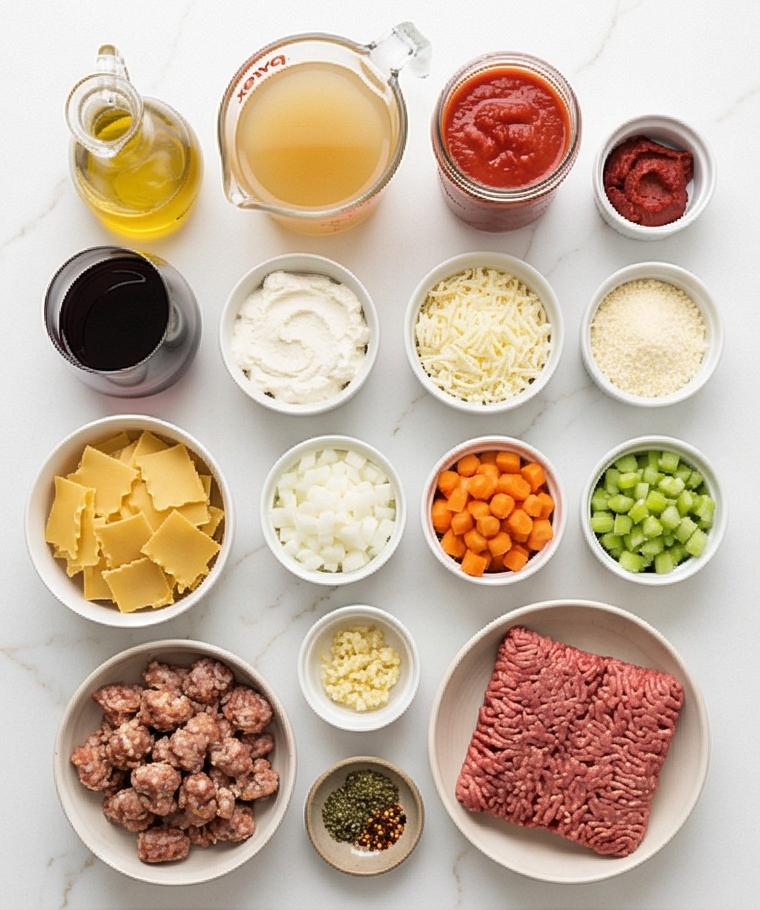
- Extra-virgin olive oil: The first layer of flavor – use a fruity, good-quality oil. Substitute with neutral oil if needed.
- Italian sausage: Adds fat and seasoning – choose mild or hot depending on heat tolerance; turkey sausage works for a lighter option.
- Ground beef: Provides meaty body and texture; swap for ground pork or a plant-based crumble for vegetarian versions.
- Yellow onion, carrot, celery (mirepoix): The aromatic backbone – pick firm produce and dice evenly so they soften at the same rate.
- Garlic: Small amount, big impact – fresh is best; roasted garlic adds sweetness.
- Tomato paste and crushed tomatoes: Tomato paste gives concentrated umami; use good-quality crushed tomatoes or San Marzano style for a sweeter profile.
- Red wine (optional): Deepens flavor – substitute with extra broth if avoiding alcohol.
- Chicken broth and water: Control salt and body – low-sodium broth lets you adjust seasoning precisely.
- Dried herbs and bay leaf: Oregano, basil, thyme – use fresh later for brightness if available.
- Lasagna noodles: Broken pieces mimic lasagna texture – gluten-free noodles can work but check cook time.
- Ricotta, mozzarella, Parmesan: The cheese trio creates a creamy topping and melty finish – use full-fat ricotta for the most luxurious mouthfeel.
Essential Kitchen Tools and Why They Help
A few reliable tools make the Lasagna Soup Recipe feel effortless. A heavy-bottomed pot or Dutch oven distributes heat evenly so the meat browns beautifully. A sturdy wooden spoon or spatula scrapes up fond and helps you evaluate browning. A set of measuring cups and spoons keeps the seasoning consistent. If you like silky ricotta, a medium bowl and a whisk or rubber spatula help you whip the topping to the right texture.
- Dutch oven or large heavy pot: Provides even heat and room for stirring.
- Wooden spoon or spatula: Ideal for breaking up meat and scraping fond.
- Measuring cups and spoons: Consistency matters for seasoning.
- Medium bowl: For whipping the ricotta topping.
- Ladle and slotted spoon: For serving and testing noodles.
Step-by-Step Preparation Guide
Step 1: Chop, Break, and Stage
Finely chop the yellow onion, dice the carrot and celery into small, even pieces, and mince the garlic so the bits are tiny and aromatic. Break the dry lasagna noodles into 1-2 inch (2.5-5 cm) pieces and pile them gently to one side. Measure the crushed tomatoes, chicken broth, tomato paste, and the wine (if using) into clear glass jars or small pouring jugs; place oils, milk/cream, and the cheeses in small bowls or ramekins so all liquids are contained – nothing spills onto the surface. This mise en place reduces motion during cooking and keeps textures and colors organized and photo-ready.
Step 2: Brown the Meats to Deep Golden-Browned Crumbles
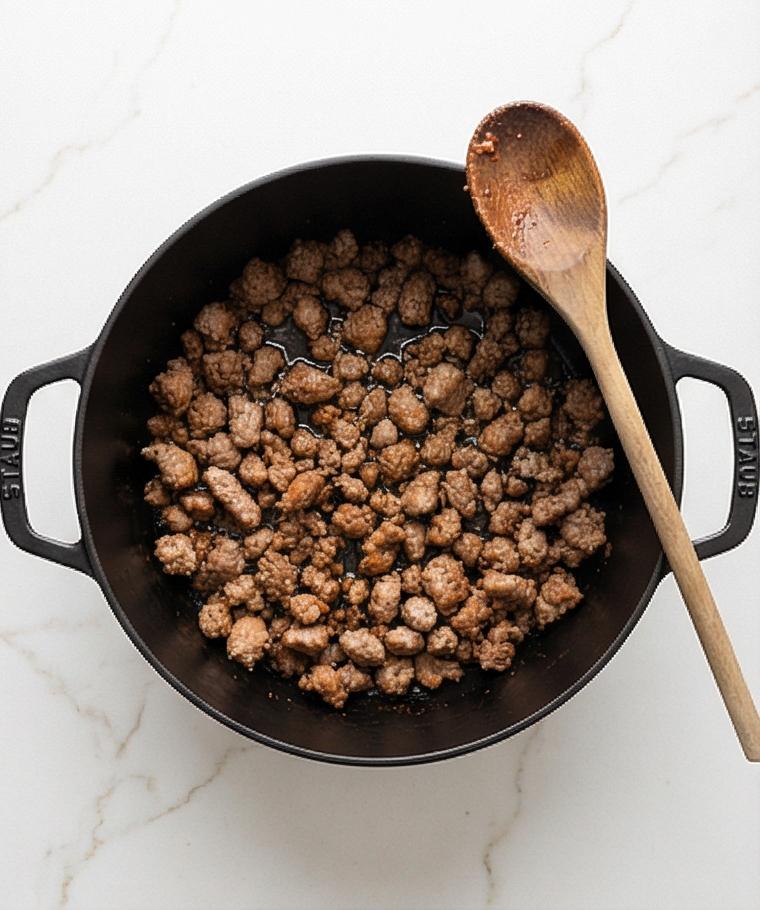
Add the crumbled Italian sausage and ground beef and brown them until the pieces are deeply caramelized with lots of small browned bits clinging to the meat – the flavor foundation. Season lightly with the initial pinch of kosher salt and black pepper and, if excess fat pools, imagine leaving a single tablespoon to carry flavor. The visual cue here is rich mahogany crusting on irregular meat crumbles, small glossy pools of rendered fat, and the wooden spoon used to break the meat resting on the rim of the cooking vessel.
Step 3: Soften the Mirepoix and Bloom the Tomato Paste
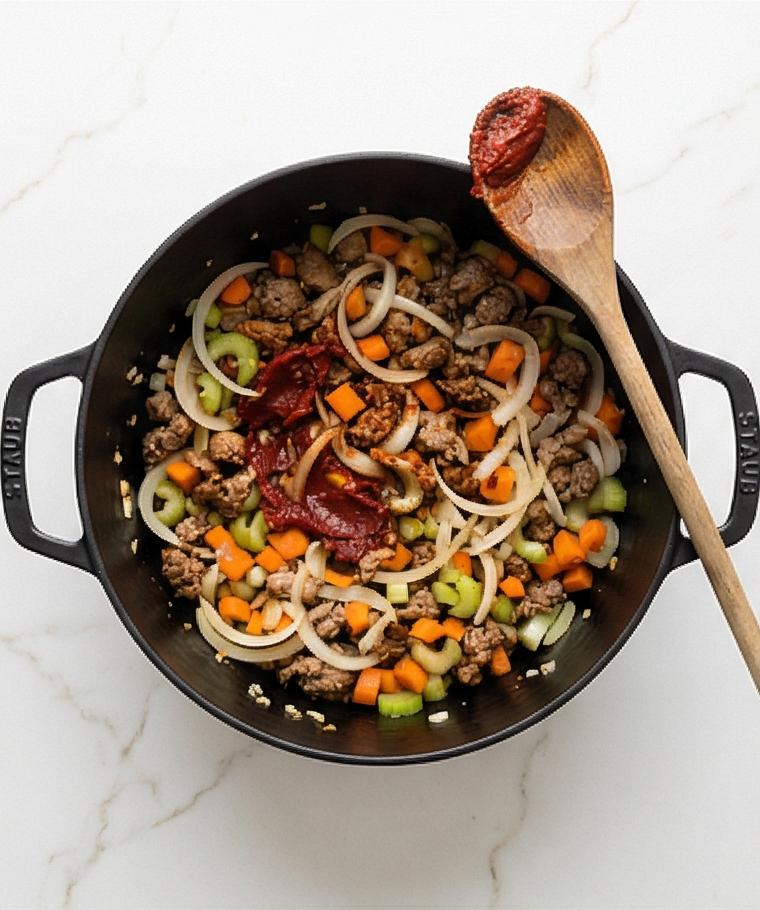
Mix the chopped onion, carrot and celery into the browned meat so the vegetables become soft and the onion turns translucent. Stir in minced garlic and a concentrated smear of tomato paste; cook until the paste deepens in color and becomes glossy, clinging to the vegetables and meat. Visually you’ll see softened, warm-orange carrot, translucent onion ribbons, and streaks of darkened tomato paste that indicate the beginning of a sweeter, deeper tomato flavor.
Step 4: Deglaze and Combine the Liquid Elements
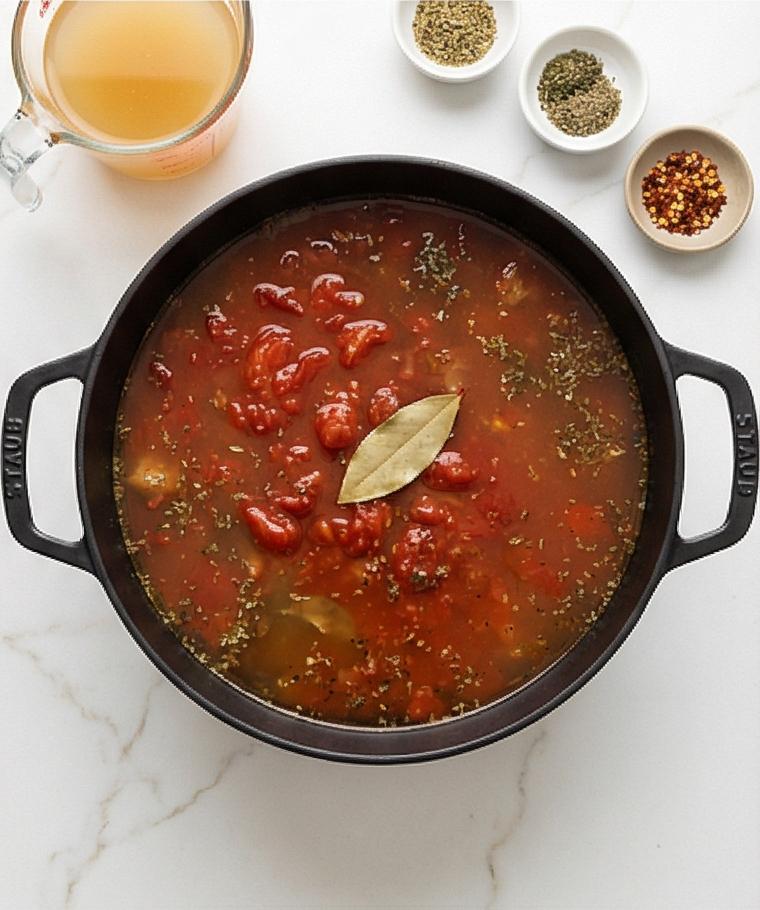
Pour in the red wine if using and scrape up the fond so the bottom of the pot is clean of stuck bits. Add the crushed tomatoes, measured chicken broth and a cup of water, then fold in dried oregano, basil, thyme, crushed red pepper flakes (if using), the bay leaf, and the remaining measured salt and pepper. The pot should present a layered texture: chunked crushed tomato suspended in glossy broth, flecks of dried herbs floating, and a bay leaf drifting near the surface – everything clearly combined and ready to soften and meld.
Step 5: Simmer Until Flavors Meld and the Broth Thickens Slightly
Bring the mixture to a gentle simmer, then reduce heat to maintain a slow, steady bubble. Let the soup cook so flavors marry and the broth takes on a slightly thicker body – reduced, tomato-forward, and fragrant. Taste and adjust seasoning; the surface should show tiny translucent fat beads and a concentrated, glossy tomato sheen with aromatic herb flecks throughout.
Step 6: Cook the Broken Lasagna Noodles Directly in the Soup
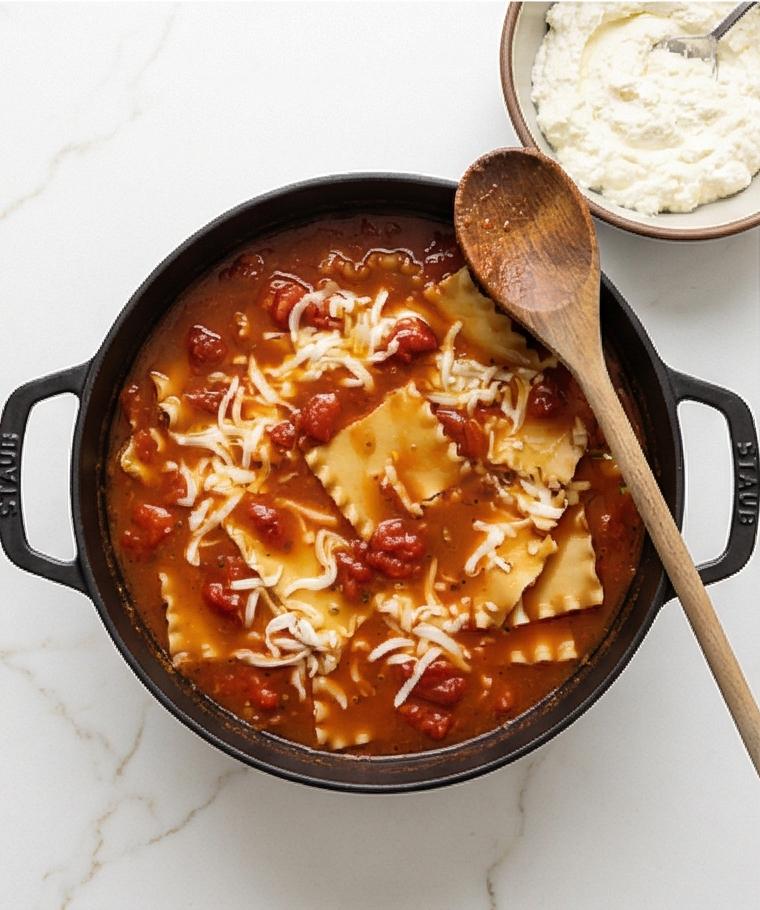
Bring the broth back up to a livelier simmer and stir in the broken lasagna noodle pieces, making sure they’re fully submerged and separated. Simmer until just al dente: tender but with a slight firm center. The visual milestone is the transformation from dry, brittle noodle fragments to plump, pillowy pieces suspended in a thickened, stew-like tomato broth, their edges fraying slightly where they absorbed liquid.
Step 7: Whip the Ricotta Topping to a Lusciously Spoonable Texture
In a medium matte bowl, combine whole-milk ricotta, most of the shredded mozzarella, half the grated Parmesan, chopped parsley, sliced basil, and the remaining black pepper. If the mixture feels stiff, loosen it with a tablespoon or two of whole milk or cream until it is creamy and spoonable but still holds shape. The ideal texture is opaque, velvety, and slightly fluffy – a cool, creamy contrast to the steaming tomato broth.
Step 8: Melt Cheese into the Soup and Final Seasoning Check
Remove and discard the bay leaf, then stir the remaining shredded mozzarella and grated Parmesan directly into the hot soup until just melted, creating a slightly creamy body. Taste and finish with any final salt and pepper adjustments. The pot now reads as a cohesive, cheese-laced tomato stew with ribboned melted cheese threads and a glossy, richly seasoned surface.
Step 9: Ladle, Dollop, Garnish, and Serve
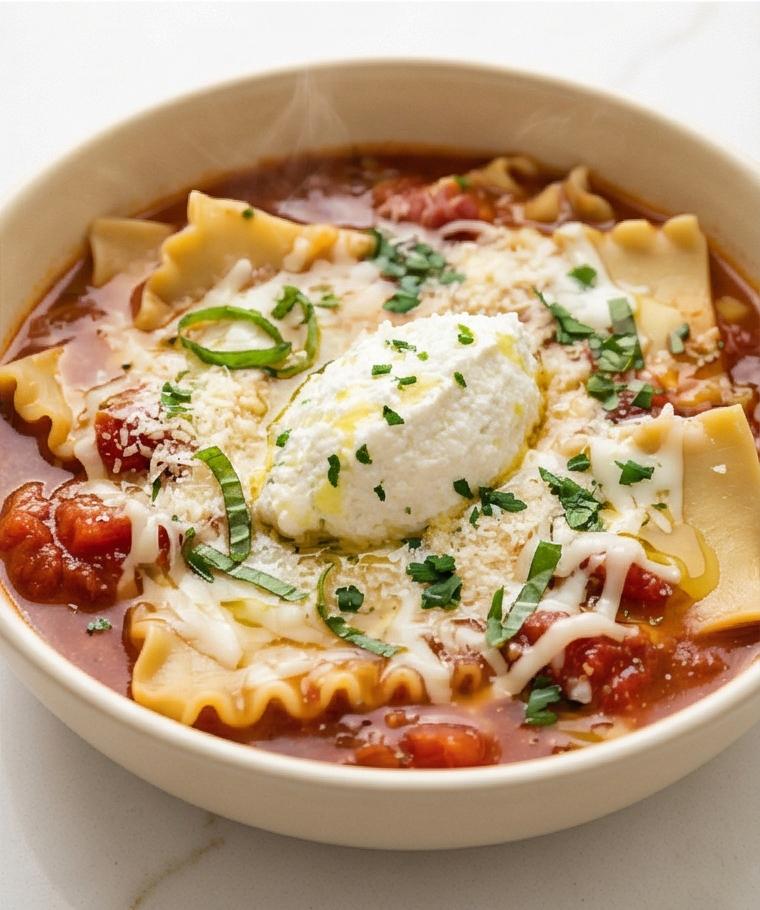
Ladle the hot lasagna soup into warm shallow bowls. Add a generous 2-3 tablespoon dollop of the ricotta mixture to the center of each bowl so it gently softens but keeps its shape. Finish with a sprinkle of extra grated Parmesan, a few fresh basil ribbons and chopped parsley, and a light drizzle of extra-virgin olive oil. Serve immediately with crusty bread alongside.
Making It Your Own
I love testing variations on the Lasagna Soup Recipe and treating each tweak like a mini experiment. For a vegetarian take, replace the meats with a mix of mushrooms and a plant-based sausage; the umami keeps the broth rich. For a lighter weeknight bowl, swap half the ricotta for plain Greek yogurt at service.
For seasonal spins, stir in roasted winter squash in late fall or a handful of fresh spring peas when they arrive – they add sweetness and texture. Regionally, try adding Italian sausage seasoned with fennel for a northern Italian vibe or a pinch of smoked paprika for a more rustic, smoky note.
How to Serve
When I serve this at a casual dinner, I ladle the soup into warm shallow bowls, place a generous spoonful of the ricotta mixture in the center, and pass extra Parmesan at the table. For a family-style meal, keep the pot on low and let guests assemble their bowls; it cuts down on plating time and feels convivial.
To scale up, double the liquids and proteins but keep the ratio of noodles steady so it never becomes gluey. For a dinner party, offer crusty bread, a simple green salad, and a small antipasto platter to start. A drizzle of high-quality extra-virgin olive oil and a few basil leaves make the presentation feel finished.
Storage and Reheating Tips
Cool leftover Lasagna Soup Recipe quickly by transferring to shallow airtight containers and refrigerating within two hours. It will keep well for 3 to 4 days. Noodles will continue to soften as the soup sits, so expect a slightly different texture on day two.
To reheat, warm gently on the stovetop over low to medium heat, adding a splash of water or broth to loosen the consistency and coax the noodles back toward their original texture. If freezing, freeze before adding the ricotta topping; thaw overnight in the refrigerator and reheat slowly.
Common Mistakes and How to Avoid Them
A common misstep is rushing the browning stage – not taking the time to caramelize the meat robs the broth of depth. Take patience and a hot pan, and don’t overcrowd the pot.
Another trap is overcooking the noodles. Add them later in the process and aim for just al dente, as they will absorb more liquid as the soup sits. Adjust salt at the end since cheeses and broth can contribute saltiness.
Final Warm Invite
If you try this Lasagna Soup Recipe, treat it like a ritual: warm bowls, good bread, and a little time to savor. It rewards small attentions and welcomes improvisation, so don’t be afraid to make it your own and then share it with someone who appreciates a cozy bowl.
Frequently Asked Questions.
- Can I make the Lasagna Soup Recipe vegetarian? Yes – swap the meats for a mix of mushrooms, lentils, or a plant-based sausage and use vegetable broth.
- How do I prevent the noodles from getting mushy? Add broken lasagna noodles toward the end of cooking and simmer just until al dente. If planning leftovers, slightly undercook them.
- Can I prepare this ahead for a dinner party? You can cook the base and refrigerate, but add noodles and ricotta topping just before serving for best texture.
- Is there a gluten-free option for the Lasagna Soup Recipe? Yes – use gluten-free lasagna noodles and check that your broth and other ingredients are labeled gluten-free.
- Can I freeze the soup? Freeze the soup without the ricotta topping in airtight containers. Thaw overnight and reheat slowly on the stove, then add fresh ricotta when serving.
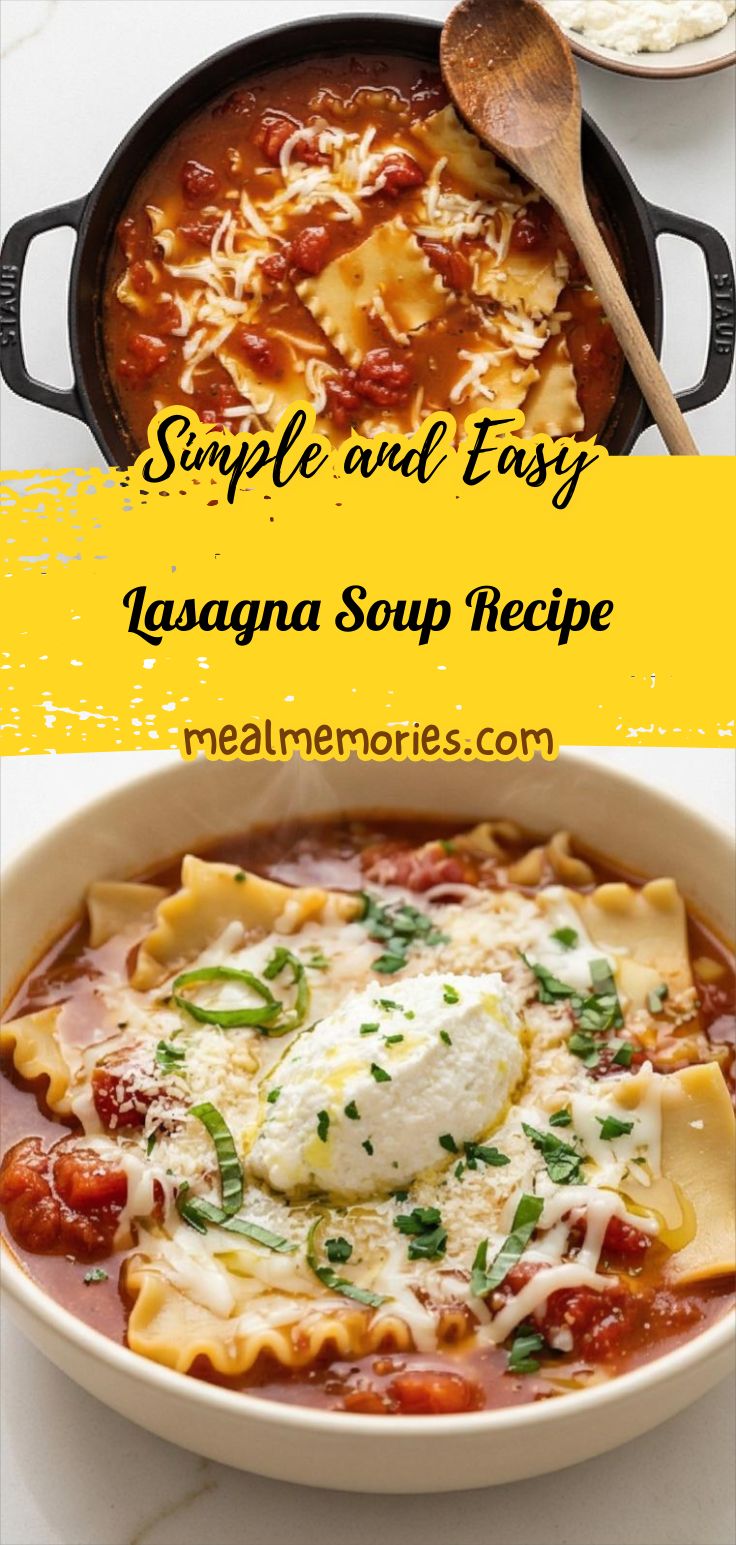
Lasagna Soup Recipe
Make Lasagna Soup Recipe for a comforting, quick lasagna in a bowl with melty cheese and a creamy ricotta dollop.
Ingredients
Instructions
Step 1: Chop, Break, and Stage
Finely chop the yellow onion, dice the carrot and celery into small, even pieces, and mince the garlic so the bits are tiny and aromatic. Break the dry lasagna noodles into 1–2 inch (2.5–5 cm) pieces and pile them gently to one side. Measure the crushed tomatoes, chicken broth, tomato paste, and the wine (if using) into clear glass jars or small pouring jugs; place oils, milk/cream, and the cheeses in small bowls or ramekins so all liquids are contained — nothing spills onto the surface. This mise en place reduces motion during cooking and keeps textures and colors organized and photo-ready.
Step 2: Brown the Meats to Deep Golden-Browned Crumbles
Add the crumbled Italian sausage and ground beef and brown them until the pieces are deeply caramelized with lots of small browned bits clinging to the meat — the flavor foundation. Season lightly with the initial pinch of kosher salt and black pepper and, if excess fat pools, imagine leaving a single tablespoon to carry flavor. The visual cue here is rich mahogany crusting on irregular meat crumbles, small glossy pools of rendered fat, and the wooden spoon used to break the meat resting on the rim of the cooking vessel.
Step 3: Soften the Mirepoix and Bloom the Tomato Paste
Mix the chopped onion, carrot and celery into the browned meat so the vegetables become soft and the onion turns translucent. Stir in minced garlic and a concentrated smear of tomato paste; cook until the paste deepens in color and becomes glossy, clinging to the vegetables and meat. Visually you’ll see softened, warm-orange carrot, translucent onion ribbons, and streaks of darkened tomato paste that indicate the beginning of a sweeter, deeper tomato flavor.
Step 4: Deglaze and Combine the Liquid Elements
Pour in the red wine if using and scrape up the fond so the bottom of the pot is clean of stuck bits. Add the crushed tomatoes, measured chicken broth and a cup of water, then fold in dried oregano, basil, thyme, crushed red pepper flakes (if using), the bay leaf, and the remaining measured salt and pepper. The pot should present a layered texture: chunked crushed tomato suspended in glossy broth, flecks of dried herbs floating, and a bay leaf drifting near the surface — everything clearly combined and ready to soften and meld.
Step 5: Simmer Until Flavors Meld and the Broth Thickens Slightly
Bring the mixture to a gentle simmer, then reduce heat to maintain a slow, steady bubble. Let the soup cook so flavors marry and the broth takes on a slightly thicker body — reduced, tomato-forward, and fragrant. Taste and adjust seasoning; the surface should show tiny translucent fat beads and a concentrated, glossy tomato sheen with aromatic herb flecks throughout.
Step 6: Cook the Broken Lasagna Noodles Directly in the Soup
Bring the broth back up to a livelier simmer and stir in the broken lasagna noodle pieces, making sure they’re fully submerged and separated. Simmer until just al dente: tender but with a slight firm center. The visual milestone is the transformation from dry, brittle noodle fragments to plump, pillowy pieces suspended in a thickened, stew-like tomato broth, their edges fraying slightly where they absorbed liquid.
Step 7: Whip the Ricotta Topping to a Lusciously Spoonable Texture
In a medium matte bowl, combine whole-milk ricotta, most of the shredded mozzarella, half the grated Parmesan, chopped parsley, sliced basil, and the remaining black pepper. If the mixture feels stiff, loosen it with a tablespoon or two of whole milk or cream until it is creamy and spoonable but still holds shape. The ideal texture is opaque, velvety, and slightly fluffy — a cool, creamy contrast to the steaming tomato broth.
Step 8: Melt Cheese into the Soup and Final Seasoning Check
Remove and discard the bay leaf, then stir the remaining shredded mozzarella and grated Parmesan directly into the hot soup until just melted, creating a slightly creamy body. Taste and finish with any final salt and pepper adjustments. The pot now reads as a cohesive, cheese-laced tomato stew with ribboned melted cheese threads and a glossy, richly seasoned surface.
Step 9: Ladle, Dollop, Garnish, and Serve
Ladle the hot lasagna soup into warm shallow bowls. Add a generous 2–3 tablespoon dollop of the ricotta mixture to the center of each bowl so it gently softens but keeps its shape. Finish with a sprinkle of extra grated Parmesan, a few fresh basil ribbons and chopped parsley, and a light drizzle of extra-virgin olive oil. Serve immediately with crusty bread alongside.
Notes
- Cool leftovers quickly and refrigerate within two hours.
- Reheat gently on the stove with a splash of broth or water to loosen.
- Freeze without the ricotta topping and add fresh ricotta when serving.
- Slightly undercook noodles if you plan to store or reheat the soup.
- Adjust salt at the end because broth and cheeses add saltiness.