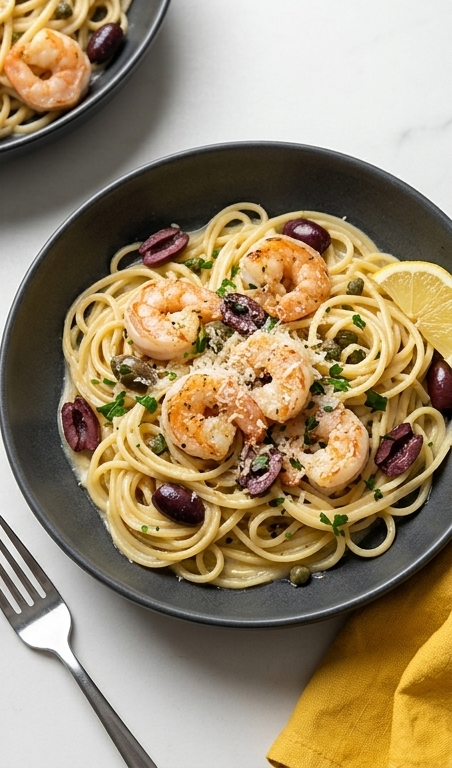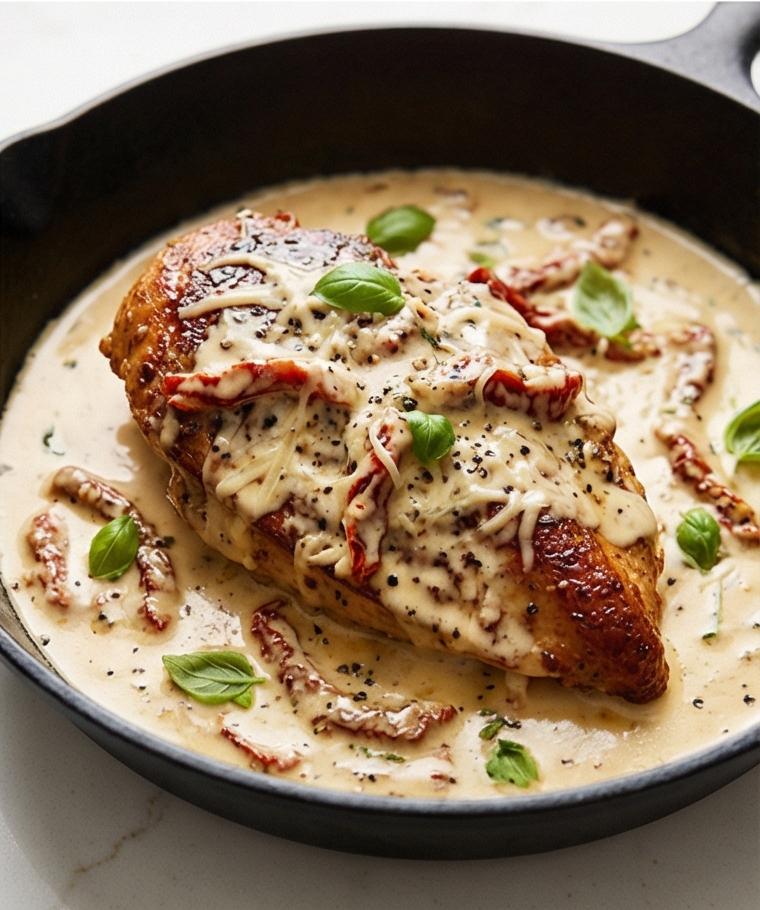
Shrimp Scampi Recipe has been my go-to weeknight shortcut for years, and I still get a little thrill when those buttery, garlicky aromas fill the kitchen. I first learned this version from a friend who insisted on keeping the butter cubes cold for the glossy sauce, and that tiny trick changed everything. Quick, elegant, and forgiving, this Shrimp Scampi Recipe turns a humble pound of shrimp into something that feels special. If you love bright lemon notes, toasted garlic, and a sauce that clings to pasta or crusty bread, you are in the right place.
How This Dish Found Its Way to My Table
One rainy evening I was racing the clock to get dinner on the table after work and pulled a bag of shrimp from the freezer. I had a lemon, some garlic, and a stubborn craving for comfort that did not include heavy prep. The first time I tried this Shrimp Scampi Recipe, I remember the tiny sizzle as the shrimp hit the hot pan and how the kitchen filled with the scent of garlic and citrus. I kept the butter cubes in the fridge until the last second, watching them melt into a glossy emulsion that felt almost magical. Plating it over thin spaghetti with a squeeze of lemon, I felt proud that something so effortless could impress everyone at the table. That memory is tactile: cold butter, warm pasta steam, a bright sprinkle of parsley and the pleasant sound of contented silence as forks found the bowl.
Main Ingredients and Why They Matter
- Shrimp: The star of the Shrimp Scampi Recipe. Choose large, raw shrimp with shells removed but tails on if you like presentation. If fresh is not available, thaw frozen shrimp gently and pat very dry. For substitutes, scallops or firm white fish can work.
- Extra-virgin olive oil: Prevents sticking and adds a fruity backbone. Use a neutral oil if you want a cleaner butter flavor.
- Unsalted butter: Provides the rich, silky sauce. Keep it cold and cut into cubes for emulsification. Ghee or clarified butter give a nuttier note.
- Garlic: Brightens and flavors the sauce. Use fresh finely minced garlic; roasted garlic will be sweeter.
- Dry white wine: Deglazes and adds acidity. Use low-sodium chicken broth if you avoid alcohol.
- Lemon juice and zest: Give essential brightness. Always zest before juicing to capture the oils.
- Parsley and seasonings: Fresh parsley lifts the dish; sea salt and black pepper are essential. Red pepper flakes are optional for heat.
Essential Kitchen Tools and Why They Help
A few good tools make this Shrimp Scampi Recipe faster and more consistent. You do not need a fancy setup, just reliable items used well.
- Heavy skillet (10 to 12-inch): Holds even heat for a quick sear; cast iron or stainless steel both work.
- Tongs or a spatula: For turning shrimp gently without tearing them.
- Sharp knife and cutting board: For finely mincing garlic and zesting lemon.
- Small bowls for mise en place: Keeps butter, garlic, wine, and lemon ready so the sauce comes together fast.
- Measuring spoons and cups: Precision matters for acid and seasoning balance.
If you do not have a heavy skillet, use a wide nonstick pan to avoid sticking. No tongs? Use a fork and a spoon together as a tweezer substitute.
Step-by-Step Preparation Guide
Step 1: Pat, season, and mise en place
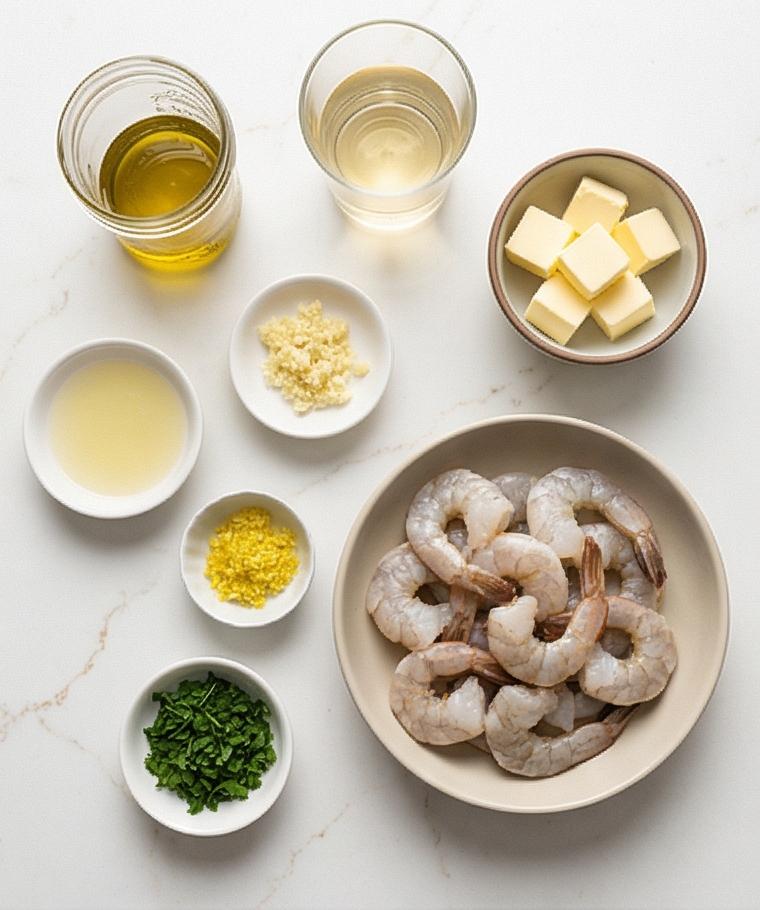
Start by patting the shrimp very dry on paper towels so they will sear instead of steam. Place the shrimp in a shallow bowl and season with the fine sea salt and freshly ground black pepper, letting the light dusting sit for a minute while you assemble the aromatics. In small glass and ceramic vessels arrange the minced garlic, cold butter cut into small cubes, chopped flat-leaf parsley, a small glass of dry white wine, a tiny dish with lemon juice and a dish with lemon zest, and an optional pinch of crushed red pepper flakes. Keep the butter chilled — the cold cubes are crucial for a glossy, emulsified sauce later. This step is about texture and readiness: very dry, neatly portioned, and visually organized so every element is visible and contained.
Step 2: Sear the shrimp to a pinpoint doneness
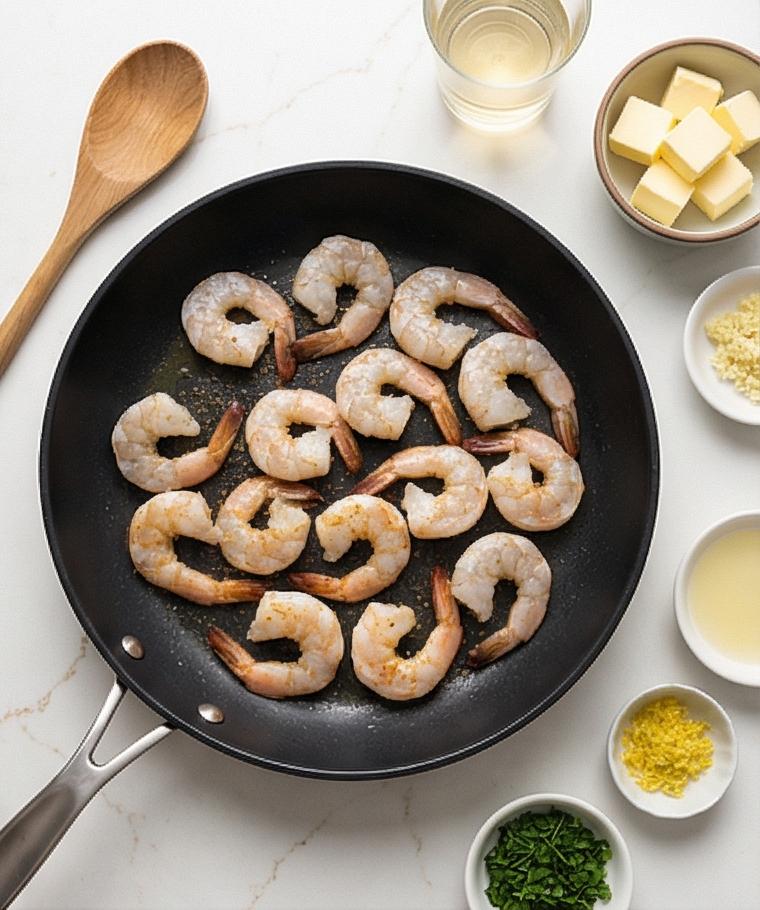
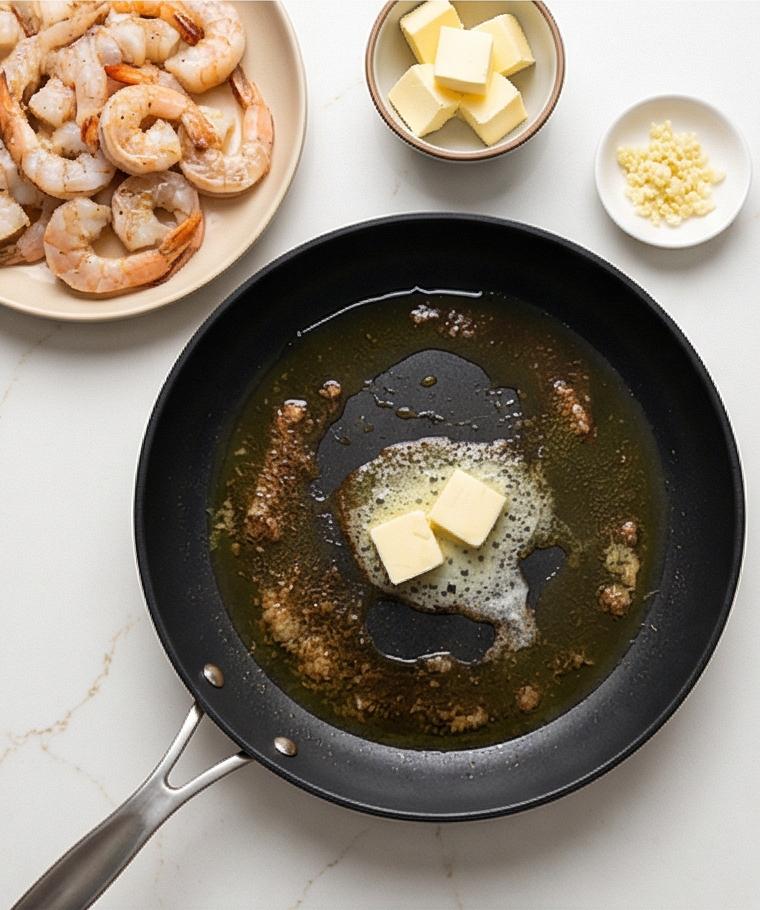
Heat the pre-oiled heavy skillet until the oil shimmers (you won’t show the stove — just the result). Arrange the seasoned shrimp in a single layer in the same matte 12-inch black skillet used throughout the cooking panels; the shrimp should be spaced, slightly braced against each other, and their undersides just turning from translucent gray to a pale opaque white with a faint pink rim. The surface shows tiny golden sear lines and a few droplets of rendered juices collecting at the edges — slightly glossy but not wet. This image captures the decisive moment when shrimp have developed surface tension and caramelization but remain a touch underdone in the centers.
Step 3: Rested shrimp and the foaming butter garlic base
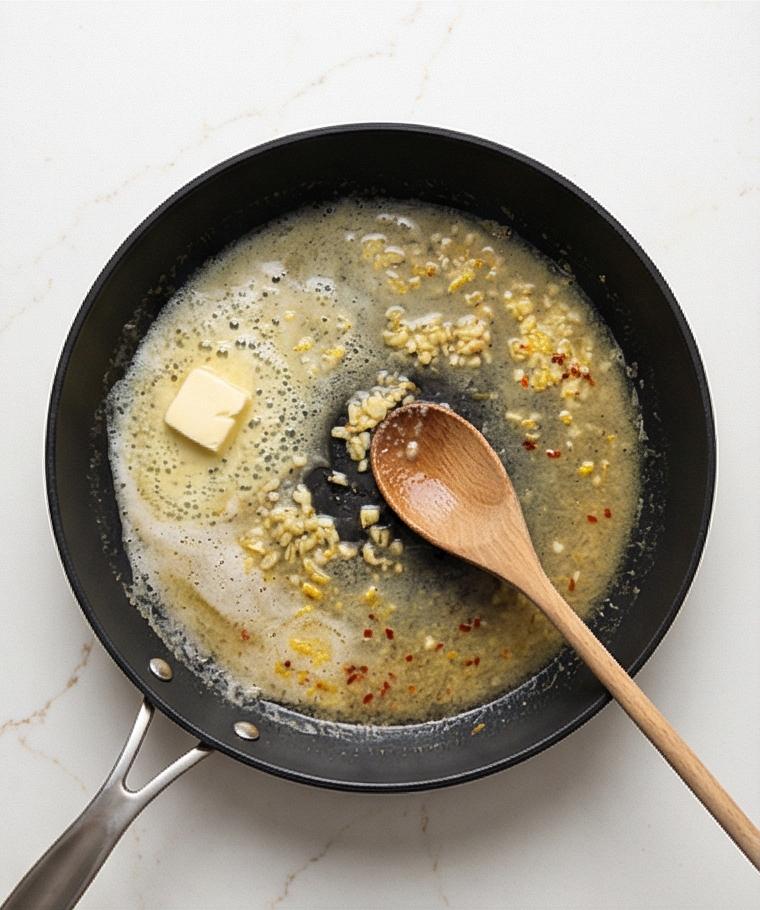
Transfer the partially cooked shrimp and their juices to a warm plate (still visible on the marble surface). Reduce the imagined heat and return the skillet to the surface composition — now containing a few glossy brown fond flecks and a pool of shimmering oil. Add cold butter cubes to the hot pan surface; as they melt they foam and create a pale buttery emulsion. Scatter the finely minced garlic and optional red pepper flakes into the melting butter; the garlic sits soft and pale, edges barely tinting a warm cream color. A wooden spoon rests across the skillet rim, slightly glossy with butter, indicating an active tool but no hands in frame.
Step 4: Wine reduction and sauce emulsification
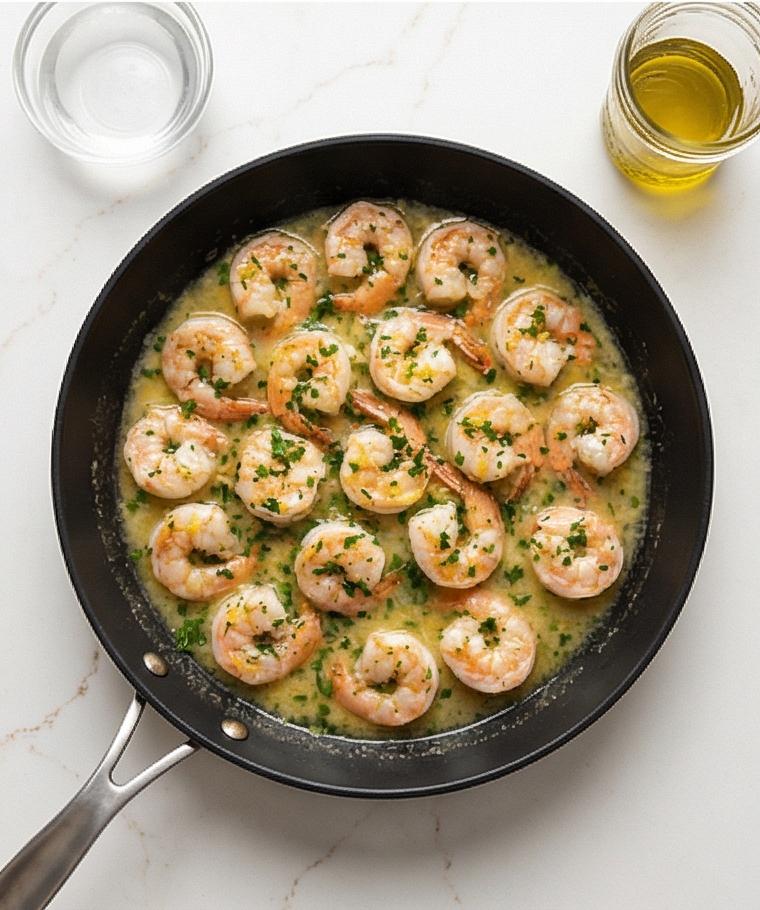
Pour the white wine into the skillet vessel to deglaze — the liquid sits clear in a small glass pitcher in Panel 1 but here it becomes a shallow simmer puddle lifting the browned bits into the liquid. The wine is reduced to a concentrated, aromatic syrupy swirl; then additional cold butter cubes and lemon juice and zest are whisked in off-heat to form a glossy lemon-butter sauce. The sauce appears slightly thickened and homogenous: satin sheen, tiny suspended lemon zest flecks, and a few glossy beads of emulsified butter. A small bowl with hot water sits nearby to show optional loosening of the sauce if needed.
Step 5: Finish, toss, and plate
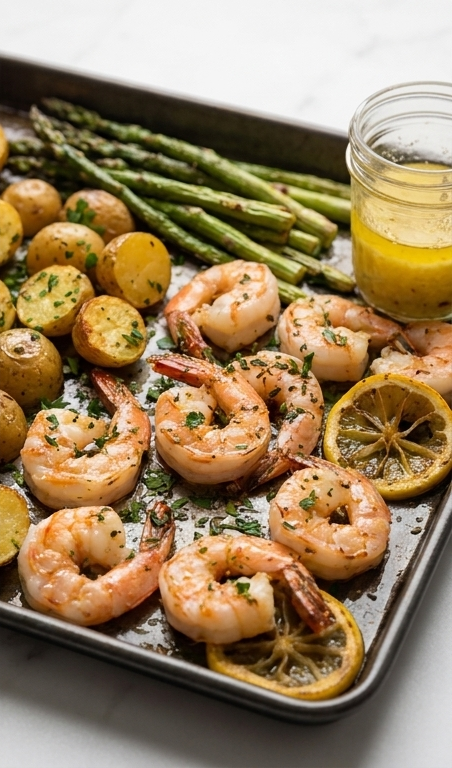
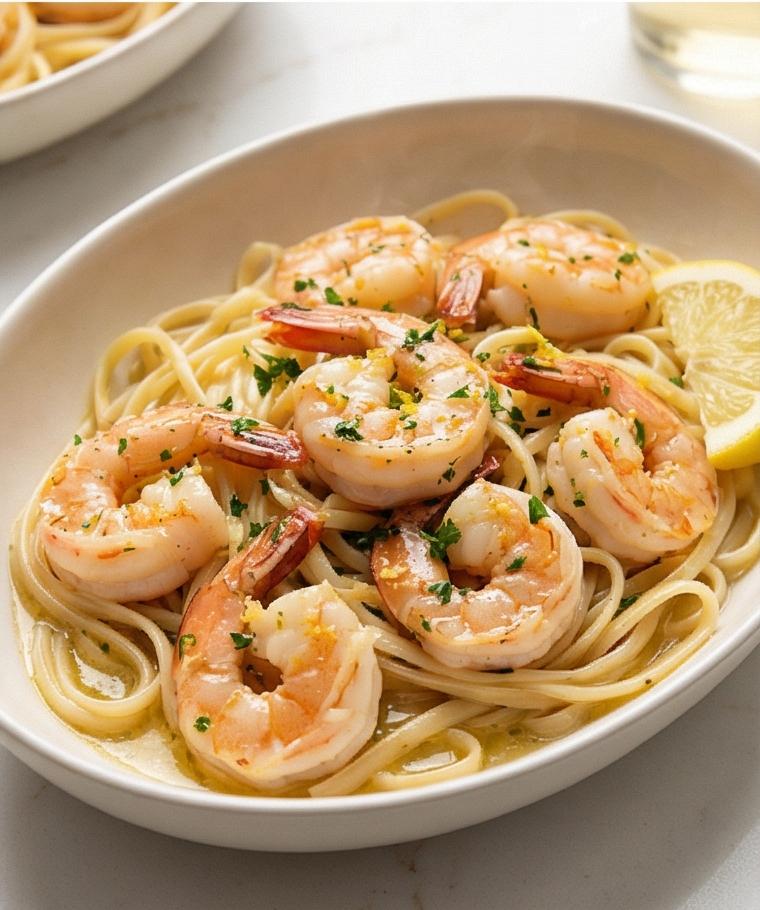
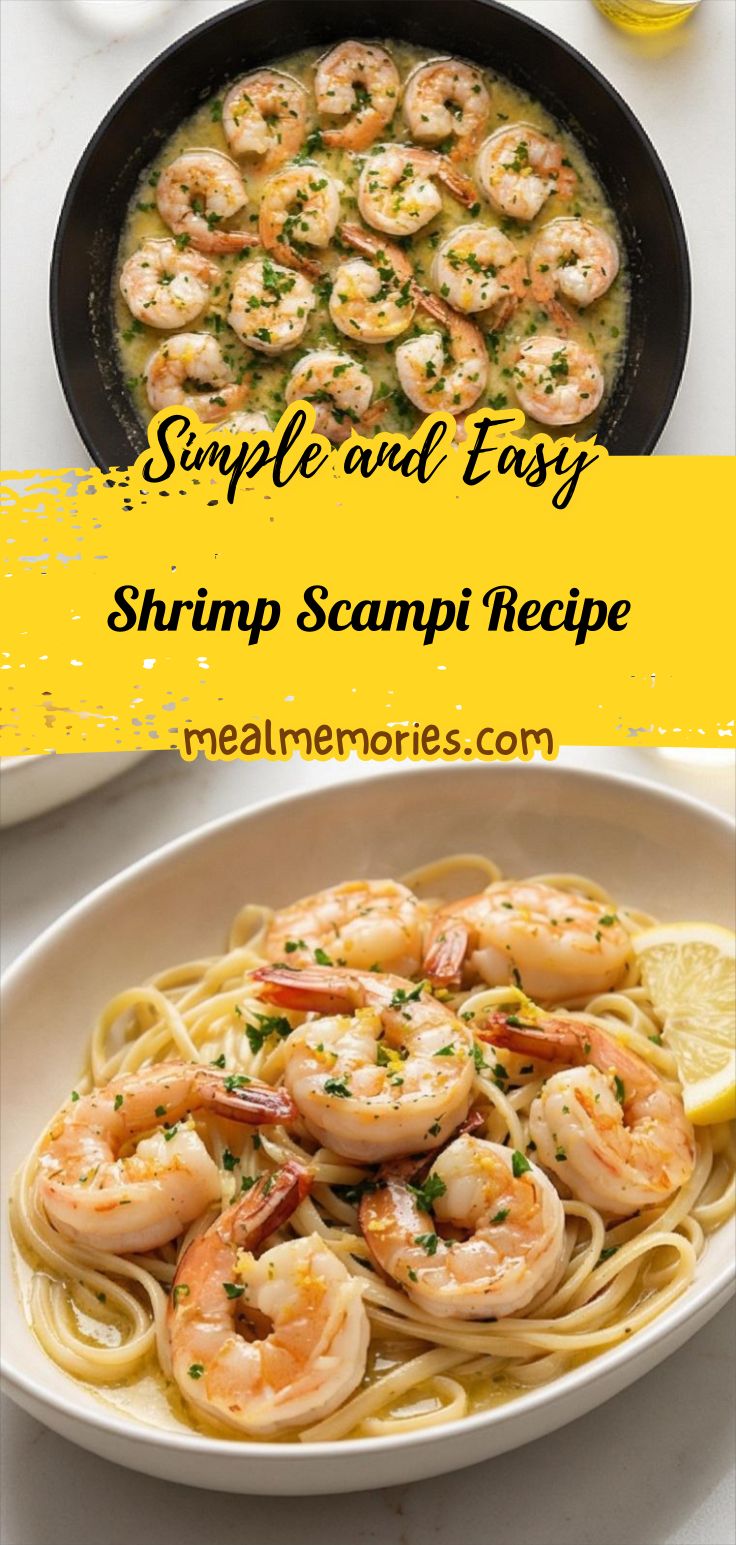
Return the shrimp and their juices to the skillet, turning them gently so they are uniformly coated in the silky lemon-butter emulsion; cook just until opaque, curled, and tender. Stir in chopped parsley and taste-adjust with a last squeeze of lemon or a pinch more salt if needed. Transfer the sauced shrimp and plenty of the glossy garlic-lemon sauce to a warm shallow oval pasta bowl; garnish with extra parsley and a lemon wedge. The final plate presents bright pink shrimp, glossy sauce clinging to noodles (or resting atop the shrimp if served simply), flecks of parsley and lemon zest, and a moist sheen that invites dipping.
Making It Your Own
I treat the Shrimp Scampi Recipe like a template I can tweak depending on the season or pantry. In colder months I sometimes swap half the wine for a splash of chicken broth and finish with a tablespoon of cream for comfort. For a lighter summer take, I use less butter and finish with extra lemon zest and an herb mix of basil and parsley. If you need a gluten-free plate, serve it over rice or zucchini noodles. For a spicy regional twist, stir in a spoonful of harissa or use smoked paprika and swap parsley for cilantro. Each small change keeps the heart of the recipe intact but gives it a fresh personality.
How to Serve and Present
When hosting, I like to serve this Shrimp Scampi Recipe family style: a wide shallow bowl of sauced shrimp in the center, a platter of al dente pasta or crusty bread on the side, and lemon wedges for guests to squeeze. For a plated dinner, serve over a nest of long pasta tossed with a touch of olive oil and reserved sauce, then arrange shrimp on top so the tails peek out for visual interest.
Scale easily by multiplying the shrimp and keeping the pan work in batches so you do not overcrowd. For a dinner party of eight, cook in two pans or in two batches, then combine the finished shrimp with warm sauce just before serving.
Storage and Reheating Tips
Leftover shrimp scampi keeps best when stored in an airtight container in the refrigerator for up to 2 days. Refrigerate the shrimp and sauce together so the flavors remain married, but expect the texture of the shrimp to soften with time.
To reheat, warm gently in a skillet over low heat with a splash of hot water or reserved pasta water to loosen the sauce. Avoid microwaving for best texture. If serving over pasta, reheat the noodles separately and combine quickly with the warmed sauce and shrimp just before serving.
Common Mistakes and How to Avoid Them
Overcooking the shrimp is the most common slip. Shrimp go from tender to rubbery quickly, so watch for the opaque color and a gentle curl; remove them from heat as soon as they are just done. Resting them briefly off the heat preserves texture.
Another mistake is letting warm butter break the sauce. Keep extra butter cold and whisk in off heat to emulsify for a glossy finish. Also, do not overcrowd the pan when searing, or the shrimp will steam instead of sear.
Final Thoughts and Invitation
This Shrimp Scampi Recipe is proof that a handful of thoughtful techniques can elevate a simple ingredient into a memorable meal. Try it this week, and play with the small variations until you find the version that feels like yours. I know you will love how quickly it comes together and how impressive it tastes.
Frequently Asked Questions.
- Q: Can I use frozen shrimp for this Shrimp Scampi Recipe? A: Yes, just thaw shrimp slowly in the refrigerator or under cold running water and pat them very dry before cooking.
- Q: What can I substitute for white wine? A: Low-sodium chicken broth or a light vegetable broth works well if you prefer to skip alcohol.
- Q: How do I keep the sauce glossy and emulsified? A: Keep the butter cold, add it off heat in small cubes, and whisk steadily to form a silky emulsion.
- Q: Can I make Shrimp Scampi Recipe ahead of time? A: You can prep ingredients in advance, but cook the shrimp at the last minute for best texture; store sauce and shrimp separately if needed.
- Q: Is Shrimp Scampi Recipe suitable for a gluten-free meal? A: Yes, serve with rice, polenta, or gluten-free pasta to keep it gluten-free.
Shrimp Scampi Recipe
Make Shrimp Scampi Recipe now: seared shrimp in a glossy lemon-butter garlic sauce, ready in about 20 minutes.
Ingredients
Instructions
Step 1: Pat, season, and mise en place
Start by patting the shrimp very dry on paper towels so they will sear instead of steam. Place the shrimp in a shallow bowl and season with the fine sea salt and freshly ground black pepper, letting the light dusting sit for a minute while you assemble the aromatics. In small glass and ceramic vessels arrange the minced garlic, cold butter cut into small cubes, chopped flat-leaf parsley, a small glass of dry white wine, a tiny dish with lemon juice and a dish with lemon zest, and an optional pinch of crushed red pepper flakes. Keep the butter chilled — the cold cubes are crucial for a glossy, emulsified sauce later. This step is about texture and readiness: very dry, neatly portioned, and visually organized so every element is visible and contained.
Step 2: Sear the shrimp to a pinpoint doneness
Heat the pre-oiled heavy skillet until the oil shimmers (you won’t show the stove — just the result). Arrange the seasoned shrimp in a single layer in the same matte 12-inch black skillet used throughout the cooking panels; the shrimp should be spaced, slightly braced against each other, and their undersides just turning from translucent gray to a pale opaque white with a faint pink rim. The surface shows tiny golden sear lines and a few droplets of rendered juices collecting at the edges — slightly glossy but not wet. This image captures the decisive moment when shrimp have developed surface tension and caramelization but remain a touch underdone in the centers.
Step 3: Rested shrimp and the foaming butter garlic base
Transfer the partially cooked shrimp and their juices to a warm plate (still visible on the marble surface). Reduce the imagined heat and return the skillet to the surface composition — now containing a few glossy brown fond flecks and a pool of shimmering oil. Add cold butter cubes to the hot pan surface; as they melt they foam and create a pale buttery emulsion. Scatter the finely minced garlic and optional red pepper flakes into the melting butter; the garlic sits soft and pale, edges barely tinting a warm cream color. A wooden spoon rests across the skillet rim, slightly glossy with butter, indicating an active tool but no hands in frame.
Step 4: Wine reduction and sauce emulsification
Pour the white wine into the skillet vessel to deglaze — the liquid sits clear in a small glass pitcher in Panel 1 but here it becomes a shallow simmer puddle lifting the browned bits into the liquid. The wine is reduced to a concentrated, aromatic syrupy swirl; then additional cold butter cubes and lemon juice and zest are whisked in off-heat to form a glossy lemon-butter sauce. The sauce appears slightly thickened and homogenous: satin sheen, tiny suspended lemon zest flecks, and a few glossy beads of emulsified butter. A small bowl with hot water sits nearby to show optional loosening of the sauce if needed.
Step 5: Finish, toss, and plate
Return the shrimp and their juices to the skillet, turning them gently so they are uniformly coated in the silky lemon-butter emulsion; cook just until opaque, curled, and tender. Stir in chopped parsley and taste-adjust with a last squeeze of lemon or a pinch more salt if needed. Transfer the sauced shrimp and plenty of the glossy garlic-lemon sauce to a warm shallow oval pasta bowl; garnish with extra parsley and a lemon wedge. The final plate presents bright pink shrimp, glossy sauce clinging to noodles (or resting atop the shrimp if served simply), flecks of parsley and lemon zest, and a moist sheen that invites dipping.
Notes
- Pat shrimp very dry to ensure a good sear and avoid steaming.
- Keep butter cold and add in small cubes off heat for a glossy emulsion.
- Do not overcrowd the pan; cook shrimp in batches if needed.
- Use reserved pasta water to loosen or bind the sauce if it becomes too thick.
- Reheat gently in a skillet with a splash of hot water to preserve texture.
- Substitute low-sodium chicken broth for wine if avoiding alcohol.