Shrimp Scampi Recipe
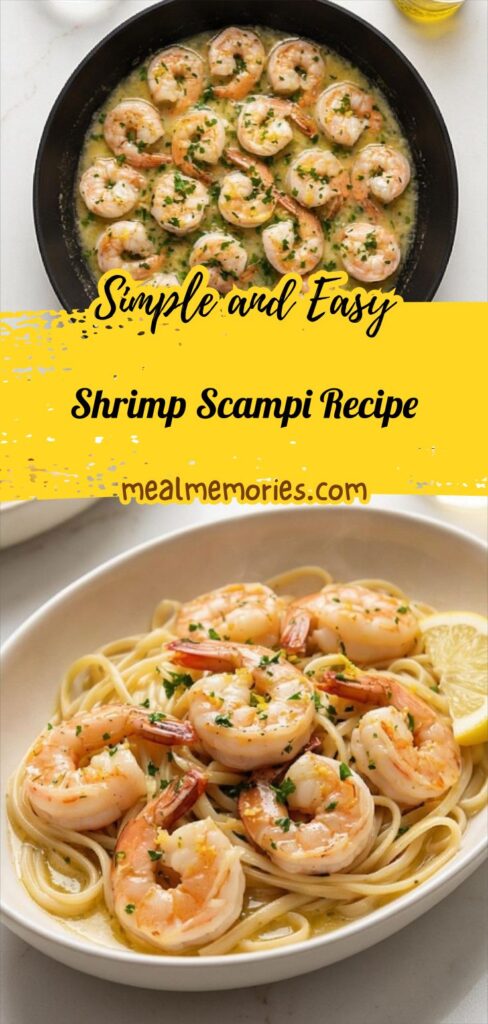
Make Shrimp Scampi Recipe now: seared shrimp in a glossy lemon-butter garlic sauce, ready in about 20 minutes.
Ingredients
- 1 pound (450 g) large raw shrimp, 16–20 count, peeled and deveined, tails left on, patted very dry with paper towels
- 1/2 teaspoon fine sea salt, divided
- 1/4 teaspoon freshly ground black pepper
- 1/4 teaspoon crushed red pepper flakes (optional, for heat)
- 2 tablespoons (30 ml) extra-virgin olive oil
- 4 tablespoons (56 g) unsalted butter, cut into small pieces and kept cold, divided
- 4 large garlic cloves (about 16 g), finely minced
- 1/4 cup (60 ml) dry white wine, such as Sauvignon Blanc or Pinot Grigio (or low-sodium chicken broth)
- 1 tablespoon (15 ml) freshly squeezed lemon juice, plus more to taste
- 1 teaspoon finely grated lemon zest (from 1 medium lemon)
- 2 tablespoons (8 g) fresh flat-leaf parsley, finely chopped, plus extra for garnish
- 2–4 tablespoons (30–60 ml) hot water or hot pasta cooking water, as needed to adjust sauce consistency (optional)
- Lemon wedges, for serving (optional)
- Cooked pasta, crusty bread, or steamed white rice, for serving (optional)
Instructions
Step 1: Pat, season, and mise en place
Start by patting the shrimp very dry on paper towels so they will sear instead of steam. Place the shrimp in a shallow bowl and season with the fine sea salt and freshly ground black pepper, letting the light dusting sit for a minute while you assemble the aromatics. In small glass and ceramic vessels arrange the minced garlic, cold butter cut into small cubes, chopped flat-leaf parsley, a small glass of dry white wine, a tiny dish with lemon juice and a dish with lemon zest, and an optional pinch of crushed red pepper flakes. Keep the butter chilled — the cold cubes are crucial for a glossy, emulsified sauce later. This step is about texture and readiness: very dry, neatly portioned, and visually organized so every element is visible and contained.
Step 2: Sear the shrimp to a pinpoint doneness
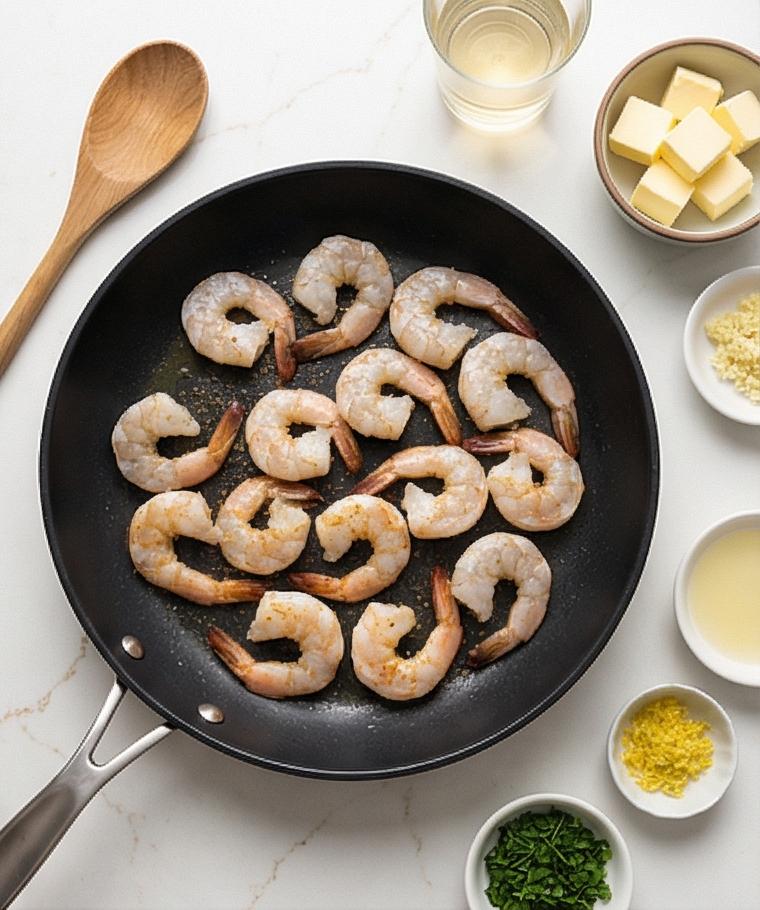
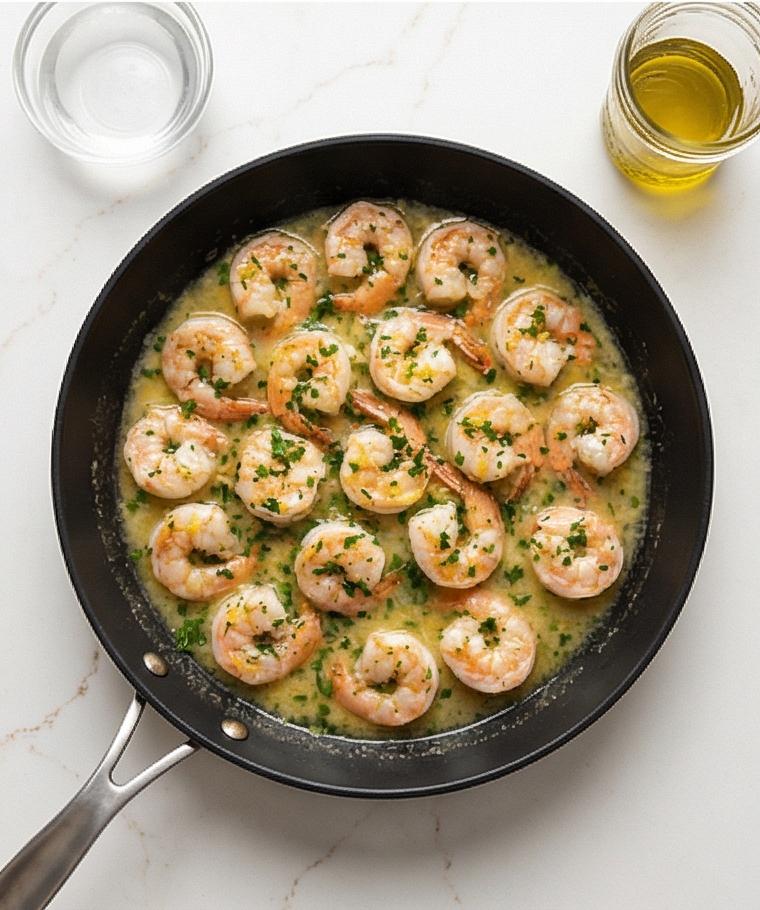
Heat the pre-oiled heavy skillet until the oil shimmers (you won’t show the stove — just the result). Arrange the seasoned shrimp in a single layer in the same matte 12-inch black skillet used throughout the cooking panels; the shrimp should be spaced, slightly braced against each other, and their undersides just turning from translucent gray to a pale opaque white with a faint pink rim. The surface shows tiny golden sear lines and a few droplets of rendered juices collecting at the edges — slightly glossy but not wet. This image captures the decisive moment when shrimp have developed surface tension and caramelization but remain a touch underdone in the centers.
Step 3: Rested shrimp and the foaming butter garlic base
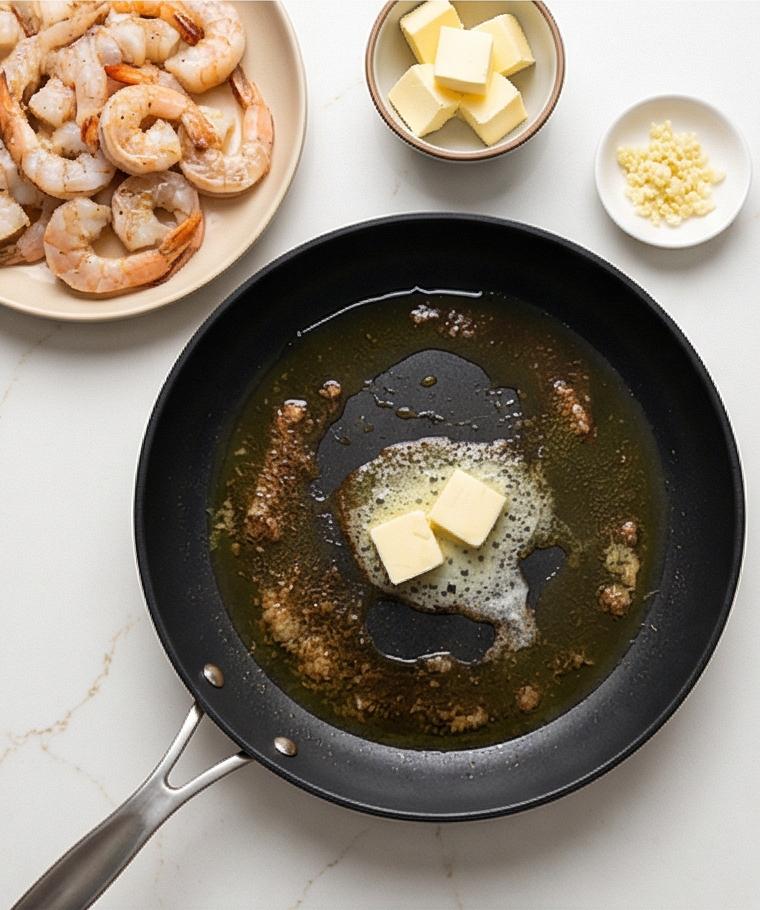
Transfer the partially cooked shrimp and their juices to a warm plate (still visible on the marble surface). Reduce the imagined heat and return the skillet to the surface composition — now containing a few glossy brown fond flecks and a pool of shimmering oil. Add cold butter cubes to the hot pan surface; as they melt they foam and create a pale buttery emulsion. Scatter the finely minced garlic and optional red pepper flakes into the melting butter; the garlic sits soft and pale, edges barely tinting a warm cream color. A wooden spoon rests across the skillet rim, slightly glossy with butter, indicating an active tool but no hands in frame.
Step 4: Wine reduction and sauce emulsification
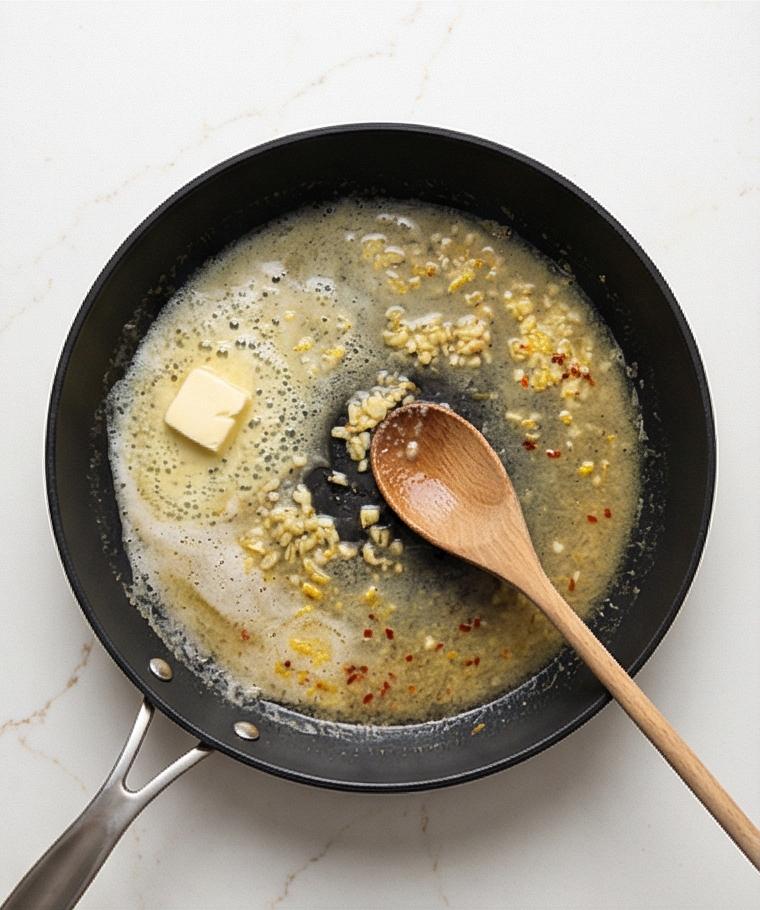
Pour the white wine into the skillet vessel to deglaze — the liquid sits clear in a small glass pitcher in Panel 1 but here it becomes a shallow simmer puddle lifting the browned bits into the liquid. The wine is reduced to a concentrated, aromatic syrupy swirl; then additional cold butter cubes and lemon juice and zest are whisked in off-heat to form a glossy lemon-butter sauce. The sauce appears slightly thickened and homogenous: satin sheen, tiny suspended lemon zest flecks, and a few glossy beads of emulsified butter. A small bowl with hot water sits nearby to show optional loosening of the sauce if needed.
Step 5: Finish, toss, and plate
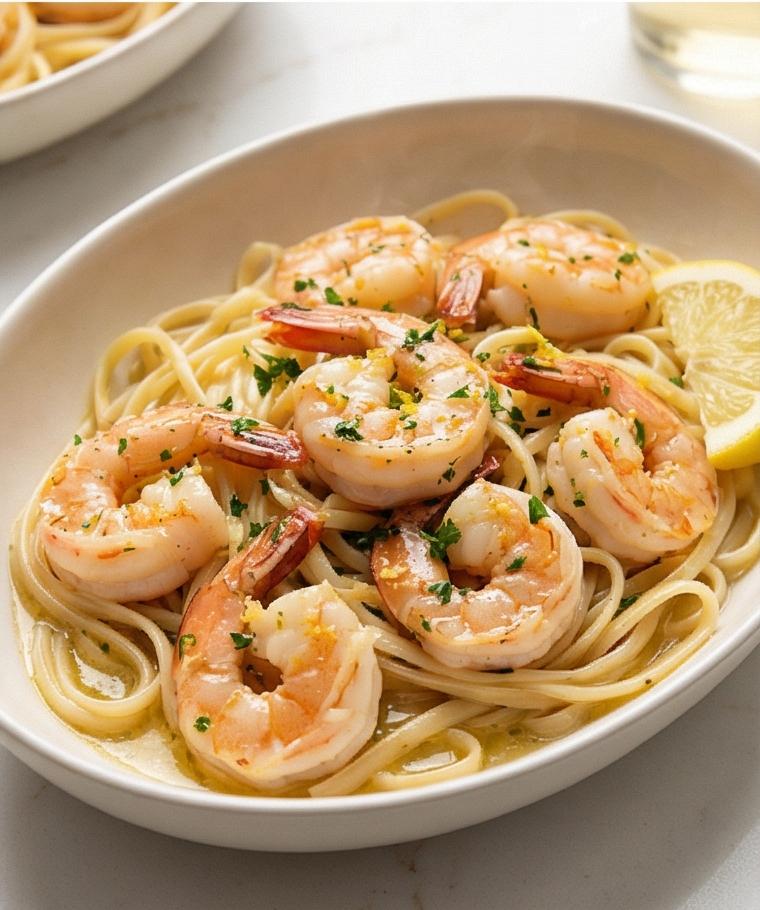
Return the shrimp and their juices to the skillet, turning them gently so they are uniformly coated in the silky lemon-butter emulsion; cook just until opaque, curled, and tender. Stir in chopped parsley and taste-adjust with a last squeeze of lemon or a pinch more salt if needed. Transfer the sauced shrimp and plenty of the glossy garlic-lemon sauce to a warm shallow oval pasta bowl; garnish with extra parsley and a lemon wedge. The final plate presents bright pink shrimp, glossy sauce clinging to noodles (or resting atop the shrimp if served simply), flecks of parsley and lemon zest, and a moist sheen that invites dipping.
Notes
- Pat shrimp very dry to ensure a good sear and avoid steaming.
- Keep butter cold and add in small cubes off heat for a glossy emulsion.
- Do not overcrowd the pan; cook shrimp in batches if needed.
- Use reserved pasta water to loosen or bind the sauce if it becomes too thick.
- Reheat gently in a skillet with a splash of hot water to preserve texture.
- Substitute low-sodium chicken broth for wine if avoiding alcohol.