Lentil Soup Recipe: a bowl of comfort that I find myself making whenever I want something both simple and deeply satisfying. This Lentil Soup Recipe is the kind of meal that bridges busy weeknights and slow, chatty weekends; it sings with bright lemon and earthy spices while staying humble and nourishing. I first learned the balance of tomato, cumin, and lentils in a tiny kitchen where the scent of simmering soup felt like home, and these flavors have stuck with me. If you want a hearty, healthy dish that scales easily, this Lentil Soup Recipe is a great place to start.
How This Recipe Became My Cozy-Weather Staple
The first time I made this soup it was raining hard and I was short on groceries; a jar of tomato paste, a bag of lentils, and a few odds and ends in the fridge turned into something surprisingly comforting. I remember the kitchen filling with warm, earthy smells while the windows fogged and I wrapped my hands around a steaming bowl. That night I learned to tune the salt and lemon carefully; the lemon brightens everything and made the whole pot sing. Over time I adjusted the spices, learned to partially purée for a silkier texture, and started keeping a jar of cooked lentils in the fridge so I could pull this together faster. Each time I serve it for friends they ask for the recipe, and it always comes back to that rainy evening as the origin.
Key Ingredients and What They Do
- Extra-virgin olive oil: Provides a flavor base and helps soften the vegetables; use avocado oil if you prefer a neutral taste.
- Yellow onion, carrots, celery: The aromatic trio that builds sweetness and body; choose firm, brightly colored vegetables.
- Garlic and tomato paste: Garlic adds savory depth, tomato paste gives umami and body; cook the paste until it darkens slightly for best flavor.
- Spices (cumin, coriander, smoked paprika, thyme, bay leaf): Create the soup’s warm, layered profile; substitute ground cumin with curry powder for a different twist.
- Brown or green lentils: The star protein and texture; pick small, whole lentils that are free of debris.
- Diced tomatoes, broth, lemon, parsley: Add acidity, liquid, and freshness; use low-sodium broth to control salt.
Essential Kitchen Tools and Why They Matter
A few simple tools make this Lentil Soup Recipe so much easier and more reliable; you do not need anything fancy, just the right basics. A heavy-bottomed pot prevents scorching and gives even heat; an immersion blender helps you achieve that perfect balance of creamy and whole lentils; and a good knife speeds up prep while keeping pieces uniform.
- Heavy-bottomed pot: Ensures even simmering and reduces hot spots.
- Sharp chef’s knife: Cuts aromatics quickly and neatly; a serrated peeler is a fine alternative for vegetables.
- Immersion blender: Lets you purée part of the soup right in the pot; a countertop blender works too if you purée in batches.
- Measuring spoons and cups: For consistent spice and liquid balance.
- Ladle and wooden spoon: For stirring and serving; a silicone spatula helps scrape the pot clean.
Step-by-Step Preparation Guide
Step 1: Prep the aromatics and lentils
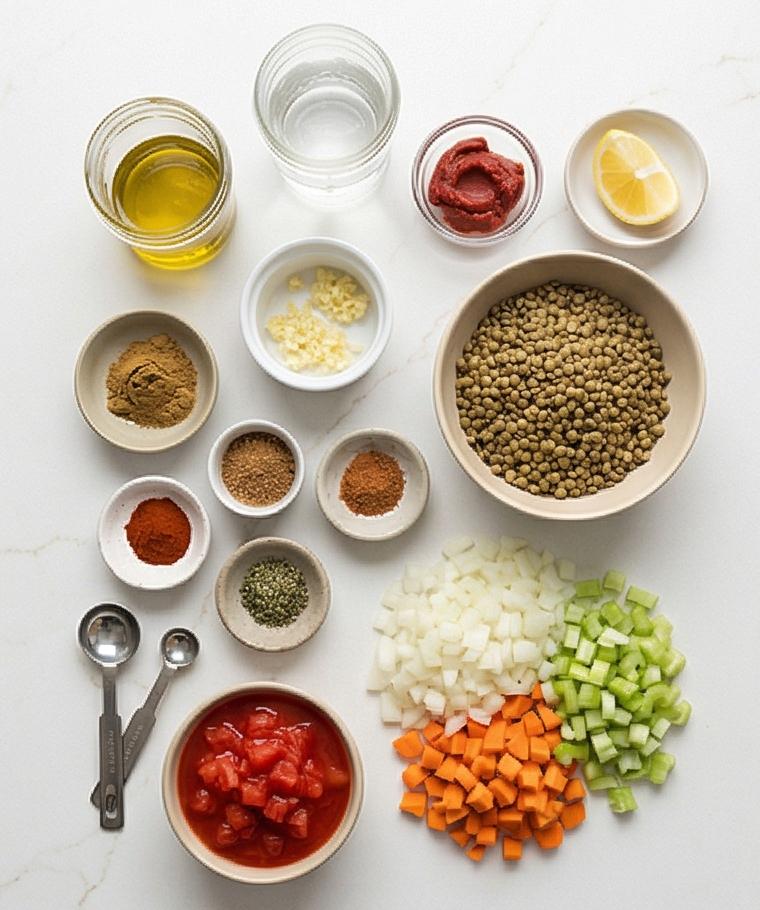
Finely dice the yellow onion, carrots, and celery into even, small 1/4-inch dice so they cook uniformly; mince the garlic finely and set it aside. Rinse the brown or green lentils under cold running water, picking out any small stones or debris, then drain thoroughly. Keep the tomato paste in a small ramekin and measure out the cumin, coriander, smoked paprika, dried thyme, bay leaf, salt and pepper into tiny bowls for easy addition.
Step 2: Sweat the vegetables until soft
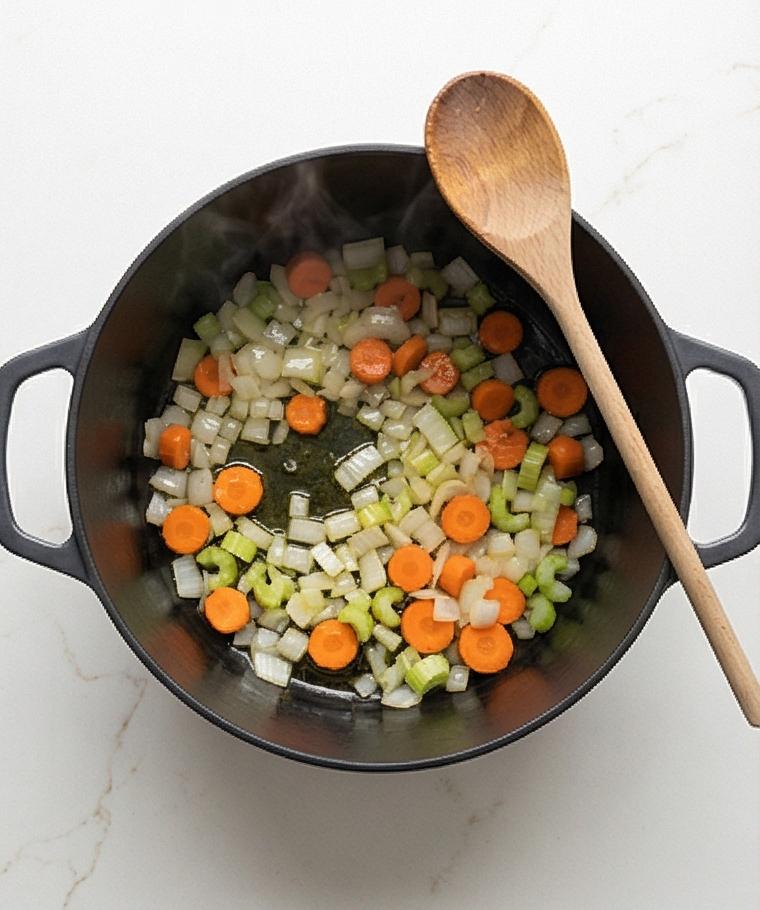
Heat the olive oil briefly until it shimmers (no browning), then add the diced onion, carrots and celery and cook gently until the vegetables are softened and the onion is translucent — glossy, tender cubes and softened carrot rounds, not browned. The mixture should look hydrated with a thin sheen of oil and softened, slightly collapsing vegetable edges, the aroma starting to smell sweet and savory.
Step 3: Bloom the garlic, tomato paste and spices
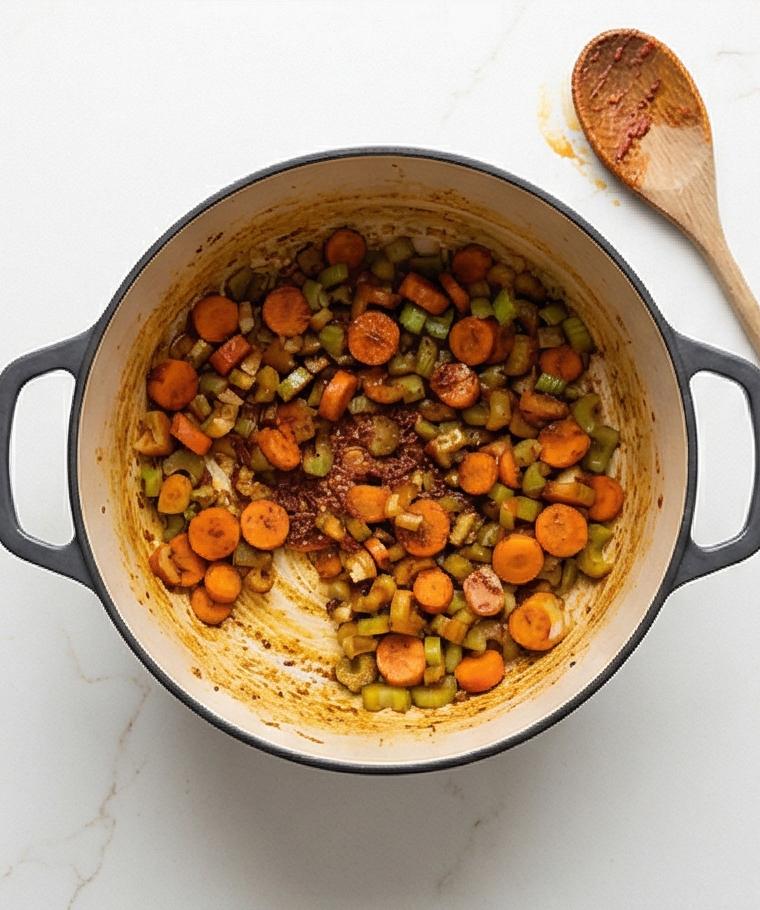
Stir in the minced garlic for only 30–45 seconds until fragrant, then add the tomato paste and the measured spices. Cook just long enough for the tomato paste to darken slightly and the spices to bloom: the paste will clinging to the vegetables, deepening from bright red to warm russet, while fine spice flecks coat the mixture and release an immediately aromatic, earthy perfume.
Step 4: Add the lentils and coat
Stir the rinsed lentils into the spiced vegetable paste, ensuring every grain is well coated — a scattering of dull olive-green lentils turning glossy from the oil and paste, nestling into the aromatic bed. The pot should read as a single composed mass: vegetables and lentils integrated, the lentils still distinct and dry-looking but visibly tacked with seasoning.
Step 5: Add tomatoes, broth, water and seasonings, bring to a gentle boil
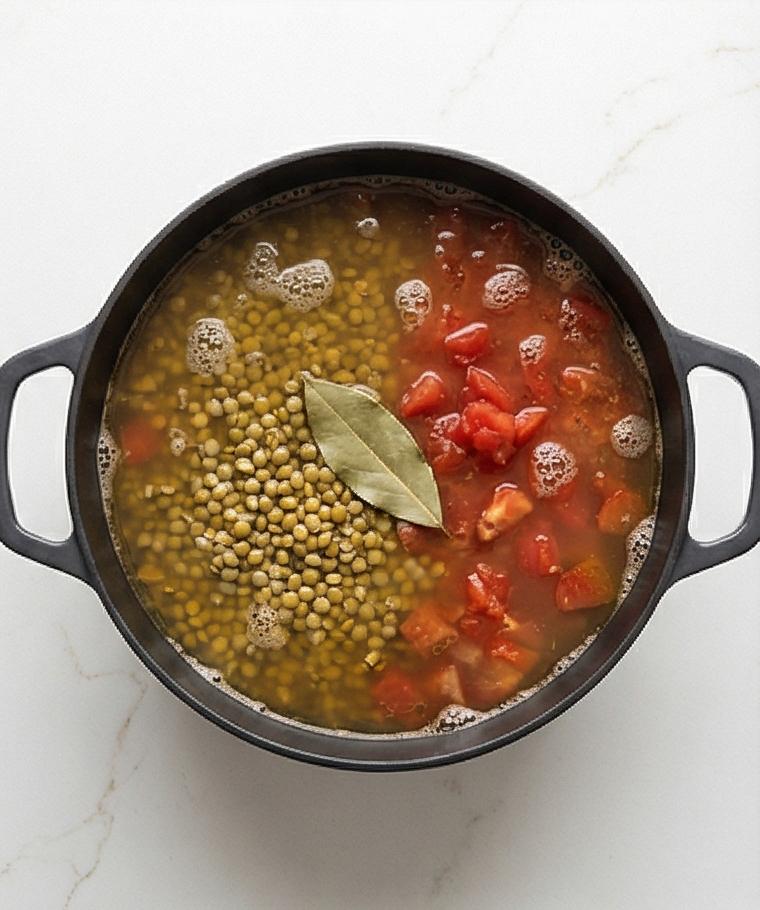
Pour in the diced tomatoes with their juices, the low-sodium broth, and the measured water, nestle in the bay leaf, and add the salt and pepper. Stir to combine and bring the mixture just to a gentle boil so the surface shows small, even bubbles and the lentils are suspended in a broth that reads thin and rust-colored with floating tomato pieces. Reduce to a low simmer immediately once it reaches that delicate bubbling.
Step 6: Simmer until lentils are tender and adjust consistency
Maintain a low, gentle simmer partially covered, stirring occasionally, until the lentils are tender and creamy inside but still hold their shape — a thickened, cohesive soup where individual lentil texture remains perceptible. If the pot looks too stiff before the lentils are done, add hot water in small increments to reach a slightly thick but pourable consistency, tasting and adjusting salt as the flavors concentrate.
Step 7: Partially purée for a creamy texture and re-warm
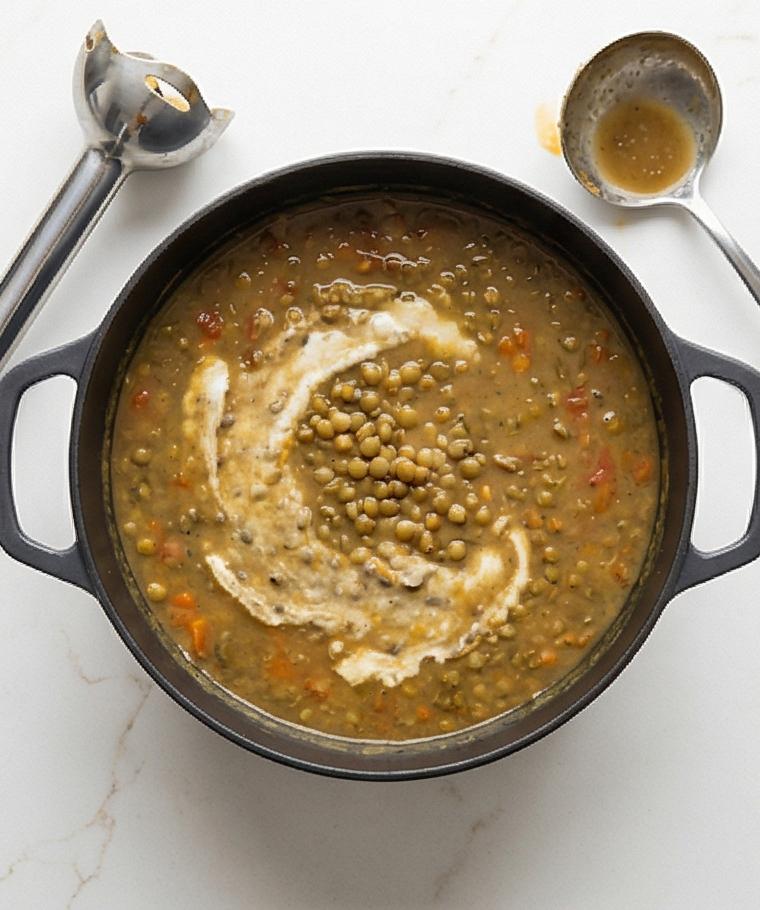
For a silkier mouthfeel, pulse an immersion blender into roughly one-third of the pot (or purée about 2 cups separately and return it) so the surface shows a pleasing contrast between creamy, velvety purée and whole, intact lentils and vegetable bits. Warm gently for a few minutes so the textures meld and the soup steams softly but does not vigorously boil.
Step 8: Brighten, finish and serve
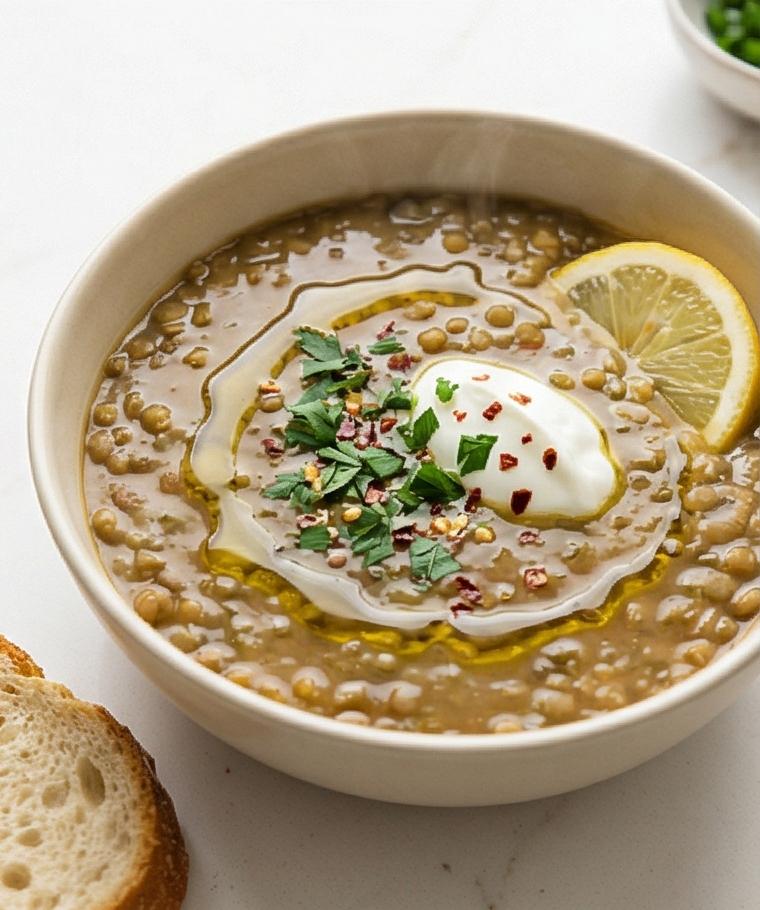
Off the heat stir in 1–2 tablespoons of freshly squeezed lemon juice and the chopped flat-leaf parsley, taste and correct seasoning. Let the soup rest briefly to marry flavors, then ladle into warmed bowls and finish each with an optional dollop of plain yogurt or sour cream, a drizzle of extra-virgin olive oil, a scattering of chopped parsley and a pinch of red pepper flakes; serve with lemon wedges and crusty bread on the side.
Making It Your Own
I like to treat this Lentil Soup Recipe as a flexible blueprint. For a heartier, stew-like version I add diced potatoes or swap some of the water for a touch of red wine; for a lighter bowl I use more broth and extra lemon. To make it vegan just use vegetable broth and skip yogurt finishing. I once added chopped kale near the end and another time roasted red peppers for a smoky-sweet lift; both worked beautifully. Small experiments with spice levels or herbs can shift the profile from Mediterranean to North African or Indian, and that playfulness keeps the recipe fresh.
How to Serve
If I am hosting, I warm the bowls ahead of time and set out lemon wedges, plain yogurt, extra parsley, and crusty bread so guests can customize. For a family dinner double the recipe and serve in a large tureen; for a date night present individual bowls with a neat swirl of yogurt and a sprinkle of parsley. Pair the soup with a simple green salad and a loaf of warm bread for a balanced meal. For larger gatherings keep the soup on low heat in a covered slow cooker so guests can ladle their own bowls.
Storage and Reheating Tips
This soup stores and reheats very well, which is one reason I make a big batch. Cool it quickly, then refrigerate in airtight containers for up to 4 days. Reheat gently on the stove over low heat with a splash of water or broth to loosen the texture and preserve the flavor.
For longer storage freeze in portioned containers for up to 3 months. Thaw overnight in the refrigerator before reheating and stir in lemon and parsley after warming; fresh lemon brightens the reheated soup and brings back vitality to the flavors.
Common Mistakes and How to Avoid Them
Undercooking the lentils or overthinning the pot are two easy mistakes. Taste as you go and add hot water in small amounts only if needed so the soup does not become watery.
Another frequent issue is under-seasoning. Because lentils absorb flavor, salt and acid at the end (like lemon) are crucial; add them gradually and taste frequently so the balance sings.
Final Thoughts and Encouragement
Give this Lentil Soup Recipe a try even if you think you are short on time; the prep is straightforward and the payoff is a bowl that feels like a hug. Adjust the spices, play with textures, and make it your own. I think you will find it becomes a go-to in your rotation.
Frequently Asked Questions.
- What kind of lentils work best in this recipe? Brown or green lentils hold their shape and provide the ideal texture for this Lentil Soup Recipe; red lentils will break down more and make a thicker, puréed soup.
- Can I make this soup in a slow cooker? Yes, you can start by sautéing the aromatics, then transfer everything to a slow cooker and cook on low for 4 to 6 hours; add lemon and parsley at the end.
- How do I keep the soup from becoming mushy? Simmer gently and check the lentils after 20 minutes; remove from heat once they are tender but not falling apart. Partially puréeing only a portion helps maintain contrasting textures.
- Is this soup freezer friendly? Absolutely. Freeze in portions for up to 3 months and thaw in the refrigerator before reheating. Add a little broth when warming if it seems thick.
- Can I add greens or protein to the soup? Yes, stir in chopped kale or spinach near the end until wilted, or add cooked sausage, shredded chicken, or roasted vegetables for extra heartiness.
Lentil Soup Recipe
Make this Lentil Soup Recipe for a cozy, hearty weeknight meal; simmer, finish with lemon, and serve with crusty bread.
Ingredients
Instructions
Step 1: Prep the aromatics and lentils
Finely dice the yellow onion, carrots, and celery into even, small 1/4-inch dice so they cook uniformly; mince the garlic finely and set it aside. Rinse the brown or green lentils under cold running water, picking out any small stones or debris, then drain thoroughly. Keep the tomato paste in a small ramekin and measure out the cumin, coriander, smoked paprika, dried thyme, bay leaf, salt and pepper into tiny bowls for easy addition.
Step 2: Sweat the vegetables until soft
Heat the olive oil briefly until it shimmers (no browning), then add the diced onion, carrots and celery and cook gently until the vegetables are softened and the onion is translucent — glossy, tender cubes and softened carrot rounds, not browned. The mixture should look hydrated with a thin sheen of oil and softened, slightly collapsing vegetable edges, the aroma starting to smell sweet and savory.
Step 3: Bloom the garlic, tomato paste and spices
Stir in the minced garlic for only 30–45 seconds until fragrant, then add the tomato paste and the measured spices. Cook just long enough for the tomato paste to darken slightly and the spices to bloom: the paste will clinging to the vegetables, deepening from bright red to warm russet, while fine spice flecks coat the mixture and release an immediately aromatic, earthy perfume.
Step 4: Add the lentils and coat
Stir the rinsed lentils into the spiced vegetable paste, ensuring every grain is well coated — a scattering of dull olive-green lentils turning glossy from the oil and paste, nestling into the aromatic bed. The pot should read as a single composed mass: vegetables and lentils integrated, the lentils still distinct and dry-looking but visibly tacked with seasoning.
Step 5: Add tomatoes, broth, water and seasonings, bring to a gentle boil
Pour in the diced tomatoes with their juices, the low-sodium broth, and the measured water, nestle in the bay leaf, and add the salt and pepper. Stir to combine and bring the mixture just to a gentle boil so the surface shows small, even bubbles and the lentils are suspended in a broth that reads thin and rust-colored with floating tomato pieces. Reduce to a low simmer immediately once it reaches that delicate bubbling.
Step 6: Simmer until lentils are tender and adjust consistency
Maintain a low, gentle simmer partially covered, stirring occasionally, until the lentils are tender and creamy inside but still hold their shape — a thickened, cohesive soup where individual lentil texture remains perceptible. If the pot looks too stiff before the lentils are done, add hot water in small increments to reach a slightly thick but pourable consistency, tasting and adjusting salt as the flavors concentrate.
Step 7: Partially purée for a creamy texture and re-warm
For a silkier mouthfeel, pulse an immersion blender into roughly one-third of the pot (or purée about 2 cups separately and return it) so the surface shows a pleasing contrast between creamy, velvety purée and whole, intact lentils and vegetable bits. Warm gently for a few minutes so the textures meld and the soup steams softly but does not vigorously boil.
Step 8: Brighten, finish and serve
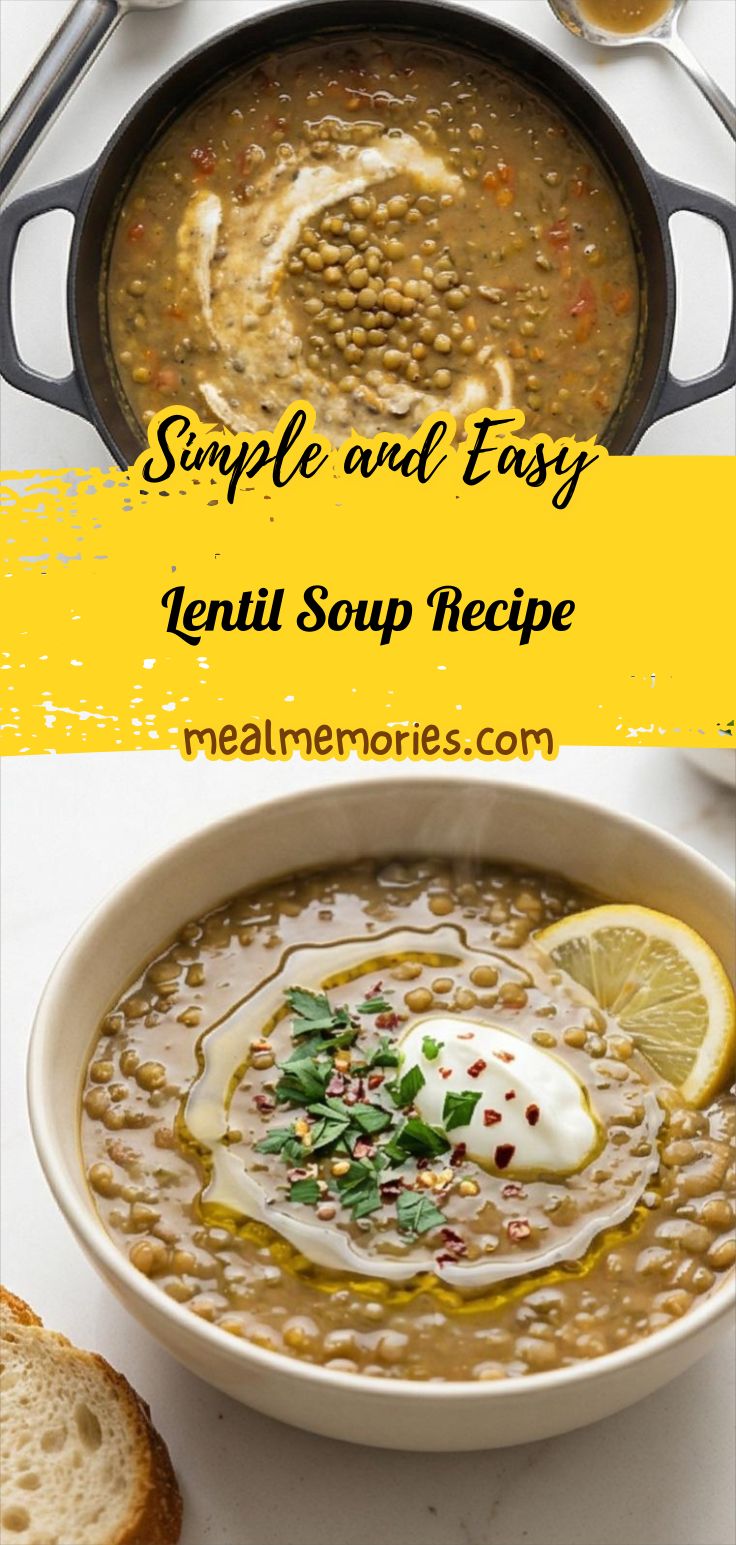
Off the heat stir in 1–2 tablespoons of freshly squeezed lemon juice and the chopped flat-leaf parsley, taste and correct seasoning. Let the soup rest briefly to marry flavors, then ladle into warmed bowls and finish each with an optional dollop of plain yogurt or sour cream, a drizzle of extra-virgin olive oil, a scattering of chopped parsley and a pinch of red pepper flakes; serve with lemon wedges and crusty bread on the side.
Notes
- Use low-sodium broth to better control seasoning.
- Partially puréeing a portion yields a creamy texture while keeping some whole lentils for bite.
- Add lemon juice at the end to brighten flavors; start with 1 tablespoon and adjust.
- Store leftovers in airtight containers for up to 4 days or freeze for up to 3 months.
- Rinse and pick over lentils to remove any debris before cooking.