Gazpacho Recipe is the kind of simple, honest food that feels like summer in a bowl. I first learned this Gazpacho Recipe from a friend who insisted that nothing beats a cold soup on a hot afternoon, and she was right. I tend to make it when I want something bright, hydrating, and impossibly quick to pull together. The balance of sun-warm tomatoes, crisp cucumber, and silky olive oil is what keeps me coming back.
How This Gazpacho Recipe Became My Summer Ritual
I remember the first time I made this Gazpacho Recipe for a small backyard gathering. The garden was full of late summer sun, and the tomatoes smelled like they remembered the sun that grew them. As I chopped, the kitchen filled with a warm tomato perfume that felt almost nostalgic. We served it in chilled glasses with tiny croutons and watched the light change as guests wandered between the table and the yard. Every spoonful felt like a cool pause from the heat, and the bright sherry vinegar cut through the richness in a way that made conversation easier and laughter louder. That afternoon turned into a habit: when tomatoes peak, when cucumbers are crisp, this gazpacho lands on the table. It pairs with simple company and a slow, unhurried evening, and each time I make it, I end up remembering small details from earlier summers.
What’s in This Gazpacho and Why It Matters
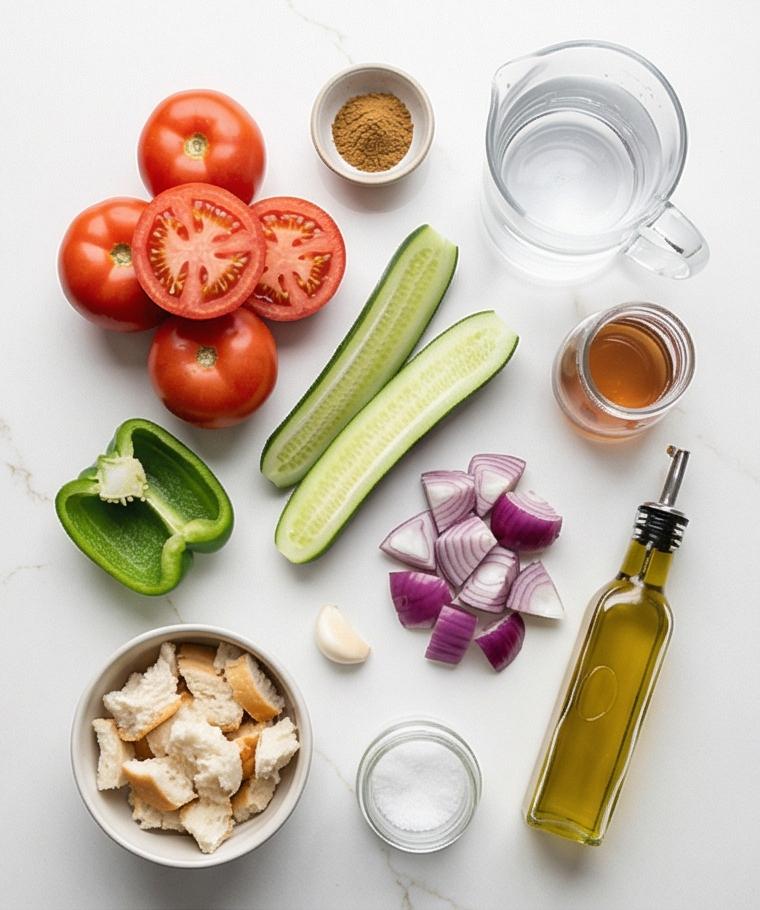
- Tomatoes: The star ingredient, giving body, sweetness, and acidity. Choose ripe, fragrant tomatoes or use plum varieties for fewer seeds. If needed, Roma or vine-ripe work well.
- Cucumber: Adds coolness and texture. Seed and peel if bitter; English cucumber is a gentle substitute.
- Green bell pepper: Brightens the blend and gives vegetal depth. Use roasted pepper for a smoky twist.
- Red onion and garlic: Provide savory backbone. Soak sliced onion briefly to tame sharpness if desired.
- Day-old bread: Thickens and gives body without cream; gluten-free bread can stand in.
- Olive oil and sherry vinegar: Emulsify the soup and lift flavors; use good olive oil for the best result.
Essential Kitchen Tools That Make a Difference
A short note on tools: you do not need a professional kitchen to make a show-stopping gazpacho, but a few simple tools will save time and improve the final texture.
- Blender: Vital for a silky pure9e; a high-speed blender shortens work time. If you don’t have one, use a food processor and blend longer.
- Fine-mesh sieve: Optional but great for an ultra-smooth finish; a chinois also works.
- Sharp chef’s knife: Makes quick, clean work of tomatoes and peppers; keep it sharp.
- Mixing bowls and a pitcher: For soaking the bread and chilling the soup.
- Ladle and chilled bowls or glasses: For serving and maintaining temperature.
Step-by-Step Preparation Guide
Step 1: Prepare and hydrate the vegetables and bread
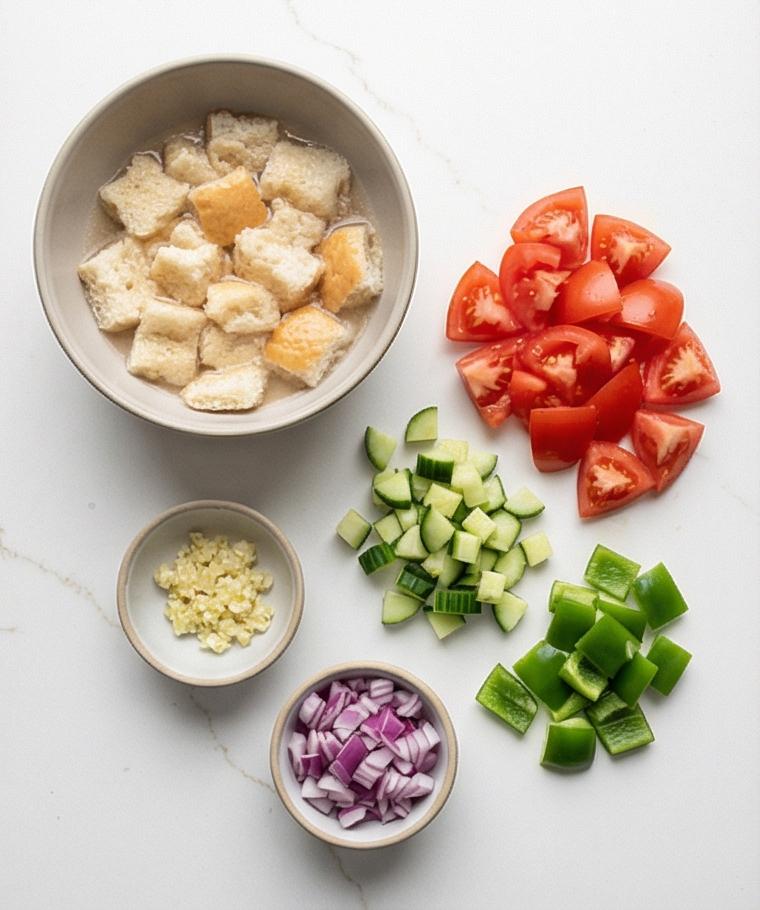
Rinse and pat the tomatoes, cucumbers, and green bell pepper dry. Core the tomatoes and cut into large, honest chunks; peel, halve, and scrape the cucumber seeds, chopping 115 g roughly for the soup base while keeping 60 g finely diced and chilled for garnish; remove stem and seeds from the pepper and chop 85 g roughly for blending while setting aside 45 g finely diced for garnish. Peel and coarsely chop the red onion and mince the garlic. Remove crusts from the day-old bread and tear into 2.5 cm pieces, then place the torn bread in a medium matte bowl and pour about half of the cold water over it, turning once or twice until the bread is fully moistened but not soupy. This is all about texture: glossy tomato flesh, satin cucumber flesh, and pillowy, water-softened bread ready to melt into the base.
Step 2: Build the base pure9e in the blender
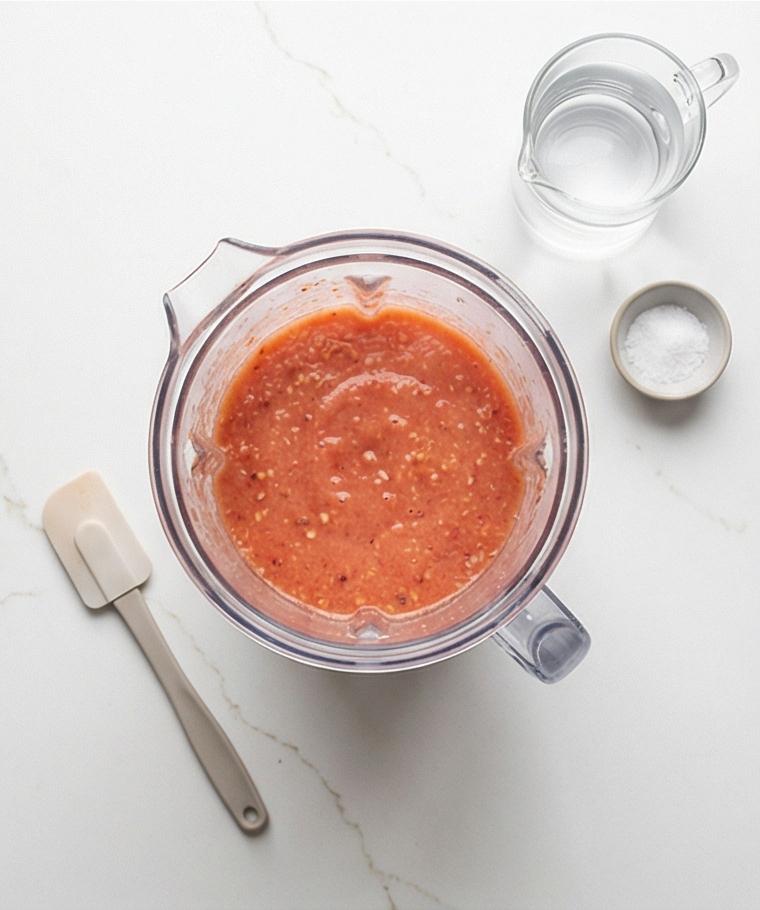
Squeeze the soaked bread gently to remove excess water and transfer the squeezed pieces to a clear blender jar. Add the chopped tomatoes, the 115 g roughly chopped cucumber, the 85 g chopped green pepper, chopped red onion, and minced garlic. Season with fine sea salt, freshly ground black pepper, and a pinch of ground cumin if you like a whisper of smoke. Pour in the remaining measured cold water plus an extra two tablespoons to help the blender catch the ingredients. Start blending low and graduate to high, scraping the sides once or twice, until the mixture becomes a cohesive, thick-but-pourable pure9e – a collage of softened seeds, velvet tomato flesh, and the breade28099s integrated clouds. The jar should show a homogeneous, tomato-pink emulsion with no large vegetable chunks.
Step 3: Emulsify with olive oil; add vinegar and adjust
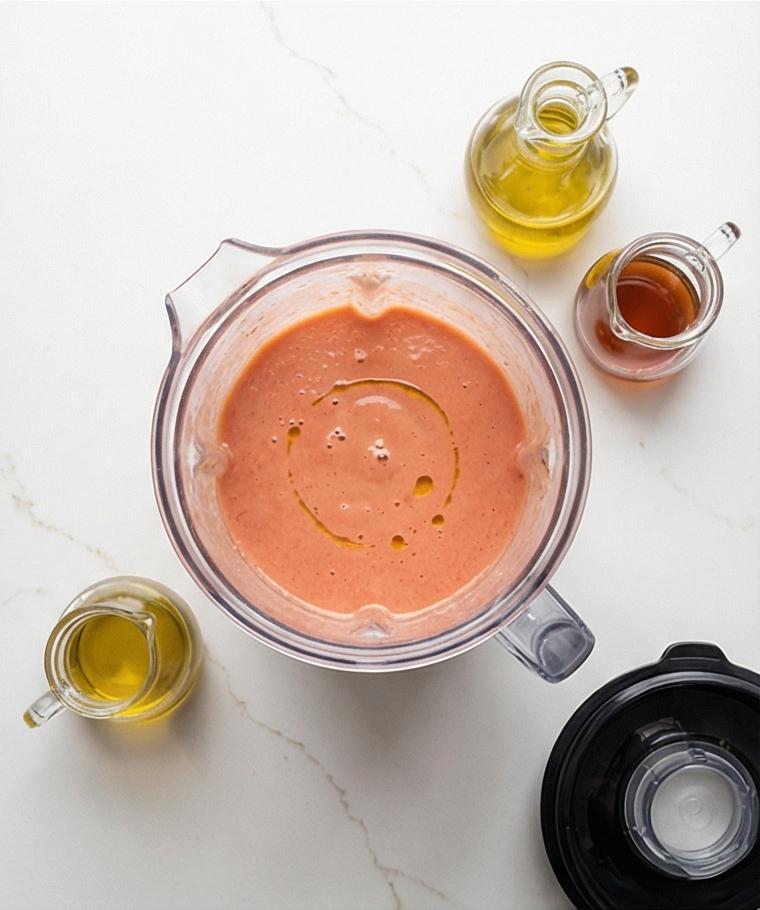
With the blender running on low, very slowly introduce the 60 ml extra-virgin olive oil in a thin steady stream so the pure9e lightens and turns creamy and silky – the texture shifts from raw pulp to a smooth, slightly glossy emulsion. Blend a little longer after the oil is fully incorporated, then add the sherry vinegar and blend briefly to wake the acidity through the soup. Check the viscosity: it should sit like drinkable yogurt – smooth, slightly thick, and luminous. Taste and adjust with tiny pinches of salt or a whisper more vinegar, remembering the chill will mute the brightness. This stage is all about transformation: grainy to velvety, matte to softly glossy.
Step 4: (Optional) Strain for ultra-silky texture and chill; prep garnishes
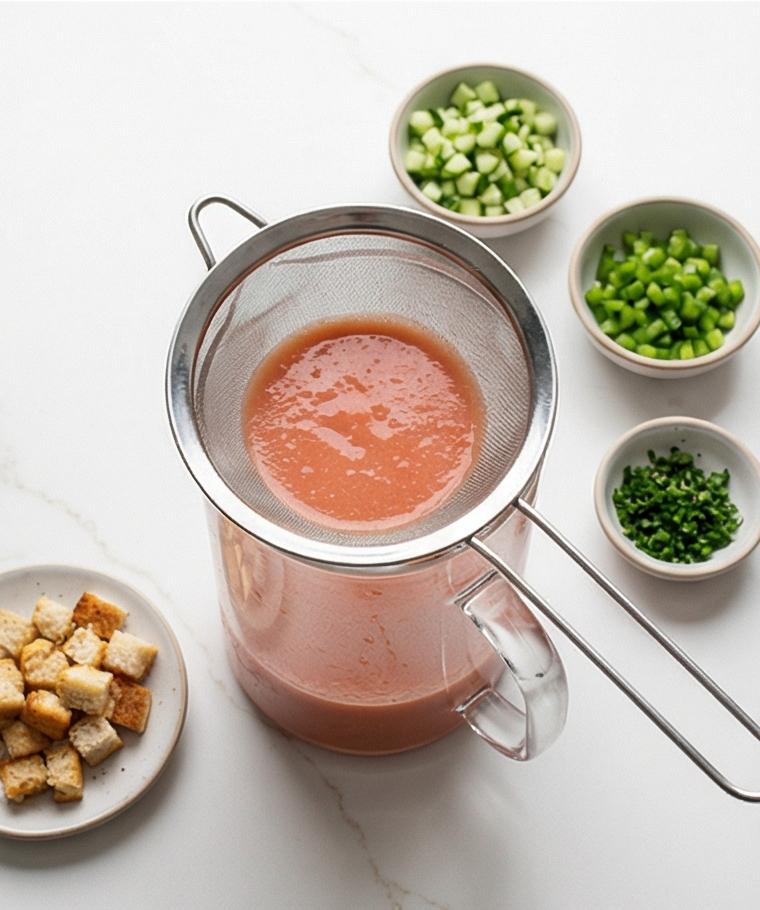
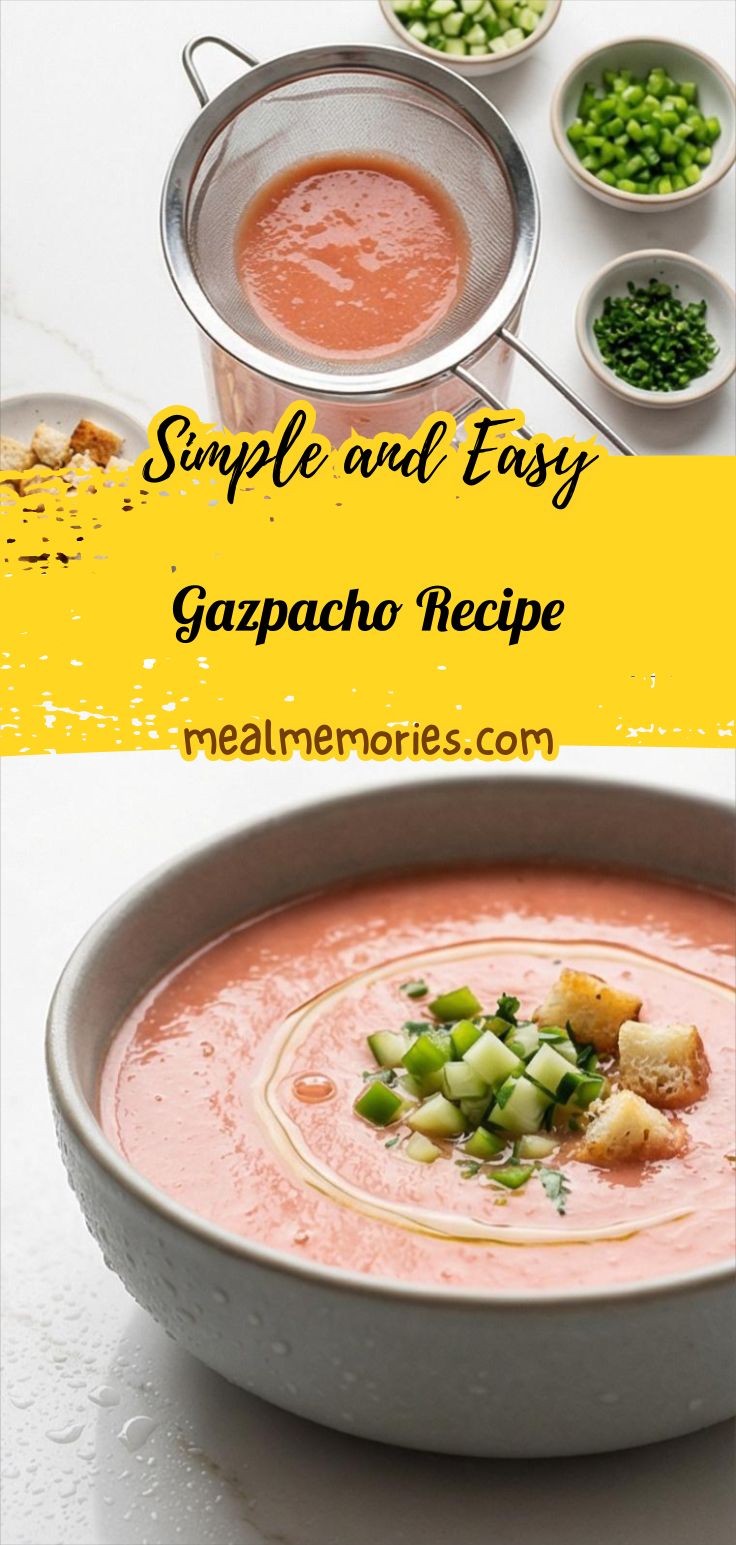
For the silkies, pour the blended soup through a fine-mesh sieve into a clear pitcher, using the back of a ladle to coax the liquid through and leaving skins and seeds behind. Transfer the clear, glossy gazpacho to a covered vessel and refrigerate until very cold (2b0C), at least two hours. While it chills, finely dice the reserved cucumber and green pepper and chop the parsley or chives; keep the croutons at room temperature so they remain crisp. The chilled pitcher should show a cool, dense, satin surface with tiny air bubbles and a subtle matte sheen from refrigeration.
Step 5: Final seasoning and serve very cold
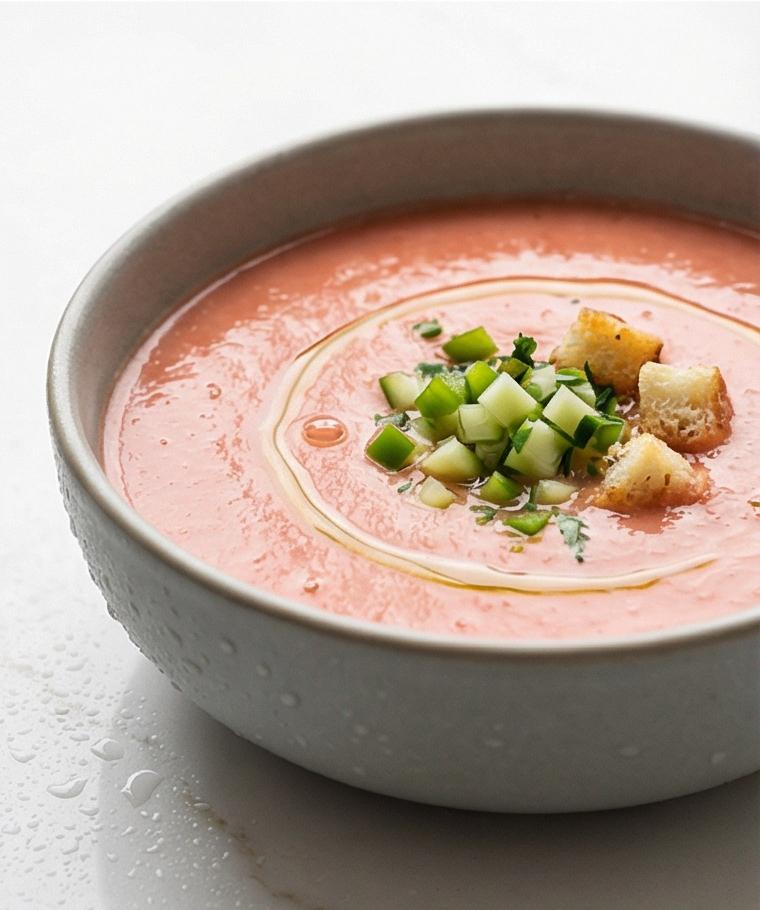
Stir the chilled gazpacho well, taste, and make a final seasoning nudge – a tiny pinch of salt, a few grinds of black pepper, or a bright splash of sherry vinegar if it feels muted. If the soup thickened too much in the cold, loosen with a tablespoon or two of cold water until it regains that drinkable creaminess. Ladle into chilled shallow bowls or small glasses; garnish each serving with a neat spoonful of the finely diced cucumber and green pepper, a scattering of chopped herbs, a few small croutons if using, and a thin thread of extra-virgin olive oil. Serve immediately while the texture is satin-cold and alive.
Making It Your Own
Try a handful of small experiments to make this Gazpacho Recipe your own. For a lighter, vegan-friendly bowl, skip the croutons and use gluten-free day-old bread. If you like a smoky note, roast or char the green pepper under a broiler before adding to the blender. For a fruit-forward summer twist, blend in a small peeled peach or a half cup of watermelon with the tomatoes.
If you want it spicier, add a pinch of smoked paprika or a slice of jalapeno while blending. Each variation shifts the character slightly, and I often rotate these tweaks based on what I find at the market.
How to Serve and Present Gazpacho
When I serve this Gazpacho Recipe for company, I think small and confident portions work best. Use chilled shallow bowls for a formal starter or small glasses for a casual aperitivo that guests can carry. Garnish with the reserved diced cucumber and pepper, scattered herbs, a few croutons, and a thin thread of olive oil to make each bowl pop.
For larger groups, keep the chilled pitcher in the fridge and ladle into bowls just before guests sit. If you want to stretch the recipe, serve it alongside crusty bread, a simple salad, and marinated olives to make a light but complete meal.
Storage and Reheating Tips
Gazpacho keeps very well chilled. Store it in an airtight container in the refrigerator for up to three days. The flavors will deepen with time, and you may find it mellows pleasantly after a day.
Since this soup is served cold, there is no reheating; instead, refresh it by stirring in a tablespoon of cold water and a little extra vinegar or olive oil if the texture or brightness has faded. Keep garnishes separate until serving to preserve their crunch.
Common Mistakes and How to Avoid Them
One frequent misstep is over-blending then serving too warm. Blend to a smooth texture but chill thoroughly before tasting the final seasoning because cold mutes acid and salt.
Another is using underripe tomatoes or thin olive oil. Use ripe, fragrant tomatoes and a good extra-virgin olive oil – they make a noticeable difference.
Try It Yourself
Give this Gazpacho Recipe a go when tomatoes are at their peak. It is forgiving, fast, and feels like a small act of summer hospitality. Share it with friends, tweak it a little, and see which variation becomes your favorite.
Frequently Asked Questions
-
What is the best tomato to use for gazpacho?
Tomatoes with good flavor and low water content like Roma or vine-ripe tomatoes work best; choose the ripest, most fragrant ones you can find. -
Can I make gazpacho ahead of time?
Yes, make it up to three days ahead and keep it refrigerated; stir in a splash of cold water or extra vinegar before serving if it thickens. -
Is this gazpacho recipe gluten-free?
The base recipe uses day-old white bread for body, but you can substitute gluten-free bread to make it gluten-free. -
Can I freeze gazpacho?
Freezing is possible but not ideal: the texture will change. If you must, freeze in a shallow container and thaw slowly in the fridge, then whisk to recombine. -
How can I make the soup silkier?
Strain the blended soup through a fine-mesh sieve into a pitcher for an extra-smooth finish, then chill thoroughly.
Gazpacho Recipe
Make Gazpacho Recipe: blend ripe tomatoes, cucumber, bread, and olive oil into a chilled, silky Spanish soup.
Ingredients
Instructions
Step 1: Prepare and hydrate the vegetables and bread
Rinse and pat the tomatoes, cucumbers, and green bell pepper dry. Core the tomatoes and cut into large, honest chunks; peel, halve, and scrape the cucumber seeds, chopping 115 g roughly for the soup base while keeping 60 g finely diced and chilled for garnish; remove stem and seeds from the pepper and chop 85 g roughly for blending while setting aside 45 g finely diced for garnish. Peel and coarsely chop the red onion and mince the garlic. Remove crusts from the day-old bread and tear into 2.5 cm pieces, then place the torn bread in a medium matte bowl and pour about half of the cold water over it, turning once or twice until the bread is fully moistened but not soupy. This is all about texture: glossy tomato flesh, satin cucumber flesh, and pillowy, water-softened bread ready to melt into the base.
Step 2: Build the base purée in the blender
Squeeze the soaked bread gently to remove excess water and transfer the squeezed pieces to a clear blender jar. Add the chopped tomatoes, the 115 g roughly chopped cucumber, the 85 g chopped green pepper, chopped red onion, and minced garlic. Season with fine sea salt, freshly ground black pepper, and a pinch of ground cumin if you like a whisper of smoke. Pour in the remaining measured cold water plus an extra two tablespoons to help the blender catch the ingredients. Start blending low and graduate to high, scraping the sides once or twice, until the mixture becomes a cohesive, thick-but-pourable purée — a collage of softened seeds, velvet tomato flesh, and the bread’s integrated clouds. The jar should show a homogeneous, tomato-pink emulsion with no large vegetable chunks.
Step 3: Emulsify with olive oil; add vinegar and adjust
With the blender running on low, very slowly introduce the 60 ml extra-virgin olive oil in a thin steady stream so the purée lightens and turns creamy and silky — the texture shifts from raw pulp to a smooth, slightly glossy emulsion. Blend a little longer after the oil is fully incorporated, then add the sherry vinegar and blend briefly to wake the acidity through the soup. Check the viscosity: it should sit like drinkable yogurt — smooth, slightly thick, and luminous. Taste and adjust with tiny pinches of salt or a whisper more vinegar, remembering the chill will mute the brightness. This stage is all about transformation: grainy to velvety, matte to softly glossy.
Step 4: (Optional) Strain for ultra-silky texture and chill; prep garnishes
For the silkies, pour the blended soup through a fine-mesh sieve into a clear pitcher, using the back of a ladle to coax the liquid through and leaving skins and seeds behind. Transfer the clear, glossy gazpacho to a covered vessel and refrigerate until very cold (2–4°C), at least two hours. While it chills, finely dice the reserved cucumber and green pepper and chop the parsley or chives; keep the croutons at room temperature so they remain crisp. The chilled pitcher should show a cool, dense, satin surface with tiny air bubbles and a subtle matte sheen from refrigeration.
Step 5: Final seasoning and serve very cold
Stir the chilled gazpacho well, taste, and make a final seasoning nudge — a tiny pinch of salt, a few grinds of black pepper, or a bright splash of sherry vinegar if it feels muted. If the soup thickened too much in the cold, loosen with a tablespoon or two of cold water until it regains that drinkable creaminess. Ladle into chilled shallow bowls or small glasses; garnish each serving with a neat spoonful of the finely diced cucumber and green pepper, a scattering of chopped herbs, a few small croutons if using, and a thin thread of extra-virgin olive oil. Serve immediately while the texture is satin-cold and alive.
Notes
- Chill the soup at least two hours for the best flavor and texture
- Keep garnishes separate until serving to maintain crunch
- Use the ripest tomatoes you can find for maximum flavor
- Substitute gluten-free bread if needed to make the recipe gluten-free
- If soup tastes muted after chilling, add a splash more sherry vinegar and a pinch of salt