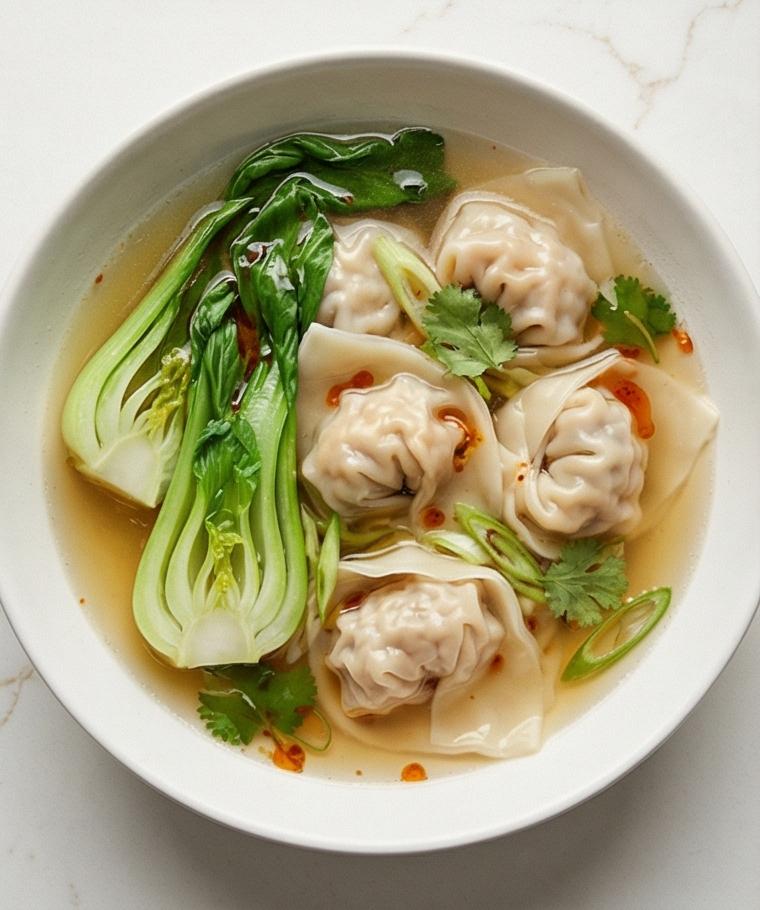
I fell in love with this Potato Soup Recipe the first time the aroma filled my kitchen on a rainy afternoon. It felt like a warm hug in a bowl and quickly became my go-to for comforting weeknight dinners. Over the years I tweaked little things until the balance of bacon, potatoes, and cheddar felt just right. If you like soup that is creamy yet still has a bit of texture, this Potato Soup Recipe will probably become a favorite in your house too.
How This Recipe Became My Rainy-Day Favorite
The first time I made this Potato Soup Recipe, I remember the sound of rain tapping the kitchen window and the way the house smelled of rendered bacon and caramelized onions. I was nervous about making something that would live up to the memory of my grandmother’s soups, but the moment I tasted that first spoonful I felt a quiet victory. The potatoes broke down into velvety threads around soft chunks, and the cheddar melted into the broth like a slow, golden ribbon. It was simple comfort food, but with little flourishes that made it feel personal: a pinch more black pepper, an extra handful of chives, the crisp bacon scattered on top. I sat at the table with a blanket over my knees and felt grateful for the small ritual of ladling warmth into bowls. Since then this Potato Soup Recipe has been my answer to chilly evenings, tired friends, and any moment that calls for something reliably soothing.
The Ingredients That Carry the Dish
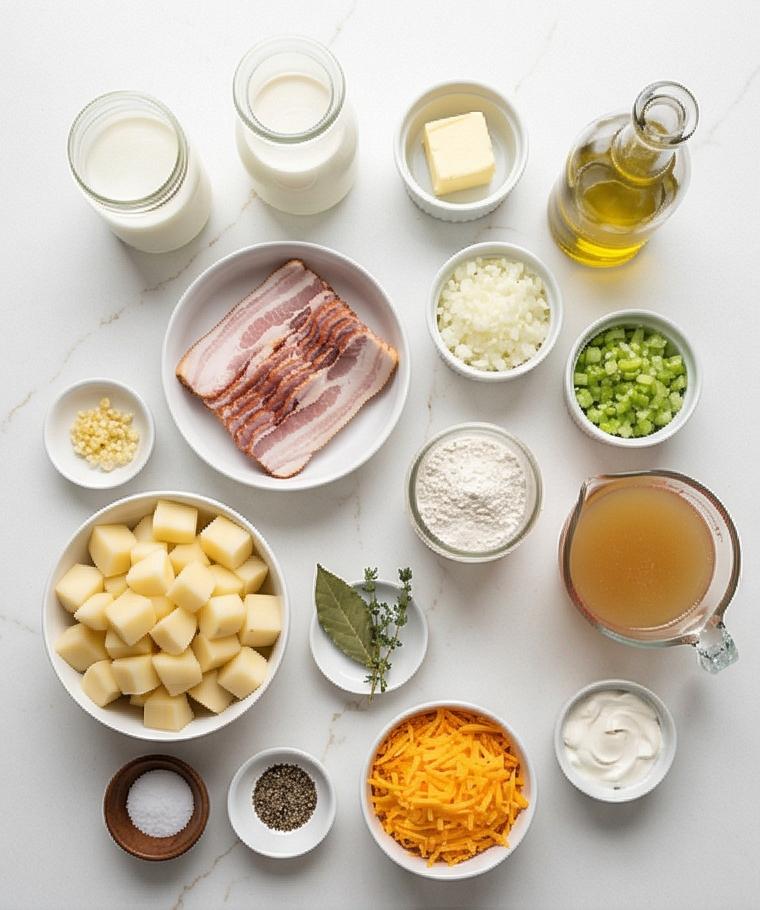
- Bacon: The flavor engine. Crisp it well for texture and use the rendered fat to build layers of savory depth. Substitute pancetta for a more delicate pork note, or omit for a vegetarian version and use olive oil.
- Russet Potatoes: The body and thickener. Choose starchy Russets for that silky, slightly crumbly texture; Yukon Golds work as a creamier alternative.
- Chicken Broth and Water: The liquid backbone. Low-sodium chicken broth lets you control salt; vegetable broth is a good swap.
- Milk, Heavy Cream, Sour Cream: Creaminess and mouthfeel. Use whole milk and cream for richness; swap to half-and-half for a lighter finish.
- Sharp Cheddar: Adds tang and depth. Choose a well-aged cheddar for the best flavor, or experiment with Gruyere for a nuttier profile.
Essential Kitchen Gear and Why It Matters
A few reliable tools make this Potato Soup Recipe much easier and more consistent. A heavy, wide-bottomed pot holds heat evenly and prevents scorching when you render bacon and build a roux. An immersion blender helps you control texture without transferring hot liquid; if you do not have one, a regular blender works but take care with hot splatters. A good slotted spoon and a sturdy ladle make moving bacon and serving simple. Sharp knives speed up prep and make uniform potato cubes, which ensure even cooking. Finally, a microplane or box grater will make quick work of the cheddar and keep it light and airy for even melting.
- Heavy pot or Dutch oven: Even heat distribution, prevents burning.
- Immersion blender: Controls texture without extra bowls.
- Slotted spoon and ladle: For transferring bacon and serving.
- Sharp chef’s knife and cutting board: For fast, even prep.
- Microplane or box grater: For finely shredding cheese.
Step-by-Step Preparation Guide
Step 1: Crisp the bacon and render its fat
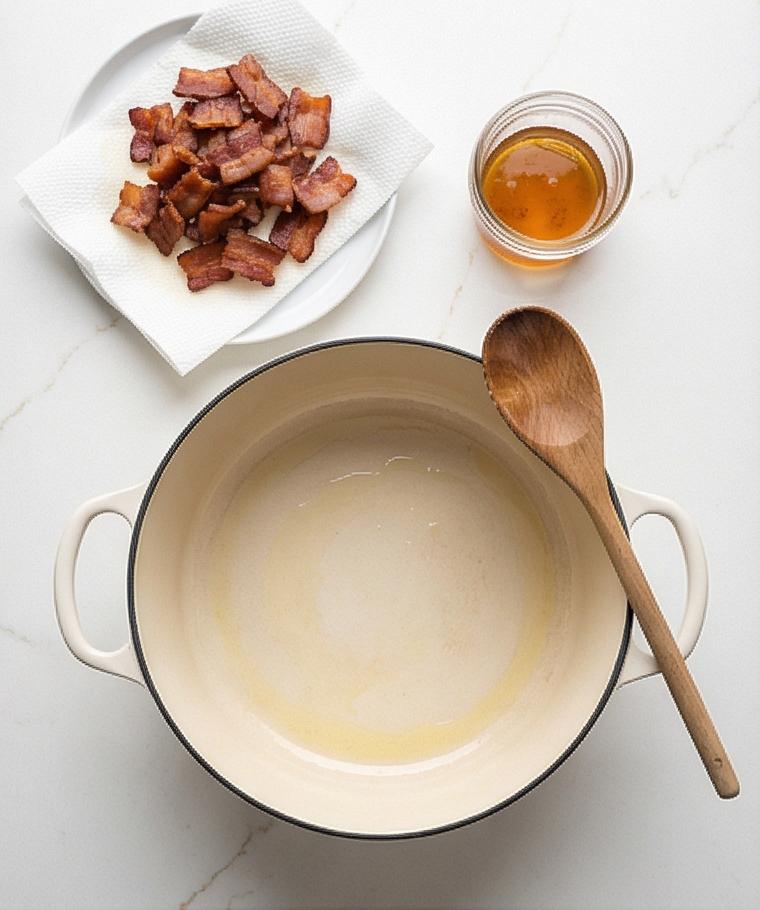
Begin by laying the thick-cut bacon pieces in a single layer in your heavy pot; over medium heat cook them until deeply golden and crisp, letting the fat render out and collect in the bottom of the pot. Transfer the crisped bacon with a slotted spoon to a paper-towel–lined plate and set aside for garnish, leaving the shimmering rendered fat in the pot to flavor the next stage. The goal here is glossy, brittle bacon shards with caramelized edges and a clear golden pool of fat remaining in the vessel.
Step 2: Gently soften the aromatics in the bacon fat and butter
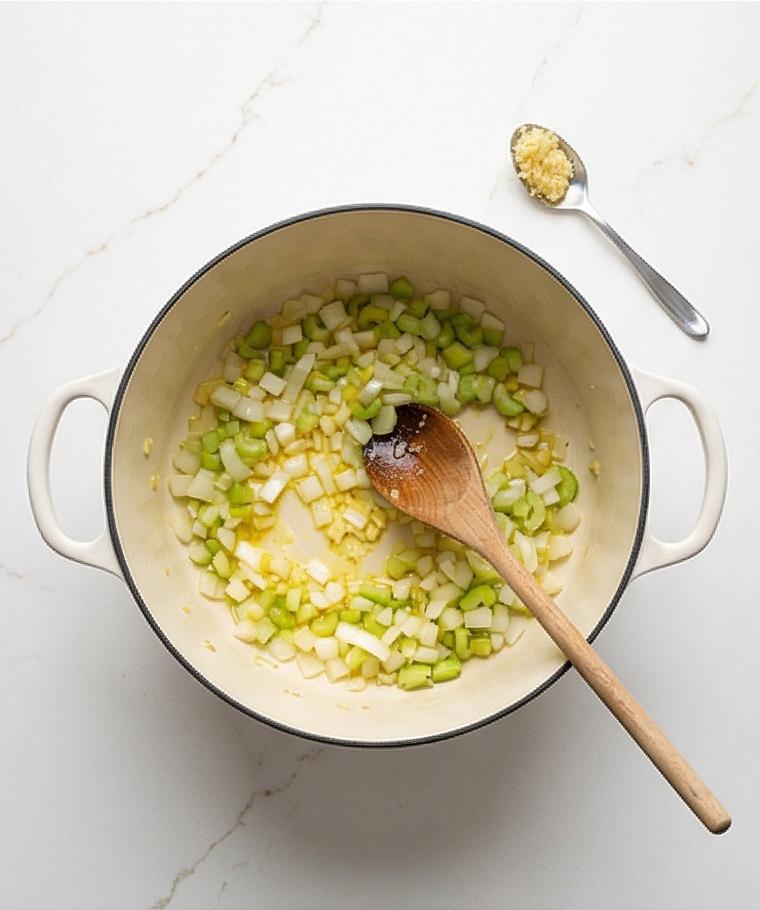
Add unsalted butter and a splash of olive oil to the pot with the warm bacon fat; once the butter is melted and foamy, add the finely chopped yellow onion and celery. Cook them over medium heat, stirring frequently, until the vegetables are translucent and just beginning to take on a pale gold at the edges. Stir in minced garlic at the end and let it become fragrant for 30–60 seconds without browning. The result should read as glossy, softened ribbons of onion and celery, flecked with tiny garlic bits and coated in a thin veil of glossy fat.
Step 3: Build a pale blond roux then wake it up with warm broth
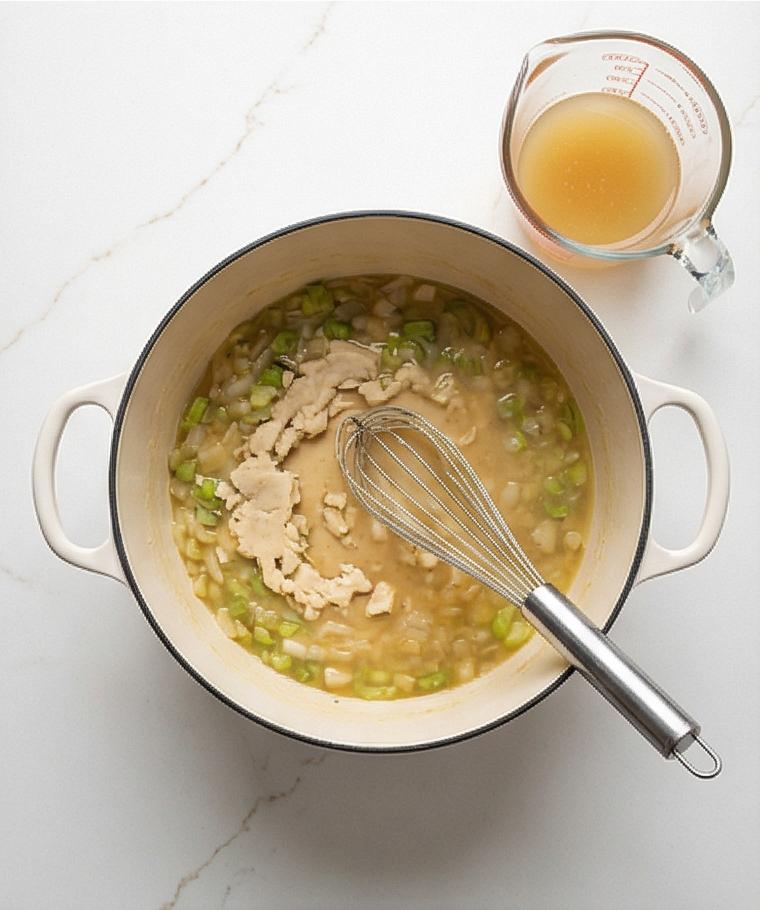
Sprinkle the all-purpose flour evenly over the softened vegetables and stir constantly until the flour is fully moistened and forms a pale, bubbly roux that smells slightly nutty but has not browned. Slowly whisk in about a cup of the room-temperature chicken broth to smooth the roux, then continue adding the remaining broth and water while scraping the pot’s fond so everything is fully incorporated. Bring the mixture up to a gentle boil so the base thickens slightly – you want a silky, slightly viscous foundation that clings to a spoon.
Step 4: Add the potatoes and aromatics, then simmer until tender
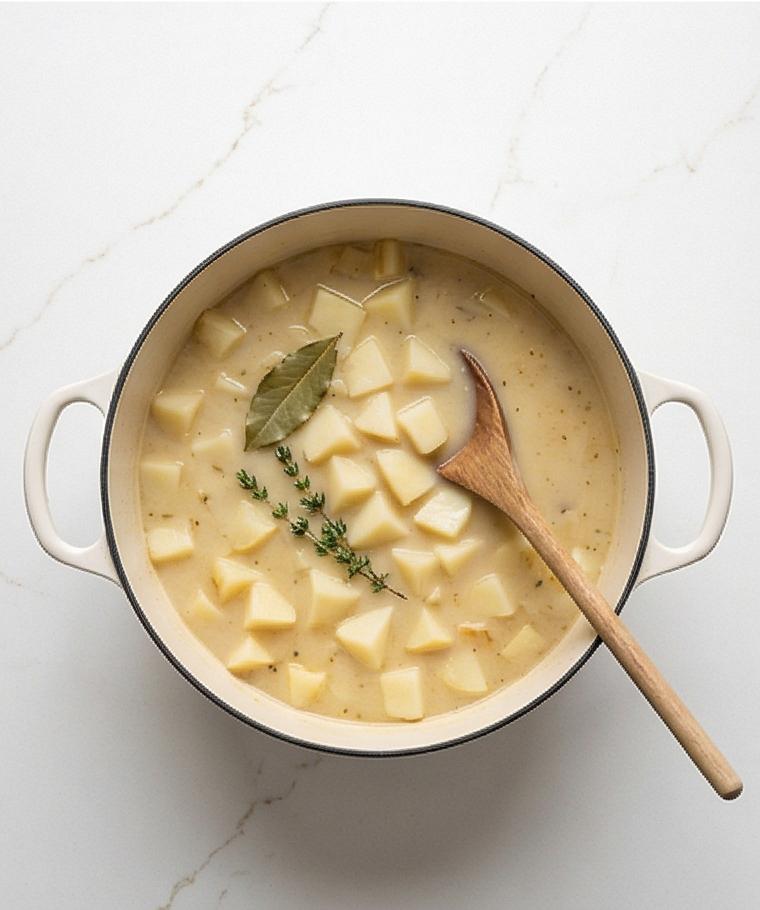
Stir in the peeled, half-inch cubed Russet potatoes along with the bay leaf, thyme, kosher salt and freshly ground black pepper. Bring the pot back to a gentle boil, then reduce to a steady simmer with the lid partially ajar. Cook, stirring occasionally, until the potato cubes are very tender and just beginning to break apart at the edges, about twenty minutes – the liquid should thicken and take on a creamy, starchy body as the potatoes release their starch.
Step 5: Create a creamy-but-chunky texture
Remove and discard the bay leaf, then transform the soup to a creamy-but-textured state: pulse an immersion blender straight in the pot for short bursts to puree roughly half of the mixture, or transfer a couple cups of the hot potato-and-broth mix to a blender and return the purée. Alternatively, lightly mash with a potato masher for a more rustic feel. The outcome should be a thick, velvety base with visible, tender potato chunks suspended within.
Step 6: Gently incorporate room-temperature dairy and melt in cheese
With the heat very low, slowly stream in the whole milk and heavy cream while stirring constantly so the dairy blends smoothly without boiling; keeping the pot below a bare simmer prevents curdling. Stir in the sour cream if using, then add the shredded sharp cheddar and stir over very low heat until the cheese is fully melted and the soup is lusciously smooth. If it feels too thick, loosen it with a little hot broth or water; taste and adjust salt and pepper to achieve a balanced, lightly peppery finish.
Step 7: Rewarm and prepare garnish elements
Warm the reserved crispy bacon briefly if you like it hot (a few seconds in a skillet or quick microwave burst), and ready the shredded cheddar and snipped fresh chives or thinly sliced green onions for finishing. Have a small pinch bowl with extra freshly ground black pepper and a tiny pinch of smoked paprika at the ready for optional finishing color and a whisper of smoke.
Step 8: Plate, garnish, and serve while hot
Ladle the steaming potato soup into warm deep bowls, then top each portion with a scattering of shredded sharp cheddar, a generous spoonful of crispy bacon pieces, a sprinkle of fresh chives, a few extra grinds of black pepper and a delicate dusting of smoked paprika if desired. Serve immediately while the cheese is melty and the bacon remains crisp.

Making It Your Own
Try this Potato Soup Recipe as a playground for small experiments. For a vegetarian version, skip the bacon and use mushroom or vegetable broth and finish with a splash of toasted sesame oil for an umami lift. If you want smoky depth without pork, stir in a teaspoon of smoked paprika and a few drops of liquid smoke.
For a seasonal twist, add roasted corn and chopped roasted red peppers in late summer to brighten the bowl. In winter, swap sharp cheddar for smoked gouda and stir in sautéed leeks for an earthier profile. For a lighter weeknight version, replace heavy cream with half-and-half and reduce the cheese by a third; it still feels indulgent but is easier on the waistline.
How to Serve
If I am hosting, I warm the bowls in the oven for a few minutes so the soup stays hot longer and then set out small plates of garnishes: extra shredded cheddar, crispy bacon, and a bowl of snipped chives. For a casual family meal, serve the Potato Soup Recipe with crusty sourdough slices and a simple green salad.
To scale up, keep a pot of extra warm broth nearby to loosen the soup without losing its silky texture. For a dinner party, ladle into shallow bowls, finish with a delicate swirl of cream and a small mound of crispy bacon, and pass warm rolls on the side. Small ramekins also make lovely individual starters.
Storage and Reheating Tips
Cool the soup quickly by transferring it to shallow airtight containers and refrigerate within two hours. It will keep well for 3 to 4 days; the texture thickens as it sits because the potatoes continue to absorb liquid.
When reheating, warm gently over low heat and thin with a splash of broth, water, or milk to restore the original consistency. If the soup seems grainy after refrigeration, a brief whisk or immersion-blend will smooth it again without changing flavor.
Common Slip-Ups and How to Dodge Them
Overcooking the onions or garlic can turn the base bitter – cook until soft and translucent, not browned. Also, don’t let the dairy boil; keep the heat low when adding milk and cream to avoid curdling.
Another common mistake is skimping on salt early on. Season gradually and taste as you go; the cheese and bacon will add saltiness at the end. If the soup is too salty, counter with a bit more cream or a peeled, halved potato simmered briefly to absorb excess salt.
Final Thoughts and a Gentle Nudge to Try It
This Potato Soup Recipe is straightforward, forgiving, and endlessly adaptable – a dependable bowl of comfort you can tailor to your mood. Give it a try this week and play with the garnishes; sometimes the smallest tweak makes it feel brand new.
Frequently Asked Questions.
- What can I use instead of bacon for a vegetarian Potato Soup Recipe? You can skip the bacon and use olive oil or butter, and substitute low-sodium vegetable or mushroom broth for depth.
- Can I make the soup ahead and reheat it? Yes, it keeps 3 to 4 days refrigerated; reheat gently over low heat and thin with broth or milk as needed.
- How can I make the soup thicker or thinner? For thicker soup, mash more of the potatoes or simmer uncovered to reduce. To thin, stir in hot broth, water, or milk until you reach the desired consistency.
- Is it safe to freeze this Potato Soup Recipe? You can freeze it, but dairy can separate – freeze without cream and add it fresh when reheating, or accept a slightly grainier texture and whisk to combine.
- Can I use a different cheese? Absolutely – Gruyere, smoked gouda, or a sharp white cheddar are great swaps; choose one that melts well and complements the bacon.

Potato Soup Recipe
Make Potato Soup Recipe: creamy, cheesy potato soup with bacon and chives for cozy dinners.
Ingredients
Instructions
Step 1: Crisp the bacon and render its fat
Begin by laying the thick-cut bacon pieces in a single layer in your heavy pot; over medium heat cook them until deeply golden and crisp, letting the fat render out and collect in the bottom of the pot. Transfer the crisped bacon with a slotted spoon to a paper-towel–lined plate and set aside for garnish, leaving the shimmering rendered fat in the pot to flavor the next stage. The goal here is glossy, brittle bacon shards with caramelized edges and a clear golden pool of fat remaining in the vessel.
Step 2: Gently soften the aromatics in the bacon fat and butter
Add unsalted butter and a splash of olive oil to the pot with the warm bacon fat; once the butter is melted and foamy, add the finely chopped yellow onion and celery. Cook them over medium heat, stirring frequently, until the vegetables are translucent and just beginning to take on a pale gold at the edges. Stir in minced garlic at the end and let it become fragrant for 30–60 seconds without browning. The result should read as glossy, softened ribbons of onion and celery, flecked with tiny garlic bits and coated in a thin veil of glossy fat.
Step 3: Build a pale blond roux then wake it up with warm broth
Sprinkle the all-purpose flour evenly over the softened vegetables and stir constantly until the flour is fully moistened and forms a pale, bubbly roux that smells slightly nutty but has not browned. Slowly whisk in about a cup of the room-temperature chicken broth to smooth the roux, then continue adding the remaining broth and water while scraping the pot’s fond so everything is fully incorporated. Bring the mixture up to a gentle boil so the base thickens slightly — you want a silky, slightly viscous foundation that clings to a spoon.
Step 4: Add the potatoes and aromatics, then simmer until tender
Stir in the peeled, half-inch cubed Russet potatoes along with the bay leaf, thyme, kosher salt and freshly ground black pepper. Bring the pot back to a gentle boil, then reduce to a steady simmer with the lid partially ajar. Cook, stirring occasionally, until the potato cubes are very tender and just beginning to break apart at the edges, about twenty minutes — the liquid should thicken and take on a creamy, starchy body as the potatoes release their starch.
Step 5: Create a creamy-but-chunky texture
Remove and discard the bay leaf, then transform the soup to a creamy-but-textured state: pulse an immersion blender straight in the pot for short bursts to puree roughly half of the mixture, or transfer a couple cups of the hot potato-and-broth mix to a blender and return the purée. Alternatively, lightly mash with a potato masher for a more rustic feel. The outcome should be a thick, velvety base with visible, tender potato chunks suspended within.
Step 6: Gently incorporate room-temperature dairy and melt in cheese
With the heat very low, slowly stream in the whole milk and heavy cream while stirring constantly so the dairy blends smoothly without boiling; keeping the pot below a bare simmer prevents curdling. Stir in the sour cream if using, then add the shredded sharp cheddar and stir over very low heat until the cheese is fully melted and the soup is lusciously smooth. If it feels too thick, loosen it with a little hot broth or water; taste and adjust salt and pepper to achieve a balanced, lightly peppery finish.
Step 7: Rewarm and prepare garnish elements
Warm the reserved crispy bacon briefly if you like it hot (a few seconds in a skillet or quick microwave burst), and ready the shredded cheddar and snipped fresh chives or thinly sliced green onions for finishing. Have a small pinch bowl with extra freshly ground black pepper and a tiny pinch of smoked paprika at the ready for optional finishing color and a whisper of smoke.
Step 8: Plate, garnish, and serve while hot
Ladle the steaming potato soup into warm deep bowls, then top each portion with a scattering of shredded sharp cheddar, a generous spoonful of crispy bacon pieces, a sprinkle of fresh chives, a few extra grinds of black pepper and a delicate dusting of smoked paprika if desired. Serve immediately while the cheese is melty and the bacon remains crisp.
Notes
- Use a heavy-bottomed pot to prevent scorching when making the roux.
- Keep dairy at room temperature before adding to reduce risk of curdling.
- For a vegetarian version, omit bacon and use vegetable broth; add a dash of smoked paprika for depth.
- To refresh leftovers, thin with hot broth or milk and whisk or briefly blend to restore creaminess.
- Freeze without cream and add cream when reheating to preserve texture.