Pumpkin Soup Recipe has been one of those dishes I reach for when the air turns crisp and I want something that feels like a warm hug. I learned to make this Pumpkin Soup Recipe the slow way, with patient stirring and little tweaks that mattered. It’s simple enough for a weeknight but elegant enough to bring out when friends drop by. The balance of spice, cream, and bright lemon makes this Pumpkin Soup Recipe sing at the table.
How This Recipe Became My Cozy-Weather Go-To
The first time I made this soup I was trying to calm down after a long, rainy day. The kitchen smelled like butter and toasted spices within minutes, and that scent alone felt like a small ceremony. I stirred the puree into the softened vegetables and watched the color deepen into a glowing orange that reminded me of lantern light. When I added the lemon at the end, the whole pot brightened in a way I did not expect; it was like the recipe took a deep breath and decided to be joyful. Serving it with warmed crusty bread and toasted pepitas made the meal feel complete. From then on, making this Pumpkin Soup Recipe became a ritual for slow evenings and casual gatherings, the kind of dish that invites conversation and a second bowl.
Pantry Heroes in This Pumpkin Soup Recipe
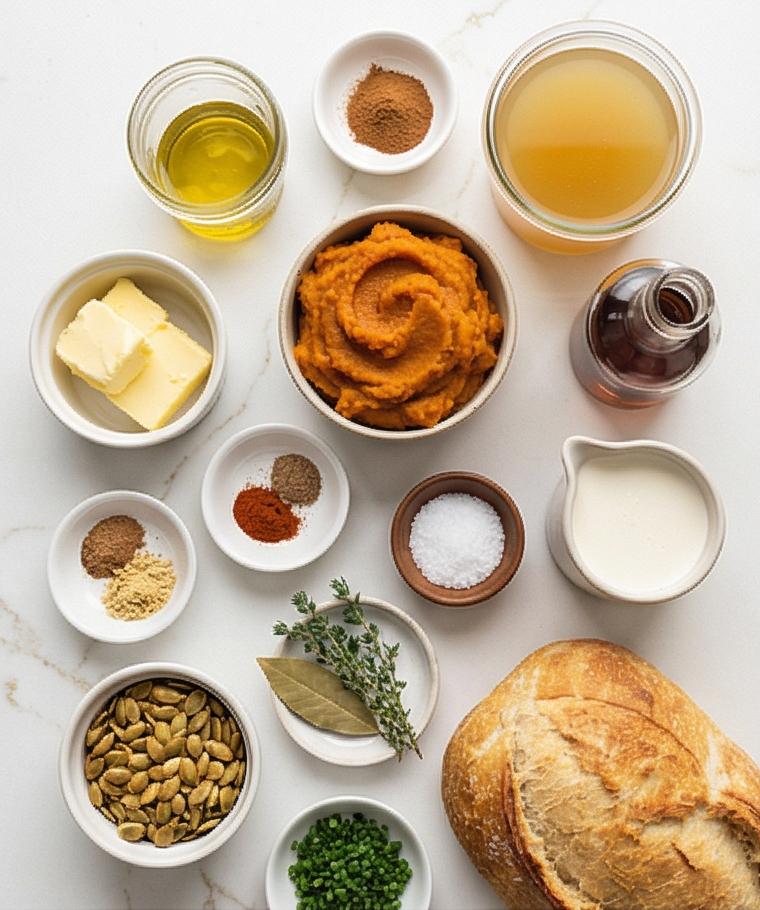
- Unsalted Butter: Adds a rich, silky base and helps carry flavor; substitute with olive oil for a lighter version and watch the flavor shift.
- Extra-Virgin Olive Oil: Rounds out the fat profile and prevents the butter from burning; use any neutral oil if needed.
- Yellow Onion: The aromatic backbone; choose firm, dry onions with no green shoots.
- Carrots and Celery: Provide sweetness and depth; parsnips or sweet potato can be swapped in for a different note.
- Pumpkin Purée: The star of the dish; look for unsweetened puree and avoid spiced canned varieties.
- Broth: Low-sodium chicken or vegetable broth controls the salt level; good-quality broth makes a noticeable difference.
- Heavy Cream and Lemon Juice: Cream smooths the texture while lemon brightens the flavors; coconut milk is a great dairy-free option.
Essential Kitchen Tools
A few simple tools make this Pumpkin Soup Recipe effortless. The right gear helps with texture and speed.
- Heavy-Bottomed Pot or Dutch Oven: Provides even heat for sweating vegetables and simmering; if you do not have one, use a heavy skillet then transfer to a deeper pot.
- Immersion Blender or Countertop Blender: For silky smooth soup; if using a blender, cool the soup slightly and blend in batches to avoid splatters.
- Fine Knife and Cutting Board: Uniform dice helps the vegetables cook at the same rate; a sharp knife is safer and faster.
- Measuring Spoons and Cups: Keep spices balanced; eyeballing can lead to uneven seasoning.
- Ladle and Warm Bowls: For serving; warmed bowls help keep the soup hot longer.
Step-by-Step Preparation Guide
Step 1: Prep the produce and aromatics
Finely chop the yellow onion, peel and dice the carrots into small uniform cubes, dice the celery, and mince the garlic so everything cooks evenly and quickly; measure out the spices (cinnamon, nutmeg, ground ginger, cayenne if using), the thyme leaves, bay leaf, maple syrup or brown sugar if using, and set the pumpkin purée, broth, cream, lemon juice, and garnishes in small bowls or jars so they are ready when you need them.
Step 2: Melt fat and sweat the vegetables
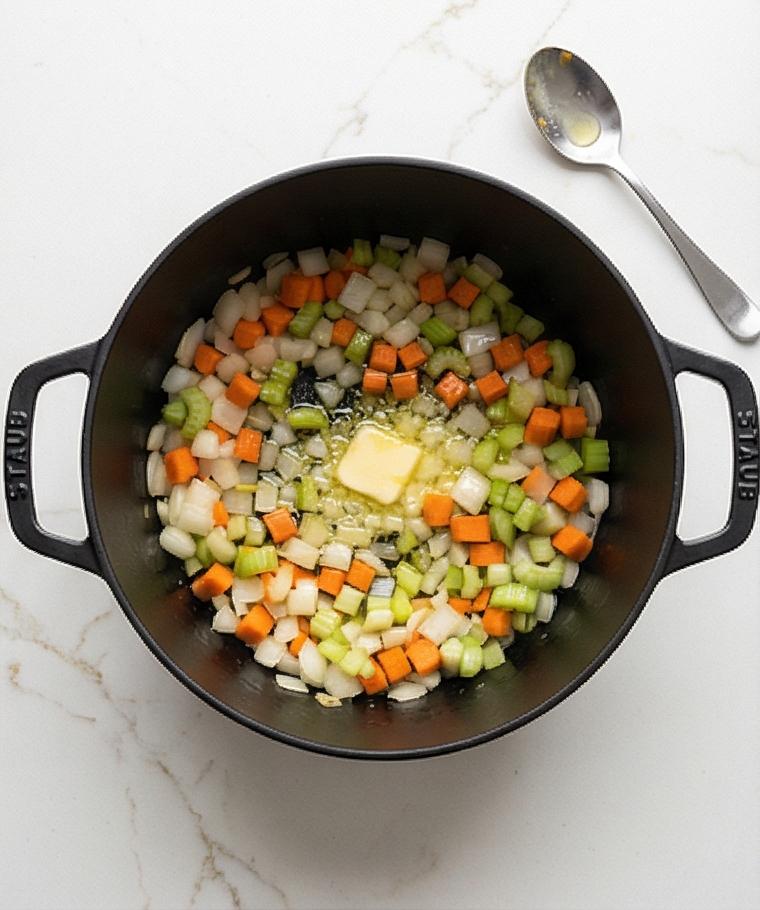
Warm a heavy-bottomed, oven-safe Dutch oven or large pot briefly, add the butter and olive oil and allow the butter to foam without browning, then add the chopped onion, carrots, and celery. Season with the first portion of kosher salt and cook over medium heat, stirring occasionally, until the onion is translucent and the carrots begin to soften—these vegetables should look glossy, softened, and gently translucent rather than browned.
Step 3: Add garlic and toast the spices
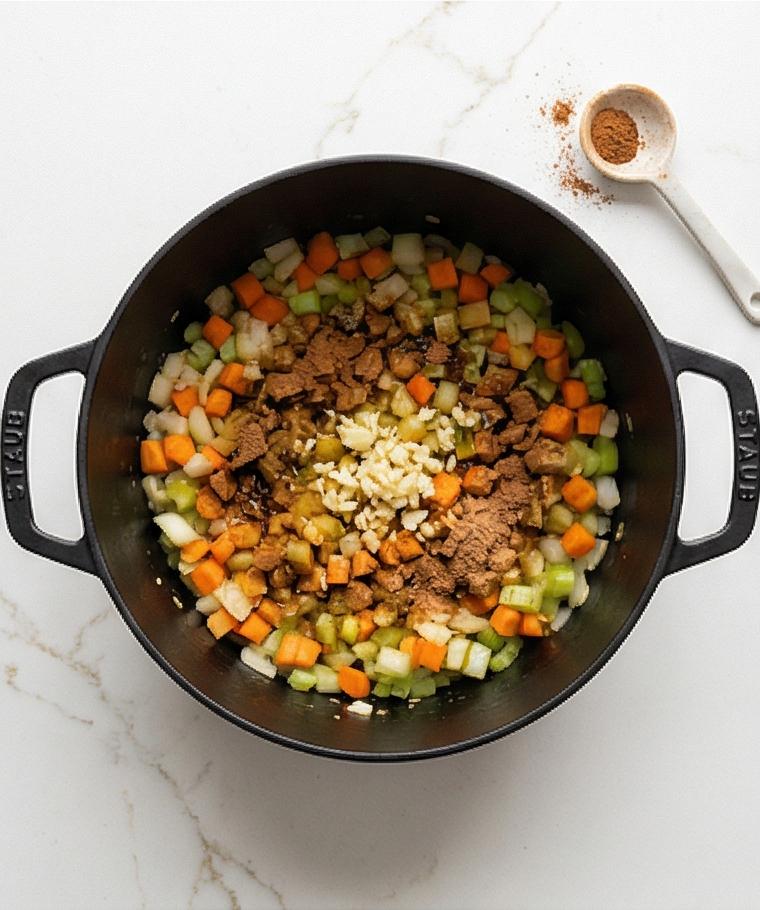
Stir in the minced garlic and cook just until fragrant, about 30–45 seconds, then immediately sprinkle in the remaining salt, black pepper, cinnamon, nutmeg, ground ginger, and optional cayenne. Keep the mixture moving so the spices warm and bloom without burning; the pan should look fragrant, lightly dusted with warm spice flecks and the garlic should appear just softened and glossy.
Step 4: Incorporate the pumpkin and herbs
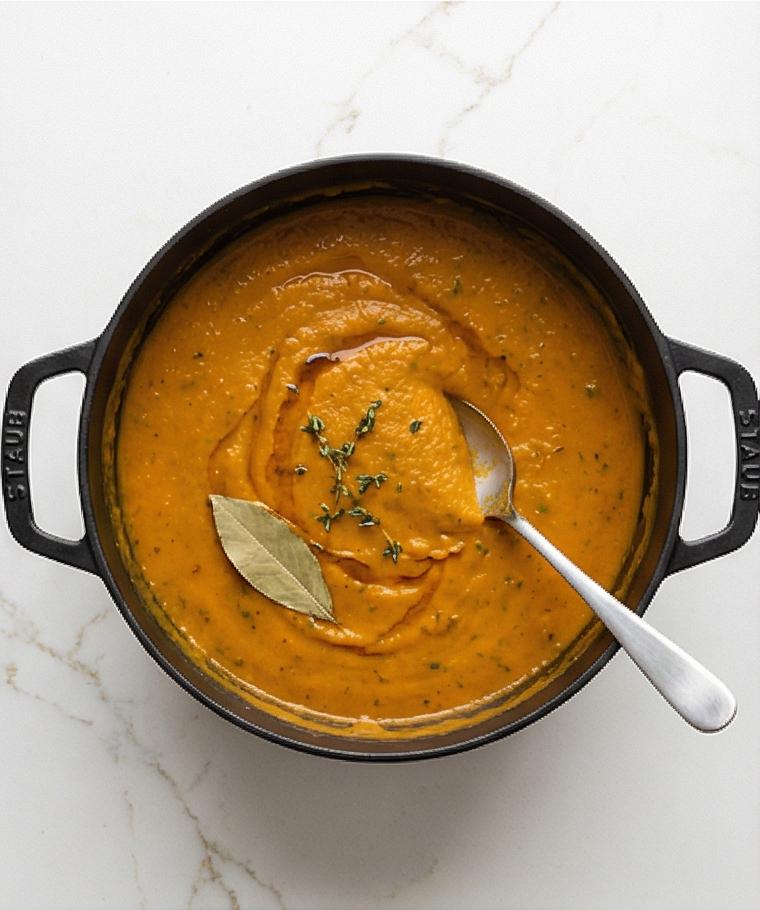
Spoon in the pumpkin purée and stir thoroughly so the bright orange purée completely coats the vegetables and toasted spices; cook briefly to remove any raw canned flavor and deepen the pumpkin taste. Stir in the chopped thyme and tuck in the bay leaf, adding maple syrup or brown sugar now if you want a subtle sweetness. The mixture should read as thick, cohesive, and richly orange, with herb flecks and a faint sheen from the fats.
Step 5: Add broth and simmer until tender
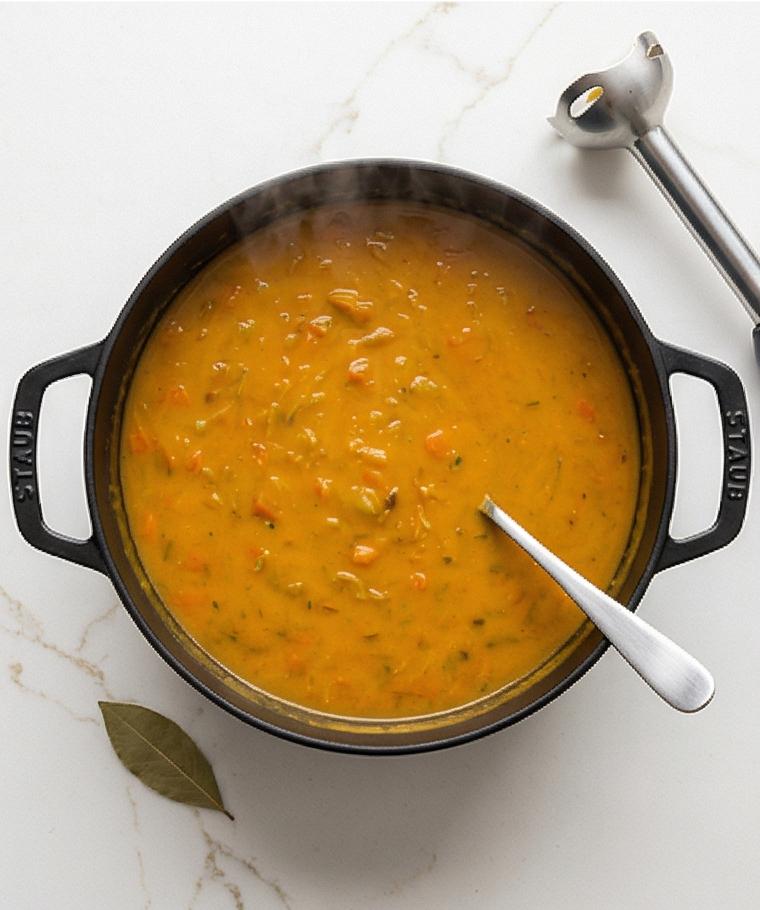
Pour in the low-sodium broth, stirring to deglaze and loosen any browned bits from the pot, and add up to a cup of water if you prefer a thinner soup. Bring to a gentle boil then immediately reduce to a low simmer, cover partially, and cook until the carrots are very tender and the flavors have melded—about 20–25 minutes. The pot should contain a fragrant, slightly loosened orange stew with visible softened carrot pieces ready for blending.
Step 6: Blend to a velvety texture
Turn off the heat, remove the bay leaf, let the soup cool briefly, then blend until completely smooth and velvety using an immersion blender directly in the pot or carefully in batches in a countertop blender. The resulting texture should be creamy and lump‑free; return to low heat and add any reserved water a little at a time if the soup is thicker than you like.
Step 7: Finish with acid and cream, then season
Stir in the fresh lemon juice and the room‑temperature heavy cream, warming gently over low heat until steaming (do not boil). Taste and adjust seasoning with additional kosher salt and black pepper so the balance is bright, rounded, and slightly sweet if you used maple or brown sugar.
Step 8: Serve, garnish, and optional storage notes
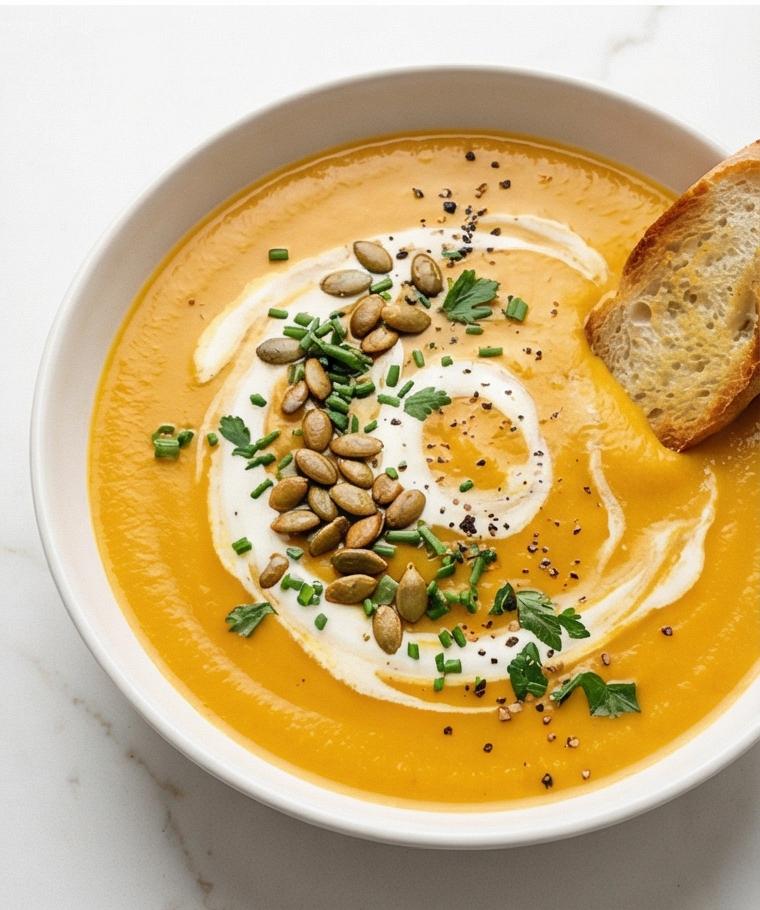
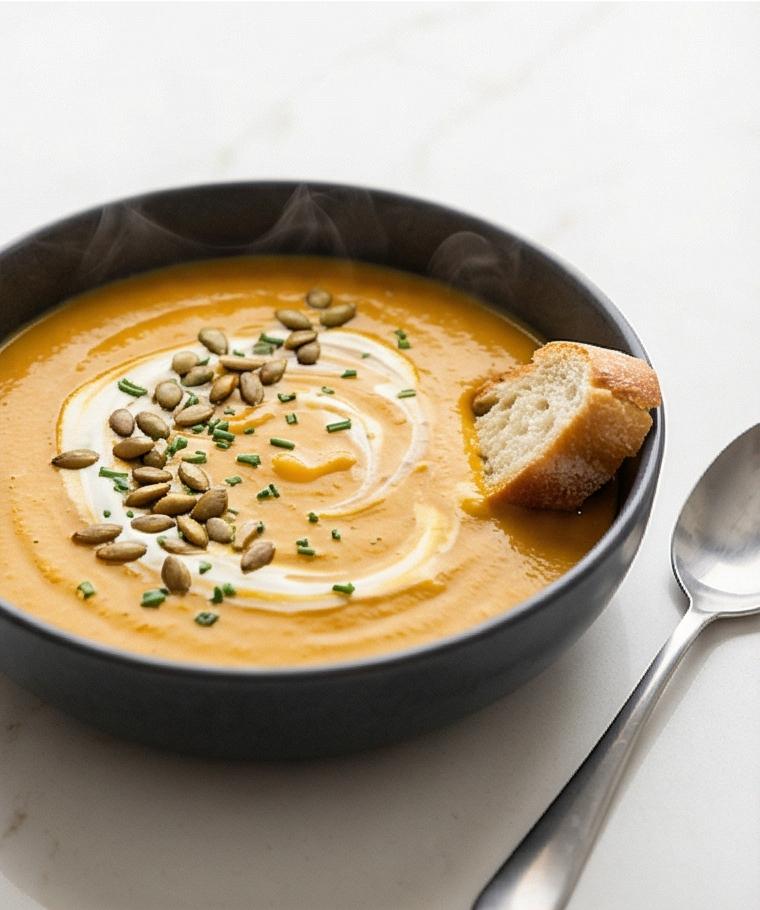
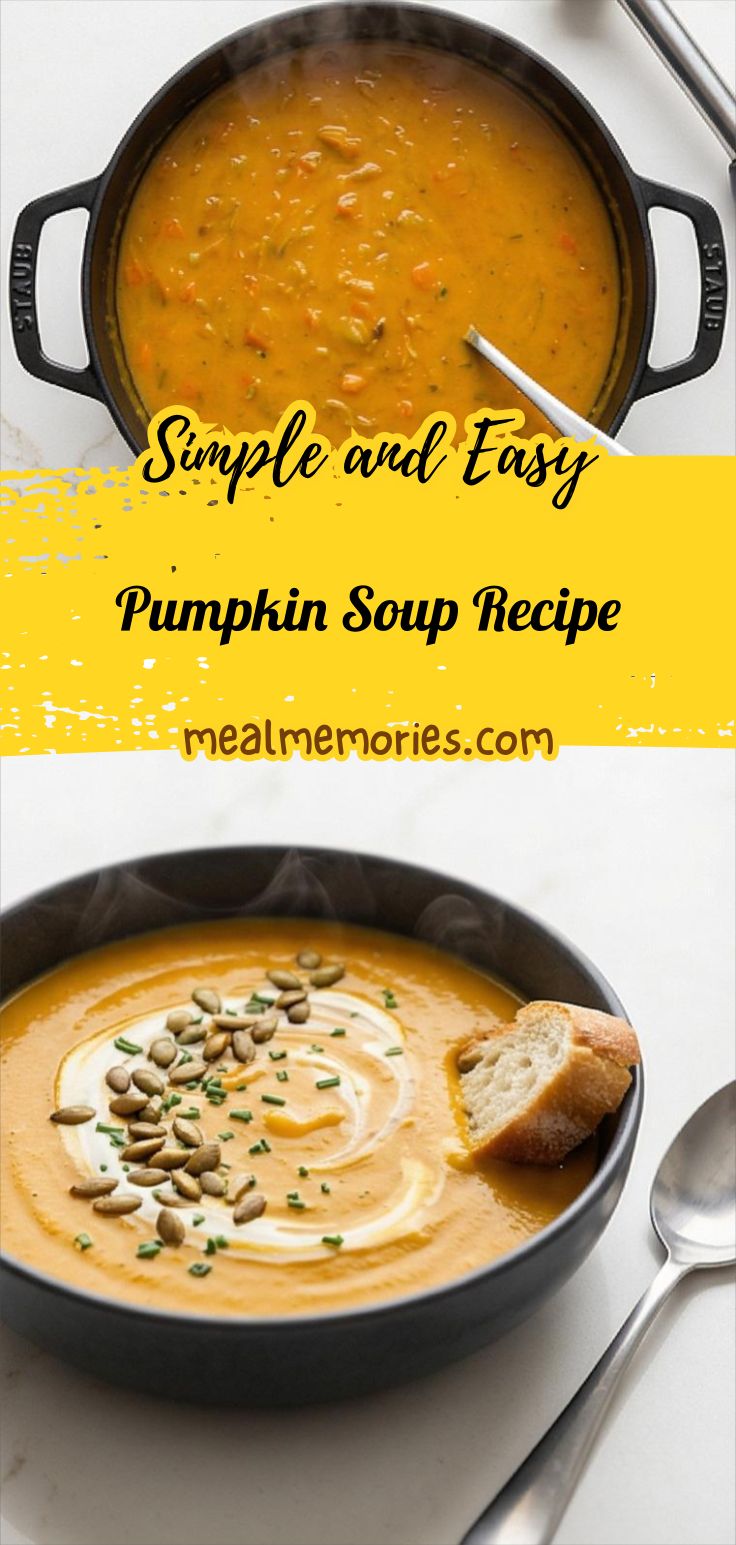
Ladle the hot pumpkin soup into warmed shallow bowls, drizzle a little extra cream or a spoonful of crème fraîche if desired, and garnish with toasted pumpkin seeds and finely chopped chives or parsley; serve with slices of warm crusty bread. Cool leftovers to room temperature before refrigerating for up to 4 days, or freeze without the cream for longer storage.
Making It Your Own
I like to play with small changes to see how the soup responds. Swap the heavy cream for coconut milk and add a squeeze of lime instead of lemon for a tropical take that still feels comforting. For a heartier, stew-like version, stir in roasted chickpeas or crumbled sausage at the end and serve with coarse toast.
If you want it vegan, use olive oil instead of butter and vegetable broth, and finish with a swirl of coconut cream. For more warmth, increase the cinnamon slightly and add a pinch of smoked paprika. Each tweak changes the mood of the Pumpkin Soup Recipe in subtle, delightful ways.
How to Serve
When I host, I treat this Pumpkin Soup Recipe like the warm-up act that sets the tone. For a small dinner, ladle into shallow bowls and top each with a swirl of cream, toasted pepitas, and a sprinkle of chives; pair with a simple green salad and crusty bread. For a buffet or larger crowd, keep the soup in a warm slow cooker and offer garnishes in small bowls so guests can build their own bowls.
To stretch the recipe for a larger group, keep the pumpkin purée to broth ratio the same and multiply by 1.5 or 2, then adjust seasoning at the end. If serving as a first course, plan on 1 cup per person; for a main with bread, count on 1 1/2 cups per person.
Storage and Reheating Tips
Cool leftover soup to room temperature before chilling to avoid sweating in the fridge. Stored in airtight containers, this soup keeps well for up to 4 days; separate the cream if you might prefer a fresher finish when reheating.
Reheat gently on the stove over low heat, stirring frequently to prevent scorching. If the soup thickened in the fridge, add small amounts of water or broth to reach the desired consistency, and finish with a splash of cream or lemon to revive brightness.
Common Mistakes and How to Avoid Them
Undercooking the carrots will leave the soup with a grainy texture; make sure the carrots are very tender before blending. Overcooking can dull the flavors, so aim for the recommended simmer time and taste as you go.
Another common slip is skipping the lemon or acid; a little lemon juice at the end lifts the whole dish, so do not skip it. Finally, blend carefully when the soup is hot to avoid splatters and burns.
Final Thoughts
If you try this Pumpkin Soup Recipe, I hope it becomes a simple ritual in your kitchen like it did in mine. It is forgiving, adaptable, and reliably comforting. Spoon it into warmed bowls, add your favorite garnish, and enjoy the cozy pause it brings to any day.
Frequently Asked Questions.
- Q: Can I use fresh pumpkin instead of canned purée? A: Yes, you can roast and purée fresh pumpkin; cook it until very tender, then blend until smooth. You may need to adjust liquid to match the canned puree’s consistency.
- Q: How do I make this Pumpkin Soup Recipe dairy free? A: Substitute olive oil for butter and use coconut milk or another plant-based cream instead of heavy cream. Taste and adjust seasoning at the end.
- Q: Can I freeze the soup? A: Yes, freeze without the heavy cream for best results. Thaw in the fridge and add cream when reheating.
- Q: How do I prevent the soup from being too sweet? A: Use low-sodium broth, skip or reduce the maple syrup, and add lemon juice to balance sweetness.
- Q: What are good garnishes for Pumpkin Soup Recipe? A: Try toasted pumpkin seeds, a drizzle of cream or crème fraîche, chopped chives or parsley, and a few cracks of black pepper.
Pumpkin Soup Recipe
Make Pumpkin Soup Recipe now: silky, spiced pumpkin soup finished with cream and lemon for bright, cozy bowls.
Ingredients
Instructions
Step 1: Prep the produce and aromatics
Finely chop the yellow onion, peel and dice the carrots into small uniform cubes, dice the celery, and mince the garlic so everything cooks evenly and quickly; measure out the spices (cinnamon, nutmeg, ground ginger, cayenne if using), the thyme leaves, bay leaf, maple syrup or brown sugar if using, and set the pumpkin purée, broth, cream, lemon juice, and garnishes in small bowls or jars so they are ready when you need them.
Step 2: Melt fat and sweat the vegetables
Warm a heavy-bottomed, oven-safe Dutch oven or large pot briefly, add the butter and olive oil and allow the butter to foam without browning, then add the chopped onion, carrots, and celery. Season with the first portion of kosher salt and cook over medium heat, stirring occasionally, until the onion is translucent and the carrots begin to soften—these vegetables should look glossy, softened, and gently translucent rather than browned.
Step 3: Add garlic and toast the spices
Stir in the minced garlic and cook just until fragrant, about 30–45 seconds, then immediately sprinkle in the remaining salt, black pepper, cinnamon, nutmeg, ground ginger, and optional cayenne. Keep the mixture moving so the spices warm and bloom without burning; the pan should look fragrant, lightly dusted with warm spice flecks and the garlic should appear just softened and glossy.
Step 4: Incorporate the pumpkin and herbs
Spoon in the pumpkin purée and stir thoroughly so the bright orange purée completely coats the vegetables and toasted spices; cook briefly to remove any raw canned flavor and deepen the pumpkin taste. Stir in the chopped thyme and tuck in the bay leaf, adding maple syrup or brown sugar now if you want a subtle sweetness. The mixture should read as thick, cohesive, and richly orange, with herb flecks and a faint sheen from the fats.
Step 5: Add broth and simmer until tender
Pour in the low-sodium broth, stirring to deglaze and loosen any browned bits from the pot, and add up to a cup of water if you prefer a thinner soup. Bring to a gentle boil then immediately reduce to a low simmer, cover partially, and cook until the carrots are very tender and the flavors have melded—about 20–25 minutes. The pot should contain a fragrant, slightly loosened orange stew with visible softened carrot pieces ready for blending.
Step 6: Blend to a velvety texture
Turn off the heat, remove the bay leaf, let the soup cool briefly, then blend until completely smooth and velvety using an immersion blender directly in the pot or carefully in batches in a countertop blender. The resulting texture should be creamy and lump‑free; return to low heat and add any reserved water a little at a time if the soup is thicker than you like.
Step 7: Finish with acid and cream, then season
Stir in the fresh lemon juice and the room‑temperature heavy cream, warming gently over low heat until steaming (do not boil). Taste and adjust seasoning with additional kosher salt and black pepper so the balance is bright, rounded, and slightly sweet if you used maple or brown sugar.
Step 8: Serve, garnish, and optional storage notes
Ladle the hot pumpkin soup into warmed shallow bowls, drizzle a little extra cream or a spoonful of crème fraîche if desired, and garnish with toasted pumpkin seeds and finely chopped chives or parsley; serve with slices of warm crusty bread. Cool leftovers to room temperature before refrigerating for up to 4 days, or freeze without the cream for longer storage.
Notes
- Taste and adjust salt at the end after adding lemon and cream.
- Freeze soup without the cream; add cream when reheating.
- Use an immersion blender for safety and a smoother texture.