Gazpacho Recipe
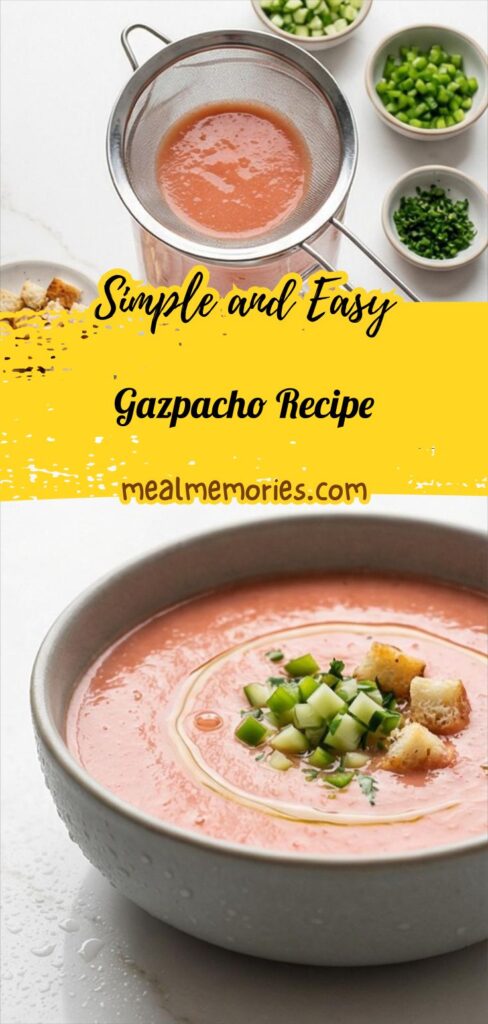
Make Gazpacho Recipe: blend ripe tomatoes, cucumber, bread, and olive oil into a chilled, silky Spanish soup.
Ingredients
- 900 g (2 lb) ripe tomatoes, cored and roughly chopped
- 115 g (4 oz) cucumber, peeled, seeded, and roughly chopped
- 85 g (3 oz) green bell pepper, seeded and roughly chopped
- 45 g (1.5 oz) red onion, peeled and roughly chopped
- 1 large garlic clove (about 4 g), minced
- 60 g (2 oz) day-old crusty white bread, crusts removed and torn into 2.5 cm (1-inch) pieces
- 120 ml (1/2 cup) cold water, plus up to 60 ml (1/4 cup) more as needed to adjust consistency
- 60 ml (1/4 cup) extra-virgin olive oil, at room temperature, plus 15 ml (1 tablespoon) extra for drizzling
- 30 ml (2 tablespoons) sherry vinegar
- 6 g (1 teaspoon) fine sea salt, plus more to taste
- 0.5 g (1/4 teaspoon) freshly ground black pepper
- 0.25 g (1/8 teaspoon) ground cumin (optional, for a subtle smoky note)
- 60 g (2 oz) cucumber, peeled, seeded, and finely diced, for garnish
- 45 g (1.5 oz) green bell pepper, finely diced, for garnish
- 8 g (2 tablespoons) fresh flat-leaf parsley or chives, finely chopped, for garnish
- 12 g (2 tablespoons) small plain croutons, for garnish (optional)
- 4–8 ice cubes, for serving (optional)
Instructions
Step 1: Prepare and hydrate the vegetables and bread
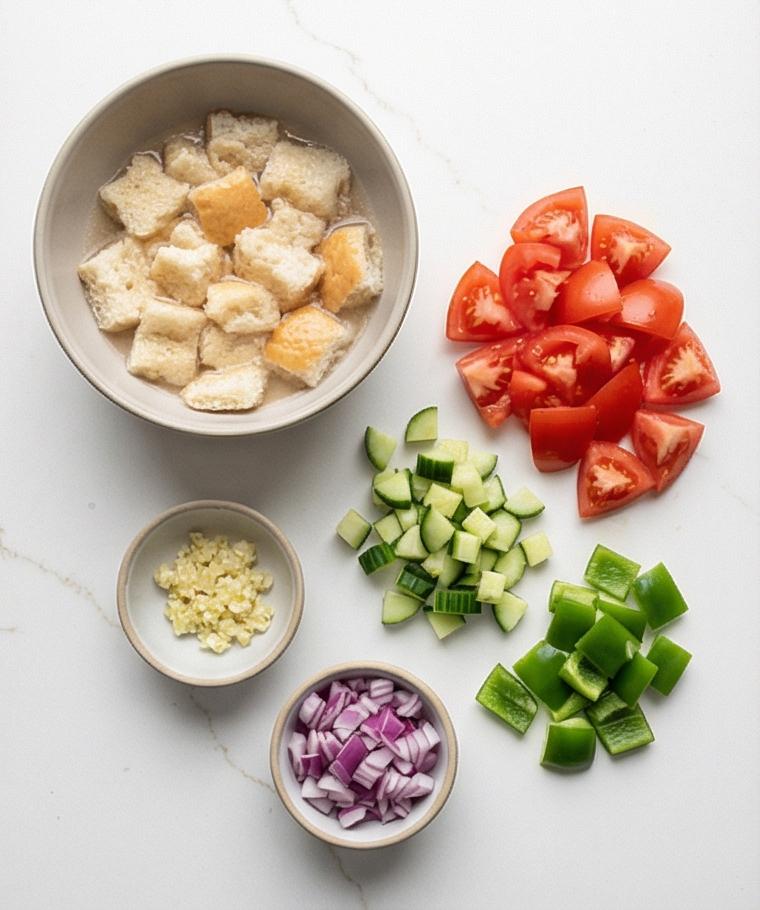
Rinse and pat the tomatoes, cucumbers, and green bell pepper dry. Core the tomatoes and cut into large, honest chunks; peel, halve, and scrape the cucumber seeds, chopping 115 g roughly for the soup base while keeping 60 g finely diced and chilled for garnish; remove stem and seeds from the pepper and chop 85 g roughly for blending while setting aside 45 g finely diced for garnish. Peel and coarsely chop the red onion and mince the garlic. Remove crusts from the day-old bread and tear into 2.5 cm pieces, then place the torn bread in a medium matte bowl and pour about half of the cold water over it, turning once or twice until the bread is fully moistened but not soupy. This is all about texture: glossy tomato flesh, satin cucumber flesh, and pillowy, water-softened bread ready to melt into the base.
Step 2: Build the base purée in the blender
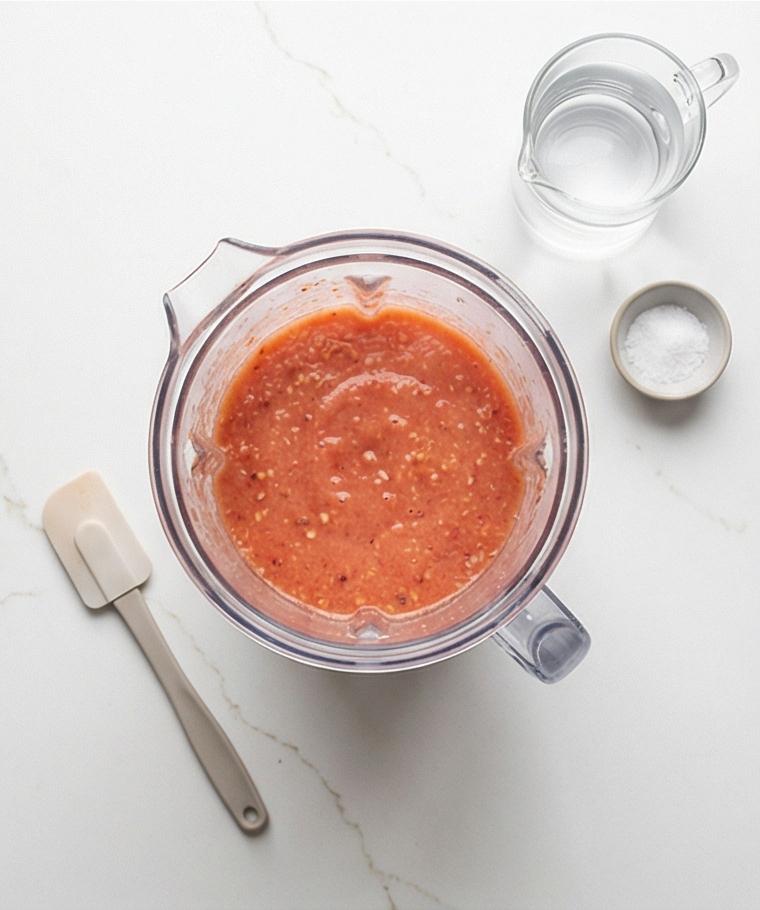
Squeeze the soaked bread gently to remove excess water and transfer the squeezed pieces to a clear blender jar. Add the chopped tomatoes, the 115 g roughly chopped cucumber, the 85 g chopped green pepper, chopped red onion, and minced garlic. Season with fine sea salt, freshly ground black pepper, and a pinch of ground cumin if you like a whisper of smoke. Pour in the remaining measured cold water plus an extra two tablespoons to help the blender catch the ingredients. Start blending low and graduate to high, scraping the sides once or twice, until the mixture becomes a cohesive, thick-but-pourable purée — a collage of softened seeds, velvet tomato flesh, and the bread’s integrated clouds. The jar should show a homogeneous, tomato-pink emulsion with no large vegetable chunks.
Step 3: Emulsify with olive oil; add vinegar and adjust
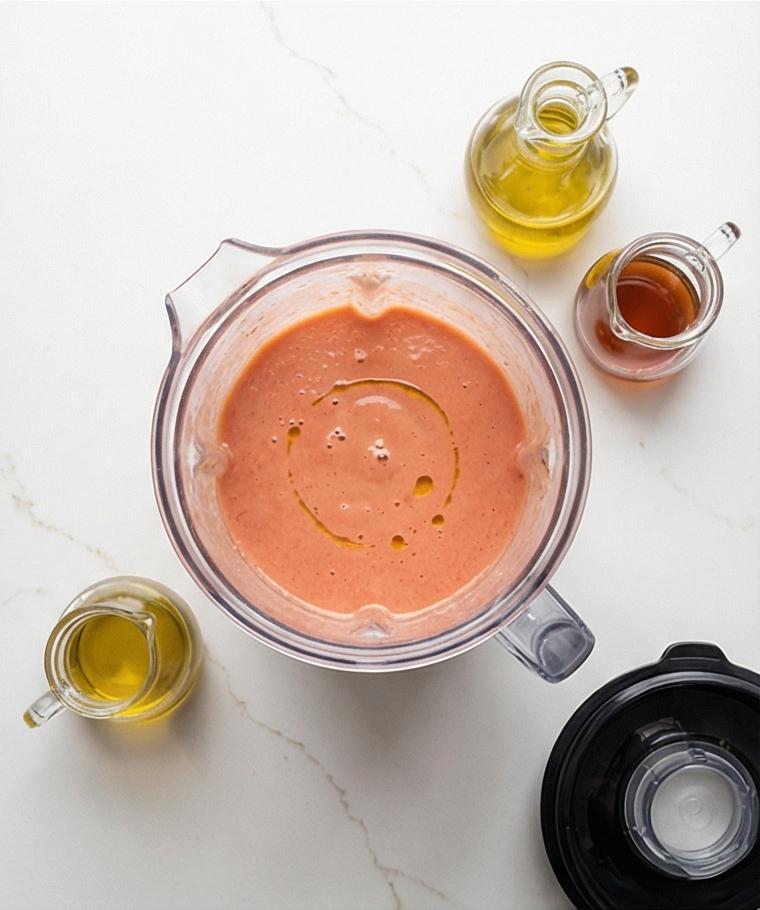
With the blender running on low, very slowly introduce the 60 ml extra-virgin olive oil in a thin steady stream so the purée lightens and turns creamy and silky — the texture shifts from raw pulp to a smooth, slightly glossy emulsion. Blend a little longer after the oil is fully incorporated, then add the sherry vinegar and blend briefly to wake the acidity through the soup. Check the viscosity: it should sit like drinkable yogurt — smooth, slightly thick, and luminous. Taste and adjust with tiny pinches of salt or a whisper more vinegar, remembering the chill will mute the brightness. This stage is all about transformation: grainy to velvety, matte to softly glossy.
Step 4: (Optional) Strain for ultra-silky texture and chill; prep garnishes
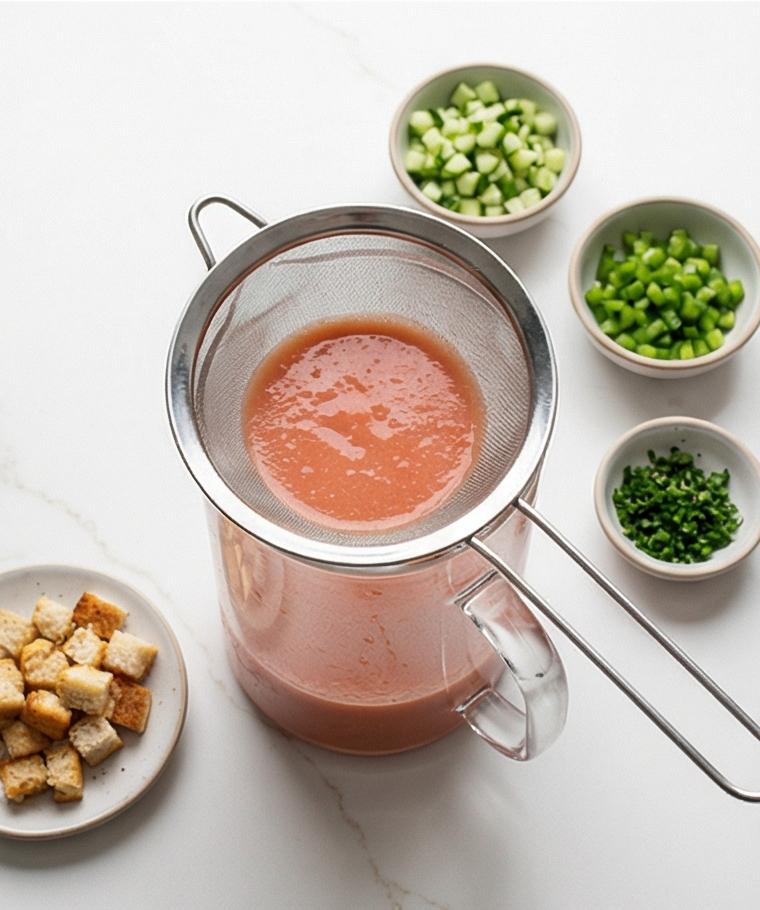
For the silkies, pour the blended soup through a fine-mesh sieve into a clear pitcher, using the back of a ladle to coax the liquid through and leaving skins and seeds behind. Transfer the clear, glossy gazpacho to a covered vessel and refrigerate until very cold (2–4°C), at least two hours. While it chills, finely dice the reserved cucumber and green pepper and chop the parsley or chives; keep the croutons at room temperature so they remain crisp. The chilled pitcher should show a cool, dense, satin surface with tiny air bubbles and a subtle matte sheen from refrigeration.
Step 5: Final seasoning and serve very cold
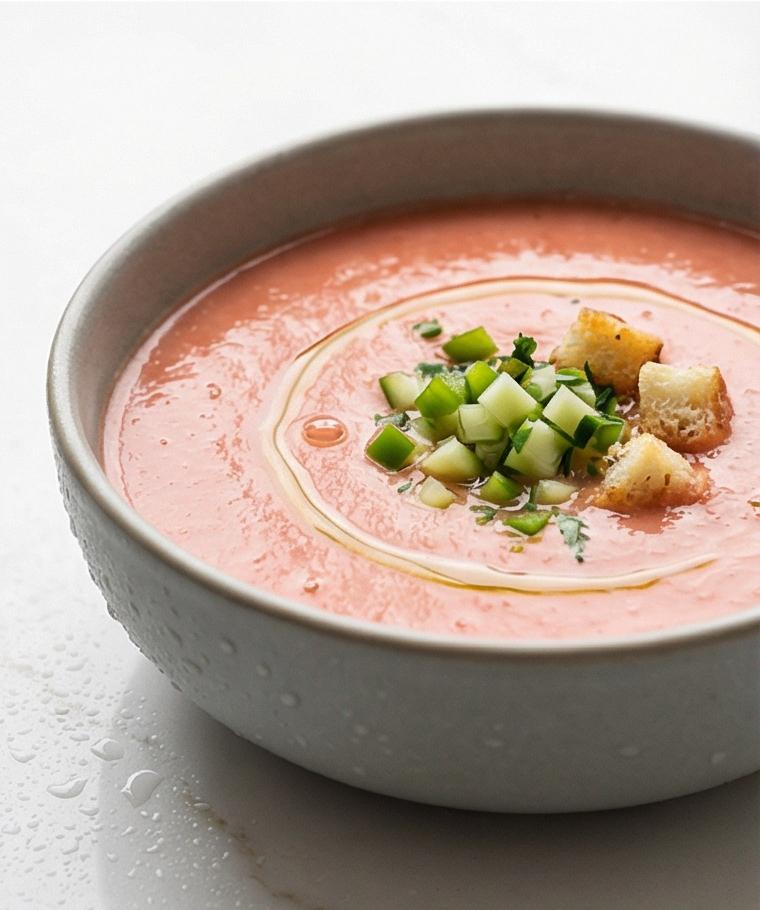
Stir the chilled gazpacho well, taste, and make a final seasoning nudge — a tiny pinch of salt, a few grinds of black pepper, or a bright splash of sherry vinegar if it feels muted. If the soup thickened too much in the cold, loosen with a tablespoon or two of cold water until it regains that drinkable creaminess. Ladle into chilled shallow bowls or small glasses; garnish each serving with a neat spoonful of the finely diced cucumber and green pepper, a scattering of chopped herbs, a few small croutons if using, and a thin thread of extra-virgin olive oil. Serve immediately while the texture is satin-cold and alive.
Notes
- Chill the soup at least two hours for the best flavor and texture
- Keep garnishes separate until serving to maintain crunch
- Use the ripest tomatoes you can find for maximum flavor
- Substitute gluten-free bread if needed to make the recipe gluten-free
- If soup tastes muted after chilling, add a splash more sherry vinegar and a pinch of salt