Caprese Skewers Recipe has been one of my easiest, most joyful go-tos for casual entertaining and weeknight snacks. I fell into making this after a summer farmers market haul left me with too many basil leaves and a tub of ciliegine I did not want to waste. I love how simple ingredients can sing together, and this Caprese Skewers Recipe feels like sunshine on a stick—bright, fresh, and endlessly sharable. You do not need to be a pro to make them look beautiful, and that sense of accomplishment is part of the fun.
How This Recipe Became My Party Favorite
I remember the first time I served the Caprese Skewers Recipe at a potluck: it was one of those humid evenings when everyone wanted something light and cool. I threaded the tomatoes, basil, and little mozzarella balls while a neighbor told a story that had us all laughing—by the time I finished plating, the skewers looked so vivid that people reached for them before I could even explain what was in the marinade. The scent of basil and olive oil pulled people in; someone said it smelled like an Italian garden, and that stuck with me. Each bite was bright and balanced, juicy tomato giving way to pillow-soft mozzarella and the warmth of garlic. Watching guests pick at the platter, linger over small talk, and come back for seconds cemented these skewers as my go-to for gatherings where easy, elegant food matters.
The Ingredients That Make the Magic (and How to Choose Them)
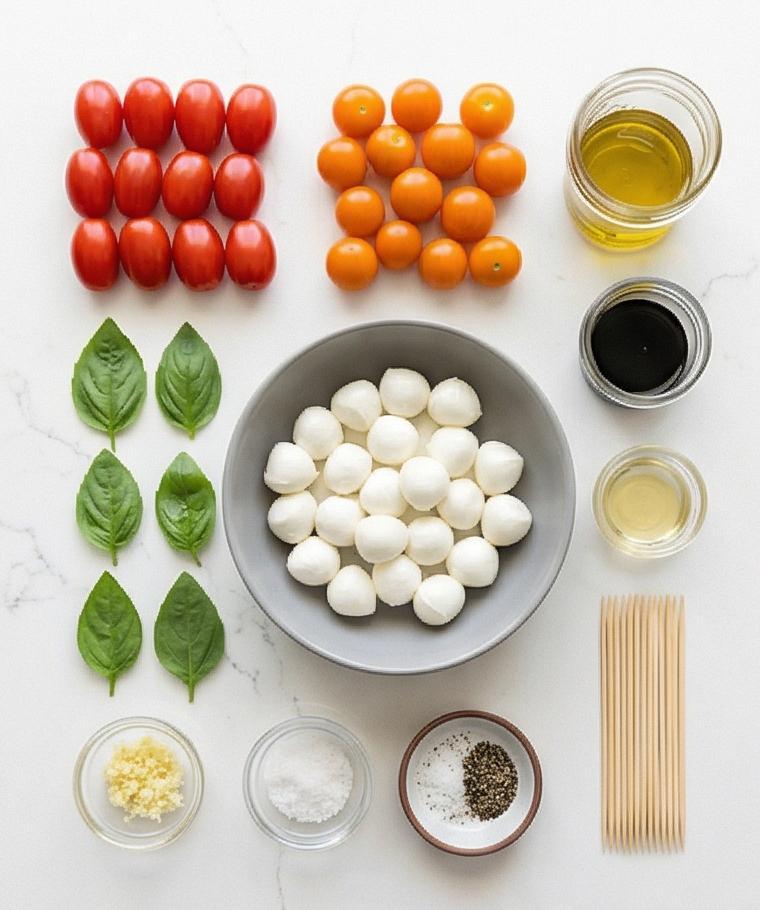
- Grape or Cherry Tomatoes: The sweet, juicy backbone; pick firm, glossy tomatoes with no blemishes. If unavailable, use small plum tomatoes halved.
- Fresh Basil Leaves: Aroma and lift; choose aromatic, vibrant leaves and avoid wilted ones. Sub with baby spinach in a pinch.
- Ciliegine Fresh Mozzarella: Creamy, tender center of each skewer; opt for high-quality mozzarella and drain well. Small bocconcini can substitute.
- Extra-virgin Olive Oil and Balsamic Vinegar: Provide a gentle marinade and finishing tang; use good olive oil and a slightly sweet balsamic.
- Garlic, Salt, Pepper: Simple seasoning that deepens flavor; grate garlic fine so it melds without overpowering.
Essential Kitchen Tools and Why They Matter
These skewers are straightforward, but the right tools make assembly faster and neater. A small bowl for marinating keeps the mozzarella from getting lost in big containers, and a platter with a flat surface lets the skewers lay evenly for a pretty presentation. If you do a lot of entertaining, invest in reusable bamboo skewers or small metal picks to reduce waste. A fine microplane makes quick work of garlic and lemon zest, and a pair of kitchen towels speeds drying the produce. Alternatives like short metal toothpicks or cocktail forks work if you do not have skewers.
- Small mixing bowl: For marinating the ciliegine.
- Microplane or fine grater: For garlic and lemon zest.
- Kitchen towels or paper towels: For thorough drying.
- Wooden cocktail skewers or bamboo picks: For assembly.
- Serving platter: To arrange skewers in a single layer.
Step-by-Step Preparation Guide
Step 1: Rinse, Dry, and Ready the Fresh Pieces
Gentle rinsing and precise drying are the first sensory steps: rinse the grape or cherry tomatoes until any garden grit is gone, then pat each completely dry so they remain glossy rather than waterlogged; do the same for the fresh basil leaves, coaxing them dry while keeping their bright emerald color intact. Place the ciliegine mozzarella in a bowl and pat the little balls dry too, so they will absorb the marinade without becoming soggy. These small, tactile actions set the textural stage for everything that follows, keeping skins taut, leaves vibrant, and cheese pleasantly pillowy.
Step 2: Marinate the Mozzarella in a Gentle Dressing
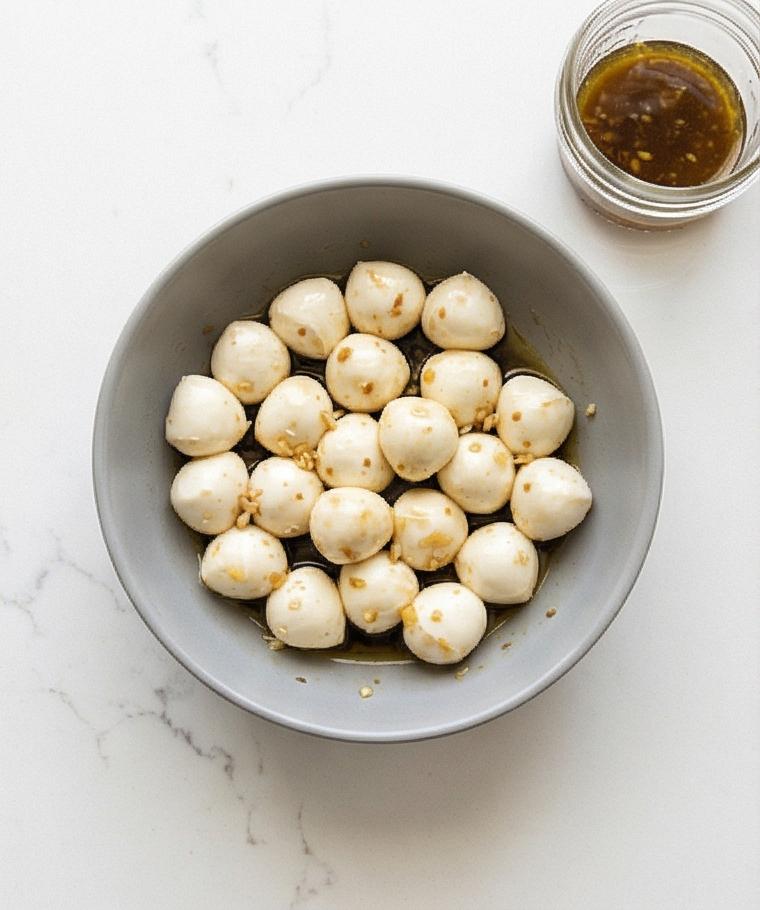
Toss the drained ciliegine with extra‑virgin olive oil, a splash of balsamic vinegar, and finely grated garlic, then season lightly with the small portion of salt and pepper reserved for the marinade. Work gently so the cheese balls become evenly coated but stay intact; let them sit chilled, loosely covered, for a short spell so flavor blooms without changing the cheese’s delicate, supple texture. After resting, drain and leave any excess liquid behind so the cheese will not drip when skewered.
Step 3: Arrange Tools and Begin Assembly Layout
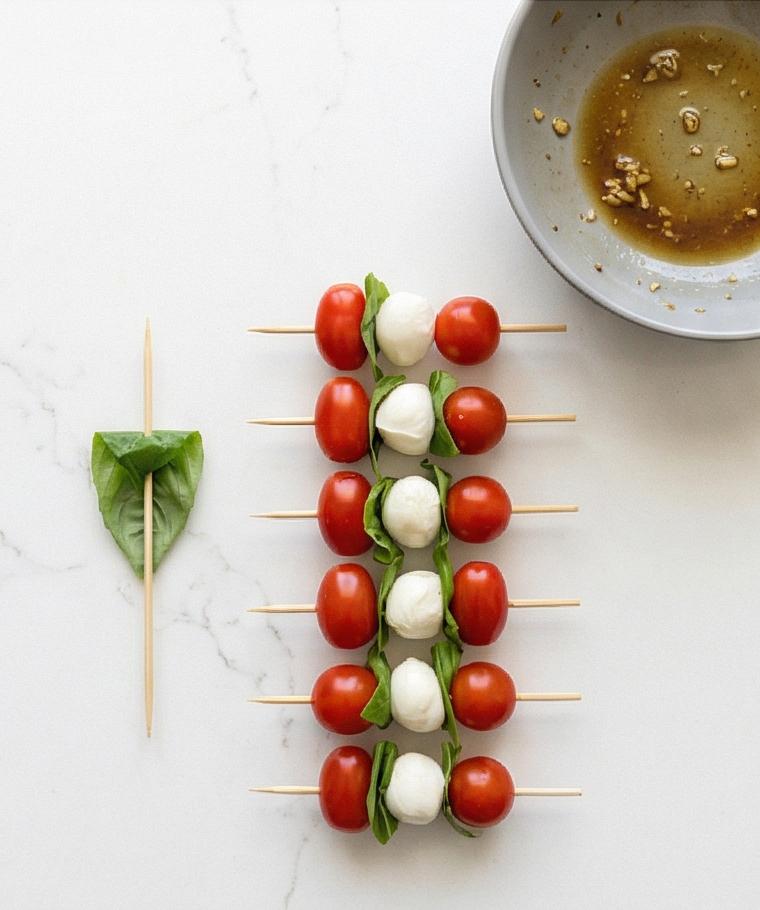
Lay out the wooden cocktail skewers, the dried tomatoes, basil leaves folded to match the cheese, and the marinated mozzarella in an orderly workflow. The goal here is snug, elegant stacking: slide a tomato about one‑third up the skewer, fold a basil leaf so it tucks against the tomato, then add a mozzarella ball so it nests into the leaf. Repeat with a calm rhythm so each skewer looks uniform—snug but not compressed—preserving roundness, glossy tomato skin, and the basil’s folded volume.
Step 4: Complete the Batch and Arrange in a Single Layer
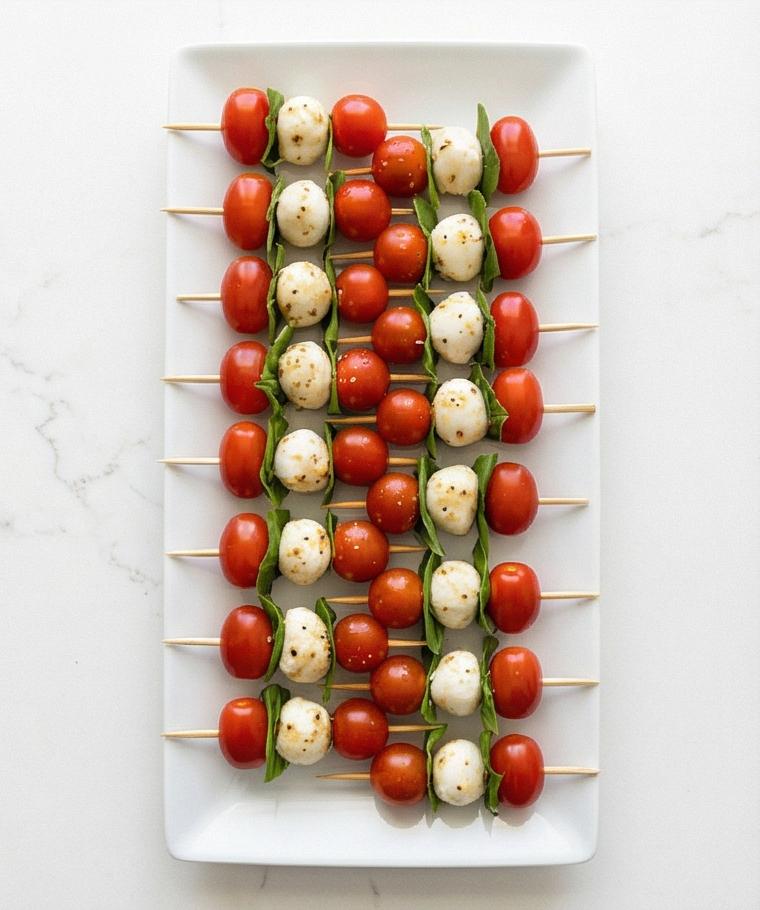
Assemble all the skewers and lay them in a single layer on the serving platter, stems aligned for visual calm. The completed raw arrangement is a study in contrast: shiny scarlet tomatoes, soft matte white mozzarella mottled with the marinade, and flat bright green basil interiors glimpsing through folds. Keep the platter composition airy and consistent so each skewer reads as part of a set rather than a scattered heap.
Step 5: Finish with Glaze, Seasoning, and Bright Garnish
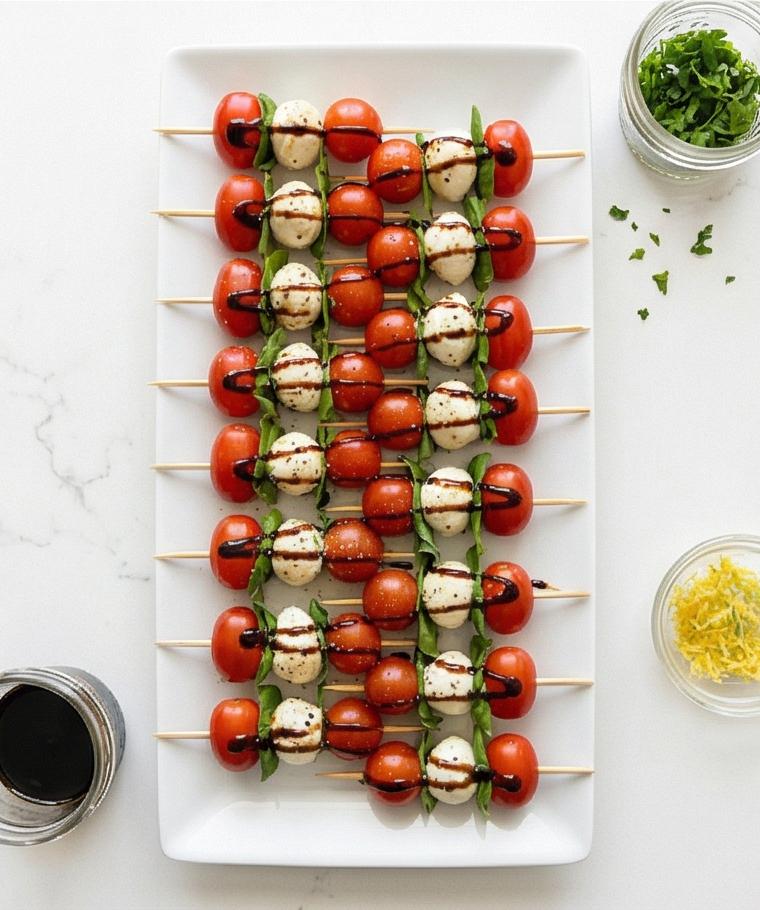
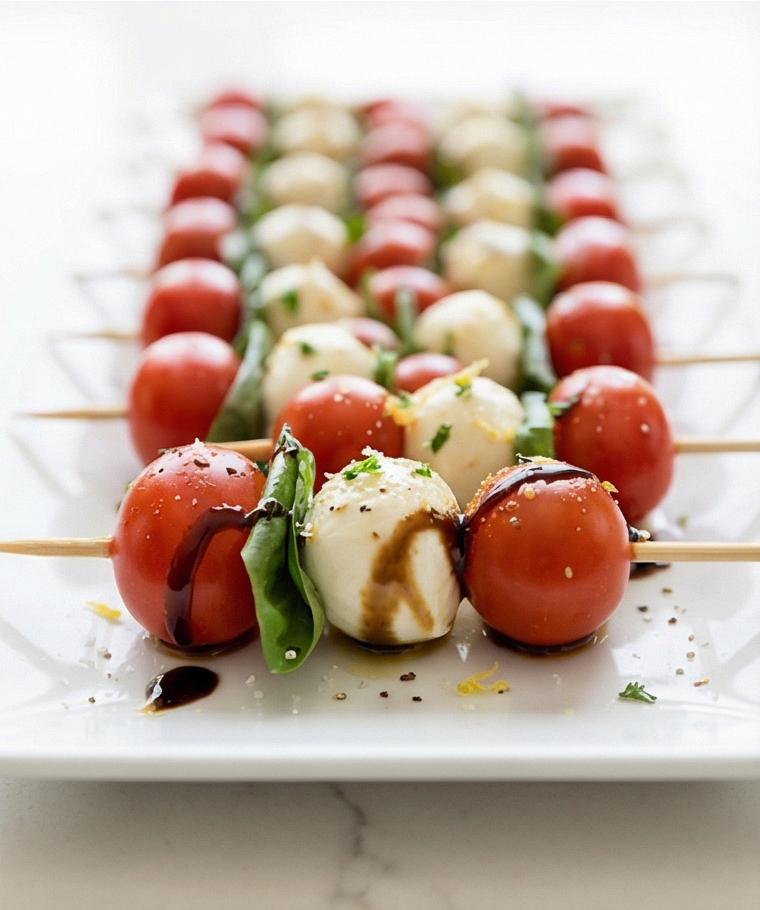
Just before serving, add the visual and flavor punctuation: drizzle thick balsamic glaze in thin, even ribbons across the skewers, then dust the finishing salt and pepper over the tops for crystalline sparkle. If using, scatter chopped parsley and a whisper of lemon zest for flecks of verdant and sunlit color. The final state should feel immediately approachable—cool, glossy, and lightly glazed—ready to be served or held briefly chilled until the last moment.
Making It Your Own
I like to experiment with small swaps depending on season and who I am serving. For a lighter, dairy-free version, try marinated chickpeas threaded with tomatoes and basil; they hold up well and pick up the marinade. In cooler months, roasted cherry tomatoes add warm, caramelized notes that contrast beautifully with the cool mozzarella. For a smoky, regional twist, add a few strips of prosciutto wrapped around the mozzarella for a savory bite. Try different balsamic glazes or a squeeze of fresh orange for playful acidity. I find tiny experiments like these keep the Caprese Skewers Recipe feeling fresh and adaptable.
How to Serve
When I am hosting, I arrange the skewers in concentric circles on a large platter so guests can reach them from any side. For cocktail parties, place individual skewers standing upright in a shallow bowl of sea salt or coarse sugar to keep them steady and pretty. If you need to scale up, double the ingredients and assemble in batches, keeping finished skewers chilled on a tray until serving time. For a family dinner, pair with crusty bread and a simple green salad to turn them into a light meal. Label any skewers with allergens when serving a crowd.
Storage and Reheating Tips
Caprese skewers are best eaten fresh, but you can store assembled skewers in an airtight container in the refrigerator for up to 24 hours. Keep them in a single layer if possible or separate layers with parchment to prevent sticking. If you marinaded the mozzarella, drain excess liquid before assembling to avoid sogginess.
If you do need to refresh chilled skewers, let them sit at room temperature for 10 to 15 minutes before serving so flavors lift. Avoid reheating; the texture of fresh mozzarella and basil does not respond well to heat. Instead, make new balsamic glaze ribbons and add them just before serving for extra shine.
Common Mistakes and How to Avoid Them
Overmarinating mozzarella can make it too soft and prone to falling apart. Keep the marinating time short and gently drain the cheese before skewering. Use a light hand with oil and vinegar so the flavors uplift rather than drown the fresh ingredients.
Another frequent misstep is assembling wet produce. Always dry tomatoes and basil thoroughly so the skewers stay glossy and the basil keeps its texture. If your basil bruises, use slightly smaller leaves or fold them to protect the surface.
Final Thoughts
I hope you try the Caprese Skewers Recipe soon; it is an effortless, crowd-pleasing way to celebrate simple ingredients. Whether you make them for a picnic, party, or a quiet snack, they bring color and fresh flavor to the table.
Frequently Asked Questions
- Q: Can I prepare Caprese skewers ahead of time? A: Yes, assemble and refrigerate up to 24 hours, but add glaze just before serving.
- Q: What can I use instead of ciliegine mozzarella? A: Small bocconcini or halved mini bocconcini work well as substitutes.
- Q: How do I keep basil from browning? A: Dry it completely and store assembled skewers chilled; add lemon zest right before serving.
- Q: Is there a dairy-free alternative that keeps the same texture? A: Marinated firm tofu cubes or roasted chickpeas are good dairy-free swaps.
- Q: Can I make these gluten-free? A: Yes, the recipe is naturally gluten-free if you use gluten-free skewers.
Caprese Skewers Recipe
Make Caprese Skewers Recipe quickly for bright, shareable appetizers—simple assembly, bold flavor, ready in minutes.
Ingredients
Instructions
Step 1: Rinse, Dry, and Ready the Fresh Pieces
Gentle rinsing and precise drying are the first sensory steps: rinse the grape or cherry tomatoes until any garden grit is gone, then pat each completely dry so they remain glossy rather than waterlogged; do the same for the fresh basil leaves, coaxing them dry while keeping their bright emerald color intact. Place the ciliegine mozzarella in a bowl and pat the little balls dry too, so they will absorb the marinade without becoming soggy. These small, tactile actions set the textural stage for everything that follows, keeping skins taut, leaves vibrant, and cheese pleasantly pillowy.
Step 2: Marinate the Mozzarella in a Gentle Dressing
Toss the drained ciliegine with extra‑virgin olive oil, a splash of balsamic vinegar, and finely grated garlic, then season lightly with the small portion of salt and pepper reserved for the marinade. Work gently so the cheese balls become evenly coated but stay intact; let them sit chilled, loosely covered, for a short spell so flavor blooms without changing the cheese’s delicate, supple texture. After resting, drain and leave any excess liquid behind so the cheese will not drip when skewered.
Step 3: Arrange Tools and Begin Assembly Layout
Lay out the wooden cocktail skewers, the dried tomatoes, basil leaves folded to match the cheese, and the marinated mozzarella in an orderly workflow. The goal here is snug, elegant stacking: slide a tomato about one‑third up the skewer, fold a basil leaf so it tucks against the tomato, then add a mozzarella ball so it nests into the leaf. Repeat with a calm rhythm so each skewer looks uniform—snug but not compressed—preserving roundness, glossy tomato skin, and the basil’s folded volume.
Step 4: Complete the Batch and Arrange in a Single Layer
Assemble all the skewers and lay them in a single layer on the serving platter, stems aligned for visual calm. The completed raw arrangement is a study in contrast: shiny scarlet tomatoes, soft matte white mozzarella mottled with the marinade, and flat bright green basil interiors glimpsing through folds. Keep the platter composition airy and consistent so each skewer reads as part of a set rather than a scattered heap.
Step 5: Finish with Glaze, Seasoning, and Bright Garnish
Just before serving, add the visual and flavor punctuation: drizzle thick balsamic glaze in thin, even ribbons across the skewers, then dust the finishing salt and pepper over the tops for crystalline sparkle. If using, scatter chopped parsley and a whisper of lemon zest for flecks of verdant and sunlit color. The final state should feel immediately approachable—cool, glossy, and lightly glazed—ready to be served or held briefly chilled until the last moment.
Notes
- Dry tomatoes and basil thoroughly to prevent sogginess.
- Drain marinated mozzarella well before skewering to avoid drips.
- Add balsamic glaze just before serving for best appearance and flavor.
- Use high-quality olive oil and balsamic for maximum flavor impact.
- If making ahead, store skewers in a single layer with parchment between layers.