Chicken Satay Recipe is one of those dishes I make whenever friends come over and I want something simple, vivid, and crowd-pleasing. I learned to balance the garlicky, ginger-scented marinade and the velvety peanut sauce through many late-night kitchen experiments, and it quickly became a go-to. The crisp char on the edges and the bright squeeze of lime make every bite sing, so it never lasts long at the table. If you love skewers that feel both homey and a little festive, this Chicken Satay Recipe will become a favorite.
How This Recipe Became My Rainy-Day Favorite
I remember the first time I tried to replicate the street-vendor satay I tasted on a humid night in Bangkok. The kitchen smelled of frying garlic and toasted peanuts, and I kept tasting tiny adjustments until the balance felt right. That evening I threaded strips of marinated chicken onto wet skewers while rain tapped on the windows, and the sound became part of the memory. When the skewers came off the grill they were glossy and caramelized, steam carrying the scent of coconut milk and lime. My partner closed their eyes at the first bite, and I felt proud in a quiet way. Since then, this Chicken Satay Recipe has been my comfort food for slow afternoons and busy gatherings alike. Every time I make it I get a little nostalgic for that rainy night, and I find myself smiling at the familiar rhythm of slicing, whisking, and grilling.
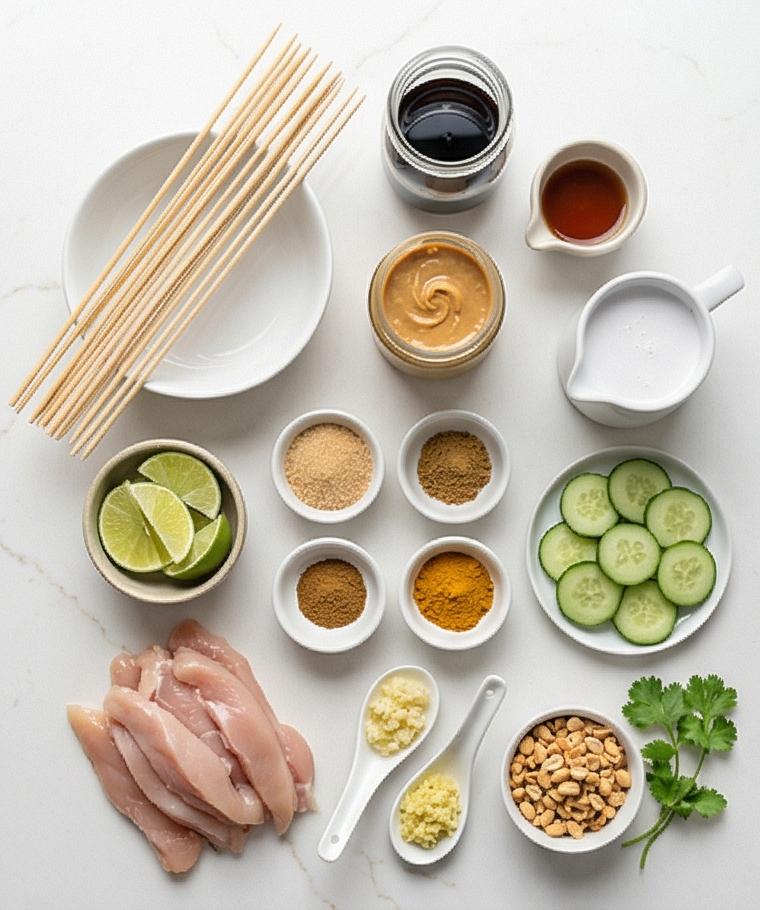
Primary Ingredients and How to Choose Them
- Chicken Thighs: Juicier and more forgiving than breasts, they give tender, flavorful skewers. Substitute boneless chicken breast if you prefer leaner meat, and slice evenly for uniform cooking.
- Garlic, Ginger, Lemongrass: Fresh aromatics lift the marinade. Use powdered ginger if needed, but fresh gives the best brightness. Omit lemongrass if unavailable.
- Soy Sauce and Fish Sauce: Provide umami and depth. Use low-sodium soy if you watch salt, and tamari for gluten-free.
- Coconut Milk and Peanut Butter: Coconut adds silkiness to the marinade and sauce, while peanut butter is the sauce’s backbone. Use natural peanut butter and thin with warm water if too stiff.
- Brown Sugar and Lime: Balance sweet and bright. Palm sugar is a great substitute for a deeper caramel note.
Essential Kitchen Tools You Need
Start with a short intro: having the right tools makes this recipe easy and more fun to cook.
- Mixing Bowl: A medium bowl for whisking and marinating keeps the chicken evenly coated. Use glass or ceramic to avoid metallic tastes.
- Tongs: Essential for turning and massaging the chicken without tearing it. A silicone-tipped tong is gentle and heat resistant.
- Skewers: Soak wooden skewers so they don’t burn. Metal skewers are reusable and ideal for broiling.
- Small Saucepan: For gently warming the peanut sauce so it becomes glossy and smooth. A double boiler works if you worry about scorching.
- Grill or Grill Pan: For char and smoke. A cast iron grill pan gives great marks if you don’t have an outdoor grill.
Step-by-Step Preparation Guide
Step 1: Soak the skewers and prepare the chicken
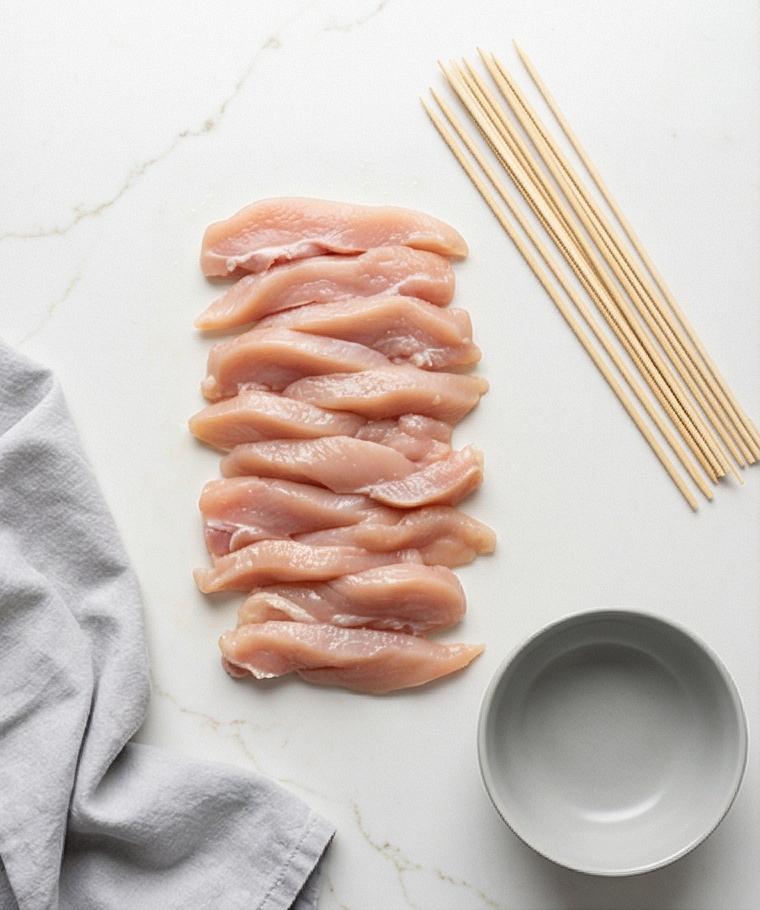
Soak 10–12 wooden skewers in cold water for at least 30 minutes while you trim excess fat from 1.5 pounds of boneless, skinless chicken thighs and slice them into long, even strips about 1/2 inch thick and 1 inch wide. Keep the pieces uniform so they cook evenly; arrange the pale-pink strips in neat parallel rows on a clean plate and leave the soaked skewers stacked nearby, ready for threading. This step sets the measured, calm rhythm of the prep – trimmed, hydrated, and organized for the next phase.
Step 2: Whisk the marinade into a smooth, clingy emulsion
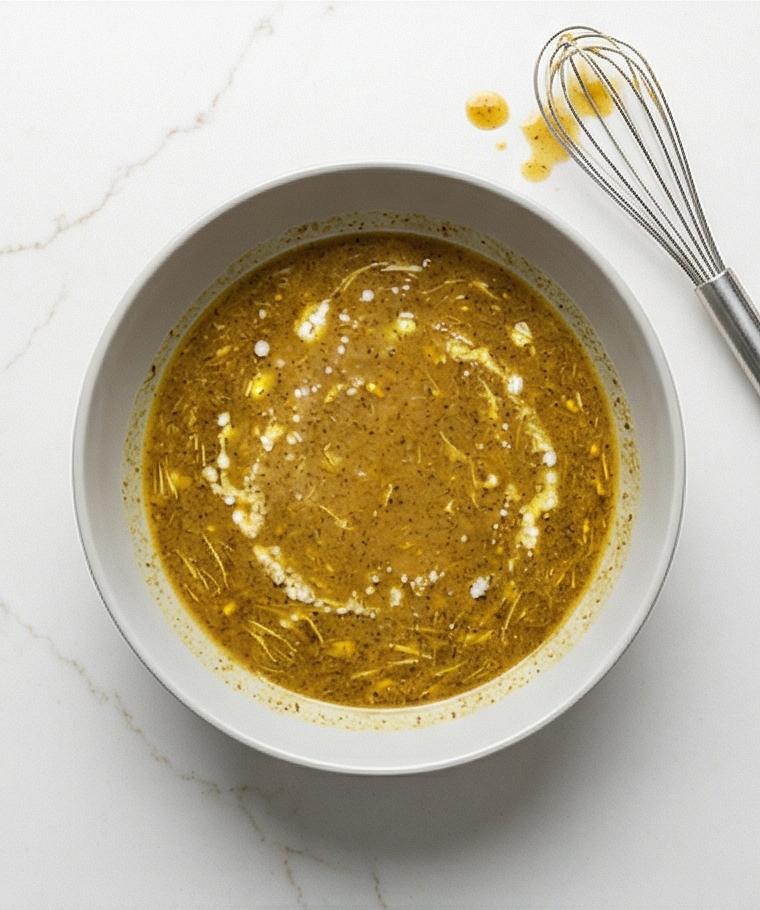
In a single matte light grey ceramic mixing bowl combine minced garlic, grated ginger, minced lemongrass (if using), 2 tablespoons soy sauce, 1 tablespoon fish sauce, 2 tablespoons light brown sugar, ground coriander, cumin, turmeric, curry powder, pepper, kosher salt, 3 tablespoons coconut milk, 1 tablespoon neutral oil and 1 tablespoon lime juice. Whisk vigorously until the spices and sugar dissolve into a slightly thick but pourable, glossy marinade – no grainy sugar crystals, just a homogenous, speckled-golden emulsion that will cling to the chicken fibers.
Step 3: Massage the chicken in the same bowl and chill
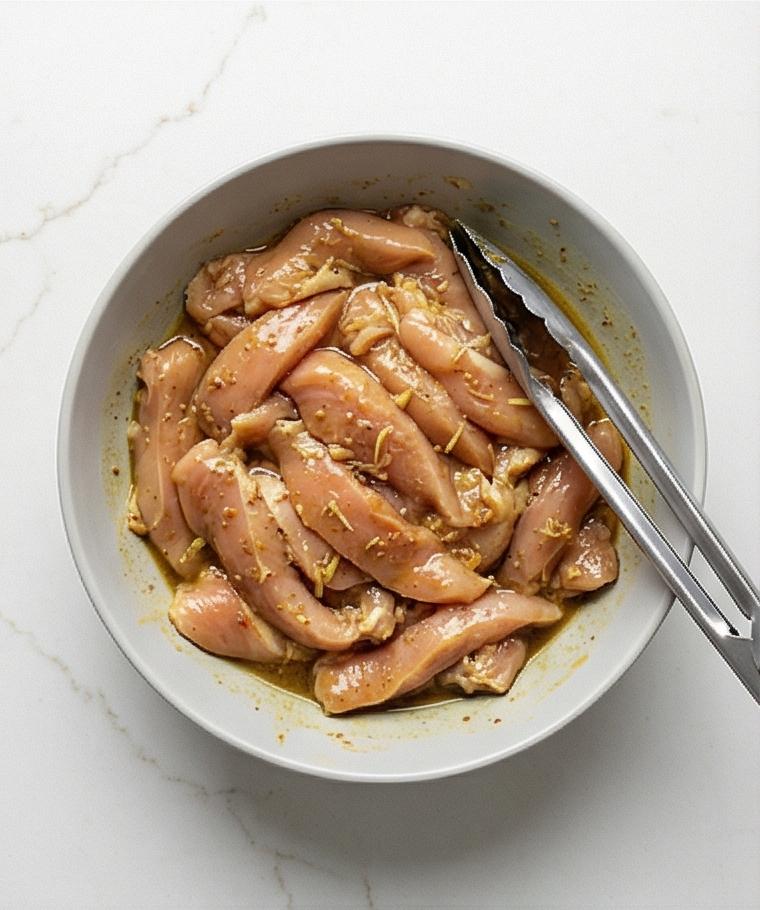
Add the sliced chicken to the same matte grey bowl and use tongs (resting on the rim) to thoroughly coat every strip, massaging the marinade into the meat so the glossy paste adheres into crevices. Arrange the coated pieces back into the bowl in a single layer so each strip is visibly saturated and shiny, then cover and chill for at least 30 minutes (up to 24 hours) – the visual should be plump strips glazed with a turmeric-speckled, herb-scented marinade.
Step 4: Build and finish the velvety peanut dipping sauce
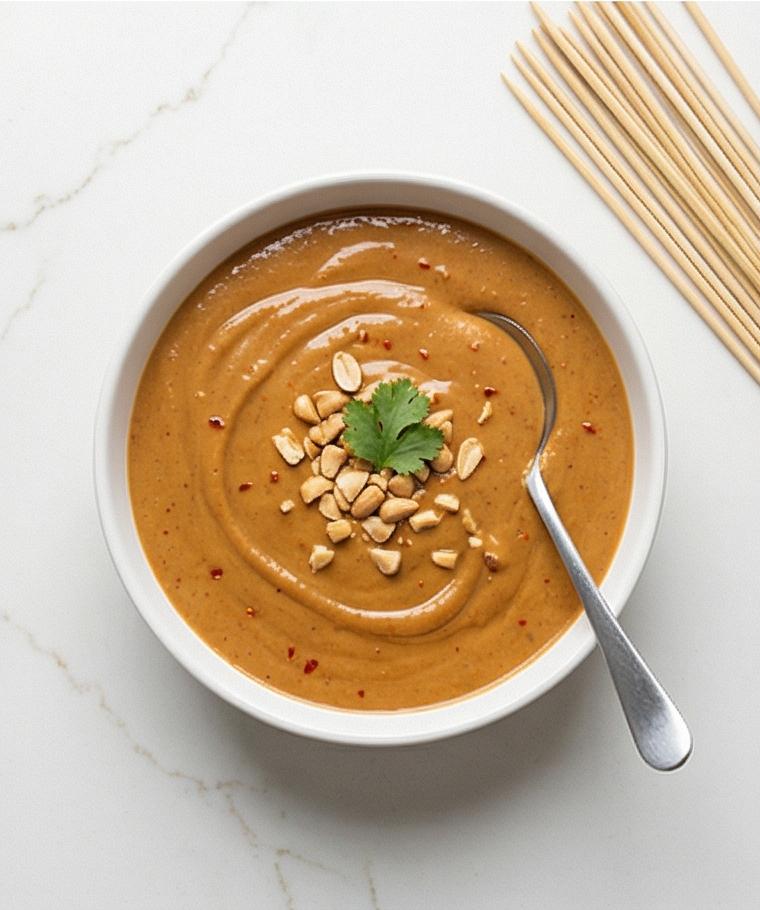
In a small shallow white ceramic saucepan off the heat combine creamy peanut butter, coconut milk, soy sauce, fish sauce, lime juice, rice vinegar, brown or palm sugar, a minced garlic clove, grated ginger, chili-garlic sauce to taste and optional toasted sesame oil. Warm gently until the mixture becomes a silky, glossy sauce that ribbons off a spoon; thin with 2–4 tablespoons warm water if needed so it’s pourable but still coats the back of a spoon. Taste and adjust for bright lime, rounded sweetness, or lifted heat – the final sauce should be nut-velvet, glossy, and flecked with fine chili bits.
Step 5: Thread, cook to caramelized char, rest and plate with garnishes
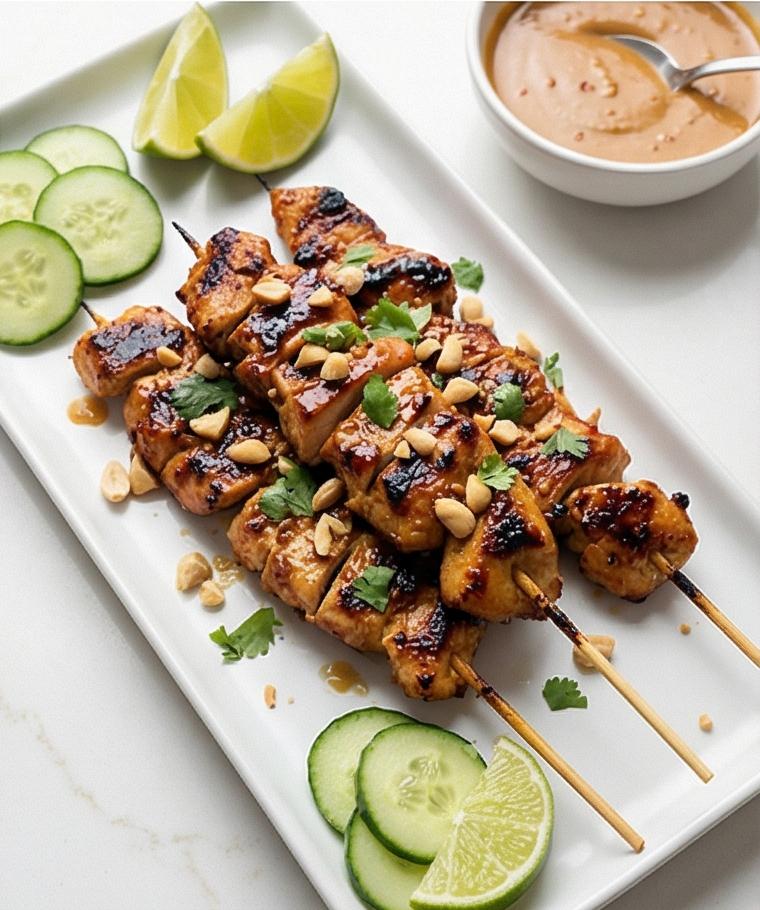
Bring the marinated chicken to room temperature, then thread the strips onto the soaked skewers in a loose S-shape so they lie flat and even; leave about 1 inch exposed at each end. Cook until the surfaces are caramelized and lightly charred in spots (juices clear and texture springy), then transfer to the quartz surface to rest 3–5 minutes so juices redistribute. Arrange the hot skewers on a long rectangular serving platter, sprinkle with roughly chopped roasted peanuts and chopped cilantro, scatter thin cucumber rounds and a few thin red chili slices, and place lime wedges and a small bowl of the warmed peanut sauce alongside for dipping – the finished skewers should be glossy, caramelized, nut-sprinkled, and ready to eat.
Making It Your Own
I like to swap things around depending on who I am feeding. For a gluten-free option I swap soy sauce for tamari and double-check labels, and the skewers still get that same caramelized edge. When I want a lighter version I use chicken breast and reduce the peanut butter in the sauce, thinning it with extra coconut milk so it stays silky.
For heat lovers I add more chili-garlic sauce and a pinch of cayenne. In summer I grill over charcoal for smoky notes, and in colder months I use a hot cast iron grill pan and finish under the broiler for quick char. Small changes like adding chopped fresh basil or swapping cilantro for mint create regional twists that keep this Chicken Satay Recipe exciting.
How to Serve
If I am hosting, I serve the skewers on a long platter so guests can grab one or two. Offer bowls of warm peanut sauce and lime wedges, and scatter chopped roasted peanuts, sliced cucumber, and herbs on the side so people can dress their skewers.
For larger crowds, double the recipe and keep finished skewers on a rimmed baking sheet in a low oven set to 200 F while you finish grilling batches. For a light meal, serve two skewers per person with a simple rice salad or steamed jasmine rice. For an appetizer, cut the strips into shorter pieces and present them on small skewers with toothpicks and a spoon of peanut sauce on the side.
Storage and Reheating Tips
Store leftover cooked skewers in an airtight container in the refrigerator for up to 3 days. Keep the peanut sauce in a separate jar; it will thicken as it cools and can be loosened with a little warm water or coconut milk.
To reheat, place skewers on a baking sheet under a 350 F oven for 6-8 minutes until warmed through, or re-sear in a hot pan for 1-2 minutes per side to regain char and crisp edges. Reheat the sauce gently on low heat, stirring until smooth.
Common Mistakes and How to Avoid Them
Overcrowding the grill is a frequent issue – give skewers room to char so they caramelize instead of steaming. Cook in batches if needed.
Not soaking wooden skewers will make them burn; soak them at least 30 minutes. Also, slicing pieces unevenly leads to mixed doneness, so take a few extra minutes to trim and match thickness.
Ready to Make It?
Give this Chicken Satay Recipe a try this weekend and see how a few bright ingredients transform simple chicken into something special. Share it with friends, tweak the sauce to your taste, and enjoy the way everyone gathers around the platter.
Frequently Asked Questions.
-
What cut of chicken is best for satay?
Chicken thighs are ideal because they stay juicy and tolerate high heat. You can use boneless breast if you prefer leaner meat, but slice it carefully and do not overcook. -
Can I make the peanut sauce ahead of time?
Yes, the sauce keeps well in the refrigerator for up to 5 days. Warm gently and thin with a splash of water or coconut milk before serving. -
How long should I marinate the chicken?
Marinate at least 30 minutes for good flavor, and up to 24 hours for deeper seasoning. If you short-marinate, the exterior will still be flavorful. -
Can I grill these indoors?
Absolutely. Use a cast iron grill pan or a broiler to get charred edges. Preheat the pan until very hot for the best results. -
How do I avoid a gritty sauce?
Whisk the sauce well and warm it gently. If the peanut butter is too stiff, add warm water gradually until it becomes silky and smooth.
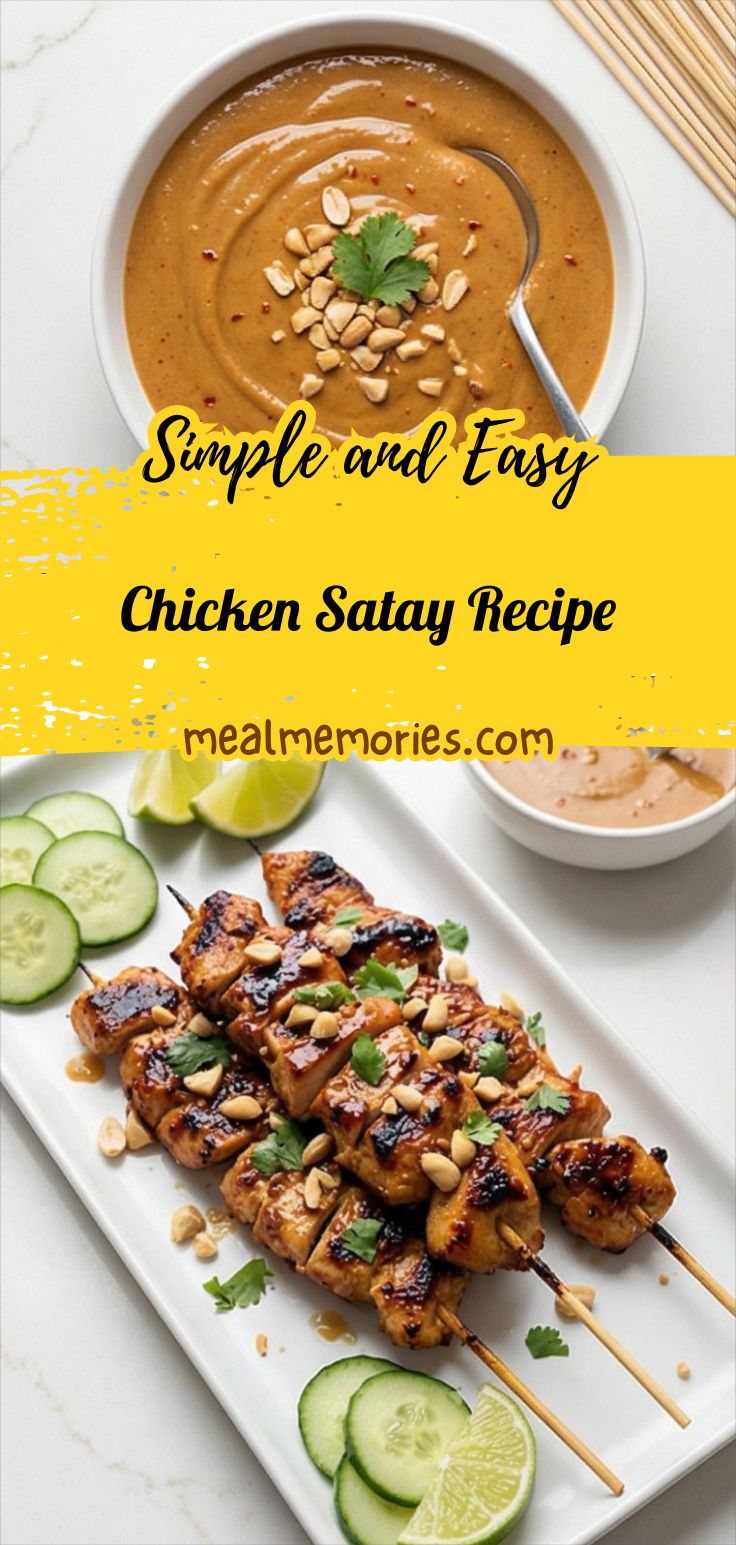
Chicken Satay Recipe
Make this Chicken Satay Recipe with garlicky marinade and velvety peanut sauce for a crowd-pleasing skewered dinner.
Ingredients
Instructions
Step 1: Soak the skewers and prepare the chicken
Soak 10–12 wooden skewers in cold water for at least 30 minutes while you trim excess fat from 1.5 pounds of boneless, skinless chicken thighs and slice them into long, even strips about 1/2 inch thick and 1 inch wide. Keep the pieces uniform so they cook evenly; arrange the pale-pink strips in neat parallel rows on a clean plate and leave the soaked skewers stacked nearby, ready for threading. This step sets the measured, calm rhythm of the prep — trimmed, hydrated, and organized for the next phase.
Step 2: Whisk the marinade into a smooth, clingy emulsion
In a single matte light grey ceramic mixing bowl combine minced garlic, grated ginger, minced lemongrass (if using), 2 tablespoons soy sauce, 1 tablespoon fish sauce, 2 tablespoons light brown sugar, ground coriander, cumin, turmeric, curry powder, pepper, kosher salt, 3 tablespoons coconut milk, 1 tablespoon neutral oil and 1 tablespoon lime juice. Whisk vigorously until the spices and sugar dissolve into a slightly thick but pourable, glossy marinade — no grainy sugar crystals, just a homogenous, speckled-golden emulsion that will cling to the chicken fibers.
Step 3: Massage the chicken in the same bowl and chill
Add the sliced chicken to the same matte grey bowl and use tongs (resting on the rim) to thoroughly coat every strip, massaging the marinade into the meat so the glossy paste adheres into crevices. Arrange the coated pieces back into the bowl in a single layer so each strip is visibly saturated and shiny, then cover and chill for at least 30 minutes (up to 24 hours) — the visual should be plump strips glazed with a turmeric-speckled, herb-scented marinade.
Step 4: Build and finish the velvety peanut dipping sauce
In a small shallow white ceramic saucepan off the heat combine creamy peanut butter, coconut milk, soy sauce, fish sauce, lime juice, rice vinegar, brown or palm sugar, a minced garlic clove, grated ginger, chili-garlic sauce to taste and optional toasted sesame oil. Warm gently until the mixture becomes a silky, glossy sauce that ribbons off a spoon; thin with 2–4 tablespoons warm water if needed so it’s pourable but still coats the back of a spoon. Taste and adjust for bright lime, rounded sweetness, or lifted heat — the final sauce should be nut-velvet, glossy, and flecked with fine chili bits.
Step 5: Thread, cook to caramelized char, rest and plate with garnishes
Bring the marinated chicken to room temperature, then thread the strips onto the soaked skewers in a loose S-shape so they lie flat and even; leave about 1 inch exposed at each end. Cook until the surfaces are caramelized and lightly charred in spots (juices clear and texture springy), then transfer to the quartz surface to rest 3–5 minutes so juices redistribute. Arrange the hot skewers on a long rectangular serving platter, sprinkle with roughly chopped roasted peanuts and chopped cilantro, scatter thin cucumber rounds and a few thin red chili slices, and place lime wedges and a small bowl of the warmed peanut sauce alongside for dipping — the finished skewers should be glossy, caramelized, nut-sprinkled, and ready to eat.
Notes
- Soak wooden skewers for at least 30 minutes to prevent burning.
- Marinate the chicken at least 30 minutes, or up to 24 hours for deeper flavor.
- Keep peanut sauce separate and thin with warm water or coconut milk when reheating.
- Use chicken thighs for juicier results; breasts can dry out if overcooked.
- Grill in batches to avoid overcrowding and to achieve a good char.