This Cornbread Recipe has been a quiet staple in my kitchen for years, the kind of thing I turn to when I want comfort without fuss. I first learned its rhythm on a Sunday morning and now I find myself reaching for it whenever company is due or the week needs a little golden cheer. I like how simple pantry ingredients turn into something tender, with a crisp edge and warm center. If you love a buttery crumb with a hint of sweetness, this Cornbread Recipe will become a favorite before the first square is gone.
How This Recipe Became My Rainy-Day Favorite
I remember the first time I made this Cornbread Recipe during a rainstorm that rolled in slow and steady. The house smelled like warm butter and toasted cornmeal while the oven hummed in the background. I stood at the counter stirring the batter and felt comforted by the rhythm of whisk and fold. When I pulled the pan out, steam rose and the top had a satin sheen that made my mouth water. Each bite was a little bit sweet, a little bit crisp, and exactly what I needed to feel cozy. Since then, this recipe has been my go-to for unexpected guests and quiet nights when a slice of warm cornbread, a pat of butter, and a drizzle of honey make everything better.
The Ingredients That Make It Work
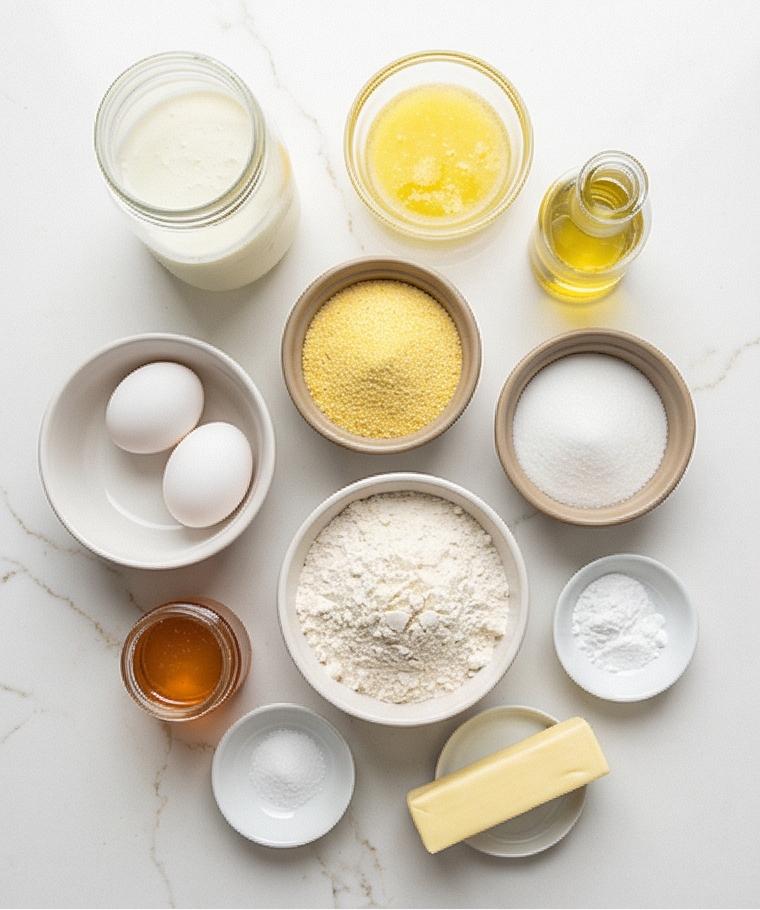
- Unsalted Butter: Adds richness and flavor. Substitute with melted coconut oil for a dairy-free version, but choose a neutral-flavored option. Pick unsalted so you control seasoning.
- Neutral Oil: Keeps the crumb tender and helps the crust brown. Use vegetable or canola; light olive oil can work but may add flavor.
- Yellow Cornmeal: The texture and corn flavor come from this ingredient. Fine or medium grind both work; for coarser texture use a medium grind.
- All-Purpose Flour: Provides structure. For a slightly lighter crumb, replace up to 1/4 cup with white whole wheat.
- Granulated Sugar: Balances cornmeal bitterness. Reduce or omit for less sweet cornbread.
- Leaveners (Baking Powder and Baking Soda): Lift and tenderness. Make sure they are fresh for the best rise.
- Fine Salt: Enhances flavor; adjust to taste.
- Buttermilk: Reacts with the leaveners and adds tang. Use cultured buttermilk or a mix of milk plus vinegar if needed.
- Eggs: Bind and enrich the batter. Use room temperature eggs for a smoother emulsion.
Essential Kitchen Tools and Why They Matter
A few simple tools make this Cornbread Recipe effortless. You do not need anything fancy, but the right choices make a big difference in texture and timing. A good mixing bowl gives you space to whisk dry and wet ingredients without spills. A flexible spatula helps fold batter gently so you dont overwork the cornmeal. A reliable measuring cup and spoon set keeps the balance of dry and wet consistent, which is key for the crumb. An 8-inch square metal baking pan encourages even browning; a cast-iron skillet is a lovely alternative that boosts crisp edges. Finally, a wire rack helps the cornbread rest and avoids a soggy bottom.
- Mixing bowl: Room to whisk and fold.
- Whisk: Aerates dry ingredients and blends wet ones.
- Flexible spatula: For gentle folding and scraping.
- Measuring cups and spoons: Accurate proportions.
- 8-inch square metal baking pan or cast-iron skillet: For even heat and crisp edges.
- Wire rack: Lets the bread cool without trapping steam.
Step-by-Step Preparation Guide
Step 1: Heat the oven and prepare the pan
Preheat your oven to 400°F (200°C) and position a rack in the center so heat will be even. Generously grease an 8‑inch (20‑cm) square metal baking pan with 1 tablespoon unsalted butter, making sure the butter reaches every corner and the sides; place the greased pan on the cool, honed surface while you work so it’s ready. This early step is about creating a slick, even boundary for the batter so the edges crisp without sticking. Keep the mixing tools and one small heatproof bowl nearby for the melted butter.
Step 2: Whisk the dry ingredients until uniform
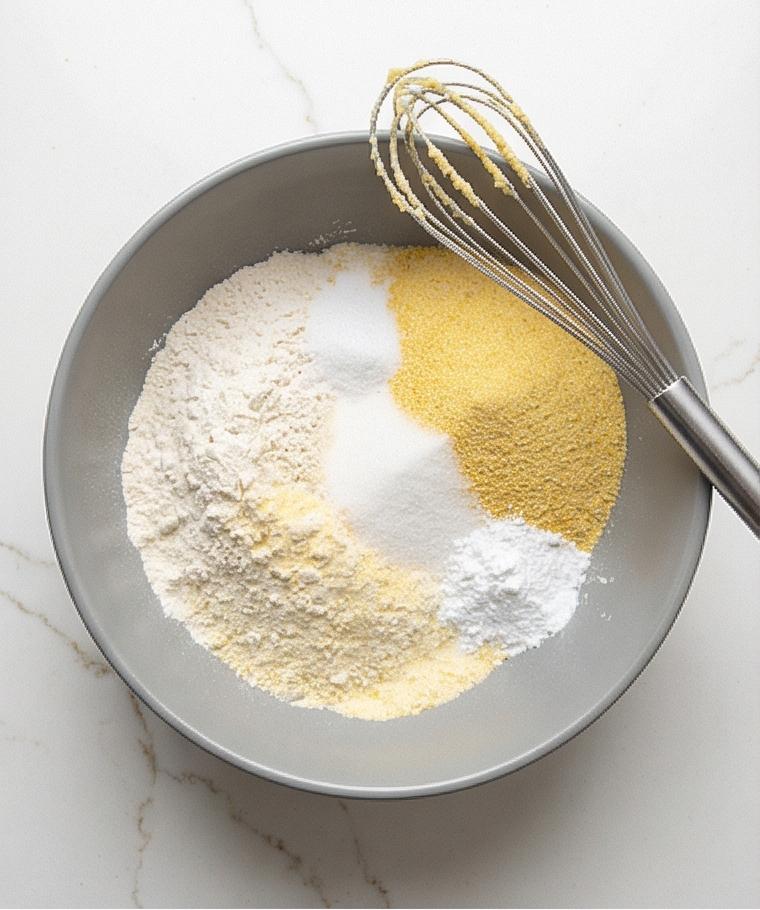
In a modern matte grey ceramic mixing bowl, whisk together the yellow cornmeal, all‑purpose flour, granulated sugar, baking powder, baking soda, and fine salt until the mixture reads visually even — no streaks of flour or clumps of cornmeal. The texture should be light and slightly grainy: small, distinct cornmeal granules suspended within the paler flour, a gentle dusting on the whisk and bowl rim. Let this dry base sit while you prepare the wet components; a tidy, aerated dry mix gives lift and even crumb.
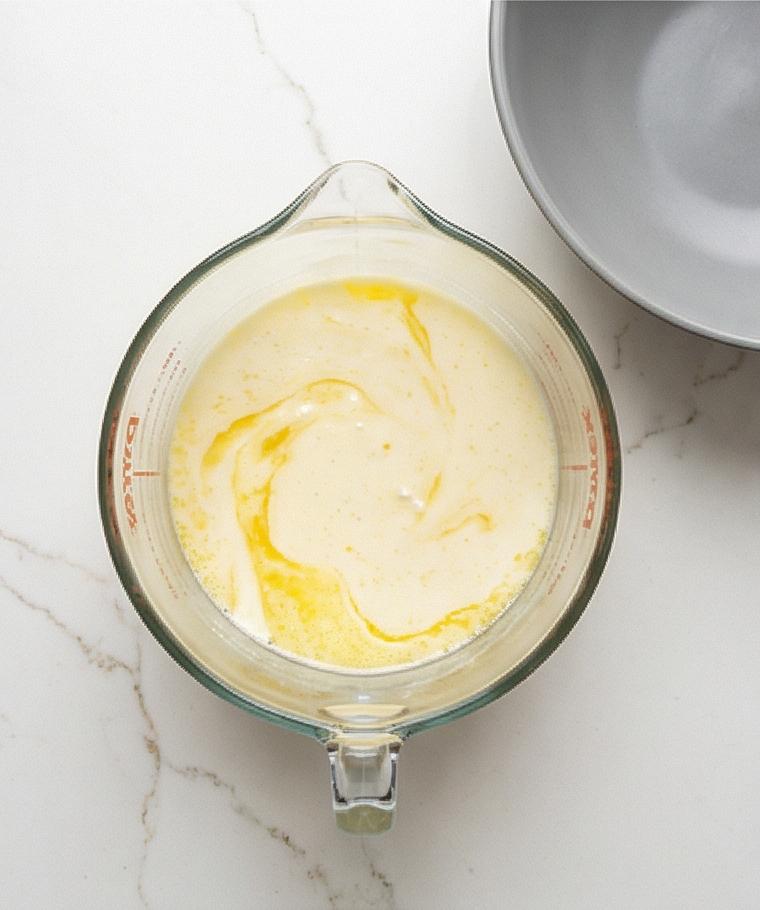
Step 3: Combine buttermilk, eggs, melted butter and oil into a glossy wet mix
In a clear glass measuring jug or transparent bowl, whisk room‑temperature buttermilk with two large eggs until smooth and uniform. Slowly drizzle the warm, slightly cooled melted butter into the buttermilk‑egg mixture while whisking to create a glossy, slightly thickened emulsion. Add two tablespoons of neutral oil and whisk briefly; the wet mixture should look satiny, pale cream with thin ribbons of fat fully incorporated — a sheen that promises tenderness in the crumb.
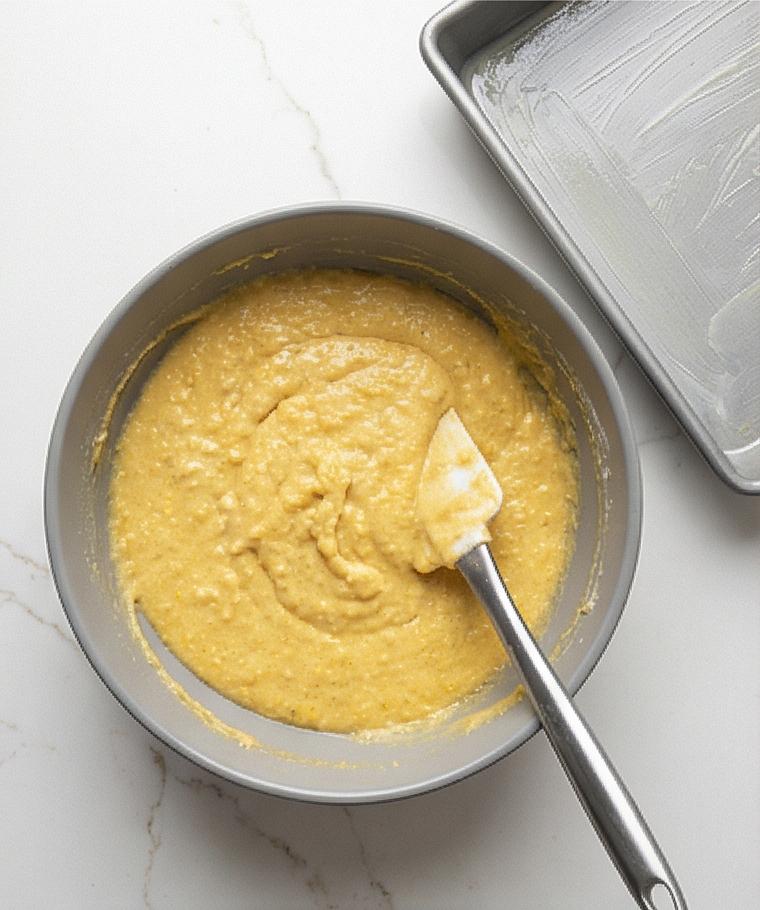
Step 4: Fold wet into dry just until moistened to form a lumpy, spreadable batter
Make a well in the center of the dry bowl, pour in the wet emulsion, and use a flexible spatula to fold gently. Mix only until you no longer see dry pockets; the finished batter is matte golden‑yellow, viscous but pourable, with a few small surface lumps and visible cornmeal texture. Scrape the bowl, show the spatula with batter clinging to its edge, and pour or transfer the batter into the prepared square pan, smoothing the top to an even layer without overworking.
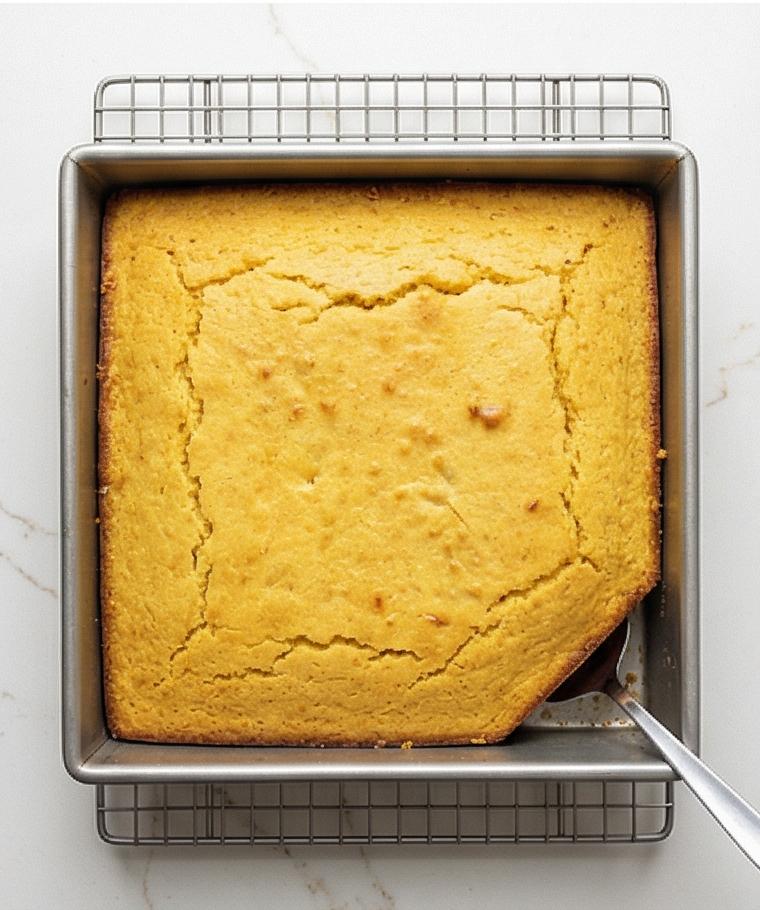
Step 5: Bake until the top is deep golden and the center springs back; cool briefly
Place the filled square pan on the marble surface and into the preheated oven (imagined here; do not show appliances in imagery). Bake until the top turns deep golden yellow with lightly browned edges and a thin, crisp crust; the center should spring back lightly and a thin knife comes out clean or with a few moist crumbs. Remove the pan and rest on a wire rack for 10–15 minutes so the crumb sets, then run a thin spatula around the edges and cut into nine large squares or 12 smaller pieces while still warm.
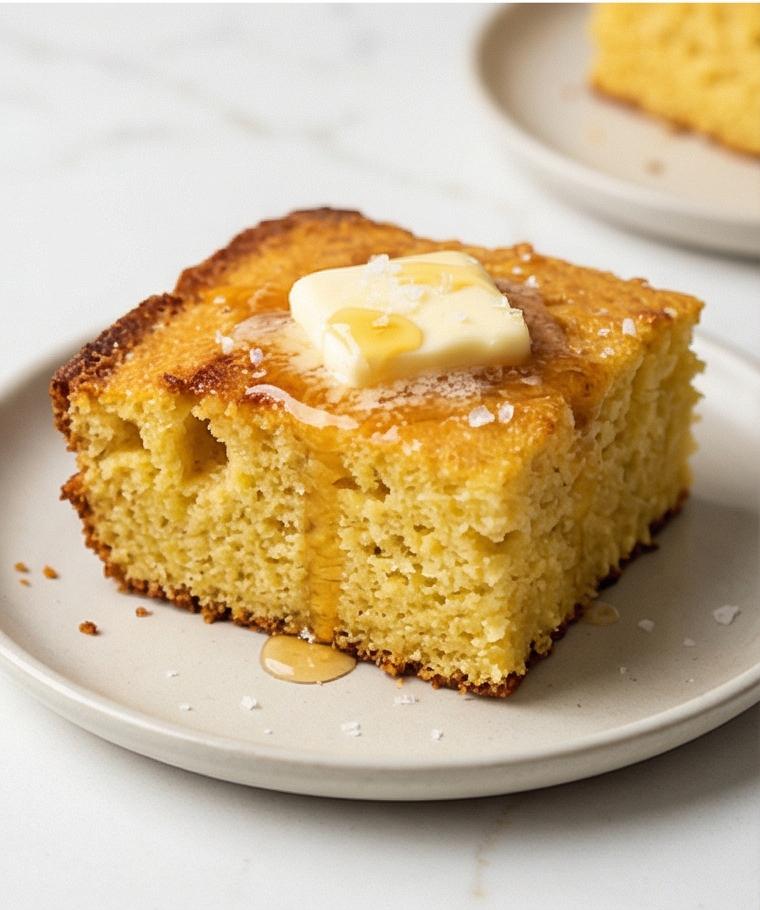
Step 6: Plate warm squares with softened butter and a honey drizzle
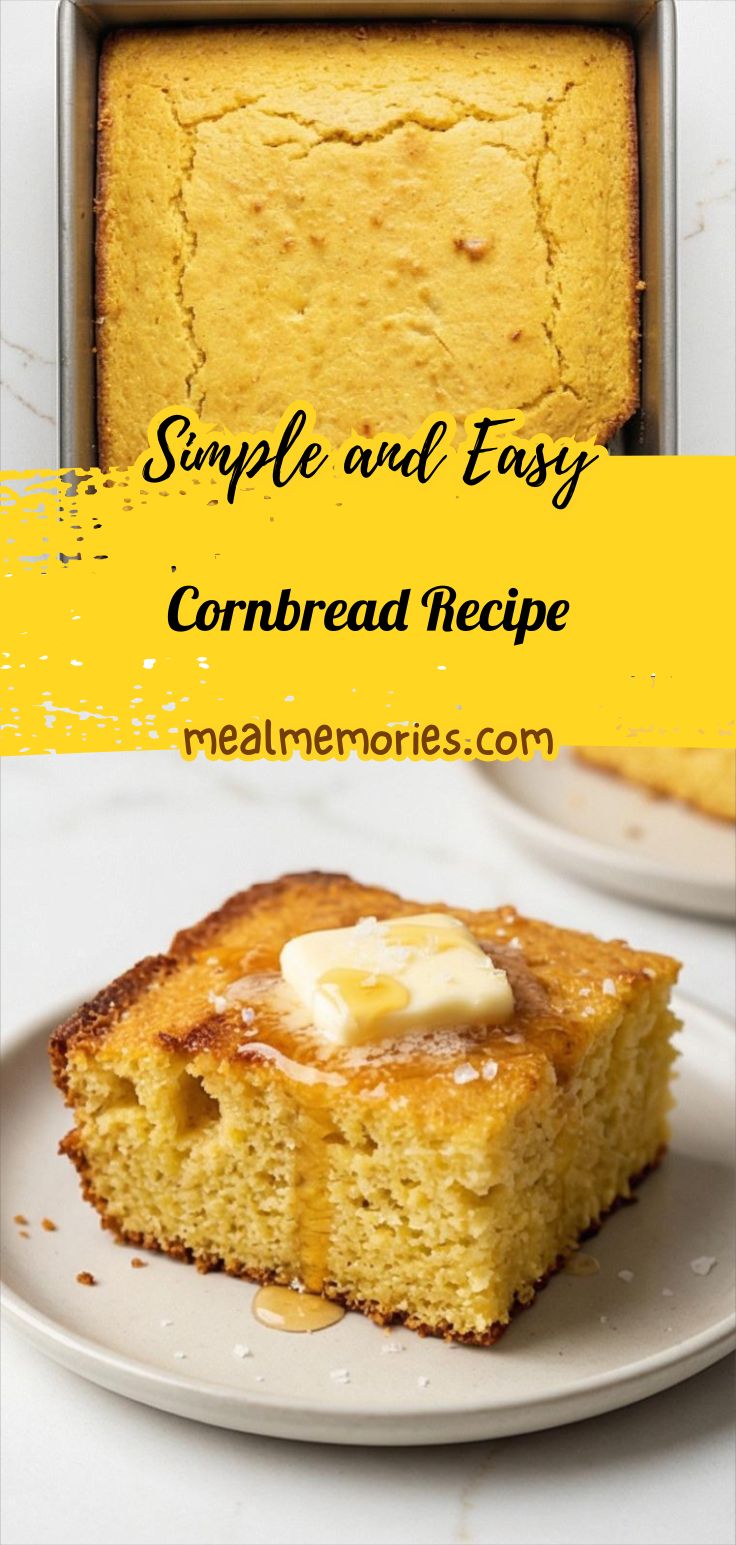
Serve warm squares directly from the pan or transfer a single square to a small matte ceramic plate; top with a pat of softened unsalted butter that melts into the hot crumb, a slow ribbon of honey or maple syrup, and a delicate pinch of flaky sea salt. The finished square should show a crisp, caramelized edge and an open, tender crumb dotted with cornmeal granules — a balance of buttery sheen and golden texture.
Making It Your Own
I like to experiment with mix-ins when I want to stretch the basic Cornbread Recipe into something new. Stirring in 1/2 cup of corn kernels and a few chopped scallions makes a savory, slightly rustic loaf that pairs well with chili. For a sweeter, more autumnal version, fold in 1/2 cup finely chopped apples and a pinch of cinnamon. If you need gluten-free, replace the all-purpose flour with a 1-to-1 gluten-free blend and watch the batter texture; you may need a touch more buttermilk.
For a dairy-free twist, substitute melted vegan butter and a plant-based cultured buttermilk alternative. Small changes like these let the recipe feel seasonal while keeping the heart of the Cornbread Recipe intact.
How to Serve
Imagine a casual dinner with friends: cut the Cornbread Recipe into squares and serve warm on a wooden board with softened butter and a bowl of honey for drizzling. For a heartier spread, offer slices alongside a pot of stew or a big bowl of chili so guests can tear off pieces and mop up sauces. If you are hosting a brunch, cube the cornbread and use it to make skillet croutons for a savory bread salad.
To scale for a crowd, bake two pans and keep one covered in a low oven so the pieces stay warm. For smaller portions, cut into 12 or 16 pieces and plate with individual pats of butter and a drizzle of maple syrup for a polished presentation.
Storage and Reheating Tips
Leftover cornbread keeps well wrapped at room temperature for up to two days. For longer storage, cool completely and wrap tightly in plastic wrap, then place in an airtight container in the fridge for up to five days.
To freeze, wrap individual squares in parchment and foil and transfer to a freezer bag for up to three months. Reheat from frozen in a 325°F oven until warm, or thaw in the fridge overnight and refresh in a hot oven for 8 to 10 minutes so the crust regains some crispness.
Common Mistakes and How to Avoid Them
Overmixing the batter can yield a dense crumb, so fold just until the dry streaks disappear and a few small lumps remain. Using cold eggs or cold buttermilk can make the emulsion seize; bring wet ingredients to room temperature first.
Skipping the butter in the pan may result in sticking and lackluster edges. If you prefer a crisper edge, use a well-seasoned cast-iron skillet and preheat it briefly before adding the batter.
Final Thoughts
This Cornbread Recipe is forgiving, fast, and deeply satisfying. Whether you keep it classic or try one of the variations, it rewards simple ingredients with a warm, tender crumb and golden crust. I cant wait for you to make it, share it, and tweak it to your liking.
Frequently Asked Questions.
- Can I make this Cornbread Recipe gluten-free? Yes. Swap the all-purpose flour for a 1-to-1 gluten-free flour blend and check the batter for consistency; you may need to add a tablespoon or two more buttermilk.
- How do I get a crispier crust? Bake in an 8-inch metal pan or a preheated cast-iron skillet and avoid covering immediately after baking so steam does not soften the crust.
- Can I use regular milk instead of buttermilk? You can use regular milk mixed with 1 tablespoon vinegar or lemon juice per cup to mimic buttermilk, which helps the leaveners and adds tang.
- What is the best way to reheat leftover cornbread? Reheat in a 325°F oven until warm for 8 to 12 minutes, or microwave briefly and then crisp in a hot pan.
- Can I make the batter ahead of time? You can mix the dry ingredients ahead and combine wet ingredients when ready; assembled batter is best baked within an hour for optimal rise.
Cornbread Recipe
Make Cornbread Recipe: bake a tender, golden cornbread with pantry staples in about 35 minutes.
Ingredients
Instructions
Step 1: Heat the oven and prepare the pan
Preheat your oven to 400°F (200°C) and position a rack in the center so heat will be even. Generously grease an 8‑inch (20‑cm) square metal baking pan with 1 tablespoon unsalted butter, making sure the butter reaches every corner and the sides; place the greased pan on the cool, honed surface while you work so it’s ready. This early step is about creating a slick, even boundary for the batter so the edges crisp without sticking. Keep the mixing tools and one small heatproof bowl nearby for the melted butter.
Step 2: Whisk the dry ingredients until uniform
In a modern matte grey ceramic mixing bowl, whisk together the yellow cornmeal, all‑purpose flour, granulated sugar, baking powder, baking soda, and fine salt until the mixture reads visually even — no streaks of flour or clumps of cornmeal. The texture should be light and slightly grainy: small, distinct cornmeal granules suspended within the paler flour, a gentle dusting on the whisk and bowl rim. Let this dry base sit while you prepare the wet components; a tidy, aerated dry mix gives lift and even crumb.
Step 3: Combine buttermilk, eggs, melted butter and oil into a glossy wet mix
In a clear glass measuring jug or transparent bowl, whisk room‑temperature buttermilk with two large eggs until smooth and uniform. Slowly drizzle the warm, slightly cooled melted butter into the buttermilk‑egg mixture while whisking to create a glossy, slightly thickened emulsion. Add two tablespoons of neutral oil and whisk briefly; the wet mixture should look satiny, pale cream with thin ribbons of fat fully incorporated — a sheen that promises tenderness in the crumb.
Step 4: Fold wet into dry just until moistened to form a lumpy, spreadable batter
Make a well in the center of the dry bowl, pour in the wet emulsion, and use a flexible spatula to fold gently. Mix only until you no longer see dry pockets; the finished batter is matte golden‑yellow, viscous but pourable, with a few small surface lumps and visible cornmeal texture. Scrape the bowl, show the spatula with batter clinging to its edge, and pour or transfer the batter into the prepared square pan, smoothing the top to an even layer without overworking.
Step 5: Bake until the top is deep golden and the center springs back; cool briefly
Place the filled square pan on the marble surface and into the preheated oven (imagined here; do not show appliances in imagery). Bake until the top turns deep golden yellow with lightly browned edges and a thin, crisp crust; the center should spring back lightly and a thin knife comes out clean or with a few moist crumbs. Remove the pan and rest on a wire rack for 10–15 minutes so the crumb sets, then run a thin spatula around the edges and cut into nine large squares or 12 smaller pieces while still warm.
Step 6: Plate warm squares with softened butter and a honey drizzle
Serve warm squares directly from the pan or transfer a single square to a small matte ceramic plate; top with a pat of softened unsalted butter that melts into the hot crumb, a slow ribbon of honey or maple syrup, and a delicate pinch of flaky sea salt. The finished square should show a crisp, caramelized edge and an open, tender crumb dotted with cornmeal granules — a balance of buttery sheen and golden texture.
Notes
- Let wet ingredients come to room temperature for a smoother emulsion.
- Do not overmix; fold until just combined to keep the crumb tender.
- For a crisper edge, use a preheated cast-iron skillet instead of a square pan.
- Freeze individual squares wrapped in parchment and foil for up to three months.
- Check freshness of baking powder and baking soda for best rise.