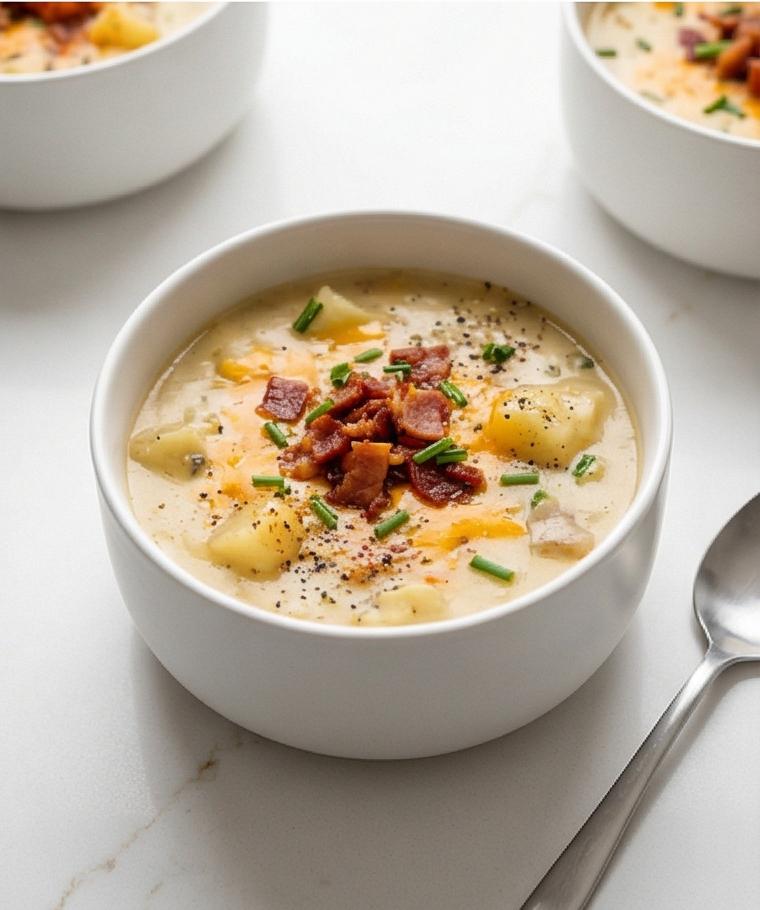
Clam Chowder Recipe: a pot of cozy comfort and a favorite of mine for blustery evenings. I first learned to make this Clam Chowder Recipe when I wanted something that smelled like the sea and felt like a warm blanket at the same time. I love how a few humble ingredients—bacon, potatoes, clams, and cream—turn into something richly layered without fuss. I kept tweaking the balance of clam juice to cream until it felt just right for my family, and now it is the recipe guests ask for most.
How This Clam Chowder Recipe Became My Rainy-Day Favorite
The first time I made this Clam Chowder Recipe for friends, a storm rolled in and we all crowded around the stove while the aroma filled the house. I remember the sound of rain on the roof and the steam fogging the windows as the bacon crackled and the potatoes softened. Tasting that first spoonful felt like wrapping my hands around a wool sweater; the briny clams cut through the creaminess and the bacon added a welcome crunch. Making it became a ritual: I would chop the onions slowly, savor the tiny sizzles, and pause to breathe in the thyme-scented steam. Sharing the pot with good company turned the recipe into more than food—it became a memory-maker for a cold night.
The Ingredients That Make It Sing
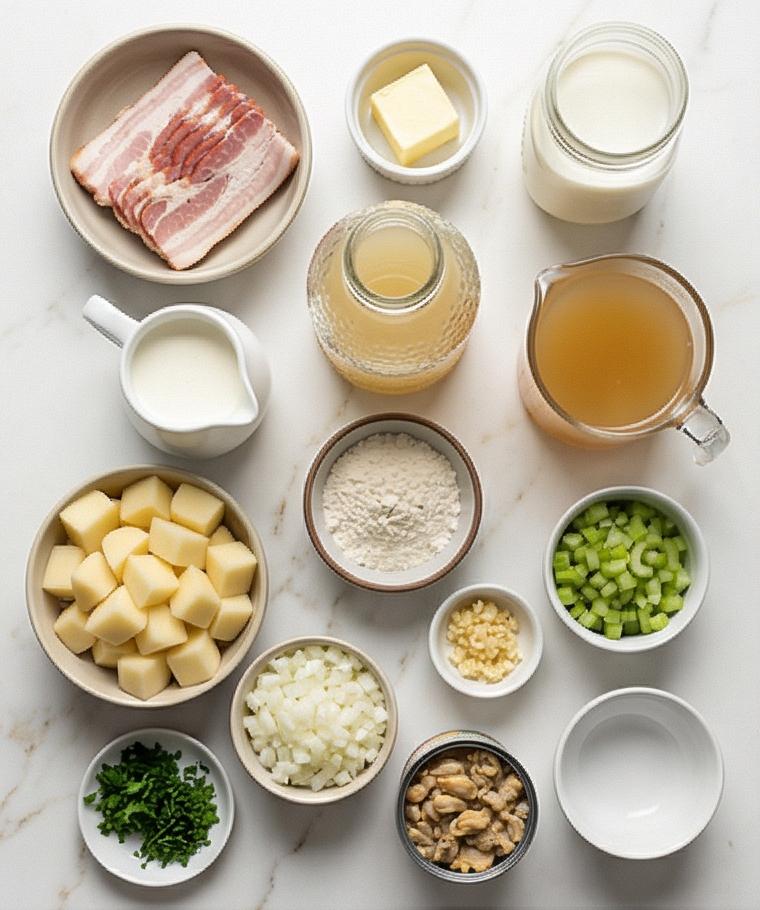
- Bacon: Provides smoky, salty depth and crunchy garnish. Substitute pancetta for a slightly sweeter profile or turkey bacon if you want less fat; choose thick-cut for texture.
- Butter: Helps soften aromatics and enrich the base; cultured butter adds a subtle tang.
- Onion and Celery: The aromatic backbone; choose firm, pale onions and crisp celery stalks.
- Clams and Clam Juice: The sea note and umami core; bottled clam juice is convenient, or use seafood stock for a rounder flavor.
- Flour: Thickens the chowder into a silky body; use all-purpose or a 1:1 gluten-free blend as needed.
- Potatoes: Russets give creamy interior without falling apart; keep them in uniform 1/2-inch cubes.
- Milk and Cream: Create the luxurious finish; whole milk plus heavy cream gives richness without heaviness.
Essential Kitchen Tools
A few simple tools will keep this Clam Chowder Recipe manageable and enjoyable. A sturdy heavy-bottomed pot or Dutch oven gives even heat so the roux and dairy don’t scorch. A good wooden spoon or heatproof spatula helps you stir the roux and prevent lumps. A sharp chef’s knife makes quick work of the onion, celery, and potatoes and keeps your cuts consistent.
- Heavy-bottomed pot or Dutch oven: Even heat and enough surface area for a smooth roux.
- Wooden spoon or spatula: Gentle on the pot and perfect for scraping and stirring.
- Chef’s knife and cutting board: For precise, safe chopping of potatoes and aromatics.
- Whisk: Helpful when incorporating clam juice into the roux for a lump-free base.
Step-by-Step Preparation Guide
Step 1: Crisp the bacon and reserve its fat
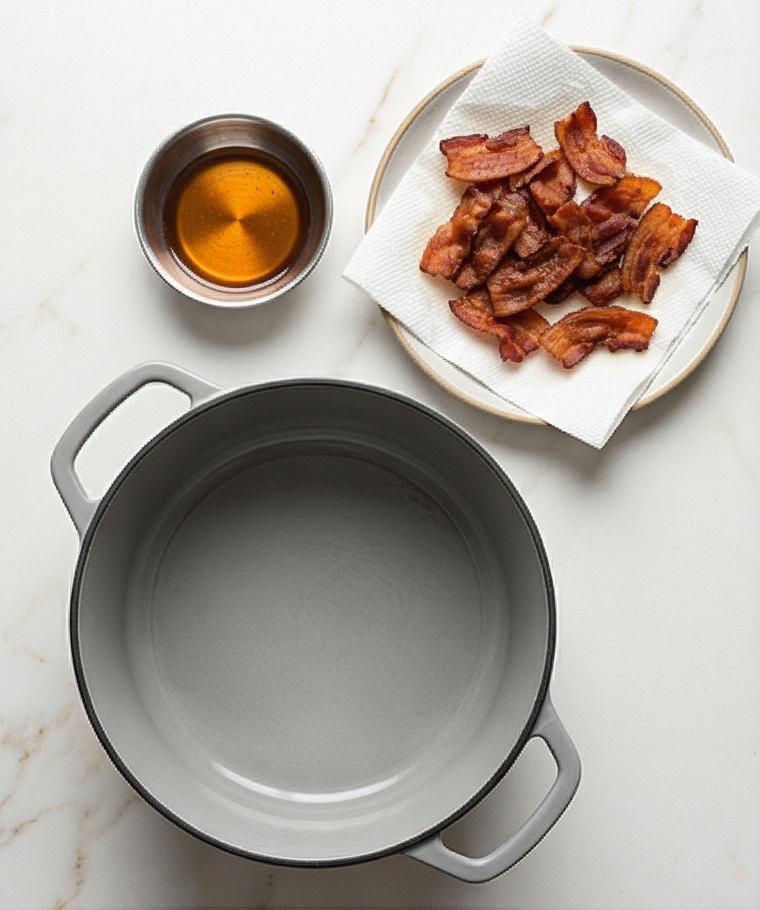
Start by rendering the bacon until the pieces are deeply golden and crisp, using medium heat so the fat slowly releases without burning. Drain the hot bacon on paper towel so it stays crunchy, and set the reserved fat aside — you want about 2–3 tablespoons of glossy amber fat to carry flavor forward. Keep the crisp bacon separate for finishing so its texture remains pronounced when the chowder is served.
Step 2: Gently sweat the aromatics in the bacon fat and butter
Lower the heat and melt butter into the reserved bacon fat, then add the finely diced onion and celery. Cook slowly until the vegetables are soft, translucent, and silky but not browned; stir often so the pieces plump and release sweetness. Finish this phase by stirring in the minced garlic and torn thyme leaves just until fragrant—bright, glossy vegetal pieces flecked with tiny green herbs, the aromatic base that will perfume the chowder.
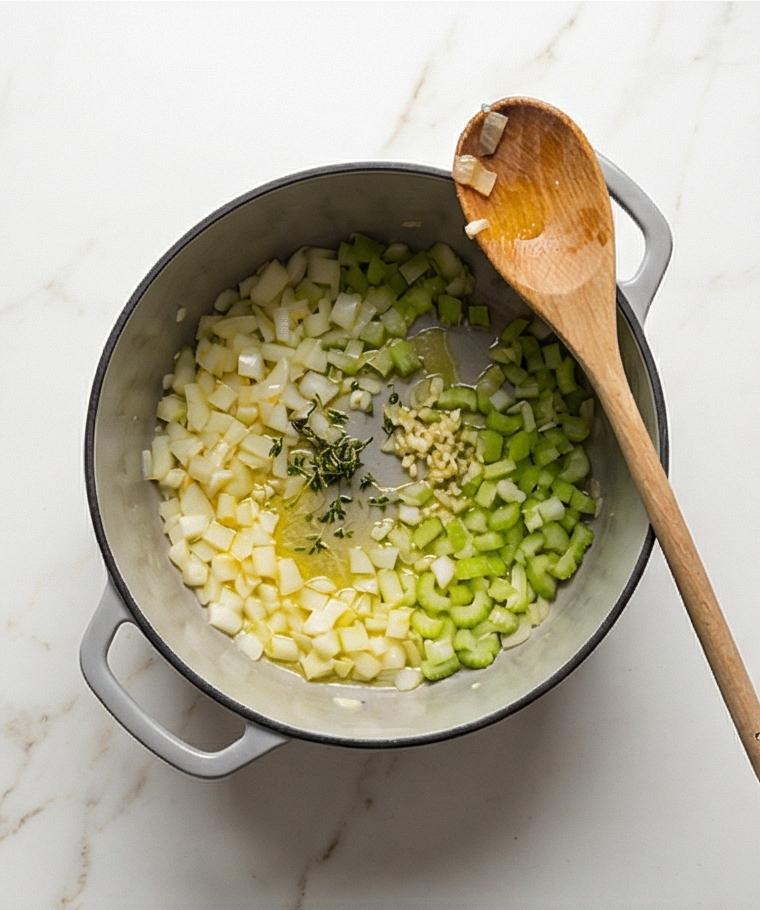
Step 3: Build a pale roux and integrate the clam juices into a smooth base
Sprinkle the flour evenly over the softened vegetables and stir continuously to form a paste-like, pale roux that clings to the spoon—cooked through but not browned. Gradually whisk in the reserved clam juices and bottled clam juice until the mixture becomes a silky, slightly thickened, beige emulsion with no lumps; the texture should be smooth and velvety, a glossy starting point for simmering. Keep your whisk or wooden spoon nearby, resting with streaks of roux to show the recent action.
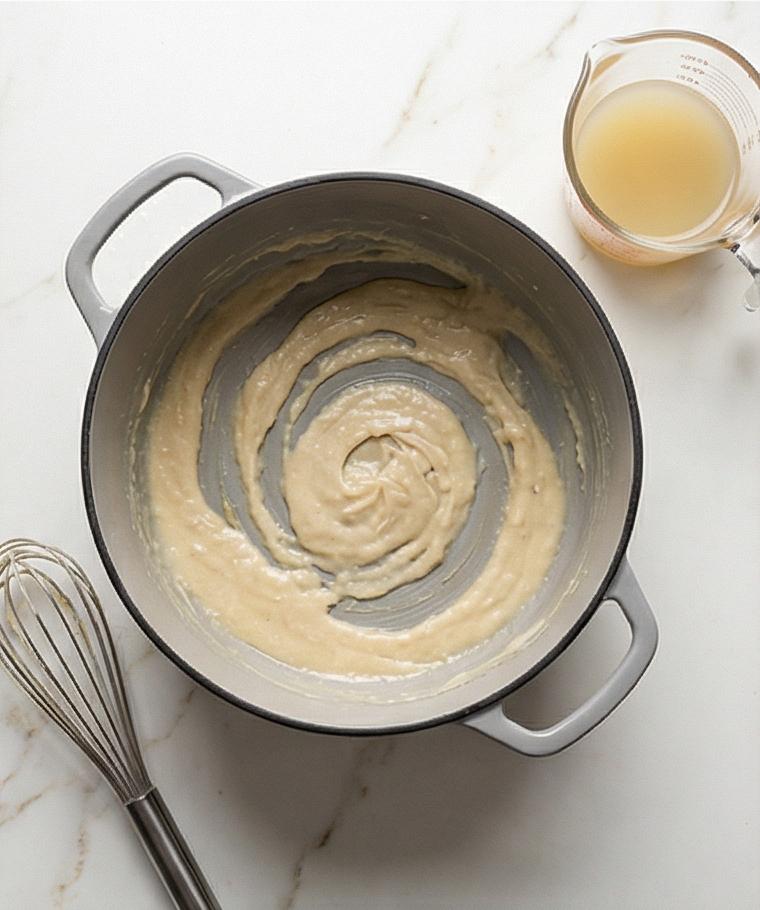
Step 4: Add stock, bay leaf, and simmer with potatoes until tender
Pour in the chicken stock (or water) and nestle in a bay leaf, then bring the liquid up to a gentle simmer. Add the peeled, 1/2‑inch cubed russets and cook uncovered at a low, steady simmer until the potato cubes are just tender but still hold their shape. The visual milestone here is pale, creamy broth studded with uniformly cut, matte potato cubes and a single bay leaf floating — a cohesive, spoonable texture that’s thickening and smelling like the sea.
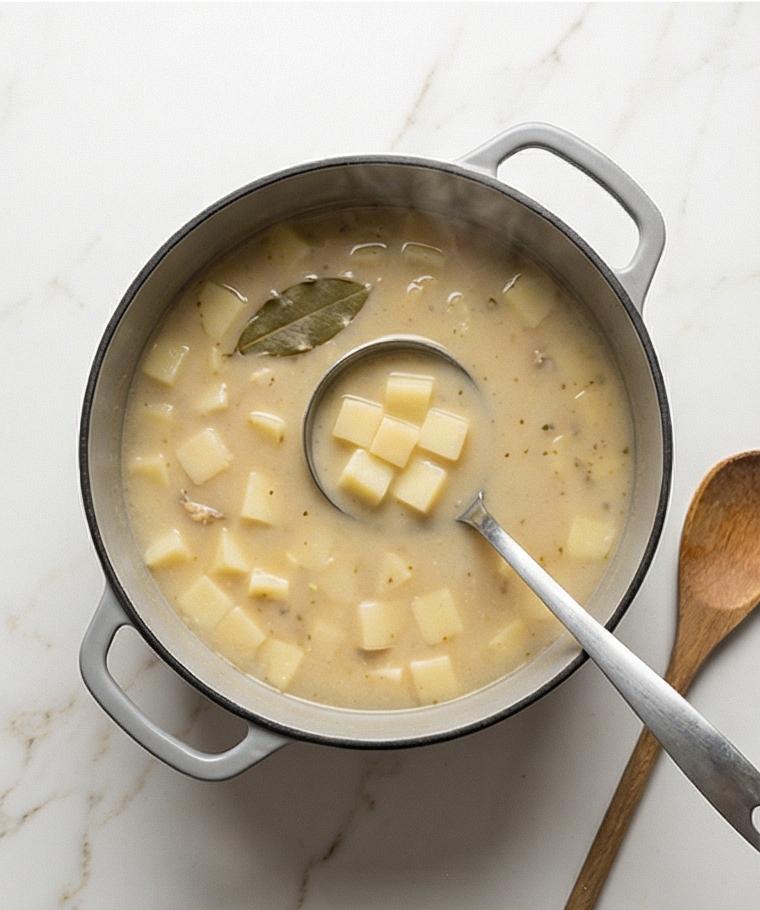
Step 5: Warm in the dairy, fold in clams, and finish seasoning
Reduce the heat to low and stir in room-temperature milk and cream slowly so the dairy melds without curdling; the chowder should look luxuriously creamy, the surface satiny and smooth. Add the chopped clams and any juices, simmering only briefly until heated through so the clams remain tender. Stir in Worcestershire if using, fold in chopped parsley, taste and adjust salt and pepper, and if necessary thin slightly with a little stock or milk to reach a spoonable yet velvety consistency. Allow the pot to rest off heat for a few minutes so the texture settles.
Step 6: Plate and garnish for maximum textural contrast
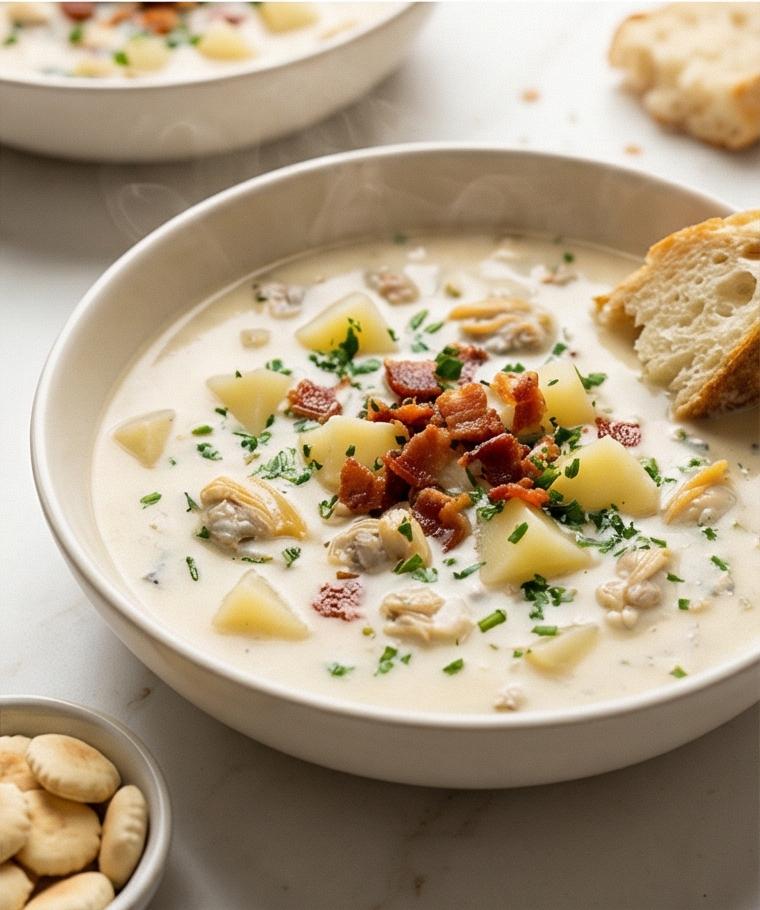
Ladle the chowder into warm serving bowls, topping each with the reserved crisp bacon pieces, a bright sprinkle of chopped parsley and chives, and a fresh crack of black pepper. Plate with a small side of crusty bread or a ramekin of oyster crackers and an optional bottle of hot sauce on the side — the goal is a close-up composition that emphasizes creamy silk, tender potato and clam morsels, and the crunchy irregularity of bacon crumbles.
Step 7: Cool, store, and reheat gently if needed
If you won’t eat all of it right away, cool the chowder to room temperature within an hour and refrigerate in an airtight container for up to three days. Reheat slowly over low heat, stirring frequently and keeping the temperature below a simmer so the dairy and clams remain tender and the texture stays creamy.
Making It Your Own
Try a Cape Cod spin by adding a splash of hard cider near the end for a bright, fruity lift. For a lighter, dairy-free version, swap the milk and cream for full-flavored canned coconut milk and a touch more clam juice; finish with a squeeze of lemon to prevent the coconut from feeling too sweet. If you prefer more herbs, fold in a handful of chopped dill or tarragon right before serving. For a chowder with a smoky punch, use smoked sea salt and omit the bacon garnish. Small adjustments like these turn the base into something that fits your pantry and season.
How to Serve
When I host, I ladle the Clam Chowder Recipe into warm bowls so the cream stays silky longer. Offer crusty sourdough or buttered rye on the side and a dish of oyster crackers for nostalgia. For a casual family meal, serve with a big green salad and chilled white wine; for a special dinner, present small bowls as a first course and top each with the crisp bacon and a sprinkle of chives.
Scale the recipe by keeping the potato-to-liquid ratio consistent. Double it for a crowd and simmer gently in a large pot; halve it for two and finish in a smaller saucepan. Little touches like warmed bowls, fresh herbs, and a small dish of hot sauce let guests personalize each spoonful.
Storage and Reheating Tips
Cool the chowder to room temperature within an hour and transfer to airtight containers. It keeps well in the refrigerator for up to three days; if you need to freeze, omit the cream and instead freeze the base with potatoes and clams for up to one month, adding fresh cream when reheating.
Reheat gently on the stove over low heat, stirring often and keeping the temperature below a simmer to avoid breaking the dairy. If the chowder seems thick after resting, stir in small amounts of stock or milk to return it to a spoonable consistency.
Common Mistakes and How to Avoid Them
Curdling dairy is the most common pitfall. Keep milk and cream at room temperature and add them over low heat, stirring slowly. If you rush the heat, the proteins can tighten and separate.
Another frequent error is overcooking the clams. Add canned clams only at the end and warm them through briefly to keep them tender. Also, underseasoning is easy to fix: taste before serving and adjust salt, pepper, and a splash of Worcestershire or lemon if needed.
Give It a Try
This Clam Chowder Recipe is forgiving and rewarding; once you make it a couple of times you will find the rhythm of chopping, sweating, and simmering becomes soothing. I hope you give it a try on a cold evening and share a bowl with someone who appreciates good comfort food.
Frequently Asked Questions.
- What kind of clams should I use and can I use fresh clams?: You can use canned chopped clams for convenience, which is what this recipe is built around. If you have fresh clams, steam them until they open, chop the meat, and reserve the steaming liquid to substitute for some or all of the bottled clam juice.
- Can I make Clam Chowder Recipe dairy-free?: Yes, use full-fat canned coconut milk or a creamy plant-based milk and reduce the quantity slightly to keep the mouthfeel rich; finish with lemon to brighten the flavor.
- How long will leftovers last?: Refrigerated, the chowder will keep for up to three days. For longer storage, freeze the base without cream for up to one month and add fresh cream when reheating.
- Can I use other potatoes than russets?: Yukon Golds will work well and offer a creamier texture, but they can break down earlier; keep cubes uniform and watch the simmer time.
- Do I need to add the bacon?: The bacon adds smoky, savory crunch, but you can omit it for a pescatarian version and finish with a drizzle of olive oil and extra herbs.
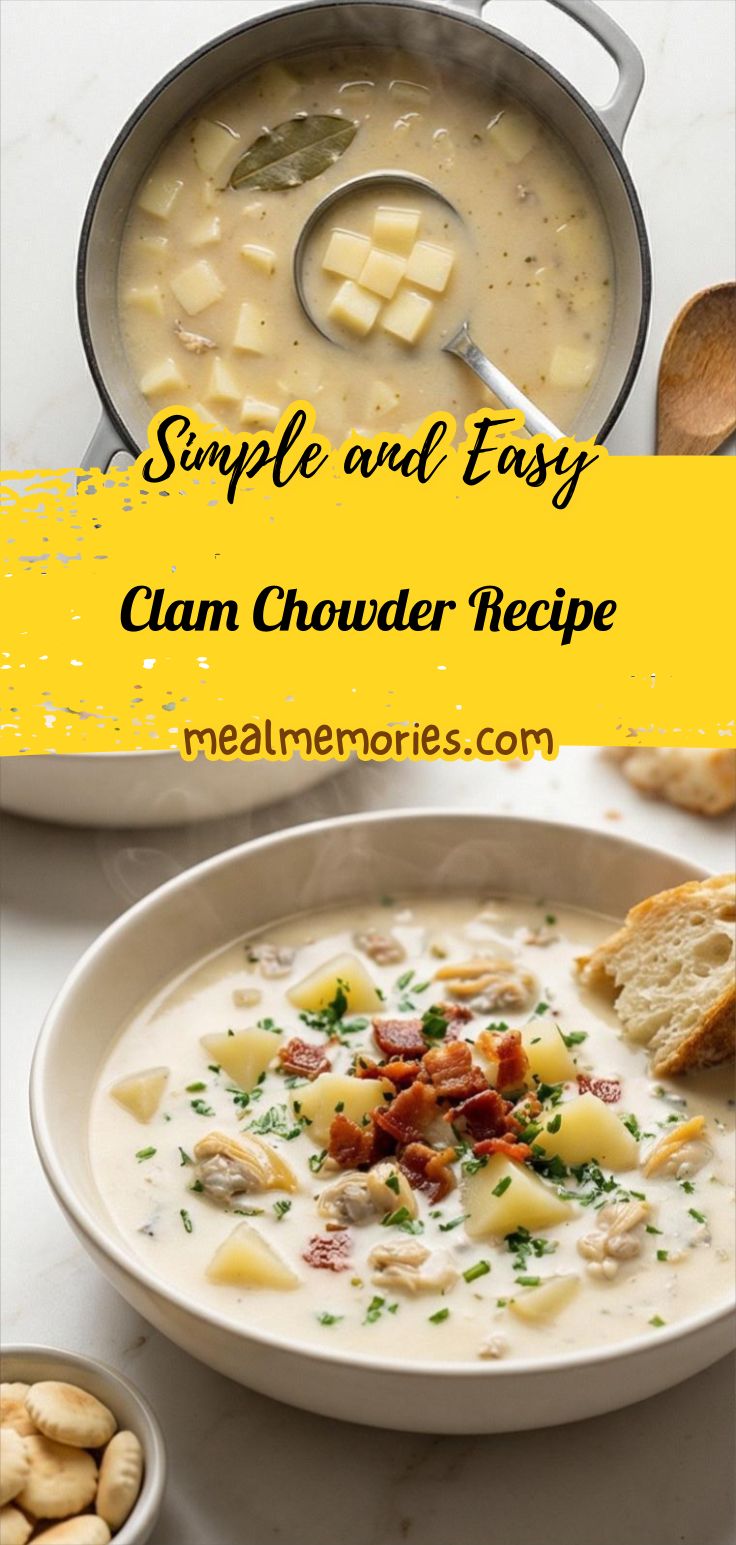
Clam Chowder Recipe
Make the Clam Chowder Recipe: creamy, briny chowder with bacon, potatoes, and clams—serve warm and enjoy.
Ingredients
Instructions
Step 1: Crisp the bacon and reserve its fat
Start by rendering the bacon until the pieces are deeply golden and crisp, using medium heat so the fat slowly releases without burning. Drain the hot bacon on paper towel so it stays crunchy, and set the reserved fat aside — you want about 2–3 tablespoons of glossy amber fat to carry flavor forward. Keep the crisp bacon separate for finishing so its texture remains pronounced when the chowder is served.
Step 2: Gently sweat the aromatics in the bacon fat and butter
Lower the heat and melt butter into the reserved bacon fat, then add the finely diced onion and celery. Cook slowly until the vegetables are soft, translucent, and silky but not browned; stir often so the pieces plump and release sweetness. Finish this phase by stirring in the minced garlic and torn thyme leaves just until fragrant—bright, glossy vegetal pieces flecked with tiny green herbs, the aromatic base that will perfume the chowder.
Step 3: Build a pale roux and integrate the clam juices into a smooth base
Sprinkle the flour evenly over the softened vegetables and stir continuously to form a paste-like, pale roux that clings to the spoon—cooked through but not browned. Gradually whisk in the reserved clam juices and bottled clam juice until the mixture becomes a silky, slightly thickened, beige emulsion with no lumps; the texture should be smooth and velvety, a glossy starting point for simmering. Keep your whisk or wooden spoon nearby, resting with streaks of roux to show the recent action.
Step 4: Add stock, bay leaf, and simmer with potatoes until tender
Pour in the chicken stock (or water) and nestle in a bay leaf, then bring the liquid up to a gentle simmer. Add the peeled, 1/2‑inch cubed russets and cook uncovered at a low, steady simmer until the potato cubes are just tender but still hold their shape. The visual milestone here is pale, creamy broth studded with uniformly cut, matte potato cubes and a single bay leaf floating — a cohesive, spoonable texture that’s thickening and smelling like the sea.
Step 5: Warm in the dairy, fold in clams, and finish seasoning
Reduce the heat to low and stir in room-temperature milk and cream slowly so the dairy melds without curdling; the chowder should look luxuriously creamy, the surface satiny and smooth. Add the chopped clams and any juices, simmering only briefly until heated through so the clams remain tender. Stir in Worcestershire if using, fold in chopped parsley, taste and adjust salt and pepper, and if necessary thin slightly with a little stock or milk to reach a spoonable yet velvety consistency. Allow the pot to rest off heat for a few minutes so the texture settles.
Step 6: Plate and garnish for maximum textural contrast
Ladle the chowder into warm serving bowls, topping each with the reserved crisp bacon pieces, a bright sprinkle of chopped parsley and chives, and a fresh crack of black pepper. Plate with a small side of crusty bread or a ramekin of oyster crackers and an optional bottle of hot sauce on the side — the goal is a close-up composition that emphasizes creamy silk, tender potato and clam morsels, and the crunchy irregularity of bacon crumbles.
Step 7: Cool, store, and reheat gently if needed
If you won’t eat all of it right away, cool the chowder to room temperature within an hour and refrigerate in an airtight container for up to three days. Reheat slowly over low heat, stirring frequently and keeping the temperature below a simmer so the dairy and clams remain tender and the texture stays creamy.
Notes
- Use thick-cut bacon for texture and render slowly to collect flavorful fat.
- Keep milk and cream at room temperature before adding to avoid curdling.
- Reserve clam juices and whisk them into the roux gradually to prevent lumps.
- Reheat gently over low heat and thin with stock if the chowder thickens after resting.
- Substitute pancetta or smoked salt for a different smoky profile.