Mashed Potatoes Recipe sits at the center of my weeknight rotation and holiday table alike. I started keeping this Mashed Potatoes Recipe in my repertoire because it turns humble russets into something almost luxurious with just a little technique and patience. It’s the kind of comfort food that rewards small rituals: rinsing the starch, drying the hot potatoes, and warming the dairy. If you want reliably fluffy, creamy mashed potatoes, this Mashed Potatoes Recipe will make you look like you know what you’re doing without fuss.
How This Recipe Became My Cozy Kitchen Staple
There was one rainy Thanksgiving when my oven decided to be unhelpful and the turkey ran late. I turned to the stove and a simple Mashed Potatoes Recipe to steady the meal. I remember the sound of rain on the windows, the bright snap of the garlic as I crushed it, and the warm, nutty smell of browned butter in my palms as I waited for the potatoes to steam dry back in the pot. Sitting down to that bowl felt like a small, celebratory rescue. Every spoonful was smooth, buttery, and a little like a hug. That evening taught me that technique matters more than fancy ingredients, and now I reach for this recipe whenever I want something reliably comforting and crowd-pleasing.
Key Ingredients and What They Do
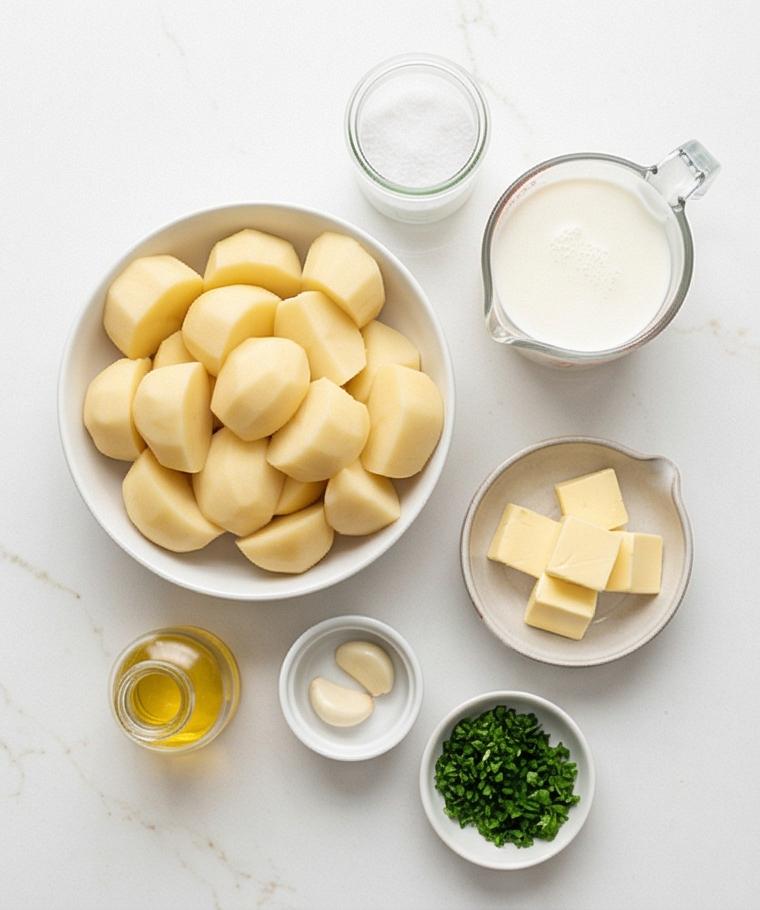
- Russet Potatoes: The backbone of the dish; their high starch content yields fluffy, light mash. Substitute Yukon Golds for a creamier, naturally buttery finish.
- Unsalted Butter: Adds richness and sheen; use good quality butter and room temperature pieces for even melting.
- Whole Milk and Heavy Cream: Together they deliver creamy texture and body; swap with half-and-half for a lighter option.
- Fine Sea Salt and Black Pepper: Seasoning to taste; adjust at the end so you don’t over-salt.
- Fresh Chives and Parsley: Bright garnish; omit or swap with green onion for sharper bite.
Essential Kitchen Tools I Rely On
A few well-chosen tools make this Mashed Potatoes Recipe effortless and repeatable. A heavy, wide pot helps the potatoes cook evenly and leaves room for steaming off moisture. A potato ricer produces the silkiest texture, but a sturdy masher will do when you want a bit more body. A small heatproof jug for warmed dairy means you can add liquids without cooling the potatoes down, which keeps everything smooth. Alternatives work fine too: use a fork or hand mixer on low for a quicker mash, and a microwave-safe cup to warm the milk.
- Heavy, wide pot: Promotes even cooking and drying.
- Potato masher or ricer: For texture control and lump-free mash.
- Small jug or measuring cup: For warmed milk and cream.
- Colander: For quick, thorough draining.
Step-by-Step Preparation Guide.
Step 1: Prep the potatoes
Peel the russets and cut them into even 1½-inch (4 cm) chunks so they cook uniformly. Rinse the cut potatoes under cold running water for 20–30 seconds to remove excess surface starch — you should see the rinse water clear and the potato pieces look matte and slightly damp. Arrange the peeled chunks in a shallow bowl and set small dishes with the butter cubes, cracked pepper, and salt nearby for quick access.
Step 2: Cold-start the pot
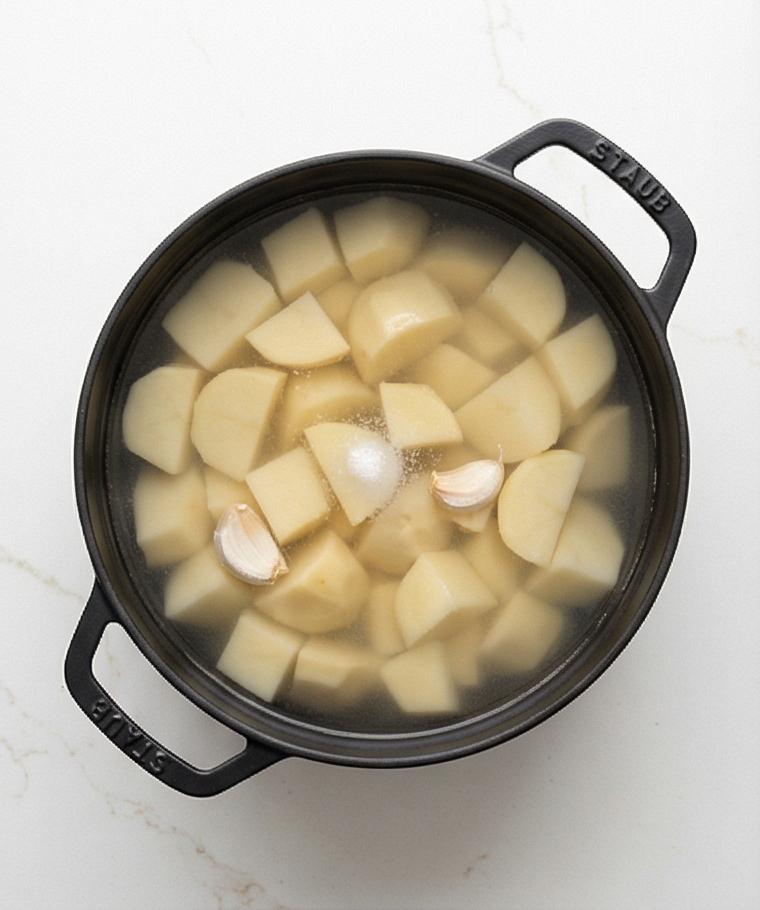
Transfer the rinsed potato chunks to a large, heavy pot and cover with cold water by about an inch. Stir in one teaspoon of fine sea salt and tuck in the two lightly crushed garlic cloves if using. The visual here is a pot full of raw potato chunks submerged in pale, slightly cloudy water with a few garlic cloves nestled between pieces — orderly and ready to heat.
Step 3: Cook until tender
Bring the pot gently up to a steady simmer (no need to show the stove). Cook until the potatoes are very tender and a knife tip slips through the center with no resistance, about 15–20 minutes. The result is uniformly broken-down edges and pillowy potato pieces that yield to gentle pressure; drain them thoroughly.
Step 4: Drain and dry back in the pot
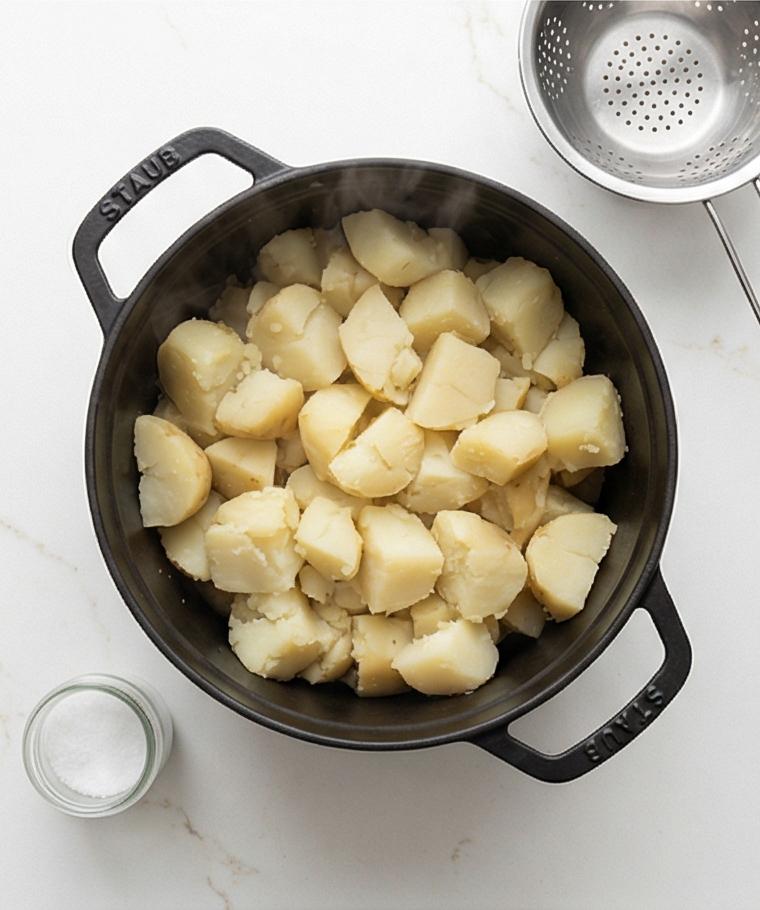
Immediately return the drained, steaming potato pieces to the warm pot. Place the pot on the marble surface and let it sit over very low retained heat for a minute or two, shaking gently to evaporate excess moisture — the pieces should look slightly drier at the surface and flaky rather than water-slick. This little drying step makes the final mash airy, not watery.
Step 5: Warm the dairy
While the potatoes finish, warm the milk and heavy cream together until just heated through (warm, not boiling). Keep the dairy in a small glass jug so it reads clearly in the flatlay and remains ready to pour in measured, warm additions.
Step 6: Mash to a fluffy base
Using a potato masher or ricer, work the hot potatoes in the pot until there are no large lumps — aim for a textured, pillowy base rather than a gluey puree. The pot should show visible strands and soft curds of potato, a matte, fluffy texture that promises lightness.
Step 7: Add butter and seasoning
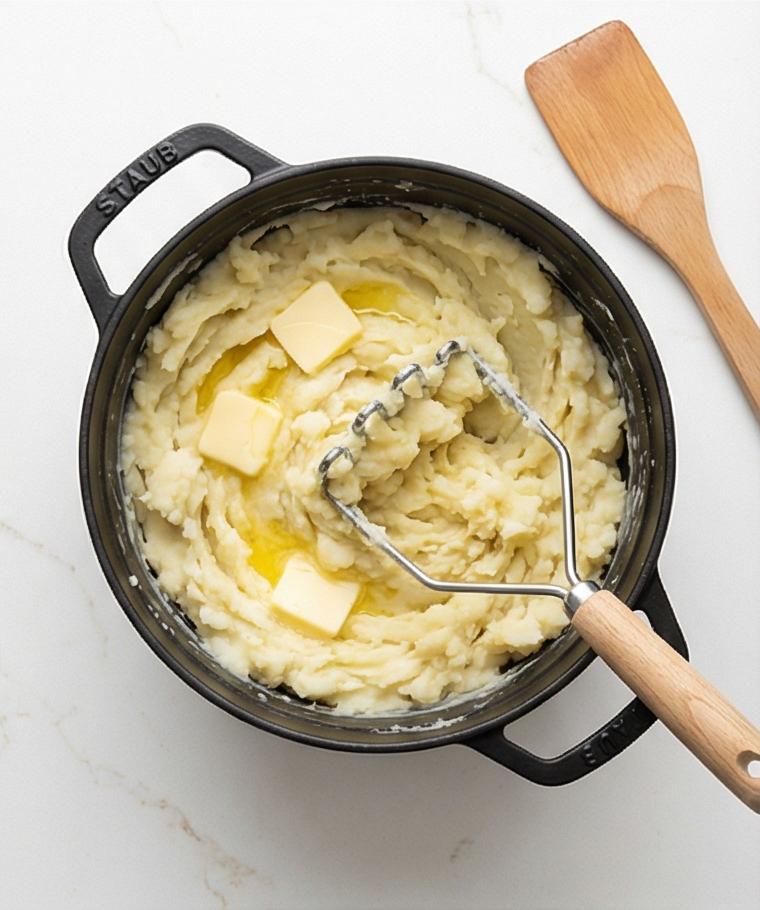
Drop the room-temperature butter pieces onto the hot mashed potatoes and sprinkle the remaining teaspoon of fine sea salt and freshly ground black pepper. Gently fold with a spatula until the butter is melted and incorporated; you should see glossy butter ribbons melting into creamy white folds.
Step 8: Incorporate warmed milk and cream to finish
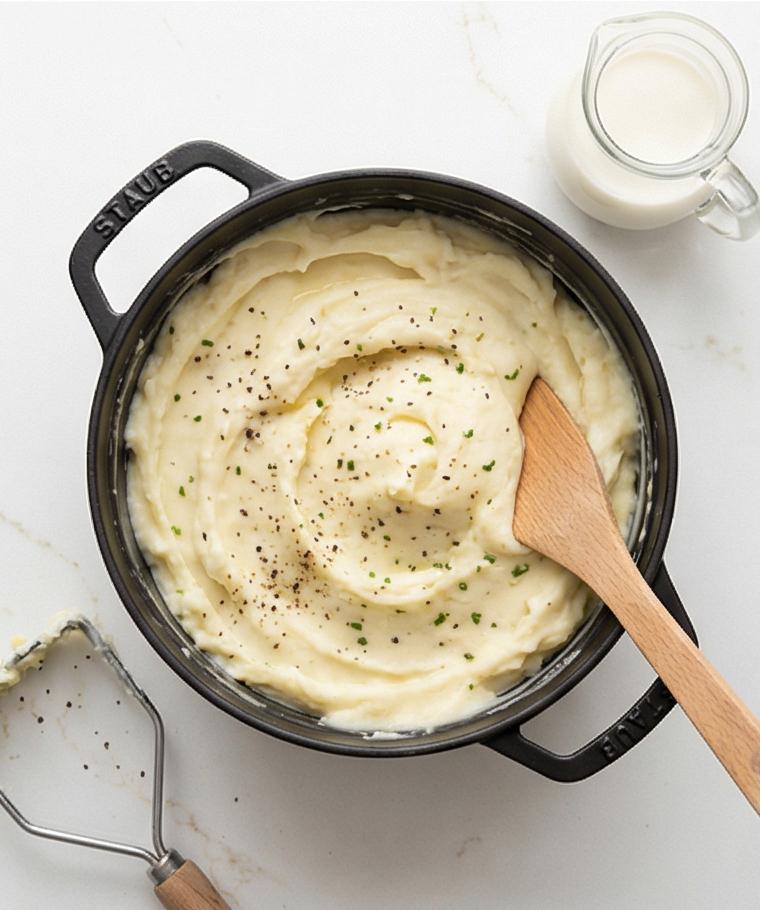
Gradually add the warmed milk-and-cream in two to three additions, stirring gently after each pour until the mash reaches a smooth, creamy consistency that still holds soft peaks — velvety but substantial. Taste and adjust salt and pepper, and if needed add a tablespoon of warm milk at a time to loosen. Show the finished pot: smooth, spoonable ridges with a soft peak texture and a faint sheen from butter and cream.
Step 9: Keep warm, garnish, and serve
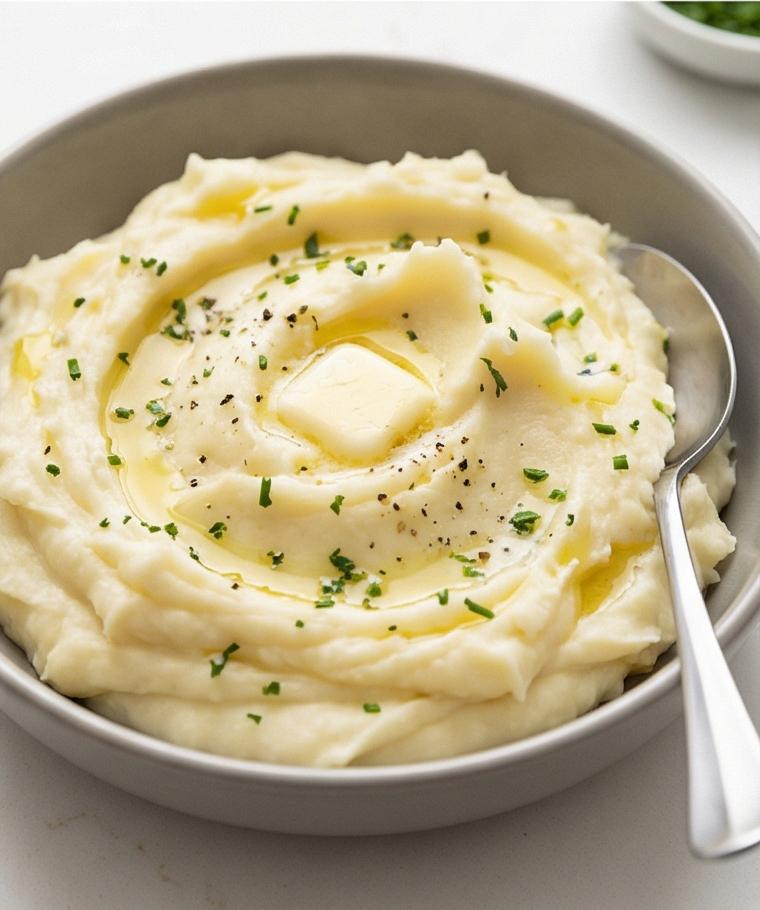
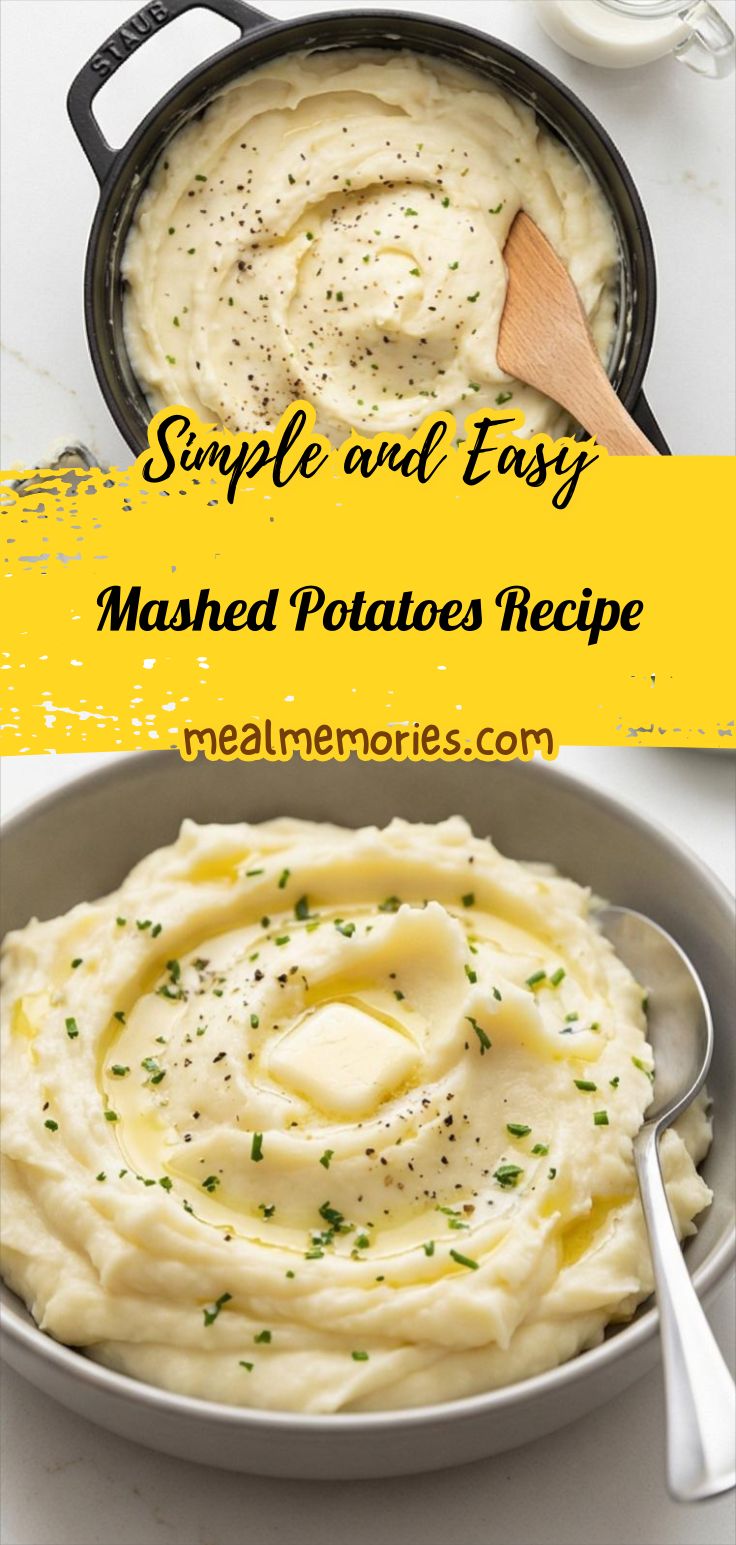
Transfer the mashed potatoes to a warmed shallow serving bowl. Create gentle peaks with the back of a spoon, drizzle a little extra-virgin olive oil if using, and scatter finely chopped chives and parsley with a final crack of black pepper. The finished dish should look airy and luminous with delicate herb flecks and a tiny melting dot of butter on top.
Making It Your Own
I like to experiment with small swaps when I make this Mashed Potatoes Recipe. For a garlic-forward version, I leave the crushed cloves in while the potatoes simmer and then remove them before mashing for a mellow, warm garlic note. If I want a lighter weeknight mash, I use half-and-half instead of both milk and cream and cut the butter by a tablespoon.
For a richer, indulgent side, I stir in a spoonful of crème fraîche or fold in sharp cheddar for a crowd-pleasing upgrade. I also tried truffle oil for a special-occasion twist and loved the deep, earthy finish in small amounts. These little tests keep the recipe fresh and adaptable.
How to Serve
When I host, mashed potatoes are the glue for the plate. For a casual dinner, scoop the warm mash into a wide serving bowl, make peaks with a spoon, and dot with butter and chopped chives. For a holiday buffet, keep the mash in a warmed dish over a low oven setting and provide ladles so guests can help themselves.
To scale: this recipe doubles nicely; use a larger pot and warm the dairy in batches. If serving a small table, the leftovers reheat beautifully and can be piped into ramekins for an elegant presentation with browned butter on top.
Storage and Reheating Tips
Store cooled mashed potatoes in an airtight container in the refrigerator for up to 4 days. Press a piece of plastic wrap directly on the surface to prevent a skin from forming.
To reheat, warm gently on the stovetop over low heat with a splash of warmed milk or cream, stirring often. You can also reheat in a covered baking dish at 350 F until heated through, then stir in a knob of butter to refresh the texture.
Common Slip-Ups and How to Fix Them
If your mash turns gluey, it was likely overworked or the potatoes were too wet. Stop mixing, fold in a little warmed milk, and use a gentler tool like a masher rather than a blender.
If the potatoes taste under-seasoned, don’t be shy to add salt in small increments and taste as you go. And if the mash is too thin, fold in a spoonful of warm, starchy potato reserved from the boil or add a small amount of instant potato flakes to thicken.
Final Invitation
Give this Mashed Potatoes Recipe a try the next time you need a dependable, comforting side. It rewards a few mindful steps with a texture and flavor that feels special without fuss, and once you make it a few times you will know exactly how you like it.
Frequently Asked Questions.
- Q: Can I make this Mashed Potatoes Recipe ahead of time? A: Yes, you can make it up to 2 days ahead and reheat gently with warmed milk, stirring to restore creaminess.
- Q: What potato is best for the Mashed Potatoes Recipe? A: Russet potatoes are preferred for fluffiness; Yukon Golds make a creamier, denser mash.
- Q: Can I use a hand mixer or food processor? A: A hand mixer on low is fine, but avoid a food processor which can make the potatoes gluey.
- Q: How do I keep the mash warm for serving? A: Place the bowl in a warm oven or use a covered slow cooker on low to hold temperature without drying.
- Q: How can I make dairy-free mashed potatoes? A: Substitute dairy with warmed unsweetened almond milk and a dairy-free butter or olive oil, and adjust seasoning.
Mashed Potatoes Recipe
Make the Mashed Potatoes Recipe for fluffy, creamy comfort—simple steps for perfect results every time.
Ingredients
Instructions
Step 1: Prep the potatoes
Peel the russets and cut them into even 1½-inch (4 cm) chunks so they cook uniformly. Rinse the cut potatoes under cold running water for 20–30 seconds to remove excess surface starch — you should see the rinse water clear and the potato pieces look matte and slightly damp. Arrange the peeled chunks in a shallow bowl and set small dishes with the butter cubes, cracked pepper, and salt nearby for quick access.
Step 2: Cold-start the pot
Transfer the rinsed potato chunks to a large, heavy pot and cover with cold water by about an inch. Stir in one teaspoon of fine sea salt and tuck in the two lightly crushed garlic cloves if using. The visual here is a pot full of raw potato chunks submerged in pale, slightly cloudy water with a few garlic cloves nestled between pieces — orderly and ready to heat.
Step 3: Cook until tender
Bring the pot gently up to a steady simmer (no need to show the stove). Cook until the potatoes are very tender and a knife tip slips through the center with no resistance, about 15–20 minutes. The result is uniformly broken-down edges and pillowy potato pieces that yield to gentle pressure; drain them thoroughly.
Step 4: Drain and dry back in the pot
Immediately return the drained, steaming potato pieces to the warm pot. Place the pot on the marble surface and let it sit over very low retained heat for a minute or two, shaking gently to evaporate excess moisture — the pieces should look slightly drier at the surface and flaky rather than water-slick. This little drying step makes the final mash airy, not watery.
Step 5: Warm the dairy
While the potatoes finish, warm the milk and heavy cream together until just heated through (warm, not boiling). Keep the dairy in a small glass jug so it reads clearly in the flatlay and remains ready to pour in measured, warm additions.
Step 6: Mash to a fluffy base
Using a potato masher or ricer, work the hot potatoes in the pot until there are no large lumps — aim for a textured, pillowy base rather than a gluey puree. The pot should show visible strands and soft curds of potato, a matte, fluffy texture that promises lightness.
Step 7: Add butter and seasoning
Drop the room-temperature butter pieces onto the hot mashed potatoes and sprinkle the remaining teaspoon of fine sea salt and freshly ground black pepper. Gently fold with a spatula until the butter is melted and incorporated; you should see glossy butter ribbons melting into creamy white folds.
Step 8: Incorporate warmed milk and cream to finish
Gradually add the warmed milk-and-cream in two to three additions, stirring gently after each pour until the mash reaches a smooth, creamy consistency that still holds soft peaks — velvety but substantial. Taste and adjust salt and pepper, and if needed add a tablespoon of warm milk at a time to loosen. Show the finished pot: smooth, spoonable ridges with a soft peak texture and a faint sheen from butter and cream.
Step 9: Keep warm, garnish, and serve
Transfer the mashed potatoes to a warmed shallow serving bowl. Create gentle peaks with the back of a spoon, drizzle a little extra-virgin olive oil if using, and scatter finely chopped chives and parsley with a final crack of black pepper. The finished dish should look airy and luminous with delicate herb flecks and a tiny melting dot of butter on top.
Notes
- Use room-temperature butter so it folds into the mash smoothly.
- Warm the milk and cream before adding to retain heat and prevent gluey texture.
- Dry the potatoes briefly in the hot pot after draining to avoid watery mash.
- Reserve a little cooking water from the pot to adjust consistency if needed.
- For ultra-smooth potatoes, press through a ricer; for textured mash, use a masher.