I love how a simple loaf can make a kitchen feel like home, so I keep this Pumpkin Bread Recipe close at hand all autumn long. It started as a pantry rescue on a rainy afternoon and turned into a reliable crowd-pleaser at weekend brunches. The balance of warm spices and moist pumpkin makes this Pumpkin Bread Recipe feel cozy without being too sweet. If you want something that slices beautifully for gifting or to enjoy with a hot mug, this Pumpkin Bread Recipe is the one I reach for time and again.
How This Loaf Became My Cozy-Go-To
The first time I made this loaf I remember the way the kitchen filled with cinnamon and ginger as the batter hit the pan. I was nursing a cold and the act of measuring, whisking, and folding felt quietly restorative. When I opened the oven and saw the top crack golden and fragrant, I felt a small burst of triumph. I wrapped a slice in a napkin and took it outside into the crisp air; the steam carried nutmeg-scented warmth, and that first bite—tender, slightly dense, with a buttery hit of brown sugar—felt like permission to slow down. Since then, this recipe has been my calm-with-comfort ritual: easy enough for weeknights, special enough for visitors, and perfect to share when life feels a little messy.
The Stars of the Batter: Key Ingredients and Tips
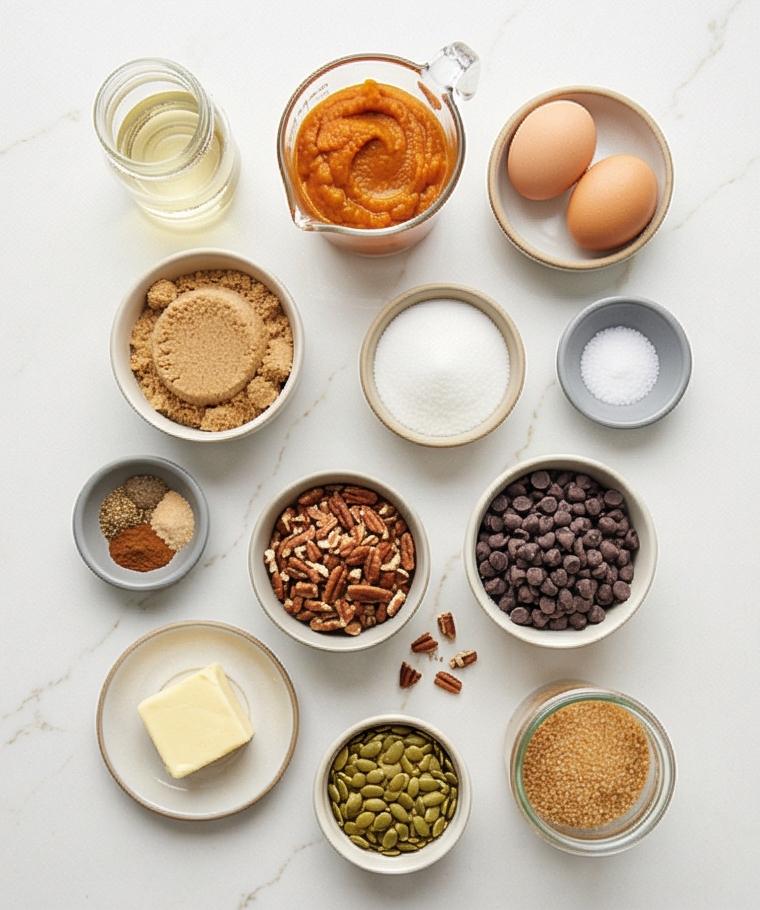
- All-Purpose Flour: The structure for the loaf. Use plain flour; for a slightly denser, heartier crumb try half whole wheat.
- Granulated and Light Brown Sugar: Provide sweetness and moisture. Light brown adds caramel notes; substitute coconut sugar for a deeper flavor but expect a darker crumb.
- Eggs: Bind and give lift. Use room-temperature eggs for best emulsification.
- Pumpkin Purée: The hero of the Pumpkin Bread Recipe, providing moisture, color, and flavor. Use 100% pumpkin, not pie mix; homemade purée works fine if drained slightly.
- Neutral Vegetable Oil: Keeps the crumb tender and moist. Canola or sunflower are great; swapped for melted butter for a richer flavor.
- Milk and Vanilla: Add silkiness and depth. Any milk works; almond milk can be used for dairy-free versions.
- Warm Spices (cinnamon, ginger, nutmeg, cloves): Define the loaf’s profile. Toast whole spices and grind if you want a fresher, livelier aroma.
Essential Kitchen Tools That Make It Easier
A few simple tools make this Pumpkin Bread Recipe come together smoothly and improve the result.
- 9 x 5-inch loaf pan: Ensures proper shape and baking time; use a metal pan for crisper edges or an insulated pan if your oven runs hot.
- Parchment sling: Lets you lift the loaf out cleanly; no scraping needed.
- Flexible spatula: Gentle folding preserves air in the batter; a silicone spatula is ideal.
- Whisk and mixing bowls: For combining wet and dry components; if you don’t have bowls in different sizes, rinse between uses.
- Fine-mesh sieve or sifter (optional): Helps aerate the flour and evenly distribute spices, preventing clumps.
Step-by-Step Preparation Guide
Step 1: Preheat and prepare the loaf pan
Warm up your oven to 350°F (175°C) and position a rack in the center. Thoroughly grease a 9 x 5-inch loaf pan with butter or a neutral cooking spray and line the bottom and long sides with a parchment sling so the loaf will lift out cleanly. Take a moment to press the parchment into the corners and leave a slight overhang for easy removal later—this small prep step saves time and keeps the loaf intact when it’s cooling.
Step 2: Whisk the dry spices and flour
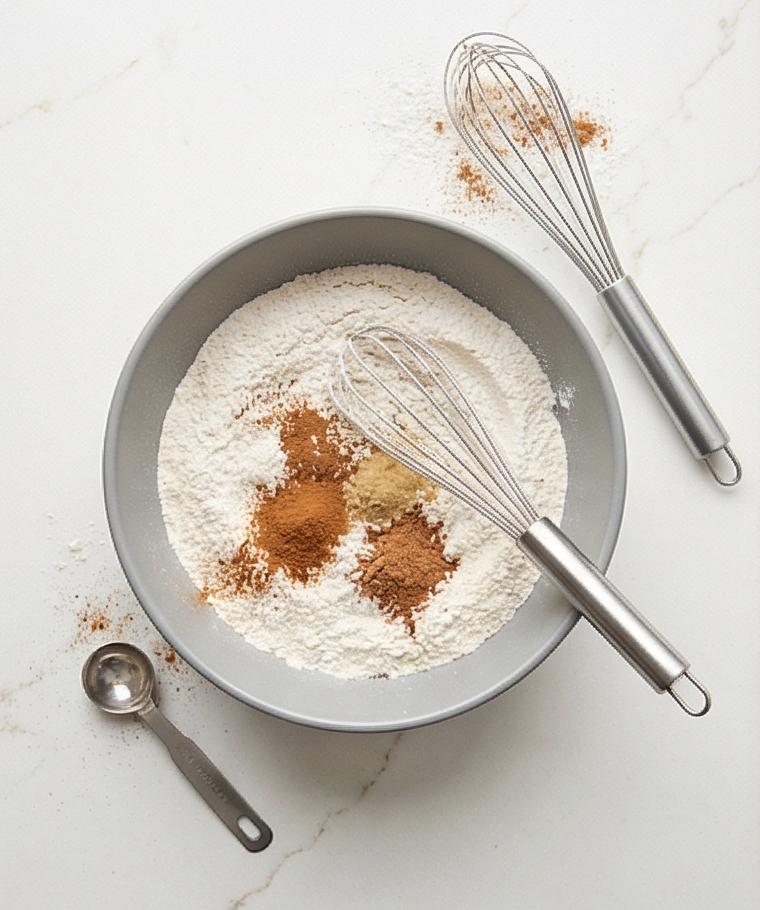
In a medium matte grey ceramic bowl, whisk together the all-purpose flour, baking soda, baking powder, fine sea salt, ground cinnamon, ground ginger, ground nutmeg, and ground cloves (if using) until fully uniform and there are no streaks of spice. This dry mixture should look pale and speckled with warm brown spice flecks and feel light and aerated to the touch—ready to balance the wet pumpkin base.
Step 3: Cream the sugars and eggs until glossy
In a matching large matte grey ceramic mixing bowl, combine the granulated sugar and packed light brown sugar, breaking up any clumps with a fork. Add the room-temperature eggs and whisk vigorously for 1–2 minutes until the mixture looks slightly thickened, lighter in color, and glossy—this step helps dissolve the sugars and gives lift to the final crumb.
Step 4: Add pumpkin, oil, milk, and vanilla; whisk to a smooth wet base
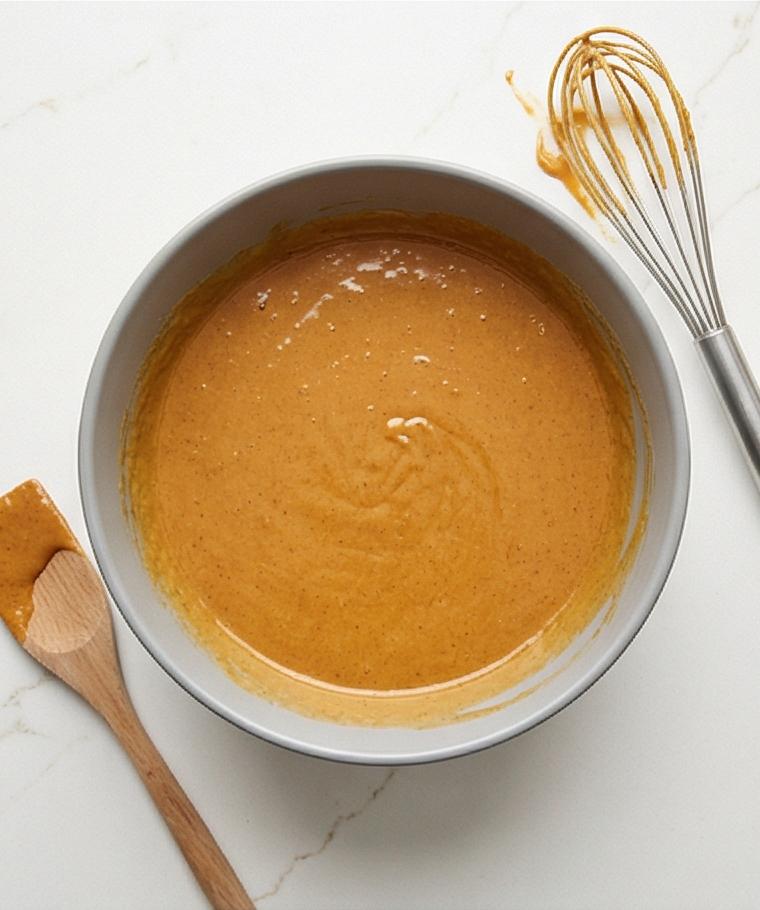
To the egg-sugar mixture, add the room-temperature pumpkin purée, neutral vegetable oil, whole milk, and vanilla extract. Whisk energetically until the mixture is completely smooth and homogenous, with no visible streaks of pumpkin or oil—think silky, dense orange-brown batter that moves as a single glossy mass when the whisk is lifted.
Step 5: Fold the dry into the wet, stopping when just combined
Add the dry flour-spice mixture to the wet pumpkin base in two additions. Using a flexible spatula, gently fold the first half in until most flour is incorporated, then fold in the second half just until you no longer see streaks of dry flour. The batter should be thick but still pourable—lumpy, tender, and aerated where small pockets of flour disappear under the spatula. Be careful not to overmix to preserve a light crumb.
Step 6: Fold in optional mix-ins with gentle motion
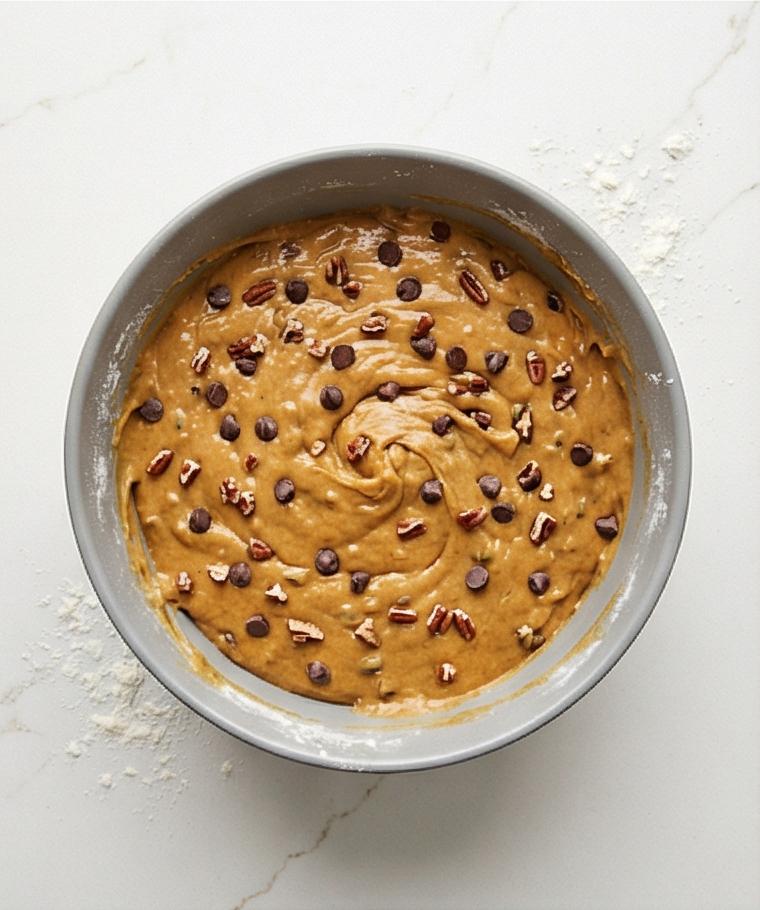
If you’re using mix-ins, gently fold in the chopped toasted pecans or walnuts and/or semi-sweet chocolate chips until they are evenly distributed throughout the batter. The chips and nuts should sit suspended in the thick batter rather than sinking, showing how balanced the batter’s body is at this stage.
Step 7: Transfer to the prepared pan and add toppings
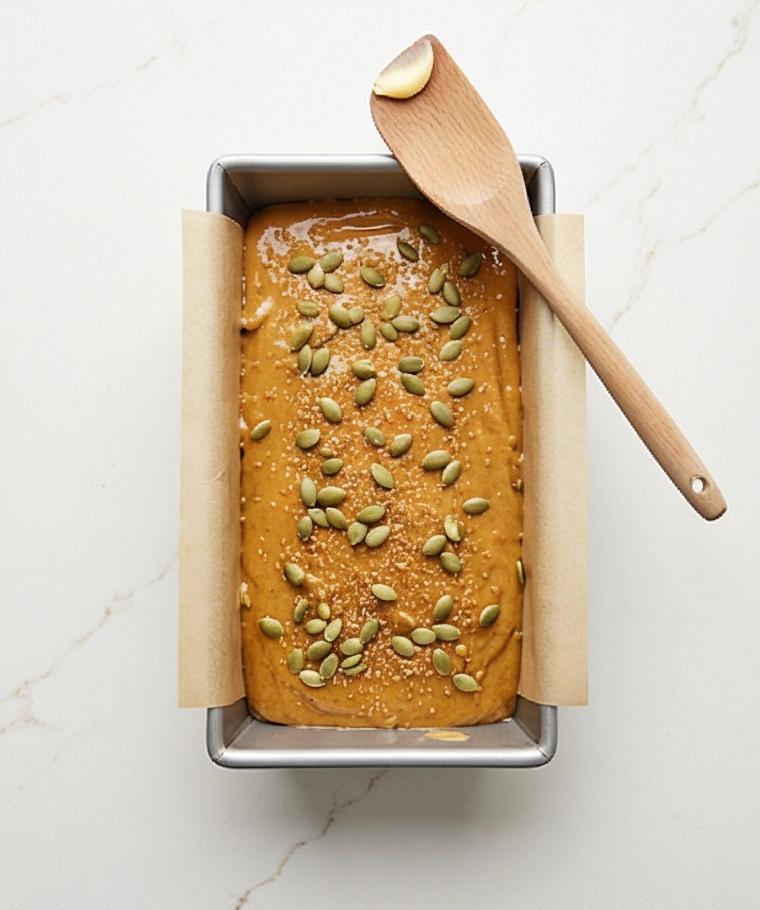
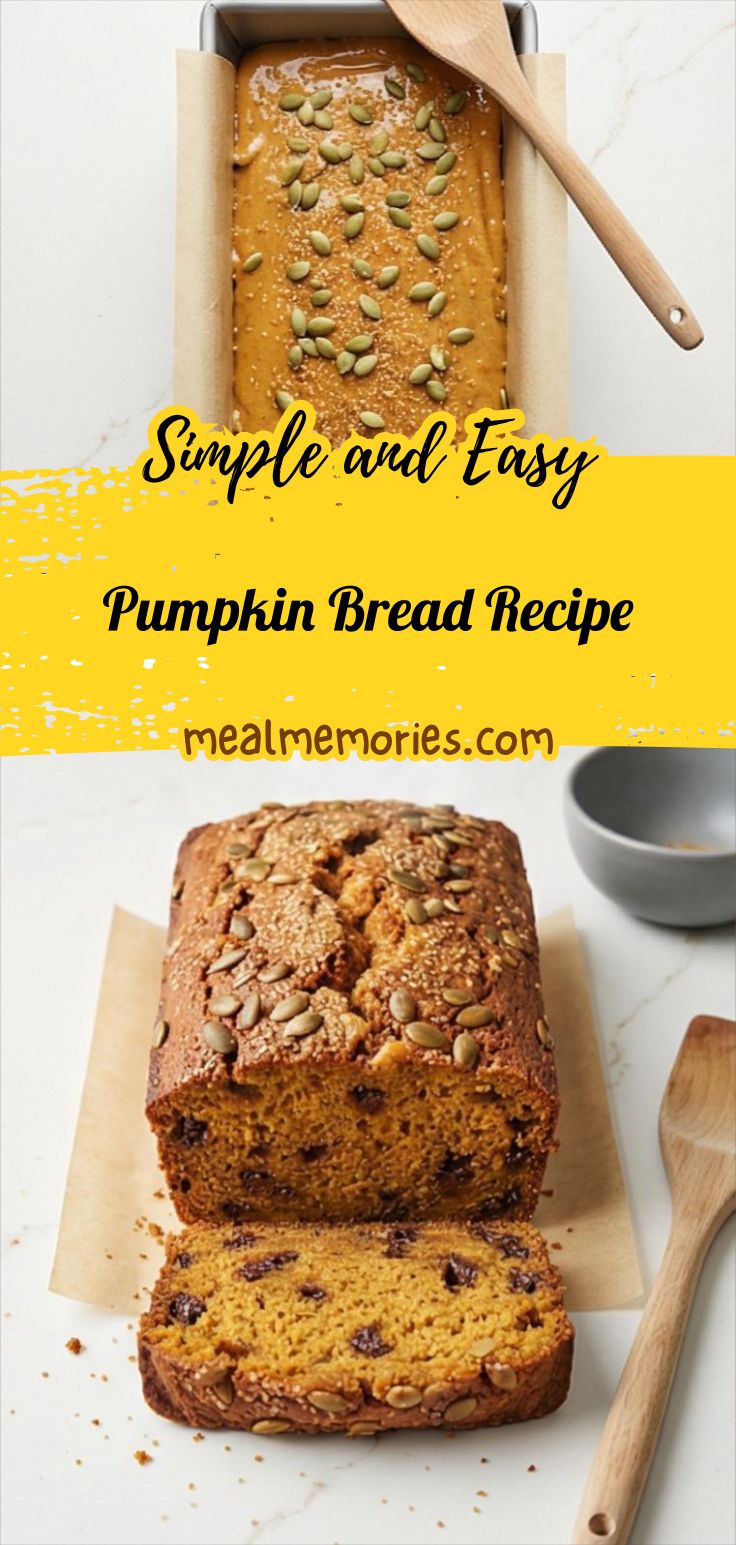
Scrape the batter into the prepared 9 x 5-inch loaf pan with a spatula, spreading it into an even layer and smoothing the top lightly. If desired, sprinkle raw pumpkin seeds (pepitas) and turbinado sugar evenly over the surface for a toasted, crystalline finish. A gentle tap on the counter levels the loaf—this is the last quiet moment before heat transforms the batter into bread.
Step 8: Bake and watch for a golden crackled top
Place the pan (centered on the oven rack) and bake at 350°F (175°C) for 55–65 minutes until the top is deeply golden-brown with a slight central crack and a thin skewer inserted into the center comes out mostly clean with only a few moist crumbs. If the top is browning too fast, tent loosely with foil after about 40 minutes and continue baking until fully cooked through.
Step 9: Cool in the pan briefly, then lift out to finish cooling
Remove the pan and set it on a wire rack to cool for 15–20 minutes; this resting period helps the loaf set. Run a thin knife around the short edges if needed, then use the parchment sling to lift the loaf from the pan and transfer it to the wire rack. Let it cool for another 30–45 minutes or until just slightly warm—slicing too soon can cause crumbling.
Step 10: Slice and serve; store for best texture
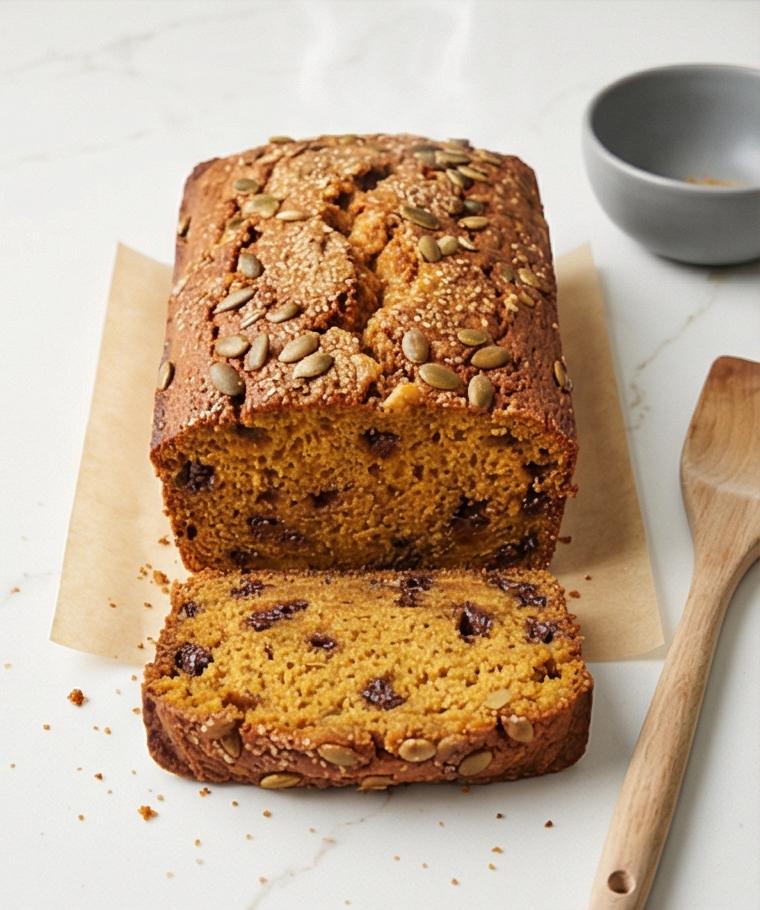
Using a serrated bread knife, cut the pumpkin bread into 10–12 slices about 3/4-inch (2 cm) thick. Serve plain or warmed with softened butter, cream cheese, honey or maple syrup. Once completely cooled, store tightly wrapped at room temperature for up to 3 days, refrigerate up to 1 week, or freeze individual slices for up to 2 months—rewarm gently before serving.
Making It Your Own
I like to tinker with this loaf depending on who I am baking for. For a nut-free school-safe version I skip the pecans and swap in extra chocolate chips for texture. When I want a richer, almost cake-like slice I replace half the oil with melted butter and add a sprinkle of flaky sea salt on top for contrast. For a vegan take I use a flax-egg and full-fat oat milk, reduce sugar slightly, and choose dairy-free chocolate chips. Seasonal experiments include folding in diced dried apples in autumn or swapping in orange zest and cardamom for a brighter, Scandinavian spin. Each small change nudges the loaf into a new personality while keeping that familiar Pumpkin Bread Recipe comfort.
How to Serve and Present
If I’m hosting, I slice the loaf into 10 to 12 even pieces and arrange them on a long wooden board with small bowls of softened butter, whipped cream cheese, and honey. For coffee brunches I serve warm slices on individual plates with a dusting of powdered sugar and a sprig of rosemary for visual contrast. To stretch the recipe for a larger crowd, bake two loaves and slice thinner pieces—about 1/2 inch—so guests can sample with preserves and cheeses. For gifting, wrap a cooled loaf in parchment, tie with twine, and add a handwritten tag. The Pumpkin Bread Recipe adapts beautifully to both casual and dressed-up tables.
Storage and Reheating Tips
Store cooled loaves wrapped tightly in plastic wrap or in an airtight container at room temperature for up to 3 days. I find wrapping each slice individually before freezing prevents freezer burn and makes reheating quick and neat.
To reheat, thaw a frozen slice at room temperature for 30 minutes then warm it in a 300°F oven for 6 to 8 minutes or microwave for 20 to 30 seconds if you prefer speed. A light spread of butter or cream cheese immediately after reheating elevates the texture and flavor.
Common Mistakes and How to Avoid Them
One frequent slip is overmixing the batter, which can make the loaf tough. Fold gently and stop when dry streaks disappear. Another is baking at too high a temperature; if the top browns too quickly tent it with foil so the inside has time to set. Finally, slicing too soon causes crumbling; let it cool at least 30 minutes after removing from the pan for neater slices.
Ready to Bake
Give this Pumpkin Bread Recipe a try this week—measure deliberately, fold gently, and savor the cozy walk-through of spices. You may find this loaf becomes the small, steady comfort you reach for when you want something warm, fragrant, and reliably delicious.
Frequently Asked Questions.
- Can I use fresh pumpkin instead of canned? Yes, you can use cooked, pureed fresh pumpkin; drain any excess water so the purée is thick and use it in the same amount as canned pumpkin.
- How do I make the recipe dairy-free? Replace the milk with oat or almond milk and swap oil for a neutral oil as written; use dairy-free chocolate chips if adding mix-ins.
- Can I halve the recipe? Yes, halve all ingredients and bake in a smaller loaf pan; start checking doneness around 35 to 40 minutes.
- Why did my pumpkin bread sink in the middle? Sinking usually means it was underbaked or the oven temperature is too low; confirm oven temperature with an oven thermometer and test with a skewer near the minimum baking time.
- How should I store pumpkin bread to keep it moist? Wrap tightly in plastic and keep at room temperature for up to 3 days, or freeze slices individually for longer storage.
Pumpkin Bread Recipe
Bake Pumpkin Bread Recipe for a moist, spiced loaf perfect for brunch or gifting.
Ingredients
Instructions
Step 1: Preheat and prepare the loaf pan
Warm up your oven to 350°F (175°C) and position a rack in the center. Thoroughly grease a 9 x 5-inch loaf pan with butter or a neutral cooking spray and line the bottom and long sides with a parchment sling so the loaf will lift out cleanly. Take a moment to press the parchment into the corners and leave a slight overhang for easy removal later—this small prep step saves time and keeps the loaf intact when it’s cooling.
Step 2: Whisk the dry spices and flour
In a medium matte grey ceramic bowl, whisk together the all-purpose flour, baking soda, baking powder, fine sea salt, ground cinnamon, ground ginger, ground nutmeg, and ground cloves (if using) until fully uniform and there are no streaks of spice. This dry mixture should look pale and speckled with warm brown spice flecks and feel light and aerated to the touch—ready to balance the wet pumpkin base.
Step 3: Cream the sugars and eggs until glossy
In a matching large matte grey ceramic mixing bowl, combine the granulated sugar and packed light brown sugar, breaking up any clumps with a fork. Add the room-temperature eggs and whisk vigorously for 1–2 minutes until the mixture looks slightly thickened, lighter in color, and glossy—this step helps dissolve the sugars and gives lift to the final crumb.
Step 4: Add pumpkin, oil, milk, and vanilla; whisk to a smooth wet base
To the egg-sugar mixture, add the room-temperature pumpkin purée, neutral vegetable oil, whole milk, and vanilla extract. Whisk energetically until the mixture is completely smooth and homogenous, with no visible streaks of pumpkin or oil—think silky, dense orange-brown batter that moves as a single glossy mass when the whisk is lifted.
Step 5: Fold the dry into the wet, stopping when just combined
Add the dry flour-spice mixture to the wet pumpkin base in two additions. Using a flexible spatula, gently fold the first half in until most flour is incorporated, then fold in the second half just until you no longer see streaks of dry flour. The batter should be thick but still pourable—lumpy, tender, and aerated where small pockets of flour disappear under the spatula. Be careful not to overmix to preserve a light crumb.
Step 6: Fold in optional mix-ins with gentle motion
If you’re using mix-ins, gently fold in the chopped toasted pecans or walnuts and/or semi-sweet chocolate chips until they are evenly distributed throughout the batter. The chips and nuts should sit suspended in the thick batter rather than sinking, showing how balanced the batter’s body is at this stage.
Step 7: Transfer to the prepared pan and add toppings
Scrape the batter into the prepared 9 x 5-inch loaf pan with a spatula, spreading it into an even layer and smoothing the top lightly. If desired, sprinkle raw pumpkin seeds (pepitas) and turbinado sugar evenly over the surface for a toasted, crystalline finish. A gentle tap on the counter levels the loaf—this is the last quiet moment before heat transforms the batter into bread.
Step 8: Bake and watch for a golden crackled top
Place the pan (centered on the oven rack) and bake at 350°F (175°C) for 55–65 minutes until the top is deeply golden-brown with a slight central crack and a thin skewer inserted into the center comes out mostly clean with only a few moist crumbs. If the top is browning too fast, tent loosely with foil after about 40 minutes and continue baking until fully cooked through.
Step 9: Cool in the pan briefly, then lift out to finish cooling
Remove the pan and set it on a wire rack to cool for 15–20 minutes; this resting period helps the loaf set. Run a thin knife around the short edges if needed, then use the parchment sling to lift the loaf from the pan and transfer it to the wire rack. Let it cool for another 30–45 minutes or until just slightly warm—slicing too soon can cause crumbling.
Step 10: Slice and serve; store for best texture
Using a serrated bread knife, cut the pumpkin bread into 10–12 slices about 3/4-inch (2 cm) thick. Serve plain or warmed with softened butter, cream cheese, honey or maple syrup. Once completely cooled, store tightly wrapped at room temperature for up to 3 days, refrigerate up to 1 week, or freeze individual slices for up to 2 months—rewarm gently before serving.
Notes
- Use room-temperature eggs for a smoother, more uniform batter.
- If using fresh pumpkin, drain excess water to match canned purée consistency.
- Tent with foil if the top browns before the center is set.
- Freeze individual slices for quick breakfasts and reheat gently before serving.
- Toast nuts before folding them in to intensify flavor.