Broccoli Cheddar Soup Recipe has been one of my kitchen workhorses for years, and I still get a small thrill when the first spoonful hits my lips. I learned to make this Broccoli Cheddar Soup Recipe for a friend who needed comfort food, and it quickly became our go-to for chilly nights. It balances bright, steamed broccoli with a silky cheddar base that feels indulgent without being fussy. I love how simple swaps let the recipe stretch from weeknight dinner to special-occasion starter.
How This Recipe Became My Rainy-Day Favorite
The first time I made this Broccoli Cheddar Soup Recipe, a storm had rolled in and everything outside sounded like soft percussion. I remember the smell of melting butter and onions filling the kitchen while rain tapped on the windows. Stirring the roux felt almost meditative. When I added the broccoli and watched the bright green bloom against the creamy base, I felt a quiet kind of satisfaction. Serving it in mismatched bowls with toasted bread made the evening feel intimate and warm. That sensory memory now nudges me to make this soup whenever I need immediate comfort: the warmth, the cheddar pull, and the green flecks remind me of conversations that linger well after bowls are empty.
Pantry and Produce: Primary Ingredients
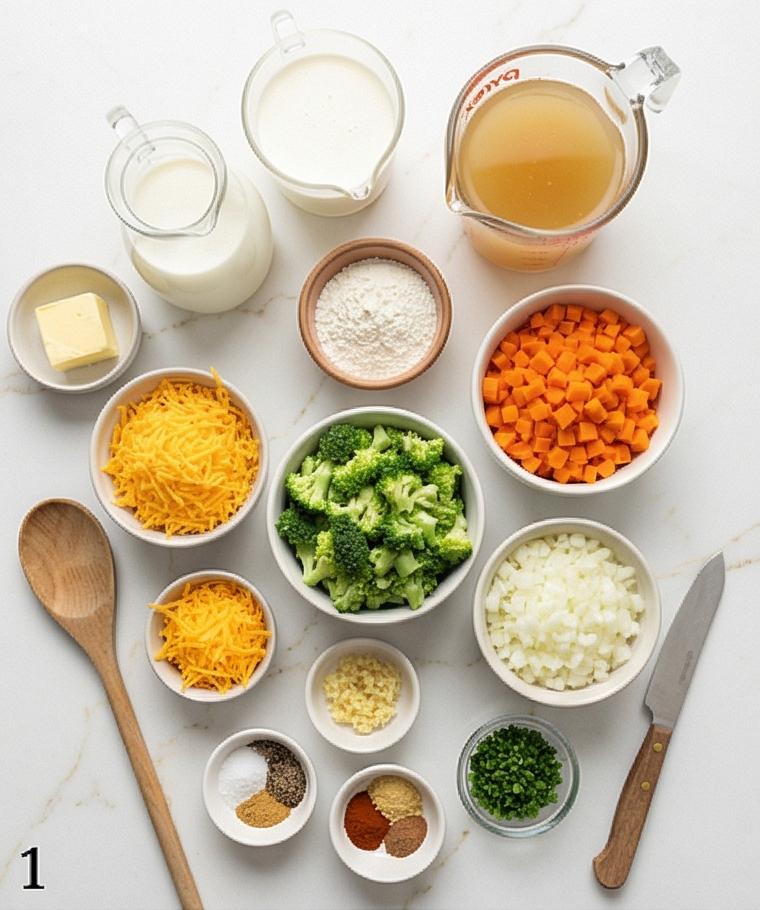
- Unsalted Butter: Builds flavor and forms the base of the roux; use a good quality butter for a richer mouthfeel. Substitute with olive oil for a lighter but different profile.
- Onion and Carrot: Provide sweetness and aromatic depth; yellow onion is ideal, but a sweet onion also works. Grate the carrot for a silkier texture.
- Flour: Thickens the soup via the roux; all-purpose is standard. For a gluten-free version use a 1:1 gluten-free flour blend.
- Broth, Milk, Cream: Broth adds savory backbone; low-sodium chicken or vegetable work well. Whole milk and cream create the silky body; swap to half-and-half for a slightly lighter finish.
- Broccoli: The star vegetable; choose firm, vivid-green heads and chop florets and tender stems evenly. Frozen can be used in a pinch but drain well.
- Sharp Cheddar: The defining flavor; freshly grate for best melting and texture. Try an aged cheddar for a punchier finish.
Essential Kitchen Tools and Why They Matter
A few reliable tools make this soup easier and more consistent. Here are the essentials and simple alternatives.
- Heavy-bottomed pot: Ensures even heat and prevents scorching of the roux; a Dutch oven is perfect. If you only have a thin pot, lower the heat and stir more often.
- Whisk: Helps eliminate lumps when adding broth and milk; a sturdy whisk is ideal. A wooden spoon can work but requires more patient stirring.
- Wooden spoon or silicone spatula: Great for scraping and stirring the roux; they stand up to heat and won’t scratch cookware.
- Box grater: Freshly grate cheddar for better melting; pre-shredded cheese often contains anti-caking agents that can affect texture. A food processor with a grating disk is a fast substitute.
- Immersion blender: Lets you control the soup body right in the pot. If you do not have one, transfer part of the soup to a blender in batches for partial puréeing.
Step-by-Step Preparation Guide
Step 1: Sauté aromatics and form the roux
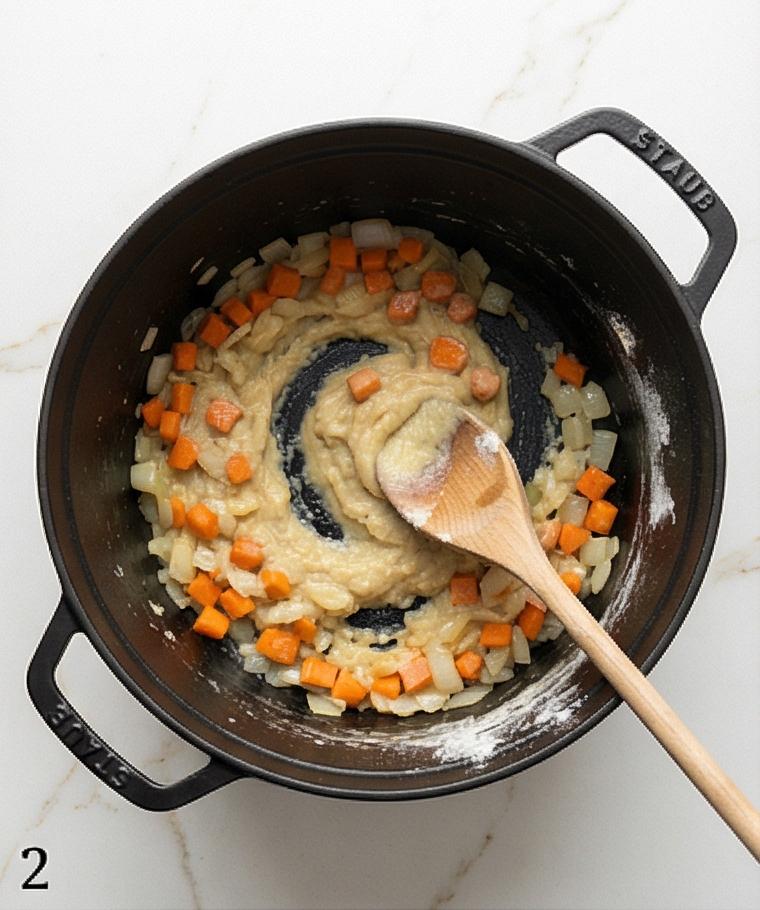
Begin by melting unsalted butter in your heavy pot until it foams; add the finely chopped onion and diced carrot and cook over medium heat until the onion is soft, translucent and edges just begin to color. Stir in the minced garlic until fragrant, then sprinkle the flour evenly over the vegetables and stir continuously until the mixture becomes thick and pasty and smells faintly nutty — this is the roux that will thicken the soup. Keep the vegetables glossy and coated, not dry; a wooden spoon resting on the pot rim or in the mixture is perfect for scraping.
Step 2: Whisk in the broths, milk and cream to build a smooth base
Slowly incorporate the room-temperature broth a little at a time, whisking or stirring vigorously after each addition to eliminate lumps and produce a silky pale sauce. Once all the broth is folded in, pour in the whole milk and then the heavy cream, stirring steadily until the liquid is fully integrated and just beginning to thicken — the texture should be smooth, slightly viscous, and velvety before any broccoli is added. Keep the whisk or spoon visible, resting nearby, showing the creamy emulsion.
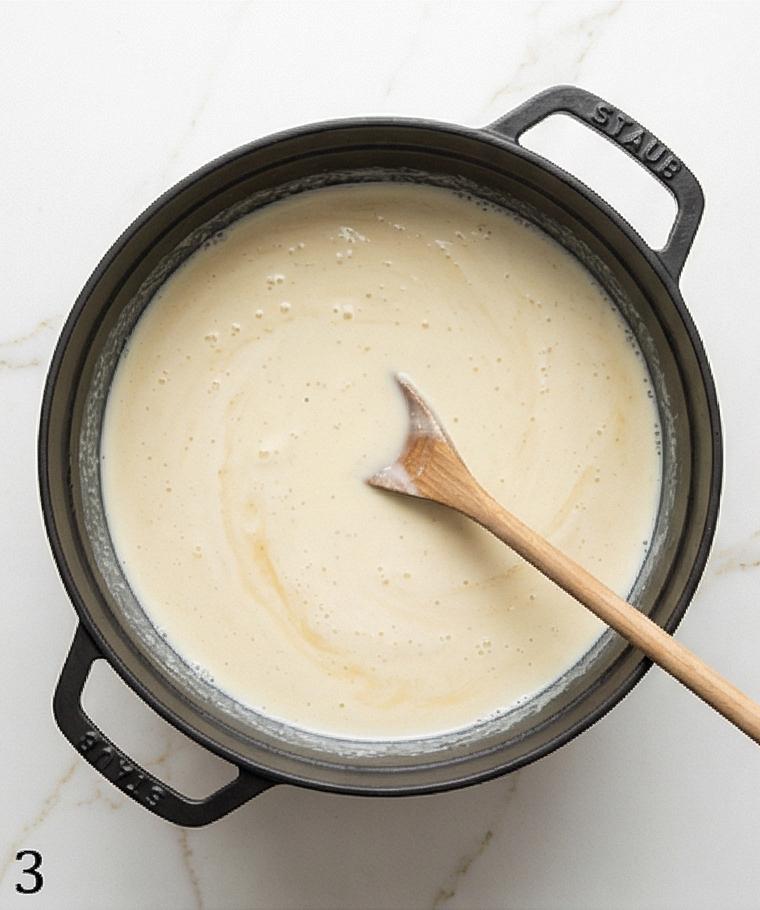
Step 3: Season and submerge the broccoli
Stir in the bay leaf (if using) and the aromatics—kosher salt, black pepper, dry mustard, smoked paprika and a pinch of freshly grated nutmeg—so the seasoning is evenly distributed in the pale base. Add the finely chopped broccoli florets and tender stems and fold them into the liquid so each piece is submerged and glossy. The broccoli should look vivid and saturated by the cream, not floating dry; small gentle bubbles at the edge signal readiness to move to a gentle simmer.
Step 4: Simmer until broccoli is very tender and the soup thickens
Maintain a gentle simmer so the broccoli softens and the liquid reduces slightly; scrape the bottom occasionally with the wooden spoon so nothing sticks. Cook until a fork pierces the florets easily and some pieces begin to break apart against the pot side — the overall consistency should be a light cream that clings slightly to the spoon, with bright green fragments suspended throughout. If the mixture seems too thick, loosen with a splash of broth or milk and return briefly to a gentle motion.
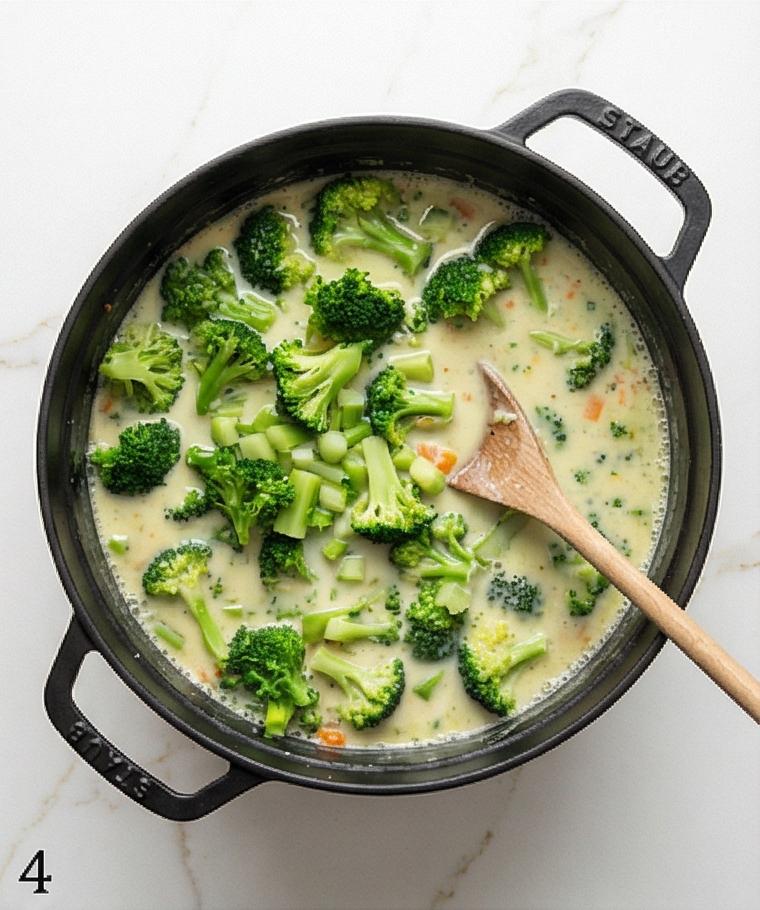
Step 5: Adjust texture — partial purée or leave chunky
Decide how much body you want: use brief pulses with an immersion blender to partially purée the soup in-place, leaving small broccoli morsels for body, or skip blending entirely for a chunky, rustic bowl. The visual result should be an even pale-green cream with visible bits of broccoli and occasional tiny flecks of carrot and onion; a small silicone spatula or spoon resting on the rim communicates the recent blending and scraping.
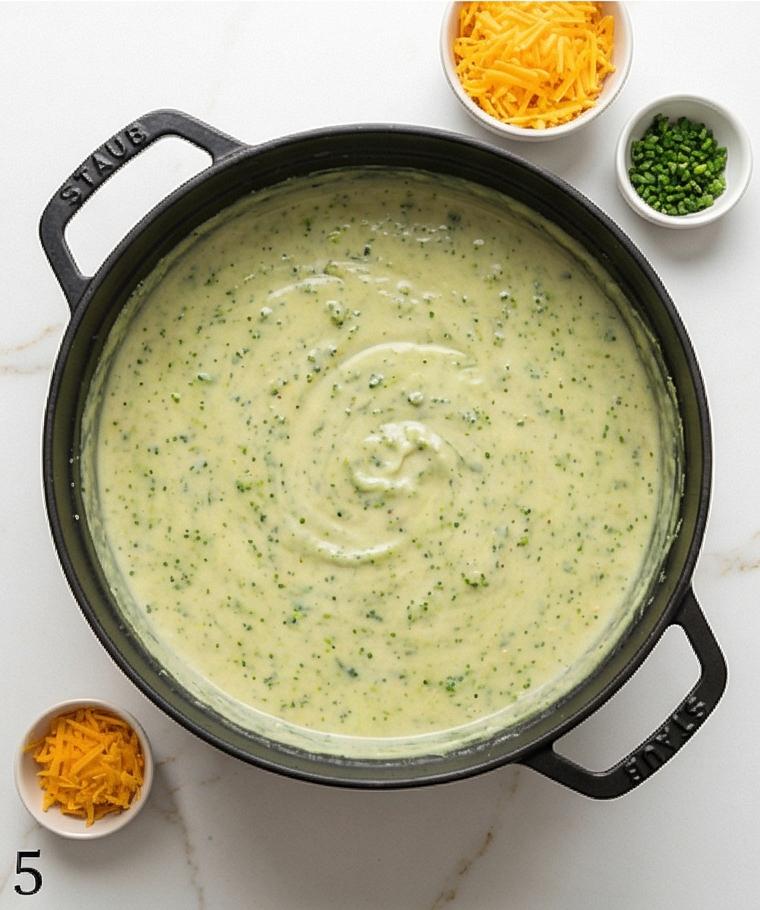
Step 6: Finish gently with sharp cheddar
With the pot off high heat and the soup steaming but not boiling, add the grated sharp cheddar in small handfuls, stirring constantly after each addition until the cheese melts into a seamless, velvety emulsion. Taste and adjust seasoning — more salt, pepper or a whisper of nutmeg — and if the soup tightens too much, thin with warm broth or milk until it pours smoothly. Keep the wooden spoon present; the finished pot should look glossy, thickened, and homogenous with no graininess.
Step 7: Optional toasted bread or croutons
If serving with toasted bread, brush slices lightly with olive oil or melted butter and toast until crisp and golden; the toasts should be shown as finished, warm and bronzed, with a sprinkle of fine sea salt visible on the crust. Arrange the cooled-to-warm slices near the pot so they read as an accompaniment, not a separate scene.
Step 8: Serve and garnish
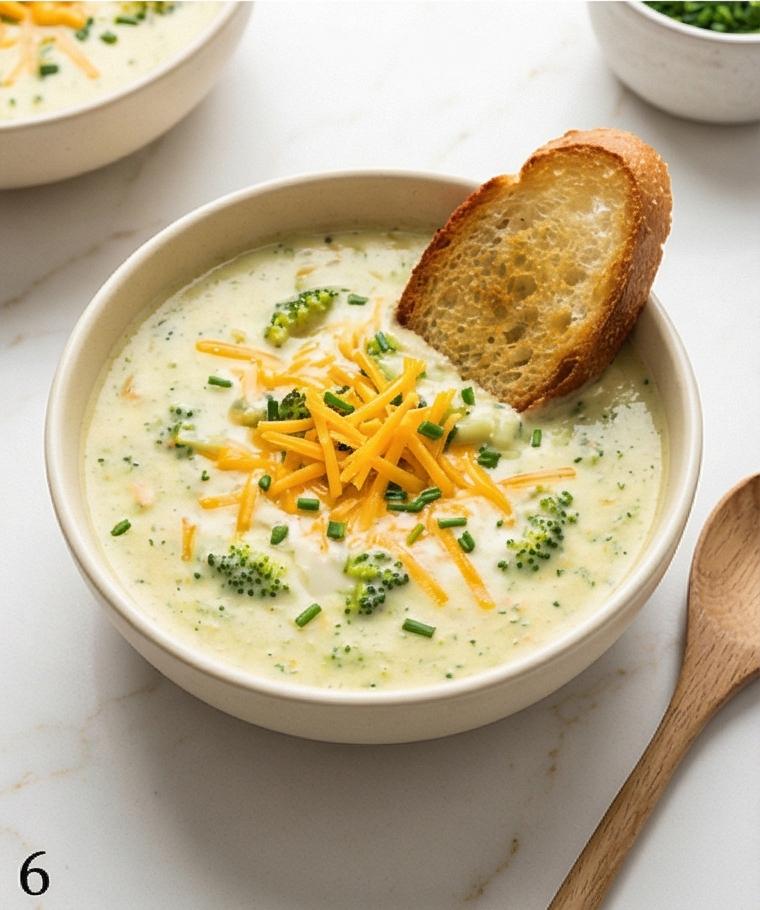
Ladle the soup into warmed shallow bowls and finish each serving with a small mound of the reserved extra-sharp cheddar and a scattering of finely chopped chives or green onion tops. The final bowl should be velvety, with melted cheddar threads, vivid green broccoli bits and a light sheen of cream; place a toasted bread slice or crusty chunk alongside.
Making It Your Own
I like to experiment by swapping cheeses and adding sparks of flavor. Try smoked gouda in place of some cheddar for a mellow, smoky note that plays well with smoked paprika. For a lighter weeknight version, replace half the cream with extra milk and skip the extra-sharp garnish.
If you need dairy-free, use full-fat coconut milk plus a plant-based cheddar-style shreds; the texture will be different but still cozy. Seasonal tests work well too: stir roasted cauliflower or a handful of wilted kale into the pot near the end for added depth.
A final experiment I adore is folding in a spoonful of whole-grain mustard at the end for a tangy counterpoint. Small changes yield big personality shifts.
How to Serve
If you are hosting, warm shallow bowls in the oven so the soup stays hot longer as guests mingle. Serve the Broccoli Cheddar Soup Recipe with toasted sourdough rounds or hollowed bread bowls for an informal but inviting presentation. Add a small mound of extra-sharp cheddar and a sprinkle of chives to each bowl for a finished look.
For larger groups, keep the soup on the lowest heat and stir occasionally; transfer to a slow cooker on warm for buffet-style serving. For a lighter meal, pair the soup with a crisp green salad and vinaigrette. For a heartier dinner, serve alongside roasted chicken or a grilled cheese sandwich built with the same sharp cheddar to echo the soup’s flavor.
Storage and Reheating Tips
Cool the soup quickly and store it in airtight containers in the refrigerator for up to 3 days. Because dairy-based soups can thicken as they chill, expect a firmer texture when you reheat.
Reheat gently over low heat, adding a splash of broth or milk to loosen the texture and whisking until it returns to a silky consistency. Avoid bringing it to a hard boil when reheating to prevent the dairy from separating.
For freezing, portion the soup into meal-sized containers and freeze up to 3 months. Thaw overnight in the fridge before reheating and stir well to reincorporate any settled solids.
Common Mistakes and How to Avoid Them
One common mistake is adding cheese to boiling soup; this can cause the cheese to seize and become grainy. Always remove the pot from high heat and stir cheese in gradually.
Overcooking the broccoli until it disintegrates yields a dull color and flavor. Simmer gently until tender and pulse-blend for texture control when needed.
Skipping freshly grating the cheddar is another trap; pre-shredded cheese often contains anti-caking agents and will not melt as smoothly. Freshly grate for the best result.
Warm Invitation to Try This Soup
Give this Broccoli Cheddar Soup Recipe a try this week and notice how small adjustments make it truly yours. Whether you keep it classic or take it in a new direction, it rewards a little patience and tasting as you go. I hope it becomes a comforting staple in your rotation as it did in mine.
Frequently Asked Questions
-
Can I make this Broccoli Cheddar Soup Recipe vegetarian?
Yes. Substitute low-sodium vegetable broth for the chicken broth and follow the recipe as written. The flavor will be slightly different but still satisfying. -
Can I use frozen broccoli instead of fresh?
You can. Thaw and drain frozen broccoli before adding to avoid excess water diluting the soup. Adjust simmer time as frozen florets may break down faster. -
How do I prevent the soup from becoming grainy when adding cheese?
Remove the pot from high heat and add cheese in small handfuls, stirring until fully melted. If the soup tightens, thin with warm broth or milk. -
Is there a way to make this lower in fat without losing creaminess?
Use a mix of whole milk and half-and-half instead of heavy cream, and reduce the amount of butter slightly. Adding a small potato or cauliflower when simmering can boost body without more fat. -
Can I prepare this soup ahead for a dinner party?
Yes. Make it up to two days ahead, cool, and refrigerate. Reheat gently and finish with fresh cheese and chives just before serving.
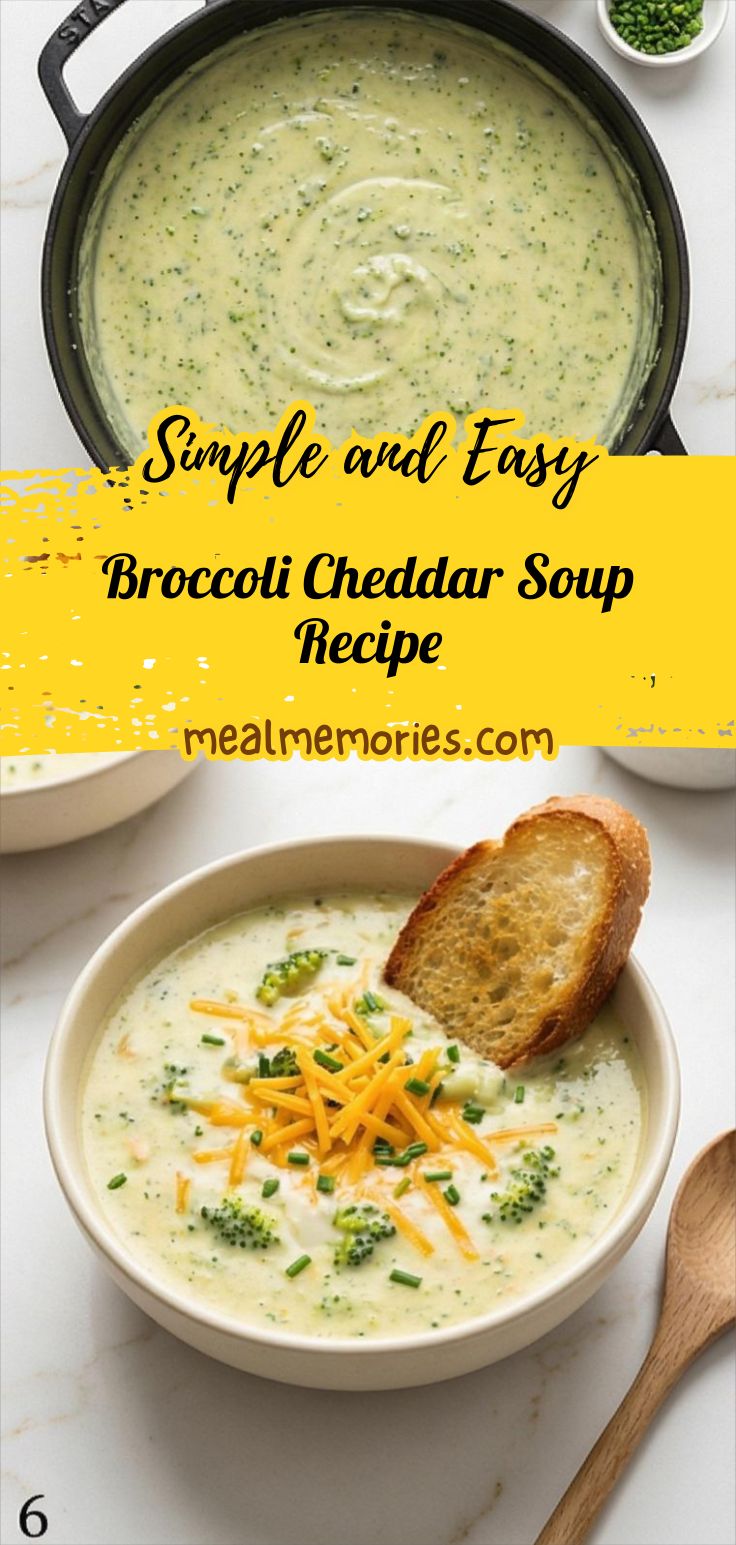
Broccoli Cheddar Soup Recipe
Make Broccoli Cheddar Soup Recipe for a silky, cheesy bowl of comfort with fresh broccoli and sharp cheddar.
Ingredients
Instructions
Step 1: Sauté aromatics and form the roux
Begin by melting unsalted butter in your heavy pot until it foams; add the finely chopped onion and diced carrot and cook over medium heat until the onion is soft, translucent and edges just begin to color. Stir in the minced garlic until fragrant, then sprinkle the flour evenly over the vegetables and stir continuously until the mixture becomes thick and pasty and smells faintly nutty — this is the roux that will thicken the soup. Keep the vegetables glossy and coated, not dry; a wooden spoon resting on the pot rim or in the mixture is perfect for scraping.
Step 2: Whisk in the broths, milk and cream to build a smooth base
Slowly incorporate the room-temperature broth a little at a time, whisking or stirring vigorously after each addition to eliminate lumps and produce a silky pale sauce. Once all the broth is folded in, pour in the whole milk and then the heavy cream, stirring steadily until the liquid is fully integrated and just beginning to thicken — the texture should be smooth, slightly viscous, and velvety before any broccoli is added. Keep the whisk or spoon visible, resting nearby, showing the creamy emulsion.
Step 3: Season and submerge the broccoli
Stir in the bay leaf (if using) and the aromatics—kosher salt, black pepper, dry mustard, smoked paprika and a pinch of freshly grated nutmeg—so the seasoning is evenly distributed in the pale base. Add the finely chopped broccoli florets and tender stems and fold them into the liquid so each piece is submerged and glossy. The broccoli should look vivid and saturated by the cream, not floating dry; small gentle bubbles at the edge signal readiness to move to a gentle simmer.
Step 4: Simmer until broccoli is very tender and the soup thickens
Maintain a gentle simmer so the broccoli softens and the liquid reduces slightly; scrape the bottom occasionally with the wooden spoon so nothing sticks. Cook until a fork pierces the florets easily and some pieces begin to break apart against the pot side — the overall consistency should be a light cream that clings slightly to the spoon, with bright green fragments suspended throughout. If the mixture seems too thick, loosen with a splash of broth or milk and return briefly to a gentle motion.
Step 5: Adjust texture — partial purée or leave chunky
Decide how much body you want: use brief pulses with an immersion blender to partially purée the soup in-place, leaving small broccoli morsels for body, or skip blending entirely for a chunky, rustic bowl. The visual result should be an even pale-green cream with visible bits of broccoli and occasional tiny flecks of carrot and onion; a small silicone spatula or spoon resting on the rim communicates the recent blending and scraping.
Step 6: Finish gently with sharp cheddar
With the pot off high heat and the soup steaming but not boiling, add the grated sharp cheddar in small handfuls, stirring constantly after each addition until the cheese melts into a seamless, velvety emulsion. Taste and adjust seasoning — more salt, pepper or a whisper of nutmeg — and if the soup tightens too much, thin with warm broth or milk until it pours smoothly. Keep the wooden spoon present; the finished pot should look glossy, thickened, and homogenous with no graininess.
Step 7: Optional toasted bread or croutons
If serving with toasted bread, brush slices lightly with olive oil or melted butter and toast until crisp and golden; the toasts should be shown as finished, warm and bronzed, with a sprinkle of fine sea salt visible on the crust. Arrange the cooled-to-warm slices near the pot so they read as an accompaniment, not a separate scene.
Step 8: Serve and garnish
Ladle the soup into warmed shallow bowls and finish each serving with a small mound of the reserved extra-sharp cheddar and a scattering of finely chopped chives or green onion tops. The final bowl should be velvety, with melted cheddar threads, vivid green broccoli bits and a light sheen of cream; place a toasted bread slice or crusty chunk alongside.
Notes
- Use freshly grated cheddar for the creamiest texture
- If soup tightens after adding cheese, thin with warm broth or milk
- Partially purée with an immersion blender for a creamy yet textured bowl
- Store in the fridge up to 3 days or freeze up to 3 months
- Heat gently and avoid boiling after adding dairy to prevent separation