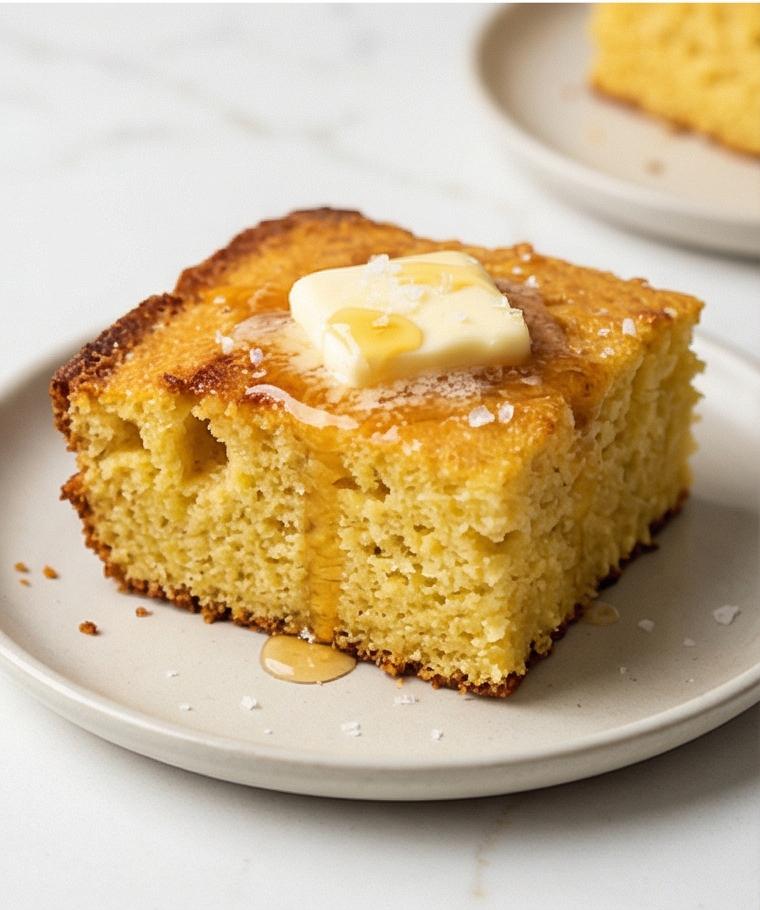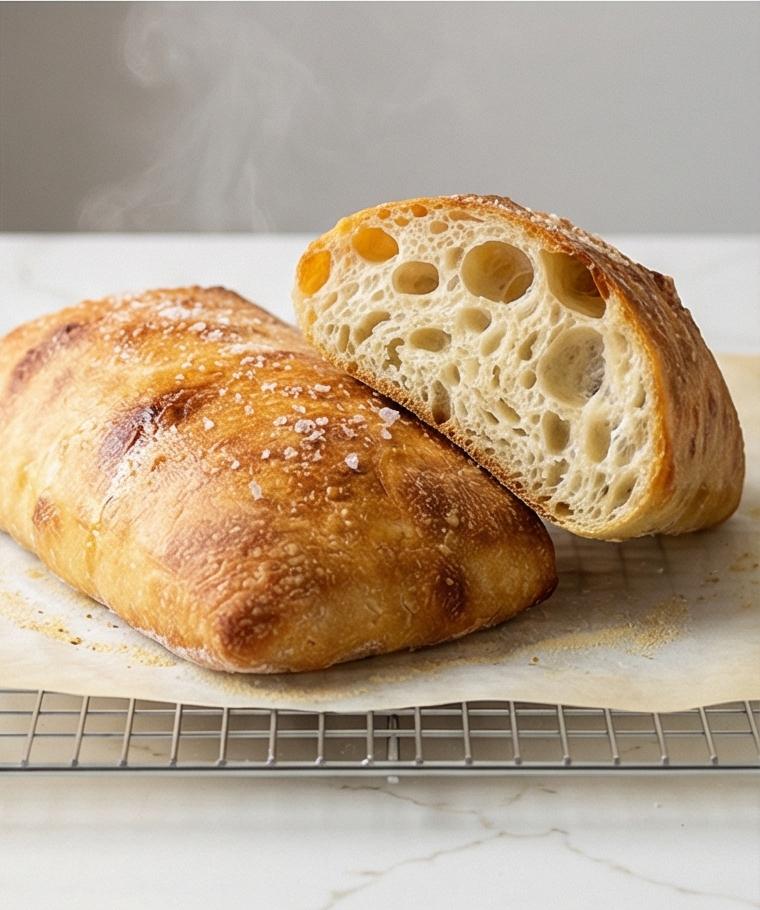
Bagels Recipe
I fell in love with this Bagels Recipe the first time I boiled a batch in my tiny apartment kitchen. There was something comforting about the bubbling pot, the smell of malt and yeast, and the ritual of shaping each ring by hand. Over the years I tweaked the process until the crust, chew, and interior crumb all felt just right. If you want a bagel that holds up to cream cheese and everything toppings, this Bagels Recipe will deliver. It’s homey, a little ceremonial, and absolutely worth the effort.
How This Recipe Became My Saturday Morning Ritual
The first time I made this Bagels Recipe I was nervous but hopeful. I remember pressing my thumbs through the dough and feeling it stretch, the surface warming under my hands, a faint yeasty smell drifting up as the dough rose on the counter. My neighbor popped by with a cup of coffee and we watched them boil, a curious hiss from the pot as the malt syrup hit the water. When the first batch came out golden and glossy, the crunch of the crust and the chewy interior felt like a small triumph. That day, I learned patience is part of the recipe, and sharing warm bagels made the whole thing feel like a tiny celebration.
The Ingredients That Make the Magic
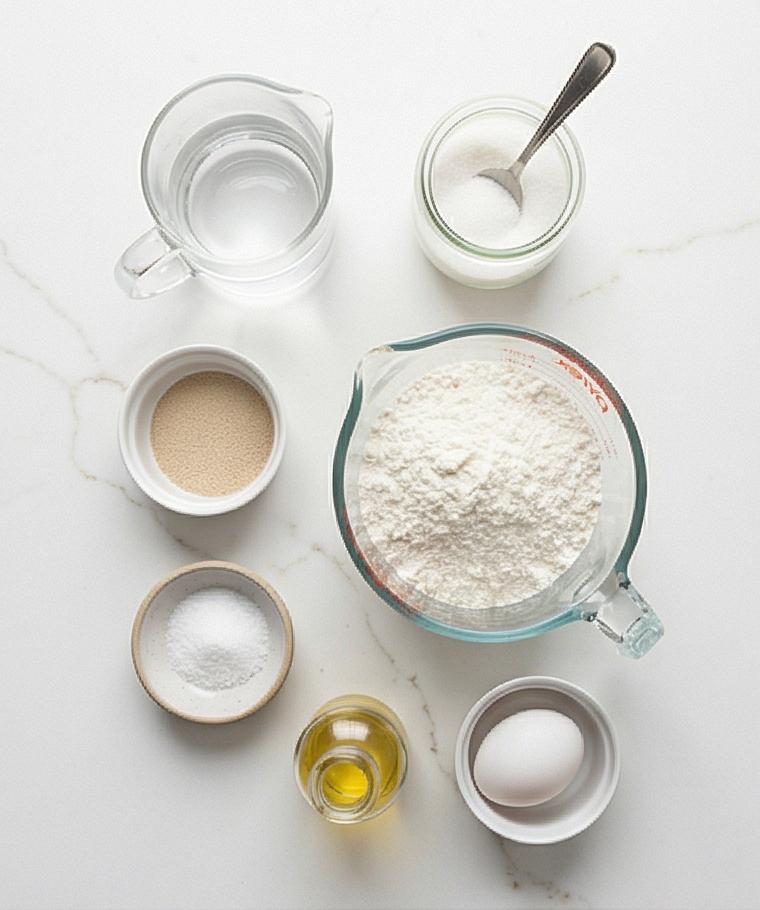
- Warm Water: Activates the yeast and hydrates flour. Use filtered water at the right temperature; too hot kills yeast. Substitute with room temperature water plus a few extra minutes for activation if needed.
- Granulated Sugar: Feeds the yeast and adds slight sweetness. Honey could replace it in small amounts.
- Active Dry Yeast: The leavening heart; check freshness by proofing. Instant yeast can work but cut a little liquid.
- Bread Flour: Gives chew and structure. High-gluten flour is ideal; all-purpose works with slightly less chew.
- Fine Sea Salt: Enhances flavor; avoid iodized salt directly in contact with yeast.
- Barley Malt Syrup / Honey: Adds color and authentic bagel flavor to the boil; malt is best.
- Baking Soda: Raises pH in the bath for better crust.
- Egg Wash and Toppings: For shine and texture; use alternatives like milk wash for less gloss.
Essential Kitchen Tools That Make It Easier
A few simple tools keep the process smooth and reliable. A sturdy mixing bowl or stand mixer saves your arms during kneading and gives consistent results. A wide, heavy pot lets you boil bagels without crowding, and a slotted spoon helps you lift them gently. A baking sheet dusted with cornmeal prevents sticking and gives a little texture.
- Mixing bowl or stand mixer: For combining and kneading; a stand mixer shortens knead time.
- Wide pot: For the water bath; a shallow, wide pot makes boiling easier.
- Slotted spoon or spider: To fish bagels from the bath without splashing.
- Baking sheet and parchment: For proofing and baking; cornmeal or semolina adds grip.
- Kitchen thermometer: To check water temperature accurately.
Step-by-Step Preparation Guide
Step 1: Activate the yeast and combine the wet and dry
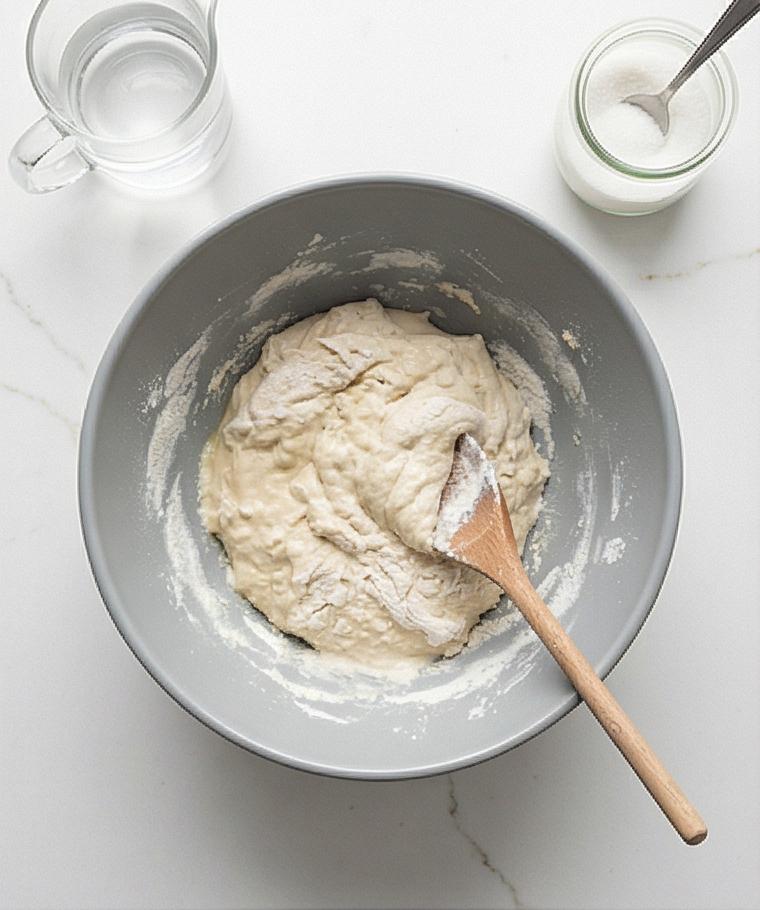
Warm the water to about 105–110°F and stir in the granulated sugar, then sprinkle the active dry yeast over the surface. After 5–10 minutes it should be foamy and smell faintly yeasty — if it doesn’t foam, start again with fresh yeast. Meanwhile, whisk the bread flour and fine sea salt together in a large bowl, make a well, and pour the foamy yeast mixture into the center. Stir with a sturdy spoon until a shaggy, slightly sticky mass forms; add small pinches of water or flour only as needed to bring the dough together into one cohesive shaggy dough.
Step 2: Knead until smooth and perform the first rise
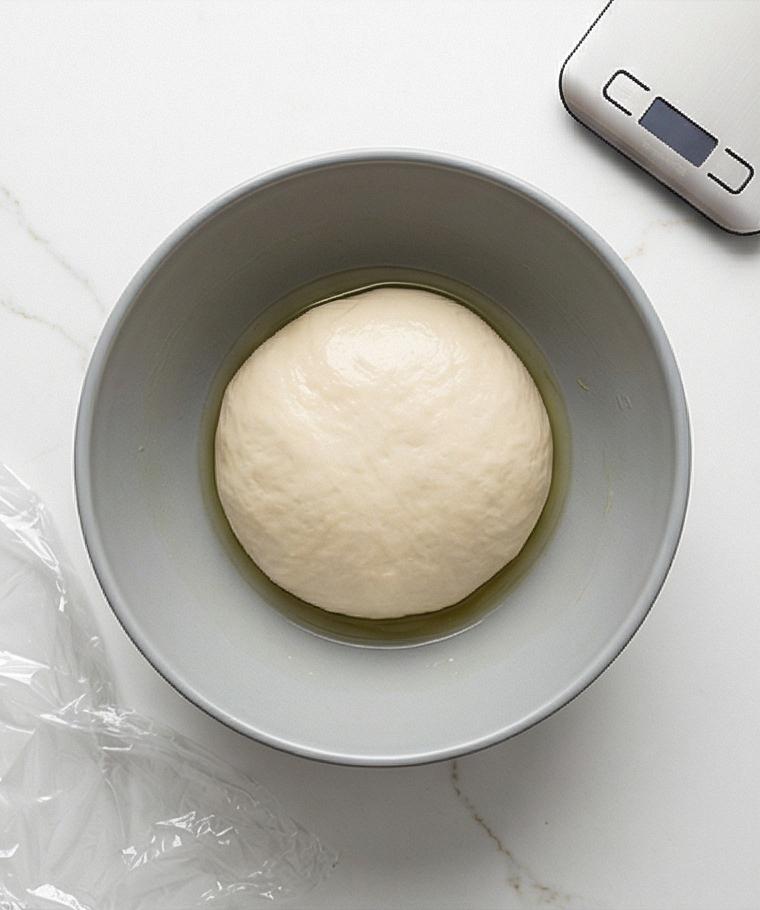
Turn the shaggy dough onto a very lightly oiled work surface (or continue in the mixing bowl) and knead until the dough is smooth, firm, and elastic—about 8–12 minutes by hand or slightly less by mixer. The finished dough should feel dense and slightly tacky and spring back when pressed. Lightly oil a clean mixing bowl, place the smooth ball seam-side down, turn once to coat, cover tightly, and let the dough rise at a warm room temperature until noticeably puffy and roughly doubled in size (about 60–90 minutes). The interior should slowly spring back when pressed.
Step 3: Divide and pre-shape the dough pieces for shaping
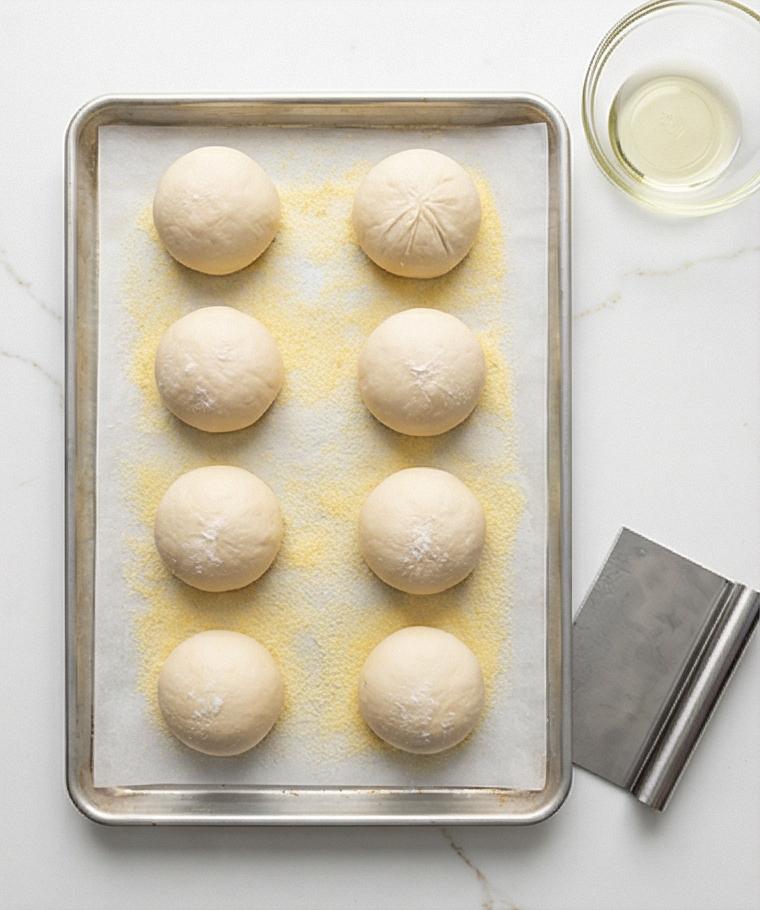
Gently deflate the risen dough, turn it out onto the lightly oiled or lightly floured surface, and divide it into eight even pieces (about 95–100 g each) using a bench scraper or sharp knife. Shape each piece into a tight ball by tucking edges under and rolling to build surface tension, then arrange the balls on a parchment-lined, cornmeal-dusted baking sheet. Cover them loosely and rest for about 10 minutes so the gluten relaxes and shaping becomes easier.
Step 4: Shape the rings and proof briefly
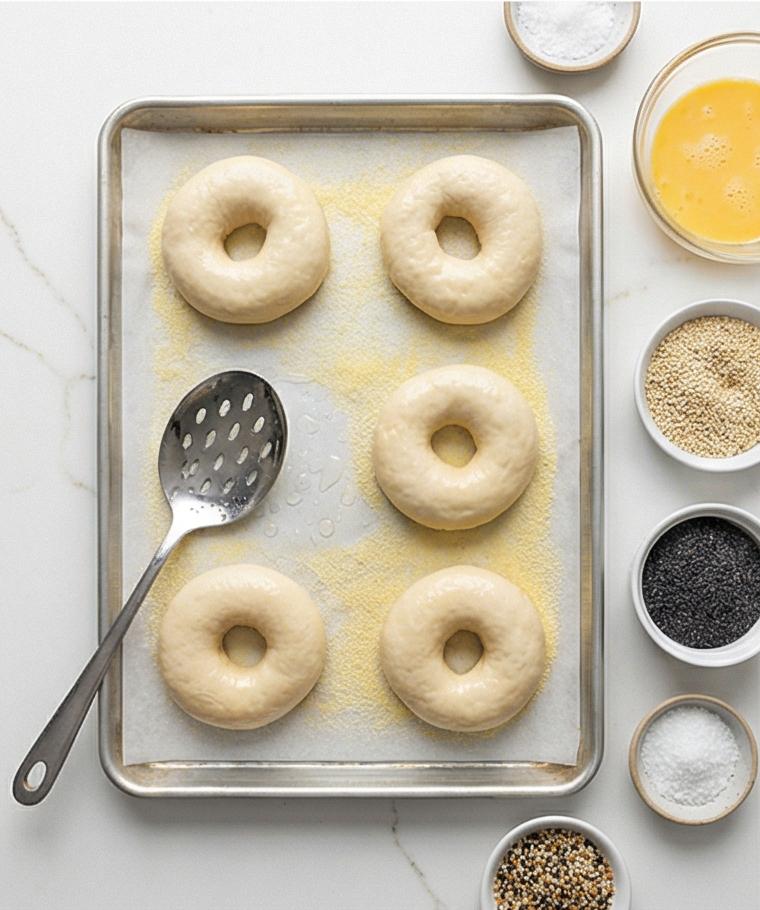
Flatten each rested ball slightly, poke a hole through the center with your thumb and use both thumbs to stretch and rotate until the hole is evenly about 1½–2 inches wide and the ring thickness is consistent. Place the shaped rings back on the cornmeal-dusted sheet, cover loosely, and proof at room temperature for 20–30 minutes until they look slightly puffy and spring back slowly when pressed. Have your egg wash whisked and your toppings in shallow dishes ready for immediate use after boiling.
Step 5: Boil briefly, top while warm, and return to the tray
Bring a wide pot of water with barley malt syrup (or honey), baking soda, and a little salt to a steady simmer (no stove needs to be shown here). Lower 2–3 bagels at a time and boil 45–90 seconds per side depending on desired chew and crust; they will puff slightly. Remove with a slotted spoon, let excess water drain, and place them back on the cornmeal-dusted sheet. While still damp and warm, brush the tops lightly with the egg wash and immediately sprinkle or press into sesame, poppy, everything seasoning, or coarse salt so the toppings adhere and the surface becomes glossy and textured.
Step 6: Bake, cool, and present the final bagels
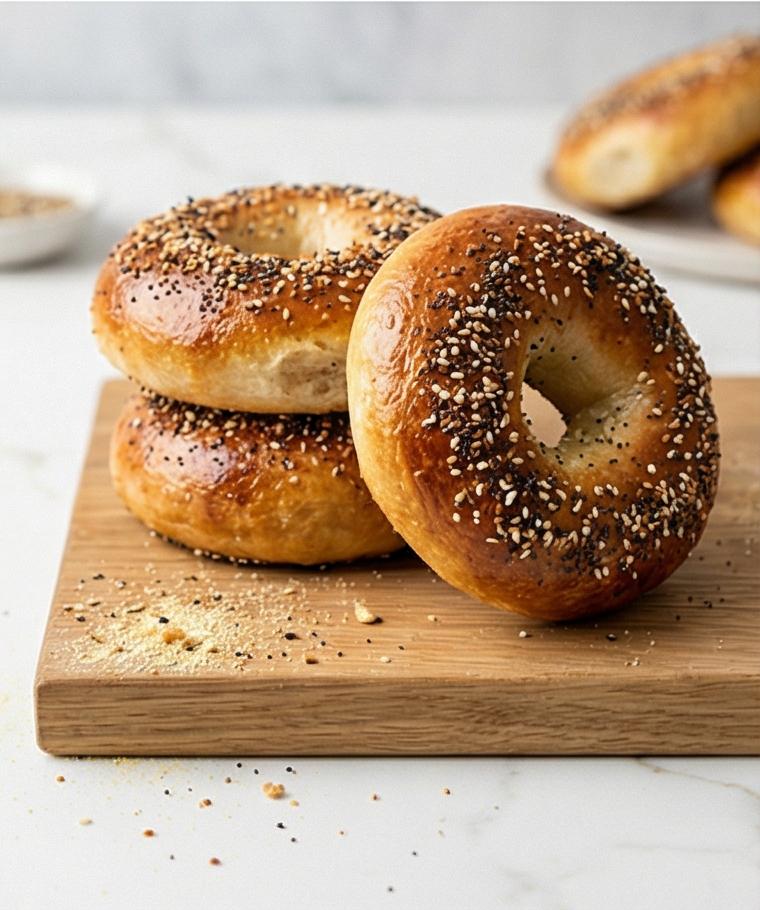
Bake the topped bagels in a preheated oven until deep golden brown with some darker spots and a firm crust, then transfer them to a wire rack to cool for at least 20–30 minutes so the crumb finishes setting. Serve slightly warm or at room temperature; slice or leave whole, toasted or plain, with your favorite spreads.
Making It Your Own
I like to play with toppings and fillings as small experiments. Try an everything bagel one week, sesame the next, or a cinnamon-sugar finish for a sweeter spin. For a whole-grain twist, replace 1 cup of bread flour with whole-wheat pastry flour and expect a nuttier flavor and denser crumb. If you need gluten-free, the structure changes dramatically; use a commercial gluten-free mix and binders like xanthan gum, and shape in a looser ring or bun form. For a savory regional twist, fold in caramelized onions or olives during shaping in tiny batches.
How to Serve
If I’m hosting, I set up a bagel bar. Slice warm bagels and arrange spreads in small bowls: cream cheese plain, herbed, smoked salmon spread, and softened butter. Add sliced tomatoes, red onion, capers, cucumber, and a bowl of smoked salmon for a classic spread. For a brunch crowd, toast half to make breakfast sandwiches with eggs, cheese, and bacon.
For larger groups, double the batch and keep extras warm in a low oven wrapped in foil. Label toppings so guests can build their own combos and place cutting boards and serrated knives nearby for easy slicing.
Storage and Reheating Tips
Leftover bagels store well. For short-term, keep them in a paper bag inside a resealable bag for up to 2 days at room temperature to preserve crust. For longer storage, slice and freeze in a freezer bag for up to 3 months.
To reheat, toast from frozen or thaw at room temperature and refresh in a 350°F oven for 5–7 minutes to restore crust crunch. Avoid microwaving for long periods, it makes the crumb gummy.
Common Mistakes and How to Avoid Them
Underproofing makes dense bagels; wait until the dough is noticeably puffy and springs back slowly. Overproofing will make rings collapse during boiling, so watch timing and room temperature.
Boiling too long or in water that’s too vigorous can ruin the crust—keep a gentle simmer and boil briefly for the desired chew. Use fresh yeast and check water temperature for predictable results.
One Last Nudge
Give this Bagels Recipe a try this weekend. It’s worth the time, and once you taste the first warm, chewy bite you’ll see why I keep coming back to it.
Frequently Asked Questions.
-
Q: Can I use instant yeast instead of active dry yeast?
A: Yes, you can. Use slightly less instant yeast and add it with the dry ingredients. You may not need to proof it first, but doing a quick wet proof still helps check freshness. -
Q: Can I skip the boiling step?
A: You can skip it, but boiling is key to the classic bagel crust and chew. If you skip it, expect a softer, breadier roll. -
Q: How do I get the bagels extra chewy?
A: Use high-protein bread flour, boil on the longer end of the time range, and keep your dough fairly stiff. Higher hydration yields a different crumb. -
Q: What can I use instead of barley malt syrup?
A: Honey or light brown sugar both work in a pinch. Malt syrup gives the most authentic flavor and color. -
Q: How long do homemade bagels keep?
A: At room temperature, 1–2 days is best. Freeze extras for up to 3 months and toast from frozen.
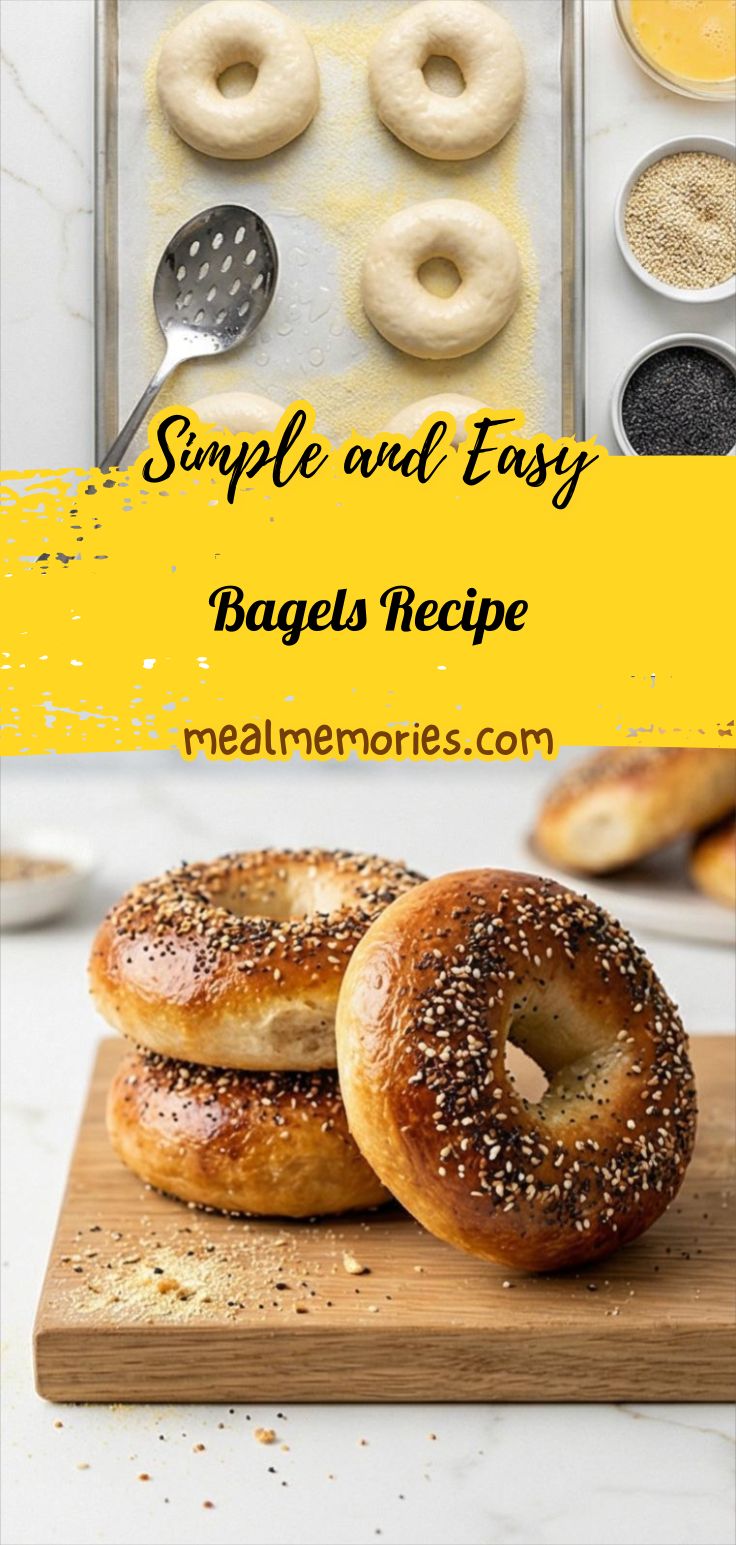
Bagels Recipe
Make the Bagels Recipe at home for chewy, golden bagels—boil, bake, and enjoy fresh Bagels Recipe today.
Ingredients
Instructions
Step 1: Activate the yeast and combine the wet and dry
Warm the water to about 105–110°F and stir in the granulated sugar, then sprinkle the active dry yeast over the surface. After 5–10 minutes it should be foamy and smell faintly yeasty — if it doesn’t foam, start again with fresh yeast. Meanwhile, whisk the bread flour and fine sea salt together in a large bowl, make a well, and pour the foamy yeast mixture into the center. Stir with a sturdy spoon until a shaggy, slightly sticky mass forms; add small pinches of water or flour only as needed to bring the dough together into one cohesive shaggy dough.
Step 2: Knead until smooth and perform the first rise
Turn the shaggy dough onto a very lightly oiled work surface (or continue in the mixing bowl) and knead until the dough is smooth, firm, and elastic—about 8–12 minutes by hand or slightly less by mixer. The finished dough should feel dense and slightly tacky and spring back when pressed. Lightly oil a clean mixing bowl, place the smooth ball seam-side down, turn once to coat, cover tightly, and let the dough rise at a warm room temperature until noticeably puffy and roughly doubled in size (about 60–90 minutes). The interior should slowly spring back when pressed.
Step 3: Divide and pre-shape the dough pieces for shaping
Gently deflate the risen dough, turn it out onto the lightly oiled or lightly floured surface, and divide it into eight even pieces (about 95–100 g each) using a bench scraper or sharp knife. Shape each piece into a tight ball by tucking edges under and rolling to build surface tension, then arrange the balls on a parchment-lined, cornmeal-dusted baking sheet. Cover them loosely and rest for about 10 minutes so the gluten relaxes and shaping becomes easier.
Step 4: Shape the rings and proof briefly
Flatten each rested ball slightly, poke a hole through the center with your thumb and use both thumbs to stretch and rotate until the hole is evenly about 1½–2 inches wide and the ring thickness is consistent. Place the shaped rings back on the cornmeal-dusted sheet, cover loosely, and proof at room temperature for 20–30 minutes until they look slightly puffy and spring back slowly when pressed. Have your egg wash whisked and your toppings in shallow dishes ready for immediate use after boiling.
Step 5: Boil briefly, top while warm, and return to the tray
Bring a wide pot of water with barley malt syrup (or honey), baking soda, and a little salt to a steady simmer (no stove needs to be shown here). Lower 2–3 bagels at a time and boil 45–90 seconds per side depending on desired chew and crust; they will puff slightly. Remove with a slotted spoon, let excess water drain, and place them back on the cornmeal-dusted sheet. While still damp and warm, brush the tops lightly with the egg wash and immediately sprinkle or press into sesame, poppy, everything seasoning, or coarse salt so the toppings adhere and the surface becomes glossy and textured.
Step 6: Bake, cool, and present the final bagels
Bake the topped bagels in a preheated oven until deep golden brown with some darker spots and a firm crust, then transfer them to a wire rack to cool for at least 20–30 minutes so the crumb finishes setting. Serve slightly warm or at room temperature; slice or leave whole, toasted or plain, with your favorite spreads.
Notes
- Check yeast freshness by proofing; if it does not foam, start with new yeast.
- Use a kitchen thermometer to keep water at 105–110°F for best activation.
- Boil bagels in small batches to avoid crowding and uneven cooking.
- Freeze extra bagels sliced for quick toasting and longer storage.
- Brush toppings on while bagels are damp from the bath so they stick well.