Garlic Butter Sheet Pan Shrimp is one of those recipes I reach for when I want a full meal with tiny fuss and big flavor. I first made this for a busy week when I had more emails than appetite, and the kitchen filled with garlic and butter in a way that felt instant and comforting. The combination of roasted baby potatoes, bright asparagus, and garlic-buttered shrimp makes Garlic Butter Sheet Pan Shrimp feel both elegant and effortless. I love how the pan does most of the work while you get to claim the glory at the table.
How This Recipe Became My Weeknight Showstopper
There was a Tuesday when I had an unexpected guest and only a small window to pull dinner together. I grabbed what was in the fridge: a bag of baby potatoes, a bunch of asparagus, and a pack of jumbo shrimp. Within an hour the kitchen smelled of garlic and lemon, and the pan looked like it had been plated by someone with better time management than me. The textures were what sold me: crispy, bronzed potato edges giving way to tender insides, satin shrimp with a light curl, and asparagus that still had a little snap. Eating it felt like a little celebration for getting things done, and the simplicity made it a repeat on rainy nights and impromptu dinner invites ever since.
Key Ingredients and Why They Matter
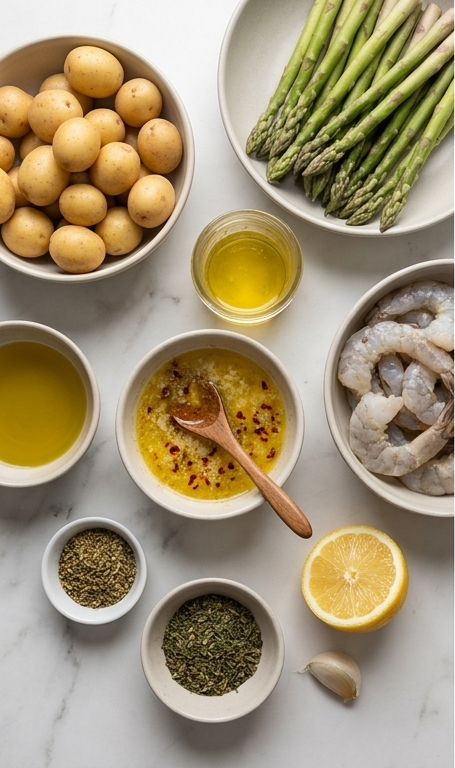
- Baby Potatoes: They provide a crispy, starchy base and stand up well to high heat; if you cannot find baby potatoes, fingerlings or small yukon golds halved work great. Choose firm, blemish-free potatoes for even roasting.
- Asparagus: Adds color and snap; substitute broccolini or trimmed green beans if asparagus is out of season. Look for bright green stalks with firm tips.
- Jumbo Shrimp: The protein and star flavor carrier for the garlic butter; frozen works, but thaw fully and pat dry to avoid steaming. Use large shrimp (16/20) for that satisfying plump bite.
- Garlic Butter Drizzle: Butter, garlic, lemon zest, and red pepper flakes glue the dish together; olive oil is not a direct substitute here, but ghee or clarified butter can be used for higher-heat notes.
Essential Kitchen Tools and Why They Help
A few good tools make this recipe as painless as it is tasty. A roomy rectangular rimmed sheet pan lets heat circulate and keeps things from steaming. A small jar or bowl is useful for whisking the garlic butter and for serving extra drizzle. A pair of tongs or a spatula helps you move and arrange ingredients without tearing delicate shrimp.
- Rimmed sheet pan: Prevents spillage and encourages even browning; in a pinch, use two smaller sheet pans.
- Mixing bowl or jar: For combining garlic butter and tossing shrimp; a jar doubles as a serving vessel for extra drizzle.
- Sharp knife and cutting board: For halving potatoes and trimming asparagus; a chef’s knife speeds prep.
- Tongs: Gentle handling of shrimp and asparagus; use a spatula if you do not have tongs.
Step-by-Step Preparation Guide
Step 1: Preheat and roast the potatoes
Preheat the oven to 450°F, then toss the washed, halved baby potatoes with 1 tablespoon of olive oil, dried oregano, salt and black pepper until each piece is lightly coated. Spread the potatoes in a single layer on a rectangular rimmed sheet pan so they develop even contact with the metal; roast for about 20 minutes until edges begin to caramelize and the skins turn a golden-brown, tender-on-the-inside texture. This step is all about building crispy, dimpled potato exteriors that will contrast against the glossy shrimp later.
Step 2: Add asparagus and continue roasting
While the potatoes start to blister, toss the trimmed asparagus pieces with the remaining tablespoon of olive oil, salt and pepper so they remain bright and glossy after roasting. Flip the potatoes on the sheet pan to expose fresh surfaces, nestle the asparagus among them, and return the same rectangular pan to the oven for another 10 minutes. You’re looking for asparagus with slight char at the tips and potatoes that are deeply bronzed at the edges — a savory, textural foundation for the shrimp.
Step 3: Make the garlic butter and assemble the sheet pan
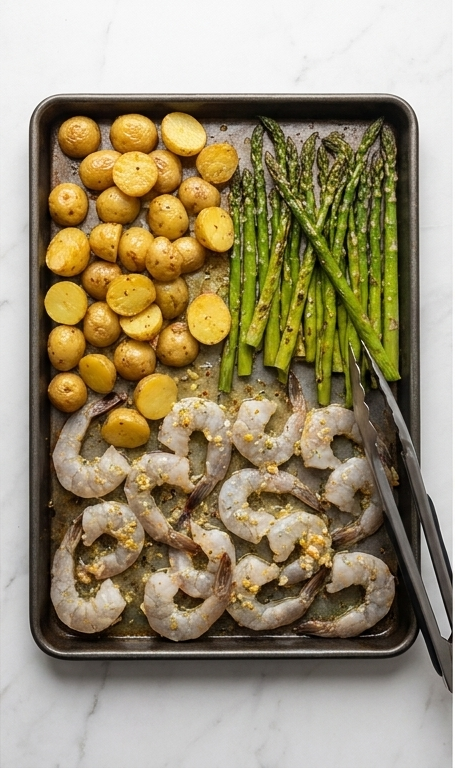
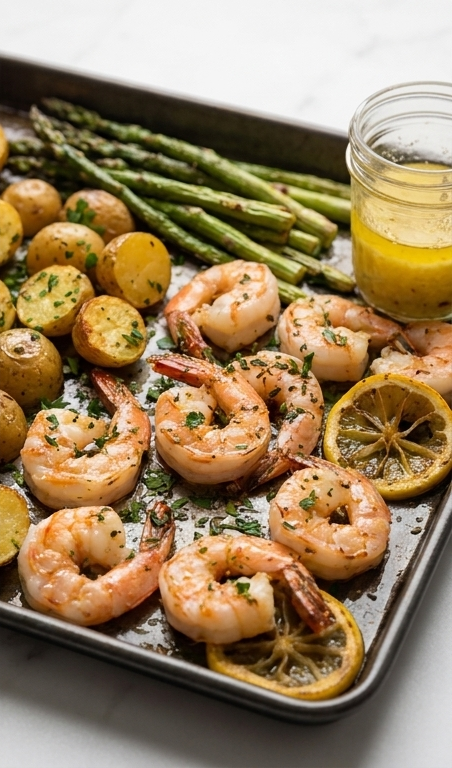
Combine the melted butter, minced garlic, lemon zest, red pepper flakes, salt and black pepper in a small glass jar or shallow ceramic bowl and stir until fragrant; reserve half of this garlic butter for serving. Toss half of the garlic butter with the peeled, deveined jumbo shrimp in a matte bowl so each shrimp is lightly glazed; then arrange those buttered shrimp in the gaps between the roasted potatoes and asparagus on the same rectangular sheet pan. The assembled pan — glossy, seasoned shrimp nestled amid golden potatoes and bright green asparagus with visible flecks of red pepper and lemon zest — is the key in-progress milestone that captures the transformation from separate components to a unified sheet-pan meal.
Step 4: Roast the shrimp, finish with herbs and serve
Return the assembled rectangular sheet pan to the oven and roast 6–8 minutes more, just until the shrimp turn opaque pink with a slight curled plumpness and the garlic butter bubbles into little glossy pools around the vegetables. Remove the pan to the white quartzite surface, sprinkle dried basil and the chopped fresh parsley over the hot shrimp and vegetables, and serve the dish directly from the same sheet pan with the reserved garlic butter in a small glass jar for dipping or additional drizzling. The final result should be a contrast of crispy potato edges, satin garlic-buttered shrimp, and crisp-tender asparagus, brightened by lemon zest and flecks of herbs.
Making It Your Own
I like to swap small things depending on the season. In spring I’ll add halved cherry tomatoes for a pop of sweetness; they blister and melt into the herb-scented butter. In colder months I sometimes roast thinly sliced fennel with the potatoes for an anise hint that pairs surprisingly well with shrimp.
If you need a gluten-free or grain-free option, this recipe is already safe, but you can add a citrusy grain like farro on the side for heartier eaters. For a vegetarian twist, replace shrimp with marinated tempeh or thick slices of king oyster mushroom and roast until golden.
Small swaps, like using smoked paprika in the garlic butter or swapping parsley for cilantro, change the whole mood without complicating the process.
How to Serve and Present It
Think rustic dinner party: slide the hot sheet pan to the center of the table and let everyone serve themselves. Garnish with a little extra chopped parsley and a lemon wedge or two. For a more formal presentation, lift portions to warmed plates, tuck a sprig of fresh herb on top, and drizzle reserved garlic butter from the jar for shine.
To scale up for a crowd, use two parallel pans and stagger their timing so one finishes while the other rests. For a smaller meal, halve the ingredients and use a smaller pan to maintain even roasting.
Pair with a crisp white wine or a bright, citrusy mocktail to cut through the buttered richness.
Storage and Reheating Tips
Leftovers keep well for 2 to 3 days in an airtight container. Store potatoes and asparagus tucked beneath the shrimp so the flavors stay melded. If you expect to reheat, reserve the extra garlic butter separately so the vegetables do not over-saturate in the fridge.
Reheat gently in a 350°F oven for 8 to 12 minutes until warmed through; this helps retain crisp edges on the potatoes. For single servings, a quick skillet rewarm over medium heat gives better texture than the microwave.
Common Mistakes and How to Avoid Them
Overcrowding the pan is the most frequent misstep; it causes steaming instead of roasting. Spread ingredients in a single layer and use two pans if needed.
Another common error is adding shrimp too early. Shrimp cook fast, so add them at the end to avoid rubbery texture. Also, do not skip patting shrimp dry before tossing with garlic butter for better browning.
Final Thoughts
If you try Garlic Butter Sheet Pan Shrimp, you’ll find it is one of those recipes that delivers big on flavor with very little drama. It is forgiving, fast, and perfect for weeknights, small dinner parties, or whenever you want dinner to feel a little special without a huge time investment. Give it a go and let the pan do the work for you.
Frequently Asked Questions.
- Q: Can I use frozen shrimp for Garlic Butter Sheet Pan Shrimp? A: Yes, but thaw and pat dry before tossing in garlic butter so they roast evenly and do not steam.
- Q: What can I substitute for asparagus? A: Broccolini, green beans, or trimmed baby broccoli are great swaps that roast well.
- Q: How do I prevent potatoes from being mushy? A: Halve potatoes evenly and give them space on the pan; roast at high heat so they crisp up before the interior gets too soft.
- Q: Can I make this dairy-free? A: Use olive oil with extra garlic, or a plant-based butter to mimic the garlic butter drizzle.
- Q: Is there a way to meal-prep this? A: Roast potatoes ahead and store separately; assemble and roast shrimp and asparagus just before serving for best texture.
Garlic Butter Sheet Pan Shrimp
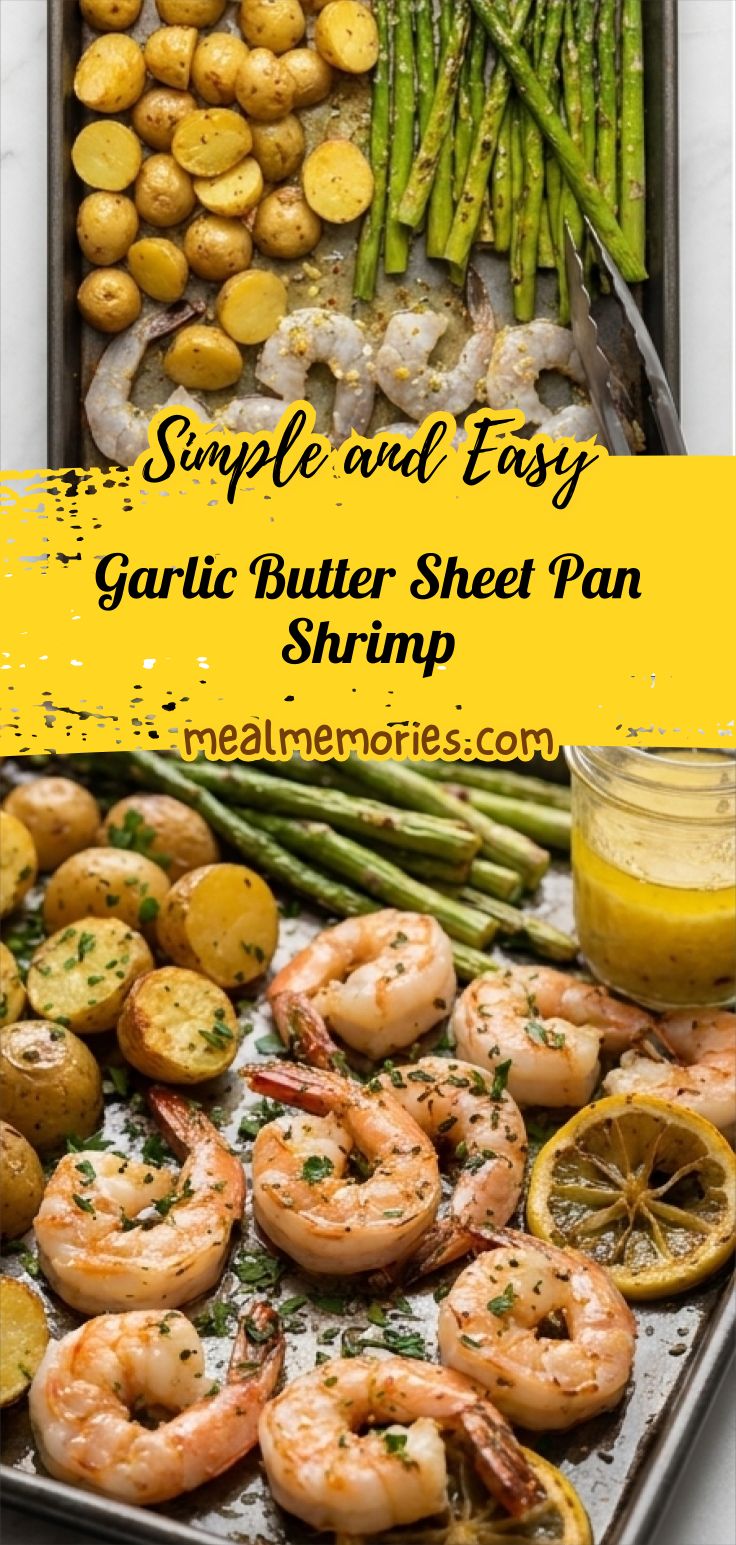
Roast potatoes, asparagus, and garlic-butter shrimp on one pan with Garlic Butter Sheet Pan Shrimp for an easy, flavorful dinner.
Ingredients
Instructions
Step 1: Preheat and roast the potatoes
Preheat the oven to 450°F, then toss the washed, halved baby potatoes with 1 tablespoon of olive oil, dried oregano, salt and black pepper until each piece is lightly coated. Spread the potatoes in a single layer on a rectangular rimmed sheet pan so they develop even contact with the metal; roast for about 20 minutes until edges begin to caramelize and the skins turn a golden-brown, tender-on-the-inside texture. This step is all about building crispy, dimpled potato exteriors that will contrast against the glossy shrimp later.
Step 2: Add asparagus and continue roasting
While the potatoes start to blister, toss the trimmed asparagus pieces with the remaining tablespoon of olive oil, salt and pepper so they remain bright and glossy after roasting. Flip the potatoes on the sheet pan to expose fresh surfaces, nestle the asparagus among them, and return the same rectangular pan to the oven for another 10 minutes. You're looking for asparagus with slight char at the tips and potatoes that are deeply bronzed at the edges — a savory, textural foundation for the shrimp.
Step 3: Make the garlic butter and assemble the sheet pan
Combine the melted butter, minced garlic, lemon zest, red pepper flakes, salt and black pepper in a small glass jar or shallow ceramic bowl and stir until fragrant; reserve half of this garlic butter for serving. Toss half of the garlic butter with the peeled, deveined jumbo shrimp in a matte bowl so each shrimp is lightly glazed; then arrange those buttered shrimp in the gaps between the roasted potatoes and asparagus on the same rectangular sheet pan. The assembled pan — glossy, seasoned shrimp nestled amid golden potatoes and bright green asparagus with visible flecks of red pepper and lemon zest — is the key in-progress milestone that captures the transformation from separate components to a unified sheet-pan meal.
Step 4: Roast the shrimp, finish with herbs and serve
Return the assembled rectangular sheet pan to the oven and roast 6–8 minutes more, just until the shrimp turn opaque pink with a slight curled plumpness and the garlic butter bubbles into little glossy pools around the vegetables. Remove the pan to the white quartzite surface, sprinkle dried basil and the chopped fresh parsley over the hot shrimp and vegetables, and serve the dish directly from the same sheet pan with the reserved garlic butter in a small glass jar for dipping or additional drizzling. The final result should be a contrast of crispy potato edges, satin garlic-buttered shrimp, and crisp-tender asparagus, brightened by lemon zest and flecks of herbs.
Notes
- Pat shrimp dry before tossing with garlic butter to promote browning.
- Do not overcrowd the sheet pan; use a second pan if needed.
- Reserve half the garlic butter for serving to keep flavors bright.
- Leftovers store 2-3 days in the refrigerator in an airtight container.
- Reheat gently in a 350°F oven for best texture.