The Best Classic Mimosa is one of those simple pleasures that feels slightly celebratory even on a weekday. I reach for this recipe whenever I want something bright, bubbly, and impossibly easy. It has a way of turning ordinary mornings into small parties, and it’s forgiving enough that you can make it for eight guests with almost no fuss. The Best Classic Mimosa is the kind of recipe I make when friends stop by or when I want a sunnier start to the day.
How This Recipe Became My Sunday Habit
I remember the first time I made The Best Classic Mimosa for a tired, rain-soaked friend. We had both woken late, and the kitchen smelled like citrus and warm coffee. As I poured chilled sparkling wine into flutes, the tiny bubbles clung to the glass and rose like tiny dancers, and the orange juice looked like liquid sunlight as it slipped in. We sipped slowly, letting the cool fizz and the bright sweetness chase away the gray outside. It wasn’t just the taste – it was the ritual of setting out flutes, the quiet clink of glassware, and the shared, relaxed hush that followed the first sip. That afternoon became a favorite memory, and since then The Best Classic Mimosa has been my answer to low-key celebrations, rainy mornings, and any time I want to nudge ordinary into something memorable.
Meet the Main Ingredients
- Sparkling Wine: The star that brings effervescence and structure. Choose a dry sparkling wine like Brut for balance; Prosecco is a fruitier, budget-friendly substitute. Look for a crisp finish and fine bubbles when selecting a bottle.
- Orange Juice: The bright counterpoint to the wine. Use freshly squeezed juice for the cleanest, juiciest flavor; store-bought is fine in a pinch, but avoid heavily pulped varieties. Navel oranges give sweetness, while Valencia oranges are ideal if you want extra citrus perfume.
- Grand Marnier: Optional, but it adds depth and a hint of orange-laced warmth if you make Grand Mimosas. Cointreau or other orange liqueurs can stand in if needed; skip it entirely for a classic, lighter drink.
Essential Kitchen Tools and Why They Matter
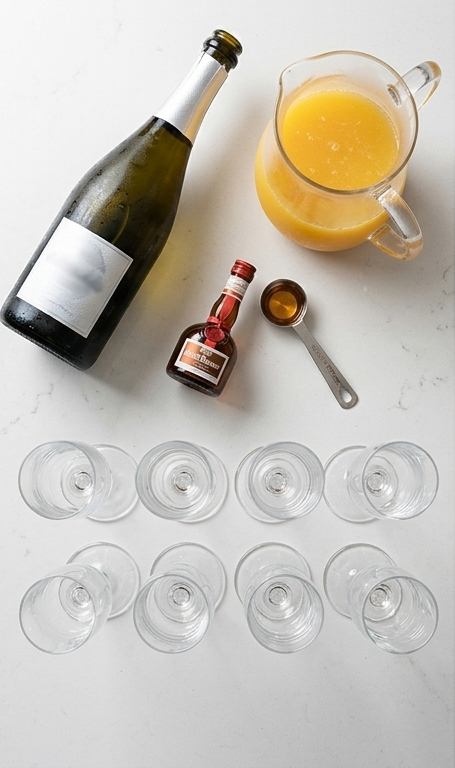
A few simple tools make this drink effortless and more elegant. A good set of flutes helps concentrate the aroma and show off the bubbles, but you can use any tall, narrow glass if that is what you have. A chilled bottle is essential – temperature keeps the fizz lively.
- Champagne flutes: They preserve bubbles and look festive; use tulip glasses as an alternative.
- Citrus juicer: Hand or electric, it makes fresh juice fast; a fine mesh strainer helps if you want pulp-free juice.
- Measuring cup or jigger: For consistent ratios, especially if you add Grand Marnier; a tablespoon works too.
- Bottle opener or champagne stopper: To open cleanly and keep any leftover fizz for later.
Step-by-Step Preparation Guide
Step 1: Pour the sparkling wine
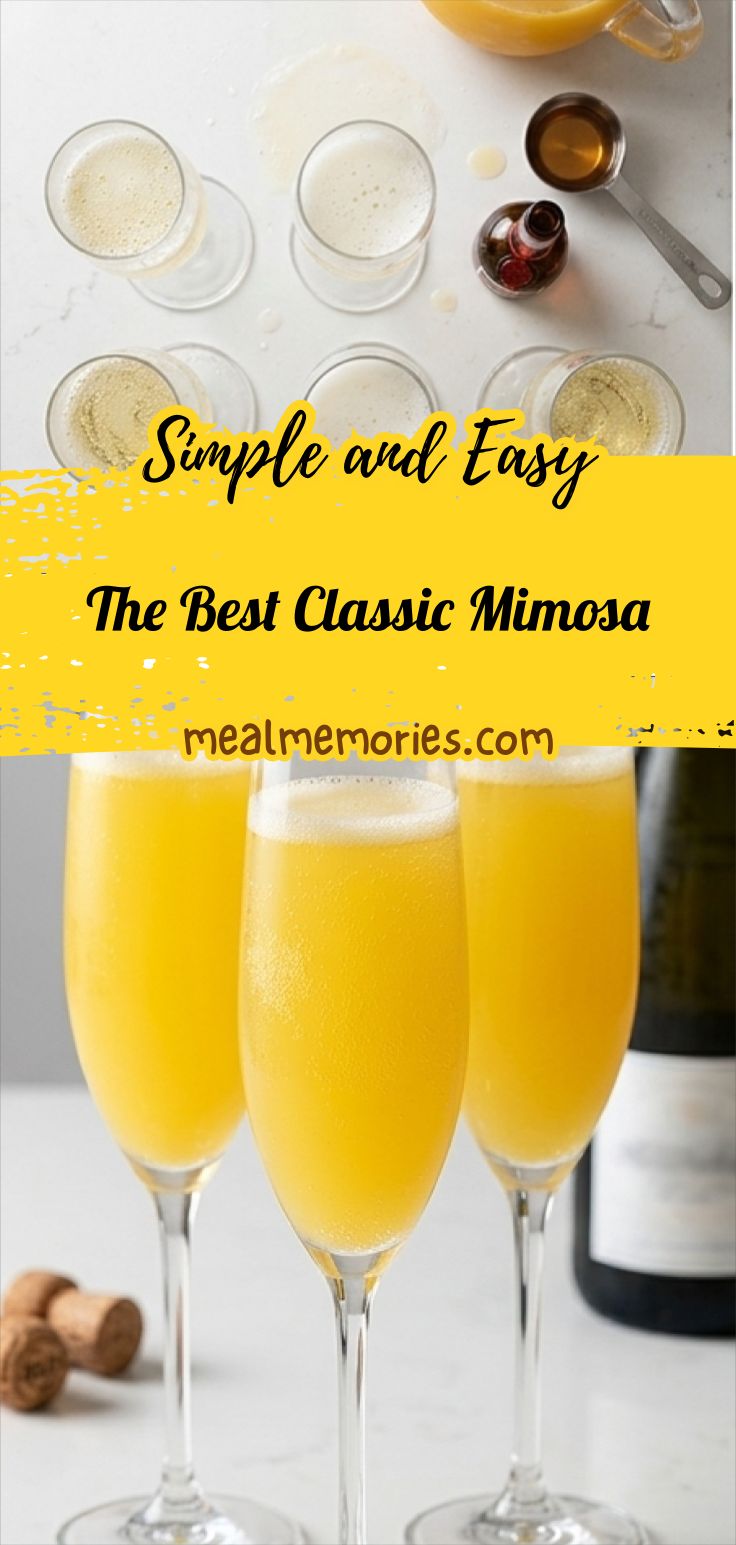
Place eight chilled crystal champagne flutes on the white quartzite surface and fill each one halfway with dry sparkling wine. Work deliberately so each glass shows a clear, even column of pale-gold liquid with a lively crown of fine effervescence – tiny, rapidly rising micro-bubbles clinging to the inner walls and forming a delicate foamy halo at the rim. If you’re making Grand Mimosas, spoon one level tablespoon of Grand Marnier into each empty glass first (the amber liqueur will nestle at the bottom beneath the wine). Keep everything neat: bottles and jiggers stay on the table, liquids contained inside clear vessels, no spills.
Step 2: Top with fresh orange juice
Gently pour chilled, freshly squeezed orange juice down the inside of each flute so it floats and blends with the sparkling wine, creating a layered, translucent gradient from honeyed-orange to pale-gold. Aim for a clean finish with a thin frothy cap where juice meets bubbles; the pulp should be minimal and the liquid should read bright, sunny and lucent through the glass. Let condensation bead faintly on the outside of the flutes for a cool, inviting look.
Step 3: Serve and enjoy
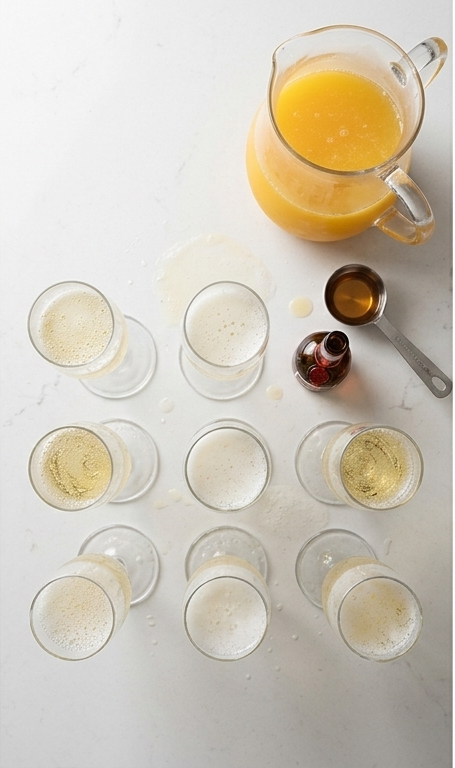
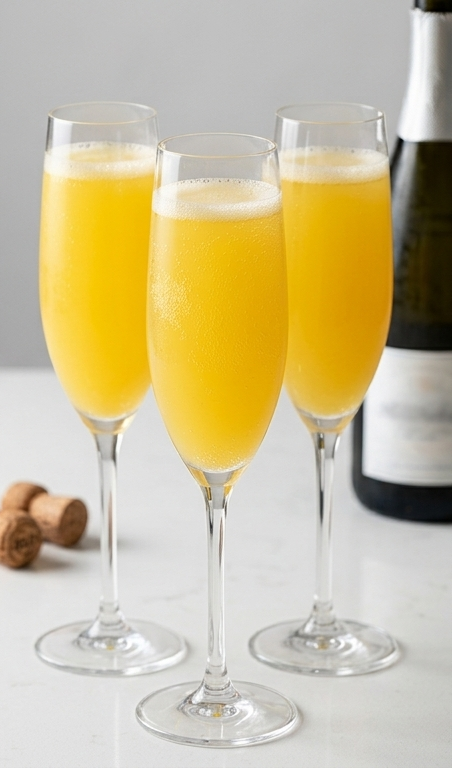
Bring three of the prepared flutes forward for the final close-up: present them together as a small trio on the same white quartzite, the mimosa liquid glowing a crisp, sunny-yellow with a fine, persistent effervescence and a subtle froth crown. Leave a couple of corks or the chilled bottle nearby as quiet, tasteful props on the surface – all vessels and props remain consistent with earlier panels. Capture the inviting translucence, the delicate bubbles, and the slight condensation that promises chilled refreshment.
Making It Your Own
I like to experiment with small swaps. For a sparkling, fruit-forward twist I sometimes use half Prosecco and half Champagne; the result is lively and a touch creamier. When citrus is in season I mix blood orange juice with regular orange for a deeper color and floral notes. For a boozy brunch, I add a splash of Grand Marnier to the base of each glass so the liqueur warms the flavors.
If you need a nonalcoholic version, try sparkling water or a nonalcoholic sparkling wine with the fresh juice – it keeps the celebratory feel without alcohol. For an herb-infused note, muddle a small sprig of thyme or basil at the bottom of the glass before pouring.
How to Serve
When hosting, keep everything chilled and prepped so you can mingle. If you expect eight guests, prepare eight flutes and set the bottle and juice nearby for a quick top-up. For larger groups, open multiple bottles and use a chilled pitcher for orange juice so guests can serve themselves. Small garnishes like a thin orange wheel, a twist of zest, or a sprig of mint make each glass feel special.
For a plated brunch, serve The Best Classic Mimosa alongside a simple fruit salad, buttery pastries, or savory tarts. If you want to stretch quantities, consider serving smaller pours and offering a second mimosa flavor – perhaps a peach or pomegranate variation – so guests can sample.
Storage and Reheating Tips
Mimosas are best fresh and chilled, so plan to serve them soon after mixing. If you need to prepare ahead, keep the sparkling wine and orange juice chilled separately and combine them just before serving. Leftover mixed mimosas will lose fizz quickly and are best consumed within a few hours if kept refrigerated in a sealed bottle.
If you have leftover sparkling wine, reseal with a proper champagne stopper and store it upright in the fridge; it will keep some effervescence for a day or two. Fresh-squeezed orange juice will keep up to 48 hours in the fridge in a sealed container, but give it a quick stir before using.
Common Mistakes and How to Avoid Them
The biggest misstep is using warm ingredients – always chill the bottle and the juice. Warm wine flattens quickly and the drink loses its lively character. Pouring too vigorously can also cause overflow or a loss of attractive layering.
Another trap is overpulped juice – it muddies the appearance and can weigh down the bubbles. Strain if you prefer a clear, elegant looking mimosa. Finally, over-sweetening by adding heavy liqueur can unbalance the drink; a little Grand Marnier goes a long way.
Final Toast
If you want something that feels festive with zero fuss, try The Best Classic Mimosa. It is bright, easy, and reliably delightful – the kind of recipe you will make again and again. Gather some friends, chill the bottles, and enjoy the simple pleasure of a sunny glass together.
Frequently Asked Questions.
- Q: Can I make The Best Classic Mimosa without alcohol?
A: Yes. Use nonalcoholic sparkling wine or sparkling water with fresh orange juice for a similar fizzy experience. - Q: What is the best sparkling wine for The Best Classic Mimosa?
A: A dry Brut or an inexpensive Prosecco works well; choose what you enjoy and what fits your budget. - Q: How far ahead can I prepare the juice?
A: Fresh-squeezed orange juice is best within 24 to 48 hours when stored in a sealed container in the fridge. - Q: Should I add Grand Marnier to every glass?
A: Grand Marnier is optional; add one tablespoon per glass for Grand Mimosas, or skip it for a lighter drink. - Q: How many servings does this recipe make?
A: This version yields about 8 flutes when poured as directed.
The Best Classic Mimosa
Make The Best Classic Mimosa with chilled sparkling wine and fresh orange juice for an easy, celebratory brunch favorite.
Ingredients
Instructions
Step 1: Pour the sparkling wine
Place eight chilled crystal champagne flutes on the white quartzite surface and fill each one halfway with dry sparkling wine. Work deliberately so each glass shows a clear, even column of pale-gold liquid with a lively crown of fine effervescence — tiny, rapidly rising micro-bubbles clinging to the inner walls and forming a delicate foamy halo at the rim. If you’re making Grand Mimosas, spoon one level tablespoon of Grand Marnier into each empty glass first (the amber liqueur will nestle at the bottom beneath the wine). Keep everything neat: bottles and jiggers stay on the table, liquids contained inside clear vessels, no spills.
Step 2: Top with fresh orange juice
Gently pour chilled, freshly squeezed orange juice down the inside of each flute so it floats and blends with the sparkling wine, creating a layered, translucent gradient from honeyed-orange to pale-gold. Aim for a clean finish with a thin frothy cap where juice meets bubbles; the pulp should be minimal and the liquid should read bright, sunny and lucent through the glass. Let condensation bead faintly on the outside of the flutes for a cool, inviting look.
Step 3: Serve and enjoy
Bring three of the prepared flutes forward for the final close-up: present them together as a small trio on the same white quartzite, the mimosa liquid glowing a crisp, sunny-yellow with a fine, persistent effervescence and a subtle froth crown. Leave a couple of corks or the chilled bottle nearby as quiet, tasteful props on the surface — all vessels and props remain consistent with earlier panels. Capture the inviting translucence, the delicate bubbles, and the slight condensation that promises chilled refreshment.
Notes
- Chill both the sparkling wine and orange juice well before serving
- Use a fine mesh strainer to remove excess pulp for a clearer drink
- Add Grand Marnier sparingly; one tablespoon per glass is plenty
- Reseal leftover sparkling wine with a champagne stopper to preserve bubbles
- Serve immediately after mixing for best effervescence