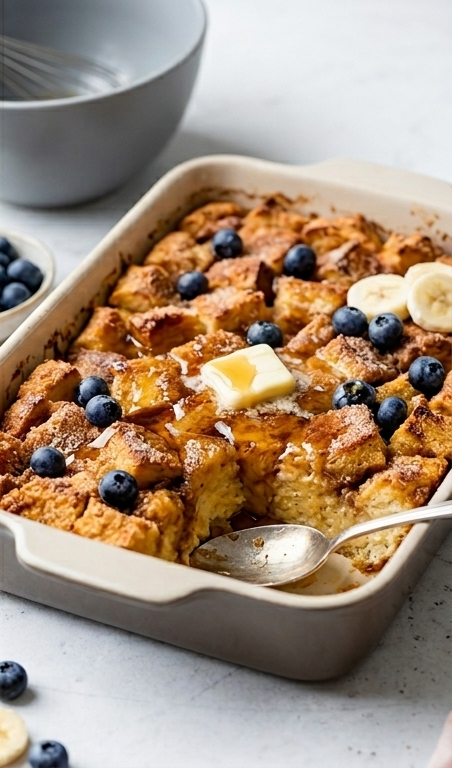
Strawberry Rhubarb Bread is the kind of cozy treat that makes a rainy afternoon feel like a celebration. I first stumbled upon this recipe while wandering through a farmer’s market, the bright pink strawberries and tart rhubarb calling my name. The blend of sweet and tangy, wrapped in a buttery crumb, instantly reminded me of childhood picnics. Since then, I’ve made it a staple in my kitchen, tweaking it here and there but always keeping the heart of the loaf intact.
How Strawberry Rhubarb Bread Became My Spring Comfort
I remember the first time I baked this loaf: the kitchen was filled with the scent of cinnamon and fresh berries, and a sudden summer rain pattered against the windows. I was nervous, juggling a new recipe while my toddler clung to my leg, demanding a snack. As the batter swirled in the pan, I felt a calm settle over me, the rhythmic whisking a meditation. When the crumble turned golden and the glaze glistened, the whole house seemed to sigh in relief. That loaf became my go‑to comfort on stormy days, a reminder that simple ingredients and a little patience can turn a hectic moment into pure joy.
Star Ingredients That Shine
- Granulated Sugar: Sweetens and helps the crust caramelize. You can swap half with coconut sugar for a deeper flavor.
- Brown Sugar: Adds moisture and a hint of molasses. Light brown works well too.
- Buttermilk: Provides tang and tenderness; substitute with kefir or milk plus a splash of lemon.
- Lemon Juice: Brightens the flavor and reacts with the baking soda. Lime works as an alternative.
- Canola or Vegetable Oil: Keeps the crumb moist; melted unsalted butter can replace it for richer taste.
- Large Eggs: Bind the batter and add lift. For a vegan twist, use flax eggs.
- Vanilla Extract: Enhances overall aroma; almond extract can add a different note.
- All‑Purpose Flour: The structure backbone. You can use a 50/50 mix of whole‑wheat flour for a nuttier loaf.
- Baking Powder & Baking Soda: Leaveners that give the bread its rise. Ensure they’re fresh.
- Ground Cinnamon: Warm spice that pairs perfectly with berries. Try nutmeg for variation.
- Kosher Salt: Balances sweetness and enhances flavor.
- Strawberries (diced): Sweet bursts of flavor. If out of season, frozen diced strawberries work after thawing.
- Rhubarb (thinly sliced): Tart contrast that cuts through the sweetness. Swap with sliced apples for a milder taste.
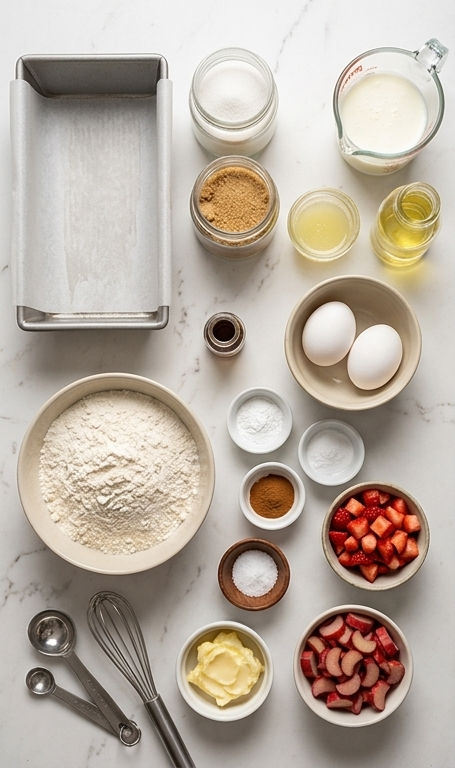
Tools That Make It Easy
- 9×5‑inch Loaf Pan: Provides the perfect shape; a springform pan works too.
- Parchment Paper: Guarantees an effortless release; a silicone mat can replace it.
- Mixing Bowls: One for wet, one for dry ingredients; a large glass bowl helps see the batter.
- Whisk: Incorporates air into the wet mix; a hand‑held electric mixer works as well.
- Spatula: For gentle folding; a rubber scraper is ideal.
- Pastry Cutter or Fork: To cut butter into the crumble; a food processor can speed up the process.
- Wire Rack: Allows the loaf to cool evenly; a cooling rack is essential.
Step-by-Step Preparation Guide
Step 1: Preheat and prepare the loaf pan
Preheat the oven to 350°F and prepare a 9×5-inch loaf pan by spraying it with cooking spray or greasing and flouring the pan; for the easiest release make a parchment sling that drapes over the sides and lightly spray the parchment as well. Set the prepared pan aside on the countertop and keep your spatula and a measuring cup nearby so everything is ready when the batter is mixed.
Step 2: Whisk the wet ingredients until smooth
In a large mixing bowl, whisk together the granulated and brown sugars, buttermilk, lemon juice, oil (or melted unsalted butter), eggs, and vanilla until the mixture is smooth and slightly glossy; this is the gentle, emulsified base that will give the bread moisture and lift. Aim for a homogenous liquid that holds a few slow-moving ribbons when the whisk is lifted—this is your wet matrix ready for the dry ingredients.
Step 3: Whisk the dry ingredients together
In a separate bowl, whisk the all-purpose flour with baking powder, baking soda, ground cinnamon, and kosher salt until evenly blended and aerated. This ensures the leaveners and spices are distributed so pockets of sodium bicarbonate or cinnamon won’t clump in the batter.
Step 4: Combine wet and dry until just mixed
Add the dry mixture to the wet and stir gently with a spatula, folding just until there are no streaks of flour. Stop as soon as the batter is cohesive—the goal is a tender crumb, so avoid overmixing which can make the loaf dense and chewy.
Step 5: Fold in the fruit and transfer to the pan
Fold in the diced strawberries and thinly sliced rhubarb with gentle lifting motions so the fruit is evenly distributed but not crushed. Scrape the batter into the prepared parchment-lined loaf pan and lightly smooth the top with a spatula so the surface is even and ready for the crumble.
Step 6: Make the crumble topping by cutting in butter
In a medium bowl combine the flour, granulated sugar, packed light brown sugar, and salt, then cut the very-softened unsalted butter into the dry ingredients using a fork or pastry cutter until small pebble-like crumbles form. You want loose, coarse bits that will bake into crunchy shards rather than a paste.
Step 7: Top the batter with crumble and prepare to bake
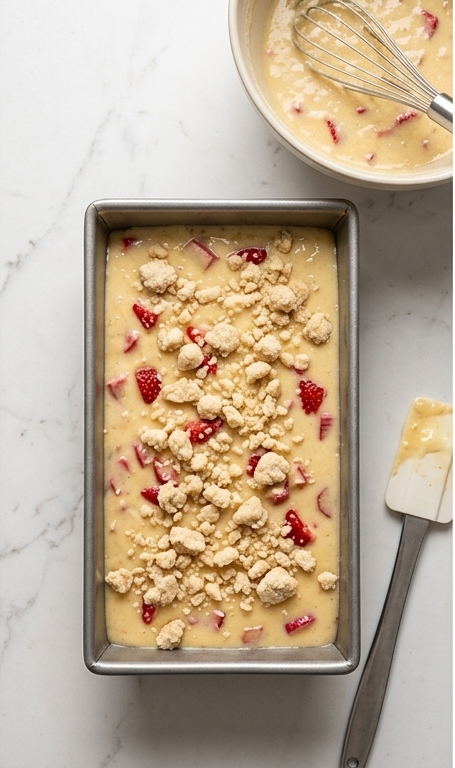
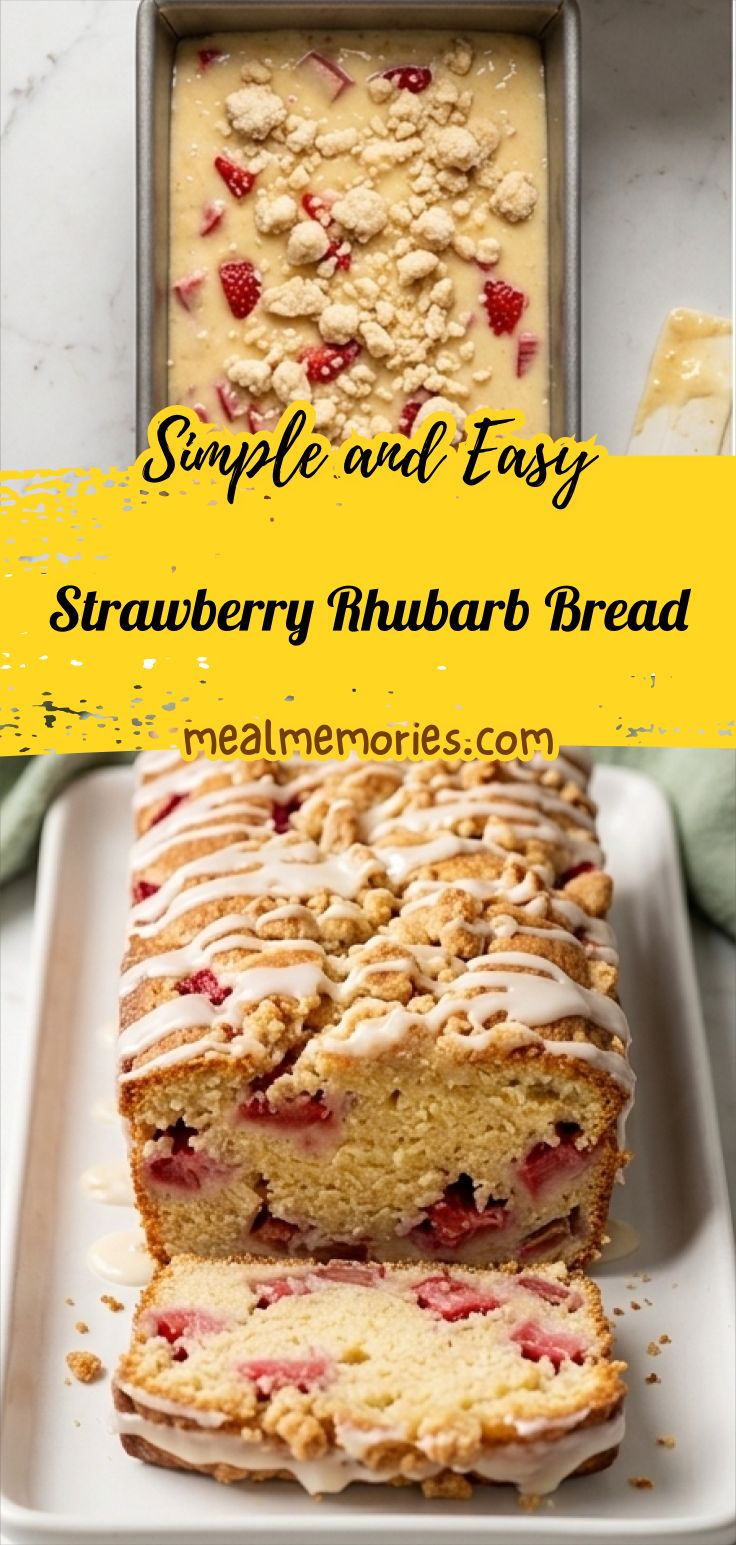
Evenly sprinkle the crumble over the smoothed batter in the loaf pan so the crumbs create a textured, patchy blanket across the surface—this will brown and crisp in the oven. Tuck a clean whisk or spatula off to the side on the countertop to show the tool that made the batter and the prepared pan with its parchment sling waiting to go in the oven.
Step 8: Bake until golden and set
Bake the loaf until it springs back lightly to the touch, the crumble is golden, and a toothpick inserted into the center comes out clean (or the internal temperature approaches about 200°F); about 50–60 minutes is typical but ovens vary. Because this is a visual recipe depiction, we focus on the finished bake characteristics—golden-browned crunchy crumble, risen center, and fragrant edges.
Step 9: Cool in the pan then transfer to a wire rack
Allow the loaf to cool in the pan on a wire rack for about 30 minutes so the interior sets and the crumble adheres; then carefully use the parchment sling to lift the loaf from the pan and transfer it to the rack to cool completely before glazing. Cooling prevents the glaze from running off a hot loaf and preserves the crumb structure.
Step 10: Whisk the glaze to the right consistency
In a medium bowl whisk together the confectioners’ sugar and vanilla, then slowly whisk in heavy cream (or half‑and‑half/milk) 1 tablespoon at a time until you reach a smooth, pourable glaze that holds a ribbon for a second before settling. Adjust with more sugar to thicken or more cream to loosen for a delicate drizzle.
Step 11: Drizzle the glaze, slice, and store
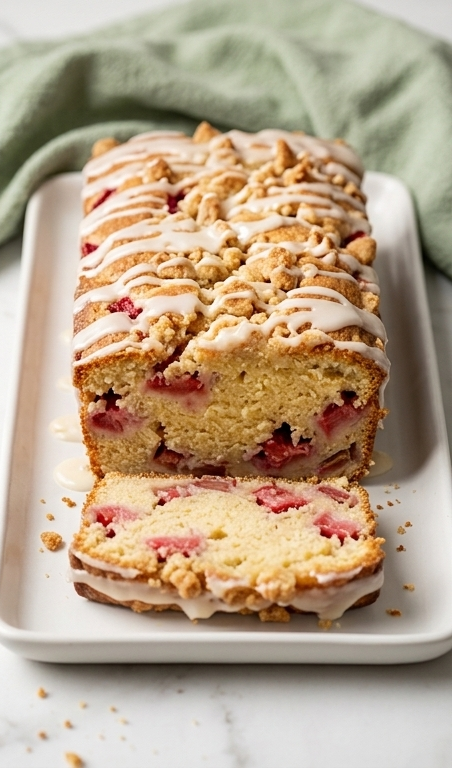
Drizzle the glaze evenly over the fully cooled loaf so it pools slightly among the crumble pockets and runs in thin, glossy ribbons down the sides; slice to reveal a tender pale yellow crumb studded with vibrant strawberry and rhubarb. Store the bread airtight at room temperature for up to 48 hours (crumbles will soften), refrigerate up to a week, or freeze for longer storage—thaw fully sealed to avoid drying.
Creative Twists and Seasonal Swaps
I love experimenting with this loaf when the seasons change. In the fall, I add a handful of chopped walnuts and a pinch of nutmeg for a cozy, earthy note. For a tropical spin, substitute the strawberries with diced mango and the rhubarb with pineapple, then finish with a lime‑infused glaze. If you’re looking for a lower‑sugar version, try reducing the granulated sugar by a third and using a sugar‑free sweetener that measures like sugar. Gluten‑free bakers can swap the all‑purpose flour for a blend of rice flour, tapioca starch, and xanthan gum, keeping the texture light. Each variation feels like a new adventure while still honoring the beloved Strawberry Rhubarb Bread base.
Serving and Presentation Ideas
When I host a brunch, I slice the loaf into thick wedges, drizzle a little extra glaze, and serve it alongside a dollop of vanilla Greek yogurt and a sprinkle of toasted almond slivers. For a casual picnic, I pack individual slices in parchment bags, add a small container of fresh berries, and let guests drizzle their own glaze. If you’re feeding a crowd, double the recipe and bake two loaves side by side, then arrange them on a rustic wooden board with fresh mint sprigs for a pop of color. Pair the bread with a cup of Earl Grey tea or a sparkling rosé for a balanced flavor profile that highlights the sweet‑tart interplay.
Storage and Reheating Tips
I keep my leftover Strawberry Rhubarb Bread wrapped tightly in plastic wrap and stored at room temperature for up to two days; the crust stays pleasantly crisp while the interior remains moist. For longer storage, I slice the loaf, freeze the pieces individually on a parchment sheet, then transfer them to a zip‑top bag—this way I can pop a slice into the toaster or microwave for a quick warm treat. When reheating, a brief 5‑minute stint in a 300°F oven revives the crumble’s crunch without drying out the crumb. If you’re in a hurry, a microwave on medium power for 15‑20 seconds works, but the texture will be softer.
Common Mistakes and How to Dodge Them
One frequent slip is over‑mixing the batter, which creates a dense, rubbery loaf. I always fold the dry ingredients just until they disappear, trusting that the gluten will develop enough during baking. Another pitfall is using rhubarb that’s too fibrous; I slice it thinly and toss it in a little sugar before folding it in, which softens the texture and balances the tartness. Finally, forgetting to let the loaf cool before glazing can cause the glaze to melt into the crumb instead of forming a shiny coating—patience is key for that perfect finish.
Ready to Bake Your Strawberry Rhubarb Bread
If you’ve been waiting for a cozy, vibrant bread to brighten your kitchen, now’s the moment. Grab your ingredients, preheat that oven, and let the fragrant steam fill your home. I can’t wait for you to taste the sweet‑tart harmony of strawberries and rhubarb, crowned with a buttery crumble and a glossy glaze. Happy baking!
Frequently Asked Questions
- Can I use frozen strawberries? Yes, thaw them first and pat dry to avoid excess moisture.
- What if I don’t have buttermilk? Mix ½ cup milk with 1 tsp lemon juice and let sit 5 minutes.
- Can I make this gluten‑free? Substitute the flour with a 1:1 gluten‑free blend and add ½ tsp xanthan gum.
- How long does the glaze set? It firms up in about 10 minutes at room temperature.
- Is this loaf suitable for vegans? Use flax‑egg replacer, plant‑based oil, and dairy‑free glaze.
Strawberry Rhubarb Bread
Bake a vibrant Strawberry Rhubarb Bread with sweet berries, tart rhubarb, crumbly topping, and glossy glaze—quick, delicious, and comforting.
Ingredients
Instructions
Step 1: Preheat and prepare the loaf pan
Preheat the oven to 350°F and prepare a 9x5-inch loaf pan by spraying it with cooking spray or greasing and flouring the pan; for the easiest release make a parchment sling that drapes over the sides and lightly spray the parchment as well. Set the prepared pan aside on the countertop and keep your spatula and a measuring cup nearby so everything is ready when the batter is mixed.
Step 2: Whisk the wet ingredients until smooth
In a large mixing bowl, whisk together the granulated and brown sugars, buttermilk, lemon juice, oil (or melted unsalted butter), eggs, and vanilla until the mixture is smooth and slightly glossy; this is the gentle, emulsified base that will give the bread moisture and lift. Aim for a homogenous liquid that holds a few slow-moving ribbons when the whisk is lifted—this is your wet matrix ready for the dry ingredients.
Step 3: Whisk the dry ingredients together
In a separate bowl, whisk the all-purpose flour with baking powder, baking soda, ground cinnamon, and kosher salt until evenly blended and aerated. This ensures the leaveners and spices are distributed so pockets of sodium bicarbonate or cinnamon won’t clump in the batter.
Step 4: Combine wet and dry until just mixed
Add the dry mixture to the wet and stir gently with a spatula, folding just until there are no streaks of flour. Stop as soon as the batter is cohesive—the goal is a tender crumb, so avoid overmixing which can make the loaf dense and chewy.
Step 5: Fold in the fruit and transfer to the pan
Fold in the diced strawberries and thinly sliced rhubarb with gentle lifting motions so the fruit is evenly distributed but not crushed. Scrape the batter into the prepared parchment-lined loaf pan and lightly smooth the top with a spatula so the surface is even and ready for the crumble.
Step 6: Make the crumble topping by cutting in butter
In a medium bowl combine the flour, granulated sugar, packed light brown sugar, and salt, then cut the very-softened unsalted butter into the dry ingredients using a fork or pastry cutter until small pebble-like crumbles form. You want loose, coarse bits that will bake into crunchy shards rather than a paste.
Step 7: Top the batter with crumble and prepare to bake
Evenly sprinkle the crumble over the smoothed batter in the loaf pan so the crumbs create a textured, patchy blanket across the surface—this will brown and crisp in the oven. Tuck a clean whisk or spatula off to the side on the countertop to show the tool that made the batter and the prepared pan with its parchment sling waiting to go in the oven.
Step 8: Bake until golden and set
Bake the loaf until it springs back lightly to the touch, the crumble is golden, and a toothpick inserted into the center comes out clean (or the internal temperature approaches about 200°F); about 50–60 minutes is typical but ovens vary. Because this is a visual recipe depiction, we focus on the finished bake characteristics—golden-browned crunchy crumble, risen center, and fragrant edges.
Step 9: Cool in the pan then transfer to a wire rack
Allow the loaf to cool in the pan on a wire rack for about 30 minutes so the interior sets and the crumble adheres; then carefully use the parchment sling to lift the loaf from the pan and transfer it to the rack to cool completely before glazing. Cooling prevents the glaze from running off a hot loaf and preserves the crumb structure.
Step 10: Whisk the glaze to the right consistency
In a medium bowl whisk together the confectioners’ sugar and vanilla, then slowly whisk in heavy cream (or half-and-half/milk) 1 tablespoon at a time until you reach a smooth, pourable glaze that holds a ribbon for a second before settling. Adjust with more sugar to thicken or more cream to loosen for a delicate drizzle.
Step 11: Drizzle the glaze, slice, and store
Drizzle the glaze evenly over the fully cooled loaf so it pools slightly among the crumble pockets and runs in thin, glossy ribbons down the sides; slice to reveal a tender pale yellow crumb studded with vibrant strawberry and rhubarb. Store the bread airtight at room temperature for up to 48 hours (crumbles will soften), refrigerate up to a week, or freeze for longer storage—thaw fully sealed to avoid drying.
Notes
- Dice strawberries and slice rhubarb just before mixing to keep them fresh.
- Use a parchment sling for easy loaf removal.
- For a richer flavor, substitute oil with melted butter.
- Adjust glaze thickness by adding more sugar or cream as needed.
- Store airtight; freeze slices for longer freshness.