Strawberry Rhubarb Bread
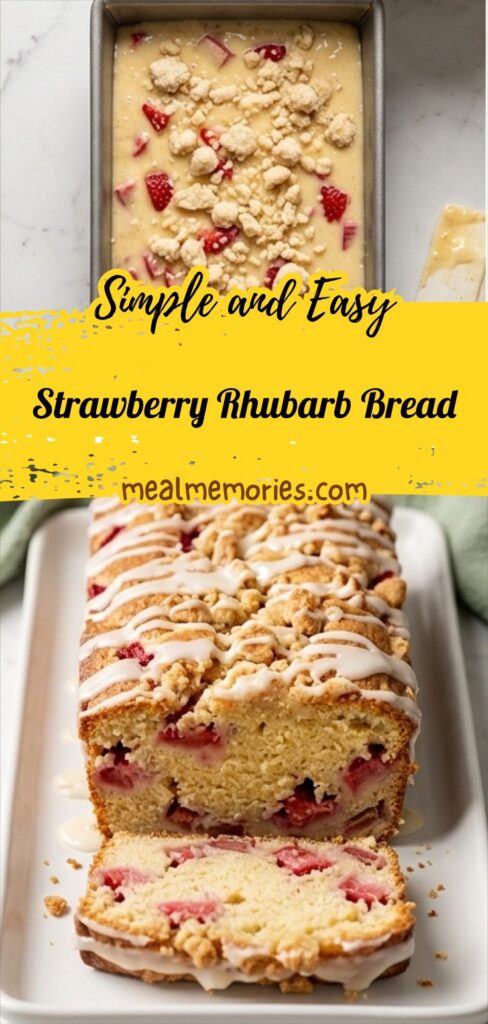
Bake a vibrant Strawberry Rhubarb Bread with sweet berries, tart rhubarb, crumbly topping, and glossy glaze—quick, delicious, and comforting.
Ingredients
- ¾ cup granulated sugar
- ¼ cup brown sugar
- ½ cup buttermilk
- 2 teaspoons lemon juice
- ½ cup canola or vegetable oil (or melted unsalted butter)
- 2 large eggs
- 2 teaspoons vanilla extract
- 2 cups all-purpose flour
- 1 ½ teaspoon baking powder
- ½ teaspoon baking soda
- 1 teaspoon ground cinnamon
- ½ teaspoon kosher salt
- 1 cup strawberries, diced
- 1 cup rhubarb, thinly sliced
- ½ cup all-purpose flour (for crumble)
- ¼ cup granulated sugar (for crumble)
- ¼ cup light brown sugar, packed (for crumble)
- 3 tablespoons unsalted butter, softened (for crumble)
- 1/8 teaspoon salt (for crumble)
- 1 cup confectioners' sugar (for glaze)
- ½ teaspoon vanilla extract (for glaze)
- 3-5 tablespoons heavy cream (or half-and-half/milk, for glaze)
Instructions
Step 1: Preheat and prepare the loaf pan
Preheat the oven to 350°F and prepare a 9x5-inch loaf pan by spraying it with cooking spray or greasing and flouring the pan; for the easiest release make a parchment sling that drapes over the sides and lightly spray the parchment as well. Set the prepared pan aside on the countertop and keep your spatula and a measuring cup nearby so everything is ready when the batter is mixed.
Step 2: Whisk the wet ingredients until smooth
In a large mixing bowl, whisk together the granulated and brown sugars, buttermilk, lemon juice, oil (or melted unsalted butter), eggs, and vanilla until the mixture is smooth and slightly glossy; this is the gentle, emulsified base that will give the bread moisture and lift. Aim for a homogenous liquid that holds a few slow-moving ribbons when the whisk is lifted—this is your wet matrix ready for the dry ingredients.
Step 3: Whisk the dry ingredients together
In a separate bowl, whisk the all-purpose flour with baking powder, baking soda, ground cinnamon, and kosher salt until evenly blended and aerated. This ensures the leaveners and spices are distributed so pockets of sodium bicarbonate or cinnamon won’t clump in the batter.
Step 4: Combine wet and dry until just mixed
Add the dry mixture to the wet and stir gently with a spatula, folding just until there are no streaks of flour. Stop as soon as the batter is cohesive—the goal is a tender crumb, so avoid overmixing which can make the loaf dense and chewy.
Step 5: Fold in the fruit and transfer to the pan
Fold in the diced strawberries and thinly sliced rhubarb with gentle lifting motions so the fruit is evenly distributed but not crushed. Scrape the batter into the prepared parchment-lined loaf pan and lightly smooth the top with a spatula so the surface is even and ready for the crumble.
Step 6: Make the crumble topping by cutting in butter
In a medium bowl combine the flour, granulated sugar, packed light brown sugar, and salt, then cut the very-softened unsalted butter into the dry ingredients using a fork or pastry cutter until small pebble-like crumbles form. You want loose, coarse bits that will bake into crunchy shards rather than a paste.
Step 7: Top the batter with crumble and prepare to bake
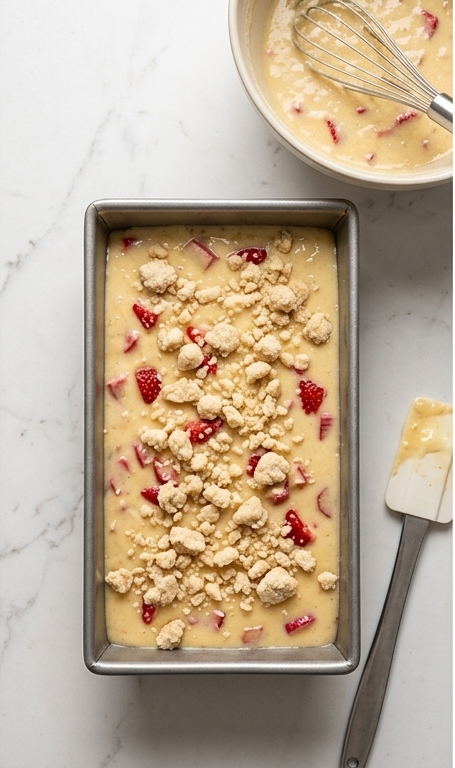
Evenly sprinkle the crumble over the smoothed batter in the loaf pan so the crumbs create a textured, patchy blanket across the surface—this will brown and crisp in the oven. Tuck a clean whisk or spatula off to the side on the countertop to show the tool that made the batter and the prepared pan with its parchment sling waiting to go in the oven.
Step 8: Bake until golden and set
Bake the loaf until it springs back lightly to the touch, the crumble is golden, and a toothpick inserted into the center comes out clean (or the internal temperature approaches about 200°F); about 50–60 minutes is typical but ovens vary. Because this is a visual recipe depiction, we focus on the finished bake characteristics—golden-browned crunchy crumble, risen center, and fragrant edges.
Step 9: Cool in the pan then transfer to a wire rack
Allow the loaf to cool in the pan on a wire rack for about 30 minutes so the interior sets and the crumble adheres; then carefully use the parchment sling to lift the loaf from the pan and transfer it to the rack to cool completely before glazing. Cooling prevents the glaze from running off a hot loaf and preserves the crumb structure.
Step 10: Whisk the glaze to the right consistency
In a medium bowl whisk together the confectioners’ sugar and vanilla, then slowly whisk in heavy cream (or half-and-half/milk) 1 tablespoon at a time until you reach a smooth, pourable glaze that holds a ribbon for a second before settling. Adjust with more sugar to thicken or more cream to loosen for a delicate drizzle.
Step 11: Drizzle the glaze, slice, and store
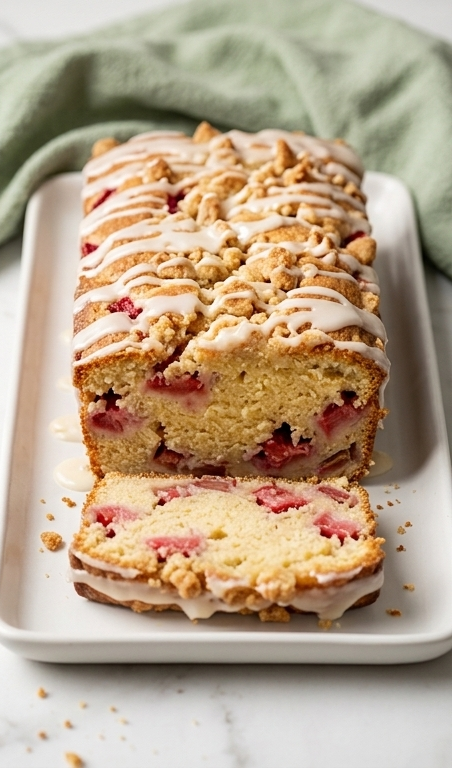
Drizzle the glaze evenly over the fully cooled loaf so it pools slightly among the crumble pockets and runs in thin, glossy ribbons down the sides; slice to reveal a tender pale yellow crumb studded with vibrant strawberry and rhubarb. Store the bread airtight at room temperature for up to 48 hours (crumbles will soften), refrigerate up to a week, or freeze for longer storage—thaw fully sealed to avoid drying.
Notes
- Dice strawberries and slice rhubarb just before mixing to keep them fresh.
- Use a parchment sling for easy loaf removal.
- For a richer flavor, substitute oil with melted butter.
- Adjust glaze thickness by adding more sugar or cream as needed.
- Store airtight; freeze slices for longer freshness.