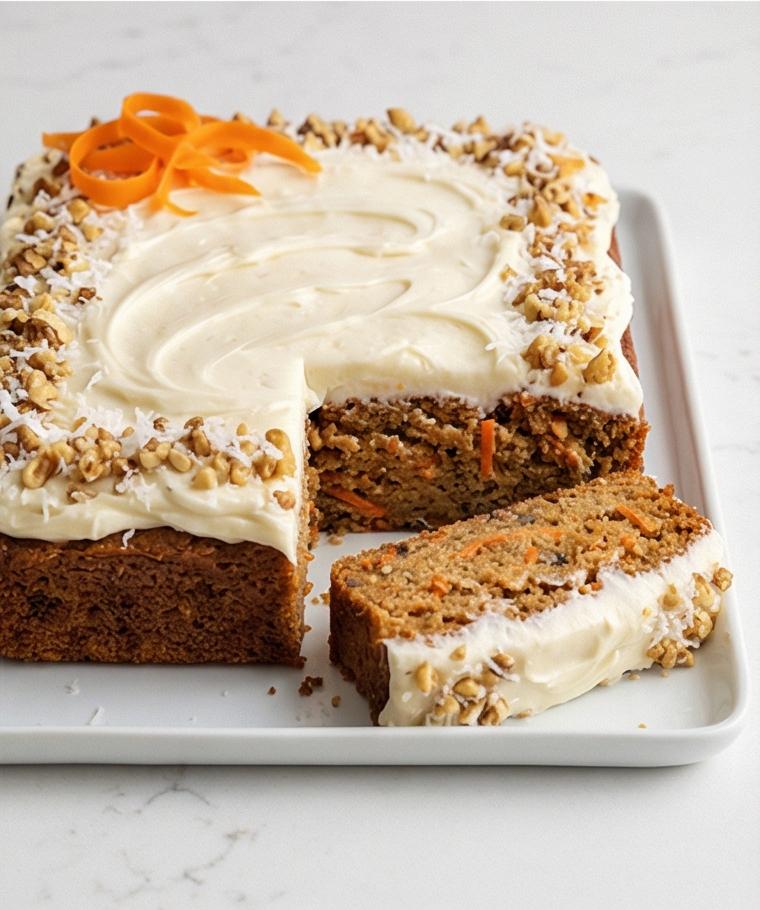
This Coconut Cake Recipe has been a little summer ritual in my kitchen for years, and every time I make it the house fills with that warm, toasty-sweet perfume of coconut and vanilla. I learned to treat the batter like a promise: gentle folding, patient baking, and a little syrup for extra glow. I love how this Coconut Cake Recipe manages to be reliably elegant without needing fussy techniques, which is why I return to it for birthdays and casual Sunday gatherings. If you like cakes that are moist, tender, and lightly tropical, this recipe will probably become one of your favorites quickly.
How This Coconut Cake Recipe Became My Sunny-Window Staple
The first time I baked this Coconut Cake Recipe I was chasing sunshine through a long grey winter. I remember the sound of the mixer whipping butter and sugar, the smell of coconut milk warming the kitchen, and how the oven light made the batter bubble like a little island. A neighbor dropped by with a mug of coffee, and we ended up splitting a warm slice while leaning against the counter, talking about everything and nothing. That afternoon taught me that a cake can be a small, steadfast way to invite company and slow the pace. It now lives on my list of recipes I use when I want comfort that also feels celebratory. When I frost and press sweet coconut onto the sides, it always feels like a tiny ritual of care.
Primary Ingredients and Why They Matter
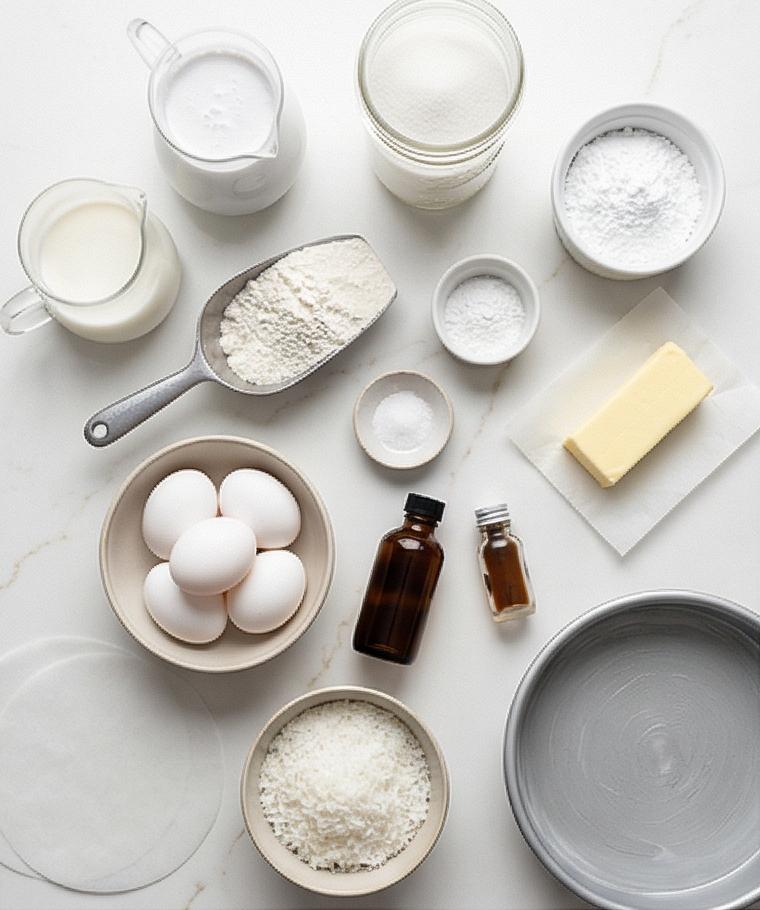
- Cake Flour: Provides a tender crumb because it has lower protein than all-purpose flour; substitute with 2 cups all-purpose plus 4 tablespoons cornstarch if needed.
- Unsalted Butter: Adds richness and structure; taste and texture suffer with margarine. Use high-quality butter for best flavor.
- Canned Full-Fat Coconut Milk: Gives coconut flavor and moisture; for a lighter version use reduced-fat, but expect less silkiness.
- Granulated Sugar: Sweetens and helps with browning; you can reduce slightly but it will change texture.
- Cream Cheese and Powdered Sugar (for Frosting): Create the tangy, stable frosting; mascarpone can be a substitute with a sweeter balance.
Essential Kitchen Tools and Why You’ll Need Them
A few reliable tools keep this Coconut Cake Recipe simple and consistent. A sturdy stand or hand mixer lets you cream butter and sugar to the right airy texture; if you only have a whisk, expect a workout and a longer time. An accurate set of measuring cups and spoons matters here, especially for flour and leavening.
- Stand mixer or electric hand mixer: Needed to get the butter and sugar very light; whisk by hand only in a pinch.
- Two 9-inch round cake pans: For even double layers; you can use three 8-inch pans instead and reduce bake time slightly.
- Offset spatula and bench scraper: For smoothing frosting and making clean edges; a butter knife can work if that’s all you have.
- Wire rack: For cooling layers evenly; do not skip this or the cakes will steam and get soggy.
Step-by-Step Preparation Guide
Step 1: Preheat and prepare the pans
Preheat the oven to 350°F (175°C) and position a rack in the center. Grease two 9-inch round cake pans with softened butter, line each bottom with a round of parchment, then dust the sides lightly with flour and tap out the excess so the pans are ready for batter. This step sets up the geometry and the nonstick base for clean-release layers; keep the prepared pans nearby on the quartz surface while you move to mixing.
Step 2: Combine the dry ingredients
Whisk together the cake flour, baking powder, and fine sea salt in a medium bowl until completely homogeneous and free of streaks. Leaving the dry mix aerated and lump-free ensures an even rise and a tender crumb when folded into the batter.
Step 3: Mix the milks and extracts
Stir the canned coconut milk, whole milk, vanilla extract, and optional coconut extract in a small jug until uniformly blended and silky. Set this milky, pale mixture aside at room temperature so it is ready to alternate into the batter.
Step 4: Cream, incorporate eggs, and build the batter
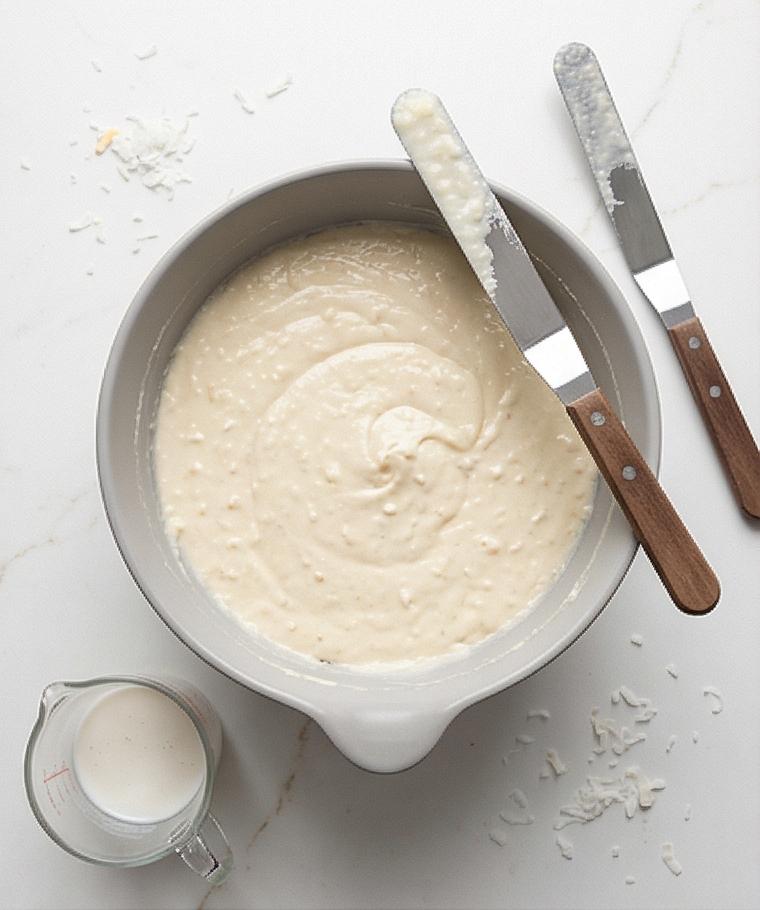
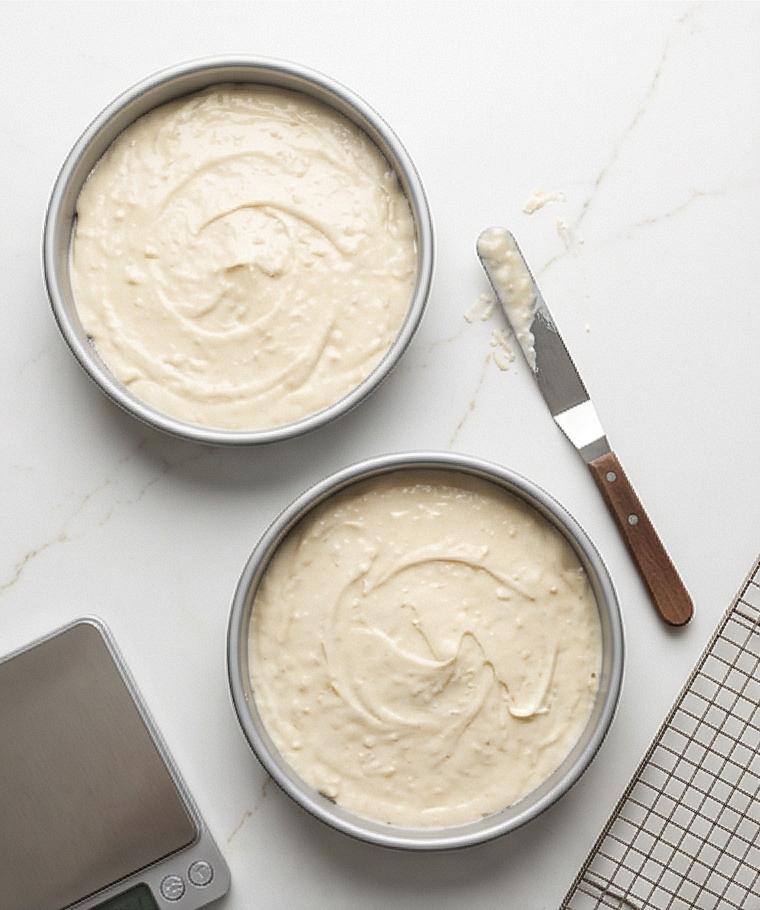
Beat the room-temperature butter until smooth, then gradually add the granulated sugar and whip until the mixture is very light, pale, and airy. Add the eggs one at a time, incorporating each just until smooth, then alternately add the flour mixture and the milk-coconut mixture in thirds on low speed until the batter is homogeneous and thick but not overmixed. Gently fold in the unsweetened shredded coconut with a spatula until evenly distributed; the final batter should be a dense, glossy, pale cream studded with flecks of coconut and have a spreadable but substantial texture.
Step 5: Portion, level, and bake the layers
Divide the batter evenly between the two prepared 9-inch round pans (about 650–700 g per pan if weighing), smooth the tops with an offset spatula so they sit perfectly level, and place them on the center rack to bake. Bake until lightly golden at the edges and a toothpick comes out with a few moist crumbs. Let the layers cool in the pans briefly, then invert onto a wire rack, peel away the parchment, and allow the rounds to cool completely to room temperature before any soaking or filling.
Step 6: Prepare the optional coconut syrup and the cream-cheese frosting
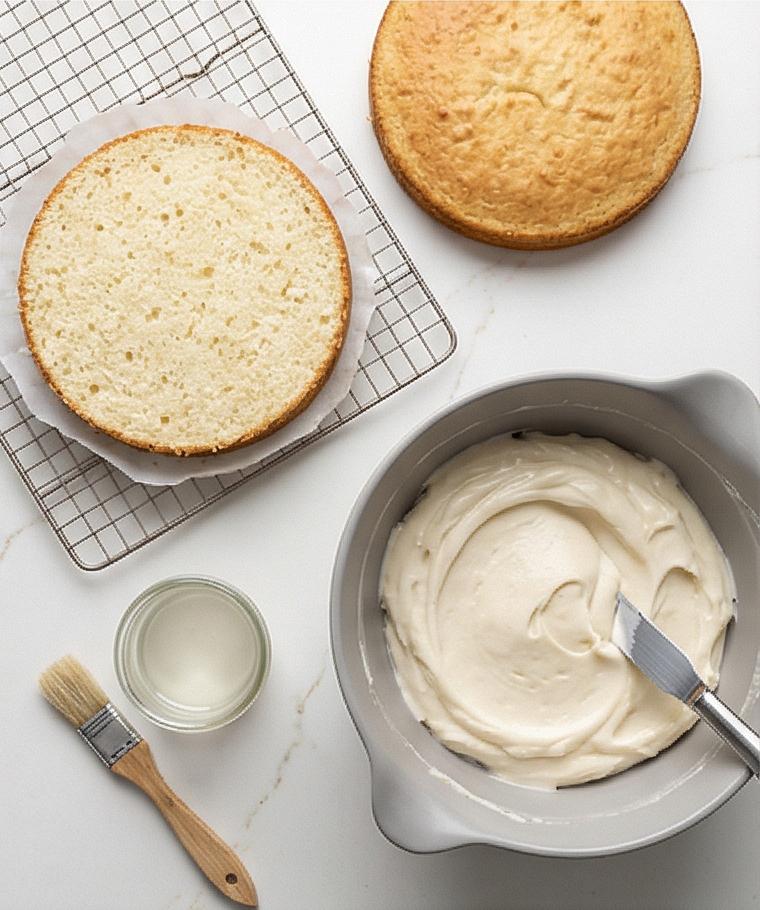
While the cakes cool, make the thin coconut soaking syrup by dissolving sugar in water, simmering briefly with coconut milk and vanilla until a pourable syrup forms; cool to room temperature. Then beat room-temperature cream cheese and butter until utterly smooth and creamy, gradually add sifted powdered sugar on low, then enrich with coconut milk, extracts, and a pinch of salt until the frosting is light, silky, and holds soft peaks—spreadable but stable. Taste and adjust; keep the frosting covered until assembly.
Step 7: Soak, assemble, frost, and finish the cake
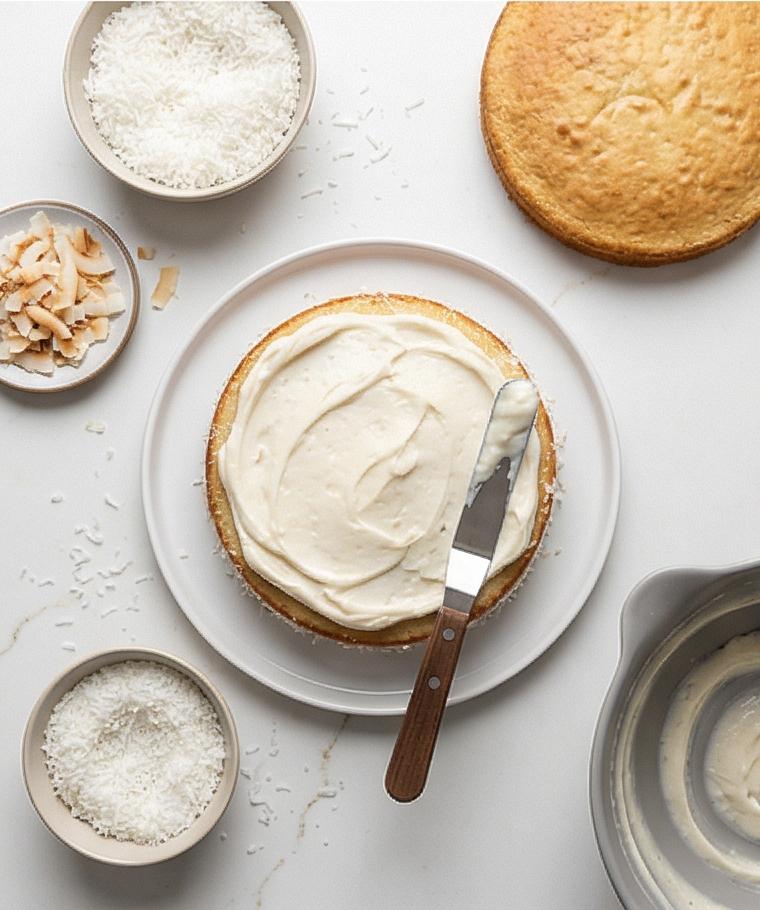
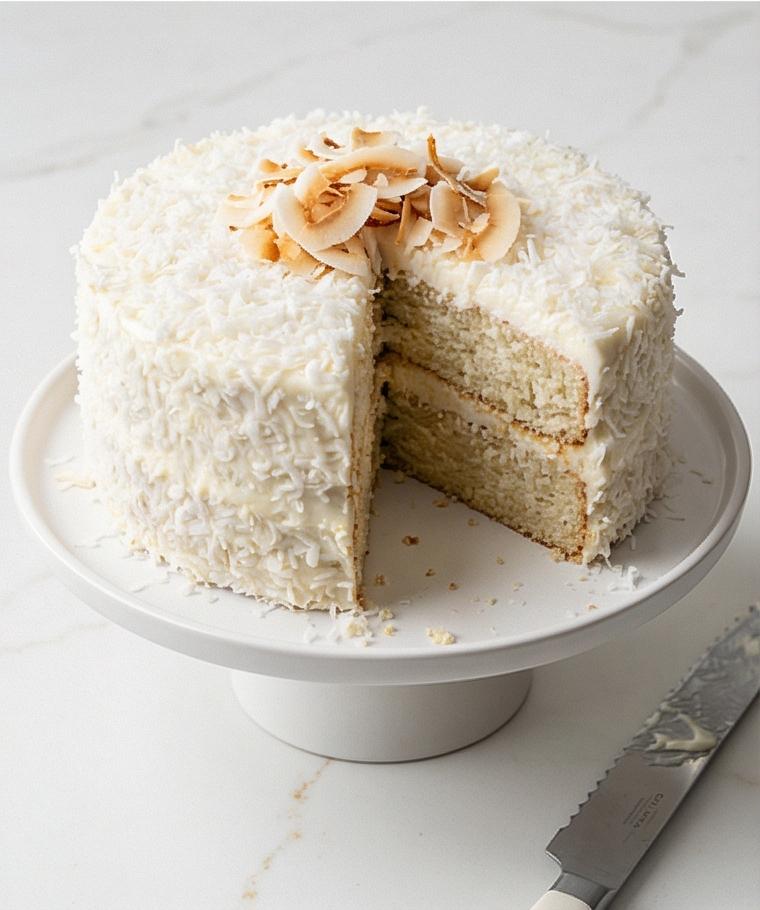
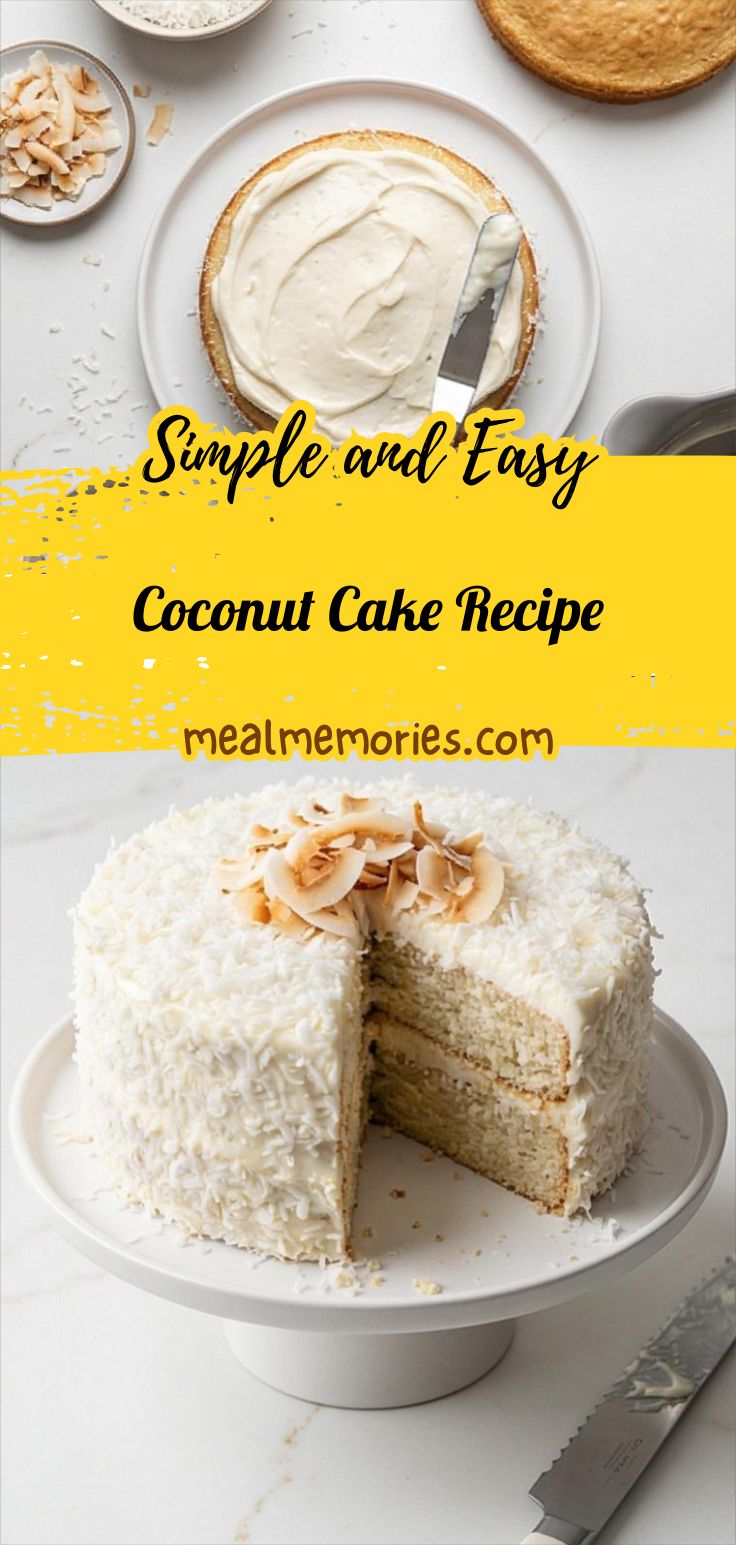
If using syrup, poke small shallow holes in the cooled layers and brush the coconut syrup evenly so the crumb glistens but is not soggy. Place one layer top-side up on your serving plate, spread about 1 to 1¼ cups of frosting to the edges, top with the second layer (top-side down to flatten), apply a thin crumb coat and chill briefly. Finish with a generous final coat of frosting, press sweetened shredded coconut into the sides and over the top, and scatter toasted large-flake coconut in the center for contrast if desired. Chill to set, then bring to room temperature before slicing with a clean knife for neat layers.
Making It Your Own
Try a few personal experiments to keep this Coconut Cake Recipe fresh. For a dairy-free version, swap butter and cream cheese for plant-based alternatives and use coconut-based cream in the frosting; texture will be slightly softer but still lovely. You can fold in a handful of toasted macadamias between layers for crunch and a Hawaiian vibe.
If you want something lighter, replace half the powdered sugar in the frosting with sifted Greek yogurt, but work quickly and serve chilled. For a seasonal twist, add a thin layer of mango or passionfruit curd between the rounds to brighten the flavor in summer.
How to Serve
When I host, this Coconut Cake Recipe is my go-to for casual dinner parties because it dresses up easily. For a larger gathering, bake in sheet pans and cut into squares; for intimate teas, make mini 6-inch layers. Serve slices at room temperature so the frosting is creamy, and garnish each plate with a sprinkle of toasted coconut and a tiny wedge of lime to cut the sweetness.
Pair the cake with bold coffee or a slightly sweet Riesling to balance the richness. If you want a plated dessert, add a smear of fruit coulis, a few fresh berries, and a mint leaf for contrast.
Storage and Reheating Tips
Wrapped tightly, this cake keeps well in the refrigerator for up to 4 days; the coconut frosting helps protect the crumb from drying out. I like to store slices in an airtight container with a small piece of parchment between layers so they do not stick.
To revive a chilled slice, let it sit at room temperature for 30 to 60 minutes before serving so the frosting softens. Avoid microwaving frosted slices as the frosting can separate; if you must warm a slice, remove the frosting and warm the cake layer briefly, then re-frost.
Baking Bloopers to Avoid
One common mistake is overmixing once the flour is added; that will tighten the crumb. Fold the dry and wet ingredients together just until no streaks remain.
Another slip-up is not allowing the layers to cool fully before frosting; warm cakes will melt the frosting and cause a messy crumb coat. Chill briefly for a neat finish.
Final Slice
I hope this Coconut Cake Recipe finds a happy place in your rotation. It rewards patience and small rituals, and it is forgiving enough for both midweek baking and special occasions. Try it, share it, and let me know how you personalize it.
Frequently Asked Questions.
- Can I make this cake ahead of time? Yes, bake the layers a day ahead, wrap them well, and refrigerate; assemble and frost on the day you plan to serve.
- Can I freeze the cake? Yes, the unfrosted layers freeze well wrapped for up to 3 months; thaw in the refrigerator before frosting.
- Can I skip the coconut extract? Yes, the cake will still be delicious though slightly less coconut-forward; keep the vanilla.
- How can I make this dairy-free? Substitute vegan butter and a dairy-free cream cheese, and ensure your milk alternatives are full-fat for richness.
- My cake sank in the middle; what happened? Likely underbaked or opened the oven too early; check doneness with a toothpick and avoid frequent door opening.
Coconut Cake Recipe
Make the Coconut Cake Recipe: moist, coconut-forward layer cake with cream-cheese frosting—perfect for parties and everyday treats.
Ingredients
Instructions
Step 1: Preheat and prepare the pans
Preheat the oven to 350°F (175°C) and position a rack in the center. Grease two 9-inch round cake pans with softened butter, line each bottom with a round of parchment, then dust the sides lightly with flour and tap out the excess so the pans are ready for batter. This step sets up the geometry and the nonstick base for clean-release layers; keep the prepared pans nearby on the quartz surface while you move to mixing.
Step 2: Combine the dry ingredients
Whisk together the cake flour, baking powder, and fine sea salt in a medium bowl until completely homogeneous and free of streaks. Leaving the dry mix aerated and lump-free ensures an even rise and a tender crumb when folded into the batter.
Step 3: Mix the milks and extracts
Stir the canned coconut milk, whole milk, vanilla extract, and optional coconut extract in a small jug until uniformly blended and silky. Set this milky, pale mixture aside at room temperature so it is ready to alternate into the batter.
Step 4: Cream, incorporate eggs, and build the batter
Beat the room-temperature butter until smooth, then gradually add the granulated sugar and whip until the mixture is very light, pale, and airy. Add the eggs one at a time, incorporating each just until smooth, then alternately add the flour mixture and the milk-coconut mixture in thirds on low speed until the batter is homogeneous and thick but not overmixed. Gently fold in the unsweetened shredded coconut with a spatula until evenly distributed; the final batter should be a dense, glossy, pale cream studded with flecks of coconut and have a spreadable but substantial texture.
Step 5: Portion, level, and bake the layers
Divide the batter evenly between the two prepared 9-inch round pans (about 650–700 g per pan if weighing), smooth the tops with an offset spatula so they sit perfectly level, and place them on the center rack to bake. Bake until lightly golden at the edges and a toothpick comes out with a few moist crumbs. Let the layers cool in the pans briefly, then invert onto a wire rack, peel away the parchment, and allow the rounds to cool completely to room temperature before any soaking or filling.
Step 6: Prepare the optional coconut syrup and the cream-cheese frosting
While the cakes cool, make the thin coconut soaking syrup by dissolving sugar in water, simmering briefly with coconut milk and vanilla until a pourable syrup forms; cool to room temperature. Then beat room-temperature cream cheese and butter until utterly smooth and creamy, gradually add sifted powdered sugar on low, then enrich with coconut milk, extracts, and a pinch of salt until the frosting is light, silky, and holds soft peaks—spreadable but stable. Taste and adjust; keep the frosting covered until assembly.
Step 7: Soak, assemble, frost, and finish the cake
If using syrup, poke small shallow holes in the cooled layers and brush the coconut syrup evenly so the crumb glistens but is not soggy. Place one layer top-side up on your serving plate, spread about 1 to 1¼ cups of frosting to the edges, top with the second layer (top-side down to flatten), apply a thin crumb coat and chill briefly. Finish with a generous final coat of frosting, press sweetened shredded coconut into the sides and over the top, and scatter toasted large-flake coconut in the center for contrast if desired. Chill to set, then bring to room temperature before slicing with a clean knife for neat layers.
Notes
- Use room-temperature ingredients to ensure even mixing and proper emulsion.
- Weighing the batter helps divide layers evenly for consistent bake times.
- Toast shredded coconut briefly in a dry pan for a nuttier garnish.
- Chill the crumb coat before the final frosting for a cleaner finish.
- Store frosted cake in an airtight container and bring to room temperature before serving.