I still remember the first time I made this Beef Stroganoff Recipe for friends; the kitchen filled with warm, savory smells and everyone kept coming back for more. It is one of those dishes I cook when I want comforting, unfussy food that still feels a little special. Over the years I adjusted the sear, the mushroom browning, and the way I temper the sour cream so it never breaks. If you love rich, silky sauces and tender beef, this Beef Stroganoff Recipe will become a weeknight favorite.
How This Recipe Became My Cozy Dinner Go-To
I made this Beef Stroganoff Recipe on a rain-soaked evening when errands ran late and my fridge was a humble, honest jumble. The first forkful warmed more than my hands; it brought the house together. I remember the sound of the skillet when the beef hit the hot oil, the fragrant lift of garlic and thyme, and the way the buttered noodles glistened under the thick sauce. That night I learned patience with searing and the small ritual of tempering sour cream. Now whenever I smell caramelized mushrooms I am instantly transported back to that small, comfortable kitchen and the laughter around the table.
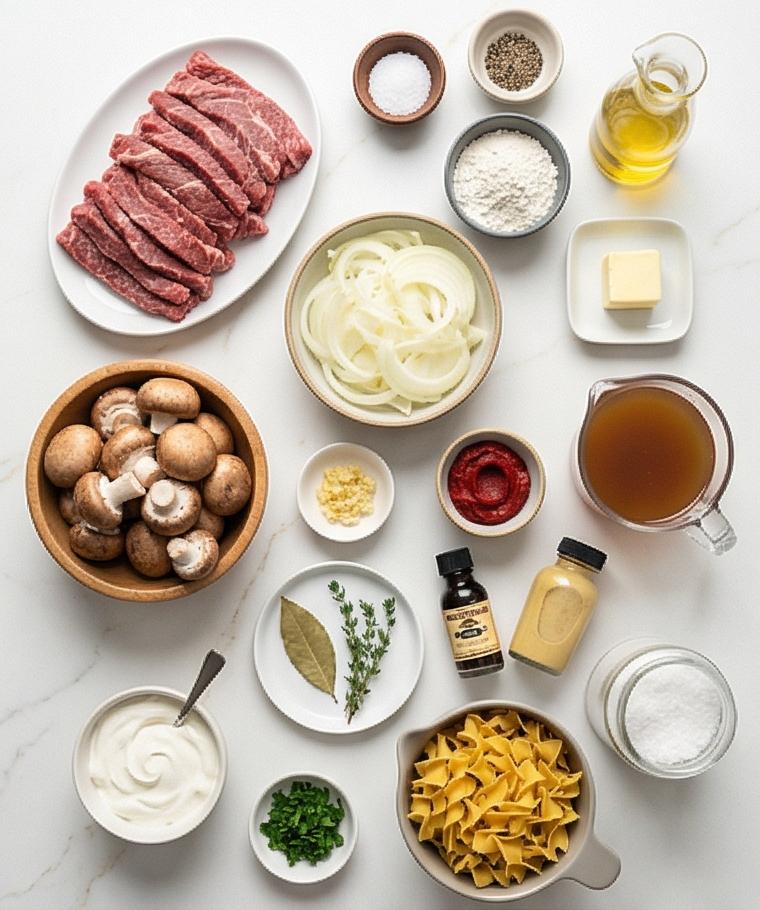
Main Ingredients and Why They Matter
- Beef Sirloin or Ribeye: The star of the Beef Stroganoff Recipe. Choose well-marbled, thin 1/4-inch strips for tenderness. Substitute flank for a leaner cut, or use mushrooms alone for a vegetarian twist.
- Flour: Provides light coating and helps thicken the sauce. Use all-purpose or a gluten-free blend if needed.
- Butter and Oil: Butter adds flavor, oil raises the smoking point for a good sear. Use clarified butter to reduce burning.
- Onion and Mushrooms: Build sweetness and umami. Cremini give depth; white buttons are fine in a pinch.
- Beef Broth, Worcestershire, Dijon: Form the savory backbone. Low-sodium broth lets you control salt.
- Sour Cream: Gives the sauce its silky finish; temper it to avoid curdling.
Essential Kitchen Tools and Why They Help
A few well chosen tools make this Beef Stroganoff Recipe easy and enjoyable. A heavy skillet, like cast iron or stainless steel, gives the best sear and builds fond. A sturdy wooden spoon or spatula helps deglaze without scratching. A fine-mesh sieve is handy if you want an ultra-smooth sauce, though not required. Use a large pot for boiling the wide egg noodles so they have room to move and cook evenly. If you do not have a heavy skillet, a wide-bottomed sauté pan will work. A small bowl for tempering sour cream keeps it from curdling when added to hot sauce.
- Heavy skillet (cast iron or stainless steel): For deep browning and fond development.
- Large pot for noodles: Prevents sticking and keeps noodles al dente.
- Wooden spoon or heatproof spatula: For stirring and scraping.
- Small bowl: For tempering sour cream.
- Tongs: For turning seared beef quickly.
Step-by-Step Preparation Guide
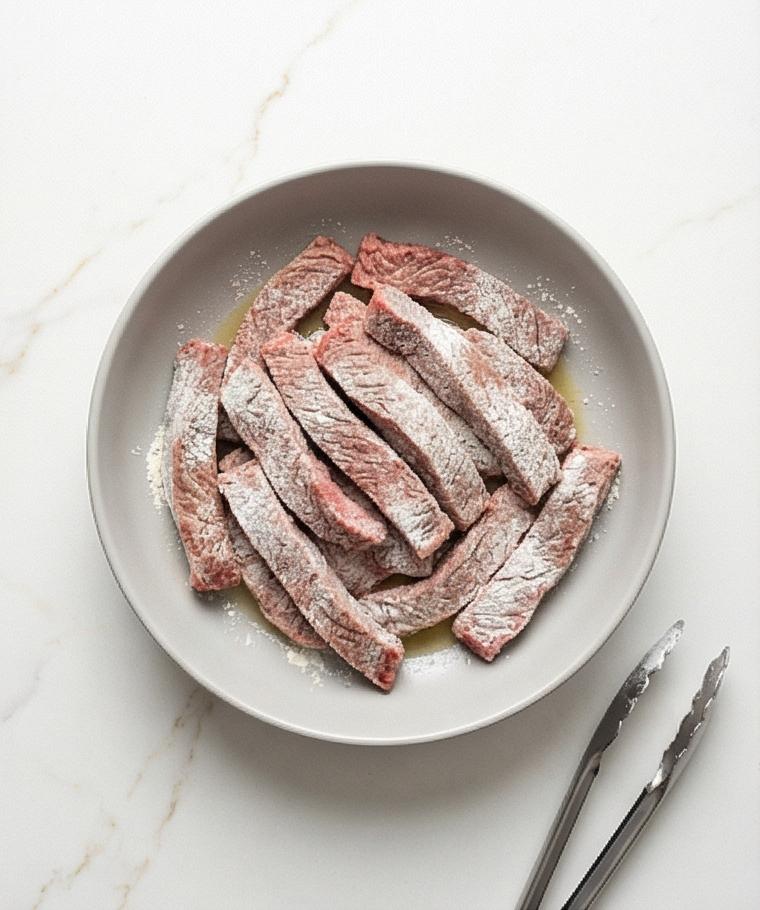
Step 1: Season and Dust the Beef
Place the thin 1/4-inch strips of sirloin in a roomy bowl, then sprinkle with kosher salt and freshly ground black pepper so each strip is evenly seasoned. Dust the meat lightly with the majority of the flour and toss just until each strip wears a fine, even coating; shake off any excess so the surface remains dry but dusted. Let the beef rest briefly at room temperature—this gentle pause helps the exterior sear evenly and gives the flour a chance to adhere for a better brown crust.
Step 2: Sear the Strips to a Deep Brown Crust
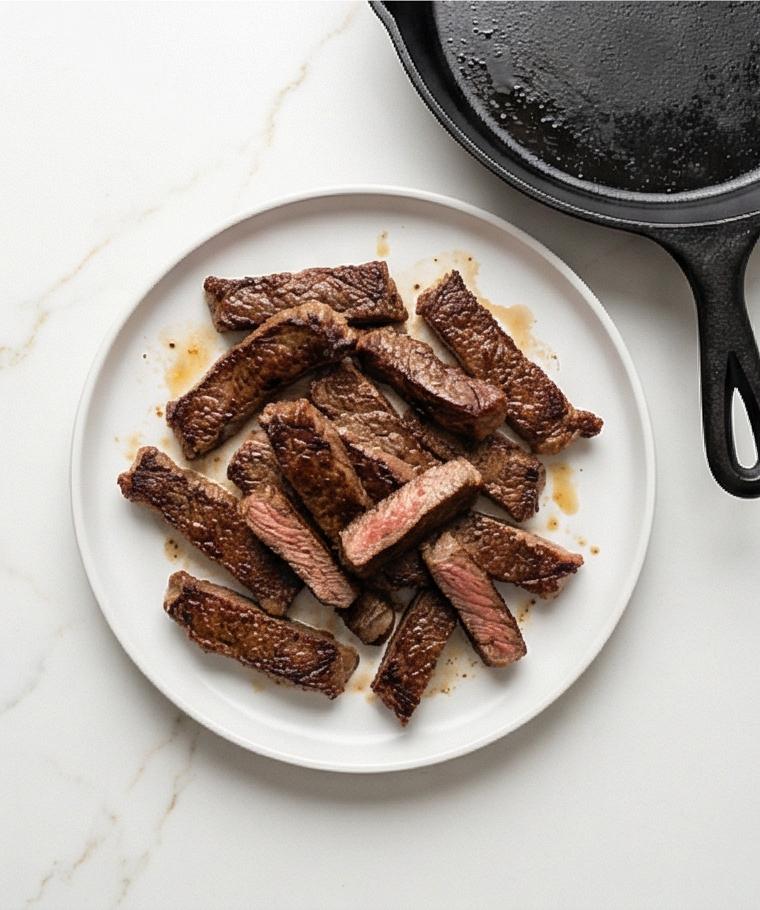
Heat a heavy, dark matte skillet until the surface is shimmering, then sear the floured strips in a few quick batches so each piece gets a tight, caramelized crust while staying slightly pink inside. Transfer the warmed, glossy, well-seared strips to a resting plate as you work in batches; you want pieces with concentrated mahogany edges and little pools of flavorful juices collecting on the plate. This is the moment the beef’s texture changes from raw to richly caramelized and fragrant.
Step 3: Soften and Sweeten the Onions
In that same skillet, add butter and toss in the thinly sliced yellow onion with a pinch of salt. Cook gently until the onions collapse into soft, translucent ribbons and their edges pick up a gentle golden tension—use a wooden spoon to sweep up the browned bits glued to the pan. Those dissolved fond fragments are tiny flavor mines that will mingle with the next additions and build depth.
Step 4: Brown the Mushrooms, Add Garlic and Tomato Paste
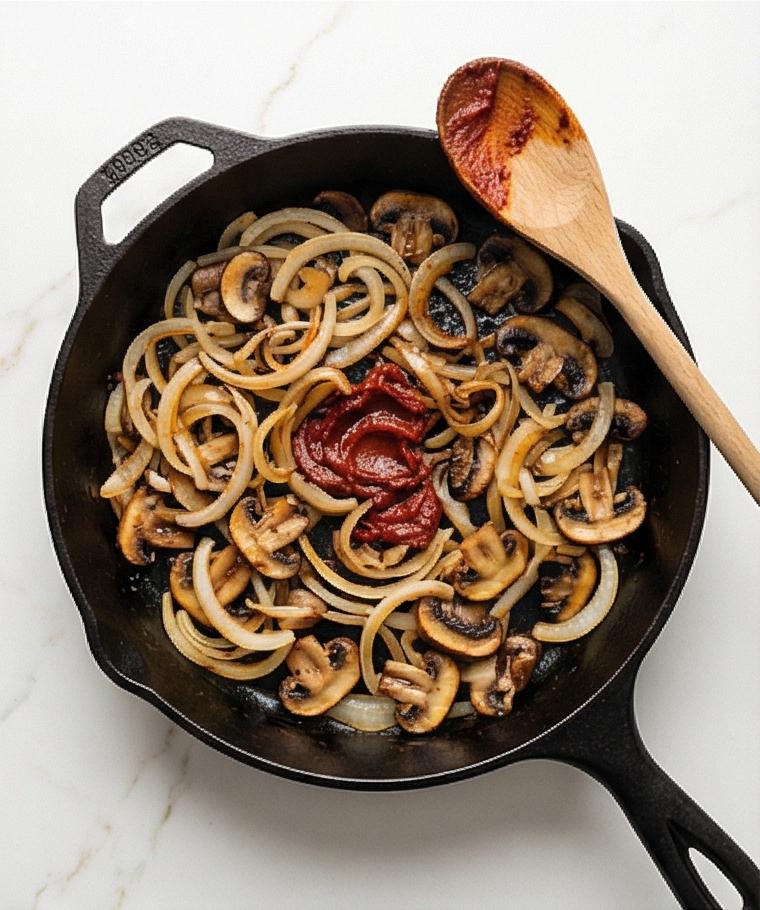
Push the softened onions aside and add the sliced creminis; increase the heat just enough for the mushrooms to release their water, then dry down and turn a deep, concentrated brown at the edges. Fold the mushrooms and onions together, add the minced garlic for a quick 30 seconds until fragrant, then stir in the tomato paste and cook until it darkens and becomes glossy—this concentrated paste clings to the vegetables and amplifies the sauce’s savory backbone.
Step 5: Thicken, Deglaze, and Simmer the Sauce
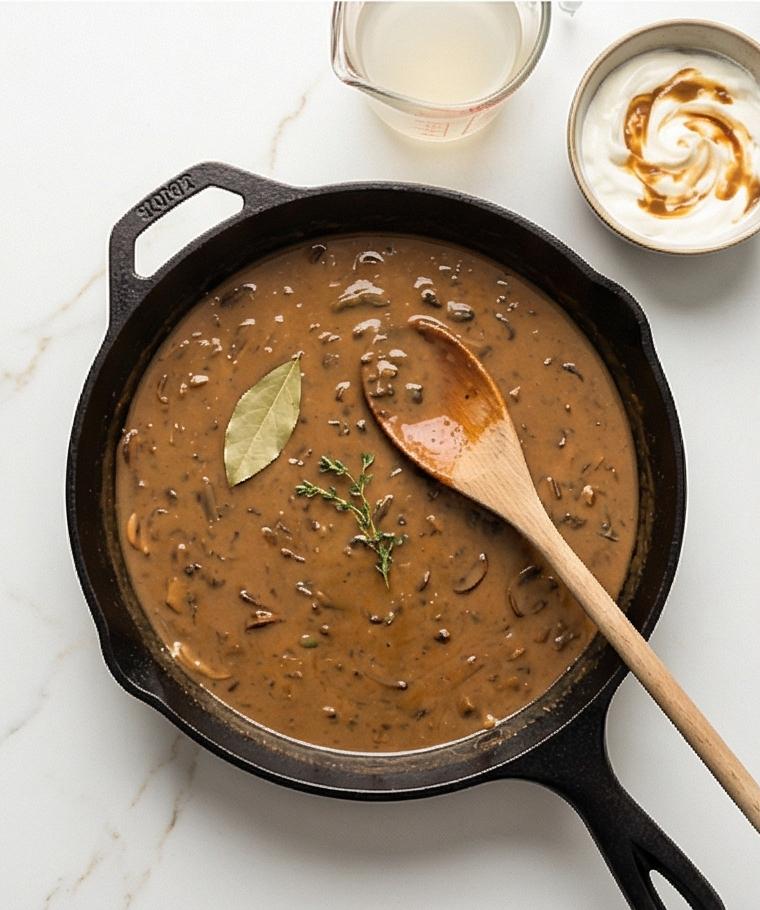
Dust the vegetable mixture with the remaining flour, stirring constantly until it pastes over the mushrooms and onions, then slowly stream in beef broth while scraping the pan to release every last browned particle into the liquid. Stir in Worcestershire, Dijon, bay leaf and thyme, bring to a gentle simmer, and reduce until the sauce takes on a gravy-like sheen that coats the back of a spoon. The texture here shifts from chunky vegetable bits to a unified, glossy, spoon-coating sauce—taste and adjust seasoning now.
Step 6: Cook the Noodles and Temper the Sour Cream
While the sauce reduces, boil the wide egg noodles in well-salted water until al dente, reserve a little starchy pasta water, then drain and toss the hot noodles with butter so they glisten and stay separate. In a small bowl, whisk a few tablespoons of the hot cooking liquid or a bit of the simmering sauce into the room-temperature sour cream to gently warm and loosen it—this step prevents curdling when it hits the hot sauce.
Step 7: Gently Finish with Beef and Sour Cream, Plate and Garnish
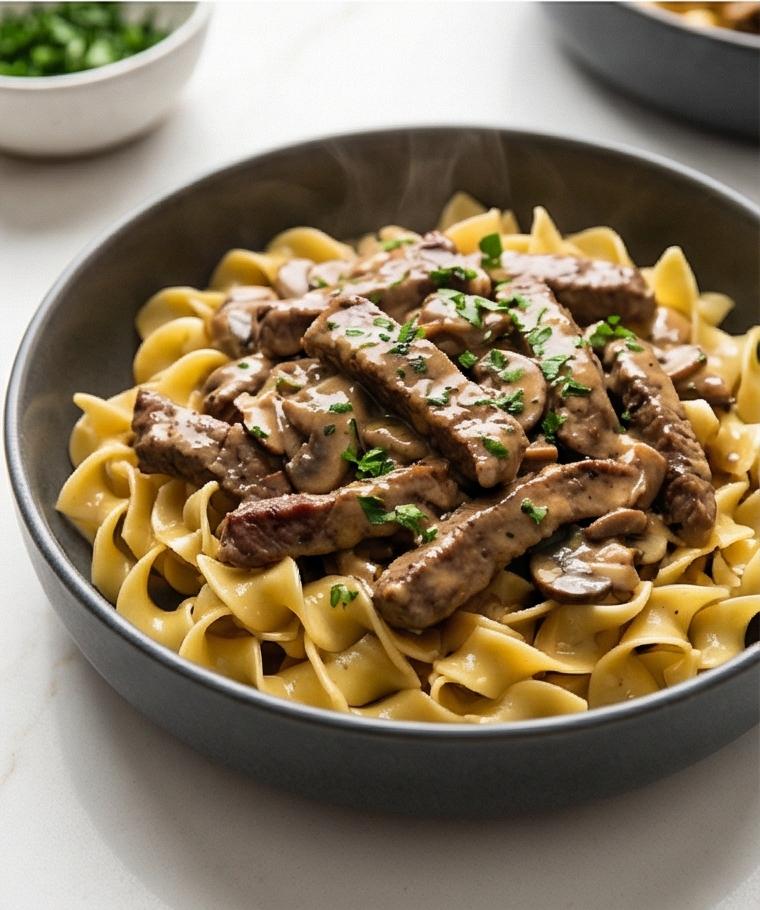
Remove the bay leaf, return the rested seared beef and any accumulated juices to the low-warm sauce, warming just until the meat is heated through but not overcooked. Turn the heat to low and stir in the tempered sour cream until the sauce is silky and homogeneous—do not boil. Adjust salt and pepper, loosen with reserved pasta water if needed, then serve generous spoonfuls of the beef stroganoff over the glossy buttered egg noodles and scatter chopped parsley on top for a fresh finish.
Making It Your Own
I often tinker with the Beef Stroganoff Recipe by swapping mushrooms or adding a splash of sherry when deglazing. For a lighter take I use Greek yogurt in place of some sour cream and reduce the butter, keeping creaminess but cutting richness. If I want deeper flavor I brown the mushrooms longer and finish with a teaspoon of smoked paprika.
For a vegetarian version I omit the beef, add extra mushrooms and a couple of tablespoons of soy sauce for umami. For a gluten-free meal, use a gluten-free flour for dusting and a grain like rice or gluten-free pasta instead of egg noodles.
How to Serve
When hosting, I serve the Beef Stroganoff Recipe family style so everyone can help themselves to noodles and sauce. For four people, keep the noodles warm in a covered dish and spoon the beef and sauce on top just before serving so textures stay perfect. If serving a crowd, double the sauce and keep the seared beef warm in a low oven; toss noodles with butter right before plating.
Garnish with fresh parsley and a squeeze of lemon if you want a bright counterpoint. Pair with a simple green salad and a crusty loaf or steamed green beans for a balanced meal. Leftovers reheat well and make a comforting lunch.
Storage and Reheating Tips
Store cooled stroganoff in an airtight container in the refrigerator for up to 3 days. Keep noodles and sauce separate when possible to preserve texture; combine only when reheating if you can.
To reheat, warm the sauce gently in a skillet over low heat, stirring in a splash of broth or water to loosen it, then add the beef and noodles just to warm through. Avoid boiling after adding sour cream to prevent splitting.
Oops-Proofing: Common Mistakes and Fixes
One frequent mistake is overcooking the beef; sear quickly in hot oil and finish in the low-warm sauce to keep it tender. Another is adding cold sour cream directly to hot sauce, which can cause curdling; always temper it first.
Also watch the mushrooms: crowding the pan makes them steam instead of brown. Work in batches if needed to get that deep, nutty color that builds character in the sauce.
Ready When You Are
Give this Beef Stroganoff Recipe a try the next time you want a cozy, satisfying meal that still feels thoughtful. It rewards attention to small techniques like searing, deglazing, and tempering sour cream, and it adapts well to your pantry and preferences. I hope it becomes one of your go-to comfort dinners.
Frequently Asked Questions.
-
Q: Can I use a different cut of beef?
A: Yes. Sirloin or boneless ribeye are ideal, but flank or hanger work if sliced thin against the grain; adjust cooking to avoid toughness. -
Q: How do I prevent the sour cream from curdling?
A: Temper the sour cream by whisking in a few tablespoons of hot sauce or pasta water before stirring it into the pan over low heat. -
Q: Can I make this ahead of time?
A: You can prepare sauce and sear beef ahead, then store separately. Finish and combine just before serving for best texture. -
Q: Is there a gluten-free option?
A: Yes. Use a gluten-free flour for dusting and a gluten-free pasta or rice for serving. -
Q: What should I serve with it?
A: Buttered wide egg noodles are classic. Add a green salad or steamed vegetables and crusty bread for a complete plate.
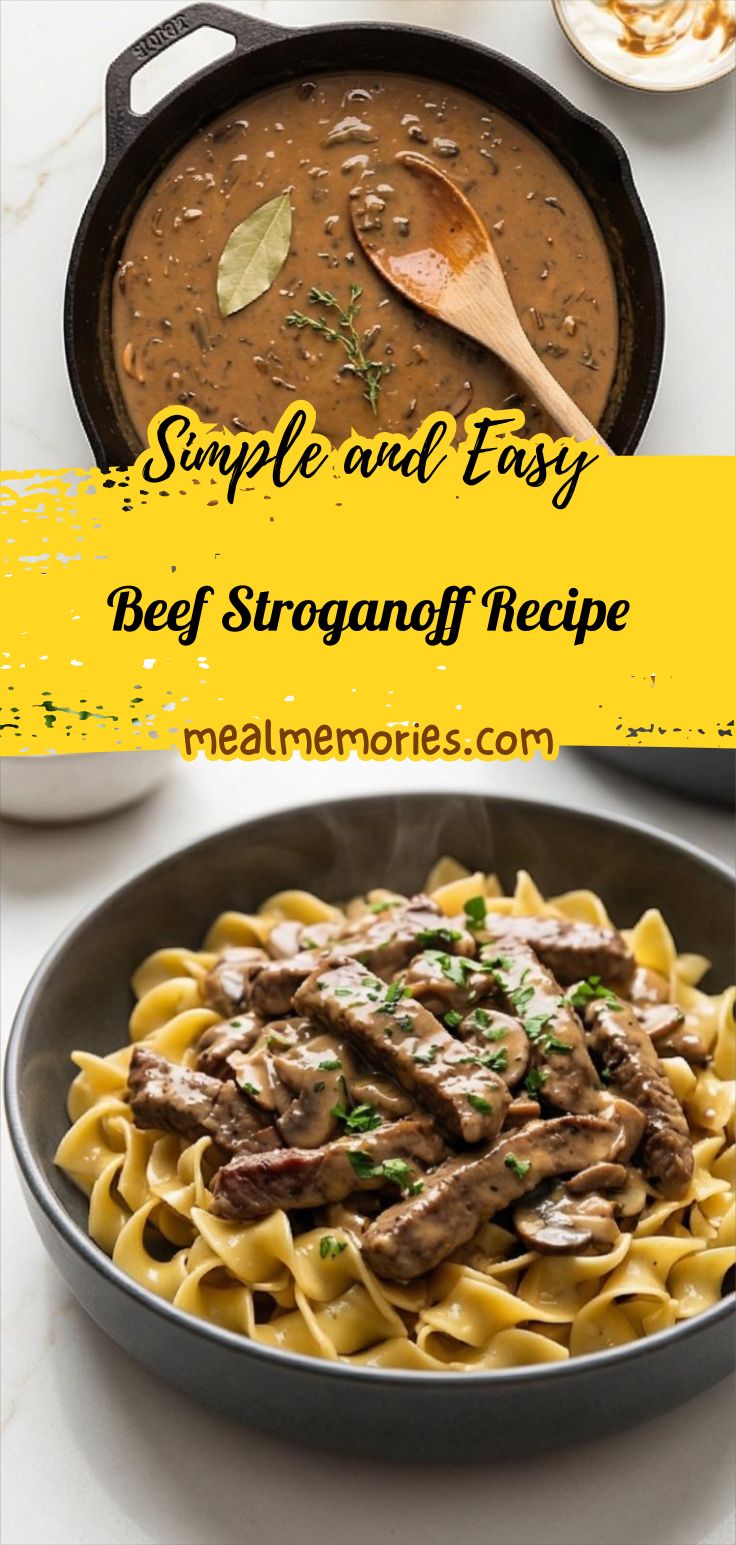
Beef Stroganoff Recipe
Make Beef Stroganoff Recipe with tender seared beef, mushroom gravy, and buttered egg noodles for a cozy weeknight dinner.
Ingredients
Instructions
Step 1: Season and Dust the Beef
Place the thin 1/4-inch strips of sirloin in a roomy bowl, then sprinkle with kosher salt and freshly ground black pepper so each strip is evenly seasoned. Dust the meat lightly with the majority of the flour and toss just until each strip wears a fine, even coating; shake off any excess so the surface remains dry but dusted. Let the beef rest briefly at room temperature—this gentle pause helps the exterior sear evenly and gives the flour a chance to adhere for a better brown crust.
Step 2: Sear the Strips to a Deep Brown Crust
Heat a heavy, dark matte skillet until the surface is shimmering, then sear the floured strips in a few quick batches so each piece gets a tight, caramelized crust while staying slightly pink inside. Transfer the warmed, glossy, well-seared strips to a resting plate as you work in batches; you want pieces with concentrated mahogany edges and little pools of flavorful juices collecting on the plate. This is the moment the beef’s texture changes from raw to richly caramelized and fragrant.
Step 3: Soften and Sweeten the Onions
In that same skillet, add butter and toss in the thinly sliced yellow onion with a pinch of salt. Cook gently until the onions collapse into soft, translucent ribbons and their edges pick up a gentle golden tension—use a wooden spoon to sweep up the browned bits glued to the pan. Those dissolved fond fragments are tiny flavor mines that will mingle with the next additions and build depth.
Step 4: Brown the Mushrooms, Add Garlic and Tomato Paste
Push the softened onions aside and add the sliced creminis; increase the heat just enough for the mushrooms to release their water, then dry down and turn a deep, concentrated brown at the edges. Fold the mushrooms and onions together, add the minced garlic for a quick 30 seconds until fragrant, then stir in the tomato paste and cook until it darkens and becomes glossy—this concentrated paste clings to the vegetables and amplifies the sauce’s savory backbone.
Step 5: Thicken, Deglaze, and Simmer the Sauce
Dust the vegetable mixture with the remaining flour, stirring constantly until it pastes over the mushrooms and onions, then slowly stream in beef broth while scraping the pan to release every last browned particle into the liquid. Stir in Worcestershire, Dijon, bay leaf and thyme, bring to a gentle simmer, and reduce until the sauce takes on a gravy-like sheen that coats the back of a spoon. The texture here shifts from chunky vegetable bits to a unified, glossy, spoon-coating sauce—taste and adjust seasoning now.
Step 6: Cook the Noodles and Temper the Sour Cream
While the sauce reduces, boil the wide egg noodles in well-salted water until al dente, reserve a little starchy pasta water, then drain and toss the hot noodles with butter so they glisten and stay separate. In a small bowl, whisk a few tablespoons of the hot cooking liquid or a bit of the simmering sauce into the room-temperature sour cream to gently warm and loosen it—this step prevents curdling when it hits the hot sauce.
Step 7: Gently Finish with Beef and Sour Cream, Plate and Garnish
Remove the bay leaf, return the rested seared beef and any accumulated juices to the low-warm sauce, warming just until the meat is heated through but not overcooked. Turn the heat to low and stir in the tempered sour cream until the sauce is silky and homogeneous—do not boil. Adjust salt and pepper, loosen with reserved pasta water if needed, then serve generous spoonfuls of the beef stroganoff over the glossy buttered egg noodles and scatter chopped parsley on top for a fresh finish.
Notes
- Temper sour cream with a few tablespoons of hot sauce or pasta water to avoid curdling
- Work in batches when searing beef and browning mushrooms to get deep color
- Use low-sodium broth so you can control final seasoning
- Reserve pasta water to loosen sauce if it becomes too thick
- Store noodles and sauce separately when possible for best texture