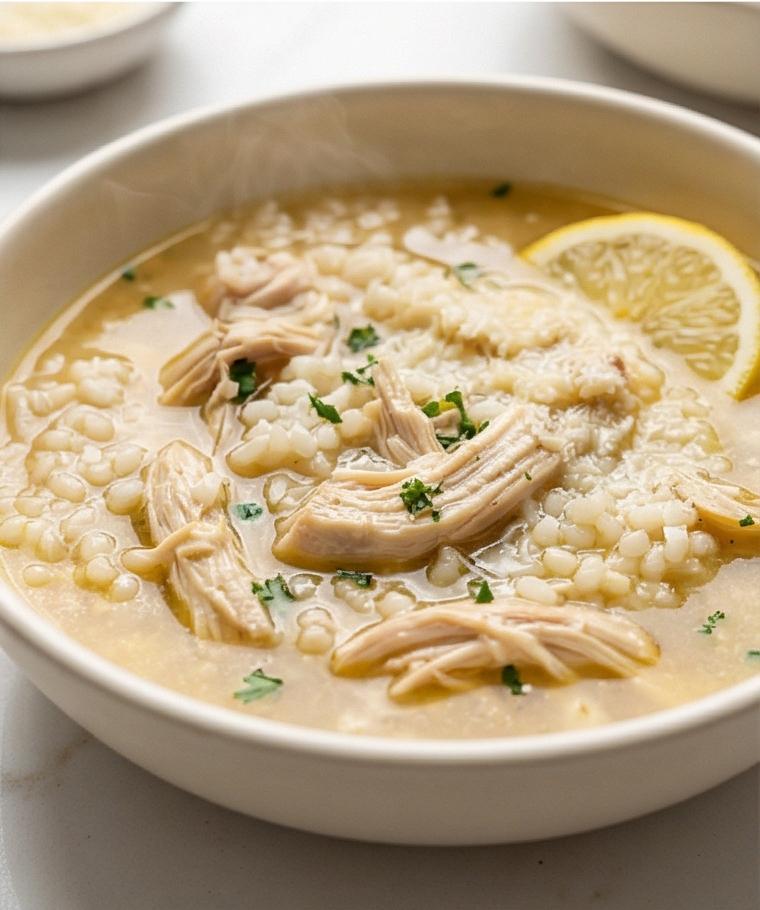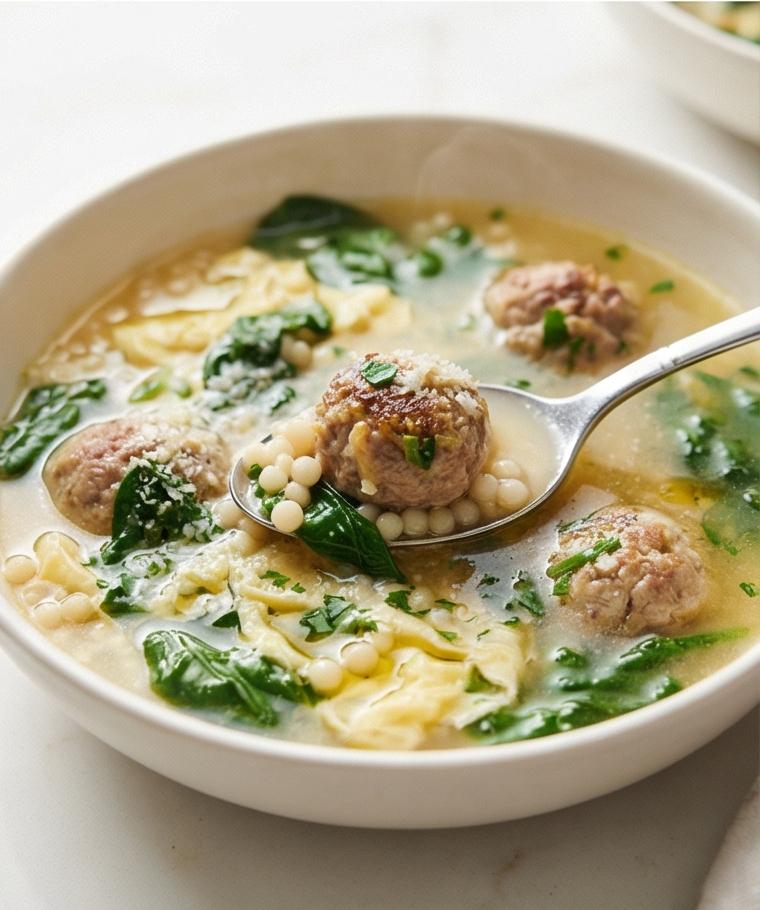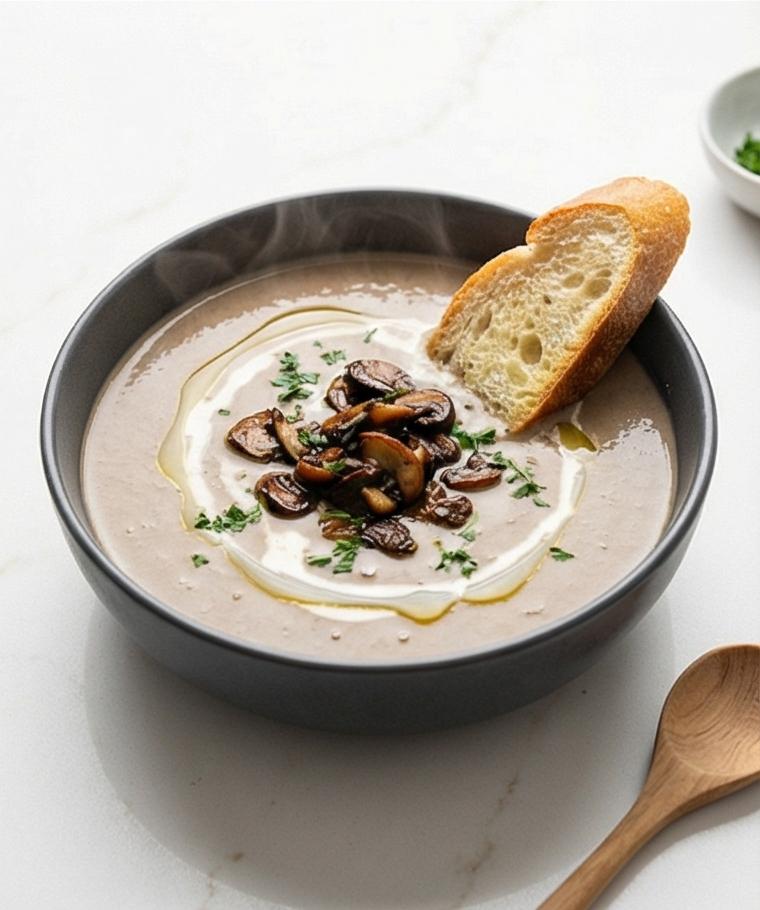
I fell for this Minestrone Recipe the first time I made it on a rainy Sunday when my kitchen smelled like simmering tomatoes and warm herbs. I keep returning to it because it is endlessly forgiving and somehow always tastes like a hug in a bowl. The recipe balances rustic vegetables, tender beans and a little pasta so it feels both homey and bright. If you like soups that are full of texture and easy to adapt, this Minestrone Recipe will become one you reach for again and again.
How This Soup Became My Rainy-Day Anchor
I remember the afternoon clearly: rain tapping the windows, a stack of overdue books, and a pantry that needed clearing. I chopped onions while the pancetta sizzled, and the kitchen filled with that warm, slightly smoky scent that makes you slow down. The tomato paste browned and perfumed the whole apartment, and when I finally ladled the first spoonful, the combination of salty Parmigiano, lemon brightness and tender beans felt like a little celebration. It was simple, honest food that made the room feel cozier. That day the Minestrone Recipe turned ordinary leftovers into something comforting and memorable, and ever since, the sound of a pot simmering takes me back to that quiet, contented moment.
Kitchen Garden Essentials: The Main Ingredients
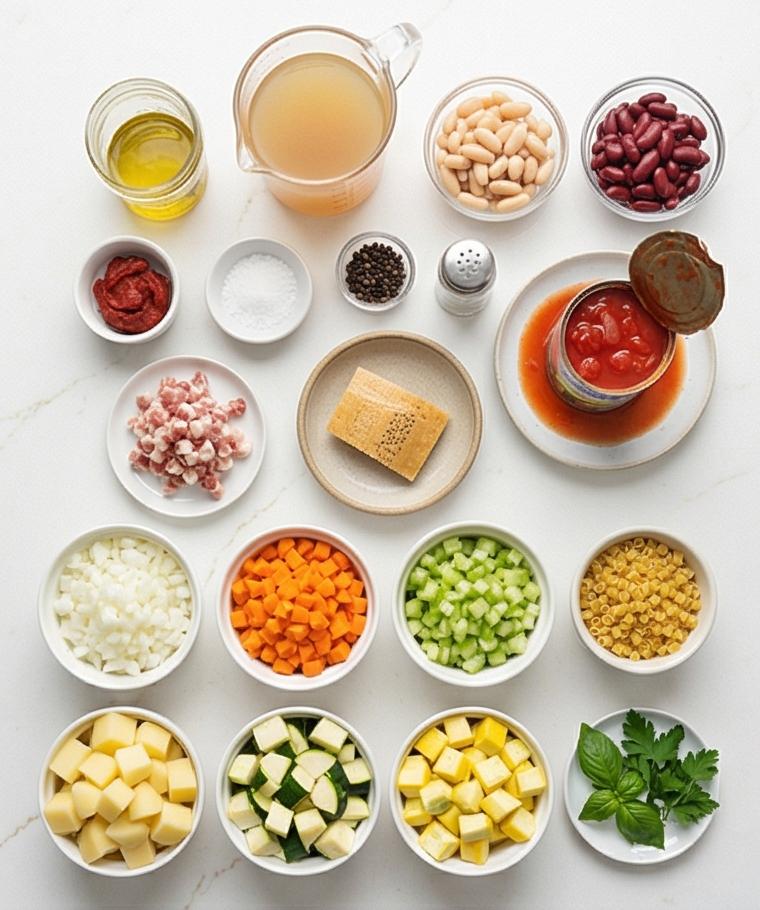
- Extra-virgin olive oil: The cooking medium that brings the aromatics together; pick a fruity bottle for finishing too. Substitute: a neutral oil plus a butter finish.
- Pancetta or smoked bacon: Adds savory depth; omit for vegetarian version and add a splash of soy sauce or smoked paprika.
- Onion, carrots, celery, fennel: The aromatic base; choose firm, fresh vegetables and dice evenly for even cooking.
- Tomatoes, broth, beans: The body of the soup; use good-quality canned tomatoes and low-sodium broth so you can season precisely.
- Potatoes, zucchini, yellow squash, green beans: Textural stars; choose firm, unblemished produce and cut to similar sizes.
Essential Kitchen Tools and Why They Matter
A few simple tools make this Minestrone Recipe effortless. A heavy-bottomed stockpot or Dutch oven gives even heat so the base aromatics cook gently without burning. A sharp chef’s knife speeds prep and keeps dice uniform, which is important so everything finishes at the same time. A wooden or heatproof spoon helps scrape up fond and avoid scratching your cookware. A fine-mesh strainer is useful for rinsing beans quickly and draining the pasta if you prefer to cook it separately. If you need alternatives, a deep skillet plus a lid can substitute for a pot, and a serrated knife will do in a pinch.
Step-by-Step Preparation Guide
Step 1: Gently render and soften the aromatics
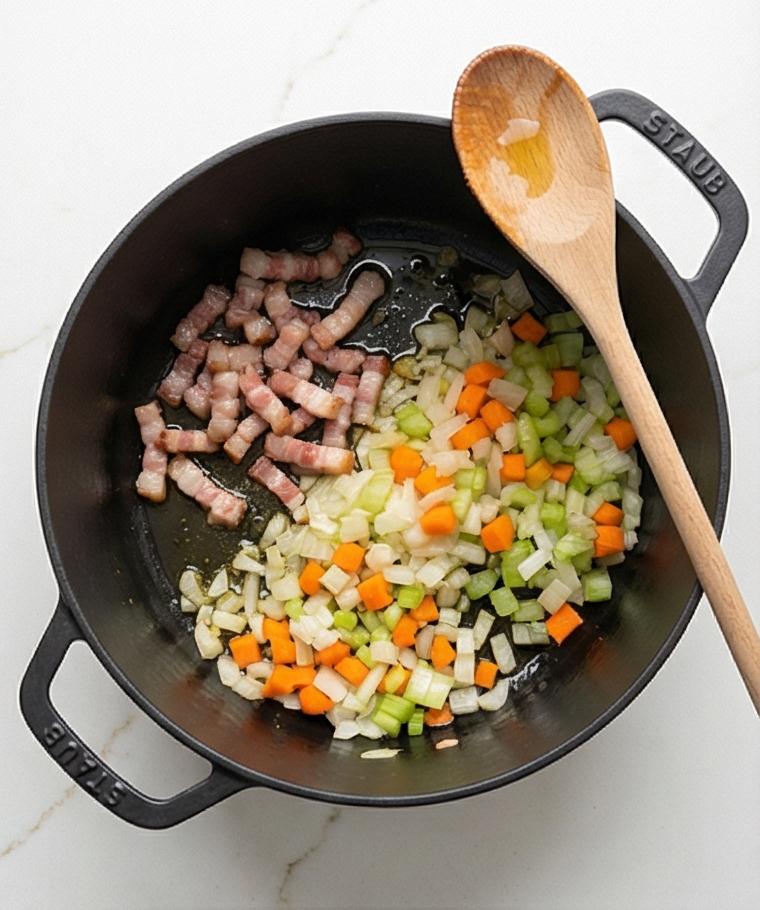
Warm the extra-virgin olive oil until it shimmers, then add the finely diced pancetta (if using) and let the fat render until the meat is lightly browned and glossy but not crisp. Add the finely diced onion, carrots, celery and fennel to the warm fat and sauté gently until the vegetables are softened and the onion turns translucent – tender, slightly glossy pieces that yield under a spoon but show no browning. This stage builds the flavor base: soft, juicy vegetable textures bathing in a warm, amber lipid sheen.
Step 2: Brighten and deepen with garlic, tomato paste and herbs
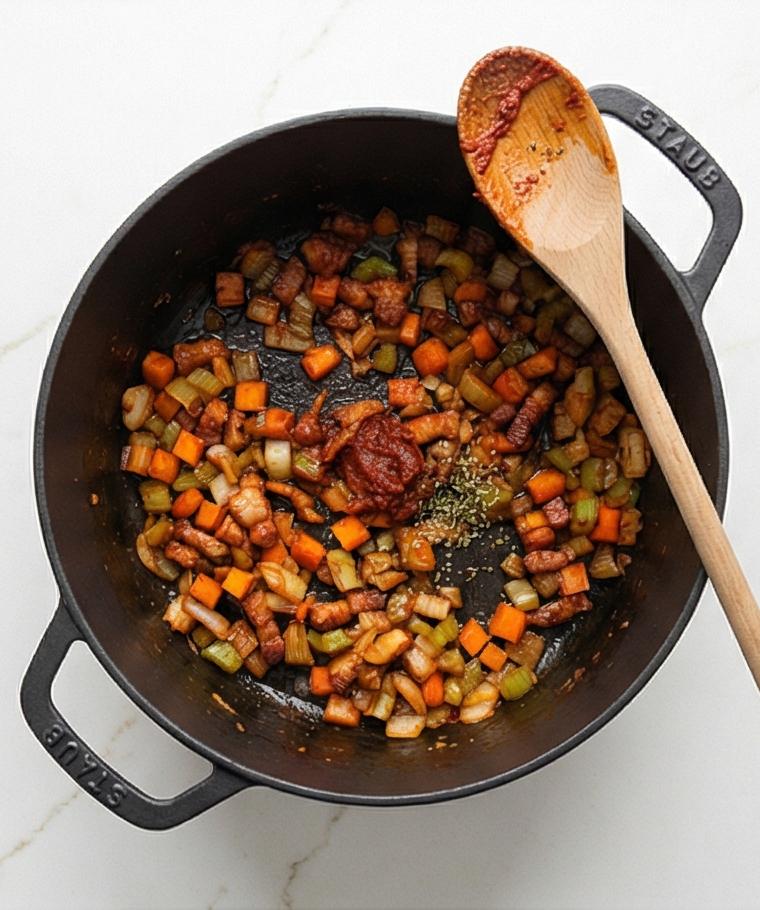
Stir in the minced garlic just long enough for it to perfume the pot, then fold in the tomato paste and the dried herbs and crushed red pepper. Cook, stirring constantly, until the tomato paste darkens and clings to the vegetables, leaving a tacky, umami-rich coating across every dice and a faint rusty tint across the surface – an aromatic, concentrated paste that signals a deeper, savory turn in the soup’s personality. Keep the wooden spoon close; you’ll see it streaked with the reddish-brown paste.
Step 3: Add the root vegetables and early summer squash, combine
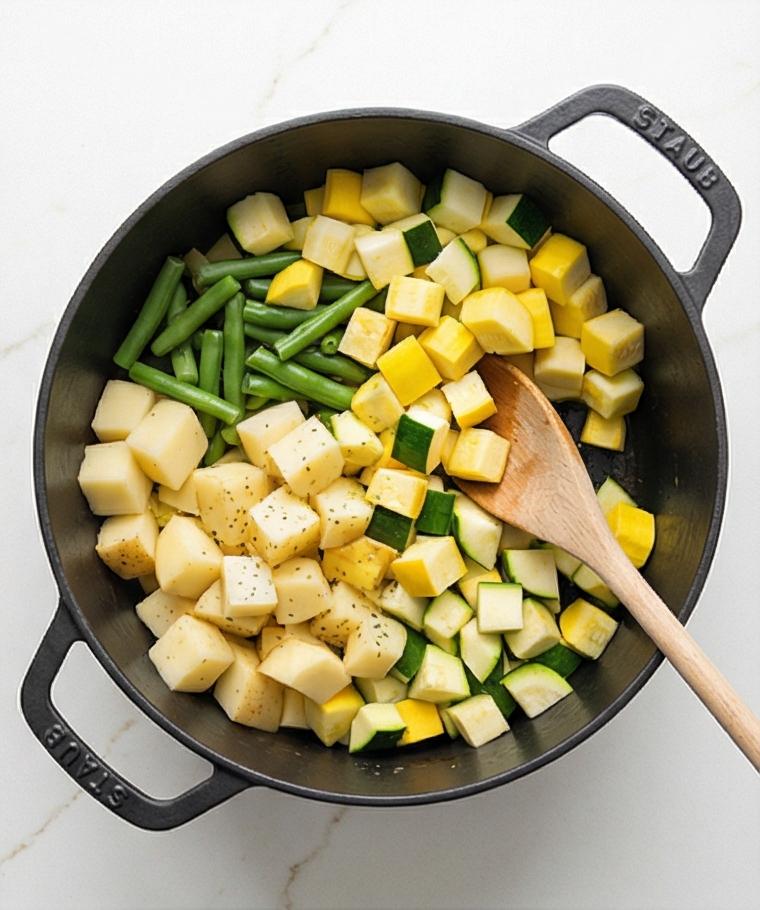
Add the cubed potatoes, zucchini, yellow squash and trimmed green beans and stir thoroughly so each cube and spear is slicked with that herb-and-tomato coating. The scene should read as a mix of soft white potato cubes, pale green zucchini, sunny yellow squash and vibrant emerald beans – all neatly cubed and showing distinct edges, their starchy and vegetal textures promising a tender bite after simmering. This is the moment the soup becomes a textured mosaic of shapes and colors.
Step 4: Pour in tomatoes, broth and beans, bring to a gentle simmer
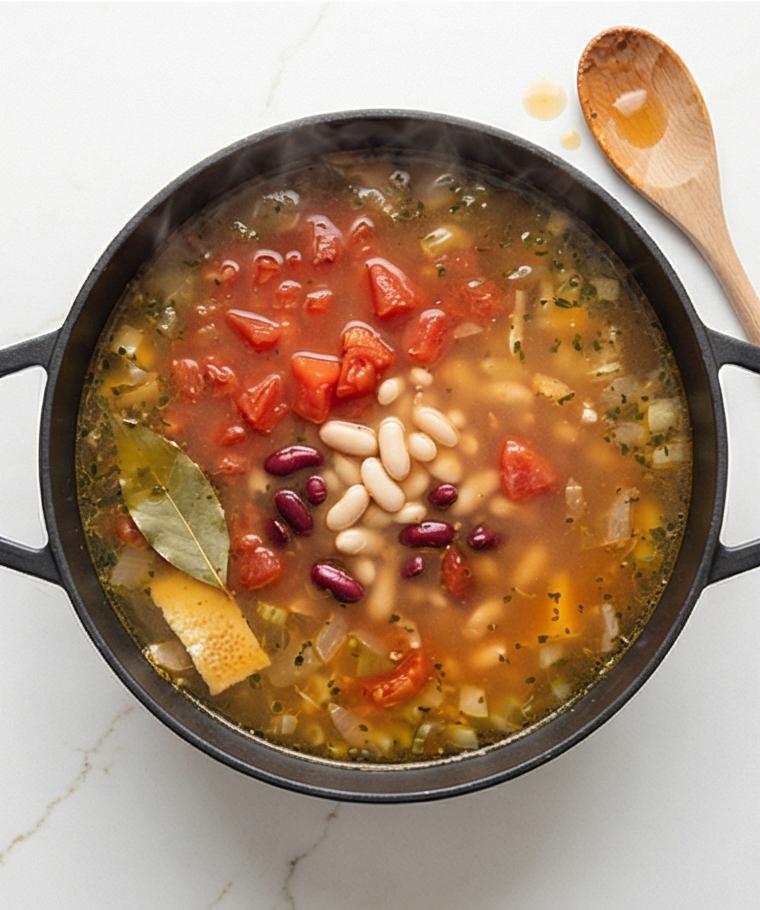
Add the canned diced tomatoes with their juices, the broth and water, then nestle in the bay leaf, the Parmesan rind and the drained cannellini and kidney beans. Scrape up any fond so the liquid is flecked with browned bits and aromatics. Increase heat until the pot reaches a gentle boil, then immediately lower to maintain a steady, quiet simmer. The pot’s surface should show slow, regular movement – floating tomato chunks, pale beans bobbing near the surface, and a clear, savory broth that’s begun to take on color and body.
Step 5: Finish with pasta, leafy greens, bright herbs and acid, then rest and serve
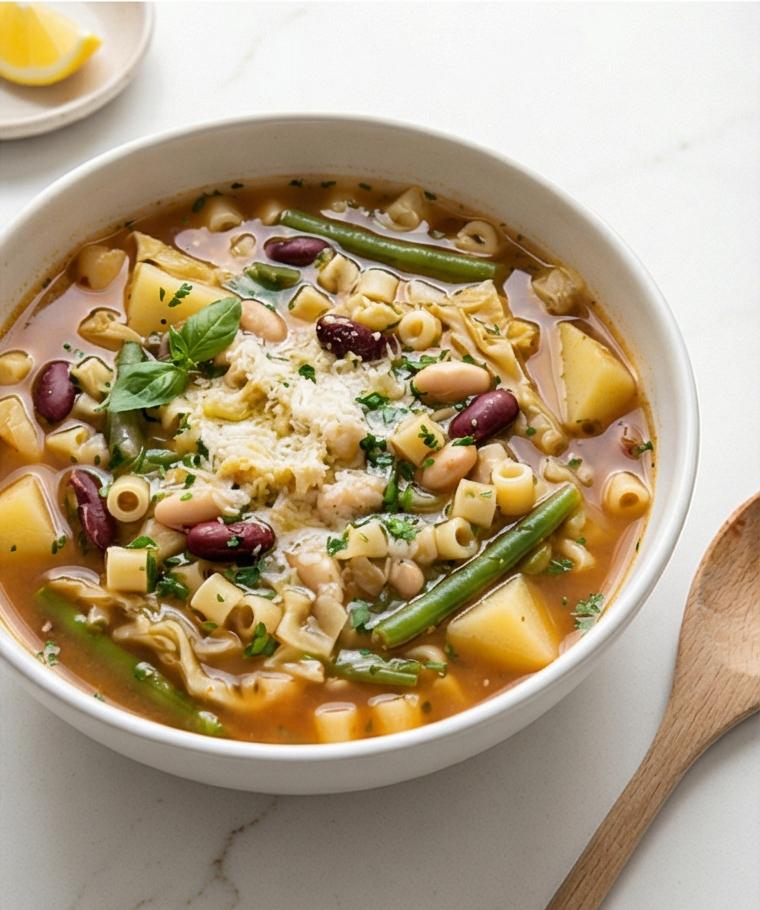
Once the potatoes and beans are tender, stir in the small pasta and the shredded cabbage (or spinach) and simmer just until the pasta is al dente and the greens have softened. Remove the bay leaf and Parmesan rind, fold in the chopped parsley and basil, then stir in fresh lemon juice to brighten. Taste and adjust salt and pepper. Let the soup rest off heat for several minutes so the textures settle and the flavors meld. Ladle into warm bowls and finish each serving with a generous grating of Parmigiano-Reggiano and a light drizzle of extra-virgin olive oil.
Making It Your Own
I often experiment with this Minestrone Recipe depending on the season. In spring I add young peas and ramps for a verdant lift. In late summer I swap the green beans for roasted bell peppers and add a splash of sherry vinegar for brightness.
For a vegetarian version I skip the pancetta and Parmesan rind and finish with a tablespoon of miso dissolved in a ladle of broth to add that savory element. For a heartier winter bowl, stir in kale and use small pearl barley instead of pasta and cook until tender. Each tweak changes the personality but keeps the soul of the soup intact.
How to Serve
When I host, I ladle the Minestrone Recipe into warmed bowls and set out a small grater of Parmigiano-Reggiano and a bottle of extra-virgin olive oil. Offer crusty bread and a simple green salad so guests can build their plates. For a casual family meal, serve bigger bowls with extra cheese and a bowl of lemon wedges on the side.
To stretch the recipe for a larger group, cook the pasta separately and let guests add their portion so the broth stays silky and not overly thickened. For smaller servings, place the soup in shallow bowls and finish with herbs and a drizzle of oil.
Storage and Reheating Tips
This soup stores beautifully. Let it cool to room temperature, then transfer to airtight containers and refrigerate for up to 4 days. If you plan to keep leftovers longer, freeze in portioned containers for up to 3 months; leave out the pasta if freezing and add fresh when reheating.
To reheat, warm gently on the stove over low heat so the vegetables stay tender. If the soup has thickened in the fridge, add a splash of broth or water while reheating. Finish with a squeeze of lemon and a fresh sprinkle of parsley to revive the flavors.
Common Mistakes and How to Avoid Them
Undercooking or overcooking the vegetables is common. Cut vegetables to similar sizes and simmer gently so everything finishes at the same time. Keep an eye on the potatoes; they should be tender but not falling apart.
Another frequent issue is over-salting. Because the recipe uses a Parmesan rind and canned beans, season gradually and taste near the end. If you skip the rind, you may need a bit more salt or an umami substitute.
Take It for a Spin
If you make this Minestrone Recipe, try doubling the herbs and finishing with lemon for an unexpectedly bright result. The soup is forgiving, so have fun with substitutions and make it your own.
Frequently Asked Questions
- What is the best pasta to use in Minestrone Recipe? – Small shapes like ditalini, small shells or elbow macaroni work best because they mingle with the vegetables and beans without overpowering the bowl.
- Can I make this Minestrone Recipe vegetarian? – Yes, omit the pancetta and Parmesan rind and boost umami with a spoonful of miso or a splash of soy sauce when finishing.
- How long does leftover Minestrone Recipe keep? – Refrigerated in an airtight container, it keeps well for up to 4 days; frozen for up to 3 months if you omit the pasta before freezing.
- Can I use different beans in this Minestrone Recipe? – Absolutely, chickpeas or great northern beans are good substitutes and change the texture slightly.
- Do I have to add the Parmesan rind to this Minestrone Recipe? – You do not have to, but it adds a savory depth; if you skip it, taste and adjust salt and herbs accordingly.
Minestrone Recipe
Make Minestrone Recipe tonight: cook Minestrone Recipe in one pot for a cozy, veggie-packed soup in 60 minutes.
Ingredients
Instructions
Step 1: Gently render and soften the aromatics
Warm the extra-virgin olive oil until it shimmers, then add the finely diced pancetta (if using) and let the fat render until the meat is lightly browned and glossy but not crisp. Add the finely diced onion, carrots, celery and fennel to the warm fat and sauté gently until the vegetables are softened and the onion turns translucent — tender, slightly glossy pieces that yield under a spoon but show no browning. This stage builds the flavor base: soft, juicy vegetable textures bathing in a warm, amber lipid sheen.
Step 2: Brighten and deepen with garlic, tomato paste and herbs
Stir in the minced garlic just long enough for it to perfume the pot, then fold in the tomato paste and the dried herbs and crushed red pepper. Cook, stirring constantly, until the tomato paste darkens and clings to the vegetables, leaving a tacky, umami-rich coating across every dice and a faint rusty tint across the surface — an aromatic, concentrated paste that signals a deeper, savory turn in the soup’s personality. Keep the wooden spoon close; you’ll see it streaked with the reddish-brown paste.
Step 3: Add the root vegetables and early summer squash, combine
Add the cubed potatoes, zucchini, yellow squash and trimmed green beans and stir thoroughly so each cube and spear is slicked with that herb-and-tomato coating. The scene should read as a mix of soft white potato cubes, pale green zucchini, sunny yellow squash and vibrant emerald beans — all neatly cubed and showing distinct edges, their starchy and vegetal textures promising a tender bite after simmering. This is the moment the soup becomes a textured mosaic of shapes and colors.
Step 4: Pour in tomatoes, broth and beans, bring to a gentle simmer
Add the canned diced tomatoes with their juices, the broth and water, then nestle in the bay leaf, the Parmesan rind and the drained cannellini and kidney beans. Scrape up any fond so the liquid is flecked with browned bits and aromatics. Increase heat until the pot reaches a gentle boil, then immediately lower to maintain a steady, quiet simmer. The pot’s surface should show slow, regular movement — floating tomato chunks, pale beans bobbing near the surface, and a clear, savory broth that’s begun to take on color and body.
Step 5: Finish with pasta, leafy greens, bright herbs and acid, then rest and serve
Once the potatoes and beans are tender, stir in the small pasta and the shredded cabbage (or spinach) and simmer just until the pasta is al dente and the greens have softened. Remove the bay leaf and Parmesan rind, fold in the chopped parsley and basil, then stir in fresh lemon juice to brighten. Taste and adjust salt and pepper. Let the soup rest off heat for several minutes so the textures settle and the flavors meld. Ladle into warm bowls and finish each serving with a generous grating of Parmigiano-Reggiano and a light drizzle of extra-virgin olive oil.
Notes
- For a vegetarian version, omit pancetta and Parmesan rind and add a tablespoon of miso for umami.
- If freezing, leave out the pasta and add fresh pasta when reheating.
- Taste for salt near the end because canned beans and Parmesan rind add sodium.
- Use firm, similarly sized vegetable cuts so everything cooks evenly.
- Finish each bowl with fresh lemon and Parmigiano-Reggiano for brightness and depth.