Tiramisu Recipe has been one of my kitchen go-tos for years, and I still get the same little thrill when I pull the dish from the fridge. I stumbled into this version after experimenting with zabaglione and mascarpone on a rainy afternoon, and now my friends always ask for the Tiramisu Recipe whenever they visit. It’s a dessert that feels fancy without being fussy, with coffee-soaked ladyfingers and a cloudlike mascarpone mousse that melts on the tongue. If you love coffee and something just slightly boozy, this Tiramisu Recipe will probably become a regular in your rotation.
How This Recipe Became My Cozy-Weather Favorite
The first time I made this Tiramisu Recipe I was trying to cheer up a friend who had a long week. The kitchen smelled like warm coffee and Marsala, and the whisking of egg yolks into a glossy zabaglione felt almost meditative. I remember pressing the first layer of ladyfingers into the dish and thinking how strange it was that something so simple could feel so luxurious. When we finally sat down to eat, the contrast of bittersweet cocoa, custardy mascarpone, and a slight wine aroma made us both close our eyes and laugh—the kind of reaction that makes a recipe feel like a small celebration. Since then I’ve made it for birthdays, slow Sunday dinners and nights when I just need a little comfort.
Main Ingredients and Why They Matter
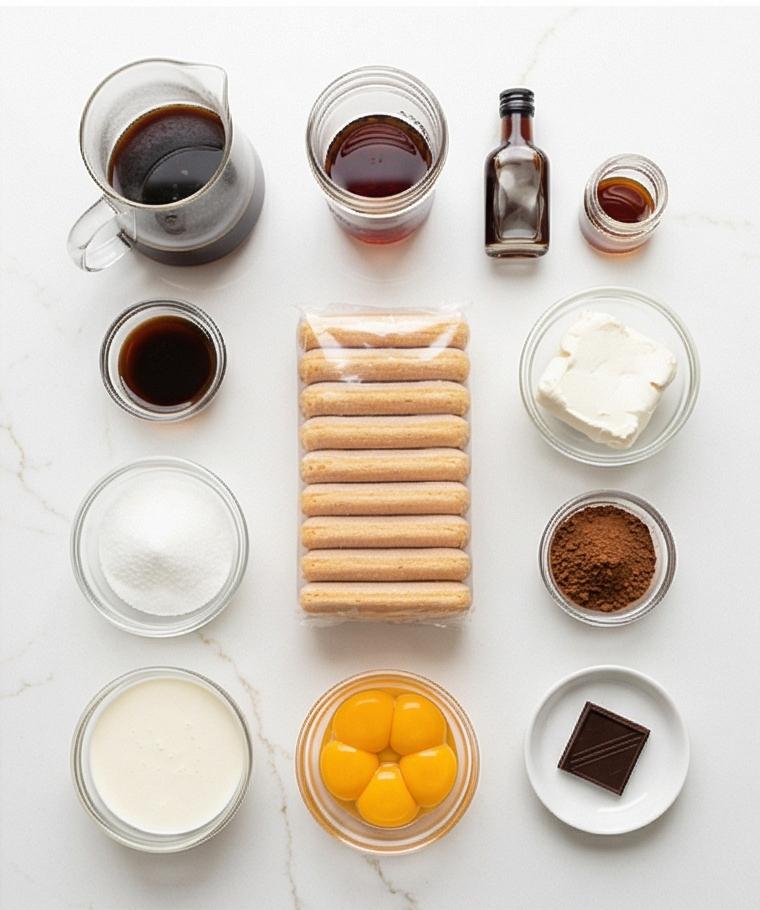
- Espresso or very strong coffee: The backbone of flavor that soaks the ladyfingers. Substitute with strong brewed coffee if you don’t have an espresso machine; use fresh-brewed for the best aroma.
- Marsala wine: Adds a floral, nutty depth to the soak and zabaglione; dry sherry or sweet Marsala both work, or use extra coffee liqueur if you skip wine.
- Mascarpone: The silky base of the cream; pick a high-quality, full-fat mascarpone and let it sit at room temperature briefly so it’s pliable.
- Egg yolks and sugar: The zabaglione creates richness and structure; use very fresh eggs. For a nonalcoholic option you can reduce the alcohol and increase vanilla.
- Heavy cream: Whipped to soft-medium peaks to lighten the mascarpone into a mousse; cold cream whips best.
- Savoiardi ladyfingers: Crisp, dry cookies that soak without dissolving; if you can’t find them, a crisp sponge or store-bought sponge fingers can work.
Essential Kitchen Tools and Why They Help
A few simple tools make this Tiramisu Recipe go smoothly. Whisking the zabaglione needs a good, sturdy whisk or a handheld electric mixer if you prefer; a wide, shallow bowl helps you heat and whisk the yolks evenly. A chilled mixing bowl for whipping cream gives you faster, more stable peaks. An offset spatula or silicone spatula helps spread the cream without tearing the soaked ladyfingers. Finally, a 9×13-inch rectangular dish is ideal for classic layers, though a smaller pan works if you want deeper layers.
- Wide, shallow bowl: For the coffee soak and for whisking the yolks.
- Chilled mixing bowl: Helps the heavy cream whip to medium-firm peaks.
- Offset spatula or silicone spatula: For smooth, even spreading of the mascarpone mousse.
- Fine-mesh sieve: For an even dusting of cocoa.
Step-by-Step Preparation Guide
Step 1: Make the coffee-marsala soak
Combine the cooled strong espresso with 1/3 cup Marsala, the optional dark rum or coffee liqueur, and a splash of vanilla in a wide, shallow glass or ceramic bowl until the liquids are evenly blended. Let the mixture come fully to room temperature so the savoiardi will be moistened but never soggy; this bowl should sit uncovered while you move on to the egg work, a wide shallow vessel holding a dark, glossy liquid with gentle surface ripples.
Step 2: Cook the zabaglione to ribbons
Whisk egg yolks, half the sugar, a pinch of fine salt and the remaining measured Marsala together until smooth, then continue whisking off-heat after heating until the mixture becomes pale, thick and ribbony. The result is a warm, glossy zabaglione that falls in slow, velvety ribbons – thick but still pourable and glossy, with a sheen like soft custard. Set it aside to cool until barely warm so it won’t break the mascarpone.
Step 3: Soften mascarpone and marry with zabaglione
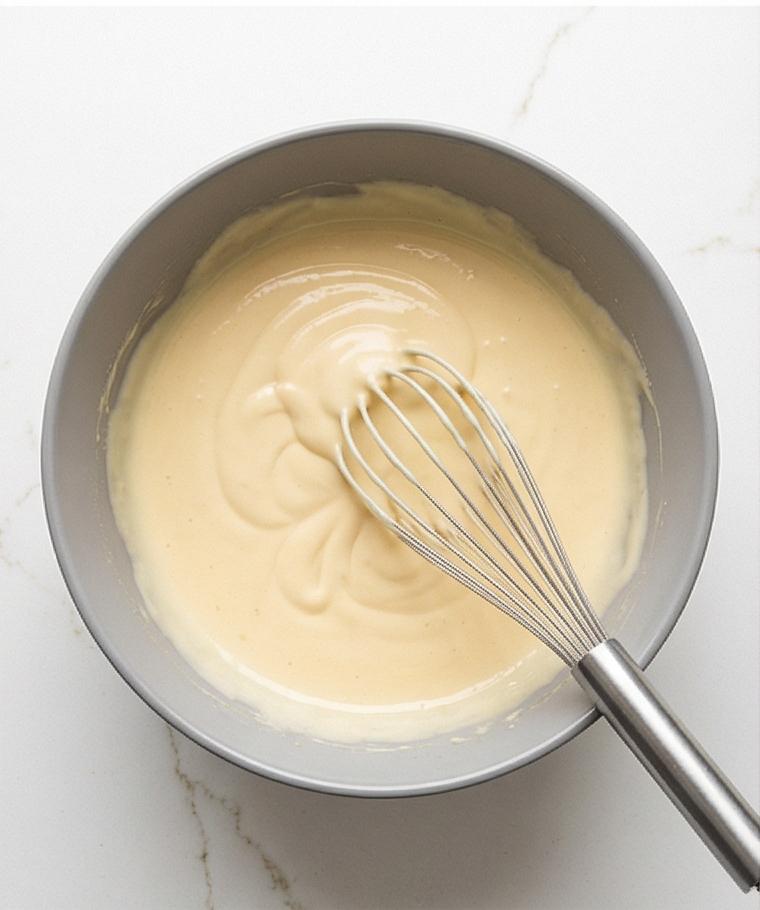
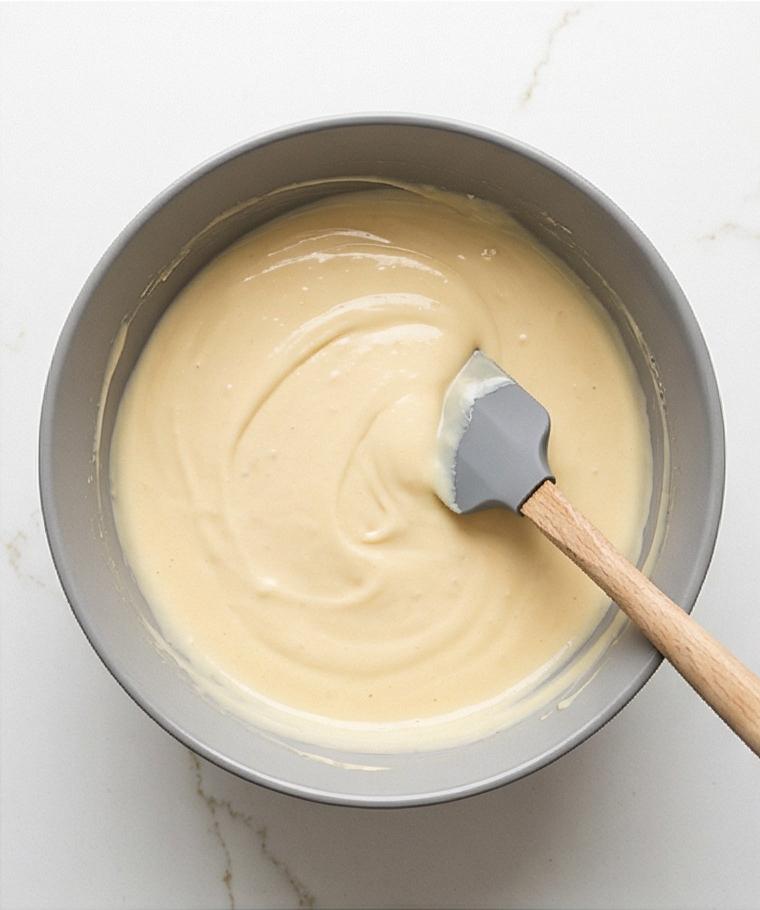
Place the cold-but-pliable mascarpone into a single modern matte grey mixing bowl and gently fold the slightly warm zabaglione in two to three additions, stirring slowly until the blend is silky and lump-free. The finished mixture should read as silky, dense cream – smooth ivory with a faint gold cast from the egg – resting in the same matte grey bowl with a small rubber spatula showing gentle sweep marks across the surface.
Step 4: Whip cream and create the mousse texture
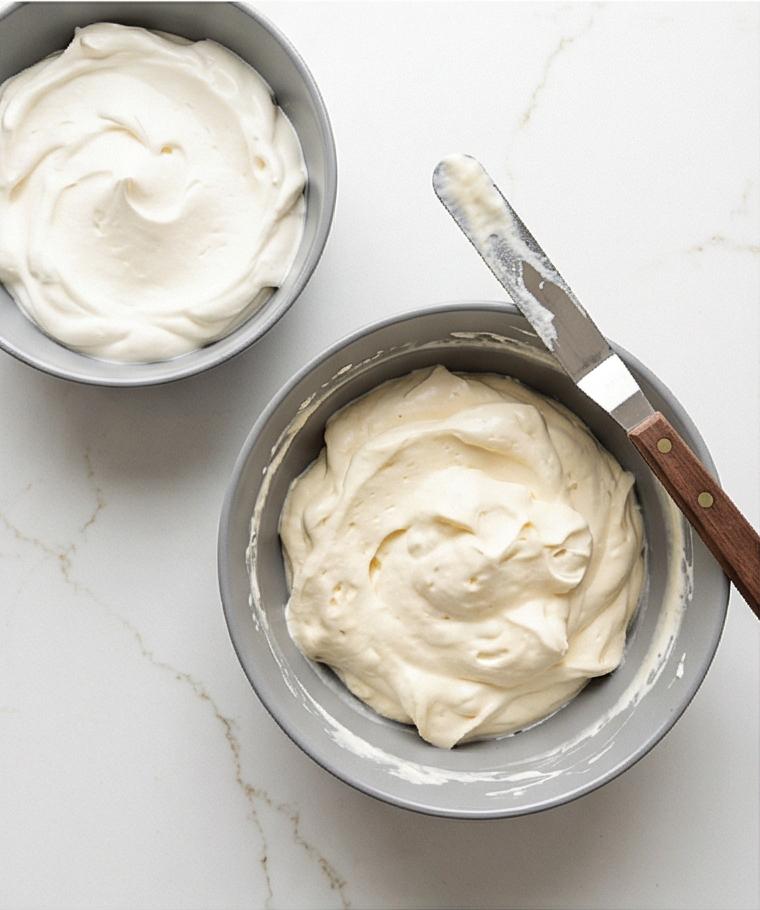
Chill a separate bowl and whip the cold heavy cream with the remaining sugar and vanilla to medium–firm peaks: glossy soft peaks that still yield slightly at the tips. Fold one-third of this whipped cream into the mascarpone base to lighten it, then fold in the rest in two additions using broad strokes so the final texture is a pillowy, dense mousse – airy but still held together, satin-smooth with visible soft folds and airy pockets. Display the partially folded bowl with the whisk resting nearby to show the staged texture.
Step 5: Arrange for assembly and dip the ladyfingers
Quickly restir the coffee soak so flavors are even. Working with one or two savoiardi at a time, dip each cookie about one second per side so the exterior is moist but the interior remains slightly firm; shake off excess over the bowl and arrange a snug single layer in the rectangular 9×13 dish. Keep the dipping bowl, open package of ladyfingers, the grey mixing bowl of cream and an offset spatula close by — everything staged and ready for layering.
Step 6: Build the layers and first dusting
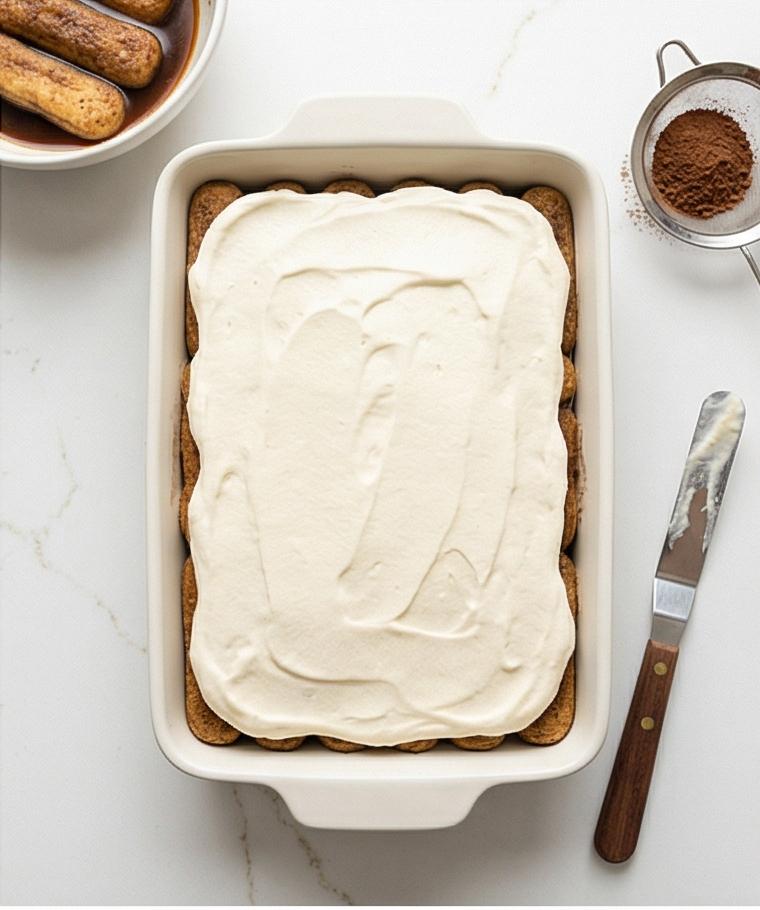
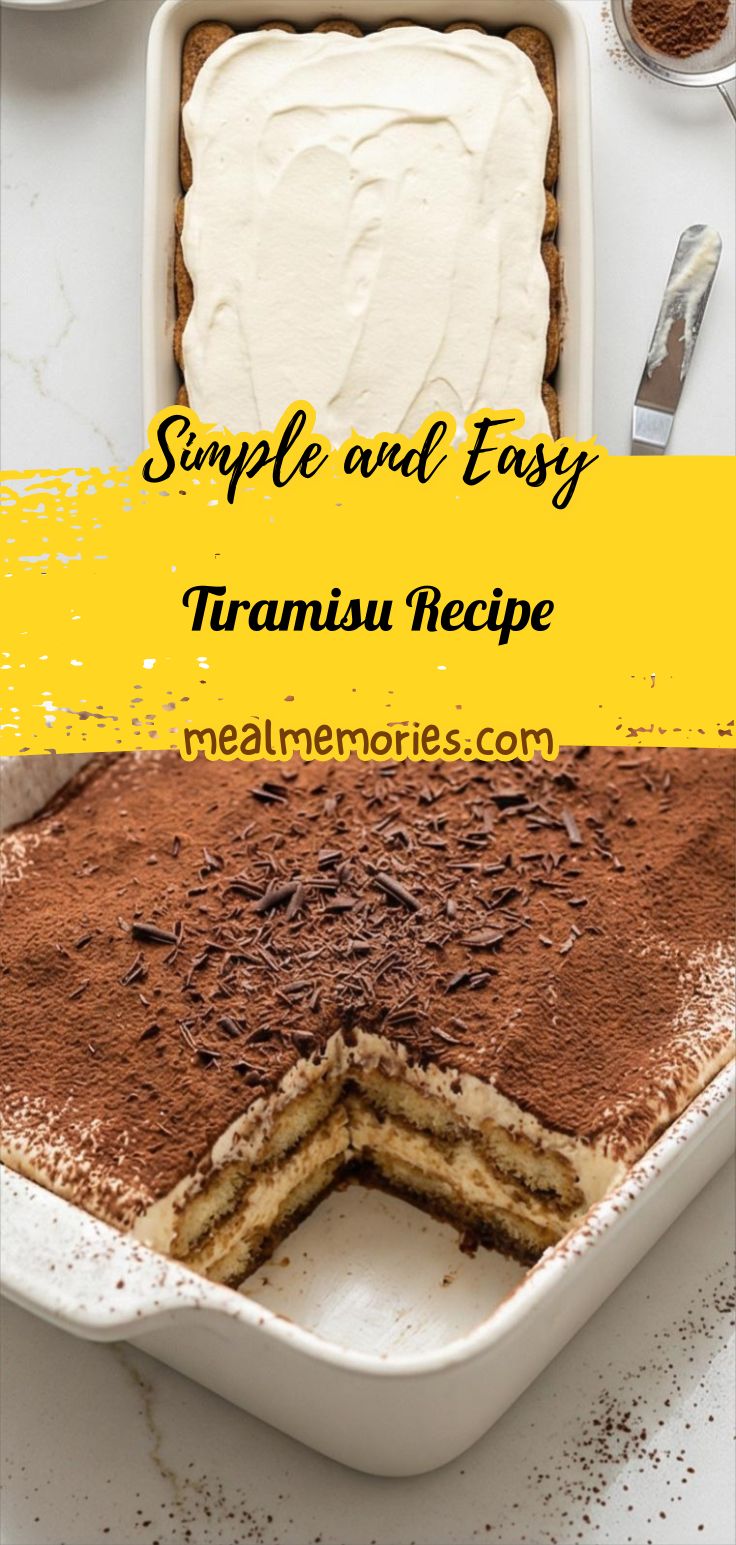
Spoon half of the mascarpone mousse over the first ladyfinger layer and spread to an even 1/2–3/4-inch thickness with the spatula, smooth the surface, then dust a generous, even veil of unsweetened cocoa through a fine sieve. Repeat the quick dipping and arrange the remaining savoiardi into a second snug layer, then spread the remaining cream evenly on top and smooth or create soft swoops as you prefer. The pan should read as an even, rectangular block of cream–cookie–cream with a thin cocoa veil on the mid-layer.
Step 7: Chill until set
Cover the dish lightly and refrigerate for at least six hours (ideally 8–24 hours) so the ladyfingers soften into a cake-like interior while the cream firms into a mousse that still feels yielding to the touch when cold.
Step 8: Final finish before serving
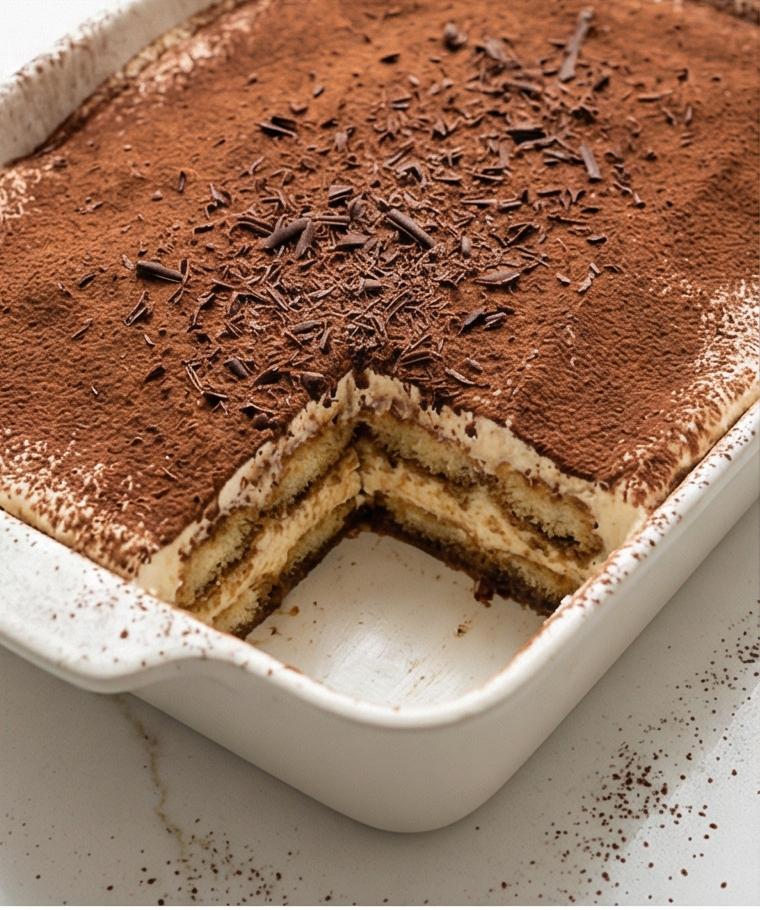
Just before serving, dust the top generously and evenly with unsweetened cocoa through the fine sieve, and optionally shave dark chocolate over the surface and very sparingly drizzle an extra tablespoon or two of Marsala or rum for an aromatic lift. Use a hot, wiped knife for clean cuts when serving — the surface should show a velvety cocoa cloak with delicate chocolate curls and a slight glossy sheen where the shavings land.
Step 9: Storage and safety notes
Cover and refrigerate leftovers promptly and consume within 2–3 days; because this dessert contains eggs and dairy, do not leave it at room temperature for more than 1–2 hours in total. Tiramisu does not freeze well – refrigeration preserves the mousse texture and the soft, soaked ladyfingers.
Making It Your Own
I like to tweak this Tiramisu Recipe depending on the season. In summer I swap in a splash of orange liqueur and add a few thin orange zest ribbons for brightness. For a chocolate-forward take I dissolve a tablespoon of cocoa into the coffee soak and use a dark chocolate shaving layer between the creams. For dairy-free friends I’ve experimented with coconut cream and eggless custard, and though it’s different it still captures the coffee-soaked texture. If you prefer less alcohol, reduce the Marsala in the soak and bump up the vanilla and coffee liqueur to keep the aroma balanced.
How to Serve
If you’re hosting, assemble the tiramisu in a 9×13 dish for a crowd or use small individual glasses for a more elegant presentation. For a dinner party of eight, a single 9×13 pan yields generous slices; for a larger gathering, halve the thickness and bake two pans. Dust cocoa right before serving so it looks fresh and lift the look with a few curled shavings of dark chocolate. Plate slices on chilled dessert plates and serve with freshly brewed espresso or a small glass of sweet Marsala for pairing.
Storage and Reheating Tips
Cover the tiramisu well and keep it refrigerated for up to 2–3 days; beyond that the ladyfingers will continue to soften and the texture changes. Because this dessert contains eggs and dairy, do not leave it at room temperature for more than 1–2 hours in total.
Tiramisu does not respond well to freezing – the cream can separate and the texture suffers. If you must make it ahead, assemble and chill for at least six hours, then hold in the refrigerator no more than 24 hours before serving for best texture.
Common Mistakes and How to Avoid Them
Taking shortcuts with the coffee soak can result in bland layers – use freshly brewed, strong espresso and don’t oversoak the ladyfingers. Dip each savoiardi quickly, just a second per side, and keep them slightly firm in the center.
Overwhipping the cream or adding warm zabaglione to very cold mascarpone can cause a grainy texture. Make sure the zabaglione is barely warm and fold gently; whip the cream to soft-medium peaks, not rock hard.
Ready to Try It?
Give this Tiramisu Recipe a shot this weekend. It rewards patience and tastes even better the next day, so plan ahead and enjoy the small ceremony of assembling and sharing it with someone you love.
Frequently Asked Questions.
- Can I make this Tiramisu Recipe without raw eggs? – Yes, you can use a cooked custard or an eggless sabayon made with a cornstarch-thickened pastry cream, though the texture will be slightly different.
- How long can I store leftover tiramisu? – Store covered in the refrigerator and enjoy within 2-3 days for best texture and safety.
- Can I substitute the Marsala? – Yes, dry sherry or a coffee liqueur can work; for no alcohol, increase vanilla and use extra coffee.
- Why did my mascarpone mixture become grainy? – It was likely too cold or the zabaglione was too hot; let the zabaglione cool slightly and fold gently.
- Can I make tiramisu ahead of time? – Absolutely, make it a day ahead and chill 8-24 hours for ideal melding of flavors.
Tiramisu Recipe
Make Tiramisu Recipe tonight: soak ladyfingers, whip mascarpone mousse, and chill for a silky, classic dessert.
Ingredients
Instructions
Step 1: Make the coffee-marsala soak
Combine the cooled strong espresso with 1/3 cup Marsala, the optional dark rum or coffee liqueur, and a splash of vanilla in a wide, shallow glass or ceramic bowl until the liquids are evenly blended. Let the mixture come fully to room temperature so the savoiardi will be moistened but never soggy; this bowl should sit uncovered while you move on to the egg work, a wide shallow vessel holding a dark, glossy liquid with gentle surface ripples.
Step 2: Cook the zabaglione to ribbons
Whisk egg yolks, half the sugar, a pinch of fine salt and the remaining measured Marsala together until smooth, then continue whisking off-heat after heating until the mixture becomes pale, thick and ribbony. The result is a warm, glossy zabaglione that falls in slow, velvety ribbons — thick but still pourable and glossy, with a sheen like soft custard. Set it aside to cool until barely warm so it won’t break the mascarpone.
Step 3: Soften mascarpone and marry with zabaglione
Place the cold-but-pliable mascarpone into a single modern matte grey mixing bowl and gently fold the slightly warm zabaglione in two to three additions, stirring slowly until the blend is silky and lump-free. The finished mixture should read as silky, dense cream — smooth ivory with a faint gold cast from the egg — resting in the same matte grey bowl with a small rubber spatula showing gentle sweep marks across the surface.
Step 4: Whip cream and create the mousse texture
Chill a separate bowl and whip the cold heavy cream with the remaining sugar and vanilla to medium–firm peaks: glossy soft peaks that still yield slightly at the tips. Fold one-third of this whipped cream into the mascarpone base to lighten it, then fold in the rest in two additions using broad strokes so the final texture is a pillowy, dense mousse — airy but still held together, satin-smooth with visible soft folds and airy pockets. Display the partially folded bowl with the whisk resting nearby to show the staged texture.
Step 5: Arrange for assembly and dip the ladyfingers
Quickly restir the coffee soak so flavors are even. Working with one or two savoiardi at a time, dip each cookie about one second per side so the exterior is moist but the interior remains slightly firm; shake off excess over the bowl and arrange a snug single layer in the rectangular 9×13 dish. Keep the dipping bowl, open package of ladyfingers, the grey mixing bowl of cream and an offset spatula close by — everything staged and ready for layering.
Step 6: Build the layers and first dusting
Spoon half of the mascarpone mousse over the first ladyfinger layer and spread to an even 1/2–3/4-inch thickness with the spatula, smooth the surface, then dust a generous, even veil of unsweetened cocoa through a fine sieve. Repeat the quick dipping and arrange the remaining savoiardi into a second snug layer, then spread the remaining cream evenly on top and smooth or create soft swoops as you prefer. The pan should read as an even, rectangular block of cream–cookie–cream with a thin cocoa veil on the mid-layer.
Step 7: Chill until set
Cover the dish lightly and refrigerate for at least six hours (ideally 8–24 hours) so the ladyfingers soften into a cake-like interior while the cream firms into a mousse that still feels yielding to the touch when cold.
Step 8: Final finish before serving
Just before serving, dust the top generously and evenly with unsweetened cocoa through the fine sieve, and optionally shave dark chocolate over the surface and very sparingly drizzle an extra tablespoon or two of Marsala or rum for an aromatic lift. Use a hot, wiped knife for clean cuts when serving — the surface should show a velvety cocoa cloak with delicate chocolate curls and a slight glossy sheen where the shavings land.
Step 9: Storage and safety notes
Cover and refrigerate leftovers promptly and consume within 2–3 days; because this dessert contains eggs and dairy, do not leave it at room temperature for more than 1–2 hours in total. Tiramisu does not freeze well — refrigeration preserves the mousse texture and the soft, soaked ladyfingers.
Notes
- Use very fresh eggs and handle the zabaglione gently to avoid curdling.
- Let mascarpone warm slightly so it folds smoothly with the zabaglione.
- Don’t oversoak the ladyfingers; quick dips preserve texture.
- Chill at least 6 hours, ideally 8-24 hours, for best flavor melding.
- Store covered in the refrigerator and consume within 2-3 days.