Creamed Spinach Recipe is one of those comforting sides that feels both humble and a little luxurious. I keep coming back to this Creamed Spinach Recipe when I want something green that pairs with roasted meats or anchors a cozy weeknight meal. The first time I made this Creamed Spinach Recipe I was surprised how simple technique and a handful of dairy transform spinach into something silky and snappy. You get bright green flecks suspended in a pale, glossy cream that somehow tastes like home and a restaurant all at once.
How This Recipe Became My Rainy-Day Favorite
The first drizzle of butter and the scent of onion sweating in the pan can still take me back to a rainy Sunday when I needed something warm and honest on the table. I remember rinsing two pounds of spinach until the leaves smelled almost like the garden after a storm, then plunging them into ice water so they snapped back with a bright, herbaceous pop. As I squeezed the bundles, the kitchen filled with a nostalgic hush; there is something very tactile and calming about compressing leaves into compact bundles and watching them transform. Folding vibrant green into a satin cream felt like painting, and the first bite landed somewhere between comfort and surprise. That memory keeps me returning to this recipe on grey afternoons and on nights when I want to feel quietly celebrated.
Spotlight on the Main Ingredients
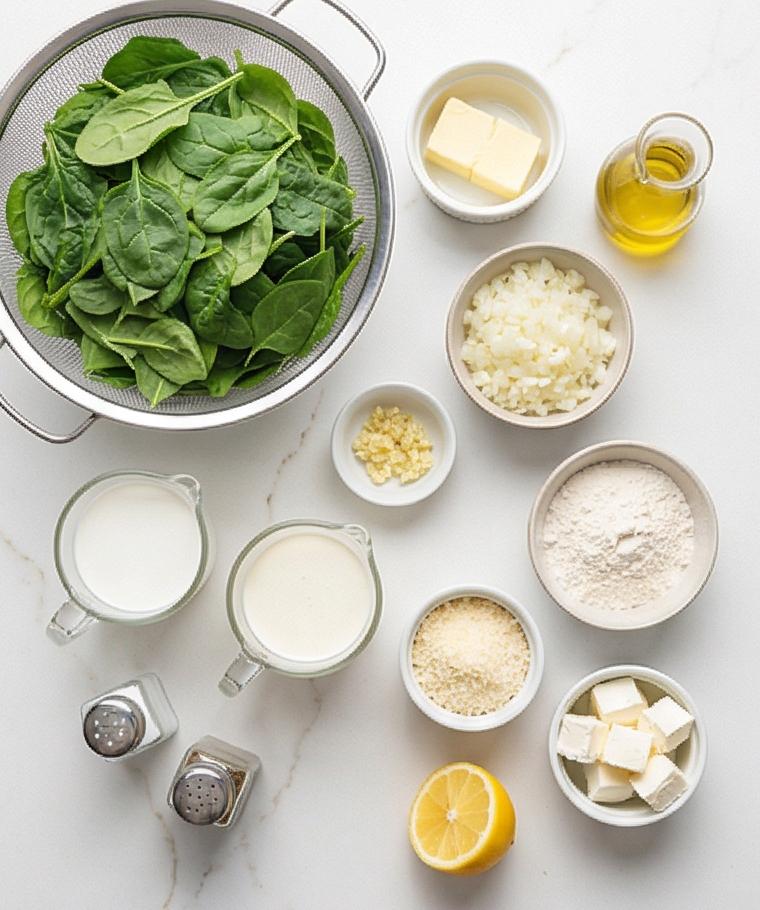
- Fresh Spinach: The backbone of the dish. Choose firm, vibrant leaves and remove tough stems. Baby spinach works but you may need less blanching time.
- Unsalted Butter: Adds richness and helps form the roux. Substitute with more olive oil for a lighter finish.
- Extra-Virgin Olive Oil: Balances the butter and adds flavor. Use a neutral oil if you prefer.
- Yellow Onion and Garlic: Provide the aromatic base. Shallots can be a milder substitute.
- All-Purpose Flour: Thickens the cream. For a gluten-free option use a cornstarch slurry.
- Whole Milk and Heavy Cream: Create the silky sauce. Use half-and-half for a lighter result but expect less richness.
- Parmesan and Cream Cheese: Bring savory depth and creaminess. Omit cream cheese for a lighter texture.
Essential Kitchen Tools
A quick word on tools before you begin. A few simple implements make this recipe effortless and help you get the velvety texture you want.
- Large pot or blanching pan: For boiling and shocking the spinach. If you lack one, use your largest saucepan.
- Ice bath bowl: Stops cooking instantly to preserve color and texture.
- Colander and clean kitchen towel or cheesecloth: For draining and squeezing out excess water.
- Shallow sauté pan: Helps cook the roux and finish the sauce evenly. A wide skillet works too.
- Whisk and wooden spatula: Whisk for smoothing dairy into the roux; spatula for folding in spinach.
- Fine grater and knife: For Parmesan and mincing aromatics. A microplane speeds grating.
Step-by-Step Preparation Guide
Step 1: Prepare and Blanch the Spinach
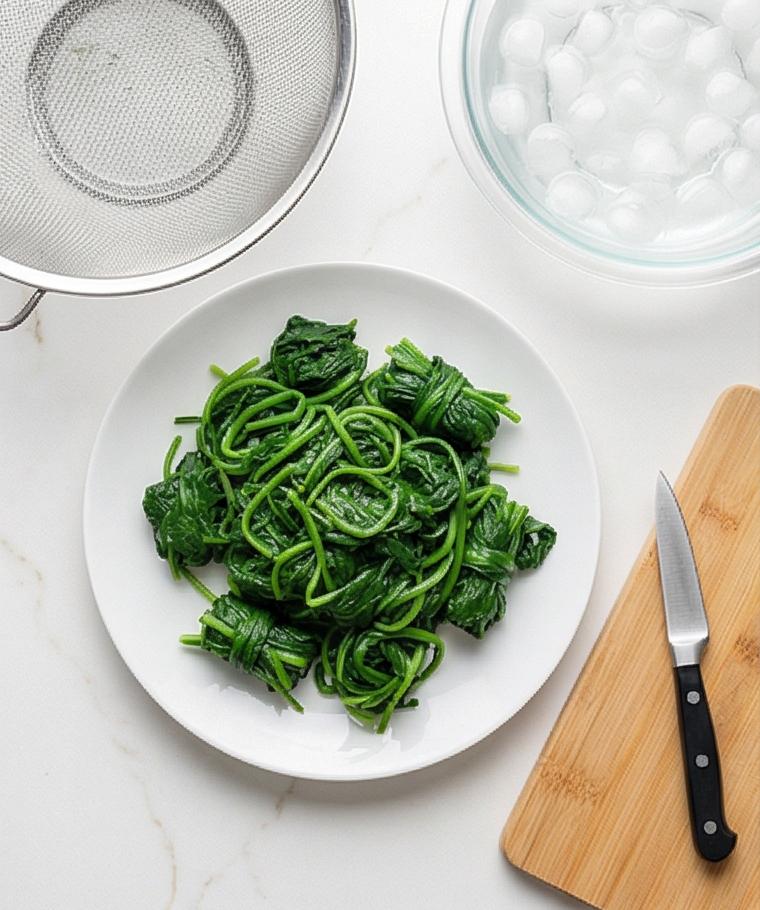
Work quickly and confidently: after rinsing and draining the leaves, remove any large, tough stems so only tender leaves remain. Bring batches of the spinach to a rolling boil briefly, then plunge immediately into ice water to stop the cooking; drain thoroughly in a colander and squeeze handfuls firmly until the spinach feels dry and forms tight bundles. Transfer those bundles to a cutting board and finely chop until the texture is uniform and easily foldable — the leaves should look vibrant, glossy, and compact, not watery.
Step 2: Build the Aromatic Cream Base
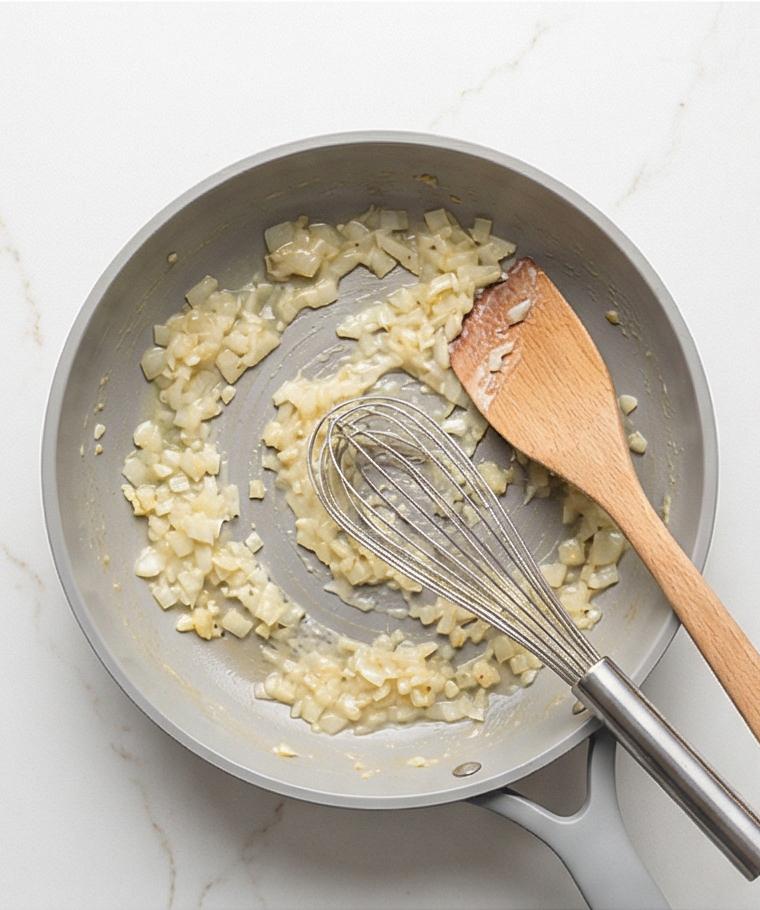
On the work surface set a shallow matte grey ceramic sauté pan (no stove visible) and place a small dish of unsalted butter and a tiny glass cruet of olive oil nearby; melt the butter into the oil so the fat becomes glossy and shimmering. Add finely minced yellow onion and sweat until translucent and tender, then stir in minced garlic until just fragrant — the onions should be soft, slightly glossy at the edges, not browned. Sprinkle the flour evenly over the aromatics and cook briefly until the mixture becomes a pale, thick paste with a satiny sheen; you should see the roux clinging lightly to the spatula.
Step 3: Add Cold Dairy and Whisk to a Silky Sauce
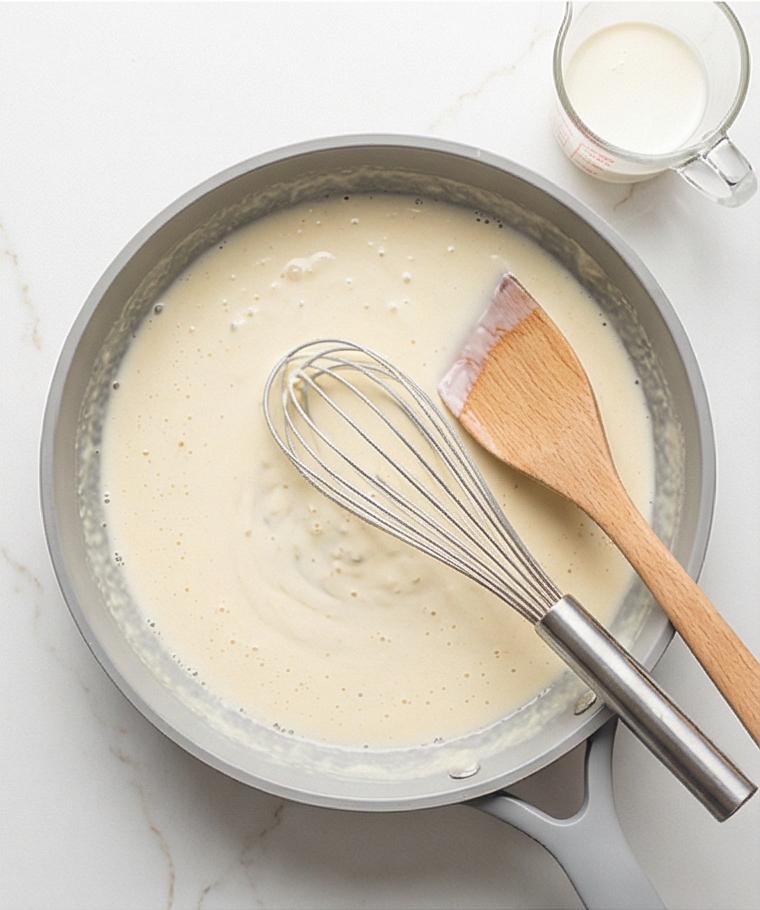
With a steady hand, whisk cold whole milk and then heavy cream into the roux in a slow stream so the texture goes from pasty to silky and fluid without lumps. Bring the mixture to a gentle simmer (visually: small, even bubbles and a cream that coats the back of a spoon) and continue to whisk until the sauce is visibly thickened, velvety, and glossy — the surface should catch the light subtly, showing a soft ripple when the whisk moves. Keep a clean stainless whisk and a wooden spatula nearby for continuity.
Step 4: Season and Enrich with Cheese
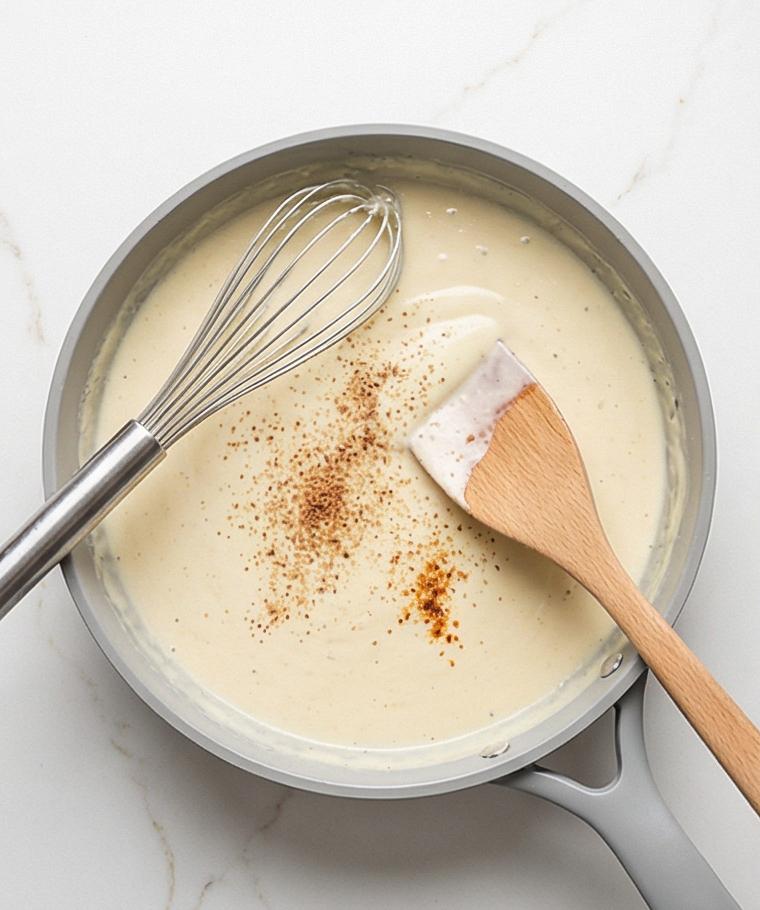
Lower the heat and fold in freshly grated nutmeg, a whisper of cayenne if you like gentle heat, salt and black pepper; taste and balance carefully. Stir in finely grated Parmesan so it melts into a satin sheen, and if using, add small cubes of room-temperature cream cheese and stir until the sauce is luxuriously rich and homogeneous — no graininess, only a smooth, thick cream that clings to the spoon. The sauce should look slightly glossy, pale ivory with tiny flecks of spice.
Step 5: Fold in the Spinach, Finish and Serve
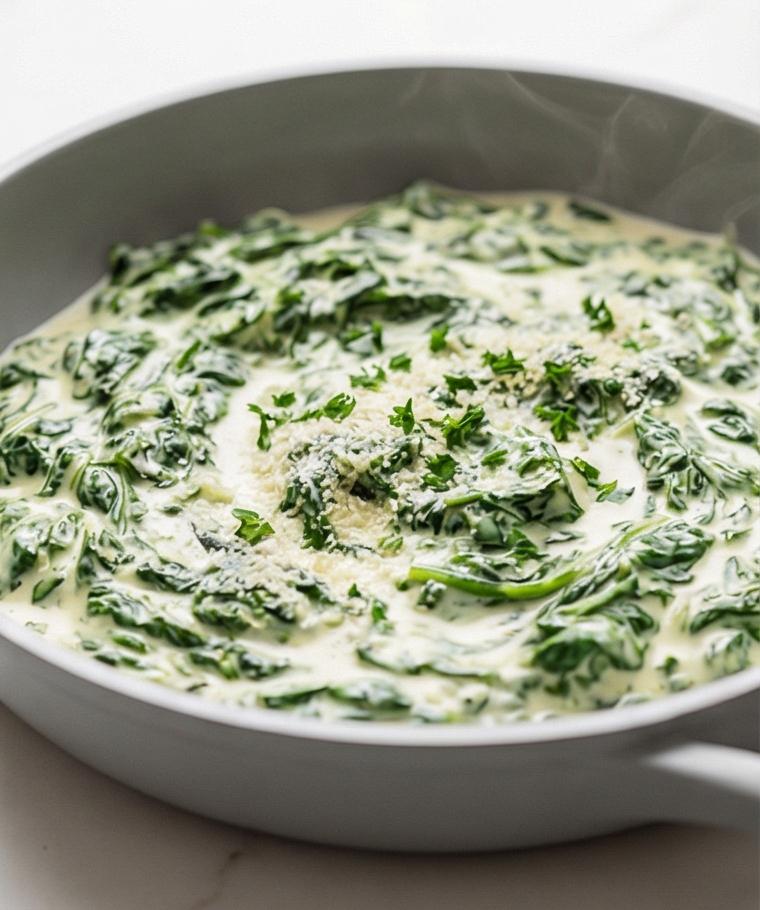
Add the finely chopped, tightly squeezed spinach to the warm cream and fold gently until every leaf is evenly coated and the mixture looks uniform — deep herb-green flecks suspended in the pale cream. Simmer off-heat for a few minutes on low warmth to marry flavors, then finish with a squeeze of lemon if desired and a final seasoning check. Transfer the creamed spinach into the same shallow matte grey ceramic serving vessel so the shape and geometry remain consistent; the final portion should be thick, glossy, and spoonable with delicate peaks and a slight sheen.
Making It Your Own
I like to tinker with small changes to see how the texture and flavor shift. For a lighter, dairy-reduced version try half-and-half and skip the cream cheese; it will still be creamy but less indulgent. To make it vegetarian-friendly without Parmesan, stir in a tablespoon of nutritional yeast and a pinch more salt for savory depth. For a smoky, regional twist add a teaspoon of smoked paprika and finish with crisped pancetta or smoked bacon on top for a meaty counterpoint. In spring, fold in a handful of blanched peas or chopped ramps for freshness. If you want a tangier side, increase lemon juice and finish with bright herbs like chives or parsley.
How to Serve
If I am hosting, I serve this creamed spinach alongside roasted chicken or a simple grilled steak so the rich sauce complements the meat. For a family dinner, spoon it into a shallow bowl and offer extra grated Parmesan and a squeeze of lemon so guests can adjust brightness. To scale up, double the sauce ingredients for every additional two pounds of spinach so richness stays consistent. For smaller portions, reduce dairy slightly to keep the texture thick rather than soupy. Garnish with finely chopped parsley or chives and serve warm, not piping hot, so the cream shows a gentle sheen on the surface.
Storage and Reheating Tips
Cool the creamed spinach to near room temperature before storing. Transfer it to an airtight container and refrigerate for up to 3 days. If you need to freeze it, place it in a freezer-safe container and use within 1 month; expect a slightly looser texture after thawing.
To reheat, warm gently in a low oven or on the stovetop over low heat, stirring often and adding a splash of milk or cream if it seems too thick. Avoid high heat which can separate the sauce and make it grainy. Reheat just until warm and glossy, then finish with a squeeze of lemon or a sprinkle of fresh herbs.
Common Pitfalls and How to Avoid Them
One frequent mistake is not removing enough water from the spinach. Too much liquid makes the sauce thin; squeeze the leaves until they form compact bundles. Another is cooking the roux too long or at too high a heat which can give a starchy or raw flour taste. Keep the aromatics gentle and cook the roux until it is pale and pasty.
Overheating during reheating can make the dairy split. To avoid this, rewarm slowly and add a little cold dairy if the sauce seems to break. Taste and adjust seasoning at the end rather than early so you do not over-salt during cooking.
Final Thought
Give this Creamed Spinach Recipe a try this week and notice how a few careful steps turn simple spinach into something silky and celebratory. It is forgiving, adaptable, and a reliable side that earns a place on both weeknight and weekend tables. I hope it becomes one of your go-to greens.
Frequently Asked Questions
- What is the best spinach to use for creamed spinach? Use fresh, firm spinach leaves with bright color; baby spinach is fine but may need shorter blanching.
- Can I make this dairy-free? For a dairy-free version use plant-based milk thickened with a little cornstarch and nutritional yeast for savory depth.
- How do I keep the sauce from becoming grainy? Warm gently and whisk cold dairy slowly into the roux; avoid boiling hard after adding cheese.
- Can I prepare this ahead for a dinner party? Yes, make it a day ahead and reheat gently, finishing with lemon and fresh herbs before serving.
- What can I serve with creamed spinach? It pairs beautifully with roasted meats, grilled fish, or as a topping for baked potatoes.
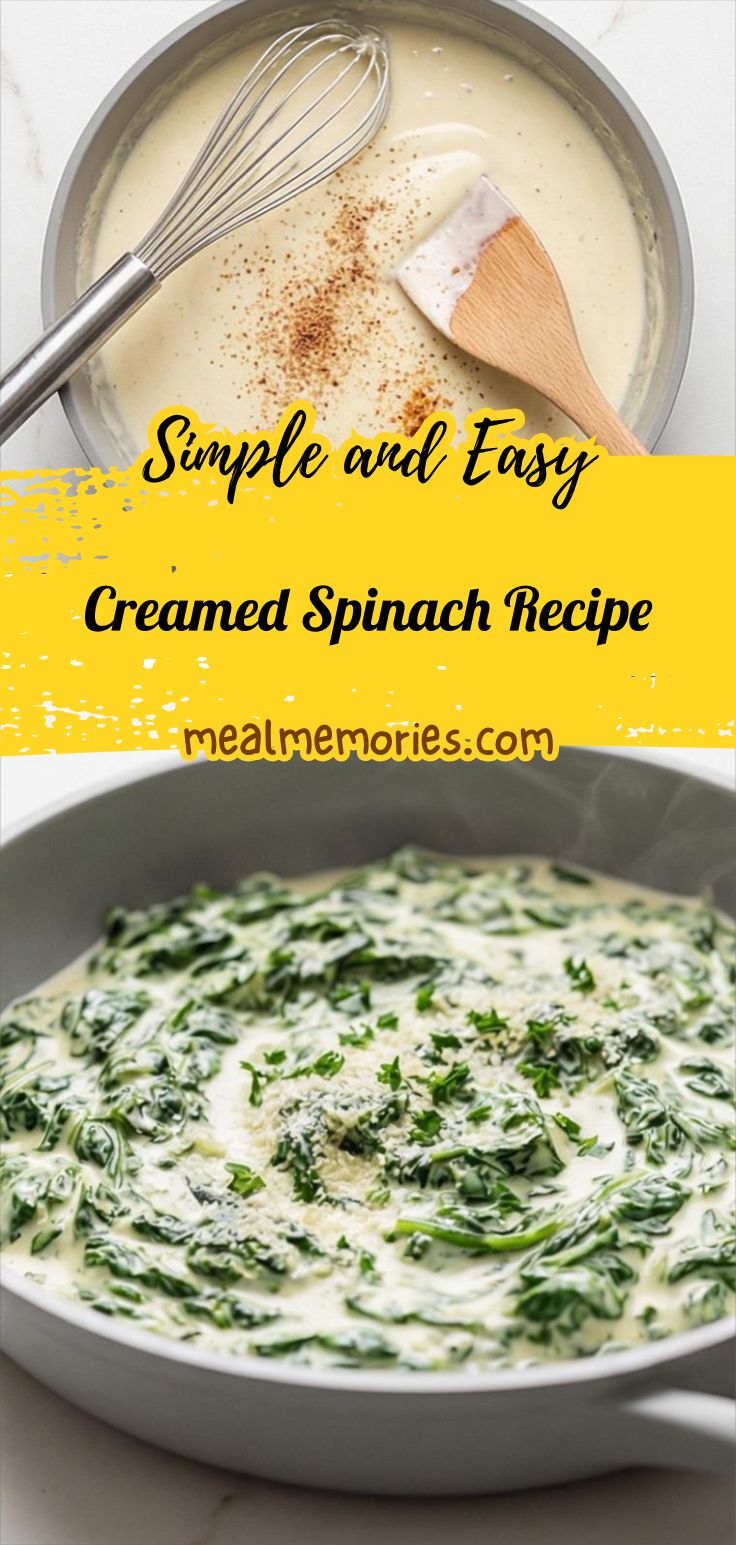
Creamed Spinach Recipe
Make this Creamed Spinach Recipe now for a silky, bright green side that elevates any meal.
Ingredients
Instructions
Step 1: Prepare and Blanch the Spinach
Work quickly and confidently: after rinsing and draining the leaves, remove any large, tough stems so only tender leaves remain. Bring batches of the spinach to a rolling boil briefly, then plunge immediately into ice water to stop the cooking; drain thoroughly in a colander and squeeze handfuls firmly until the spinach feels dry and forms tight bundles. Transfer those bundles to a cutting board and finely chop until the texture is uniform and easily foldable — the leaves should look vibrant, glossy, and compact, not watery.
Step 2: Build the Aromatic Cream Base
On the work surface set a shallow matte grey ceramic sauté pan (no stove visible) and place a small dish of unsalted butter and a tiny glass cruet of olive oil nearby; melt the butter into the oil so the fat becomes glossy and shimmering. Add finely minced yellow onion and sweat until translucent and tender, then stir in minced garlic until just fragrant — the onions should be soft, slightly glossy at the edges, not browned. Sprinkle the flour evenly over the aromatics and cook briefly until the mixture becomes a pale, thick paste with a satiny sheen; you should see the roux clinging lightly to the spatula.
Step 3: Add Cold Dairy and Whisk to a Silky Sauce
With a steady hand, whisk cold whole milk and then heavy cream into the roux in a slow stream so the texture goes from pasty to silky and fluid without lumps. Bring the mixture to a gentle simmer (visually: small, even bubbles and a cream that coats the back of a spoon) and continue to whisk until the sauce is visibly thickened, velvety, and glossy — the surface should catch the light subtly, showing a soft ripple when the whisk moves. Keep a clean stainless whisk and a wooden spatula nearby for continuity.
Step 4: Season and Enrich with Cheese
Lower the heat and fold in freshly grated nutmeg, a whisper of cayenne if you like gentle heat, salt and black pepper; taste and balance carefully. Stir in finely grated Parmesan so it melts into a satin sheen, and if using, add small cubes of room-temperature cream cheese and stir until the sauce is luxuriously rich and homogeneous — no graininess, only a smooth, thick cream that clings to the spoon. The sauce should look slightly glossy, pale ivory with tiny flecks of spice.
Step 5: Fold in the Spinach, Finish and Serve
Add the finely chopped, tightly squeezed spinach to the warm cream and fold gently until every leaf is evenly coated and the mixture looks uniform — deep herb-green flecks suspended in the pale cream. Simmer off-heat for a few minutes on low warmth to marry flavors, then finish with a squeeze of lemon if desired and a final seasoning check. Transfer the creamed spinach into the same shallow matte grey ceramic serving vessel so the shape and geometry remain consistent; the final portion should be thick, glossy, and spoonable with delicate peaks and a slight sheen.
Notes
- Squeeze blanched spinach tightly to remove excess water for a thicker sauce.
- Whisk cold milk slowly into the roux to avoid lumps.
- Reheat gently over low heat and add a splash of milk if the sauce tightens.
- Substitute cornstarch for flour for a gluten-free option, whisked into cold milk first.
- Taste and adjust salt at the end to prevent over-salting due to Parmesan.