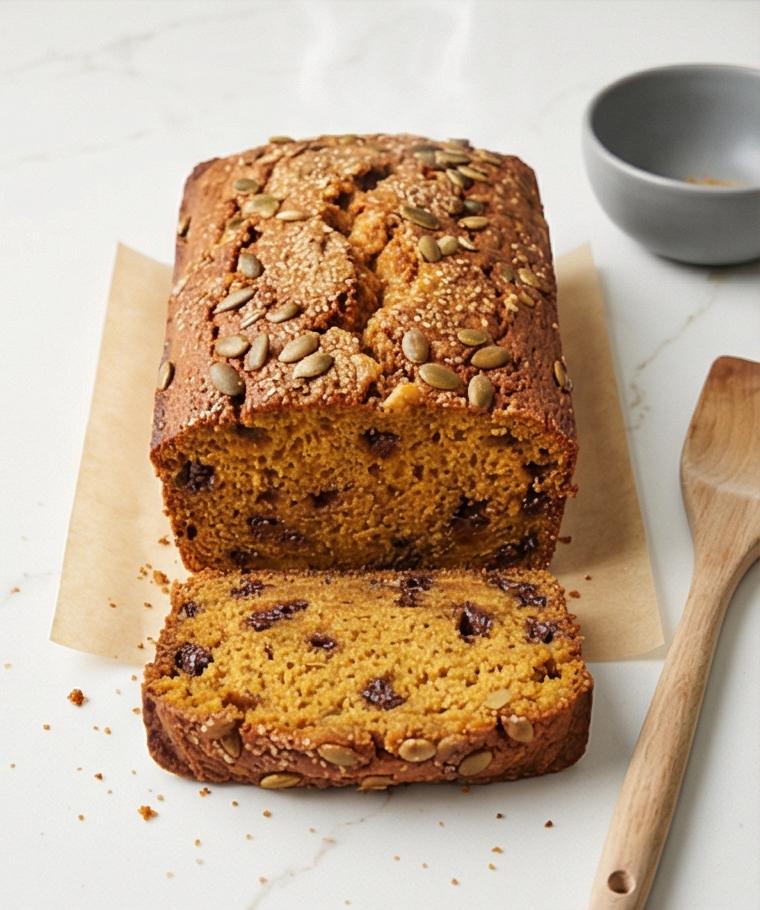
Zucchini Bread Recipe is one of those recipes I reach for when I want something comforting and a little surprising. I first learned it in a cramped kitchen with a window that smelled like basil, and the soft, green threads of zucchini turned plain batter into something extraordinary. I make this Zucchini Bread Recipe for neighbors, for rushed breakfasts, and whenever I need a loaf that travels well. It crisps at the edges, stays tender inside, and always disappears faster than I expect.
How This Loaf Became My Go-To Comfort Bake
The first time I baked this Zucchini Bread Recipe I was exhausted after a damp weekend and had three small zucchini from the farmer’s market. Grating them filled the kitchen with a clean, green scent that felt like a promise. As the batter came together, warm cinnamon notes and nutty oil made the whole house feel restful. When I sliced that first warm piece, steam curled up and the crumb was glossy and moist. Sharing that loaf with my friend, we traded stories and buttered slices, and the recipe instantly became a part of our small rituals.
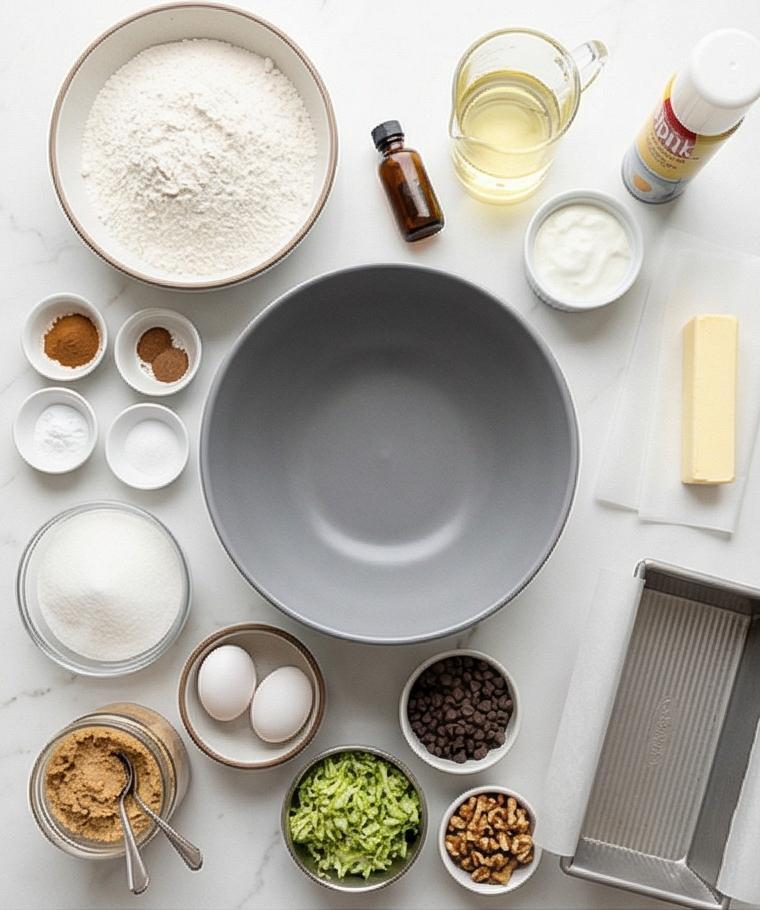
Primary Ingredients and How I Use Them
- All-Purpose Flour: The structure builder. Substitute half-whole wheat for a nuttier crumb but expect a denser loaf. Pick fresh, un-scooped flour for accurate measure.
- Cinnamon and Nutmeg: The aromatic backbone. Use freshly ground spices for livelier flavor; omit nutmeg if you prefer a simpler spice profile.
- Eggs: Binders that add lift. Room-temperature eggs mix more evenly; for vegan swaps, try flax eggs though texture will change.
- Sugar (granulated and brown): Sweetness and moisture. Brown sugar adds depth; coconut sugar can substitute but alters color.
- Vegetable Oil and Greek Yogurt: Keep the loaf tender and moist; applesauce can replace oil for lower fat, and yogurt adds tang.
- Zucchini: The hero—adds moisture, texture, and stealth veg. Squeeze excess water but don’t dry completely.
Essential Kitchen Tools and Why They Matter
A few simple tools make this recipe smooth and predictable. The right tool keeps technique consistent and saves time.
- 9×5-inch Loaf Pan: Holds the batter and creates the classic shape. If using a different pan, adjust bake time and check early.
- Box Grater: Produces the fine zucchini shreds that fold into batter. A food processor works but grate gently to avoid pulp.
- Mixing Bowls: Separate bowls for dry and wet ingredients let you whisk thoroughly without overmixing later.
- Spatula: For folding; a flexible spatula helps scrape batter cleanly.
- Parchment Paper: Makes unmolding effortless and protects loaf edges.
Step-by-Step Preparation Guide
Step 1: Preheat and prepare the loaf pan
Preheat the oven to 350°F (175°C) and position the rack in the center for even heat. Lightly grease a 9×5-inch loaf pan, then line the bottom and long sides with a parchment sling, leaving an overhang to lift the loaf out later; grease the parchment lightly as well. This simple prep lets the bread release cleanly and creates the rectangular geometry we’ll preserve through the shoot.
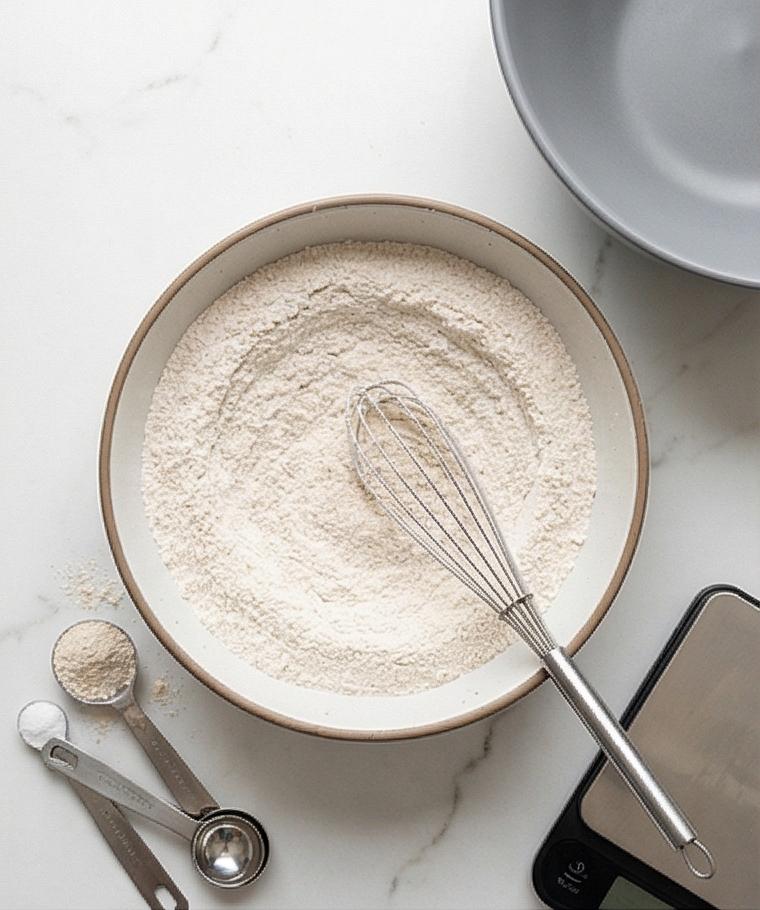
Step 2: Whisk the dry spices and leaveners together
Whisk together the dry ingredients in a medium bowl until evenly blended: all-purpose flour, ground cinnamon, ground nutmeg, baking soda, baking powder, and salt. Aim for a smooth, homogenous pale tan mixture with no visible streaks of spice—this even distribution is the foundation of a uniform crumb.
Step 3: Beat eggs and sugars to ribbon stage
In a large mixing bowl whisk the room-temperature eggs with granulated sugar and light brown sugar until the mixture is lighter in color and begins to fall from the whisk in soft ribbons—about 1–2 minutes. The texture should be glossy and slightly aerated; this is what helps the loaf rise and gives a tender crumb.
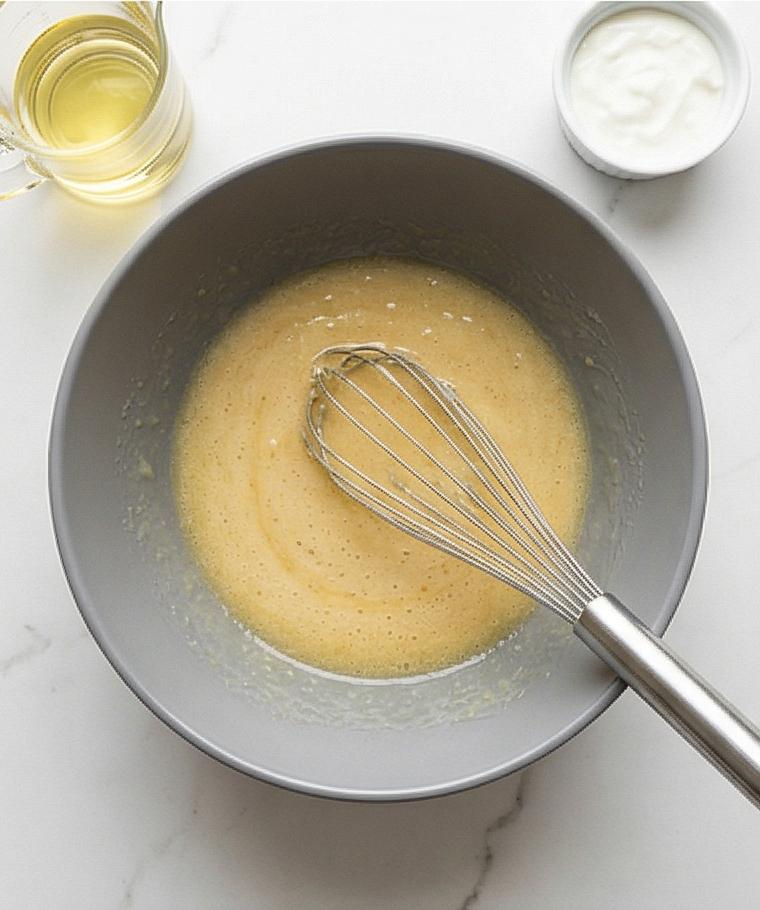
Step 4: Emulsify oil, yogurt, and vanilla into the wet base
Add the neutral vegetable oil, Greek yogurt, and vanilla to the egg-sugar mixture and whisk until completely smooth and emulsified with no visible oil streaks. The batter surface should look unified and satiny, the consistency slightly loose but cohesive—ready to accept the zucchini shreds.
Step 5: Prepare the zucchini
Finely grate the zucchini on the small holes of a box grater and measure roughly 2 cups. Gather the shreds in a clean towel or several paper towels and gently press out excess moisture until the shreds are damp but not dripping. Fluff them with your fingers so they separate into loose, glistening green threads that fold easily into batter.
Step 6: Fold the zucchini into the wet mixture
Add the prepared, drained zucchini directly to the emulsified wet mixture and fold with a spatula until the green shreds are evenly distributed. The wet bowl should show bright, textured strands of zucchini suspended in a glossy pale batter—moist, flecked, and airy.
Step 7: Combine the dry and wet in gentle folds
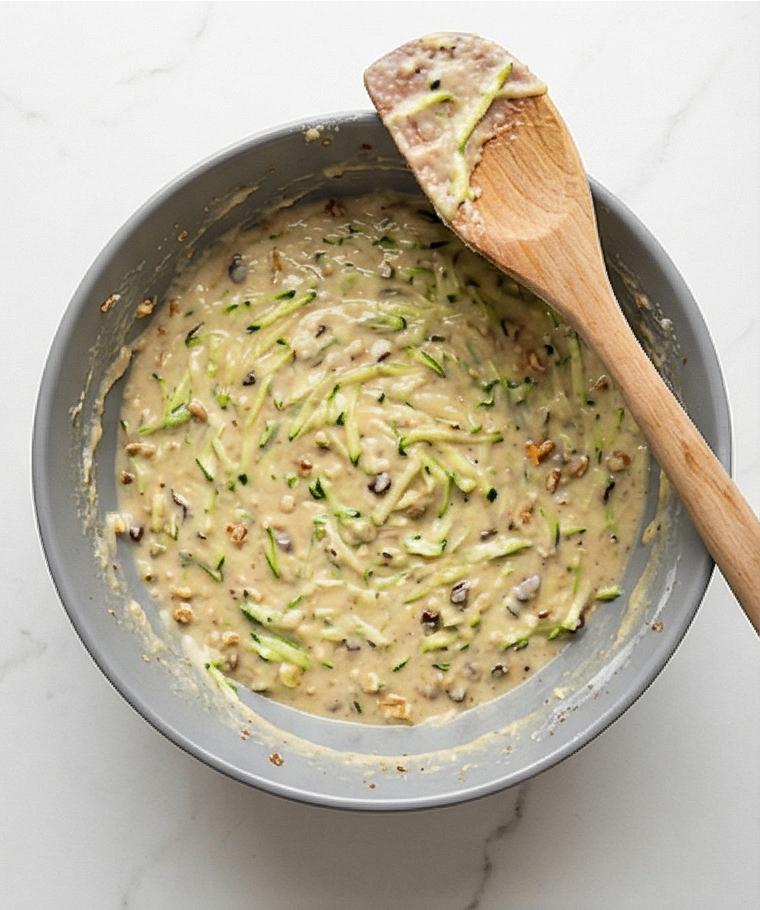
Add the dry ingredient mixture to the wet in two additions, folding gently after each addition just until you no longer see pockets of flour. Scrape the bowl thoroughly so there are no dry streaks, but stop as soon as the batter is mostly smooth with a few small lumps—overmixing tightens the crumb. At this stage the batter will be thick but still pourable and full of visible zucchini shreds.
Step 8: Fold in mix-ins (optional)
If using, fold in toasted chopped walnuts or pecans and/or semisweet chocolate chips just until evenly dispersed. The batter should feel dense and textured, studded with warm brown nut fragments or glossy chocolate spots that contrast against the pale-green flecks of zucchini.
Step 9: Transfer to the prepared pan and finish the top
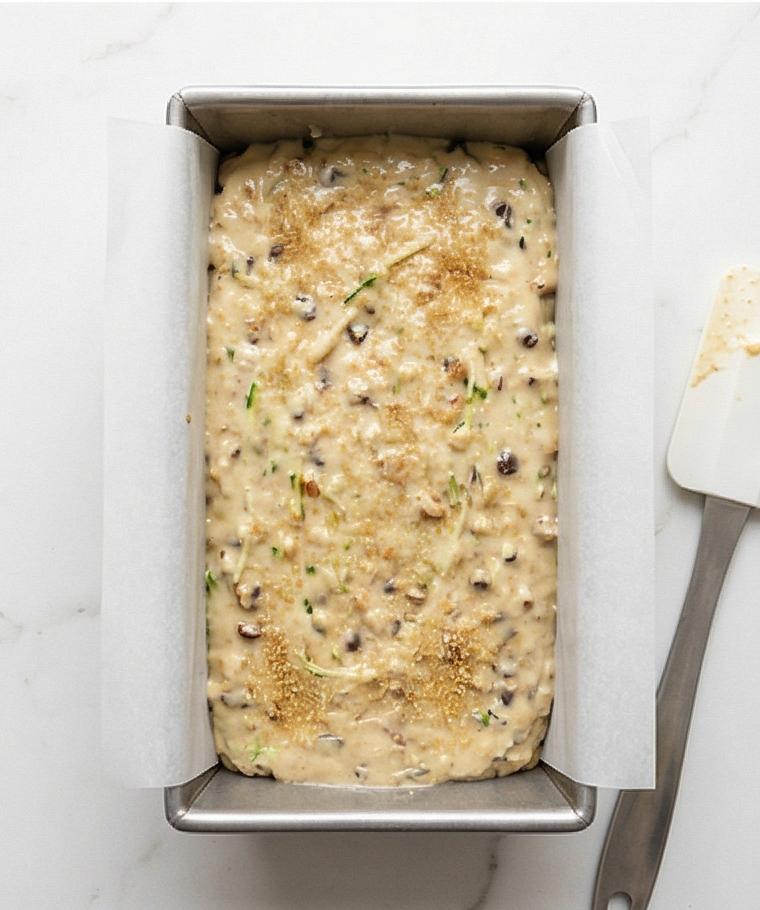
Scrape the batter into the prepared 9×5 loaf pan, spread it into an even layer and smooth the surface with a spatula. If you like, sprinkle coarse turbinado sugar across the top for a crackly, glittering crust. The pan should show a neatly filled rectangular volume, the batter level and studded where nuts or chips peek through.
Step 10: Bake, cool, unmold, and serve
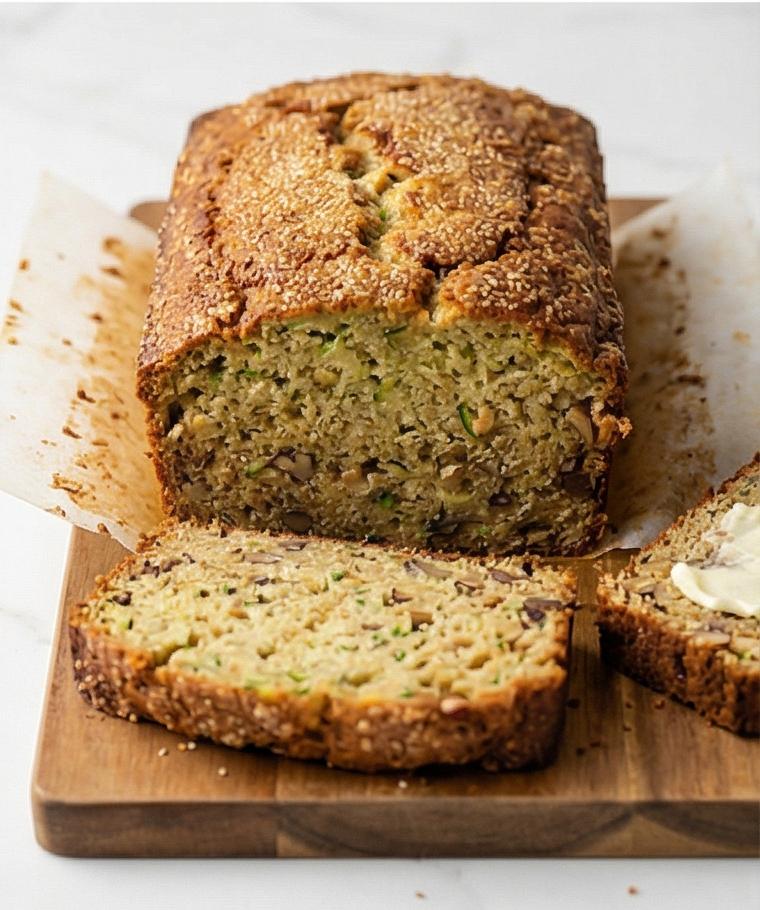
Bake at 350°F (175°C) for 50–60 minutes until the top is deeply golden-brown and domed, a skewer inserted in the center comes out mostly clean, and the loaf springs back lightly when pressed. Let the pan rest on a rack 10–15 minutes to set the structure, then use the parchment sling to lift the loaf out and cool completely on the rack for at least an hour before slicing into 3/4-inch (2 cm) pieces. The finished bread should reveal a moist, tender crumb with visible zucchini shreds and toasted nut or chocolate bits; serve plain or with softened butter.
Making It Your Own
I like to treat this loaf as a canvas. For a lighter version I swap half the oil for unsweetened applesauce and add a splash of orange zest to lift the spice notes. When I want a richer bite, toasted pecans and semisweet chips go in and the loaf becomes dessert.
For seasonal twists, add grated carrot in autumn or fold in chopped fresh figs in late summer. For a nut-free version, skip the nuts and try toasted sunflower seeds for crunch. Small turns like these keep the base familiar while making each loaf feel new.
How to Serve
If I am hosting, I slice the loaf into 3/4-inch pieces and arrange them on a wooden board with softened butter, cream cheese, and a pot of strong coffee. For brunch, warm slices lightly and serve with a dollop of Greek yogurt and honey.
To scale up for a crowd, bake two loaves and cut each into smaller slices for a buffet. For gift loaves, wrap a cooled loaf in parchment and tie with twine so it travels well.
Storage and Reheating Tips
Store cooled slices in an airtight container at room temperature for up to three days. If planning to keep longer, freeze whole or sliced loaves in a sealed bag for up to three months.
To reheat, thaw overnight in the fridge or at room temperature, then warm individual slices in a toaster oven for a few minutes until just toasty. A quick zap in the microwave for 10 to 15 seconds works for single servings, but watch closely to avoid drying.
Common Mistakes and How to Avoid Them
One frequent slip is over-squeezing zucchini. Removing some moisture is good, but drying the shreds too much loses the gentle hydration that keeps the crumb tender. Press just enough so the shreds are damp, not dripping.
Another common error is overmixing after adding flour. Fold until combined and stop. Overworked batter yields a tight, tough crumb instead of the tender loaf you want.
Final Thoughts
Give this Zucchini Bread Recipe a try this week. It is forgiving, comforting, and a lovely way to use up garden zucchini. I hope a warm slice brings you the same quiet satisfaction it does for me.
Frequently Asked Questions.
- What is the best way to remove excess moisture from the zucchini? I grate and gather the shreds into a clean kitchen towel, then press gently until damp but not dripping.
- Can I use whole wheat flour in this recipe? Yes, substitute up to half the all-purpose flour with whole wheat for a nuttier flavor; expect a slightly denser loaf.
- How do I know when the loaf is done? The top should be golden and spring back lightly, and a skewer inserted in the center should come out mostly clean.
- Can I make this recipe gluten free? Use a 1-to-1 gluten-free flour blend that contains xanthan gum; texture will be similar but may be a bit more crumbly.
- How long does the loaf keep? At room temperature in an airtight container it stays fresh about three days, or freeze for up to three months.
Zucchini Bread Recipe
Make this Zucchini Bread Recipe for a moist, spiced loaf that uses fresh zucchini and simple pantry staples.
Ingredients
Instructions
Step 1: Preheat and prepare the loaf pan
Preheat the oven to 350°F (175°C) and position the rack in the center for even heat. Lightly grease a 9×5-inch loaf pan, then line the bottom and long sides with a parchment sling, leaving an overhang to lift the loaf out later; grease the parchment lightly as well. This simple prep lets the bread release cleanly and creates the rectangular geometry we'll preserve through the shoot.
Step 2: Whisk the dry spices and leaveners together
Whisk together the dry ingredients in a medium bowl until evenly blended: all-purpose flour, ground cinnamon, ground nutmeg, baking soda, baking powder, and salt. Aim for a smooth, homogenous pale tan mixture with no visible streaks of spice—this even distribution is the foundation of a uniform crumb.
Step 3: Beat eggs and sugars to ribbon stage
In a large mixing bowl whisk the room-temperature eggs with granulated sugar and light brown sugar until the mixture is lighter in color and begins to fall from the whisk in soft ribbons—about 1–2 minutes. The texture should be glossy and slightly aerated; this is what helps the loaf rise and gives a tender crumb.
Step 4: Emulsify oil, yogurt, and vanilla into the wet base
Add the neutral vegetable oil, Greek yogurt, and vanilla to the egg-sugar mixture and whisk until completely smooth and emulsified with no visible oil streaks. The batter surface should look unified and satiny, the consistency slightly loose but cohesive—ready to accept the zucchini shreds.
Step 5: Prepare the zucchini
Finely grate the zucchini on the small holes of a box grater and measure roughly 2 cups. Gather the shreds in a clean towel or several paper towels and gently press out excess moisture until the shreds are damp but not dripping. Fluff them with your fingers so they separate into loose, glistening green threads that fold easily into batter.
Step 6: Fold the zucchini into the wet mixture
Add the prepared, drained zucchini directly to the emulsified wet mixture and fold with a spatula until the green shreds are evenly distributed. The wet bowl should show bright, textured strands of zucchini suspended in a glossy pale batter—moist, flecked, and airy.
Step 7: Combine the dry and wet in gentle folds
Add the dry ingredient mixture to the wet in two additions, folding gently after each addition just until you no longer see pockets of flour. Scrape the bowl thoroughly so there are no dry streaks, but stop as soon as the batter is mostly smooth with a few small lumps—overmixing tightens the crumb. At this stage the batter will be thick but still pourable and full of visible zucchini shreds.
Step 8: Fold in mix-ins (optional)
If using, fold in toasted chopped walnuts or pecans and/or semisweet chocolate chips just until evenly dispersed. The batter should feel dense and textured, studded with warm brown nut fragments or glossy chocolate spots that contrast against the pale-green flecks of zucchini.
Step 9: Transfer to the prepared pan and finish the top
Scrape the batter into the prepared 9×5 loaf pan, spread it into an even layer and smooth the surface with a spatula. If you like, sprinkle coarse turbinado sugar across the top for a crackly, glittering crust. The pan should show a neatly filled rectangular volume, the batter level and studded where nuts or chips peek through.
Step 10: Bake, cool, unmold, and serve
Bake at 350°F (175°C) for 50–60 minutes until the top is deeply golden-brown and domed, a skewer inserted in the center comes out mostly clean, and the loaf springs back lightly when pressed. Let the pan rest on a rack 10–15 minutes to set the structure, then use the parchment sling to lift the loaf out and cool completely on the rack for at least an hour before slicing into 3/4-inch (2 cm) pieces. The finished bread should reveal a moist, tender crumb with visible zucchini shreds and toasted nut or chocolate bits; serve plain or with softened butter.
Notes
- Do not over-squeeze the zucchini; it should be damp, not dripping.
- Use room-temperature eggs and yogurt for better emulsification.
- Check the loaf at 50 minutes and add time as needed; ovens vary.
- Freeze slices individually for quick breakfasts and toast straight from frozen.
- Swap half the oil for applesauce to reduce fat and add natural sweetness.