Chai Latte Recipe brings me back to slow mornings and the tiny kitchen rituals that make a day feel cared for. I learned this Chai Latte Recipe from a friend who taught me how spice and patience can turn simple milk and tea into something almost ceremonial. Every time I make a pot, the kitchen fills with warm cardamom and cinnamon, and it feels like an invitation to pause. If you like cozy, spiced drinks that smell like autumn and taste like comfort, this recipe will become your go-to.
How This Recipe Became My Rainy-Day Favorite
The first time I made this Chai Latte Recipe I was trying to soothe a dreary, rain-soaked afternoon. I remember the sound of small rain drops on the window and the bright pop of crushed cardamom as I cracked it with the flat of a knife – a tiny, surprising perfume that opened the whole recipe. While the spices toasted, the air turned warm and peppery, and for a moment the gray outside seemed softer. Sitting with the cup, steam rising and cinnamon on my lips, felt like a small ceremony of calm. That memory stuck, and now whenever storm clouds gather I reach for these same jars and pans; making this chai is as much about the comfort of the process as it is about the drink itself.
Key Ingredients and What They Do
- Green cardamom pods: The aromatic backbone – crush gently to release the seeds. Substitute: ground cardamom but use sparingly. Choose fresh, plump pods.
- Small cinnamon stick: Adds sweet warmth; use cassia if that’s what you have. Prefer a single stick to avoid overpowering.
- Whole cloves: Provide depth and a hint of clove heat; use 3-4 for balance.
- Black peppercorns: Bright, warming bite – freshly cracked is best.
- Fresh ginger slice: Offers clean heat and zing; ginger powder is a weaker substitute.
- Strong black tea: Assam or Darjeeling gives body – tea bags work in a pinch.
- Whole milk: Creates creamy body; swap for oat or almond milk but expect a thinner foam.
- Sugar and vanilla: Sugar balances spices; vanilla is optional for a latte-like lift.
Essential Kitchen Tools and Why They Matter
Start small: having the right tools makes this Chai Latte Recipe effortless and repeatable. A medium stainless steel saucepan is ideal because it heats evenly and lets you watch color changes. A fine-mesh strainer keeps grit out of the final cup and protects texture. A small mortar or the flat of a knife for cracking spices helps release oils without pulverizing them. A heatproof jug makes pouring easier and safer. For froth, a handheld frother or a vigorous whisk lifts texture quickly – if you don’t have one, shake warmed milk in a tightly sealed jar for a rustic foam.
- Medium stainless steel saucepan: Even heating and easy to clean.
- Fine-mesh strainer: Removes tea leaves and spice bits.
- Small mortar or knife: For cracking cardamom and smashing ginger.
- Heatproof jug: For safe, easy pouring and tasting.
- Handheld frother or whisk: For latte-like foam; jar method as an alternative.
Step-by-Step Preparation Guide
Step 1: Crack and ready the whole spices
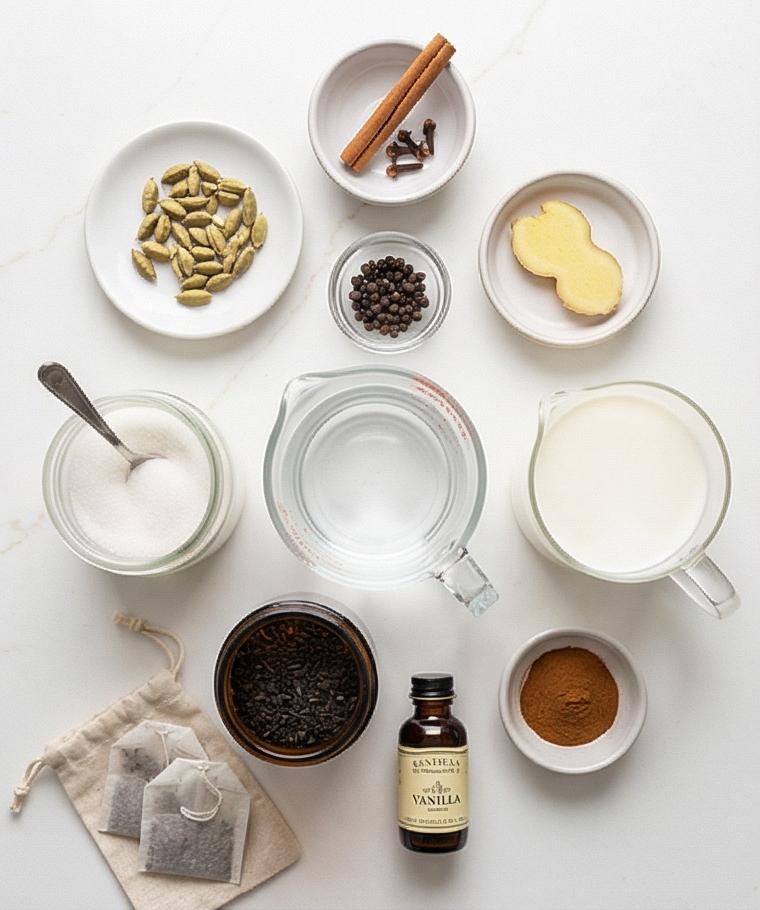
Lightly crush the four green cardamom pods with the flat side of a knife or a small mortar and pestle until the pods just crack and the pale seeds peek out – avoid grinding into powder so the pods stay intact. Place the cracked cardamom, the small cinnamon stick, whole cloves and black peppercorns together on a small ceramic saucer; keep the peeled, lightly smashed 3 mm ginger slice nearby on a tiny ramekin. Have the cold whole milk in a clear glass jug, the cold water in a small measuring jug, loose tea in a loose-leaf jar (or the four tea bags tucked into a linen pouch), sugar in a glass jar, and vanilla in a petite bottle. This tidy layout keeps everything visible yet in vessels, ready for the first heat step.
Step 2: Dry-toast the spices and add water to bloom flavors
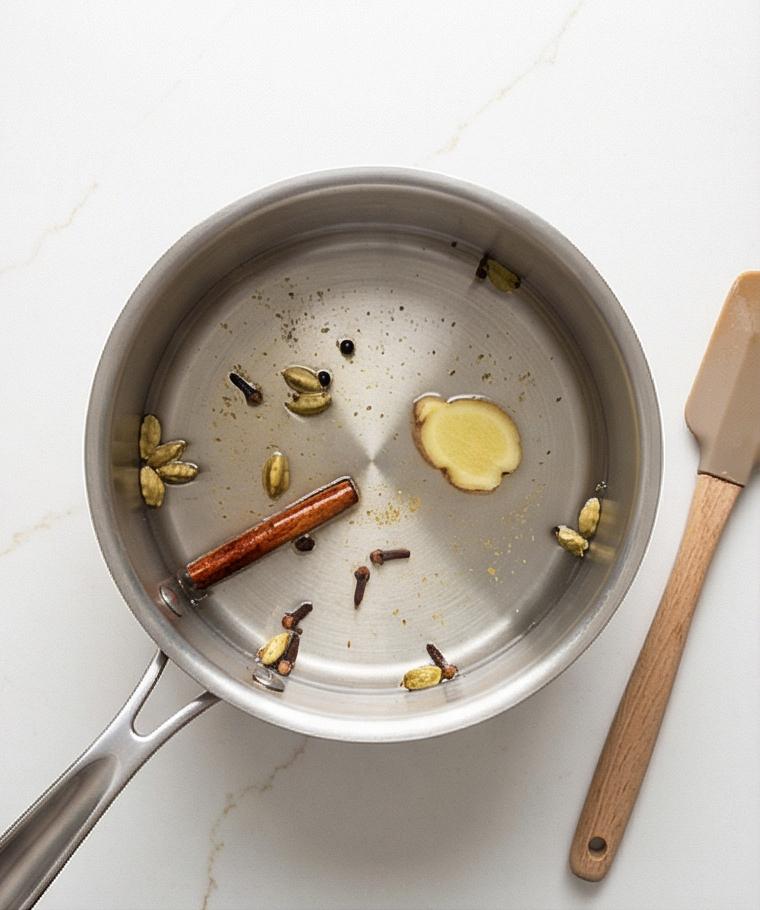
Transfer the cracked cardamom, cinnamon stick, cloves and peppercorns into a medium brushed stainless steel saucepan (no stove visible) and dry-toast them by shaking the pan briefly so the skins darken slightly and the oils become fragrant – you should imagine a warm, toasty aroma and tiny flecks darkening but no burnt bits. Add the smashed ginger slice into the same pan, then pour in 1 1/4 cups (300 ml) cold water so the spices sit submerged; this is the beginning of the infusion, the spices resting in clear water before color develops. Keep the saucepan as the persistent hero vessel for the next stages so the object language is consistent and familiar.
Step 3: Bring to a gentle simmer and dissolve sugar into the spiced infusion
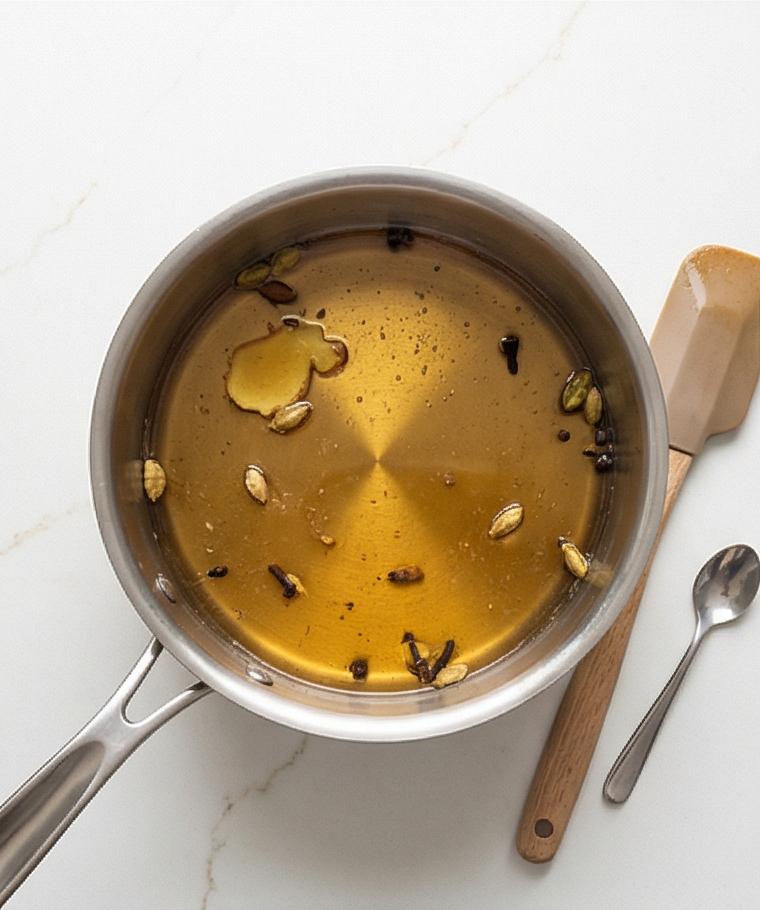
Bring the spices and water to just under a boil and then lower to a gentle simmer so the liquid warms and slowly takes on that first pale amber tint; maintain a low simmer long enough for the water to smell fully spiced. While still hot, stir in 3 tablespoons (36 g) granulated sugar until it has fully dissolved into the infused water – the surface should look slightly glossy and the liquid a warmer, clearer amber, free of grit. Taste carefully in imagination: the sweetness will be brighter now and soften later once milk arrives.
Step 4: Add tea, keep a patient short steep, then rest off heat
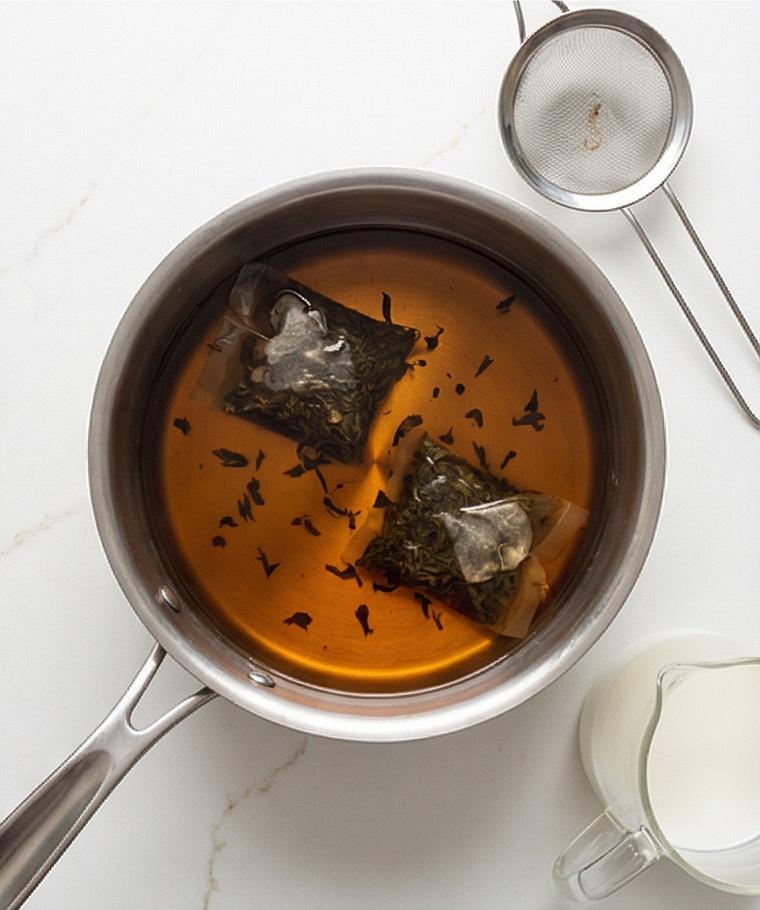
Add 2 tablespoons of strong loose-leaf black tea (or the four tea bags) directly to the simmering spiced water in the same stainless saucepan, stir once, and maintain a very gentle simmer for 3-4 minutes until the liquid becomes a deep amber-brown and smells boldly of tea. Turn off the heat and let the pan sit for an additional two minutes off-heat so the leaves finish opening without going bitter; the result is a richly colored, tea-forward spiced broth with visible tea leaves or steeped bags resting in the liquid.
Step 5: Enrich with cold whole milk, gently heat and introduce foam
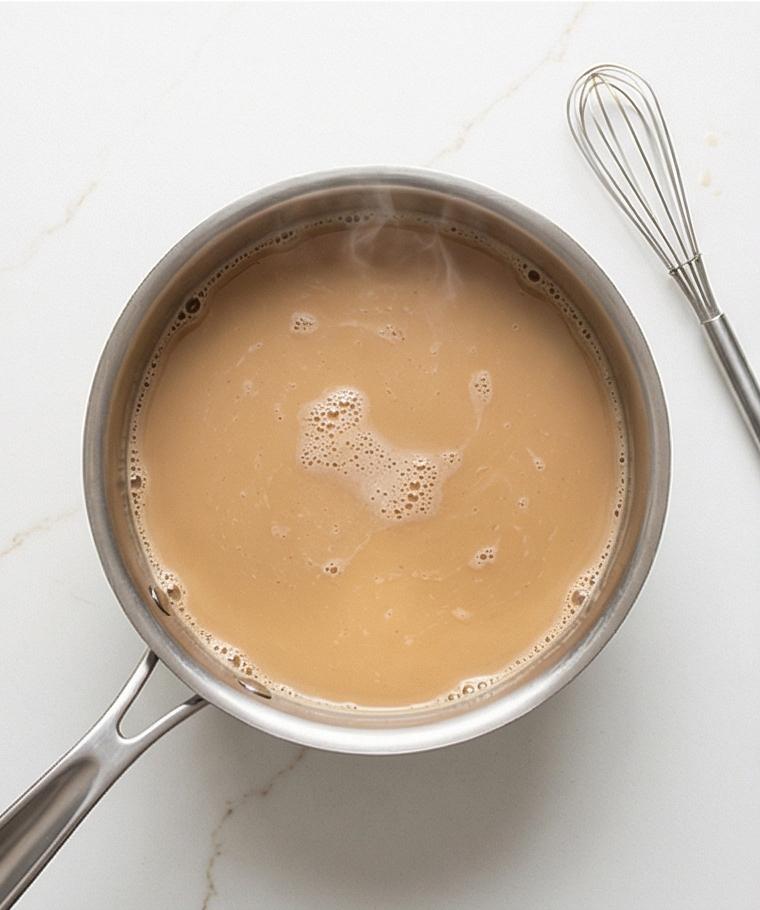
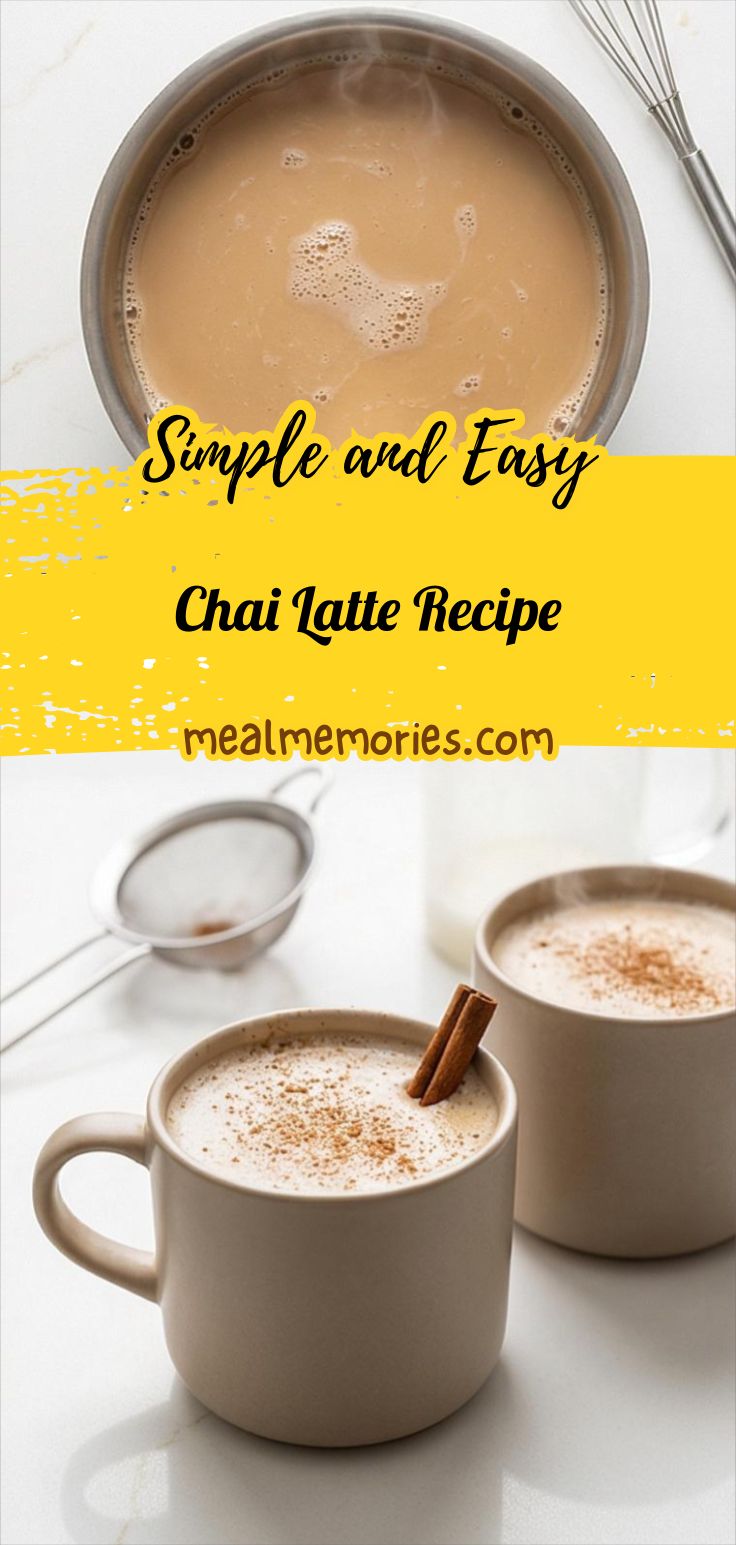
Pour 2 cups (480 ml) cold whole milk into the steeped tea-spice concentrate in the same saucepan and return the pan to medium-low heat. Slowly warm the mixture while stirring and scraping the bottom with a heatproof spatula until it is steaming and small bubbles form around the edges, the color turning to a warm tan-caramel shade. For a latte texture, whisk vigorously for the last 30-60 seconds or use a small handheld frother (shown resting beside the pan) until a light layer of foam forms on top – the surface should show delicate microfoam with streaks of darker chai swirling through.
Step 6: Strain, taste, and finish with vanilla if desired
Remove the saucepan from the surface, place a fine-mesh stainless strainer over a heatproof glass jug, and pour the hot chai through, pressing gently with the back of a spoon to extract flavor while avoiding grit. Taste the strained chai and, if needed, stir in an extra 1-2 teaspoons (4-8 g) sugar while still hot so it dissolves completely; if using, stir in 1/2 teaspoon pure vanilla extract now for a cafe-style lift. The jug now holds a silky, homogeneous chai latte base ready for serving.
Step 7: Serve very hot in two wide ceramic mugs with foam and garnish
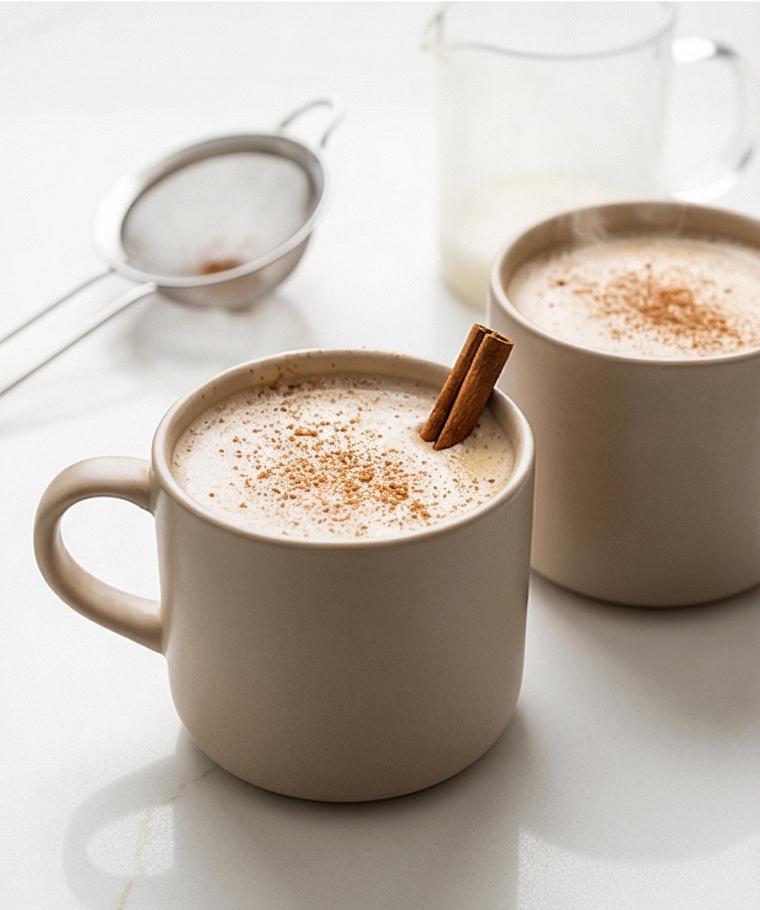
Pour the hot chai latte from the heatproof jug into two large matte ceramic mugs (about 300-350 ml each), spoon a little of the foam on top if present, dust lightly with ground cinnamon, and tuck a small cinnamon stick or a whole star anise into each mug for aroma. Present the mugs side-by-side on the engineered Calacatta-like quartz surface – the creamy tan of the chai and the tawny foam should pop against the bright white surface and delicate grey-gold veins. Serve immediately while very warm.
Making It Your Own
I like to experiment with small swaps when I want a different mood. For a dairy-free version try oat milk – it foams fairly well and brings a hint of natural sweetness. To make it lighter use half milk and half water for lower richness and fewer calories. If you love spice, bump up the ginger and add a small star anise for aniseed notes; if you prefer floral tones, a pinch of crushed cardamom seeds does the trick. For an iced Chai Latte, chill the concentrate and serve over ice with cold milk – stir well so the spices stay lively.
How to Serve
If you’re hosting, make the spiced concentrate in a larger saucepan and keep it warm in a thermos or on the lowest heat setting so guests can top up as they like. For two people follow the recipe as written; for a small party multiply the spices and tea by the number of mugs you want to serve, then add milk in batches so texture stays consistent. Garnish thoughtfully – a dusting of ground cinnamon, a cinnamon stick, or a star anise looks elegant and adds aroma. Offer sugar on the side so everyone can sweeten to taste.
Storage and Reheating Tips
Cool any leftover chai concentrate to room temperature within an hour, then store it in an airtight container in the refrigerator for up to 48 hours. Keep milk separate if you plan to reheat small servings to preserve foam potential and texture.
When reheating, warm on low heat and whisk briefly to restore a little froth – avoid boiling or the milk may scald and the spices can become bitter. If flavor has dulled, a small pinch of fresh ground cardamom or an extra teaspoon of sugar while warm will revive it.
Common Mistakes and How to Avoid Them
Not cracking the cardamom enough – the pods need a light crack so the seeds release their oils. Use the flat side of a knife or a mortar and pestle and avoid pulverizing to keep flavors balanced.
Oversteeping the tea – this makes chai bitter. Keep the simmer short (about 3-4 minutes), then rest off heat for two minutes. If your tea tastes harsh, use slightly less tea next time or shorten the steep.
Final Thoughts
Give this Chai Latte Recipe a try on a slow morning or as a warm finish to an evening. It’s forgiving, adaptable, and a lovely way to slow down. I hope it becomes a small ritual in your kitchen too.
Frequently Asked Questions.
- Can I use non-dairy milk for this Chai Latte Recipe? Yes – oat or almond milk work well; oat gives the creamiest texture.
- How far ahead can I make the spiced concentrate? Make it up to 48 hours ahead and refrigerate; add fresh milk when ready to serve.
- Can I make this chai less sweet? Absolutely – reduce sugar to taste during the simmer step and adjust after adding milk.
- What tea is best for Chai Latte Recipe? Strong black teas like Assam or a robust Darjeeling are great; use fewer leaves if using very strong blends.
- How do I get good foam without a frother? Whisk vigorously for 30-60 seconds or shake hot milk in a sealed jar until frothy.
Chai Latte Recipe
Make this Chai Latte Recipe for a cozy, spiced latte in about 25 minutes — creamy, aromatic, and easy to customize.
Ingredients
Instructions
Step 1: Crack and ready the whole spices
Lightly crush the four green cardamom pods with the flat side of a knife or a small mortar and pestle until the pods just crack and the pale seeds peek out — avoid grinding into powder so the pods stay intact. Place the cracked cardamom, the small cinnamon stick, whole cloves and black peppercorns together on a small ceramic saucer; keep the peeled, lightly smashed 3 mm ginger slice nearby on a tiny ramekin. Have the cold whole milk in a clear glass jug, the cold water in a small measuring jug, loose tea in a loose-leaf jar (or the four tea bags tucked into a linen pouch), sugar in a glass jar, and vanilla in a petite bottle. This tidy layout keeps everything visible yet in vessels, ready for the first heat step.
Step 2: Dry-toast the spices and add water to bloom flavors
Transfer the cracked cardamom, cinnamon stick, cloves and peppercorns into a medium brushed stainless steel saucepan (no stove visible) and dry-toast them by shaking the pan briefly so the skins darken slightly and the oils become fragrant — you should imagine a warm, toasty aroma and tiny flecks darkening but no burnt bits. Add the smashed ginger slice into the same pan, then pour in 1 1/4 cups (300 ml) cold water so the spices sit submerged; this is the beginning of the infusion, the spices resting in clear water before color develops. Keep the saucepan as the persistent hero vessel for the next stages so the object language is consistent and familiar.
Step 3: Bring to a gentle simmer and dissolve sugar into the spiced infusion
Bring the spices and water to just under a boil and then lower to a gentle simmer so the liquid warms and slowly takes on that first pale amber tint; maintain a low simmer long enough for the water to smell fully spiced. While still hot, stir in 3 tablespoons (36 g) granulated sugar until it has fully dissolved into the infused water — the surface should look slightly glossy and the liquid a warmer, clearer amber, free of grit. Taste carefully in imagination: the sweetness will be brighter now and soften later once milk arrives.
Step 4: Add tea, keep a patient short steep, then rest off heat
Add 2 tablespoons of strong loose-leaf black tea (or the four tea bags) directly to the simmering spiced water in the same stainless saucepan, stir once, and maintain a very gentle simmer for 3–4 minutes until the liquid becomes a deep amber-brown and smells boldly of tea. Turn off the heat and let the pan sit for an additional two minutes off-heat so the leaves finish opening without going bitter; the result is a richly colored, tea-forward spiced broth with visible tea leaves or steeped bags resting in the liquid.
Step 5: Enrich with cold whole milk, gently heat and introduce foam
Pour 2 cups (480 ml) cold whole milk into the steeped tea-spice concentrate in the same saucepan and return the pan to medium-low heat. Slowly warm the mixture while stirring and scraping the bottom with a heatproof spatula until it is steaming and small bubbles form around the edges, the color turning to a warm tan-caramel shade. For a latte texture, whisk vigorously for the last 30–60 seconds or use a small handheld frother (shown resting beside the pan) until a light layer of foam forms on top — the surface should show delicate microfoam with streaks of darker chai swirling through.
Step 6: Strain, taste, and finish with vanilla if desired
Remove the saucepan from the surface, place a fine-mesh stainless strainer over a heatproof glass jug, and pour the hot chai through, pressing gently with the back of a spoon to extract flavor while avoiding grit. Taste the strained chai and, if needed, stir in an extra 1–2 teaspoons (4–8 g) sugar while still hot so it dissolves completely; if using, stir in 1/2 teaspoon pure vanilla extract now for a café-style lift. The jug now holds a silky, homogeneous chai latte base ready for serving.
Step 7: Serve very hot in two wide ceramic mugs with foam and garnish
Pour the hot chai latte from the heatproof jug into two large matte ceramic mugs (about 300–350 ml each), spoon a little of the foam on top if present, dust lightly with ground cinnamon, and tuck a small cinnamon stick or a whole star anise into each mug for aroma. Present the mugs side-by-side on the engineered Calacatta-like quartz surface — the creamy tan of the chai and the tawny foam should pop against the bright white surface and delicate grey-gold veins. Serve immediately while very warm.
Notes
- Crack cardamom gently to release oils without pulverizing.
- Keep steeping times short to avoid bitterness from the tea.
- Store concentrate separately and add fresh milk when reheating.
- Use a handheld frother or whisk for best foam; jar-shake as an alternative.