Farmer’s Market Pasta has been one of those weeknight heroes in my kitchen for years. I reached for it on days when the pantry and the produce drawer had to do the talking, and it never lets me down. The bright green peas and torn basil make it feel like a little celebration, even if dinner is on the table in under an hour. If you love simple, fresh flavors, Farmer’s Market Pasta will become one of those dishes you make on repeat.
How This Recipe Became My Rainy-Day Favorite
I remember the first time I cooked Farmer’s Market Pasta on a gray, drizzly afternoon when I needed something cheerful and fast. The aroma of garlic softened in the ricotta filled the kitchen and felt like a warm invitation. I sat by the window with a bowl and a cup of tea, watching raindrops on the glass while each bite gave me a pop of tender peas, creamy cheese, and basil that tasted like summer memory. It was comforting and bright at the same time, and serving it warmed both the room and my mood. That day taught me how little effort it takes to lift a weekday dinner into something that feels special, and since then I reach for this recipe whenever I want food that is easy, honest, and full of flavor.
Fresh Stars: What Makes This Dish Sing
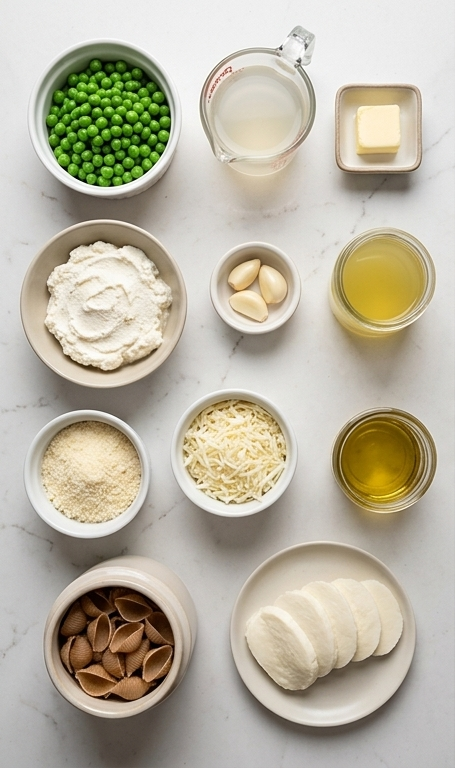
- Peas: A pop of sweetness and color; use frozen peas if fresh are not available, blanch briefly for best texture.
- Pasta (whole wheat shells): Holds the sauce in its cups; substitute with orecchiette or conchiglie for similar pockets.
- Ricotta or cottage cheese: Creates the creamy base; full-fat ricotta yields richer texture, cottage cheese is lighter—blend until silky.
- Parmesan cheese: Adds salty, nutty depth; freshly grated is best for melt and flavor, Pecorino Romano can be used for a tangier edge.
- Mozzarella: Melts into a tender top; fresh slices create a lovely broiled cap, shredded mozzarella works for ease.
- Garlic: Brightens the cheese mixture; roast a clove for a softer, sweeter note.
- Butter and olive oil: Butter brings a glossy finish and olive oil helps emulsify the cheese; use unsalted butter to control seasoning.
Essential Kitchen Tools
A few simple tools make Farmer’s Market Pasta effortless. A large pot and a fine colander are obvious for cooking and draining pasta quickly. A food processor or blender guarantees the ricotta mixture is lusciously smooth; if you do not have one, whisk very vigorously to avoid graininess. A wide mixing bowl gives you space to toss hot pasta without crushing the peas. Ramekins and a baking sheet are useful for the broil finish and presentation, but you can skip individual portions and use a single ovenproof dish. Finally, a good microplane or grater for the parmesan saves time and improves melt.
- Large pot: For boiling the pasta; choose one with plenty of water so pasta cooks evenly.
- Colander: For quick draining and cooling of peas and pasta.
- Food processor or blender: To smooth the ricotta or cottage cheese into a silky sauce.
- Wide mixing bowl: To toss pasta with peas and butter without losing ingredients.
- Ramekins or ovenproof dish: For broiling the mozzarella topping; ramekins make pretty individual portions.
- Microplane or fine grater: For freshly grating parmesan so it blends beautifully.
Step-by-Step Preparation Guide
Step 1: Blanch and Reserve the Peas
Cook the peas until bright and tender, then drain them thoroughly and set them aside to cool slightly; keep them in a small, shallow white ceramic bowl so they stay plump and vibrant for later. While the peas rest, measure out the reserved pasta water into a small glass measuring cup and place the butter on a tiny square dish—everything stays in its own vessel to keep flavors and textures separate and clean.
Step 2: Boil Pasta and Combine with Peas and Butter
Cook the pasta until just al dente, drain, then immediately toss the hot shells with the blanched peas and the half tablespoon of butter in a wide matte mixing bowl so the butter melts and slicks each piece. Toss gently so the peas remain intact and the pasta warms through; this is when the shells carry steam and a faint sheen of butter, ready to receive the cheese mixture.
Step 3: Make the Cheese-Garlic Mixture and Fold It In
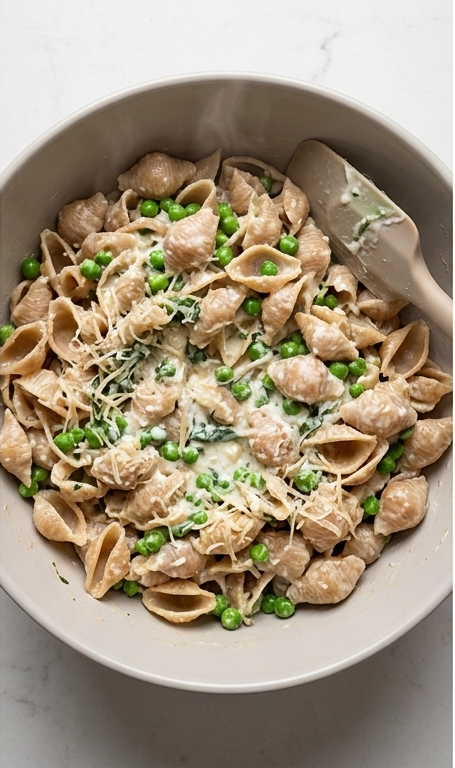
In a food processor or blender, puree the ricotta (or cottage cheese) with garlic and the teaspoon of olive oil until smooth and silky; season with salt and pepper, then fold in the grated parmesan, grated mozzarella, and torn basil to build a creamy, slightly grainy, herb-speckled texture. Add this cheese mixture to the warm pasta, pour in the reserved pasta water, and stir until the sauce becomes glossy, cohesive, and lightly coating every shell — a smooth, creamy emulsion dotted with bright peas and flecks of basil.
Step 4: Portion, Top with Mozzarella Slices, and Broil to Finish
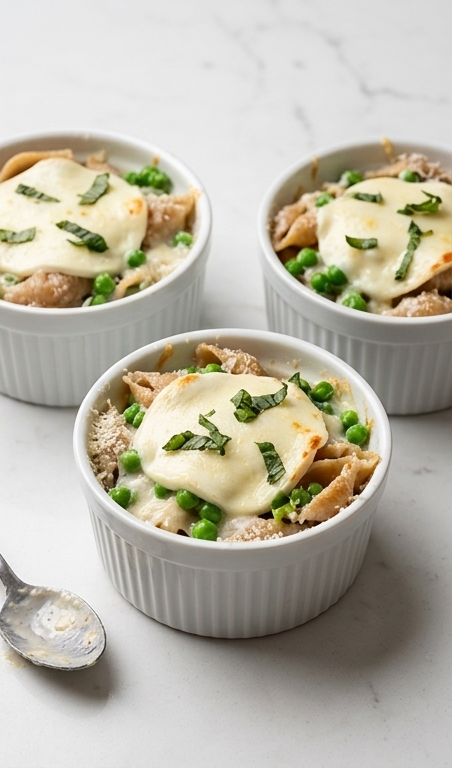
Spoon the sauced pasta into individual white ribbed ramekins, press a thin slice of fresh mozzarella onto each mound so it covers the surface, then place the ramekins aside to broil briefly until the mozzarella melts into a tender, slightly blistered cap with faint golden edges. Let the ramekins rest just a moment so the cheese settles, scatter a few more torn basil leaves on top for color and aroma, and serve warm.
Making It Your Own
I often treat this recipe like a template and play with little swaps. For a vegetarian-friendly protein boost, stir in halved roasted chickpeas or white beans at the end. When summer tomatoes are abundant, fold in a handful of quartered cherry tomatoes for acidity and color. In cooler months I swap basil for a scattering of chopped sautéed kale or spinach to make it heartier.
For a lighter take, use low-fat cottage cheese and skip the butter; add a squeeze of lemon for brightness. To make it gluten-free, choose your favorite gluten-free shells—the texture changes a bit, but the pockets still cradle the sauce beautifully. These experiments keep Farmer’s Market Pasta feeling new while staying true to the fresh, simple spirit that makes it a go-to.
How to Serve
If I’m hosting, I portion the Farmer’s Market Pasta into individual ramekins as the recipe suggests and arrange them on a large wooden board with a simple green salad dressed in lemon vinaigrette. Serve with crusty bread and a small dish of extra grated parmesan so guests can finish plates to taste. For a casual family meal, spoon the pasta into a large ovenproof dish, top with mozzarella, and broil for a single bubbly casserole.
Adjust quantities by doubling or tripling the ingredients and using a baking dish sized to hold the volume; broil in batches if needed so the cheese gets that lovely blistered finish. Pair with a crisp white wine or sparkling water with lemon for a refreshing contrast.
Storage and Reheating
Store leftovers in an airtight container in the refrigerator for up to 3 days. Keep the sauce and pasta together; the emulsion may firm up as it cools, so a quick warm-up restores that silky texture. When ready to eat, add a splash of water or reserved pasta water, then reheat gently on the stove over low heat, stirring to loosen the sauce.
To reheat individual portions under the broiler, warm briefly in the oven until heated through and then broil just long enough to revive the mozzarella top. Freezing is possible but not ideal, as the ricotta-based sauce can change texture; if you must freeze, use it within a month and thaw overnight in the refrigerator before reheating slowly.
Common Oopses and How to Fix Them
If the sauce is grainy, it usually means the ricotta or cottage cheese was not pureed enough; blitz it longer in a processor and add a tablespoon or two of hot pasta water to smooth things out. If the pasta seems dry, toss with a splash more reserved pasta water and a small pat of butter to re-emulsify.
Over-salting can happen quickly with parmesan and salted butter; taste the cheese mixture before adding extra salt and remember you can always adjust at the table. If peas lose their brightness, a quick blanch in boiling water for 30 seconds then an ice bath will revive their color and snap.
Final Invitation
Give Farmer’s Market Pasta a try this week and let its simple, fresh flavors remind you how satisfying minimal cooking can be. It’s quick enough for a weekday but feels special enough for company, and it adapts beautifully to what you have on hand. I hope it becomes a reliable comfort and a small celebration on your table.
Frequently Asked Questions.
- Can I use frozen peas instead of fresh? Yes, frozen peas are a great substitute and often make the recipe easier—briefly blanch or heat them so they are bright and tender before tossing with the pasta.
- Is ricotta absolutely necessary? No, cottage cheese works well too; blend it until smooth to avoid lumpiness and use whichever you prefer for texture and calorie differences.
- Can I make this dairy-free? For a dairy-free version, try a creamy cashew base or a plant-based ricotta and use vegan mozzarella for the broil finish.
- How do I prevent the broccoli from becoming mushy? This recipe does not include broccoli, but if you add it, steam or blanch it just until crisp-tender to keep texture.
- Can I prepare this ahead of time? You can make the cheese mixture and blanch the peas ahead; toss with freshly cooked pasta just before serving to retain best texture.
Farmer's Market Pasta
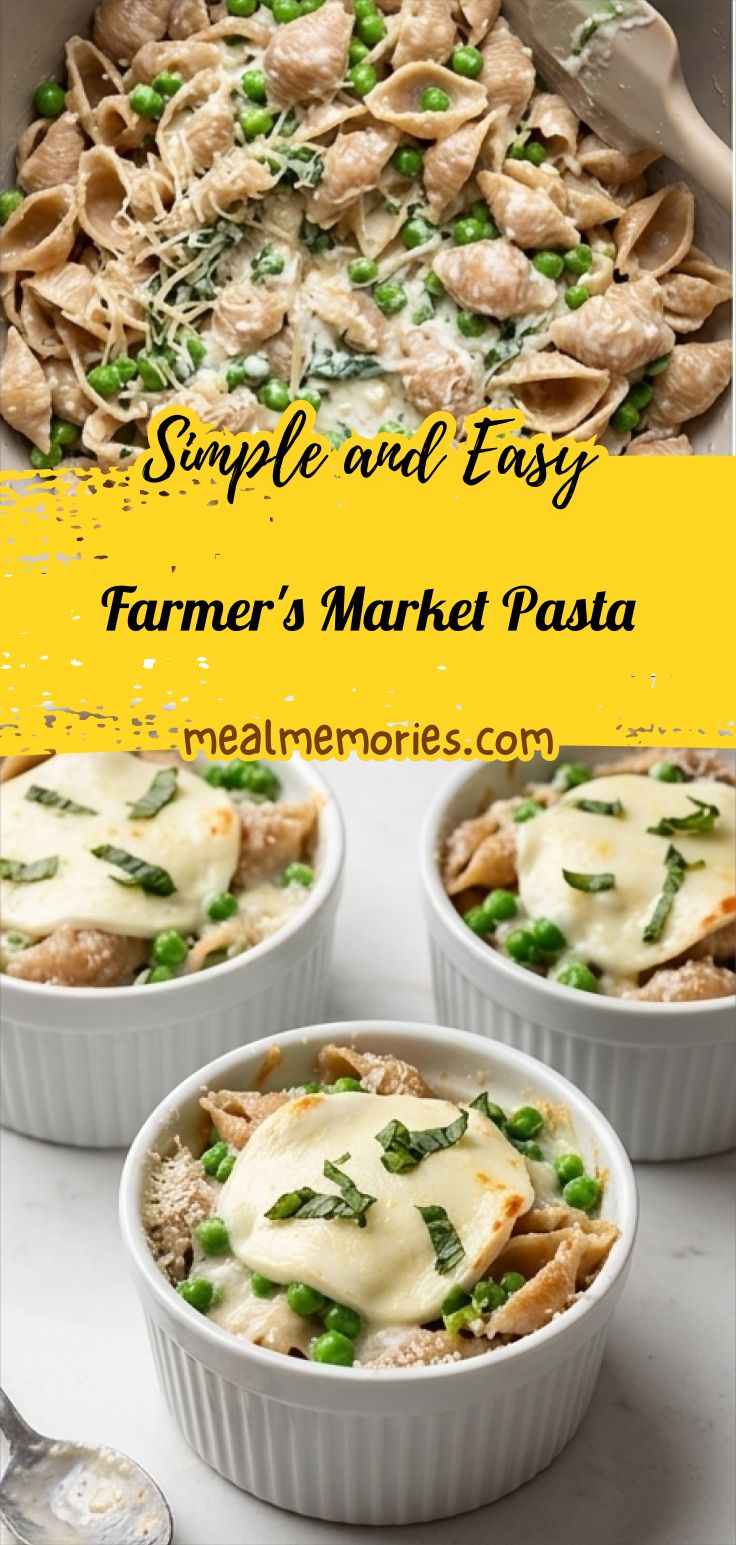
Make Farmer's Market Pasta in 30 minutes: bright peas, creamy ricotta sauce, and broiled mozzarella for a simple, fresh meal.
Ingredients
Instructions
Step 1: Blanch and Reserve the Peas
Cook the peas until bright and tender, then drain them thoroughly and set them aside to cool slightly; keep them in a small, shallow white ceramic bowl so they stay plump and vibrant for later. While the peas rest, measure out the reserved pasta water into a small glass measuring cup and place the butter on a tiny square dish—everything stays in its own vessel to keep flavors and textures separate and clean.
Step 2: Boil Pasta and Combine with Peas and Butter
Cook the pasta until just al dente, drain, then immediately toss the hot shells with the blanched peas and the half tablespoon of butter in a wide matte mixing bowl so the butter melts and slicks each piece. Toss gently so the peas remain intact and the pasta warms through; this is when the shells carry steam and a faint sheen of butter, ready to receive the cheese mixture.
Step 3: Make the Cheese-Garlic Mixture and Fold It In
In a food processor or blender, puree the ricotta (or cottage cheese) with garlic and the teaspoon of olive oil until smooth and silky; season with salt and pepper, then fold in the grated parmesan, grated mozzarella, and torn basil to build a creamy, slightly grainy, herb-speckled texture. Add this cheese mixture to the warm pasta, pour in the reserved pasta water, and stir until the sauce becomes glossy, cohesive, and lightly coating every shell — a smooth, creamy emulsion dotted with bright peas and flecks of basil.
Step 4: Portion, Top with Mozzarella Slices, and Broil to Finish
Spoon the sauced pasta into individual white ribbed ramekins, press a thin slice of fresh mozzarella onto each mound so it covers the surface, then place the ramekins aside to broil briefly until the mozzarella melts into a tender, slightly blistered cap with faint golden edges. Let the ramekins rest just a moment so the cheese settles, scatter a few more torn basil leaves on top for color and aroma, and serve warm.
Notes
- Use frozen peas if fresh are not available; blanch briefly for best texture.
- Blend ricotta or cottage cheese until silky to avoid grainy sauce.
- Reserve some pasta water to adjust sauce consistency when reheating.
- Freshly grated parmesan melts and flavors better than pre-grated.
- For a lighter version, use cottage cheese and skip the butter.
- Broil briefly and watch closely so the mozzarella gets golden but does not burn.