I love the sparkle of a fresh mimosa on a lazy weekend morning – it feels like a tiny celebration in a glass. When I first learned how to make Mimosas, I was looking for a simple yet elegant drink that could turn any brunch into a special occasion. The bright orange hue and the gentle fizz instantly lift the mood, and the ritual of layering the juice and wine feels almost meditative. Over the years, I’ve refined the technique, and now I’m excited to share the secrets that make this classic cocktail shine.
My Mimosas Moment
It was a rainy Saturday when a few close friends popped over, and we were stuck indoors with nothing but a bottle of brut and a half‑filled pitcher of orange juice. I remembered a tip from my grandmother about chilling the glass before pouring, and I quickly fetched a set of crystal flutes from the cabinet. As we poured the juice, the room filled with a citrusy aroma that seemed to chase the clouds away. The first sip was a burst of sunshine, and we all laughed, feeling the warmth spread through us. That simple, spontaneous gathering became a cherished memory, and ever since I’ve made sure to keep a stash of fresh orange juice and a favorite sparkling wine on hand for those moments when a little sparkle is just what we need.
The Star Ingredients
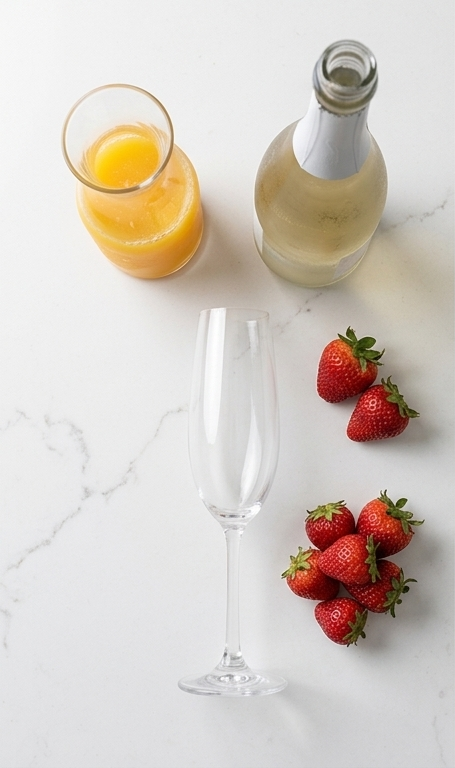
- Orange Juice: Fresh, chilled orange juice provides the bright, tangy base. Look for juice with a hint of pulp for texture, or strain it for a smoother sip. If oranges are out of season, try a blend of blood orange and tangerine for a deeper flavor.
- Sparkling Wine: Brut champagne, Cava, or prosecco adds the lively bubbles. Choose a dry style to balance the sweetness of the juice. For a budget‑friendly option, a quality prosecco works beautifully.
- Strawberry: A ripe strawberry on the rim adds a pop of color and a fragrant finish. Opt for berries that are firm yet fragrant; you can also use a thin orange twist for a citrusy edge.
Tools of the Trade
- Champagne Flute: A slender, clear flute showcases the layers and preserves the bubbles longer. If you don’t have a flute, a tall wine glass works in a pinch.
- Juicer or Citrus Press: Freshly squeezed juice tastes brighter than store‑bought. A handheld press lets you extract juice quickly without a mess.
- Ice Bucket: Keeping the wine and juice chilled is essential; an ice bucket with a towel underneath prevents condensation drips.
- Small Spoon: For gently stirring the layers if you prefer a slight mix before serving.
Step-by-Step Preparation Guide
Step 1: Pour the chilled orange juice into the flute
Gently pour fresh, chilled orange juice into a slender clear champagne flute until it reaches about one-third of the glass. Focus on the juice’s cool, slightly pulpy texture: tiny suspended pulp flecks catching light, a satin-like meniscus at the rim, and small droplets of condensation beginning to bead on the outside of the chilled glass. Take a quiet moment to appreciate the bright, sunlit orange color against the clean white quartzite surface as the base layer for the cocktail.
Step 2: Top with sparkling wine until lively and effervescent
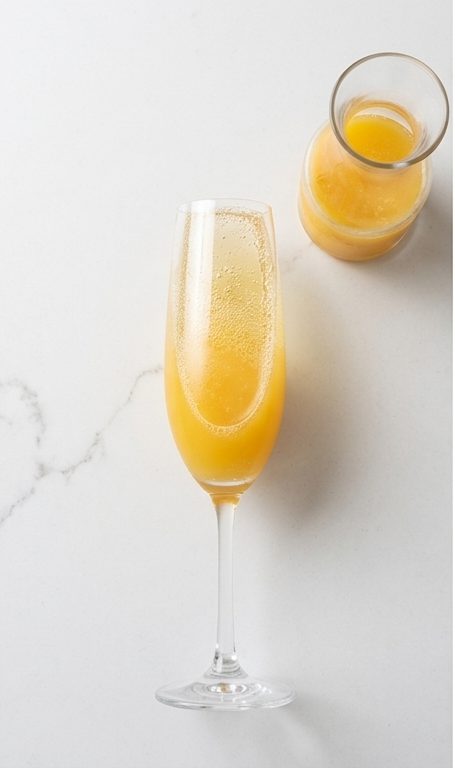
Slowly top the flute with well‑chilled brut or prosecco, pouring gently so the two layers blend with a swift cascade of rising micro‑bubbles. Watch the surface texture transform: a translucent golden‑orange column threaded with thousands of tiny, persistent bubbles and a delicate, airy crown of foam at the top. The flute remains the same clear crystal vessel from Step 1, carrying the evolving liquid textures and the soft ring of condensation along its stem.
Step 3: Garnish with a fresh strawberry and serve
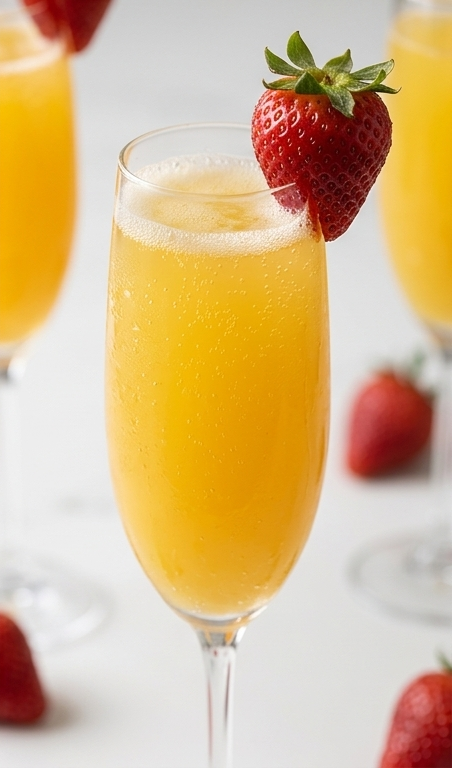
Slide a glossy, ripe red strawberry onto the rim, its seeds and tiny droplets of water catching the light and adding a vibrant contrast to the sparkling drink. The glass appears perfectly brimming, the liquid shimmering with motion and tiny bubbles racing to the surface, while the strawberry’s green calyx offers a fresh pop of color. Present the finished mimosa on the white quartzite tabletop—no hands, no appliances—just the elegant flute, the gleaming drink, and the cheerful garnish.
Making It Your Own
I love experimenting with twists that keep the classic spirit alive. Swap the orange juice for a blend of grapefruit and blood orange for a slightly bitter edge, perfect for a brunch with a sophisticated palate. Add a splash of peach puree or a few fresh raspberries for a fruity burst that feels like summer in a glass. For a non‑alcoholic version, replace the sparkling wine with sparkling water or a dry ginger ale, and you’ll still get that festive fizz. Seasonal herbs like mint or basil can be muddled gently in the juice for an aromatic surprise. Each variation invites a new story, so feel free to play and discover your favorite version.
Serving & Presentation
When hosting a brunch, line a tray with a variety of flutes, each pre‑chilled in the freezer for extra crispness. Arrange a platter of fresh strawberries, orange wedges, and a few sprigs of mint nearby for guests to customize their garnish. If you’re serving a larger crowd, scale the recipe in a punch bowl: combine orange juice and sparkling wine in a large pitcher, then ladle into individual flutes and add a single strawberry per glass. For a romantic twist, serve the mimosa over a bed of crushed ice in a tall glass, allowing the ice to melt slowly and dilute the drink just enough to keep it refreshing throughout the meal.
Storage & Reheating
If you have leftover orange juice, keep it in a sealed container in the refrigerator for up to two days; give it a quick stir before using again to recombine any settled pulp. Sparkling wine loses its bubbles once opened, so it’s best to use any remaining wine within a few hours. You can revive a flat mimosa by adding a splash of club soda or a fresh pour of chilled sparkling water, which restores the lively effervescence without altering the flavor profile. For pre‑made batches, store the juice and wine separately, then combine just before serving to maintain the perfect fizz.
Oops! Common Mistakes
One frequent slip is pouring the wine before the juice, which can cause the bubbles to dissipate quickly and result in a flat drink. Always start with the orange juice to create a stable base. Another mistake is using juice that’s too sweet or too sour; balance is key, so taste the juice before mixing and adjust with a splash of water if needed. Finally, neglecting to chill the glass can cause condensation that dilutes the cocktail – a quick chill in the freezer or an ice‑water bath keeps the drink crisp.
Enjoy Your Mimosas
Now that you’ve mastered how to make Mimosas, it’s time to bring that sparkle to your own table. Whether you’re celebrating a special occasion or simply brightening a regular morning, this effortless cocktail adds a touch of elegance and joy. Grab a flute, pour, garnish, and let the bubbles do the talking – cheers to many more delightful brunches!
Frequently Asked Questions
- Can I use bottled orange juice? Yes, but freshly squeezed juice gives a brighter flavor and better texture.
- What’s the ideal juice‑to‑wine ratio? The classic ratio is 1 part orange juice to 2 parts sparkling wine, but feel free to adjust to taste.
- Can I make a non‑alcoholic mimosa? Absolutely – replace the sparkling wine with sparkling water or a dry ginger ale for a festive mocktail.
- How long does a mimosa stay fizzy? Ideally, enjoy it within 30 minutes of pouring; the bubbles will slowly fade after that.
- What garnish works best? A fresh strawberry, orange slice, or even a sprig of mint adds color and aroma.
How to make Mimosas
Learn how to make Mimosas quickly – fresh orange juice, sparkling wine, and a strawberry garnish for a perfect brunch sparkle.
Ingredients
Instructions
Step 1: Pour the chilled orange juice into the flute
Gently pour fresh, chilled orange juice into a slender clear champagne flute until it reaches about one-third of the glass. Focus on the juice’s cool, slightly pulpy texture: tiny suspended pulp flecks catching light, a satin-like meniscus at the rim, and small droplets of condensation beginning to bead on the outside of the chilled glass. Take a quiet moment to appreciate the bright, sunlit orange color against the clean white quartzite surface as the base layer for the cocktail.
Step 2: Top with sparkling wine until lively and effervescent
Slowly top the flute with well-chilled brut or prosecco, pouring gently so the two layers blend with a swift cascade of rising micro-bubbles. Watch the surface texture transform: a translucent golden-orange column threaded with thousands of tiny, persistent bubbles and a delicate, airy crown of foam at the top. The flute remains the same clear crystal vessel from Step 1, carrying the evolving liquid textures and the soft ring of condensation along its stem.
Step 3: Garnish with a fresh strawberry and serve
Slide a glossy, ripe red strawberry onto the rim, its seeds and tiny droplets of water catching the light and adding a vibrant contrast to the sparkling drink. The glass appears perfectly brimming, the liquid shimmering with motion and tiny bubbles racing to the surface, while the strawberry’s green calyx offers a fresh pop of color. Present the finished mimosa on the white quartzite tabletop—no hands, no appliances—just the elegant flute, the gleaming drink, and the cheerful garnish.
Notes
- Keep the glass chilled for extra fizz.
- Use a dry sparkling wine to balance the juice sweetness.
- Freshly squeezed juice tastes brighter than store‑bought.
- Garnish with a ripe strawberry for visual appeal.