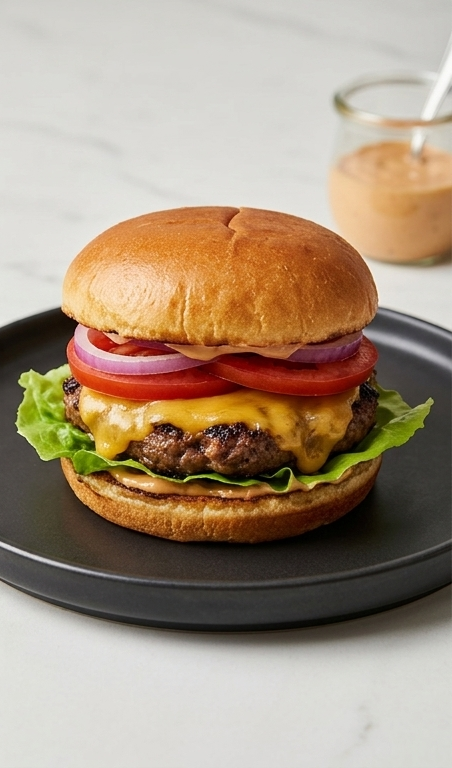
I still remember the first time I served my family the Smoked Pulled Pork Sandwiches Recipe – the house smelled like a backyard barbecue and everyone kept sneaking into the kitchen. I fell for this technique because it yields a deep smoky crust and meat that practically melts in your mouth. Over the years I have tweaked the rub and the spritzing routine until the sandwiches are reliably tender and full of flavor. If you love slow-cooked comfort food, this Smoked Pulled Pork Sandwiches Recipe is the kind of project that pays off in big, saucy servings.
The combination of a sweet-savory rub, a thin layer of mustard, and a patient, low-and-slow smoker creates a sandwich that feels both rustic and celebratory. Whether you are serving a crowd or making a Sunday dinner, this Smoked Pulled Pork Sandwiches Recipe is worth the time – and the payoff is worth the wait.
How This Recipe Became My Rainy-Day Favorite
I made these sandwiches on a rainy Saturday when the power was out at our neighbors’ house and we decided to move the party to my backyard smoker. I tacked on the mustard and spice rub while the rain tapped the hood of my smoker and the scent of apple juice and bourbon spritz rose in soft clouds. There was a small moment when the bark took on that mahogany sheen and I knew the patience would be rewarded. The first bite – juices, smoke, a hint of sweetness – made everyone laugh and relax as if the weather had been planned just to slow us down. That memory is folded into every future cook, and the Smoked Pulled Pork Sandwiches Recipe now comes out when I want something familiar, comforting, and showy without being fussy.
Key Ingredients and Why They Matter
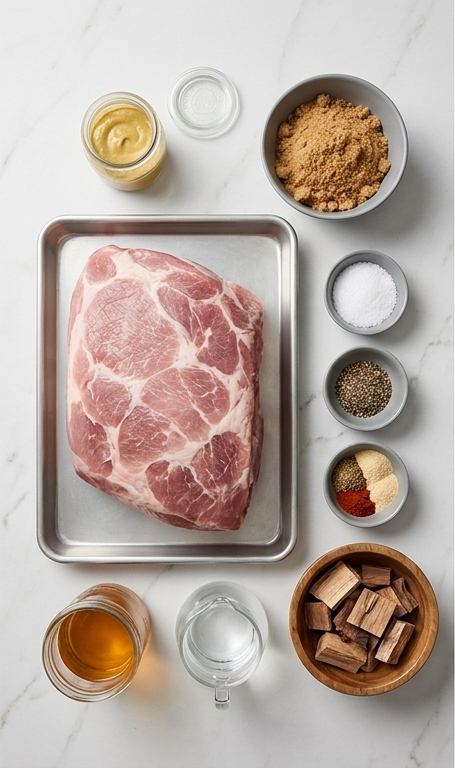
- Pork Shoulder: The foundation of the dish. Look for well-marbled pork shoulder or Boston butt – the fat renders into the meat to keep it juicy. Substitute with a smaller shoulder if feeding fewer people.
- Mustard: Acts as an adhesive for the rub and gives a mild tang. Yellow or Dijon work fine; use a light coat so the rub sticks.
- Brown Sugar: Brings sweetness and helps create a caramelized crust. You can swap with coconut sugar in a pinch.
- Salt and Spices (pepper, garlic, paprika, onion, cayenne): Build the savory backbone; adjust cayenne for heat. Use fresh spices for the best aroma.
- Bourbon and Apple Juice: For the spritz – they keep the surface moist and add flavor layers. Apple cider works if you prefer less sweetness.
- Wood, Water: Wood chunks or pellets add smoke character; water in the smoker stabilizes temperature and humidity.
Essential Kitchen Tools and Why They Help
For this recipe, a few well-chosen tools make the process easier and more reliable. The right tools help you maintain temperature, manage smoke, and finish the shoulder without stress. If you do not own every item below, I include simple alternatives that still let you get great results.
- Smoker: The star appliance for low-and-slow smoking. If you do not have a smoker, use a grill set up for indirect heat or a pellet grill.
- Meat Thermometer: Essential for knowing when to wrap and when the shoulder is done – instant-read thermometers are fast and accurate.
- Spray Bottle: For the bourbon and apple juice spritz – a clean kitchen spray bottle works best.
- Butcher Paper or Foil: For the Texas crutch when the meat hits around 160F. Butcher paper keeps a bit more bark; foil traps more steam.
- Two Forks or Meat Claws: For shredding – use forks, claws, or stand mixer with paddle on low for large batches.
Step-by-Step Preparation Guide
Step 1: Mix the dry spice rub
In a small ceramic bowl combine the brown sugar, salt, ground black pepper, garlic powder, paprika, onion powder, and cayenne pepper. Stir the mix until it is uniform and fragrant, tasting that deep warm balance of sweet, salty, smoky and spicy. Use a shallow matte bowl so the granularity of the brown sugar and the flecks of spices are visible – this will make the rub easy to scoop and apply.
Step 2: Coat the pork with mustard and apply the rub
Spread a thin even layer of mustard over the entire pork shoulder to act as the adhesive for the spice rub. Place the shoulder on a low-sided tray and press the spice mixture onto every exposed surface, making sure the rub forms a generous, even crust. Leave a little pile of the rub in its bowl and a small jar of mustard nearby on the tray for reference – these tools help preserve the visual story of the prep.
Step 3: Marinate in the fridge overnight
Transfer the coated shoulder to a covered tray or shallow dish and place it in the refrigerator overnight to let the flavors meld and the rub adhere. This slow rest lets the sugar and salt penetrate and begin to create the foundation for a proper bark. Keep the tray uncovered briefly when bringing to room temperature before smoking so any surface moisture evaporates.
Step 4: Prepare the smoker accoutrements
While you won’t see the smoker machine in the images, prepare the supporting elements: a small jug of water for the smoker’s water pan, a wooden bowl with pre-soaked wood chunks or a container of pellets, and a bottle of bourbon and a jar of apple juice to be mixed for spritzing. Arrange these in clean vessels so they’re ready and visually consistent with your prep bowls.
Step 5: Smoke the shoulder at 250°F for the initial hours
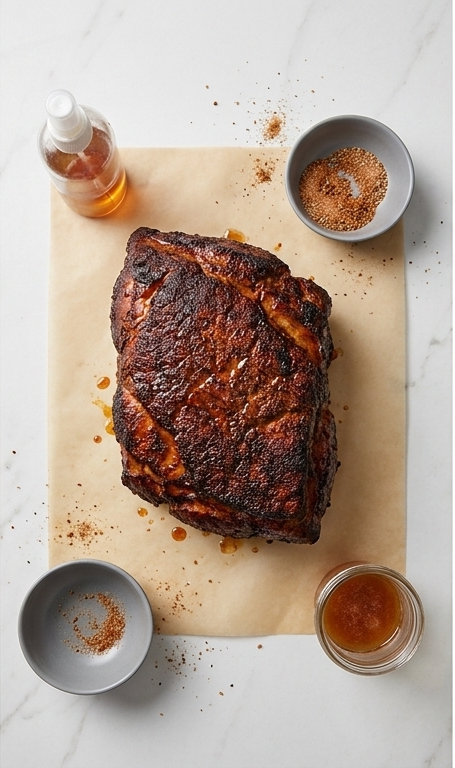
Set the shoulder into the smoker environment and smoke low-and-slow at about 250°F for the first four to six hours, developing color and early bark without rushing the cook. During this period the surface will slowly darken and tighten – you want that gradual mahogany color to start forming before the more frequent spritzing phase. Give the shoulder time to build structure before the next active phase.
Step 6: Spritz hourly with the bourbon + apple juice mixture until 160°F
Combine 4 ounces bourbon and 16 ounces apple juice in a clean spray bottle and use it to mist the shoulder every hour. This keeps the surface moist, helps the smoke penetrate, and builds the glossy layers on the developing bark. Continue the hourly spritzing until the internal temperature reaches about 160°F, where the meat will begin to transition toward tenderness.
Step 7: Wrap and finish at lower temperature to 195–205°F
When the shoulder hits ~160°F, give it one last spritz and then wrap tightly in foil or butcher paper and return it to the smoker. Lower the smoker to about 225°F and continue to cook until the internal temperature reaches the sweet spot of 195–205°F – this is where connective tissues collapse and the meat becomes shred-ready.
Step 8: Rest the wrapped shoulder for an hour
Carefully remove the wrapped shoulder from heat and let it rest, still wrapped, for about an hour. This resting period equalizes juices and helps the meat reabsorb moisture, yielding tender, glistening strands that pull cleanly without drying out.
Step 9: Shred, build sandwiches, and serve
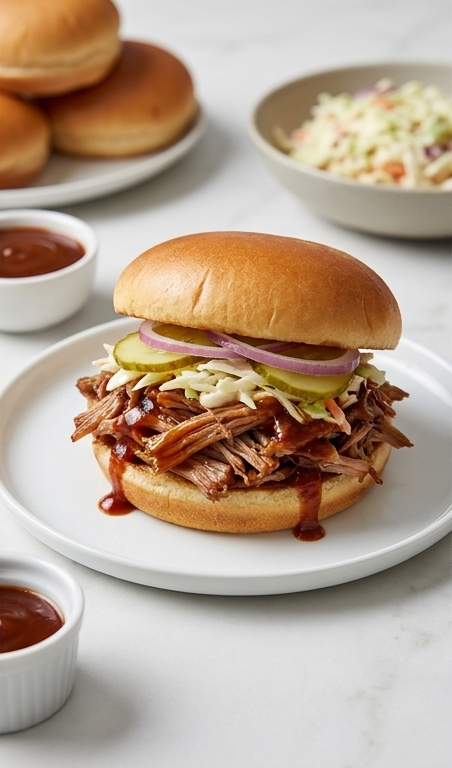
Unwrap and transfer the shoulder to a large bowl, remove and discard the bone, and use two forks or meat shredders to tease the meat into long, juicy strands. Toss with a little of the cooking juices or your favorite barbecue sauce if you like it saucy. Pile the pulled pork onto soft toasted rolls, top with creamy coleslaw, slices of pickle and red onion, and serve with extra sauce on the side. Enjoy the smoky, tender contrasts of texture and flavor.
Making It Your Own
I like to experiment by shifting one element at a time – try swapping brown sugar for maple sugar or adding a little coffee to the rub for an earthy note. For a lighter option, shred and pile the pork onto lettuce cups instead of buns. Regional twists are fun: add a Carolina mustard sauce for tang, or mix in a vinegar-based sauce for more zip.
In cooler months I lean into darker wood like hickory for a bolder smoke; in summer I use fruitwoods like apple for a milder profile. For a weeknight version, cook a smaller pork shoulder or finish in a covered oven after an initial smoky stage.
How to Serve
Picture a casual dinner party: set up a sandwich bar with toasted rolls, bowls of coleslaw, pickles, thinly sliced red onion, and a couple of barbecue sauces. Keep the pulled pork warm in a covered tray or slow cooker so guests can help themselves and everyone gets the freshest bites.
To scale up, double the shoulder and stagger cooks so you have continuous warm trays. For a family meal, one 9 lb shoulder will feed a crowd – plan sides like potato salad and baked beans that can be made ahead.
Storage and Reheating Tips
Leftovers keep beautifully. Cool the pulled pork quickly, then store in airtight containers in the fridge for up to 4 days or freeze for up to 3 months in portioned freezer bags.
To reheat, warm gently in a skillet with a splash of reserved cooking juices or a little apple juice to keep the meat moist. For larger quantities, reheat in a covered oven-safe dish at 300F until warmed through.
Common Mistakes and How to Avoid Them
Skipping a reliable thermometer is the fastest way to problems – cook by temperature not time. If you wrap too early or too late you may sacrifice bark or moistness, so trust the thermometer cues.
Over-spritzing can wash away the rub; keep a steady hourly rhythm and use a light hand. And don’t rush the rest – cutting too soon loses precious juices.
Final Thoughts
Give the Smoked Pulled Pork Sandwiches Recipe a try when you want a show-stopping, hands-off main that rewards patience. Once you get the timing dialed in, you will find yourself making these sandwiches for celebrations, game days, and cozy weekends.
Frequently Asked Questions.
- Q: How long will a 9 lb pork shoulder take to smoke? A: It depends on your smoker and the stall, but plan 10 to 14 hours total for a 9 lb shoulder – aim for 195 to 205F internal.
- Q: Can I skip the bourbon in the spritz? A: Yes, you can use apple juice or apple cider alone; the bourbon adds a hint of depth but is optional.
- Q: What wood is best for smoked pulled pork? A: Fruitwoods like apple or cherry are classic for pulled pork; hickory gives a stronger, more assertive smoke.
- Q: Should I trim the fat cap? A: Trim excess silver skin, but keep a moderate fat cap to render into the meat and keep it juicy.
- Q: What do I serve with these sandwiches? A: Coleslaw, pickles, potato salad, and baked beans are classic, but a fresh green salad also balances the richness.
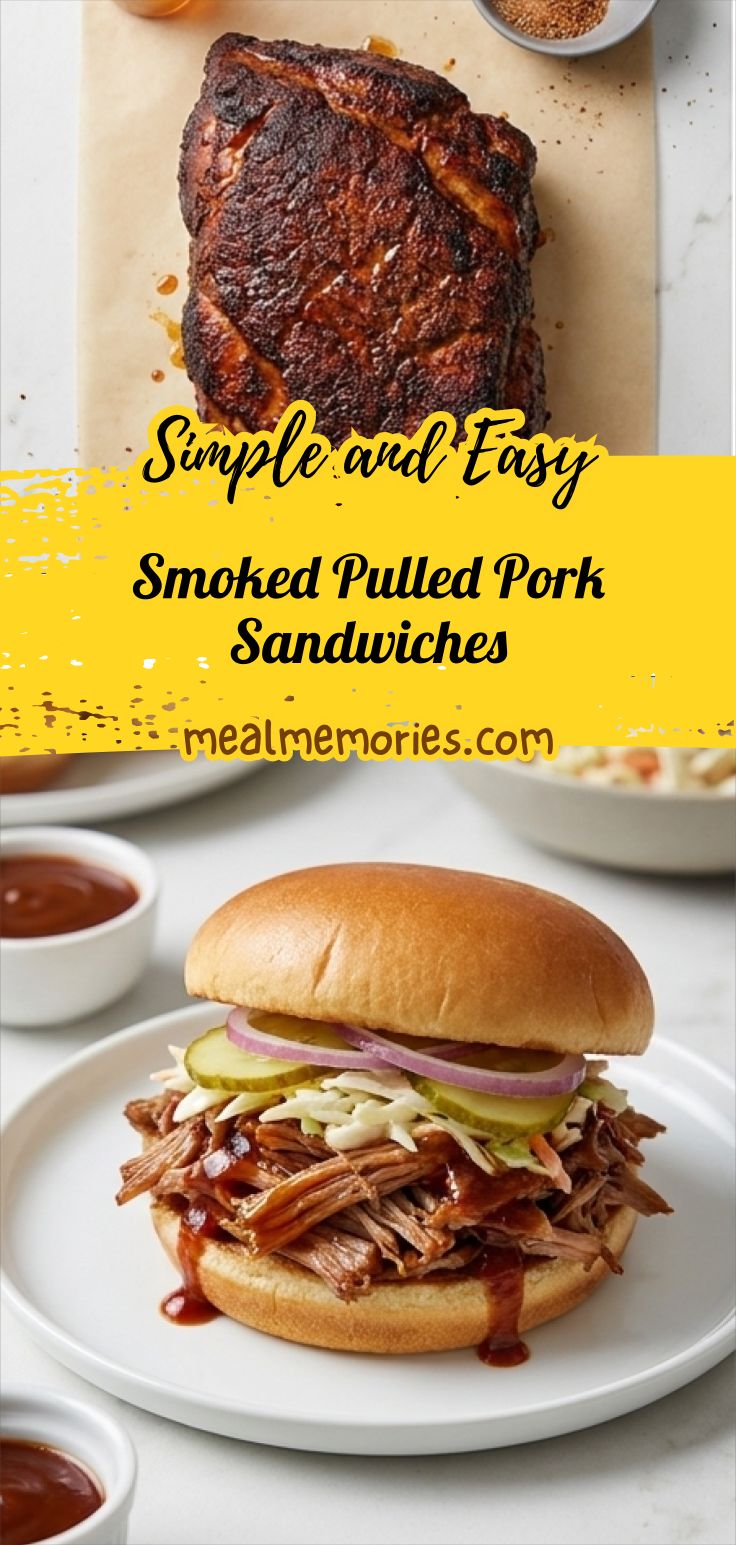
Smoked Pulled Pork Sandwiches Recipe
Make Smoked Pulled Pork Sandwiches Recipe: smoke, shred, and serve juicy sandwiches everyone will love.
Ingredients
Instructions
Step 1: Mix the dry spice rub
In a small ceramic bowl combine the brown sugar, salt, ground black pepper, garlic powder, paprika, onion powder, and cayenne pepper. Stir the mix until it is uniform and fragrant, tasting that deep warm balance of sweet, salty, smoky and spicy. Use a shallow matte bowl so the granularity of the brown sugar and the flecks of spices are visible — this will make the rub easy to scoop and apply.
Step 2: Coat the pork with mustard and apply the rub
Spread a thin even layer of mustard over the entire pork shoulder to act as the adhesive for the spice rub. Place the shoulder on a low-sided tray and press the spice mixture onto every exposed surface, making sure the rub forms a generous, even crust. Leave a little pile of the rub in its bowl and a small jar of mustard nearby on the tray for reference — these tools help preserve the visual story of the prep.
Step 3: Marinate in the fridge overnight
Transfer the coated shoulder to a covered tray or shallow dish and place it in the refrigerator overnight to let the flavors meld and the rub adhere. This slow rest lets the sugar and salt penetrate and begin to create the foundation for a proper bark. Keep the tray uncovered briefly when bringing to room temperature before smoking so any surface moisture evaporates.
Step 4: Prepare the smoker accoutrements
While you won’t see the smoker machine in the images, prepare the supporting elements: a small jug of water for the smoker’s water pan, a wooden bowl with pre-soaked wood chunks or a container of pellets, and a bottle of bourbon and a jar of apple juice to be mixed for spritzing. Arrange these in clean vessels so they’re ready and visually consistent with your prep bowls.
Step 5: Smoke the shoulder at 250°F for the initial hours
Set the shoulder into the smoker environment and smoke low-and-slow at about 250°F for the first four to six hours, developing color and early bark without rushing the cook. During this period the surface will slowly darken and tighten — you want that gradual mahogany color to start forming before the more frequent spritzing phase. Give the shoulder time to build structure before the next active phase.
Step 6: Spritz hourly with the bourbon + apple juice mixture until 160°F
Combine 4 ounces bourbon and 16 ounces apple juice in a clean spray bottle and use it to mist the shoulder every hour. This keeps the surface moist, helps the smoke penetrate, and builds the glossy layers on the developing bark. Continue the hourly spritzing until the internal temperature reaches about 160°F, where the meat will begin to transition toward tenderness.
Step 7: Wrap and finish at lower temperature to 195–205°F
When the shoulder hits ~160°F, give it one last spritz and then wrap tightly in foil or butcher paper and return it to the smoker. Lower the smoker to about 225°F and continue to cook until the internal temperature reaches the sweet spot of 195–205°F — this is where connective tissues collapse and the meat becomes shred-ready.
Step 8: Rest the wrapped shoulder for an hour
Carefully remove the wrapped shoulder from heat and let it rest, still wrapped, for about an hour. This resting period equalizes juices and helps the meat reabsorb moisture, yielding tender, glistening strands that pull cleanly without drying out.
Step 9: Shred, build sandwiches, and serve
Unwrap and transfer the shoulder to a large bowl, remove and discard the bone, and use two forks or meat shredders to tease the meat into long, juicy strands. Toss with a little of the cooking juices or your favorite barbecue sauce if you like it saucy. Pile the pulled pork onto soft toasted rolls, top with creamy coleslaw, slices of pickle and red onion, and serve with extra sauce on the side. Enjoy the smoky, tender contrasts of texture and flavor.
Notes
- Use a reliable instant-read thermometer to hit 195 to 205F for shreddable pork.
- If short on time, smoke to 160F then finish in a 300F oven wrapped tightly.
- Keep a light hand when spritzing; once per hour is enough to build flavor without washing the rub.