I have a soft spot for Chicken Noodle Soup Recipe that goes back to rainy afternoons and quiet kitchens. This version is the kind I make when I want something honest and comforting: clear golden broth, tender shredded chicken, and wide egg noodles that soak up flavor. I’ve tinkered with the balance of herbs and lemon until it feels just right, and it’s become a go-to when friends or family need something warm. If you love simple, nourishing food, this Chicken Noodle Soup Recipe will feel like a small, delicious ritual.
How This Recipe Became My Cozy-Meal Go-To
I remember the first time I cooked this Chicken Noodle Soup Recipe for someone who was feeling under the weather. The house smelled like butter, garlic, and slow-simmered broth, and when I ladled the first bowl it felt like a tiny rescue. The chicken shredded into tender ribbons, the noodles were soft but still ribbon-like, and a squeeze of lemon brightened the whole pot. There was a quiet satisfaction watching my friend take the first spoonful and relax; the steam fogged their glasses and they smiled. That moment sealed it for me: this soup is not just food, it’s a small act of care that balances technique and comfort. I still think about that bowl when I peel carrots and dice onions, and every time I make it there’s a little ritual to the rhythm of chopping, stirring, and tasting.
Key Ingredients and Why They Matter
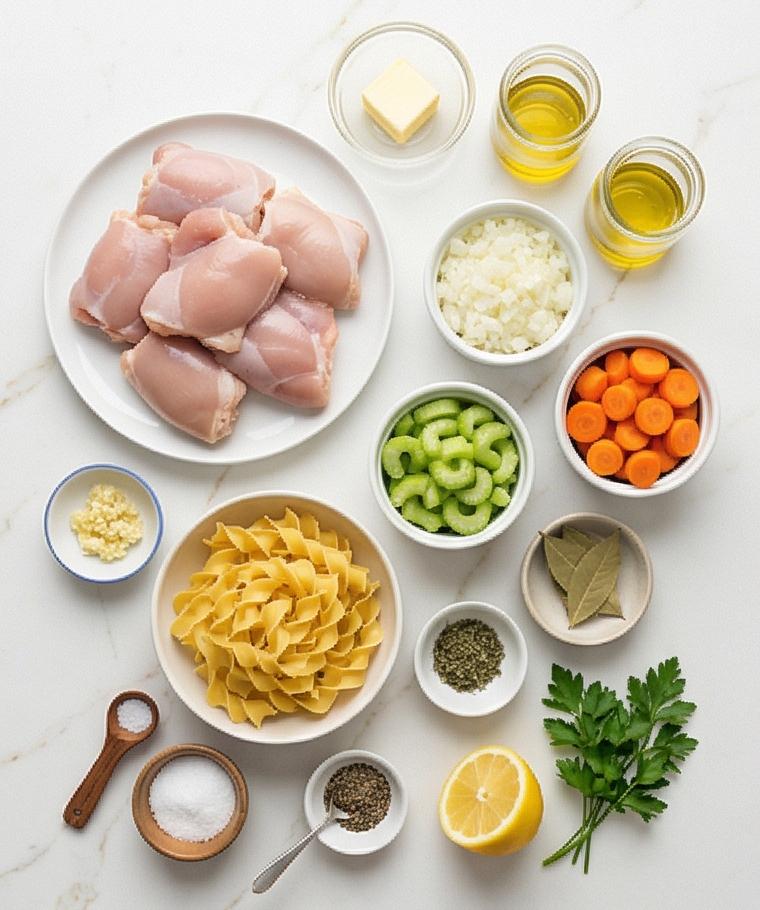
- Olive Oil: Adds a light, fruity backbone for sautéing; use extra-virgin for flavor or avocado oil for a neutral option.
- Unsalted Butter: Gives silk and richness; substitute all oil for a dairy-free version.
- Yellow Onion: Builds sweet-savory depth; pick firm, heavy bulbs with dry skins.
- Carrots and Celery: The classic mirepoix for texture and sweetness; parsnips are a nice swap.
- Chicken Broth: The flavor base, so choose low-sodium to control seasoning; homemade is best.
- Boneless Chicken: Thighs stay moist, breasts are leaner; trim excess fat and pat dry.
Essential Kitchen Tools and Why They Help
A few reliable tools keep this recipe simple and successful. Start with a heavy-bottomed pot or Dutch oven so heat distributes evenly and the aromatics sweat without scorching. A sharp chef’s knife makes quick work of uniform dicing and keeps textures consistent, and a sturdy cutting board protects your knife and your wrists. Use a slotted spoon or tongs to lift the chicken without losing liquid, and a fine mesh strainer is helpful if you want an extra-clear broth. If you don’t have wide egg noodles, a large spoon and careful stirring will prevent smaller pasta from clumping. For shredding, two forks work fine, or use your hands once the chicken is cool enough.
- Heavy Dutch oven or large pot: Even heat for gentle simmering.
- Chef’s knife: Fast, consistent prep and safer cuts.
- Cutting board: Preferably one with a groove for juice control.
- Tongs or slotted spoon: Remove chicken without excess liquid.
- Colander or slotted spoon: Drain or lift cooked noodles.
Step-by-Step Preparation Guide.
Step 1: Prepare the vegetables
Finely dice the yellow onion until the pieces are small and uniform, peel and slice the carrots into precise 1/4-inch (6 mm) rounds, trim and slice the celery into matching 1/4-inch pieces, and finely mince the garlic. Work methodically so the textures read consistently in the pot: tight, even dice for the onion, crisp circular carrot rounds, and celery crescents that will soften evenly. Keep the prepped vegetables in small bowls or ramekins so each element’s color and texture are clear and ready.
Step 2: Sweat the aromatics until soft and translucent
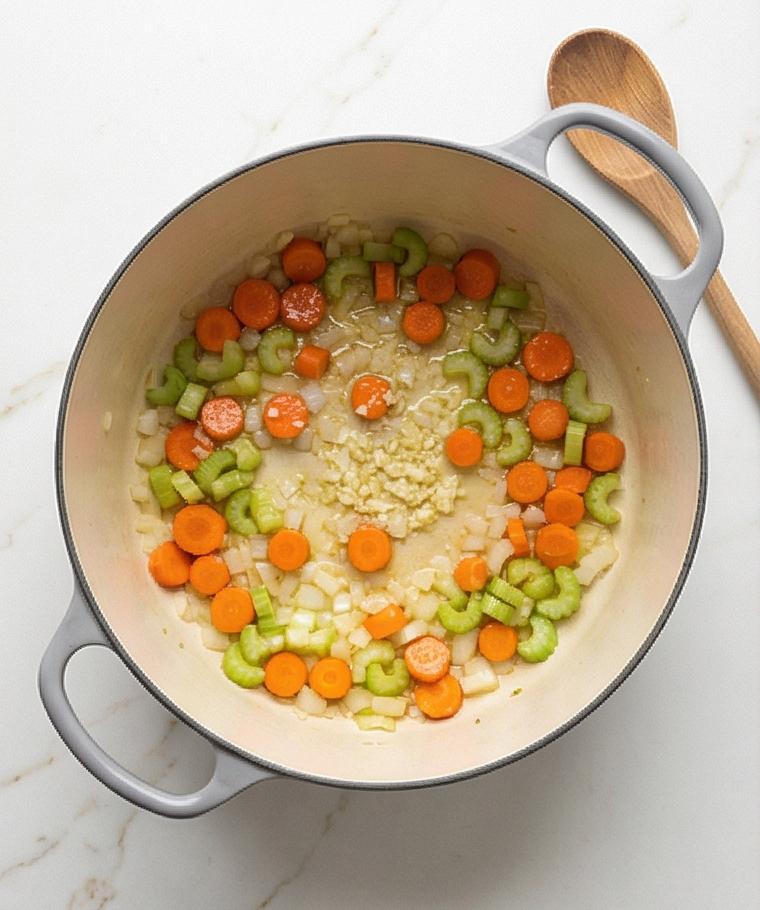
In a heavy Dutch oven or large pot, warm the olive oil and butter together until the butter just foams, then add the diced onion, carrot rounds, and celery pieces. Cook over medium heat, stirring occasionally, until the vegetables soften and the onion becomes translucent but not browned; finish by stirring in the minced garlic for thirty to forty-five seconds so it releases aroma without browning. The result should be glossy, slightly softened vegetables with a faint sheen of butter on the surface, bright color but softened edges.
Step 3: Build the broth and submerge the chicken
Pour the low-sodium chicken broth and water into the pot, scraping up any fond, then nestle the trimmed boneless chicken thighs (or breasts), add the dried bay leaves and thyme, and bring just to a boil before lowering to a gentle simmer. Visually the pot should read as a clear golden broth with chicken pieces fully submerged, a couple of bay leaves floating, and softened vegetables suspended in the liquid. Season gently with salt and black pepper so the liquid reads mildly seasoned and shimmering with tiny fat droplets.
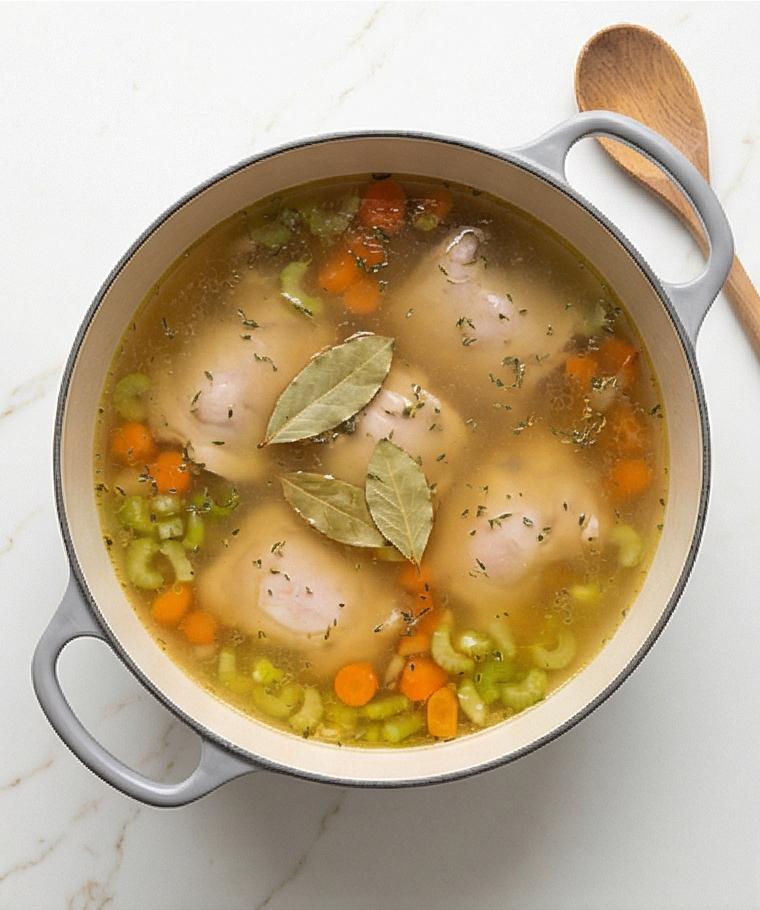
Step 4: Simmer until the chicken is very tender, then rest and remove
Keep the pot at a gentle simmer until the chicken is tender enough to shred easily, then use tongs or a slotted spoon to lift the pieces onto a clean cutting board or plate and let them rest for a few minutes. The visual milestone is cooked, plump chicken pieces resting with a few glossy juices pooling beneath them and a faint shine on the skinless surface—clearly cooked through, fibers intact, ready to be shredded.
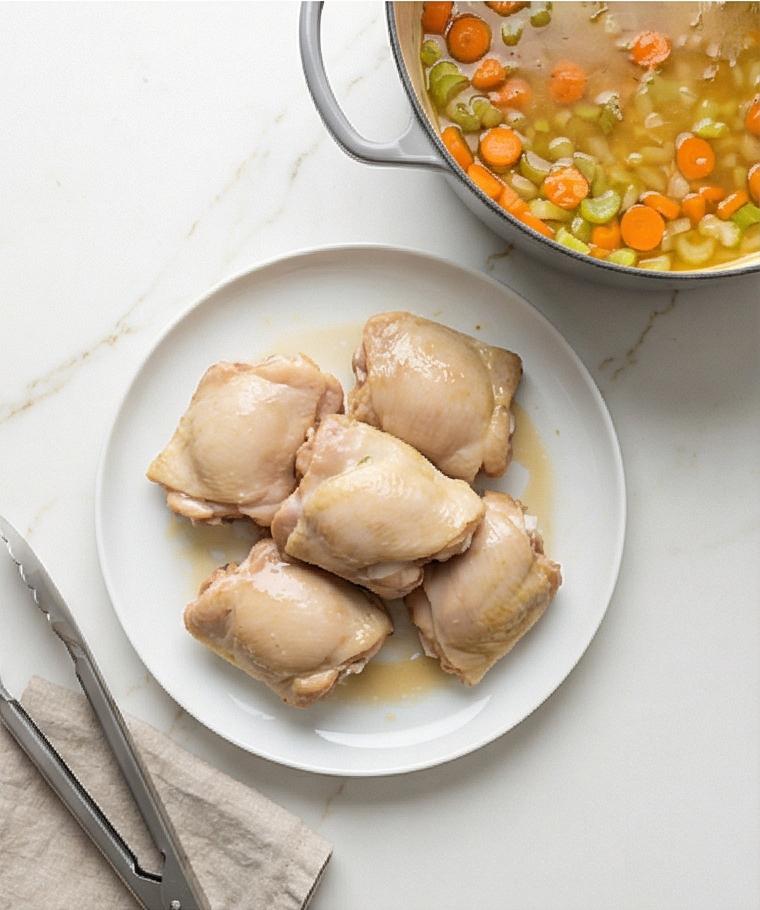
Step 5: Cook the noodles and prepare finishing herbs
Bring the simmering soup briefly back up to a gentle boil and add the dried wide egg noodles, stirring to prevent sticking and cooking until just tender (al dente). While the noodles cook, finely chop the fresh flat-leaf parsley. The pot at this stage should look full of plump, hydrated noodle ribbons mingling with softened vegetables in a clear broth; the parsley sits ready as bright green flecks waiting to be stirred in.
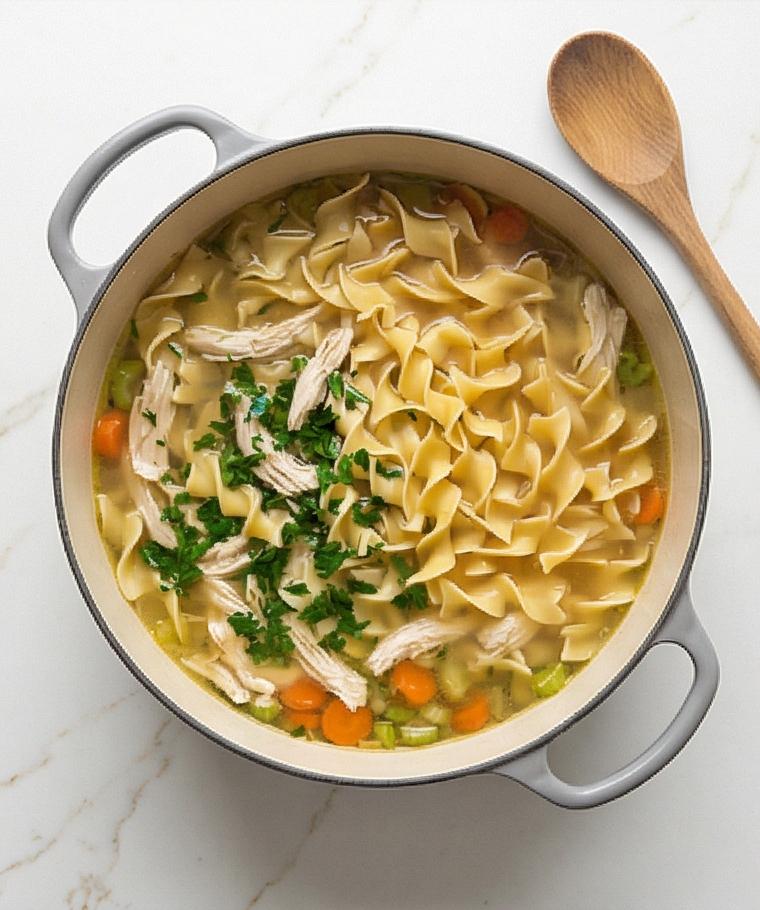
Step 6: Shred, return, finish, and serve
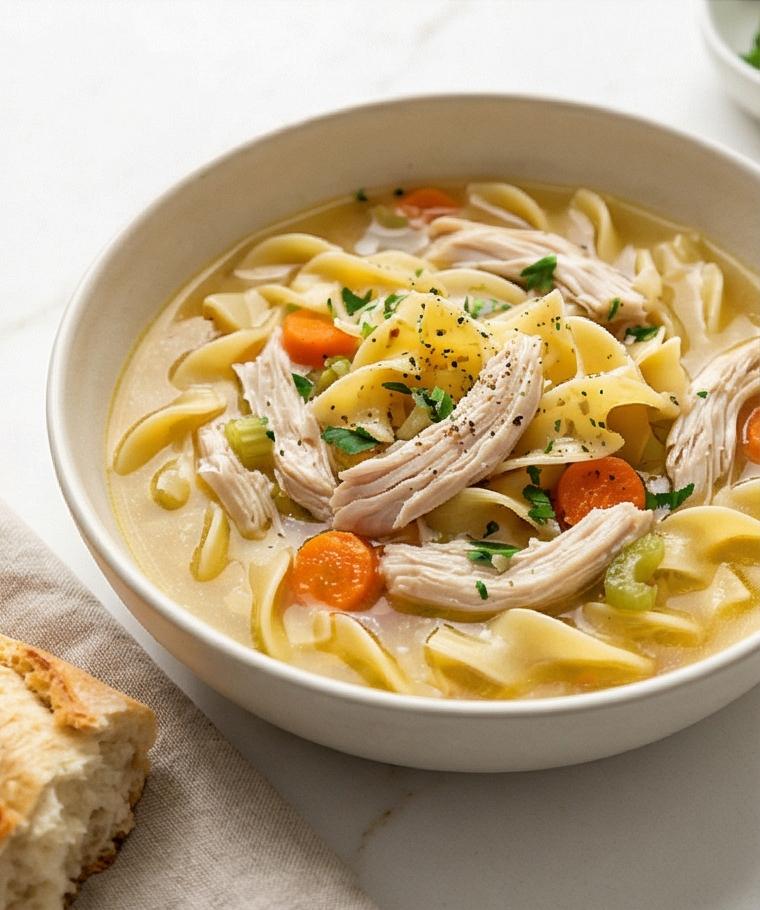
Shred the cooled chicken into bite-sized pieces, return the meat and any collected juices to the pot, remove the bay leaves, and stir in the chopped parsley and optional lemon juice. Adjust salt and pepper to taste and simmer briefly so the flavors meld and the broth lightly coats noodles and chicken. Transfer generous portions into warm soup bowls and garnish with extra parsley and a few grinds of black pepper for contrast.
Making It Your Own
I often try small experiments with this recipe to see what sticks. For a lighter take, I swap chicken thighs for breasts and add a handful of baby spinach at the end. When I want more depth, I roast the carrots and onions first for a caramelized edge, then add them to the pot. For a gluten-free version, rice noodles or chopped root vegetables work well instead of egg noodles. On winter nights I stir in a spoonful of miso for umami, while in spring I add lemon zest and extra parsley. Each variation keeps the same comforting heart but nudges the flavors in a new direction.
How to Serve
Think of this Chicken Noodle Soup Recipe as the centerpiece for a casual supper or a healing meal when someone under the weather needs extra attention. For a dinner party, serve in warmed bowls with a tray of garnishes: lemon wedges, extra parsley, and flaky sea salt so guests can finish their own bowls. To stretch the pot for more people, keep the noodle portion smaller and offer crusty bread or a green salad as an accompaniment. For individual portions, ladle into shallow bowls so the noodles and chicken are visible and the broth cools quickly for immediate eating.
Storage and Reheating Tips
Store leftover Chicken Noodle Soup Recipe in an airtight container in the refrigerator for up to 4 days. Because the noodles absorb liquid over time, consider storing the cooked noodles separately if you plan long-term storage; that keeps the broth bright and pourable.
To reheat, gently warm the soup on the stove over low heat until steaming, adding a splash of water or broth if the noodles have soaked up too much liquid. For microwave reheating, cover and heat in short intervals, stirring between bursts to ensure even temperature.
Oops-Proofing: Common Mistakes and How to Avoid Them
One common misstep is overcooking the vegetables until they lose color and texture; sweat them patiently until soft and translucent rather than browning. Another is overseasoning early; remember you can always add salt later, and if the broth becomes too salty dilute with low-sodium chicken broth or water. Finally, watch the noodles closely so they stay al dente and don’t turn mushy; cook them in the simmering soup and stop when they are tender but still have a little bite.
Final Encouragement
I hope this Chicken Noodle Soup Recipe finds a place in your kitchen for those nights when comfort matters most. It’s straightforward, forgiving, and endlessly adaptable, and it gives you a warm bowl that tastes like care. Try it, tweak one small thing each time, and soon you’ll have your own signature bowl to share.
Frequently Asked Questions.
- What cut of chicken is best for Chicken Noodle Soup Recipe? I prefer boneless thighs for moistness, but breasts work fine if you want leaner meat.
- Can I make this soup ahead of time? Yes, make the broth and chicken in advance; store noodles separately and combine when reheating.
- How do I keep the noodles from getting soggy? Store noodles separately or add them just before serving so they stay springy.
- Is low-sodium broth important? Yes, low-sodium broth lets you control seasoning better and prevents an overly salty soup.
- Can I freeze this soup? You can freeze the broth and shredded chicken, but for best texture freeze without the noodles and add fresh when reheating.
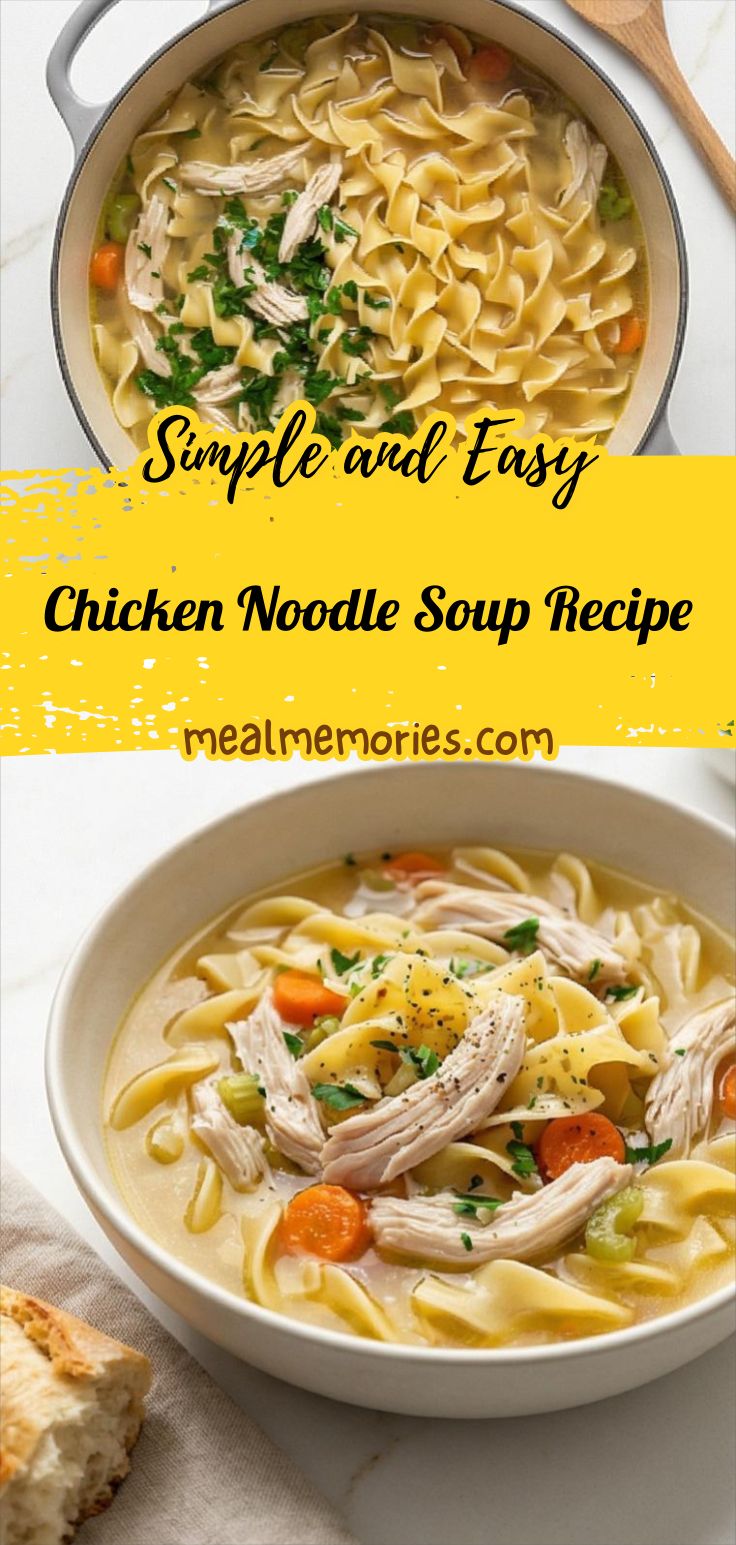
Chicken Noodle Soup Recipe
Make Chicken Noodle Soup Recipe for comforting homemade broth, tender chicken, and wide egg noodles in about 55 minutes.
Ingredients
Instructions
Step 1: Prepare the vegetables
Finely dice the yellow onion until the pieces are small and uniform, peel and slice the carrots into precise 1/4-inch (6 mm) rounds, trim and slice the celery into matching 1/4-inch pieces, and finely mince the garlic. Work methodically so the textures read consistently in the pot: tight, even dice for the onion, crisp circular carrot rounds, and celery crescents that will soften evenly. Keep the prepped vegetables in small bowls or ramekins so each element’s color and texture are clear and ready.
Step 2: Sweat the aromatics until soft and translucent
In a heavy Dutch oven or large pot, warm the olive oil and butter together until the butter just foams, then add the diced onion, carrot rounds, and celery pieces. Cook over medium heat, stirring occasionally, until the vegetables soften and the onion becomes translucent but not browned; finish by stirring in the minced garlic for thirty to forty-five seconds so it releases aroma without browning. The result should be glossy, slightly softened vegetables with a faint sheen of butter on the surface, bright color but softened edges.
Step 3: Build the broth and submerge the chicken
Pour the low-sodium chicken broth and water into the pot, scraping up any fond, then nestle the trimmed boneless chicken thighs (or breasts), add the dried bay leaves and thyme, and bring just to a boil before lowering to a gentle simmer. Visually the pot should read as a clear golden broth with chicken pieces fully submerged, a couple of bay leaves floating, and softened vegetables suspended in the liquid. Season gently with salt and black pepper so the liquid reads mildly seasoned and shimmering with tiny fat droplets.
Step 4: Simmer until the chicken is very tender, then rest and remove
Keep the pot at a gentle simmer until the chicken is tender enough to shred easily, then use tongs or a slotted spoon to lift the pieces onto a clean cutting board or plate and let them rest for a few minutes. The visual milestone is cooked, plump chicken pieces resting with a few glossy juices pooling beneath them and a faint shine on the skinless surface—clearly cooked through, fibers intact, ready to be shredded.
Step 5: Cook the noodles and prepare finishing herbs
Bring the simmering soup briefly back up to a gentle boil and add the dried wide egg noodles, stirring to prevent sticking and cooking until just tender (al dente). While the noodles cook, finely chop the fresh flat-leaf parsley. The pot at this stage should look full of plump, hydrated noodle ribbons mingling with softened vegetables in a clear broth; the parsley sits ready as bright green flecks waiting to be stirred in.
Step 6: Shred, return, finish, and serve
Shred the cooled chicken into bite-sized pieces, return the meat and any collected juices to the pot, remove the bay leaves, and stir in the chopped parsley and optional lemon juice. Adjust salt and pepper to taste and simmer briefly so the flavors meld and the broth lightly coats noodles and chicken. Transfer generous portions into warm soup bowls and garnish with extra parsley and a few grinds of black pepper for contrast.
Notes
- Use low-sodium broth so you can control final seasoning.
- Store noodles separately if you plan to refrigerate leftovers to avoid sogginess.
- Pat chicken dry before browning to improve texture and color.
- Add lemon juice at the end to brighten the broth.
- Reheat gently and add a splash of broth or water if the soup has thickened.