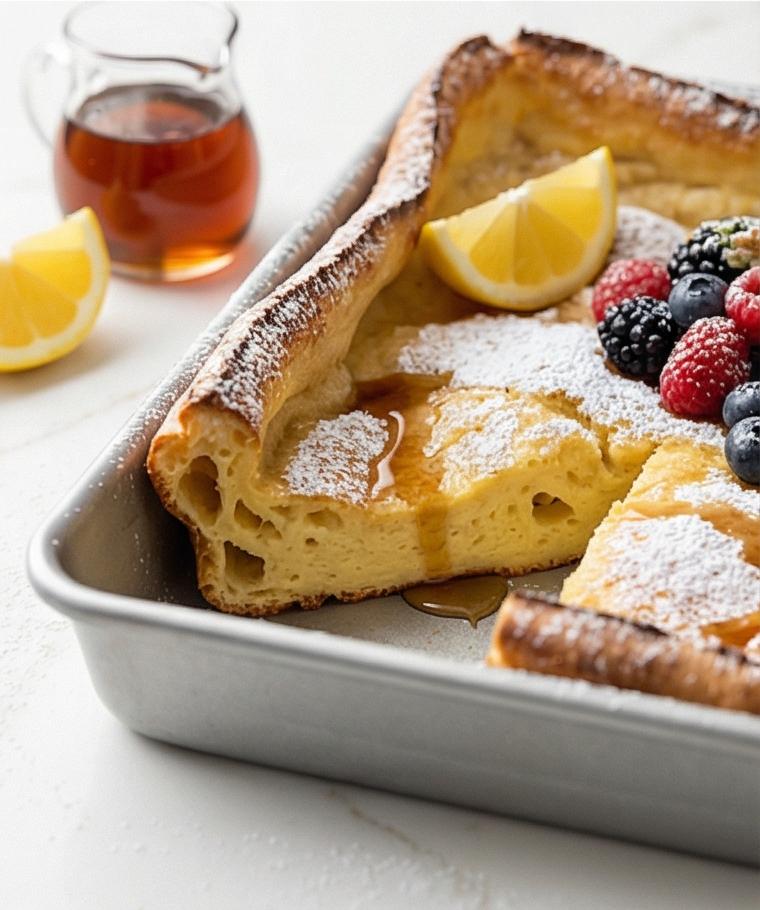
I still remember the first time I made this Eggs Benedict Recipe for friends — the kitchen smelled like warm butter and lemon, and everyone lingered at the table until the last glossy drop of hollandaise was gone. Eggs Benedict Recipe has since become my go-to weekend treat when I want something a little celebratory but not fussy. I love how the silky hollandaise, soft poached egg, and toasty muffin come together in one perfect bite. You don’t need a restaurant kitchen to make it; with a bit of attention and practice you’ll get reliably gorgeous results.
How This Recipe Became My Rainy-Day Favorite
On a rainy Sunday afternoon years ago I decided to try the Eggs Benedict Recipe when friends dropped by unexpectedly. The ritual of melting butter, whisking yolks over a gentle double boiler, and watching that first spoonful of hollandaise ribbon off the whisk felt oddly meditative. I remember the kitchen light slanting through the window and the sound of rain on the roof while the bacon sizzled and the muffins crisped. The first bite was everything: warm, buttery muffin giving way to a satin poached egg that spilled golden yolk into the hollandaise sea. We ate slowly, talking about small things, and the simple decadence of that plate turned a gray afternoon into a tiny celebration. Since then I make it when I want comfort that still feels special.
The Ingredients That Make It Sing
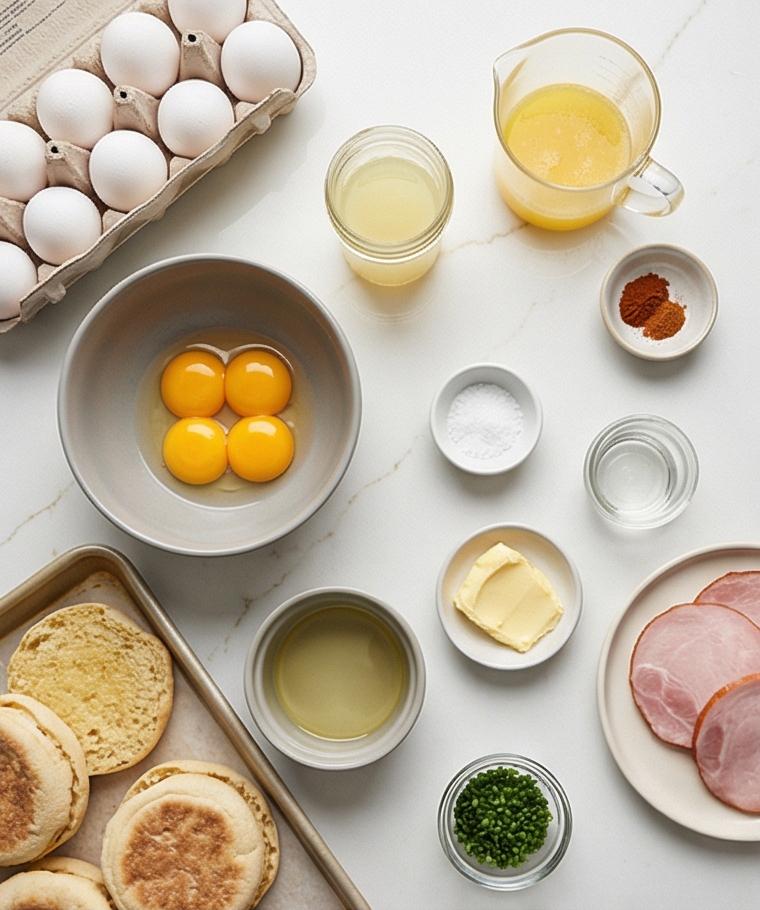
- Unsalted Butter: The backbone of the hollandaise; use high-quality butter for a clean, creamy flavor. Substitute with clarified butter for stability.
- Egg Yolks: Provide richness and structure to the sauce; room temperature yolks emulsify best.
- Fresh Lemon Juice: Brightens and balances the butter; try white wine vinegar in a pinch.
- Eggs for Poaching: Fresh eggs hold their shape better; older eggs are harder to poach.
- English Muffins: Give crunch and soak up yolk; try toasted sourdough for more flavor.
- Canadian Bacon: Adds savory, smoky notes; swap with smoked salmon or sautéed spinach for variations.
Essential Kitchen Tools
Start with a short intro: the right tools make the process less fiddly and more fun. A few essentials will save time and help you get consistent results.
- Small saucepan and heatproof bowl: For the double-boiler method; the bowl should sit snugly without touching the water.
- Whisk: A sturdy whisk helps you emulsify the yolks and butter into a glossy hollandaise; a balloon whisk works great.
- Heatproof pour-jug: Perfect for holding warm melted butter and pouring it in a steady stream.
- Slotted spoon: Makes lifting poached eggs easy and tidy.
- Nonstick skillet or cast iron pan: For browning Canadian bacon or ham; a thin metal spatula helps flip slices.
- Toaster or oven: For crisp, warm English muffins; a broiler will also work.
Step-by-Step Preparation Guide
Step 1: Melt and ready the butter; set up the double boiler and start the yolk base
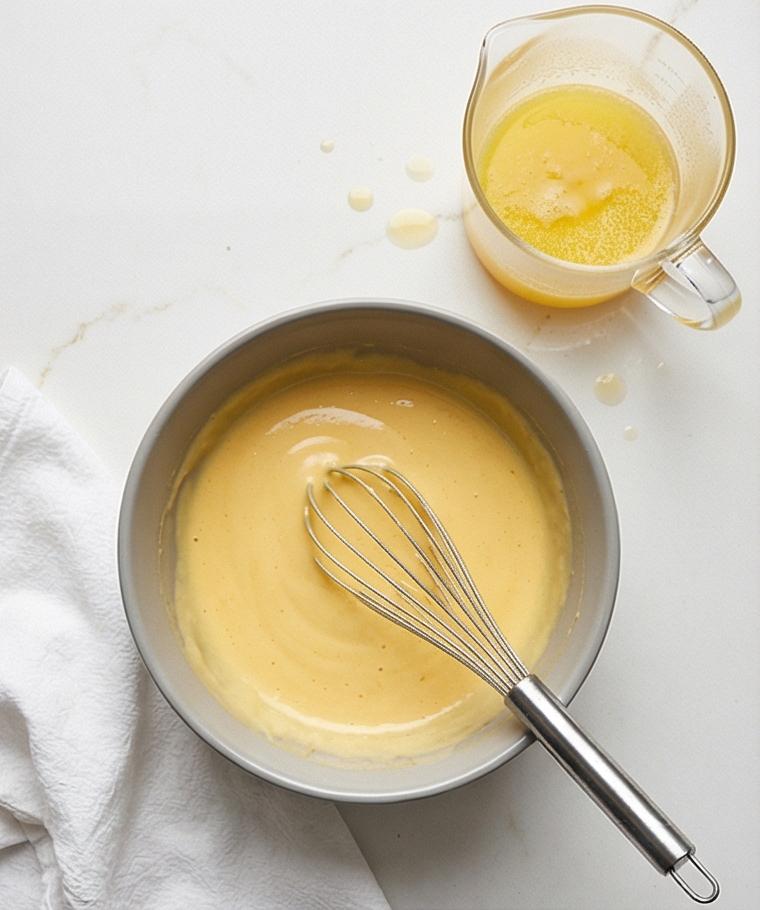
Gently melt the unsalted butter until it is fully liquid and just steaming, then keep it warm in a heatproof pour-jug; set a medium saucepan with an inch or two of water to a gentle simmer and rest a snug heatproof mixing bowl on top (bowl does not touch the water). Off the heat, whisk the room-temperature egg yolks with lemon juice, water, and salt until pale and slightly thick — this is the silky base that will transform into hollandaise. The visual focus here is on temperature and state: warm, clarified butter in a glass jug, and the pale, satiny yolk mixture clinging to a matte ceramic bowl’s sides.
Step 2: Thicken the yolks and emulsify into a glossy hollandaise
Set the bowl over the barely simmering water and whisk constantly until the yolk mixture becomes creamy and forms slow ribbons; gently incorporate the hot melted butter in a slow, steady stream while whisking until the sauce is thick, smooth, and glossy. If the sauce hesitates, rescue it with a teaspoon of cool water and keep it warm but never too hot. Finish by seasoning with a whisper of cayenne (optional) and extra lemon to taste. Texture notes: the hollandaise should be pourable but evident in ribbons and with a lubricious sheen, held in a modern matte grey ceramic bowl with a polished stainless whisk resting on the rim.
Step 3: Toast the English muffins and brown the Canadian bacon
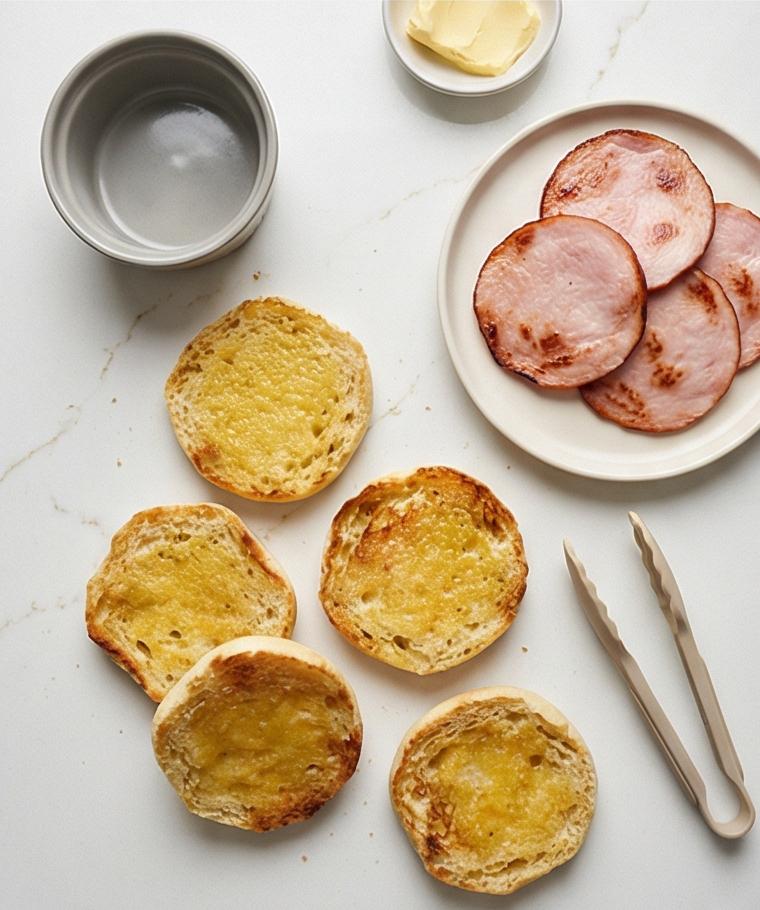
Toast the split English muffins until the cut faces are lightly golden and crisp at the edges, then immediately spread with softened butter so the heat melts it into the nooks. In a separate skillet (not shown), the Canadian bacon is quickly browned to render edges and caramelize surfaces; transfer the slices to a warm plate. The visual result is important: crisp-edged, butter-melting muffin halves stacked neatly and warm, alongside amber-browned, slightly glossy bacon slices arranged in a single layer ready for assembly.
Step 4: Poach eggs to set whites but keep the yolks wobbly
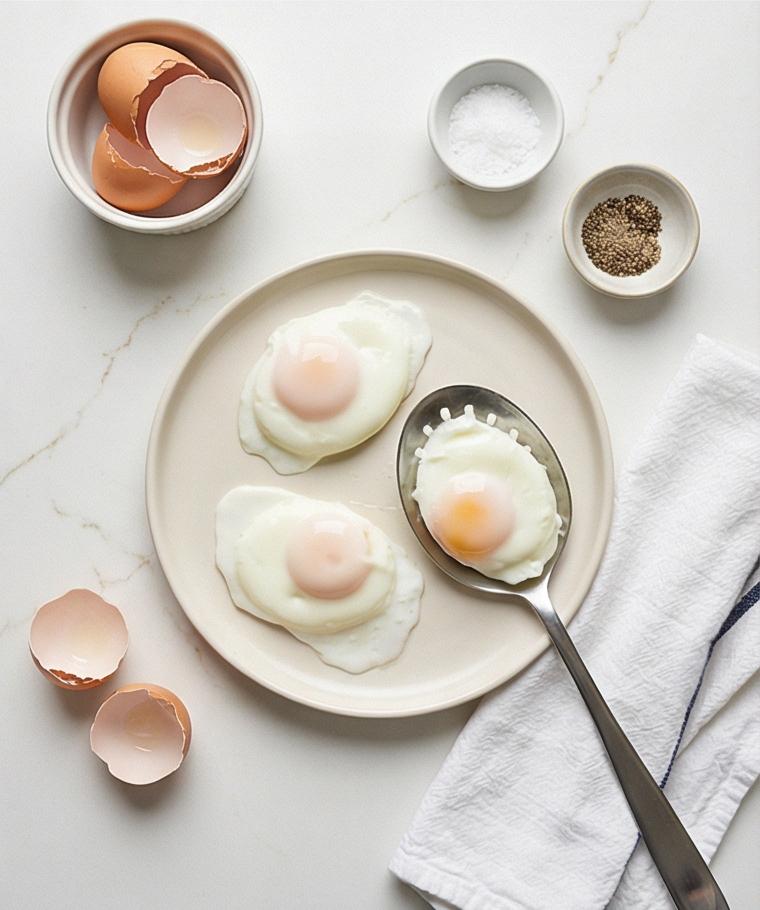
Bring a wide pan of water with a splash of distilled vinegar to a bare simmer, create a gentle vortex, and slide eggs from individual ramekins into the center. Poach until whites are opaque and set while yolks remain soft and slightly jiggly (about 3–4 minutes for runny yolks). Drain each egg on a slotted spoon and blot very gently so they sit cleanly on a warm plate; finish with a light pinch of fine sea salt and a grind of black pepper. The image-worthy state is the perfect poached egg: satin white surfaces with subtle undulations and a barely domed, tender yolk hinted beneath.
Step 5: Assemble the muffin, bacon, and egg; sauce generously
Place buttered muffin halves cut-side up on plates, top each with a browned Canadian bacon slice and center a warm poached egg on top. Spoon warm hollandaise over the egg so it drapes and forms a glossy cascade that clings to the white and spills slightly onto the bacon and muffin — the sauce should coat but not drown. Garnish sparingly with snipped chives and a tiny pinch of smoked paprika; finish with a light crack of black pepper. Visually emphasize contrasts: satiny hollandaise against the toasty crumb, the glossy bacon edge, and the smooth egg dome.

Step 6: Plate, garnish, and present immediately while everything is hot
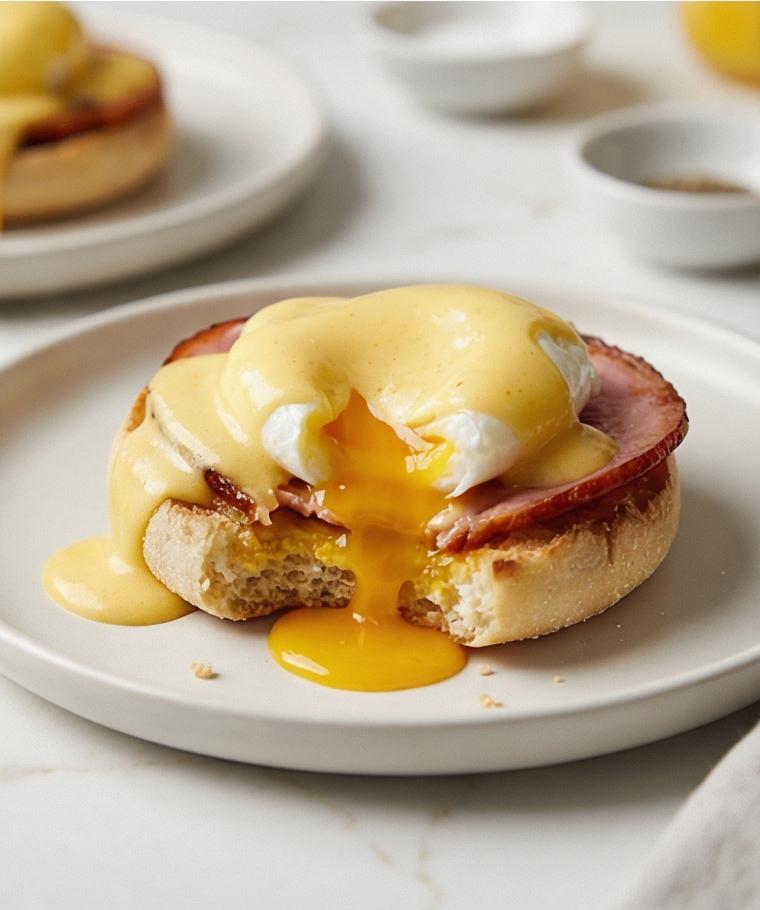
Serve immediately while the yolks are still runny: a final close look shows a delicate cut into the egg revealing a warm, liquid yolk that pours into the muffin nooks, hollandaise clinging and pooling, chives and paprika adding tiny flecks of color. Texturally celebrate the crunchy-to-soft transitions: crisp muffin edge, tender bacon, silky egg white, molten yolk, and the velvety hollandaise finishing each bite.
Making It Your Own
I experiment with this Eggs Benedict Recipe all the time. For a pescatarian twist I swap Canadian bacon for thin slices of smoked salmon and add a scattering of capers. A vegetarian take uses wilted spinach or grilled tomatoes under the egg; it still soaks up yolk and hollandaise in a very satisfying way.
For a seasonal variation, try roasted asparagus spears and lemon zest in spring, or swap the English muffin for a toasted crumpet in winter. I also like to play with herbs: tarragon folded into the hollandaise gives a classic French note, while chives keep things simple and bright.
If you want to lighten the dish, use half butter and half olive oil in the sauce or serve smaller portions with mixed greens on the side. Small changes can make it feel new without losing what you love.
How to Serve
When I serve Eggs Benedict Recipe at a brunch for friends I time everything so it hits the table warm. Arrange muffin halves on warmed plates, place bacon or alternative protein on top, and spoon a hot poached egg and hollandaise over each stack. Garnish with snipped chives and a tiny pinch of smoked paprika for color.
For larger groups, keep the hollandaise warm in a thermos or over a very gentle warm water bath and poach eggs in batches, draining them on a warm sheet pan in a low oven (about 175 F/80 C) to keep them cozy. Offer lemon wedges and extra pepper at the table so guests can finish to taste.
Pair with simple sides like arugula salad, roasted cherry tomatoes, or roasted potatoes to make it a full meal.
Storage and Reheating Tips
Hollandaise is best eaten fresh, but you can keep it for a short time. Store leftover sauce in an airtight container in the fridge for up to 2 days. To reheat, set the container in a bowl of warm water and whisk gently until just warmed; avoid direct heat or it may separate.
Poached eggs are not ideal for long storage. If you must, cool them quickly, store in a shallow layer of water in the fridge for up to 24 hours, and reheat by gently warming in simmering water for 30 to 45 seconds. Toast muffins fresh just before serving for the best texture.
Common Missteps and How to Avoid Them
The most common problem is hollandaise that splits or is grainy. Fix it by whisking in a teaspoon of cool water slowly, or start with a fresh egg yolk in a clean bowl and slowly whisk the broken sauce into it.
Another slip is overcooking poached eggs. Keep the water at a bare simmer and use a gentle vortex to help the whites wrap around the yolk. Fresh eggs will give you neater, firmer whites.
Final Thoughts
Give this Eggs Benedict Recipe a try on your next weekend morning. With a little practice you’ll find the rhythm of melting, whisking, and poaching becomes both relaxing and rewarding. Serve it to friends, or keep it as your own small luxury—the payoff is the same: silky hollandaise and runny yolk that feels like a celebration.
Frequently Asked Questions
- What makes the hollandaise sauce thicken properly? The combination of room-temperature yolks, steady heat from a double boiler, and slowly pouring warm melted butter while whisking creates a stable emulsion.
- Can I make hollandaise ahead of time? You can make it up to a day ahead and keep it chilled, but reheat gently in warm water and whisk briefly; freshly made is best.
- How do I poach multiple eggs at once? Use a wide pan, gently simmer, and slide eggs in from separate ramekins; poach in batches if your pan is crowded.
- What can I substitute for Canadian bacon? Smoked salmon, grilled ham, sautéed mushrooms, or wilted spinach all work well depending on diet and preference.
- My hollandaise separated; is it ruined? Not necessarily. Whisk in a teaspoon of cold water or start a new yolk and slowly whisk the broken sauce into it to bring it back.

Eggs Benedict Recipe
Make Eggs Benedict Recipe now: poached eggs, Canadian bacon, and silky hollandaise for a perfect weekend brunch.
Ingredients
Instructions
Step 1: Melt and ready the butter; set up the double boiler and start the yolk base
Gently melt the unsalted butter until it is fully liquid and just steaming, then keep it warm in a heatproof pour-jug; set a medium saucepan with an inch or two of water to a gentle simmer and rest a snug heatproof mixing bowl on top (bowl does not touch the water). Off the heat, whisk the room-temperature egg yolks with lemon juice, water, and salt until pale and slightly thick — this is the silky base that will transform into hollandaise. The visual focus here is on temperature and state: warm, clarified butter in a glass jug, and the pale, satiny yolk mixture clinging to a matte ceramic bowl’s sides.
Step 2: Thicken the yolks and emulsify into a glossy hollandaise
Set the bowl over the barely simmering water and whisk constantly until the yolk mixture becomes creamy and forms slow ribbons; gently incorporate the hot melted butter in a slow, steady stream while whisking until the sauce is thick, smooth, and glossy. If the sauce hesitates, rescue it with a teaspoon of cool water and keep it warm but never too hot. Finish by seasoning with a whisper of cayenne (optional) and extra lemon to taste. Texture notes: the hollandaise should be pourable but evident in ribbons and with a lubricious sheen, held in a modern matte grey ceramic bowl with a polished stainless whisk resting on the rim.
Step 3: Toast the English muffins and brown the Canadian bacon
Toast the split English muffins until the cut faces are lightly golden and crisp at the edges, then immediately spread with softened butter so the heat melts it into the nooks. In a separate skillet (not shown), the Canadian bacon is quickly browned to render edges and caramelize surfaces; transfer the slices to a warm plate. The visual result is important: crisp-edged, butter-melting muffin halves stacked neatly and warm, alongside amber-browned, slightly glossy bacon slices arranged in a single layer ready for assembly.
Step 4: Poach eggs to set whites but keep the yolks wobbly
Bring a wide pan of water with a splash of distilled vinegar to a bare simmer, create a gentle vortex, and slide eggs from individual ramekins into the center. Poach until whites are opaque and set while yolks remain soft and slightly jiggly (about 3–4 minutes for runny yolks). Drain each egg on a slotted spoon and blot very gently so they sit cleanly on a warm plate; finish with a light pinch of fine sea salt and a grind of black pepper. The image-worthy state is the perfect poached egg: satin white surfaces with subtle undulations and a barely domed, tender yolk hinted beneath.
Step 5: Assemble the muffin, bacon, and egg; sauce generously
Place buttered muffin halves cut-side up on plates, top each with a browned Canadian bacon slice and center a warm poached egg on top. Spoon warm hollandaise over the egg so it drapes and forms a glossy cascade that clings to the white and spills slightly onto the bacon and muffin — the sauce should coat but not drown. Garnish sparingly with snipped chives and a tiny pinch of smoked paprika; finish with a light crack of black pepper. Visually emphasize contrasts: satiny hollandaise against the toasty crumb, the glossy bacon edge, and the smooth egg dome.
Step 6: Plate, garnish, and present immediately while everything is hot
Serve immediately while the yolks are still runny: a final close look shows a delicate cut into the egg revealing a warm, liquid yolk that pours into the muffin nooks, hollandaise clinging and pooling, chives and paprika adding tiny flecks of color. Texturally celebrate the crunchy-to-soft transitions: crisp muffin edge, tender bacon, silky egg white, molten yolk, and the velvety hollandaise finishing each bite.
Notes
- Use the freshest eggs possible for cleaner poached whites and better shape.
- Keep hollandaise warm in a thermos or a bowl set over warm water, never direct heat.
- If hollandaise breaks, whisk in a teaspoon of cool water or start with a fresh yolk and re-emulsify.
- Toast English muffins just before serving so they stay crisp and soak up the yolk.
- For dietary swaps, try smoked salmon, wilted spinach, or a lighter half-butter, half-olive oil hollandaise.