Eggs Benedict Recipe

Make Eggs Benedict Recipe now: poached eggs, Canadian bacon, and silky hollandaise for a perfect weekend brunch.
Ingredients
- 1 cup (225 g) unsalted butter, cut into tablespoons
- 4 large egg yolks, at room temperature
- 2 tablespoons (30 ml) fresh lemon juice, plus more to taste
- 2 tablespoons (30 ml) water, at room temperature
- 1/4 teaspoon fine sea salt, plus more to taste
- 1/8 teaspoon cayenne pepper or hot paprika (optional, for gentle heat)
- 8 large eggs, as fresh as possible, for poaching
- 8 cups (1.9 L) water, for poaching the eggs
- 2 tablespoons (30 ml) distilled white vinegar, for poaching water
- 4 English muffins, split in half (8 halves total)
- 2 tablespoons (28 g) unsalted butter, softened, for spreading on English muffins
- 8 slices (about 8 oz / 225 g) Canadian bacon or ham, 1/8–1/4 inch (3–6 mm) thick
- 1 tablespoon (15 ml) neutral oil or 1 tablespoon (14 g) unsalted butter, for browning the Canadian bacon
- 1 tablespoon (4 g) finely chopped fresh chives, for garnish (optional)
- 4 small pinches smoked paprika or regular paprika, for garnish (optional)
- Freshly ground black pepper, to taste, for serving
- Fine sea salt, to taste, for finishing the eggs
Instructions
Step 1: Melt and ready the butter; set up the double boiler and start the yolk base
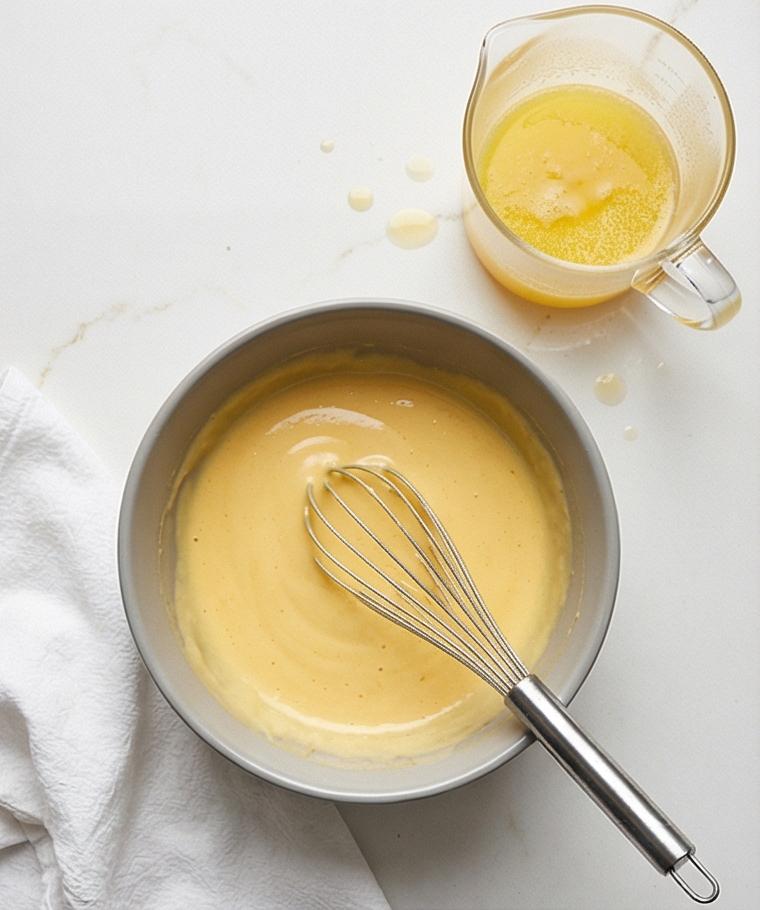
Gently melt the unsalted butter until it is fully liquid and just steaming, then keep it warm in a heatproof pour-jug; set a medium saucepan with an inch or two of water to a gentle simmer and rest a snug heatproof mixing bowl on top (bowl does not touch the water). Off the heat, whisk the room-temperature egg yolks with lemon juice, water, and salt until pale and slightly thick — this is the silky base that will transform into hollandaise. The visual focus here is on temperature and state: warm, clarified butter in a glass jug, and the pale, satiny yolk mixture clinging to a matte ceramic bowl’s sides.
Step 2: Thicken the yolks and emulsify into a glossy hollandaise
Set the bowl over the barely simmering water and whisk constantly until the yolk mixture becomes creamy and forms slow ribbons; gently incorporate the hot melted butter in a slow, steady stream while whisking until the sauce is thick, smooth, and glossy. If the sauce hesitates, rescue it with a teaspoon of cool water and keep it warm but never too hot. Finish by seasoning with a whisper of cayenne (optional) and extra lemon to taste. Texture notes: the hollandaise should be pourable but evident in ribbons and with a lubricious sheen, held in a modern matte grey ceramic bowl with a polished stainless whisk resting on the rim.
Step 3: Toast the English muffins and brown the Canadian bacon
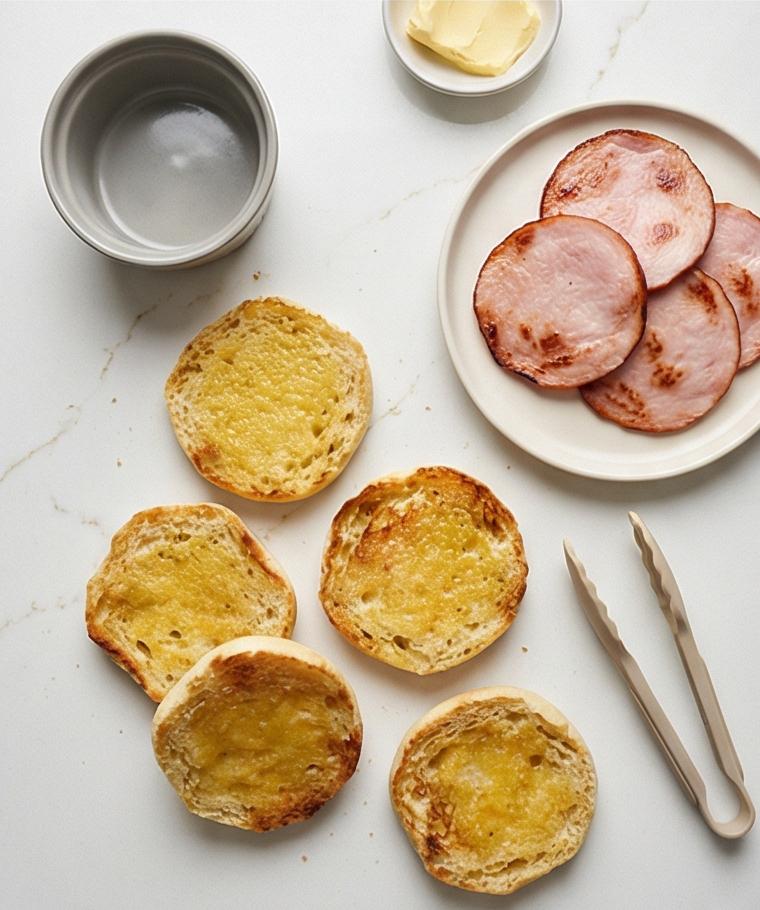
Toast the split English muffins until the cut faces are lightly golden and crisp at the edges, then immediately spread with softened butter so the heat melts it into the nooks. In a separate skillet (not shown), the Canadian bacon is quickly browned to render edges and caramelize surfaces; transfer the slices to a warm plate. The visual result is important: crisp-edged, butter-melting muffin halves stacked neatly and warm, alongside amber-browned, slightly glossy bacon slices arranged in a single layer ready for assembly.
Step 4: Poach eggs to set whites but keep the yolks wobbly
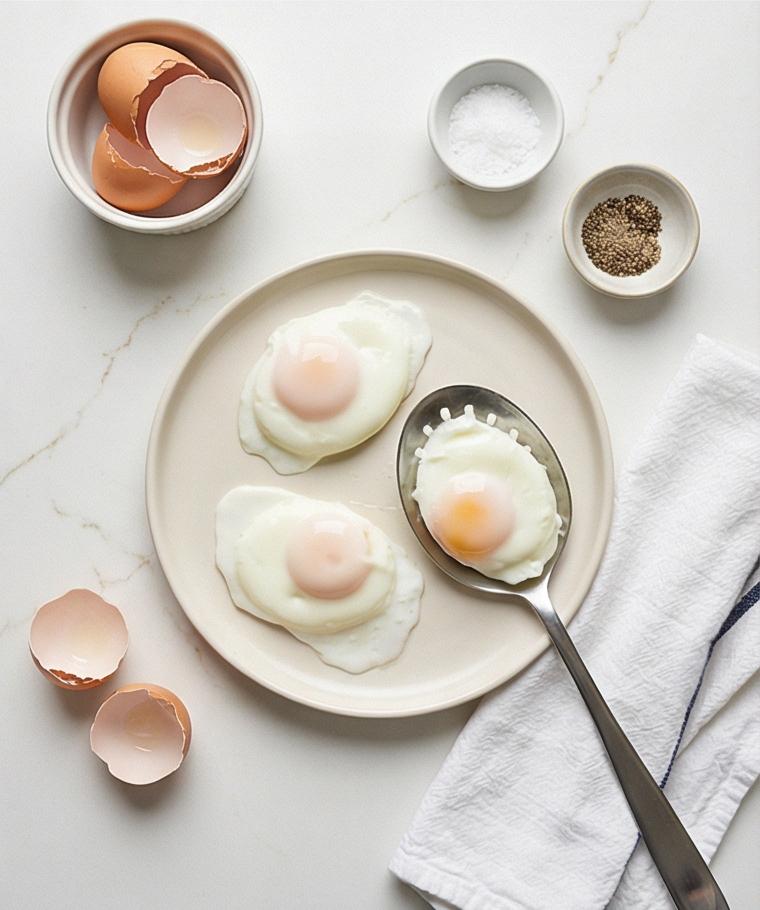
Bring a wide pan of water with a splash of distilled vinegar to a bare simmer, create a gentle vortex, and slide eggs from individual ramekins into the center. Poach until whites are opaque and set while yolks remain soft and slightly jiggly (about 3–4 minutes for runny yolks). Drain each egg on a slotted spoon and blot very gently so they sit cleanly on a warm plate; finish with a light pinch of fine sea salt and a grind of black pepper. The image-worthy state is the perfect poached egg: satin white surfaces with subtle undulations and a barely domed, tender yolk hinted beneath.
Step 5: Assemble the muffin, bacon, and egg; sauce generously
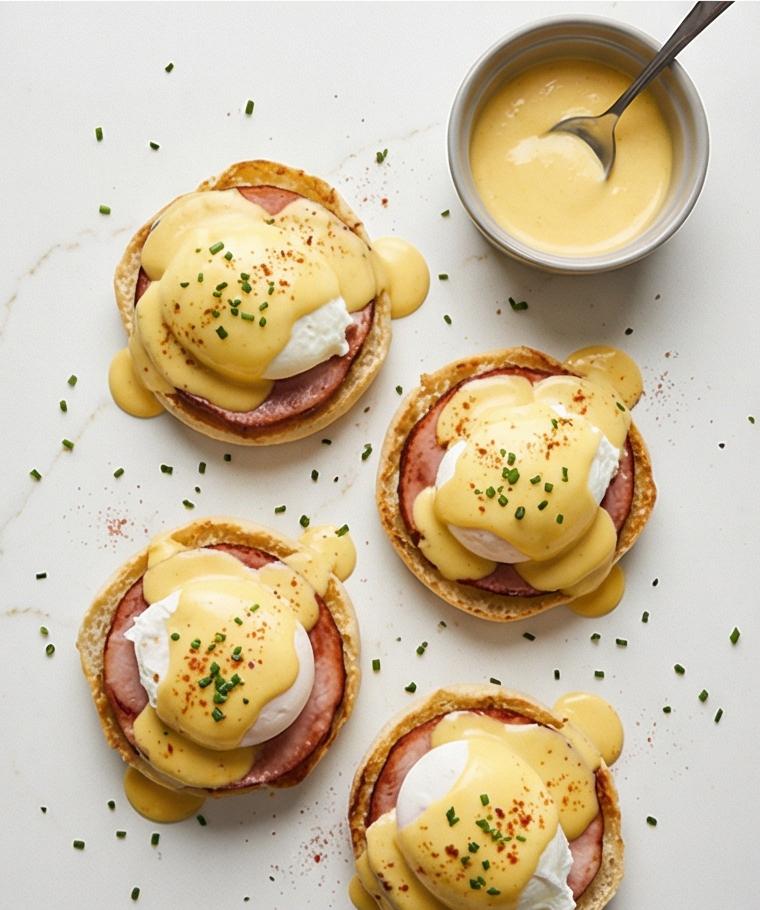
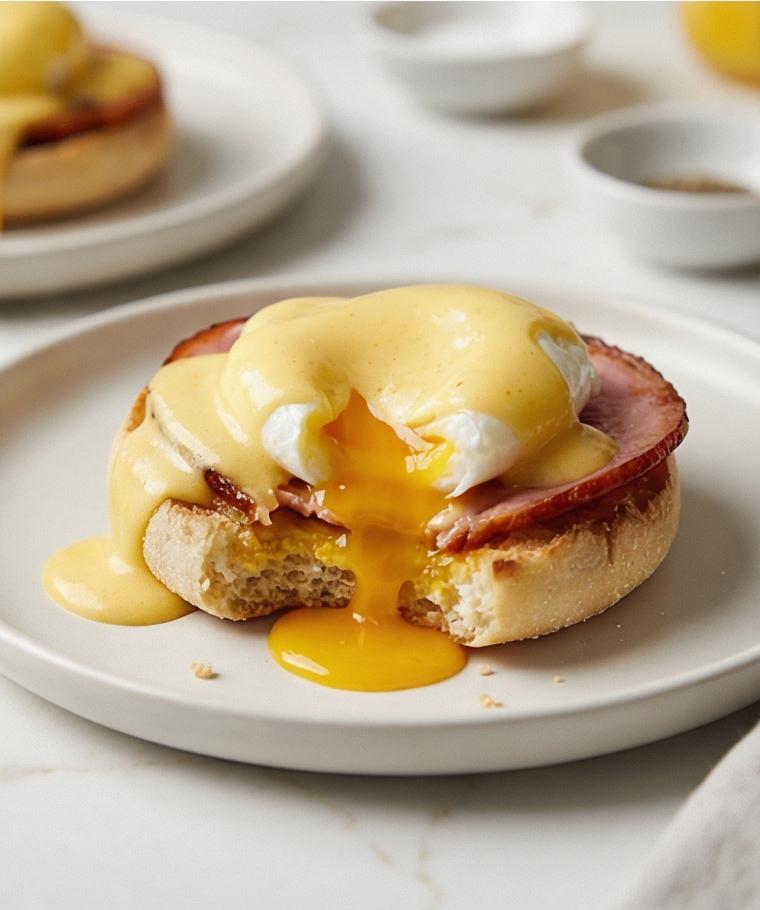
Place buttered muffin halves cut-side up on plates, top each with a browned Canadian bacon slice and center a warm poached egg on top. Spoon warm hollandaise over the egg so it drapes and forms a glossy cascade that clings to the white and spills slightly onto the bacon and muffin — the sauce should coat but not drown. Garnish sparingly with snipped chives and a tiny pinch of smoked paprika; finish with a light crack of black pepper. Visually emphasize contrasts: satiny hollandaise against the toasty crumb, the glossy bacon edge, and the smooth egg dome.
Step 6: Plate, garnish, and present immediately while everything is hot
Serve immediately while the yolks are still runny: a final close look shows a delicate cut into the egg revealing a warm, liquid yolk that pours into the muffin nooks, hollandaise clinging and pooling, chives and paprika adding tiny flecks of color. Texturally celebrate the crunchy-to-soft transitions: crisp muffin edge, tender bacon, silky egg white, molten yolk, and the velvety hollandaise finishing each bite.
Notes
- Use the freshest eggs possible for cleaner poached whites and better shape.
- Keep hollandaise warm in a thermos or a bowl set over warm water, never direct heat.
- If hollandaise breaks, whisk in a teaspoon of cool water or start with a fresh yolk and re-emulsify.
- Toast English muffins just before serving so they stay crisp and soak up the yolk.
- For dietary swaps, try smoked salmon, wilted spinach, or a lighter half-butter, half-olive oil hollandaise.