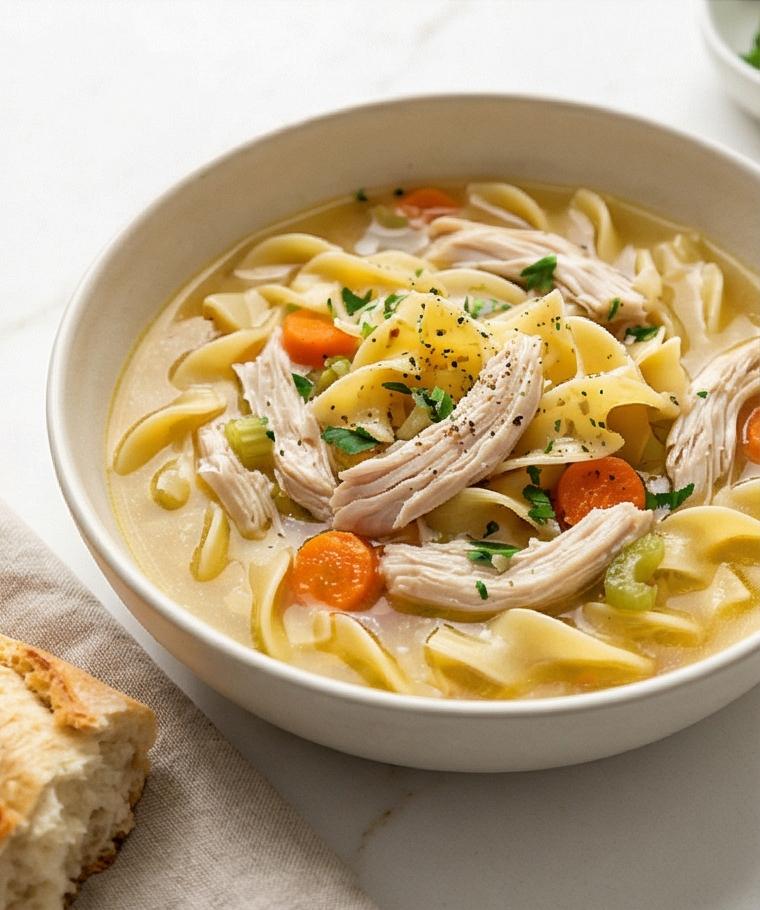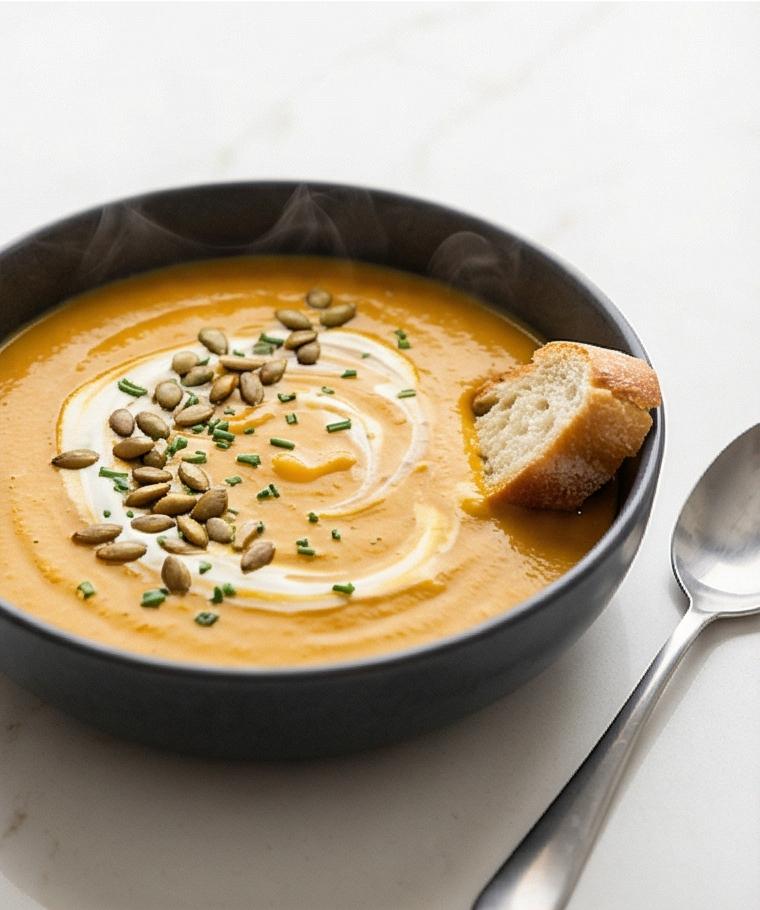
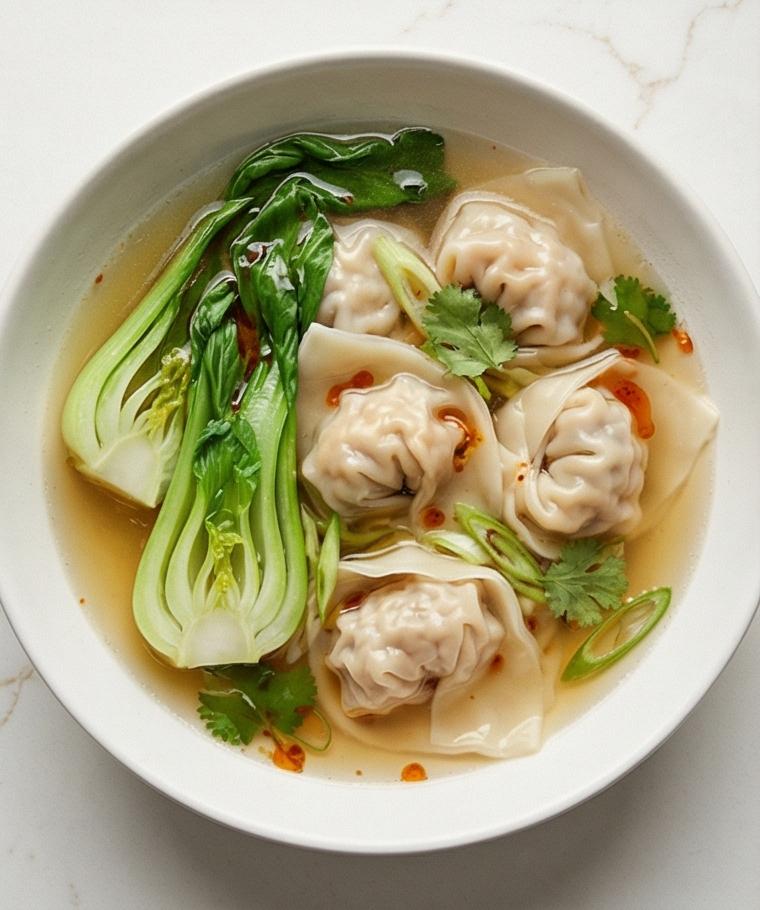
Wonton Soup Recipe is one of those bowls I turn to when I want comfort that feels thoughtful rather than heavy. I learned this Wonton Soup Recipe from weekend cooking sessions with my grandmother, and over the years I nudged the broth and filling until the textures felt just right. The springy wonton wrapper, the glossy filling, and the clear, fragrant broth come together in a way that is both humble and very refined. If you love simple technique with big payoff, this Wonton Soup Recipe will become a favorite in your rotation.
How Wonton Soup Became My Cozy Weeknight Ritual
When I was a kid the sound of my grandmother folding wontons was as familiar as the kettle whistling. I remember being allowed to press the wrappers closed while she told stories about tiny markets and rain-slick streets. The scent of ginger and toasted sesame oil would float through the kitchen and make everything else slow down. Folding taught me patience and the small, satisfying reward of a neat pleat. Tonight, when the wind rattles the windows, a bowl of wonton soup brings back that warm, cozy silence, full of steam, bright scallion, and a soft, meaty bite.
The Ingredients That Make It Sing
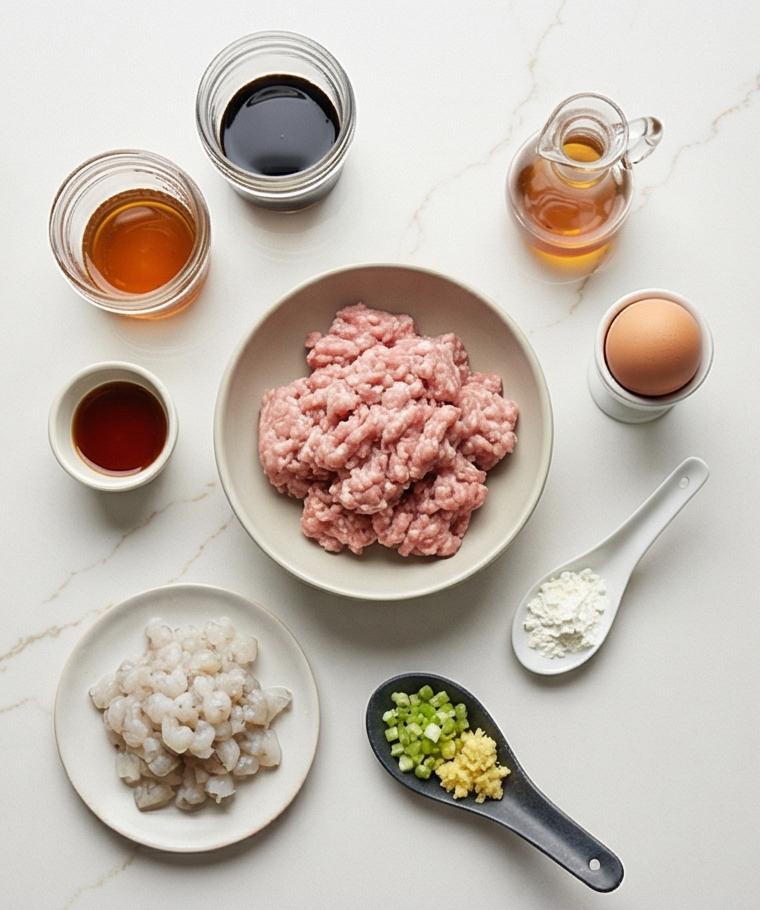
- Ground pork: Provides savory, fatty body – choose 20 to 25 percent fat for juicy filling; substitute ground chicken or turkey for a leaner version.
- Raw shrimp: Adds sweet, briny lift – use finely chopped scallops or omit for pork-only wontons.
- Scallions, ginger, garlic: Aromatics that brighten and season – pick firm scallions and fresh, fragrant ginger.
- Soy sauce and Shaoxing wine: Salt and depth – low-sodium soy lets you control seasoning; dry sherry works in place of Shaoxing.
- Toasted sesame oil, egg, cornstarch: Bind and add silkiness – cornstarch helps the filling hold together.
- Wonton wrappers and chicken broth: The vehicle and the soul of the soup – fresh wrappers are best; low-sodium broth keeps the final seasoning flexible.
Essential Kitchen Tools and Why They Matter
Start with a small intro here: a few thoughtful tools make the whole process smoother and more enjoyable. A nonstick or matte bowl helps you see the filling texture, and a wide, shallow pot gives an even simmer and easy access for removing wontons.
- Mixing bowl: Use a medium bowl for combining the filling – a heavy ceramic bowl stabilizes the motion when you mix.
- Chopsticks or spoon: For mixing the filling thoroughly – chopsticks give good control, a spoon works fine too.
- Small bowl of water: For sealing wrappers – your hands and a small brush are acceptable substitutes.
- Tray and towel: To hold finished wontons – parchment or a dusting of cornstarch prevents sticking.
- Wide pot: For simmering broth and cooking wontons – a stockpot or Dutch oven are good alternatives.
Step-by-Step Preparation Guide
Step 1: Make the filling
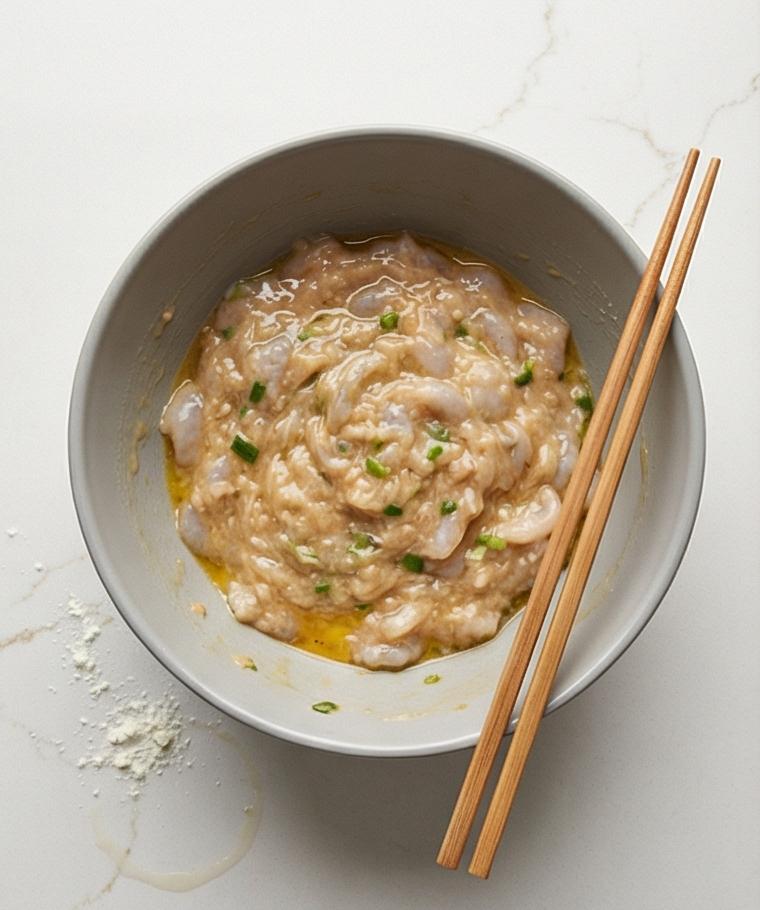
In a medium matte grey ceramic bowl combine the ground pork, very finely chopped shrimp (if using), finely minced scallions, minced ginger and garlic, soy sauce, Shaoxing wine (or dry sherry), toasted sesame oil, the lightly beaten egg, cornstarch, kosher salt, ground white pepper, and a pinch of sugar. Using chopsticks or a spoon, stir the mixture firmly in one direction until the mixture becomes thick, slightly sticky, and cohesive – about two to three minutes – then cover and chill briefly so the filling firms and the flavors meld. This yields a glossy, tightly bonded mass with visible flecks of scallion and ginger and a slightly tacky sheen from the egg and oils.
Step 2: Set up the wrapping station and begin filling
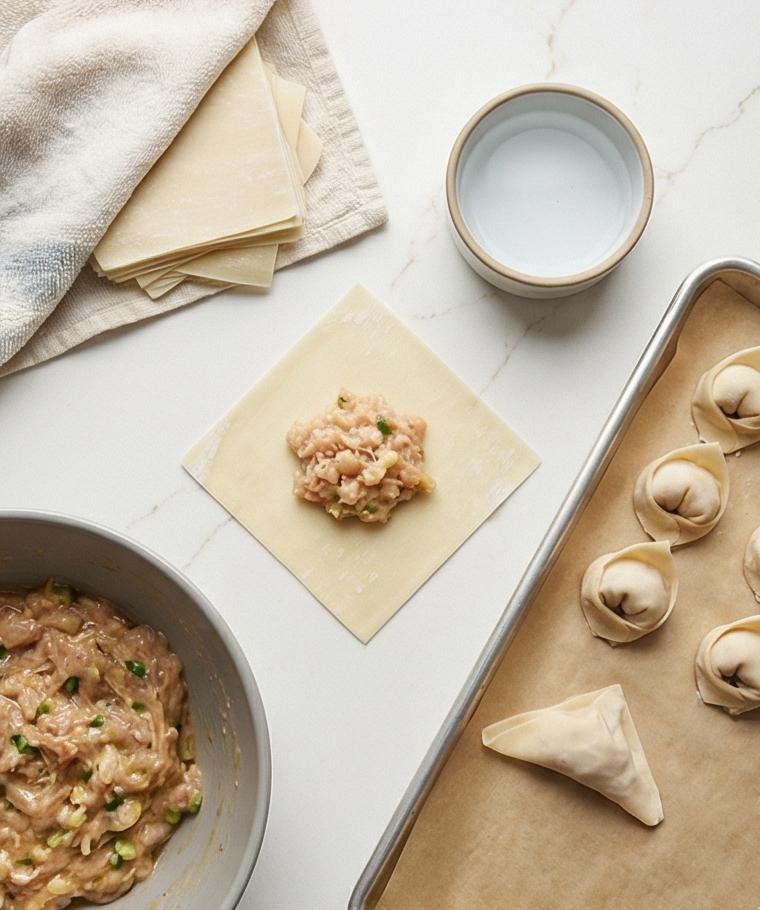
Arrange a stack of square wonton wrappers on a small plate under a slightly damp kitchen towel, place a small bowl of cool water for sealing, and line a tray with parchment or a very light dusting of cornstarch. Spoon roughly two teaspoons of the chilled filling into the center of a diamond-oriented wrapper, moisten the edges lightly with the water, and fold the bottom corner up to meet the top, pressing out any air. Keep your tools tidy – a little dish with cornstarch, the same matte grey bowl with the remaining filling, and a pair of clean chopsticks nearby so the wrapping flow feels calm and intentional.
Step 3: Seal and shape the classic wontons
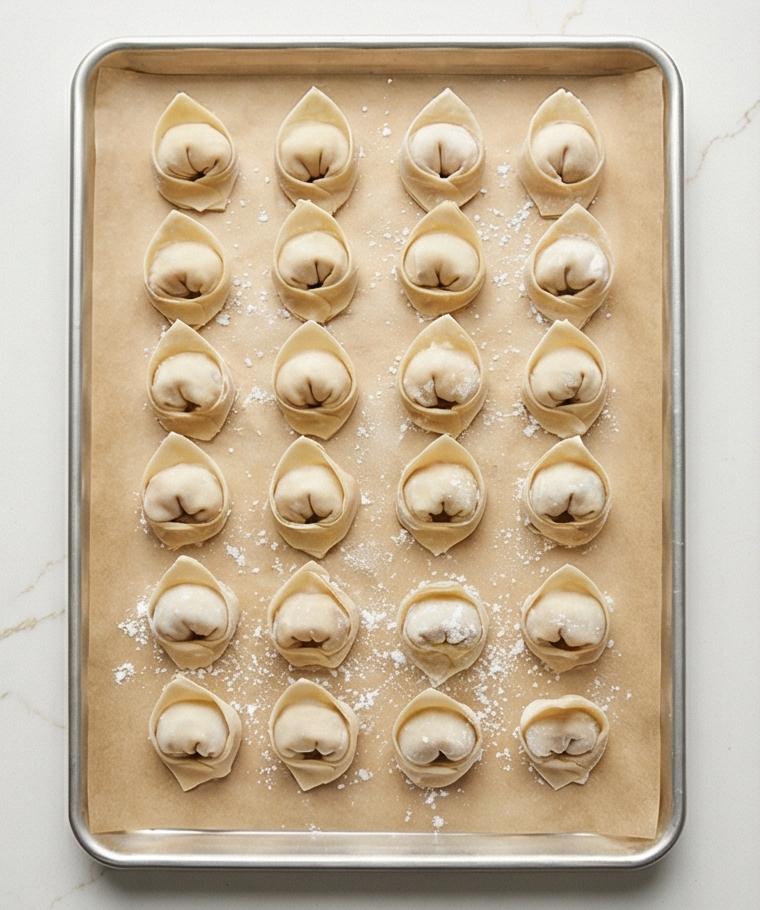
After forming the basic triangle, moisten the two lower corners and bring them together, overlapping slightly and pinching to create the traditional nurse’s-cap shape. Place each finished wonton on the prepared tray in neat rows, cover lightly with a towel to prevent drying, and continue until the batch is complete. The finished raw wontons should look plump, neatly pleated, and uniform in size with slightly translucent edges where the dough stretches thin.
Step 4: Prepare and infuse the broth
Transfer low-sodium chicken broth and water into a wide, low matte pot on the tabletop (no stove shown) and add the fresh ginger slices, lightly crushed garlic cloves, soy sauce, Shaoxing wine, toasted sesame oil, kosher salt, and white pepper. Bring the pot to a gentle simmer off-frame so the surface shows tiny moving bubbles and the liquid takes on a faint golden glow; let it infuse briefly, then remove the aromatics so the broth reads clean, translucent, and fragrant – ready to cook the wontons. The broth should look silky with a subtle oil sheen and clear color.
Step 5: Cook wontons, blanch bok choy, and finish seasoning
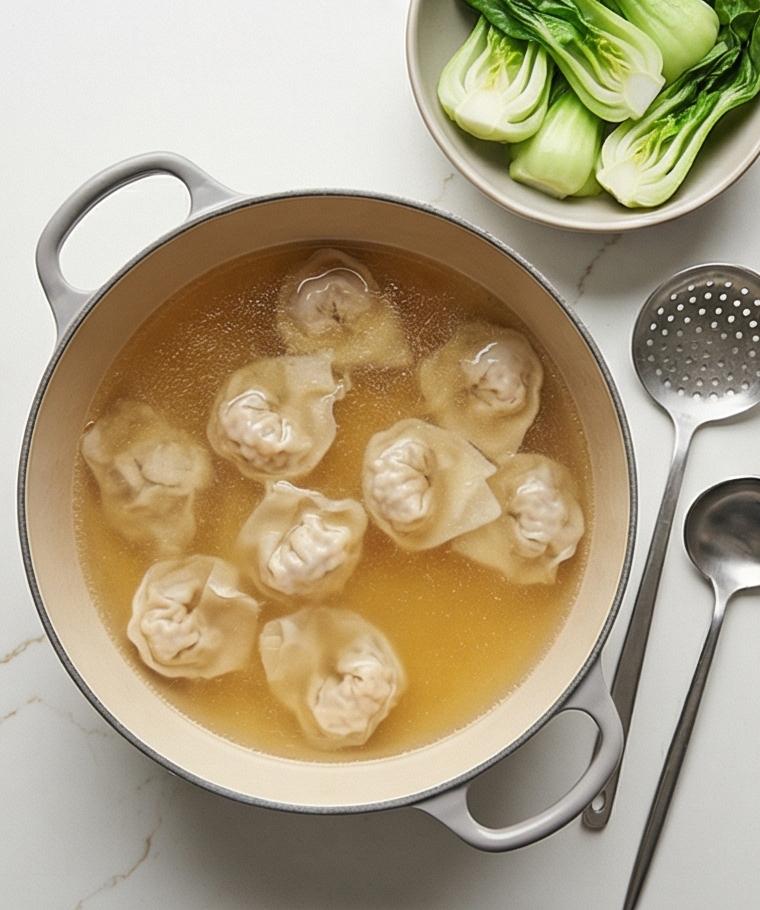
Gently add wontons to the simmering broth and cook until they float and the wrappers appear translucent and slightly puffy, about four to six minutes; briefly blanch the halved baby bok choy until the stalks are crisp-tender and the leaves are brilliant green, then rest them to the side. Taste and adjust the broth with a splash of soy or a pinch more salt. The cooked scene should show plump, glossy wontons with opaque, fully set filling and bright emerald bok choy waiting to be plated.
Step 6: Serve, garnish, and store notes
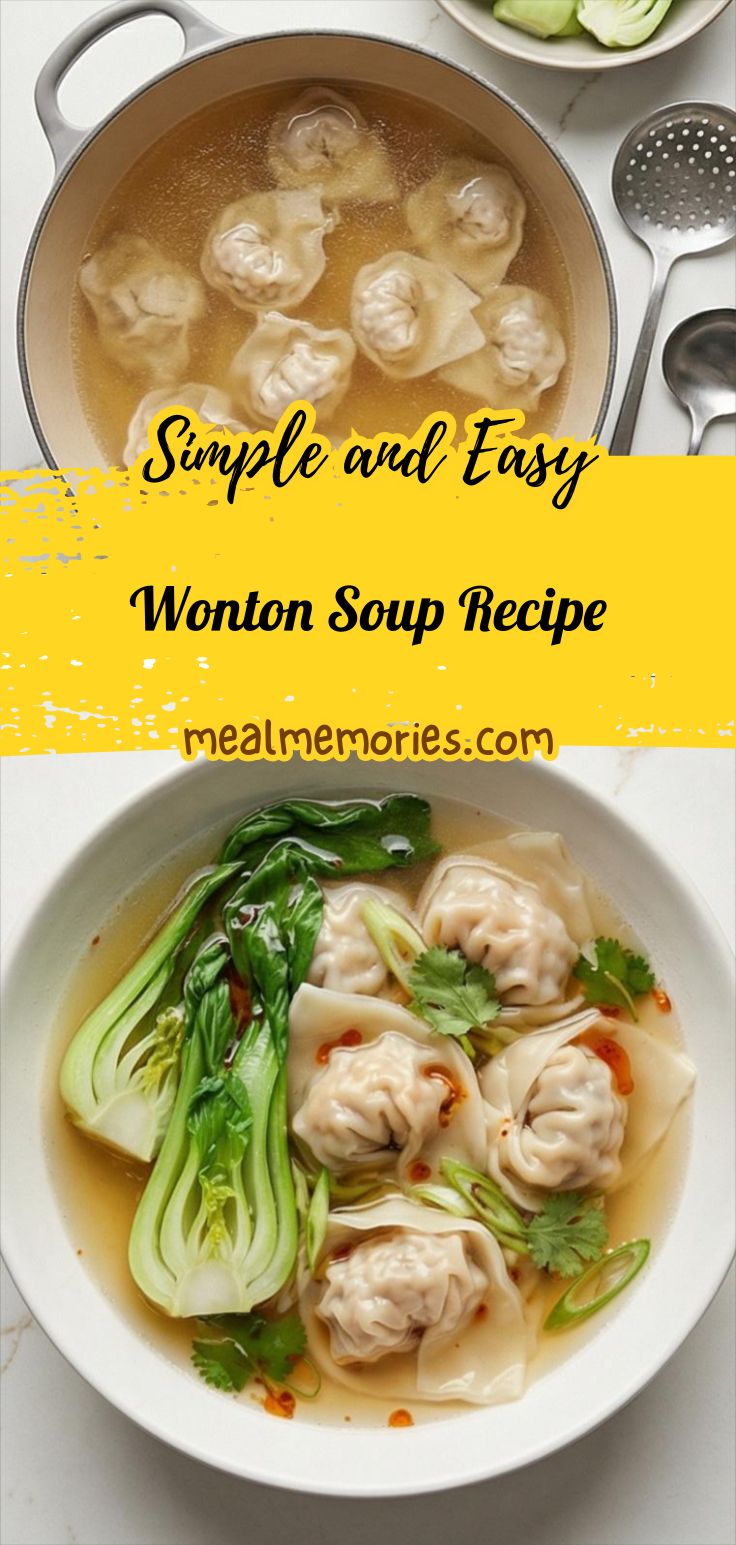
Divide the hot wontons and bok choy among wide, shallow ceramic soup bowls, ladle in the steaming clear broth so the wontons are gently submerged, and finish with thinly sliced scallion greens, roughly chopped cilantro if using, and an optional drizzle of chili oil. The final bowls should read very close-up: translucent wrappers hugging dense, textured filling, glossy broth surface catching soft highlights, flecks of scallion and cilantro, and a whisper of chili oil pooling like tiny rubies. Serve immediately for best texture; store uncooked wontons separately from broth if keeping leftovers.
Making It Your Own
I often tweak small things to keep this recipe interesting. Try a pork-and-mushroom mix for an earthier filling – finely chop shiitake and fold it into the pork for umami depth.
If you want a lighter bowl, swap pork for ground chicken and skip the shrimp. For a vegetarian route, use mashed firm tofu and finely minced shiitake plus a splash of mushroom soy.
Seasonally, add a handful of thinly sliced napa cabbage to the filling in winter, or fold in minced cilantro and lime zest for a bright summer riff. Small swaps change the character but keep the soul of the Wonton Soup Recipe intact.
How to Serve
When I host, I treat wonton soup like a gentle starter that doubles as a main for lighter meals. Serve the soup in wide shallow bowls so the wontons sit prettily under the clear broth. Offer small bowls of chili oil, extra soy sauce, and chopped cilantro so guests can personalize their bowls.
For larger groups, hold the broth warm in a pot and cook wontons in batches, then assemble bowls as guests arrive. If you need to stretch the servings, add steamed rice or extra bok choy to bulk up each bowl without losing the elegant presentation.
Storage and Reheating Tips
Store uncooked wontons in a single layer on a tray, cover with plastic wrap, and refrigerate for up to 24 hours. For longer storage, freeze the tray until firm, then transfer wontons to a zip-top bag for up to one month.
Reheat the broth gently on the stove until steaming but not boiling, then add frozen or refrigerated wontons and cook until they float and the filling is fully set. Avoid microwaving the assembled soup, because the wonton wrappers can turn chewy.
Common Mistakes and How to Avoid Them
One frequent mistake is overfilling the wrappers – use roughly two teaspoons; too much filling makes sealing hard and leads to splits. Keep a damp towel over unused wrappers so they do not dry out and crack.
Another misstep is boiling the broth too vigorously when cooking wontons – a rolling boil can tear delicate wrappers. Maintain a gentle simmer and add wontons in small batches for even cooking.
Final Thoughts and Encouragement
Give this Wonton Soup Recipe a try on a quiet evening – the process is meditative and the result truly comforting. Start simple, taste as you go, and enjoy the little ritual of folding and simmering. I promise it becomes easier and more rewarding each time.
Frequently Asked Questions.
- What is the best way to store leftover wontons and broth? – Store uncooked wontons separately on a tray covered with plastic wrap in the fridge for 24 hours or freeze them. Keep broth in an airtight container in the refrigerator for up to 3 days.
- Can I make wontons ahead of time? – Yes, you can make and freeze wontons on a tray, then transfer to a bag; cook from frozen and add extra minute or two to the cooking time.
- Is Shaoxing wine necessary? – Shaoxing wine adds depth but dry sherry is a fine substitute; if you avoid alcohol, a tiny splash of rice vinegar with a pinch of sugar helps mimic the balance.
- How do I prevent wontons from sticking together? – Dust the tray lightly with cornstarch or line with parchment, and leave space between finished wontons before covering them with a towel.
- Can I make this recipe gluten-free? – Use gluten-free wonton wrappers if available and swap tamari for soy sauce to make a gluten-free version.
Wonton Soup Recipe
Make Wonton Soup Recipe for silky broth, plump wontons, and bright bok choy in one comforting bowl.
Ingredients
Instructions
Step 1: Make the filling
In a medium matte grey ceramic bowl combine the ground pork, very finely chopped shrimp (if using), finely minced scallions, minced ginger and garlic, soy sauce, Shaoxing wine (or dry sherry), toasted sesame oil, the lightly beaten egg, cornstarch, kosher salt, ground white pepper, and a pinch of sugar. Using chopsticks or a spoon, stir the mixture firmly in one direction until the mixture becomes thick, slightly sticky, and cohesive—about two to three minutes—then cover and chill briefly so the filling firms and the flavors meld. This yields a glossy, tightly bonded mass with visible flecks of scallion and ginger and a slightly tacky sheen from the egg and oils.
Step 2: Set up the wrapping station and begin filling
Arrange a stack of square wonton wrappers on a small plate under a slightly damp kitchen towel, place a small bowl of cool water for sealing, and line a tray with parchment or a very light dusting of cornstarch. Spoon roughly two teaspoons of the chilled filling into the center of a diamond-oriented wrapper, moisten the edges lightly with the water, and fold the bottom corner up to meet the top, pressing out any air. Keep your tools tidy—a little dish with cornstarch, the same matte grey bowl with the remaining filling, and a pair of clean chopsticks nearby so the wrapping flow feels calm and intentional.
Step 3: Seal and shape the classic wontons
After forming the basic triangle, moisten the two lower corners and bring them together, overlapping slightly and pinching to create the traditional nurse’s-cap shape. Place each finished wonton on the prepared tray in neat rows, cover lightly with a towel to prevent drying, and continue until the batch is complete. The finished raw wontons should look plump, neatly pleated, and uniform in size with slightly translucent edges where the dough stretches thin.
Step 4: Prepare and infuse the broth
Transfer low-sodium chicken broth and water into a wide, low matte pot on the tabletop (no stove shown) and add the fresh ginger slices, lightly crushed garlic cloves, soy sauce, Shaoxing wine, toasted sesame oil, kosher salt, and white pepper. Bring the pot to a gentle simmer off-frame so the surface shows tiny moving bubbles and the liquid takes on a faint golden glow; let it infuse briefly, then remove the aromatics so the broth reads clean, translucent, and fragrant—ready to cook the wontons. The broth should look silky with a subtle oil sheen and clear color.
Step 5: Cook wontons, blanch bok choy, and finish seasoning
Gently add wontons to the simmering broth and cook until they float and the wrappers appear translucent and slightly puffy, about four to six minutes; briefly blanch the halved baby bok choy until the stalks are crisp-tender and the leaves are brilliant green, then rest them to the side. Taste and adjust the broth with a splash of soy or a pinch more salt. The cooked scene should show plump, glossy wontons with opaque, fully set filling and bright emerald bok choy waiting to be plated.
Step 6: Serve, garnish, and store notes
Divide the hot wontons and bok choy among wide, shallow ceramic soup bowls, ladle in the steaming clear broth so the wontons are gently submerged, and finish with thinly sliced scallion greens, roughly chopped cilantro if using, and an optional drizzle of chili oil. The final bowls should read very close-up: translucent wrappers hugging dense, textured filling, glossy broth surface catching soft highlights, flecks of scallion and cilantro, and a whisper of chili oil pooling like tiny rubies. Serve immediately for best texture; store uncooked wontons separately from broth if keeping leftovers.
Notes
- Use 20 to 25 percent fat ground pork for a juicy filling.
- Keep wrappers covered with a damp towel to prevent drying.
- Freeze wontons on a tray before bagging to avoid sticking.
- Maintain a gentle simmer when cooking wontons to prevent tearing.
- Adjust broth seasoning at the end with soy or salt, not during the initial simmer.