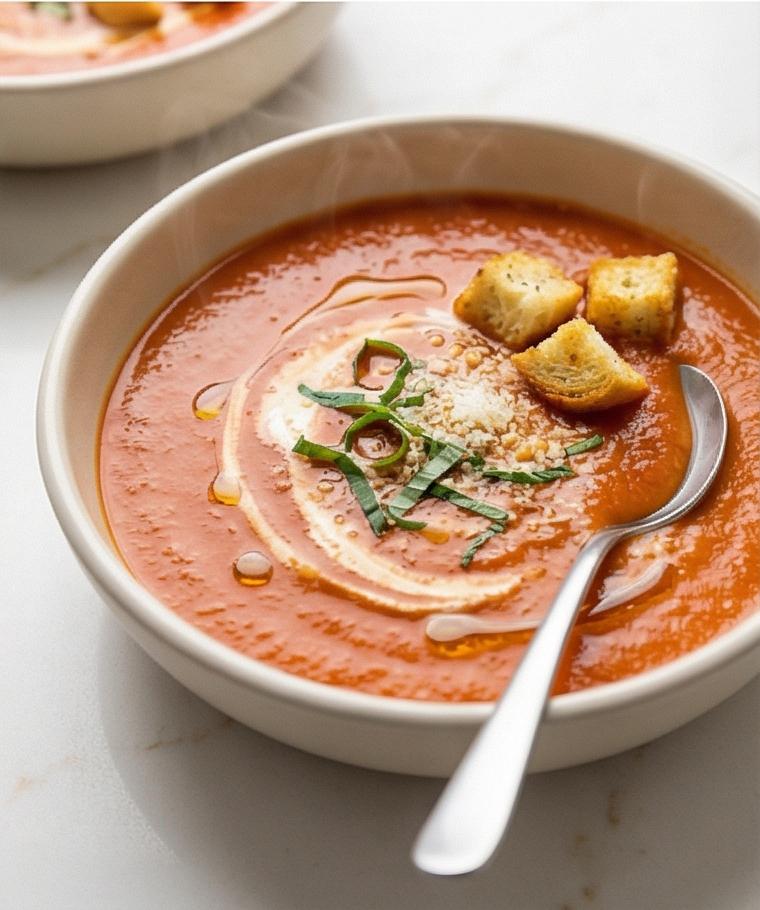
Split Pea Soup Recipe is the kind of comfort food I come back to every winter. I first learned it from a family friend who always kept a ham bone in the freezer, and the smell of simmering peas still takes me right back to that tiny kitchen. This Split Pea Soup Recipe is soulful but unfussy, and it rewards a little patience with really deep, savory flavor. If you love soups that feel like a warm blanket, this is a recipe you will make again and again.
How Split Pea Soup Recipe Became My Rainy-Day Favorite
The first time I cooked this Split Pea Soup Recipe I was fleeing a rainy afternoon and needed something that would fill the house with smell and comfort. I remember the ham bone clinking into the pot, the carrots and celery hissing as they hit the shimmering fat, and the slow, patient bubble of the simmer that felt like therapy. I stirred when it needed it and wandered back to check the steam and the color of the peas. When I finally tasted it, the soup was earthy and mellow with little bright lifts from the apple cider vinegar I dared to add. I served it with rustic bread and watched my friends relax into long conversation. That evening taught me that good soup is less about technique and more about time, attention, and generous seasoning.
The Ingredients That Make This One to Remember
This section breaks down the key players and why they matter.
- Olive oil or unsalted butter: Provides the cooking fat that carries flavor; use butter for richness or olive oil for a lighter finish.
- Yellow onion: The aromatic base; choose firm, dry onions with no soft spots.
- Carrots and celery: Classic mirepoix vegetables for sweetness and body; parsnip can substitute for a nuttier flavor.
- Garlic: Adds depth; fresh is best but 1/2 teaspoon granulated garlic works in a pinch.
- Green split peas: The starch and body; pick through and rinse well.
- Ham bone or diced smoked ham: The salt and smoky backbone; a smoked turkey wing works for a different direction.
- Broth and thyme: Low-sodium broth lets you control salt; fresh thyme brightens the finish.
Essential Kitchen Tools You’ll Use
A few good tools make this soup effortless. You do not need fancy gear, but the right pieces save time and improve results. A heavy pot holds heat and prevents scorching; an immersion blender lets you smooth the soup without dirtying a food processor; a fine-mesh strainer makes quick work of rinsing peas. If you do not have an immersion blender, a regular blender works in small batches. Ovenproof bowls or a warm towel help keep servings hot during a dinner party. Keep a wooden spoon nearby to scrape the bottom while simmering and a sharp knife for tidy vegetables.
- Large heavy-bottomed pot or Dutch oven: Even heat distribution prevents burning.
- Immersion blender: For partial pureeing and silky texture.
- Fine-mesh strainer: To rinse peas and strain if needed.
- Sharp chef’s knife and cutting board: For neat, even vegetables.
- Ladle and wooden spoon: For stirring, serving, and scraping.
Step-by-Step Preparation Guide
Step 1: Prep the aromatics and legumes
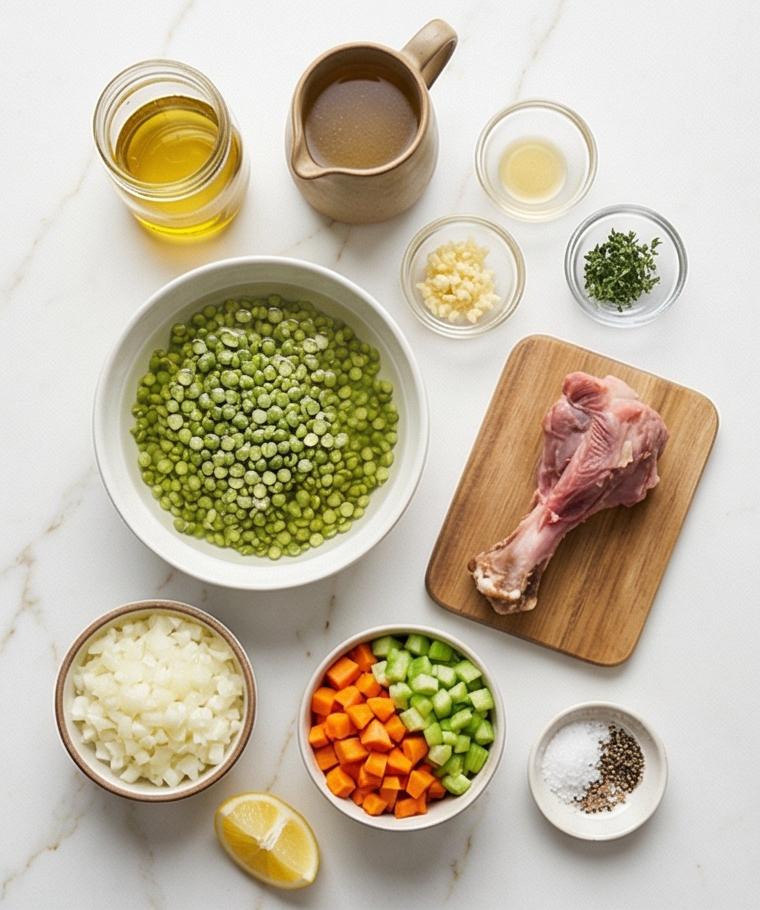
Begin by finely chopping the yellow onion until soft-edged pieces form, peel and dice the carrots and celery into tidy 1/4‑inch cubes, and mince the garlic into a small pile. Pick through the dried green split peas, removing any stones, then rinse them in a fine-mesh strainer under cold water until the runoff is clear. Gather the bay leaves and thyme, and set the ham bone or diced smoked ham nearby. This stage is all about neat, uniform pieces and a wet, rinsed pile of peas ready to absorb broth.
Step 2: Build the base and sweat the vegetables
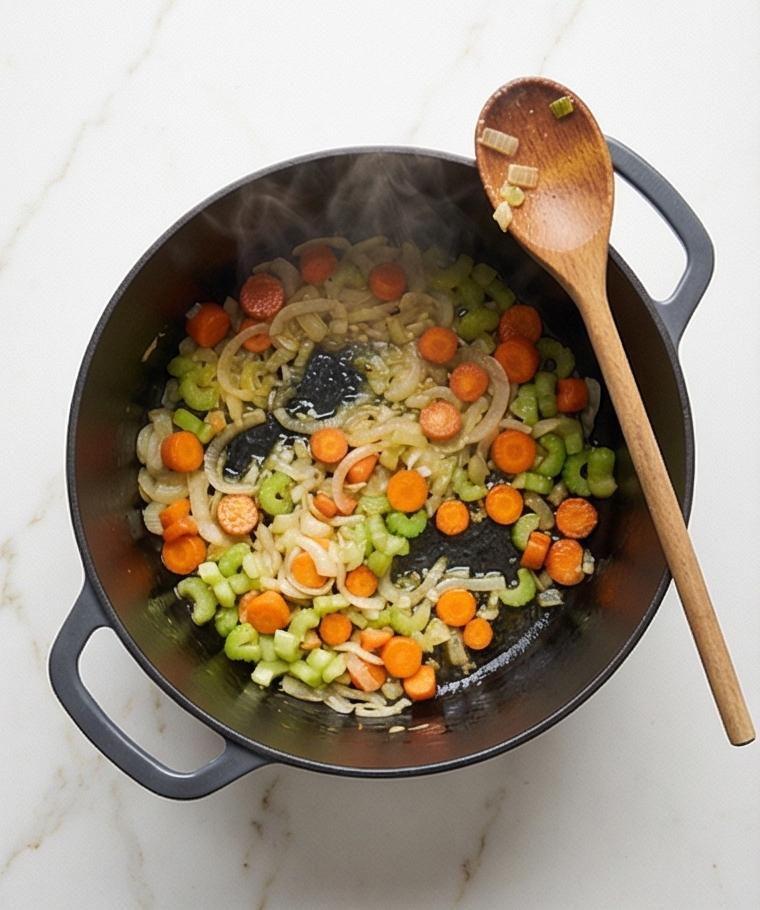
Heat the olive oil or butter in a deep, matte graphite Dutch oven until shimmering; add the chopped onion and cook gently until translucent and soft, then stir in the diced carrots and celery until their edges just begin to soften and the mixture smells sweet and aromatic. Add the minced garlic and cook only until fragrant—brief, glossy, and aromatic without browning. The result should be a glossy, slightly softened mirepoix sitting in shimmering fat, ready to accept the peas and ham.
Step 3: Combine peas, ham, and liquids and bring to a boil
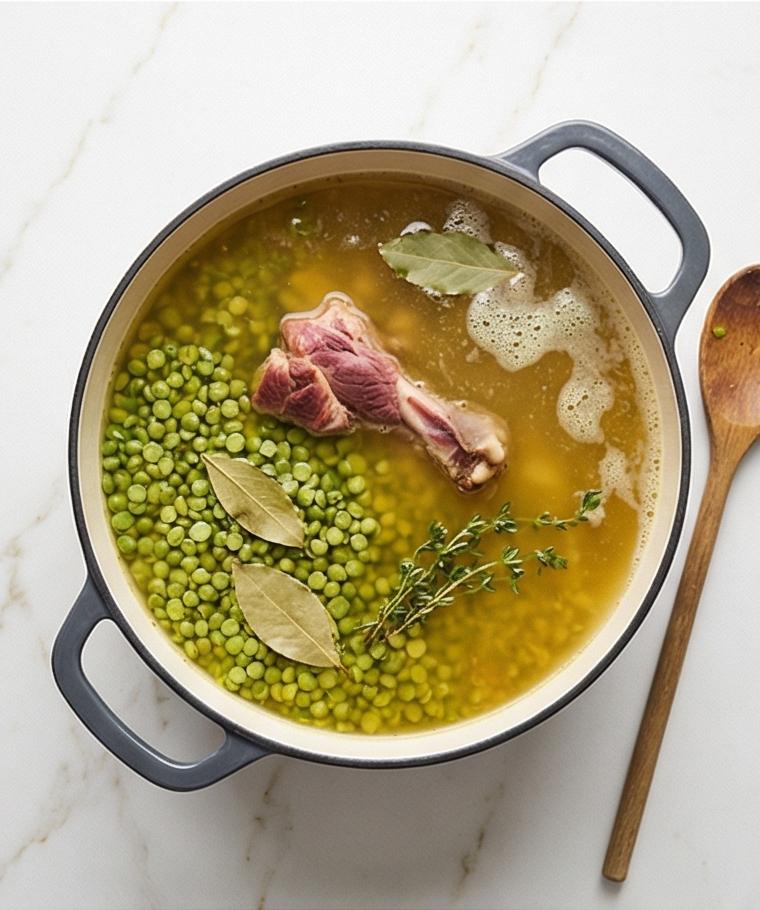
Stir in the rinsed split peas and nestle the meaty ham bone (or the diced smoked ham) into the pot, then pour in the low-sodium broth and water so the peas are fully submerged. Add bay leaves, thyme, and cracked black pepper, stir to combine, and gently bring the pot up to the point of boiling—brief bubbling with a little foam collecting on the surface. Visually you should see whole peas settling and the ham bone partially submerged, with clear broth surrounding them.
Step 4: Simmer until the peas collapse and the soup thickens
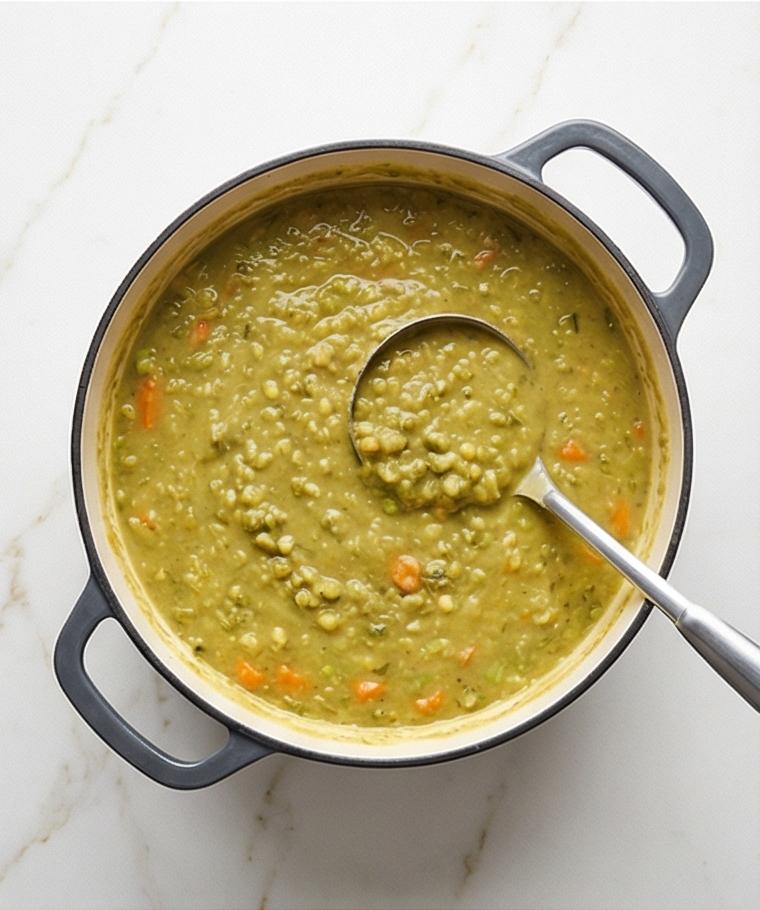
Lower the heat to maintain a soft, steady simmer and partially cover the pot, allowing gentle steam to escape. Over 60–75 minutes the peas will swell and then break down into a thick, velvety body; the surface will transition from individual peas to a coarse, green cream flecked with softened vegetable pieces. Stir periodically to keep the bottom clean; if the texture becomes too thin, reduce uncovered, or add a splash of hot water if it’s too dry before tender. This image captures a dense, stewing green mass—texturally rich and almost porridge-like.
Step 5: Finish with shredded ham, seasoning, and optional smoothing
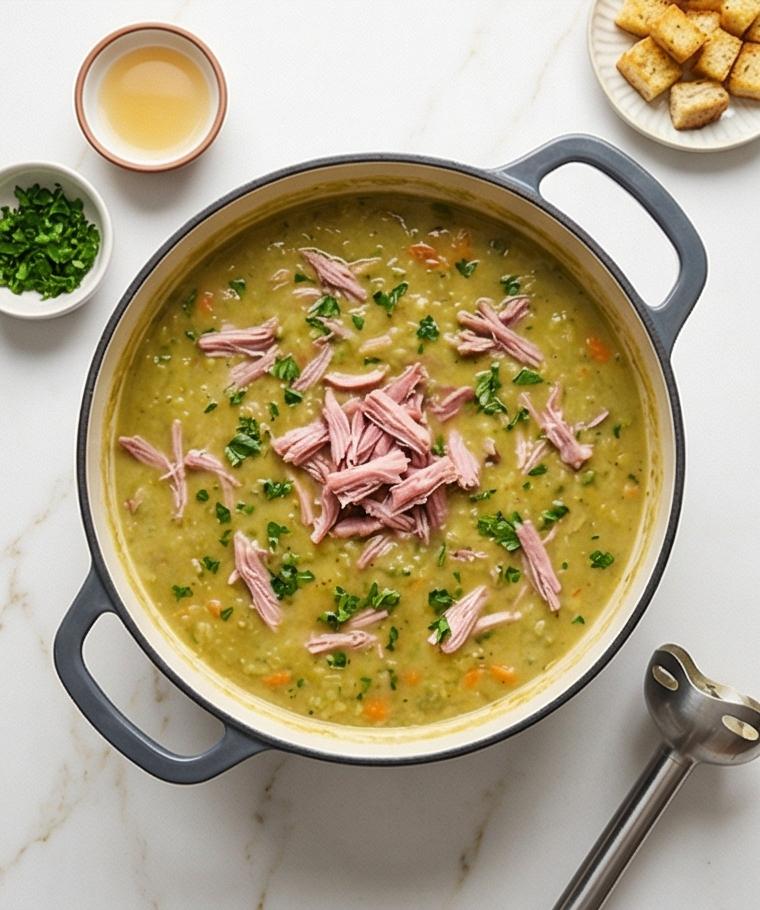
Remove and discard the bay leaves and lift out the ham bone; let it cool slightly, then pull the meat off in shreds and discard bones and excess fat. Return the shredded ham to the pot and taste, seasoning with kosher salt and a brightener such as a splash of apple cider vinegar or lemon juice to lift the flavor. For a silkier mouthfeel, partially puree with an immersion blender in short pulses until you reach a pleasing balance of creamy and rustic texture—some whole shredded ham and tiny vegetable bits should remain visible. Fold in chopped parsley and prepare croutons on the side.
Step 6: Rewarm, ladle, and garnish for serving
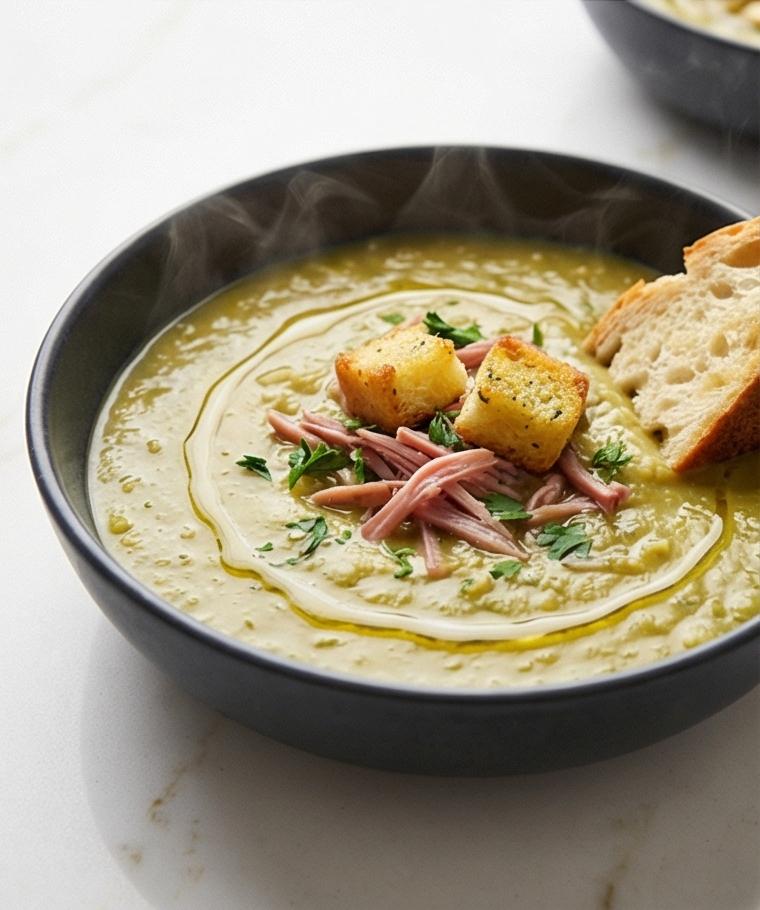
Gently reheat if needed over low heat until hot and silky; ladle the soup into warm bowls and finish with a drizzle of olive oil, a scattering of fresh parsley, a few garlic croutons, and optional crumbled bacon or extra ham. The final presentation should be a thick, luminous pea-green surface with visible strands of tender ham, textural croutons, and a glossy oil halo—ready to serve with crusty bread.
Making It Your Own
I love experimenting with this Split Pea Soup Recipe depending on what I have on hand. For a vegetarian twist, omit the ham and use a smoky smoked paprika and extra vegetable broth to mimic depth. In winter I sometimes add diced potatoes for heartiness or a parsnip for an earthy-sweet note. When the garden yields herbs, I swap in fresh thyme and a bay leaf from the pantry.
For a regional twist, try using a spiced smoked sausage in place of ham for a Southeast European vibe. If you want a lighter bowl, thin with extra hot water and finish with a squeeze of lemon. Small changes like a different acid or a textural garnish turn the familiar into something exciting.
How to Serve
If I am hosting, I warm bowls in the oven so the soup arrives hot and inviting. For a casual family meal I ladle generous portions into bowls and set out a tray of garnishes: chopped parsley, garlic croutons, crumbled bacon, and extra diced ham. Offer crusty bread or buttered toast on the side for dunking.
Scale the recipe easily: double everything for a crowd or halve it for two. When serving a buffet, keep the soup warm in a slow cooker on low and stir occasionally to prevent film on top. Plated for a dinner party, finish with a drizzle of olive oil and a small herb sprig for polish.
Storage and Reheating
Cool leftover Split Pea Soup Recipe quickly and store in airtight containers in the refrigerator for up to four days. The soup will thicken as it rests; a splash of hot water or broth while reheating helps return it to a ladleable consistency. Reheat gently over low heat, stirring to prevent sticking.
For longer storage, freeze portions in freezer-safe containers for up to three months. Thaw overnight in the refrigerator before reheating. If the texture tightens after freezing, blend briefly and add warm liquid to loosen the body without diluting flavor.
Common Mistakes and How to Avoid Them
Adding salt too early is a frequent error, especially with a salty ham bone. Taste near the end and adjust with small pinches of kosher salt. If the pot seems underseasoned, a splash of apple cider vinegar or lemon juice lifts the whole bowl.
Another slip is letting the soup scorch. Use a heavy pot and stir occasionally, especially toward the end of the simmer. If it cooks too rapidly, lower the heat and give it time; patient simmering is the secret to a creamy texture.
Final Thoughts
This Split Pea Soup Recipe is forgiving, satisfying, and utterly cozy. Try it as written the first time, then make small changes to match your pantry and taste. You will end up with bowls that feel like coming home.
Frequently Asked Questions.
- Can I make Split Pea Soup Recipe without a ham bone? Yes, use diced smoked ham or smoked paprika with vegetable broth for a vegetarian-style version. The flavor will shift but remain comforting.
- How long do the peas take to cook? Expect 60 to 75 minutes of simmering until the peas break down into a creamy texture.
- Can I freeze this soup? Yes, freeze in airtight containers for up to three months. Thaw overnight in the refrigerator before reheating.
- Do I need to soak the split peas? No, split peas do not need soaking; just pick through and rinse them well.
- How do I adjust the salt if my ham is very salty? Reduce the added kosher salt and taste at the end; a brightener like apple cider vinegar helps balance excess salt.
Split Pea Soup Recipe
Make Split Pea Soup Recipe with ham and herbs for a cozy, hearty weeknight meal.
Ingredients
Instructions
Step 1: Prep the aromatics and legumes
Begin by finely chopping the yellow onion until soft-edged pieces form, peel and dice the carrots and celery into tidy 1/4‑inch cubes, and mince the garlic into a small pile. Pick through the dried green split peas, removing any stones, then rinse them in a fine-mesh strainer under cold water until the runoff is clear. Gather the bay leaves and thyme, and set the ham bone or diced smoked ham nearby. This stage is all about neat, uniform pieces and a wet, rinsed pile of peas ready to absorb broth.
Step 2: Build the base and sweat the vegetables
Heat the olive oil or butter in a deep, matte graphite Dutch oven until shimmering; add the chopped onion and cook gently until translucent and soft, then stir in the diced carrots and celery until their edges just begin to soften and the mixture smells sweet and aromatic. Add the minced garlic and cook only until fragrant—brief, glossy, and aromatic without browning. The result should be a glossy, slightly softened mirepoix sitting in shimmering fat, ready to accept the peas and ham.
Step 3: Combine peas, ham, and liquids and bring to a boil
Stir in the rinsed split peas and nestle the meaty ham bone (or the diced smoked ham) into the pot, then pour in the low-sodium broth and water so the peas are fully submerged. Add bay leaves, thyme, and cracked black pepper, stir to combine, and gently bring the pot up to the point of boiling—brief bubbling with a little foam collecting on the surface. Visually you should see whole peas settling and the ham bone partially submerged, with clear broth surrounding them.
Step 4: Simmer until the peas collapse and the soup thickens
Lower the heat to maintain a soft, steady simmer and partially cover the pot, allowing gentle steam to escape. Over 60–75 minutes the peas will swell and then break down into a thick, velvety body; the surface will transition from individual peas to a coarse, green cream flecked with softened vegetable pieces. Stir periodically to keep the bottom clean; if the texture becomes too thin, reduce uncovered, or add a splash of hot water if it’s too dry before tender. This image captures a dense, stewing green mass—texturally rich and almost porridge-like.
Step 5: Finish with shredded ham, seasoning, and optional smoothing
Remove and discard the bay leaves and lift out the ham bone; let it cool slightly, then pull the meat off in shreds and discard bones and excess fat. Return the shredded ham to the pot and taste, seasoning with kosher salt and a brightener such as a splash of apple cider vinegar or lemon juice to lift the flavor. For a silkier mouthfeel, partially puree with an immersion blender in short pulses until you reach a pleasing balance of creamy and rustic texture—some whole shredded ham and tiny vegetable bits should remain visible. Fold in chopped parsley and prepare croutons on the side.
Step 6: Rewarm, ladle, and garnish for serving
Gently reheat if needed over low heat until hot and silky; ladle the soup into warm bowls and finish with a drizzle of olive oil, a scattering of fresh parsley, a few garlic croutons, and optional crumbled bacon or extra ham. The final presentation should be a thick, luminous pea-green surface with visible strands of tender ham, textural croutons, and a glossy oil halo—ready to serve with crusty bread.
Notes
- Pick through and rinse split peas to remove debris.
- Use low-sodium broth so you can control seasoning.
- Add acid (apple cider vinegar or lemon) at the end to brighten flavors.
- Stir occasionally while simmering to prevent sticking and burning.
- Freeze in portions for easy reheating later.