Gazpacho is my go-to for hot evenings and lazy lunches, and it feels like catching summer in a bowl. I first learned this Gazpacho from a friend who insisted the tomatoes should sit overnight, and since then I never skip that slow marinate. The balance of bright tomato, crisp cucumber, and silky olive oil makes every spoonful sing, and it is one of those recipes that keeps surprising me with tiny adjustments. If you love simple food that tastes like sunlight, this Gazpacho will feel like a warm welcome from the first chilled sip.
How This Recipe Became My Rainy-Day Favorite
There was a week when the rain would not stop and the markets overflowed with bruised, fragrant tomatoes. I remember coming home with a paper bag of imperfect fruit, the kind you would normally overlook, and deciding to make something that celebrated each tomato without heavy cooking. I chopped, I marinated, and I waited while the house filled with the scent of vinegar and olive oil. When I finally blitzed the mixture and tasted it, the result felt like a small festival: the tomatoes were lush, the garlic gave a friendly kick, and the cucumber kept everything crisp. It was comfort without heaviness, and I ended up serving it to friends who walked in soaked but smiling. From that rainy week, Gazpacho became my proof that sometimes simple patience makes the most generous food.
The Ingredients That Make This Gazpacho Shine
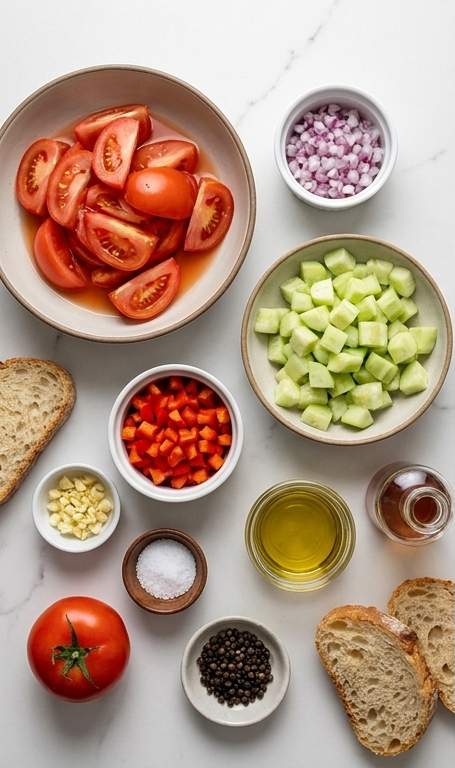
- Tomatoes: The backbone of the soup; choose ripe, fragrant tomatoes for the best flavor. If tomatoes are out of season, use very ripe canned plum tomatoes and reduce the added vinegar slightly.
- Cucumber: Adds cooling crunch and hydrates the soup. Seed if you want a milder texture; substitute with zucchini in a pinch.
- Red capsicum/bell pepper: Brings a sweet, peppery note and color contrast. Swap for orange pepper for a slightly different sweetness.
- Garlic: Gives gentle heat and depth; use one clove if you prefer it subtle or roast a clove for a softer flavor.
- Red onion: Adds sharpness and bite; soak in cold water for a few minutes to tame the raw edge.
- Extra virgin olive oil: Builds silkiness and rounds the flavors; choose a fruity oil for brightness.
- Sherry vinegar: Lifts the soup with acidity; white wine or champagne vinegar will work as substitutes.
- Kosher salt and black pepper: Season to taste; coarse salt helps the vegetables release juices during marination.
Essential Tools for a Smooth, Calm Kitchen Session
A few simple tools make this Gazpacho easy to execute and elevate the final texture.
- Large mixing bowl: For marinating the vegetables; a wide bowl helps ingredients mingle and release juices.
- High-speed blender or immersion blender: For achieving a silky, even texture; an immersion blender is great for smaller batches.
- Fine mesh strainer or food mill: Optional, but recommended if you want a glass-smooth result.
- Sharp knife and cutting board: Clean cuts reduce bruising and keep the juice in the vegetables.
- Measuring spoons and cups: For consistent seasoning; taste and adjust as you go.
Step-by-Step Preparation Guide
Step 1: Marinate
Toss the ripe tomato wedges, peeled diced cucumber, diced red capsicum, chopped garlic and finely diced red onion into a large matte ceramic mixing bowl. Pour in the extra virgin olive oil, sherry vinegar, and sprinkle the kosher salt and black pepper, then give everything a gentle fold so the tomato juices begin to loosen and mingle with the oil and vinegar. Cover the bowl and let it rest in the refrigerator — ideally 12 to 24 hours for the cleanest, brightest flavor and the juiciest body, or at least 3 hours if you’re short on time. The goal here is that the vegetables soften, release sweet juices, and the dressing mellows into a fragrant, slightly glossy marinade.
Step 2: Blitz
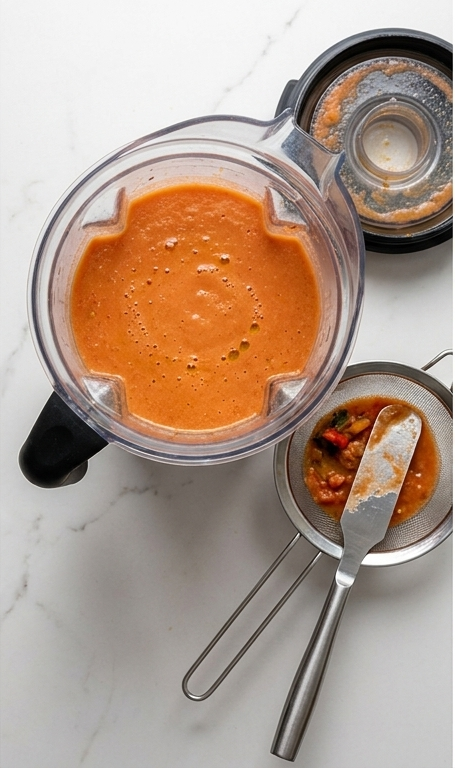
Transfer the entire marinated mixture into a high-speed blender (or a tall jug for an immersion blender) and blitz on high until the mixture becomes uniformly smooth and liquid, with a slightly frothy surface from the high-speed action. If you want the silkiest, glass-smooth texture, pass the blitzed soup through a fine mesh strainer or food mill into a clean container, pressing and discarding the solids — you’ll be left with a clear, velvety orange-red liquid that still carries tiny suspended droplets of oil and tomato flavor.
Step 3: Rest and Serve
Pour the blitzed gazpacho into a serving jug or back into the chilled mixing bowl and allow it to rest for about 15 minutes so surface bubbles settle and the temperature evens out. Give it a final gentle stir to unify texture and sheen, then ladle into shallow soup bowls. Keep everything chilled until just before serving so the soup reads as bright and fresh rather than warm or flat.
Step 4: Garnish and Accompaniments
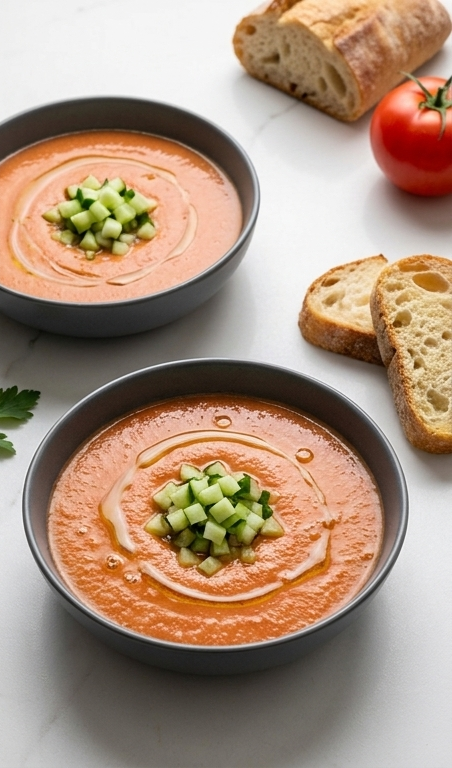
Finish each bowl with a concentrated contrast: a small scatter of very finely diced cucumber in the center for crunch, a glossy swish of extra virgin olive oil that catches the light, and a few sprigs of fresh green herb if desired. Serve alongside thick, rustic slices of crusty bread for soaking. The final plate should feel clean, refreshed, and visually loud — the smooth, deep orange gazpacho contrasted by tiny green cucumber cubes and the golden, craggy bread.
Making It Your Own
Try a smoky version by roasting the tomatoes and peppers first; this adds depth and works well when tomatoes are less sweet. For a lighter, herb-forward twist, blend in a handful of basil or parsley at the end and reduce the oil slightly. If you want a creamier texture, swirl in plain yogurt or a splash of buttermilk when serving; it smooths the acidity and adds richness. For a spicy regional twist, add a small pinch of smoked paprika or a sliver of jalapeno during the blitz. Each tiny experiment changes the mood of the Gazpacho, so treat these as friendly tests rather than rules.
How to Serve
When I host, I ladle Gazpacho into shallow bowls and place a small dice of cucumber in the center for contrast. For a casual lunch for two, halve the recipe and serve with warm crusty bread and a simple green salad. For a buffet, chill the soup in a large jug and set a toppings station with extra diced cucumber, croutons, chopped herbs, and additional olive oil so guests can customize. To stretch the recipe for a bigger crowd, increase tomatoes and cucumber proportionally, and keep the oil and vinegar slightly conservative until you taste.
Storage and Reheating
Gazpacho stores beautifully in the refrigerator for up to 3 days in an airtight container. The flavor often deepens after a day, though the texture may separate slightly; give it a quick whisk before serving to reunite the oil and juices.
Do not freeze if you want to keep the fresh texture; thawed tomato soup can become watery and lose brightness. If you must freeze, expect some texture change and plan to strain and re-season after thawing.
Common Mistakes and How to Avoid Them
A common mistake is over-blending then immediately serving; give the soup a short rest so surface bubbles settle and the flavors calm. Also, skipping the marinate shortchanges the depth of flavor, so even a brief 3-hour rest is better than none.
Another slip is oversalting before tasting. Season gradually and adjust after blitzing and resting. If your tomatoes are dull, add a touch more vinegar or a pinch of sugar to balance acidity and sweetness.
Final Thoughts and an Invitation
This Gazpacho is forgiving, bright, and endlessly adaptable. Give it a go on the next warm day, or make it ahead for a relaxed dinner with friends. Once you taste how simple ingredients can sing together, I think it will become a reliable favorite in your kitchen too.
Frequently Asked Questions
- Can I make Gazpacho without a blender?
Yes, but texture will be chunkier. Chop everything very fine and toss with the dressing, or use a potato masher for a rustic version. - How long can I store Gazpacho in the fridge?
Store in an airtight container for up to 3 days. Give it a stir before serving as oil may separate. - Can I use other vinegars instead of sherry vinegar?
Absolutely. White wine or champagne vinegar are great substitutes. Adjust the amount to taste. - Is Gazpacho suitable for vegans?
Yes, this Gazpacho is naturally vegan. Add plant-based yogurt for creaminess if you like. - Can I make Gazpacho ahead for a party?
Yes. Make it the day before and keep chilled. Finish with fresh garnishes just before serving.
Gazpacho
Make vibrant Gazpacho: chill-marinated tomatoes, cucumber, and peppers blitzed into a silky, refreshing summer soup.
Ingredients
Instructions
Step 1: Marinate
Toss the ripe tomato wedges, peeled diced cucumber, diced red capsicum, chopped garlic and finely diced red onion into a large matte ceramic mixing bowl. Pour in the extra virgin olive oil, sherry vinegar, and sprinkle the kosher salt and black pepper, then give everything a gentle fold so the tomato juices begin to loosen and mingle with the oil and vinegar. Cover the bowl and let it rest in the refrigerator — ideally 12 to 24 hours for the cleanest, brightest flavor and the juiciest body, or at least 3 hours if you're short on time. The goal here is that the vegetables soften, release sweet juices, and the dressing mellows into a fragrant, slightly glossy marinade.
Step 2: Blitz
Transfer the entire marinated mixture into a high-speed blender (or a tall jug for an immersion blender) and blitz on high until the mixture becomes uniformly smooth and liquid, with a slightly frothy surface from the high-speed action. If you want the silkiest, glass-smooth texture, pass the blitzed soup through a fine mesh strainer or food mill into a clean container, pressing and discarding the solids — you'll be left with a clear, velvety orange-red liquid that still carries tiny suspended droplets of oil and tomato flavor.
Step 3: Rest and Serve
Pour the blitzed gazpacho into a serving jug or back into the chilled mixing bowl and allow it to rest for about 15 minutes so surface bubbles settle and the temperature evens out. Give it a final gentle stir to unify texture and sheen, then ladle into shallow soup bowls. Keep everything chilled until just before serving so the soup reads as bright and fresh rather than warm or flat.
Step 4: Garnish and Accompaniments
Finish each bowl with a concentrated contrast: a small scatter of very finely diced cucumber in the center for crunch, a glossy swish of extra virgin olive oil that catches the light, and a few sprigs of fresh green herb if desired. Serve alongside thick, rustic slices of crusty bread for soaking. The final plate should feel clean, refreshed, and visually loud — the smooth, deep orange gazpacho contrasted by tiny green cucumber cubes and the golden, craggy bread.
Notes
- Marinate the vegetables at least 3 hours, ideally 12 to 24 hours, for best flavor.
- If texture is too coarse, strain the blitzed soup through a fine mesh for a silkier result.
- Taste and adjust vinegar and salt after blitzing and resting, not before.
- Store chilled in an airtight container for up to 3 days; avoid freezing if you want fresh texture.