I still remember the first time I mixed up a batch of Strawberry Pineapple Mimosas for a sleepy Sunday brunch. I wanted something bright, effortless, and a little bit fancy without the fuss. Over the years this drink has become my go-to for celebrations that start early and carry on into the afternoon. Its balance of citrus and tropical fruit with a fizzy finish makes it feel like a small party in a flute.
What makes Strawberry Pineapple Mimosas special is how simple they are and how the flavors sing together with almost no effort. The combination of orange and pineapple juice gives a sunny base that the sparkling white wine lifts into something celebratory. If you like light, refreshing drinks that still feel festive, this is one to keep in your repertoire.
When Brunch Felt Like a Little Miracle
I mixed my first pitcher the morning my sister moved into her new apartment. Boxes were everywhere, and the kitchen smelled like coffee and cardboard. I wanted to slow the chaos for a moment, so I opened a chilled bottle of sparkling wine and stirred together orange and pineapple juice while thinly slicing strawberries. The first glass felt like a pause, a bright sip that made the day feel gentler and more hopeful. The fizz tickled our noses as we sat on the floor among open boxes, and for a few blissful minutes we forgot the to do list and just talked. That memory is why Strawberry Pineapple Mimosas always feels like celebration to me; they are small, simple, and memorable.
The Stars of the Pitcher
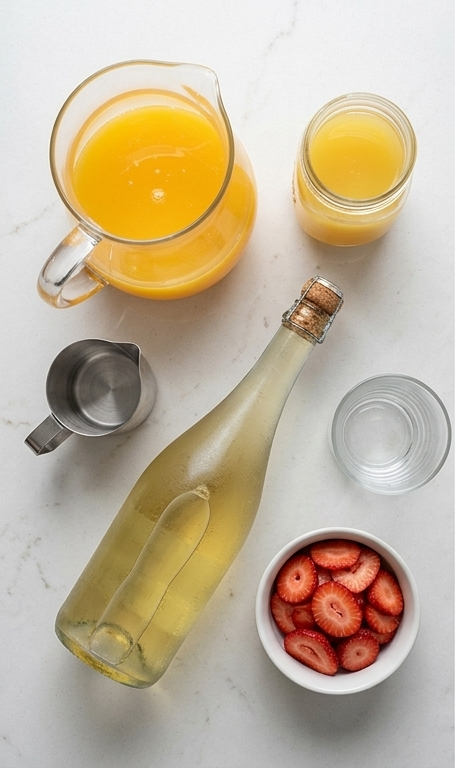
- Orange Juice: The backbone of the drink, providing acidity and familiar citrus notes. Use fresh-squeezed for brightness, or high-quality store-bought for convenience. If you need a substitute, tangerine or mandarin juice will keep the sweetness while adding a floral lift.
- Pineapple Juice: Adds tropical body and natural sweetness. Opt for 100 percent juice without added sugars for the best balance. Swap in mango nectar for a richer, silkier profile.
- Sparkling White Wine: The effervescence and dry finish keep the drink lively. Choose a Brut or Extra Dry Prosecco or Cava. For nonalcoholic guests, a premium sparkling grape juice works well.
- Strawberries: For garnish and a touch of acidity, use ripe, firm berries. If strawberries are out of season, thin slices of peach or a few raspberries can add color and interest.
Essential Kitchen Tools and Why They Matter
A short note on tools makes this recipe faster and less stressful. You do not need anything fancy, but a few reliable pieces will improve speed and presentation.
- Clear glass pitcher: For easy mixing and a pretty presentation. If you do not have one, use a large measuring cup.
- Champagne flutes or tall glasses: They concentrate the aroma and show off the bubbles. Any tall, narrow glass will work.
- Sharp knife and cutting board: For thin, elegant strawberry slices. A paring knife substitutes if you lack a chef’s knife.
- Bottle opener and chill space: Keep the sparkling wine cold until pouring; an ice bucket or fridge works great.
Step-by-Step Preparation Guide
Step 1: Combine the juices in a chilled pitcher
Pour the orange juice and pineapple juice into a clear glass pitcher and gently stir until the two juices are uniformly combined. Aim for a sunny, golden-yellow hue with a clean, slightly pulpy texture as the citrus and tropical juices marry; the surface should show a calm sheen and a few tiny suspended bits of pulp. Keep the pitcher on the white quartzite tabletop while it chills briefly so the mixture reads bright and fresh against the pale, matte surface.
Step 2: Portion the orange–pineapple mixture into flutes
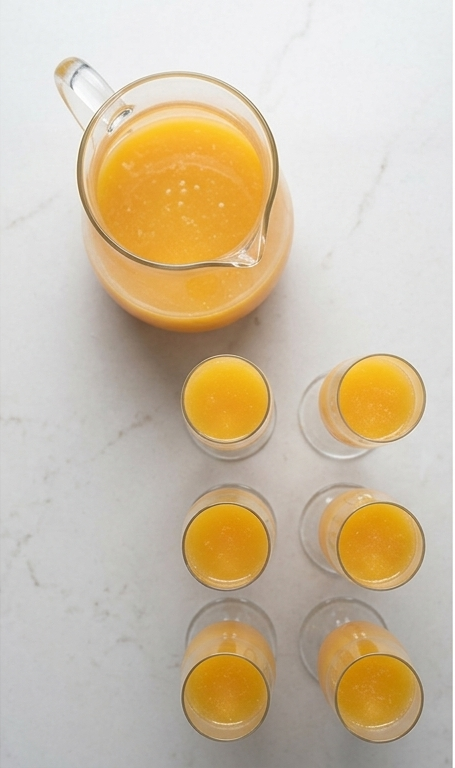
Using the same clear pitcher, carefully pour the orange–pineapple mixture into tall champagne flutes from above, filling each glass about halfway so the vivid yellow liquid sits level in the bowl. From the top-down view you should see the smooth liquid planes and the contrast between the glass rims and the quartzite surface, glass bases casting faint soft shadows. Focus on the evenness of fill and the liquid’s flat, glossy texture as it awaits the final effervescent touch.
Step 3: Top with chilled sparkling white wine
Bring the chilled sparkling white wine to the table and gently fill each flute the rest of the way, pouring slowly so a stream of tiny effervescent bubbles rises from the bottom to the surface. Describe the wine’s transition: a crisp, translucent fizz that lightens the liquid’s appearance and creates a shimmering, active surface dotted with fragile bubbles. Leave the bottle and a small puddle of condensation near the pitcher on the matte quartzite for visual continuity.
Step 4: Garnish with thinly sliced strawberries and serve
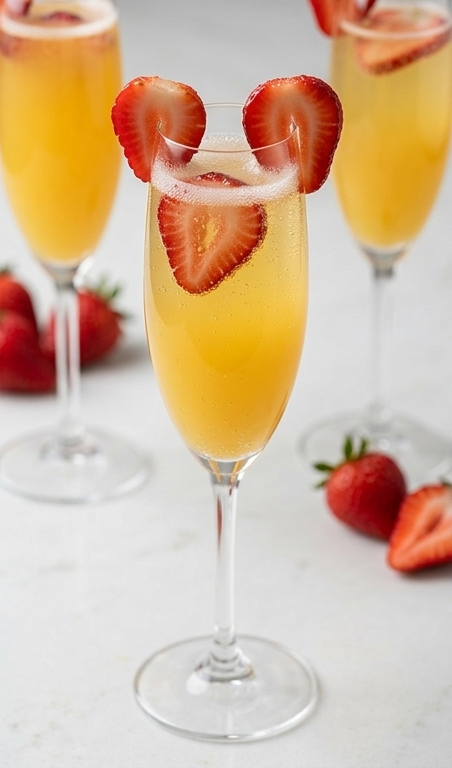
Finish by resting one or two thin, perfectly sliced strawberries on the rim or floating delicately at the surface of each mimosa, their saturated red flesh and tiny seeds providing a bright counterpoint to the golden drink. Present the final flute at eye level for a close-up that celebrates the drink’s sparkling surface, the micro-texture of bubbles, and the juicy translucence of the strawberry slices, all staged on the same white quartzite tabletop.
Making It Your Own
Try playing with proportions to suit your crowd. Use more pineapple juice for a sweeter, tropical feel, or increase orange juice for brighter acidity. For a lower alcohol option, halve the bottle of sparkling wine and top off with high-quality sparkling water.
For a winter twist, muddle a few macerated strawberries with a pinch of sugar and a splash of lemon before combining with the juices. In summer, freeze some pineapple chunks and use them as chilled, fruity ice cubes that keep the drink cold without diluting it.
I often experiment with flavored sparkling wines, like a lightly floral Prosecco, to add a subtle perfume. These small changes let you tailor Strawberry Pineapple Mimosas to seasons and guests.
How to Serve
If I am hosting a brunch, I make one large pitcher and set up a small station with chilled flutes, the bottle of sparkling wine in an ice bucket, and a bowl of thin strawberry slices for guests to garnish their own. For a crowd of 8 to 10, prepare two pitchers to speed refills.
To elevate presentation, rim glasses with a tiny sugar sprinkle or add a small mint sprig beside the strawberry. For a family-friendly party, offer a nonalcoholic sparkling option and label the glasses so everyone knows which one is which.
Storage and Reheating
These mimosas are best enjoyed immediately; the bubbles start to fade within a few hours. If you need to prepare components ahead, mix the orange and pineapple juices in advance and chill them in the refrigerator for up to 24 hours.
Keep the sparkling wine chilled until the last moment. Leftover mixed mimosa will lose fizz and should be consumed within the same day. If you have leftover wine, reseal and refrigerate it for up to 2 days.
Avoid These Little Slipups
A common mistake is pouring too quickly and losing most of the bubbles. Pour slowly and tilt the flute slightly to preserve effervescence.
Another trap is using warm wine or flat juice. Chill everything ahead of time and taste the juices to ensure they are bright and not overly sweet. Small adjustments make the final drink sing.
Raise a Glass
Strawberry Pineapple Mimosas are easy, bright, and endlessly adaptable. Whether you are making a few for a quiet morning or several pitchers for a lively brunch, this recipe rewards small care with a big payoff. Try it this weekend and see how a little sparkle changes the mood.
Frequently Asked Questions.
- Can I make Strawberry Pineapple Mimosas without alcohol? Yes. Use a high quality nonalcoholic sparkling wine or sparkling grape juice to keep the bubbles and the celebratory feel.
- How far ahead can I prepare parts of this recipe? Mix the orange and pineapple juices and chill them up to 24 hours in advance. Keep the wine separate until serving.
- What is the best wine to use for these mimosas? A Brut or Extra Dry Prosecco or Cava works nicely. They add crispness without too much sweetness.
- Can I sweeten the mimosas if my juices are tart? Yes. Stir a small teaspoon of simple syrup into the juices before pouring. Start small and taste.
- How many servings does one 750 mL bottle make? Typically one 750 mL bottle with the given amount of juice serves about 6 people depending on flute size and pour.
Strawberry Pineapple Mimosas
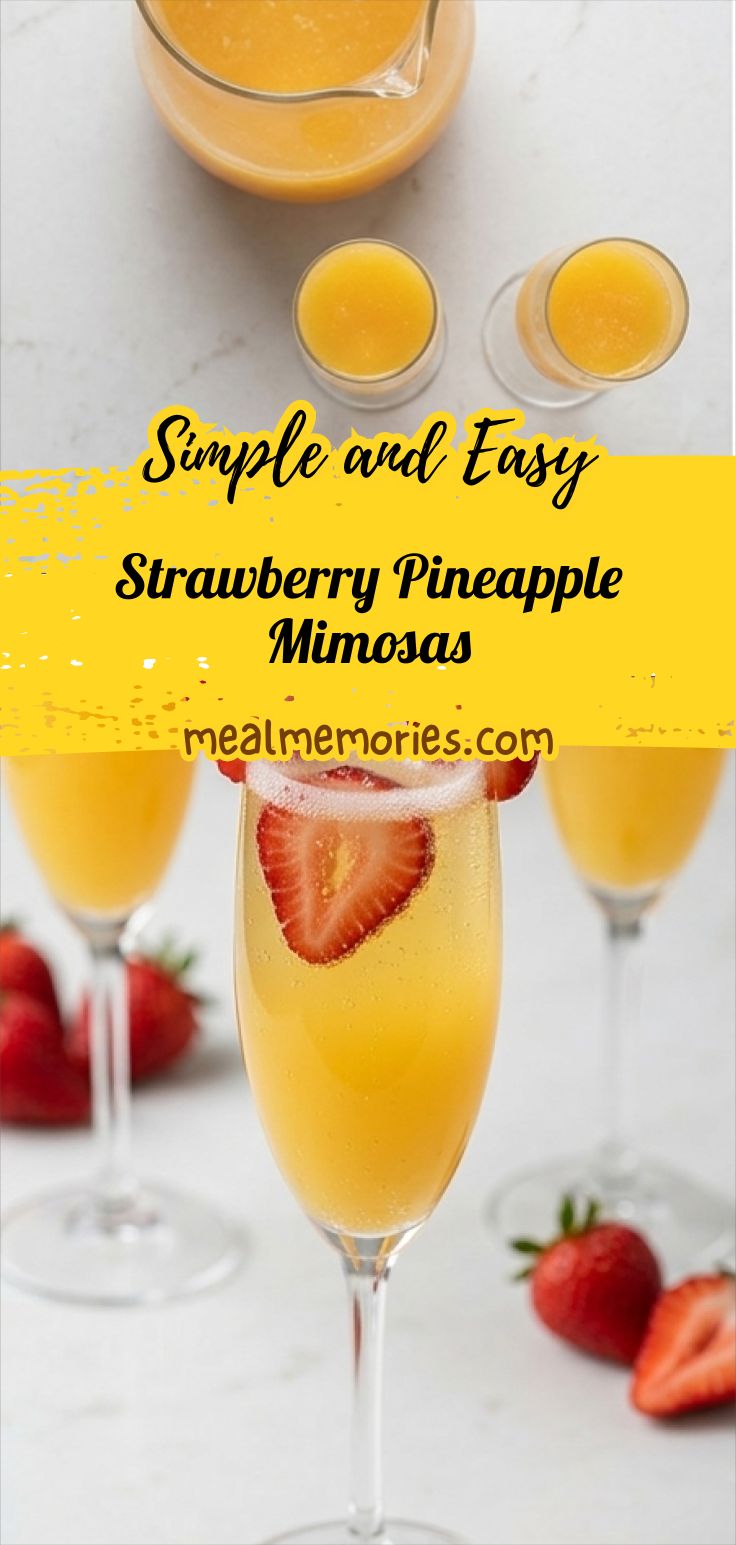
Make Strawberry Pineapple Mimosas for a bright brunch: mix juices, top with chilled sparkling wine, and garnish with strawberries.
Ingredients
Instructions
Step 1: Combine the juices in a chilled pitcher
Pour the orange juice and pineapple juice into a clear glass pitcher and gently stir until the two juices are uniformly combined. Aim for a sunny, golden-yellow hue with a clean, slightly pulpy texture as the citrus and tropical juices marry; the surface should show a calm sheen and a few tiny suspended bits of pulp. Keep the pitcher on the white quartzite tabletop while it chills briefly so the mixture reads bright and fresh against the pale, matte surface.
Step 2: Portion the orange–pineapple mixture into flutes
Using the same clear pitcher, carefully pour the orange–pineapple mixture into tall champagne flutes from above, filling each glass about halfway so the vivid yellow liquid sits level in the bowl. From the top-down view you should see the smooth liquid planes and the contrast between the glass rims and the quartzite surface, glass bases casting faint soft shadows. Focus on the evenness of fill and the liquid’s flat, glossy texture as it awaits the final effervescent touch.
Step 3: Top with chilled sparkling white wine
Bring the chilled sparkling white wine to the table and gently fill each flute the rest of the way, pouring slowly so a stream of tiny effervescent bubbles rises from the bottom to the surface. Describe the wine’s transition: a crisp, translucent fizz that lightens the liquid’s appearance and creates a shimmering, active surface dotted with fragile bubbles. Leave the bottle and a small puddle of condensation near the pitcher on the matte quartzite for visual continuity.
Step 4: Garnish with thinly sliced strawberries and serve
Finish by resting one or two thin, perfectly sliced strawberries on the rim or floating delicately at the surface of each mimosa, their saturated red flesh and tiny seeds providing a bright counterpoint to the golden drink. Present the final flute at eye level for a close-up that celebrates the drink’s sparkling surface, the micro-texture of bubbles, and the juicy translucence of the strawberry slices, all staged on the same white quartzite tabletop.
Notes
- Use freshly squeezed orange juice for the brightest flavor.
- Keep the sparkling wine chilled until just before serving to preserve bubbles.
- Freeze pineapple chunks to use as decorative ice that will not water down the drinks.
- For nonalcoholic guests, use a quality sparkling grape juice or nonalcoholic sparkling wine.
- Thinly slice strawberries right before serving to keep them firm and vibrant.