Greek Salad Recipe has been a summer staple in my kitchen for as long as I can remember. I fell for its bright, crunchy vegetables and that tangy olive-oil dressing the first time I tasted a version made by a Greek friend. I like how simple ingredients come together to feel festive and surprisingly sophisticated. This Greek Salad Recipe is quick, forgiving, and perfect for weeknights or for feeding a crowd when you want something fresh and satisfying.
How This Salad Became My Sunlit Table Favorite
I first learned to make the Greek Salad Recipe on a hot afternoon at my neighbor Maria’s apartment. She opened the windows so the basil-scented breeze could mingle with the scent of ripe tomatoes, and we chopped and chatted in the shifting light. I remember the sound of the olives hitting the bowl and the bright pop of vinegar when she whisked the dressing. We tasted as we went, laughing when we added too much onion and then balanced it with a squeeze of olive oil. That afternoon stuck with me because the salad felt like hospitality in a bowl: honest, bright, and generous. Ever since, making this salad pulls me back to that warm kitchen, and I reach for the same simple ingredients when I want a meal that feels like a small celebration.
Key Ingredients and Why They Matter
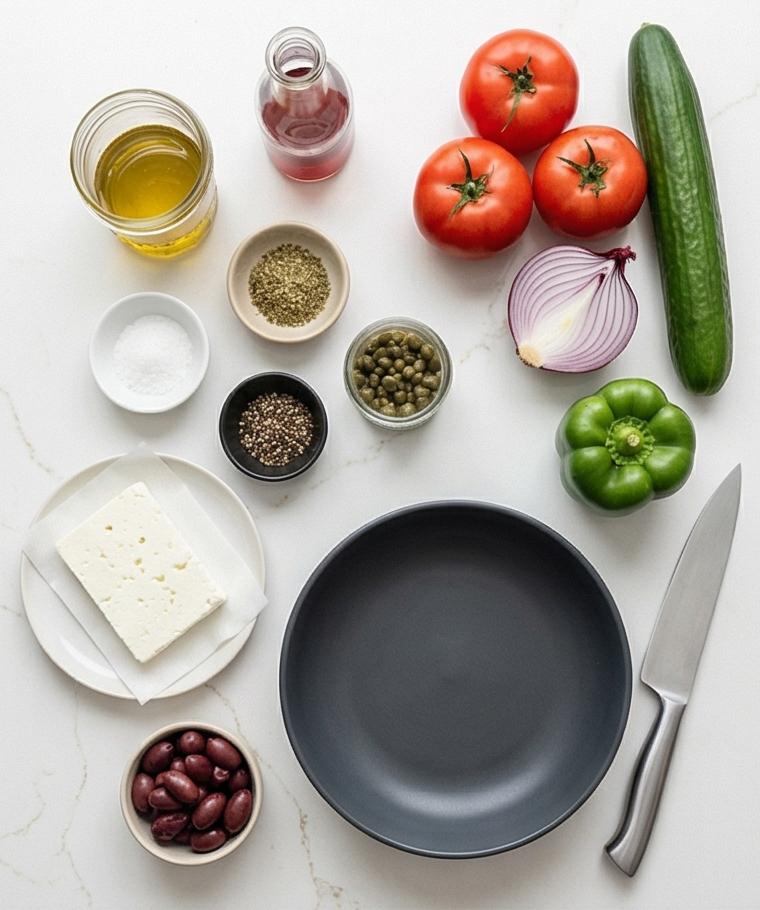
- Extra-virgin olive oil: The base of the dressing and a flavor carrier; choose a fruity, peppery oil. Substitute: a milder extra-virgin or a 50/50 mix with regular olive oil.
- Red wine vinegar: Adds tang and balance; if needed, use sherry vinegar in a pinch.
- Dried oregano: Earthy and aromatic; use fresh oregano for garnish if you have it.
- Ripe tomatoes: Provide sweetness and juiciness; look for fragrant, slightly soft tomatoes.
- English cucumber: Adds crunch and freshness; keep the peel for color and texture.
- Red onion: Bright heat and texture; soak briefly in cold water if you want milder flavor.
- Kalamata olives and capers: Provide briny contrast; swap with Castelvetrano olives for a milder bite.
- Greek feta: The creamy, salty finishing note; pick a block in brine and drain well.
Essential Kitchen Tools and Why They Help
A few simple tools make this Greek Salad Recipe effortless and more enjoyable to prepare. A sharp chef’s knife speeds up prep and keeps tomato wedges intact, while a sturdy cutting board protects your countertops and gives you room to layer vegetables. Use a mixing bowl large enough to toss everything without squashing the tomatoes. A small jar with a lid is my favorite for the dressing because it emulsifies nicely and is easy to shake. If you don’t have a jar, whisk in a bowl or use a fork. Finally, two large serving spoons let you lift and fold without crushing the ingredients.
- Chef’s knife: For clean, even cuts and safe chopping.
- Large mixing bowl: To toss without bruising the vegetables.
- Small jar or bowl for dressing: For easy whisking or shaking.
- Cutting board: To protect surfaces and keep prep organized.
- Two large spoons or salad servers: To gently toss the salad.
Step-by-Step Preparation Guide
Step 1: Make the dressing
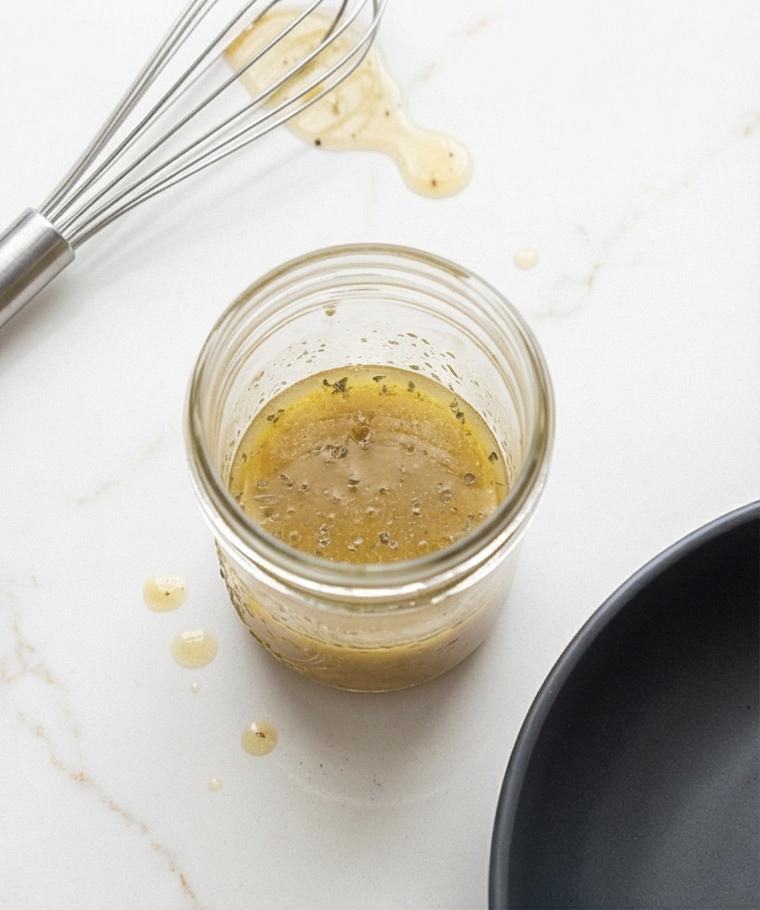
In a small jar or bowl combine the extra-virgin olive oil, red wine vinegar, crumbled dried oregano, fine sea salt, and freshly ground black pepper. Whisk vigorously for 20–30 seconds (or close the jar and shake) until the liquid looks slightly thickened and unified with no large oil-vinegar separation. Taste and adjust with a pinch more salt or pepper if needed; leave the dressing at room temperature while you prepare the vegetables.
Step 2: Core and wedge the tomatoes
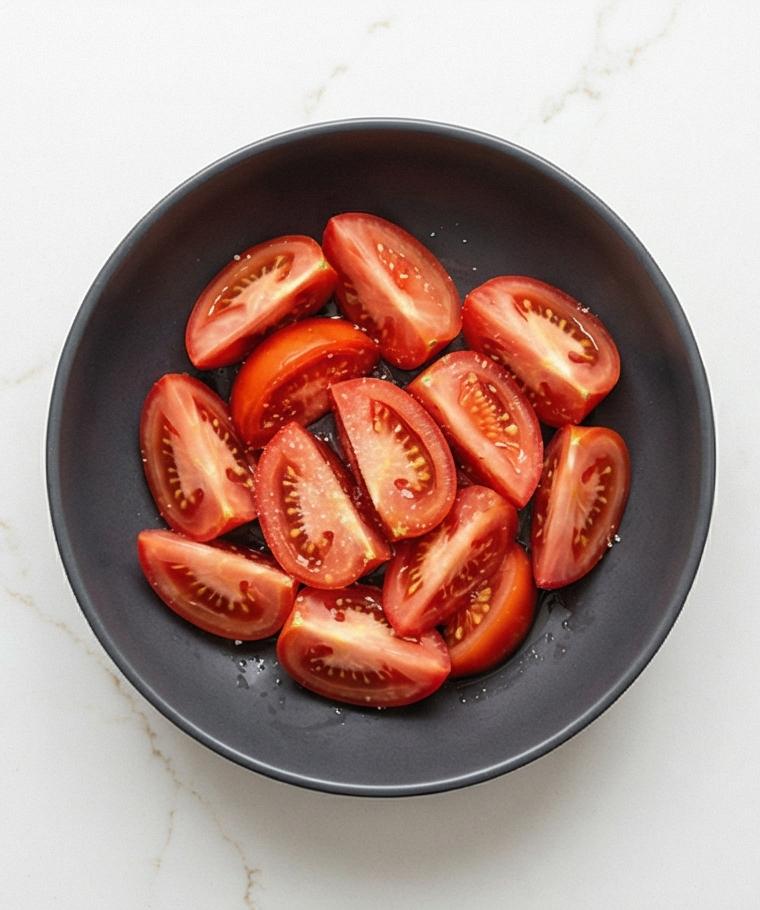
Core four ripe tomatoes and slice them into 1–1¼ inch wedges. Place the tomato wedges in your large salad bowl, season them very lightly with a small pinch of salt to coax out some juices, and let them sit while you prep the other vegetables so they begin to release flavor and become glossy.
Step 3: Slice the cucumber, onion, and pepper
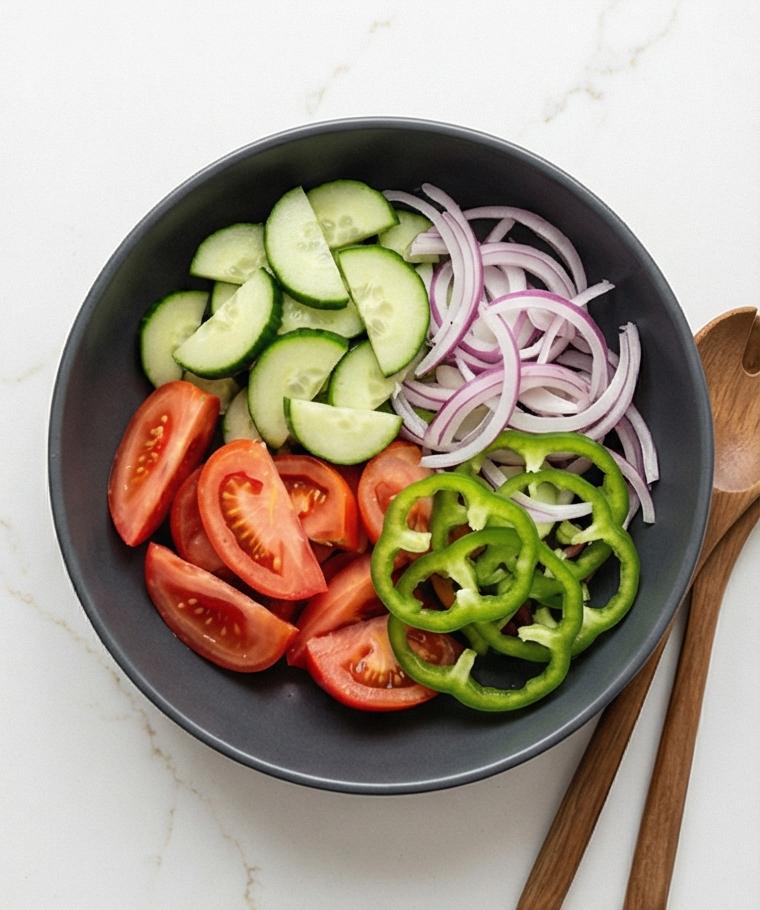
Rinse and dry the English cucumber and slice it lengthwise into 1/4-inch half-moons with the peel left on for contrast. Peel and very thinly slice the red onion into translucent half-moons, separating the rings with your fingers. Core, seed, and slice the green bell pepper into 1/4-inch rings or strips. Add all three into the bowl with the tomatoes, layering colors and textures so the glossy tomato wedges rest against crisp cucumber crescents and papery onion ribbons.
Step 4: Add olives and capers, then dress
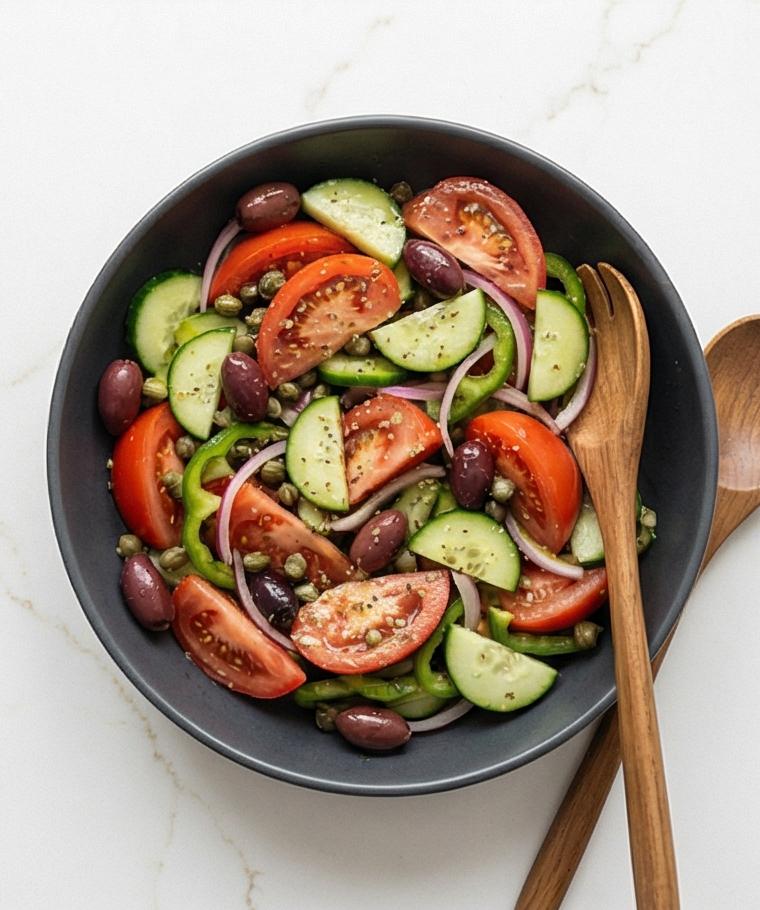
Scatter the pitted Kalamata olives (whole or halved) and the drained capers over the mixed vegetables so they’re evenly distributed. Re-emulsify the dressing with a quick whisk or shake, then pour it evenly over the vegetables in the bowl, aiming for a light, even coating rather than a heavy puddle.
Step 5: Toss gently and let the salad rest
Using two large spoons, gently toss the salad for 30–45 seconds—lift and fold rather than mashing—until the vegetables are lightly glossy and evenly coated, taking care not to crush the tomato wedges. Let the dressed salad sit at room temperature for 10–15 minutes so the flavors meld and a little tomato-olive oil juice forms at the bottom of the bowl.
Step 6: Add feta, finish with oil and herbs, and serve
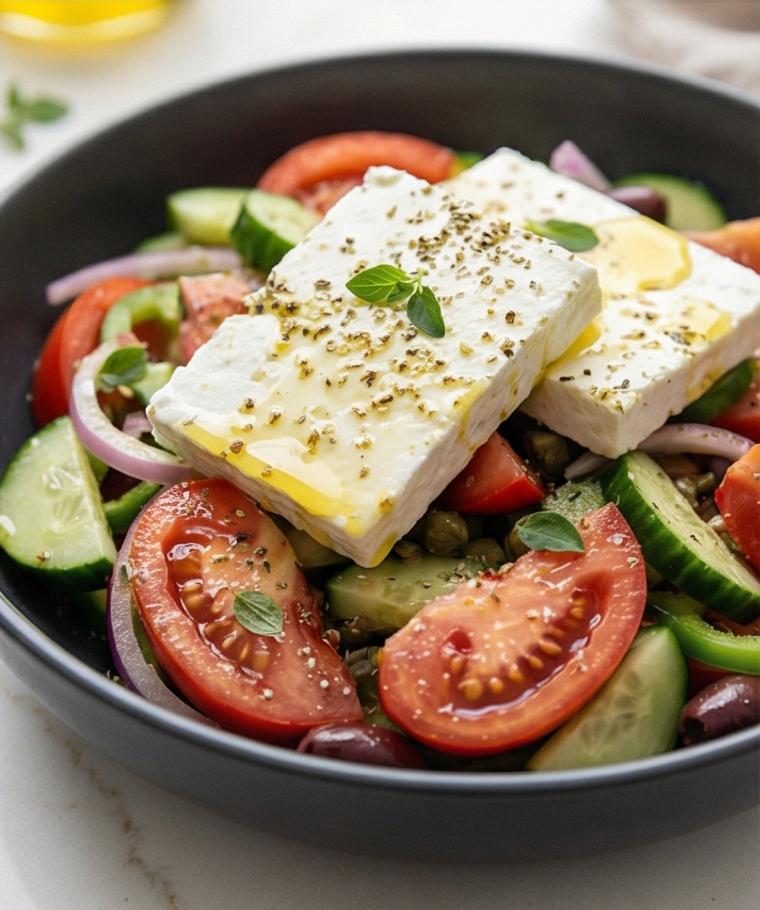
Place one or two thick slabs of drained, patted-dry Greek feta on top of the salad (don’t crumble). Drizzle a tablespoon of extra-virgin olive oil over the feta and the salad, sprinkle the dried oregano over the cheese, and scatter fresh oregano or flat-leaf parsley leaves as a garnish if desired. Serve immediately, scooping a mix of vegetables and some of the tomato-olive oil juices into each portion. If you need to store leftovers, remove the feta and refrigerate separately; keep the dressed salad covered for up to one day and bring back to room temperature before serving.
Making It Your Own
I like to experiment with the Greek Salad Recipe depending on the season and who is coming over. In spring I add a handful of peas and a scatter of mint for a brighter, sweeter edge. In winter I sometimes swap tomatoes for slow-roasted cherry tomatoes to concentrate the flavor. For a vegan version I skip the feta and add marinated tempeh or roasted chickpeas for protein. When I want something heartier, I toss in cooked farro or slices of grilled halloumi. Each tweak changes the mood of the salad, but the core idea stays the same: fresh ingredients, olive oil, and a little oregano.
How to Serve
When I serve the Greek Salad Recipe for a dinner party, I place the salad in a wide shallow bowl so the feta slab sits proudly on top. For larger groups, double the ingredients and use a platter so guests can help themselves. Pair it with grilled fish, roasted chicken, or warm pita and hummus for a Mediterranean-style meal. If you want to make it part of a mezze spread, serve smaller bowls alongside olives, dolmas, and tzatziki. For picnic packing, keep the dressing separate and add it just before serving to preserve crunch.
Storage and Reheating Tips
Store leftovers in an airtight container with the feta removed if you want the cheese to stay firm. The dressed vegetables keep best for up to one day in the fridge; bring them back to room temperature before serving to revive flavors.
If you have extra dressing, keep it in a small jar in the refrigerator for up to a week and shake before using. I don’t recommend reheating this salad because it loses its fresh texture; instead, use leftovers cold over toasted bread for a quick tomato-topped snack.
Common Slip-Ups and How to Avoid Them
One common mistake is over-salting the tomatoes before tossing. A light pinch is enough to coax juices; you can always add more salt after the salad rests. Another misstep is adding the feta too early and crumbling it; placing thick slabs on top preserves texture and makes a prettier presentation.
Also, don’t overdress the salad. Aim for a light coating of dressing so the vegetables stay crisp rather than soggy. Taste, then adjust, and remember that a little extra olive oil on the finished feta is a wonderful finishing touch.
Final Thoughts
This Greek Salad Recipe is one of those recipes that feels both nostalgic and fresh every time I make it. It is quick to pull together, forgiving if you improvise a little, and reliably bright on the table. Give it a try this week and see which small twist you like best.
Frequently Asked Questions.
- Can I make the Greek Salad Recipe ahead of time? Yes, but keep the dressing separate and the feta off the salad until about 15 minutes before serving to keep textures fresh.
- How do I make the salad less salty? Rinse capers and reduce the olives, and taste before adding any extra salt. Using a milder feta can also help.
- Can I use a different cheese instead of feta? Yes, try halloumi for grilling or a crumbly goat cheese if you want a milder tang, though feta is classic.
- Is this salad vegan friendly? The base salad is vegan if you omit the feta; add marinated tofu or chickpeas for protein.
- What bread pairs well with this salad? Warm pita, crusty country bread, or a simple olive oil-rubbed baguette work wonderfully.
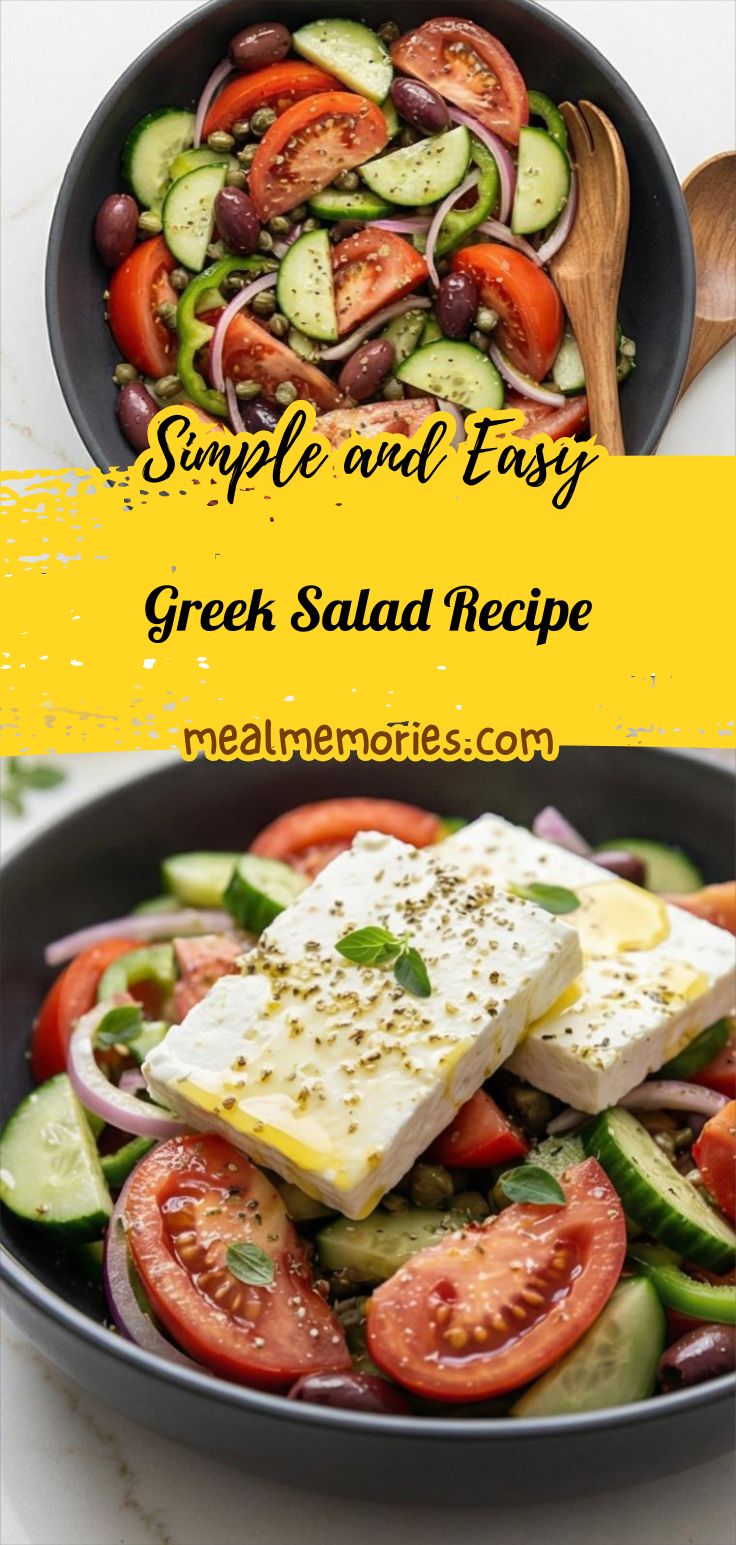
Greek Salad Recipe
Make the Greek Salad Recipe: toss ripe tomatoes, cucumber, olives, and feta with bright olive oil and oregano for a fresh side.
Ingredients
Instructions
Step 1: Make the dressing
In a small jar or bowl combine the extra-virgin olive oil, red wine vinegar, crumbled dried oregano, fine sea salt, and freshly ground black pepper. Whisk vigorously for 20–30 seconds (or close the jar and shake) until the liquid looks slightly thickened and unified with no large oil-vinegar separation. Taste and adjust with a pinch more salt or pepper if needed; leave the dressing at room temperature while you prepare the vegetables.
Step 2: Core and wedge the tomatoes
Core four ripe tomatoes and slice them into 1–1¼ inch wedges. Place the tomato wedges in your large salad bowl, season them very lightly with a small pinch of salt to coax out some juices, and let them sit while you prep the other vegetables so they begin to release flavor and become glossy.
Step 3: Slice the cucumber, onion, and pepper
Rinse and dry the English cucumber and slice it lengthwise into 1/4-inch half-moons with the peel left on for contrast. Peel and very thinly slice the red onion into translucent half-moons, separating the rings with your fingers. Core, seed, and slice the green bell pepper into 1/4-inch rings or strips. Add all three into the bowl with the tomatoes, layering colors and textures so the glossy tomato wedges rest against crisp cucumber crescents and papery onion ribbons.
Step 4: Add olives and capers, then dress
Scatter the pitted Kalamata olives (whole or halved) and the drained capers over the mixed vegetables so they’re evenly distributed. Re-emulsify the dressing with a quick whisk or shake, then pour it evenly over the vegetables in the bowl, aiming for a light, even coating rather than a heavy puddle.
Step 5: Toss gently and let the salad rest
Using two large spoons, gently toss the salad for 30–45 seconds—lift and fold rather than mashing—until the vegetables are lightly glossy and evenly coated, taking care not to crush the tomato wedges. Let the dressed salad sit at room temperature for 10–15 minutes so the flavors meld and a little tomato-olive oil juice forms at the bottom of the bowl.
Step 6: Add feta, finish with oil and herbs, and serve
Place one or two thick slabs of drained, patted-dry Greek feta on top of the salad (don’t crumble). Drizzle a tablespoon of extra-virgin olive oil over the feta and the salad, sprinkle the dried oregano over the cheese, and scatter fresh oregano or flat-leaf parsley leaves as a garnish if desired. Serve immediately, scooping a mix of vegetables and some of the tomato-olive oil juices into each portion. If you need to store leftovers, remove the feta and refrigerate separately; keep the dressed salad covered for up to one day and bring back to room temperature before serving.
Notes
- Keep feta in a separate container and add just before serving to maintain texture.
- Use the best extra-virgin olive oil you can find; it makes a noticeable difference.
- If onions are too sharp, soak sliced red onion in cold water for 10 minutes and drain before adding.
- Store leftover dressing in a jar in the fridge for up to one week; shake well before use.