Roasted Vegetables Recipe has lived in my weeknight rotation for years, and I’m always surprised how a handful of simple vegetables turns into something silky, caramelized, and deeply satisfying. I first learned this Roasted Vegetables Recipe when I had to feed a hungry, tired group after a long hike; it was forgiving, fast, and everyone asked for seconds. It feels like comfort and spring at the same time, brightened with lemon and the snap of parsley. If you want a dish that’s easy to scale and impressive on the table, this Roasted Vegetables Recipe is a reliable go-to.
How This Recipe Became My Rainy-Day Favorite
The first time I roasted this mix I remember the smell—sweet onion, warm garlic, and olive oil coming together in the oven while rain tapped the windows. I had rushed to the market and grabbed what looked best: a speckled zucchini, a perfect red pepper, and a cauliflower with tight, pale florets. Back home I sliced and tossed everything, unsure if the carrot slices and broccoli stems would play nicely. As the kitchen filled with a toasty, vegetal aroma I felt calmer; the vegetables softened, edges browned, and a little lemon brightened the whole tray. The first bite felt like a small, quiet celebration. Since then, the Roasted Vegetables Recipe has been my answer to last-minute guests, midweek dinners, and the nights when I just need something wholesome with minimal fuss. It is forgiving, colorful, and always feels slightly like a treat.
Primary Ingredients and How They Work
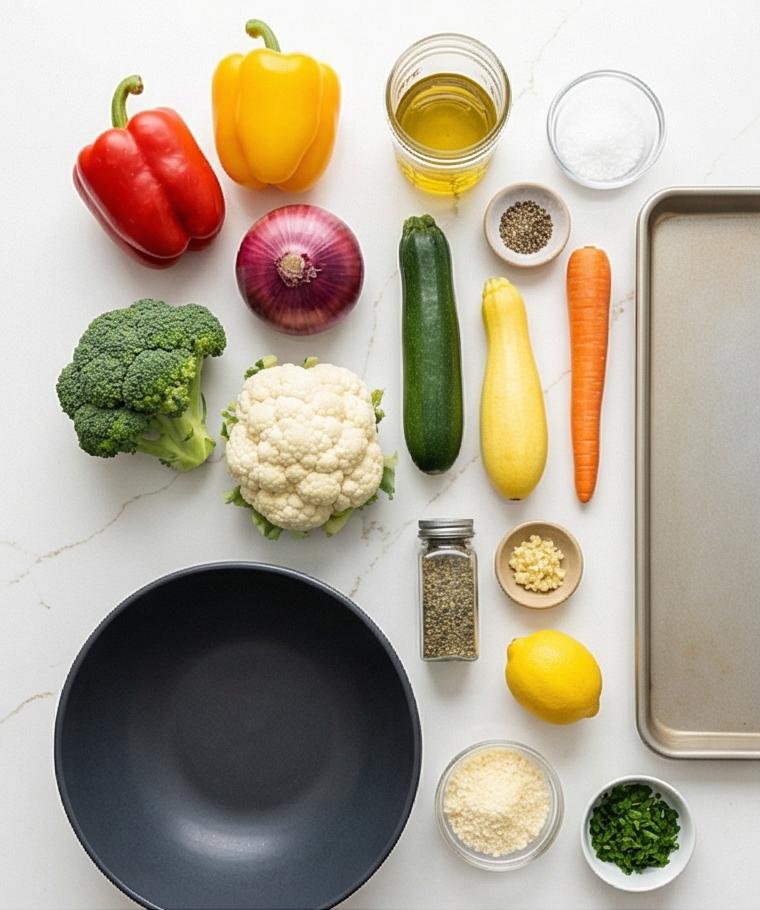
- Red Bell Pepper: Adds color, sweetness, and a soft roasted texture; swap for orange or poblano if you like a smokier note. Choose firm, glossy peppers with no soft spots.
- Yellow Bell Pepper: Balances the red pepper with mild sweetness; substitutes include orange bell pepper or roasted cherry tomatoes for a different acidity profile.
- Red Onion: Provides sweetness and layered caramelization; Vidalia or sweet onions are great substitutes. Look for tight, papery skins and heavy feel.
- Zucchini and Yellow Squash: Offer tender, silky bite and soak up seasoning; eggplant or sliced sweet potato work as seasonal alternatives. Choose firm, unblemished squash.
- Carrot: Brings a firmer texture and natural sweetness; parsnip can substitute for a nuttier flavor. Pick brightly colored, crisp carrots.
- Broccoli and Cauliflower: Deliver body, roastable florets, and a satisfying char; Brussels sprouts or Romanesco are good swaps. Opt for compact heads with fresh-colored stems.
- Olive Oil and Seasonings: The coating that helps caramelize and carry flavor; use avocado oil for higher-heat roasting or herb blends you prefer.
Essential Kitchen Tools and Why They Matter
A few simple tools make this Roasted Vegetables Recipe easier and more consistent. Good knives and a stable cutting surface save time and produce even pieces that roast uniformly. A large rimmed baking sheet lined with parchment keeps vegetables separated and prevents sticking while making cleanup trivial. A large mixing bowl gives you room to toss everything without losing seasoning, and a spatula helps turn pieces mid-roast for even browning. If you want to swap, use a silicone baking mat in place of parchment, a cast-iron pan for deeper char, and a chef’s knife can be substituted by a santoku.
- Chef’s knife: For even, safe slicing and dicing.
- Large rimmed baking sheet: Prevents spillover and allows single-layer roasting.
- Parchment paper or silicone mat: Keeps cleanup easy and stops sticking.
- Large mixing bowl: Lets you toss oil and seasonings evenly.
- Spatula or tongs: For turning vegetables midway through roasting.
Step-by-Step Preparation Guide
Step 1: Preheat and prep the pan
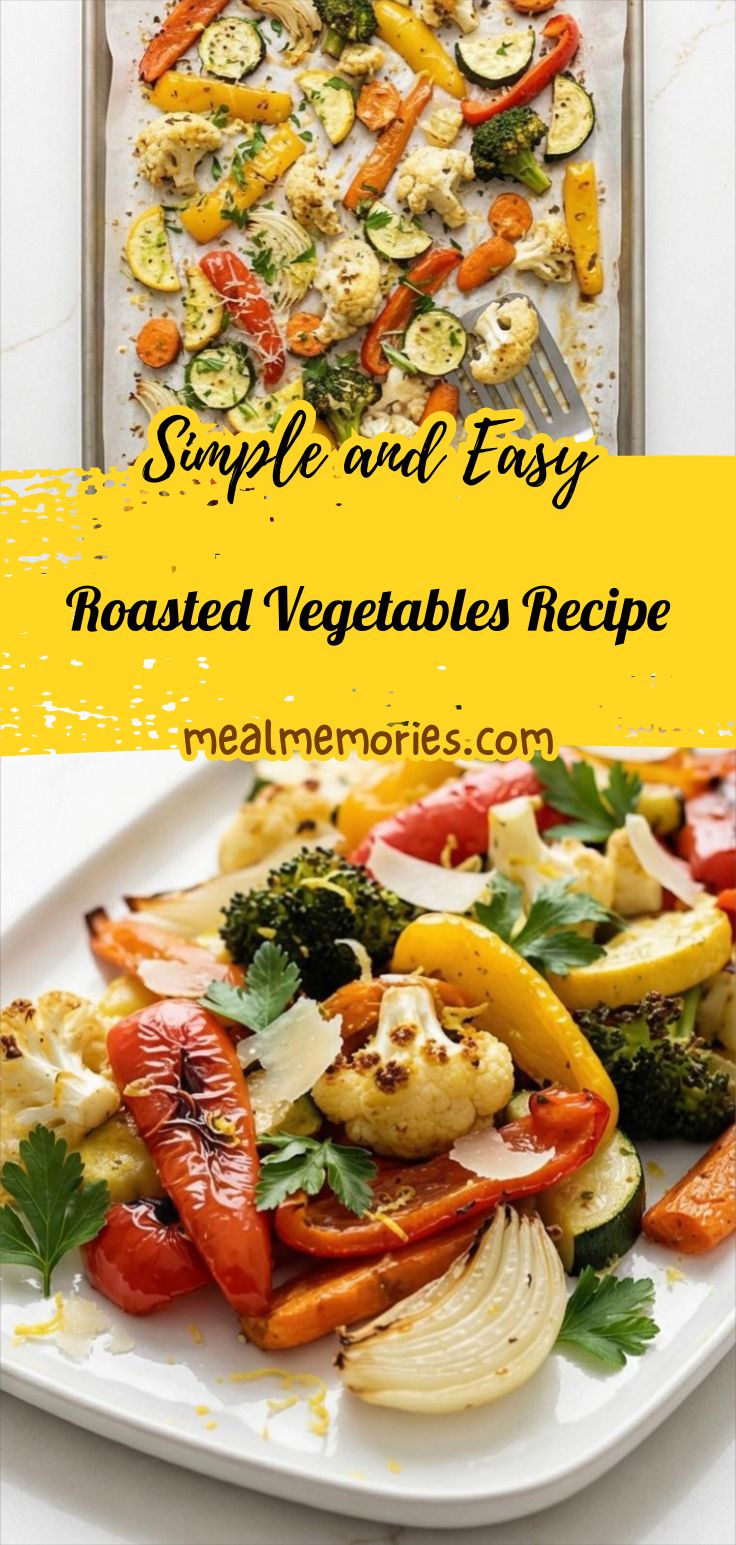
Preheat your oven to 425°F (220°C) and position a rack in the center. Line a large rectangular rimmed baking sheet (about 18 x 13 inches / 46 x 33 cm) with a single sheet of parchment paper so it sits smooth and taut; this single rectangular geometry will be important for the final presentation. Keep the empty baking sheet and a roll of parchment nearby on the Calacatta-inspired quartz surface so everything is ready to move when the vegetables are seasoned.
Step 2: Trim and slice the peppers and onion
Remove stems, seeds, and membranes from the red and yellow bell peppers, then cut each into 1-inch wide strips and shorten to 2–3 inch lengths so they roast evenly. Peel the red onion, trim the root slightly while keeping layers attached, and slice into 1-inch wedges, gently teasing the layers apart with your fingers so they fan open while roasting.
Step 3: Slice the summer squash and carrot
Trim the zucchini and yellow squash ends and slice into 1/2-inch thick rounds, halving larger rounds into half-moons to match sizes across vegetables. Peel the carrot and slice on the bias into about 1/3-inch pieces so the carrot cooks at the same rate as the softer squash and peppers.
Step 4: Cut the florets and assemble the prepped vegetables
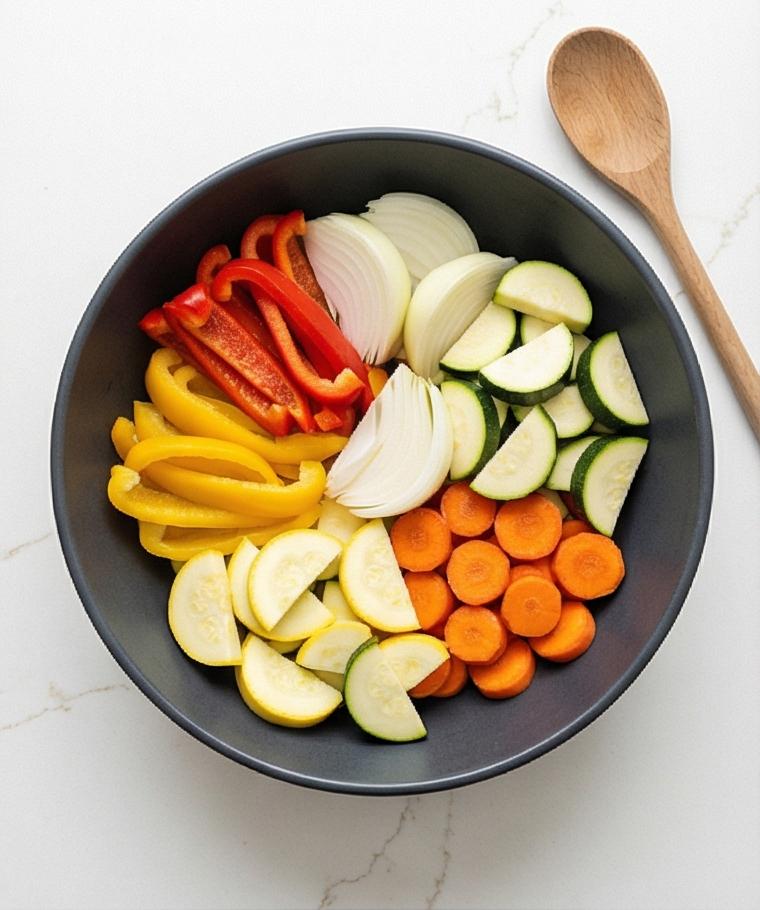
Cut broccoli and cauliflower into 1 1/2-inch florets; peel any thick broccoli stems and slice into 1/3-inch rounds so they roast tender. Gather all prepared pieces — bell peppers, onion wedges, zucchini and yellow squash half-moons, carrot bias slices, broccoli rounds and cauliflower florets — into a single large mixing bowl so they’re ready for seasoning.
Step 5: Make the seasoned oil and toss
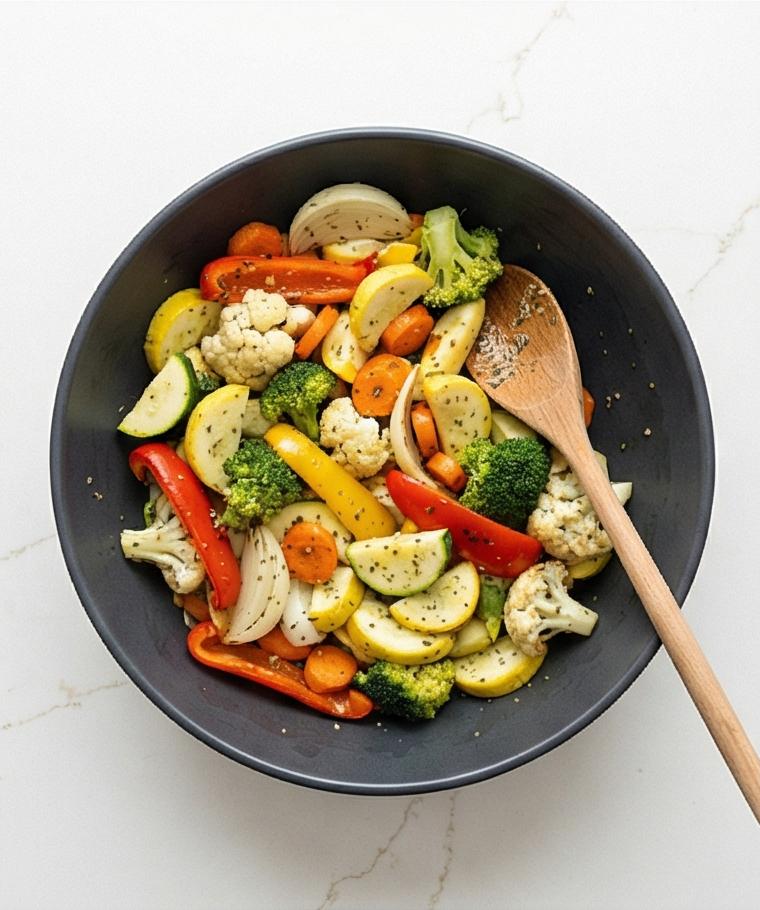
In a small bowl whisk together extra-virgin olive oil, fine sea salt, freshly ground black pepper, dried Italian seasoning (or mixed herbs), and garlic powder until homogenous. Pour the seasoned oil over the vegetables in the large matte charcoal mixing bowl, add the finely minced garlic cloves and optional fresh thyme, then toss thoroughly with a spoon or by hand (no hands shown) until every piece gleams with an even, thin film of oil and visible flecks of herbs and garlic. Scrape the bottom of the bowl so no spices are left behind.
Step 6: Spread into a single layer on the baking sheet and start roasting
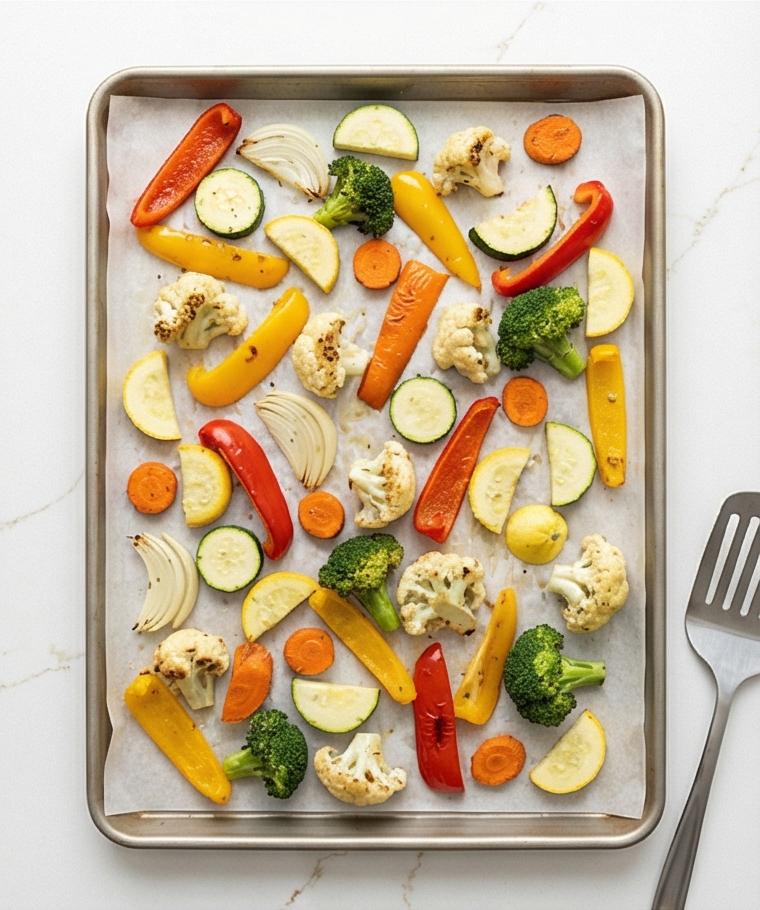
Transfer the evenly coated vegetables to the parchment-lined rectangular baking sheet, arranging them into a single, non-overcrowded layer with small gaps between pieces so air circulates and edges can brown. Slide the sheet onto its resting spot (no oven shown) and roast conceptually at 425°F for the first 15 minutes without stirring; during this period the undersides will begin to develop light browning and the onion layers will soften.
Step 7: Turn, finish roasting, and finish with acid and cheese
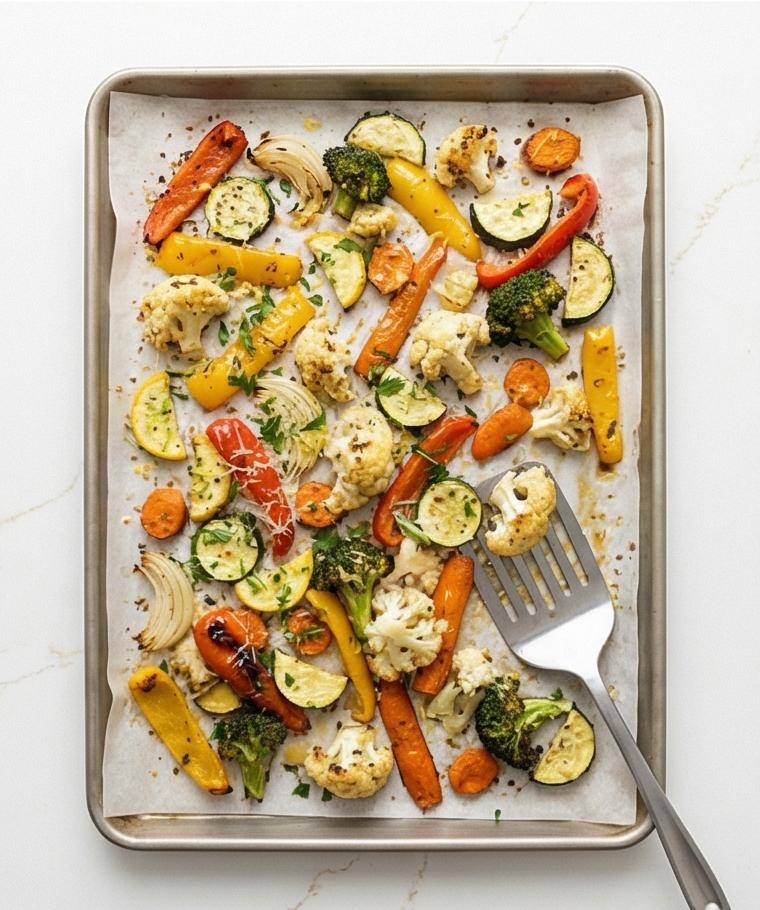
Remove the tray, use a spatula to turn and redistribute the pieces into another single layer, then continue roasting until the vegetables are fork-tender with caramelized, lightly charred edges (25–30 minutes total). Immediately after removing the hot sheet, sprinkle with freshly grated lemon zest and drizzle with a touch of lemon juice so the citrus brightens the roasted sugars, then, if using, finish with freshly grated Parmesan and a scattering of chopped parsley while everything is still hot so the cheese melts slightly and herbs cling. Taste and adjust salt and pepper to finish.
Step 8: Transfer to a warmed rectangular serving platter and serve
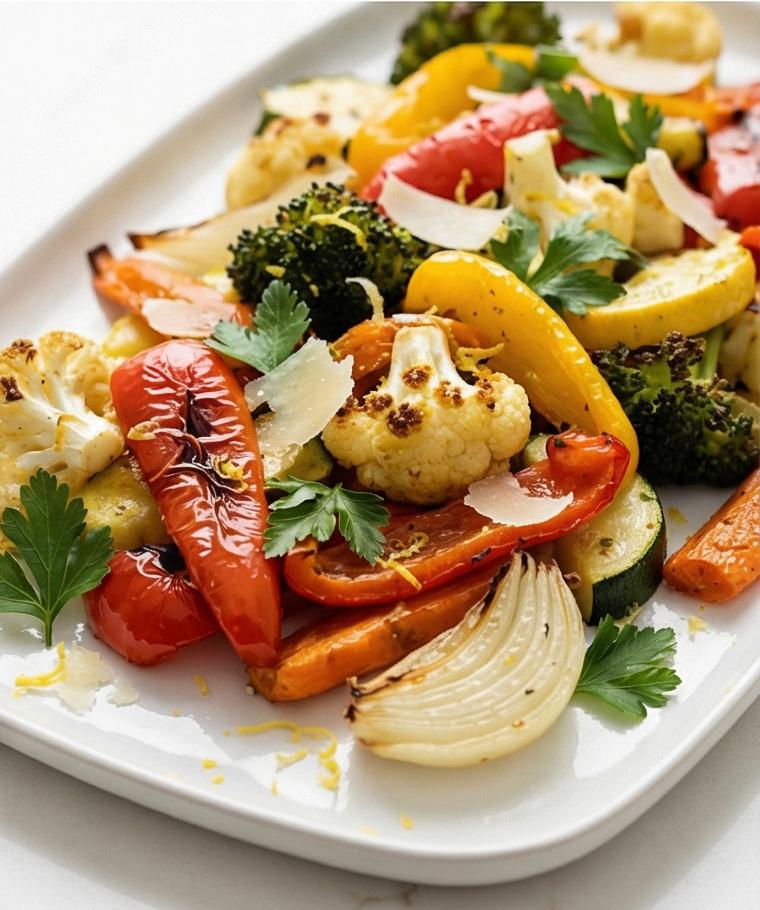
Transfer the hot roasted vegetables from the baking sheet into a warmed, shallow rectangular serving platter that mirrors the sheet’s geometry, arranging the pieces so caramelized edges and colorful contrasts are visible. Serve immediately while glossy from the finishing oil and lemon, with some Parmesan shavings and parsley left on top for texture and color.
Making It Your Own
I treat the Roasted Vegetables Recipe like a canvas. Swap in seasonal vegetables like sweet potatoes in autumn or cherry tomatoes in late summer for bursts of juice. For a protein boost toss in chickpeas or cubes of halloumi during the last 10 minutes so they warm through without losing texture.
If you want it vegan, skip the Parmesan and finish with toasted nuts and a drizzle of balsamic. For a smoky, regional twist add smoked paprika and swap thyme for oregano. Whenever I experiment, I roast a small test batch to check timing so nothing overcooks.
How to Serve
If I am hosting, I slide the tray onto the table and spoon the Roasted Vegetables Recipe into a shallow platter so guests can serve themselves. For a larger crowd, double the sheet pans and roast on two racks, switching positions halfway for even browning.
Serve alongside roasted chicken, grilled fish, or as a main with grains and a dollop of yogurt or hummus. To impress, garnish with lemon zest, Parmesan, and microgreens and serve with warm crusty bread so guests can soak up any glossy juices.
Storage and Reheating Tips
Cool the vegetables to room temperature, then store in an airtight container in the fridge for up to 4 days. Keep any cheese separate and add it fresh when serving so it stays bright. If you want longer storage, flash-freeze on a tray then transfer to a freezer bag for up to 3 months.
To reheat, spread on a baking sheet and warm in a 400°F oven for 8 to 12 minutes to restore some crisp edges. For a quick stove-top revival, warm a skillet with a tablespoon of oil and sauté until warmed through and edges re-crisp.
Common Mistakes and How to Avoid Them
Overcrowding the pan is the usual culprit; your vegetables steam instead of roast. Give pieces room and use two pans if needed so everything gets a chance to brown. Also, uneven sizes mean some bits overcook while others remain firm; try to cut to consistent thickness.
Using too much oil will leave them greasy; you want a thin, even coating. Salt early for flavor but taste and adjust at the end, especially if you plan to finish with salty Parmesan.
Final Thoughts
Give this Roasted Vegetables Recipe a try this week. It is forgiving, colorful, and perfect for feeding a small crowd or rounding out a quiet weeknight dinner. Once you make it a couple times, you will have your favorite tweaks and swaps ready.
Frequently Asked Questions.
- Q: Can I roast these vegetables on a sheet pan without parchment? A: Yes, but oil the pan well or use a silicone mat; parchment helps cleanup and prevents sticking.
- Q: Can I make this ahead for a party? A: Roast and store slightly underdone, then reheat in a hot oven to finish so they taste freshly made.
- Q: How do I keep the vegetables from becoming mushy? A: Don’t overcrowd the pan and cut vegetables to uniform size so they roast rather than steam.
- Q: Can I add protein to make it a main? A: Absolutely; toss in chickpeas or roast tofu, or serve with grilled chicken or fish.
- Q: What is a good substitute for Parmesan to keep it dairy-free? A: Try toasted nutritional yeast for a cheesy, nutty finish.
Roasted Vegetables Recipe
Roasted Vegetables Recipe: Roast colorful veggies with olive oil, herbs, lemon, and optional Parmesan for an easy, flavorful side.
Ingredients
Instructions
Step 1: Preheat and prep the pan
Preheat your oven to 425°F (220°C) and position a rack in the center. Line a large rectangular rimmed baking sheet (about 18 x 13 inches / 46 x 33 cm) with a single sheet of parchment paper so it sits smooth and taut; this single rectangular geometry will be important for the final presentation. Keep the empty baking sheet and a roll of parchment nearby on the Calacatta-inspired quartz surface so everything is ready to move when the vegetables are seasoned.
Step 2: Trim and slice the peppers and onion
Remove stems, seeds, and membranes from the red and yellow bell peppers, then cut each into 1-inch wide strips and shorten to 2–3 inch lengths so they roast evenly. Peel the red onion, trim the root slightly while keeping layers attached, and slice into 1-inch wedges, gently teasing the layers apart with your fingers so they fan open while roasting.
Step 3: Slice the summer squash and carrot
Trim the zucchini and yellow squash ends and slice into 1/2-inch thick rounds, halving larger rounds into half-moons to match sizes across vegetables. Peel the carrot and slice on the bias into about 1/3-inch pieces so the carrot cooks at the same rate as the softer squash and peppers.
Step 4: Cut the florets and assemble the prepped vegetables
Cut broccoli and cauliflower into 1 1/2-inch florets; peel any thick broccoli stems and slice into 1/3-inch rounds so they roast tender. Gather all prepared pieces — bell peppers, onion wedges, zucchini and yellow squash half-moons, carrot bias slices, broccoli rounds and cauliflower florets — into a single large mixing bowl so they’re ready for seasoning.
Step 5: Make the seasoned oil and toss
In a small bowl whisk together extra-virgin olive oil, fine sea salt, freshly ground black pepper, dried Italian seasoning (or mixed herbs), and garlic powder until homogenous. Pour the seasoned oil over the vegetables in the large matte charcoal mixing bowl, add the finely minced garlic cloves and optional fresh thyme, then toss thoroughly with a spoon or by hand (no hands shown) until every piece gleams with an even, thin film of oil and visible flecks of herbs and garlic. Scrape the bottom of the bowl so no spices are left behind.
Step 6: Spread into a single layer on the baking sheet and start roasting
Transfer the evenly coated vegetables to the parchment-lined rectangular baking sheet, arranging them into a single, non-overcrowded layer with small gaps between pieces so air circulates and edges can brown. Slide the sheet onto its resting spot (no oven shown) and roast conceptually at 425°F for the first 15 minutes without stirring; during this period the undersides will begin to develop light browning and the onion layers will soften.
Step 7: Turn, finish roasting, and finish with acid and cheese
Remove the tray, use a spatula to turn and redistribute the pieces into another single layer, then continue roasting until the vegetables are fork-tender with caramelized, lightly charred edges (25–30 minutes total). Immediately after removing the hot sheet, sprinkle with freshly grated lemon zest and drizzle with a touch of lemon juice so the citrus brightens the roasted sugars, then, if using, finish with freshly grated Parmesan and a scattering of chopped parsley while everything is still hot so the cheese melts slightly and herbs cling. Taste and adjust salt and pepper to finish.
Step 8: Transfer to a warmed rectangular serving platter and serve
Transfer the hot roasted vegetables from the baking sheet into a warmed, shallow rectangular serving platter that mirrors the sheet’s geometry, arranging the pieces so caramelized edges and colorful contrasts are visible. Serve immediately while glossy from the finishing oil and lemon, with some Parmesan shavings and parsley left on top for texture and color.
Notes
- Cut vegetables to uniform sizes so they roast evenly.
- Don’t overcrowd the pan; use two sheet pans if needed.
- Add Parmesan or lemon juice just after roasting for the best flavor.
- Store in an airtight container and reheat on a baking sheet to restore crispness.
- Substitute oils, herbs, or vegetables seasonally to keep the recipe fresh.