Chicken Alfredo Baked Spaghetti Recipe
I have a soft spot for the Chicken Alfredo Baked Spaghetti Recipe because it combines two of my favorite comfort foods into one bubbly, cheesy dish. This recipe feels like a warm hug on a busy weeknight, and over the years I have tweaked the sauce to get it silky without being too heavy. The first time I made this Chicken Alfredo Baked Spaghetti Recipe, it turned a skeptical dinner guest into a repeat-request regular. It’s easy to scale, forgiving in the oven, and always delivers that golden, browned cheesy top that makes everyone at the table pause.
How This Dish Wormed Its Way into My Weeknight Rotation
The first time I cooked this Chicken Alfredo Baked Spaghetti Recipe I remember the kitchen smelling of garlic and butter, a rainstorm tapping at the windows, and the house feeling unusually cozy. I was tired from a long day and looking for something simple but special. The seared chicken sizzled and caramelized while the sauce simmered into a glossy ribbon, and when I mixed everything and slid the pan into the oven, I felt a quiet thrill. Pulling it out ten minutes later, cheese browned in little islands, I felt proud and comforted at the same time. Everyone dug in, the room warmed by steam and good conversation, and that night the recipe earned a permanent place in my rotation.
Key Ingredients and What They Do
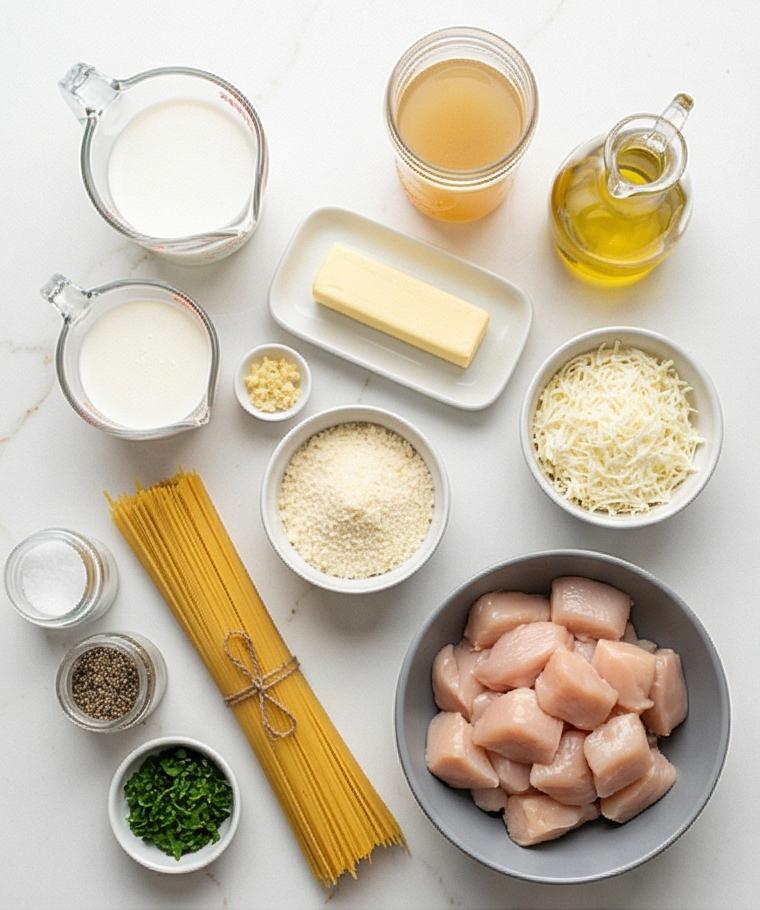
- Spaghetti: The backbone of the casserole, it soaks up the Alfredo and keeps the dish hearty. Substitute with fettuccine or penne if you prefer shorter shapes.
- Chicken breasts: Protein and texture; use thighs for juicier results or rotisserie chicken to save time.
- Parmesan cheese: Adds salty, nutty depth; try Pecorino Romano for a sharper bite.
- Heavy cream and whole milk: Create the lush, creamy sauce; reduce cream and increase milk for a lighter version.
- Butter and garlic: Build flavor and richness; swap butter for olive oil for a dairy-light touch.
Essential Kitchen Tools and Why They Matter
A few simple tools make this Chicken Alfredo Baked Spaghetti Recipe much easier. A sturdy 9×13-inch baking dish helps the pasta bake evenly and gives you the classic casserole profile. A large pot for boiling spaghetti prevents sticking and allows the pasta to move freely. Use a heavy-bottomed skillet for browning chicken so you get good caramelization and fond for flavor. A whisk is essential when you make the roux and add dairy to keep the sauce smooth. If you don’t have a whisk, a fork will work in a pinch. Finally, tongs make tossing and transferring pasta effortless.
- 9×13-inch baking dish: Even heat and perfect slices; use two smaller dishes if needed.
- Large pot: Prevents clumping; a wide pot is best.
- Heavy skillet: For good sear; cast iron or stainless steel are ideal.
- Whisk: For silky sauce; a fork can substitute.
- Tongs: For gentle tossing; use two forks if you must.
Step-by-Step Preparation Guide
Step 1: Preheat and prepare the baking dish
Preheat the oven to 375°F (190°C) and lightly grease a 9×13-inch (23×33 cm) rectangular baking dish with a little cooking spray or neutral oil so the casserole releases cleanly after baking. While the oven comes to temperature, set out a large matte grey ceramic mixing bowl that will be your primary vessel for tossing; this same bowl will appear again later to keep the visual story consistent.
Step 2: Cook and rest the spaghetti
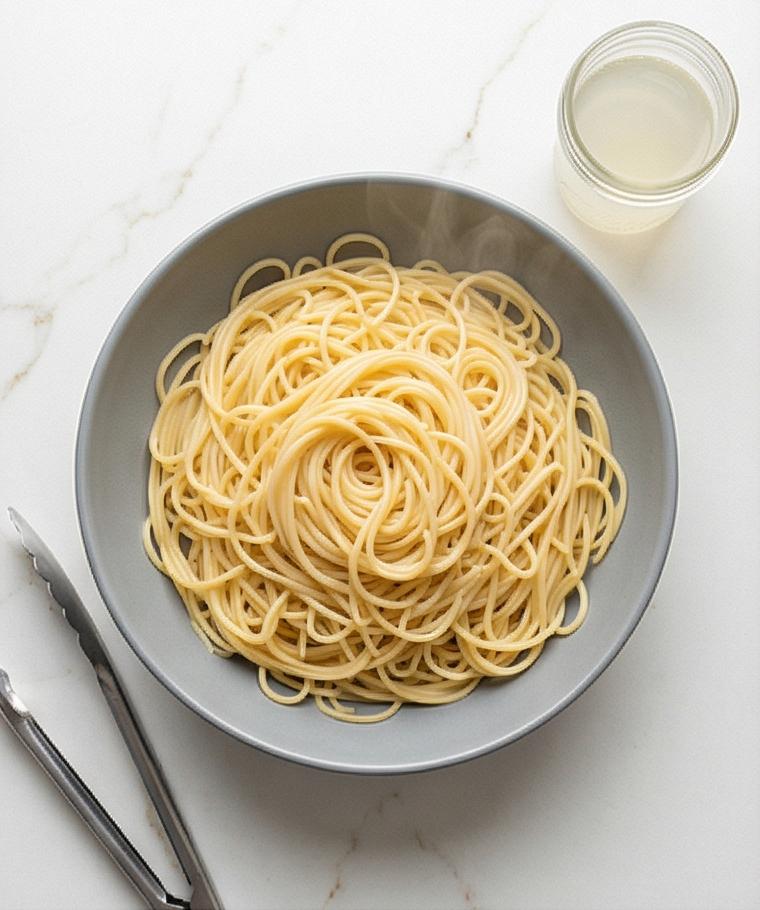
Bring a large pot of well-salted water to a rolling boil and cook the dried spaghetti until it’s just shy of al dente—about two minutes less than package directions. Reserve half a cup of the starchy pasta water, then drain the pasta thoroughly and toss briefly so the strands release steam and don’t clump. Place the warm, slightly glossy pasta into the matte grey mixing bowl and leave the reserved pasta water in a small clear glass jar nearby; the pasta will finish cooking in the oven as it basks in the warm sauce.
Step 3: Brown the seasoned chicken and set aside
Pat the chicken cubes dry and season evenly with salt, black pepper, Italian seasoning and garlic powder. In a thin film of olive oil the chicken becomes lightly golden with caramelized edges and opaque centers—transfer the cooked cubes and any flavorful juices into the same matte grey bowl for continuity. The cooked chicken should look plump, seared at the edges, and resting in its juices, ready to be folded into the pasta.
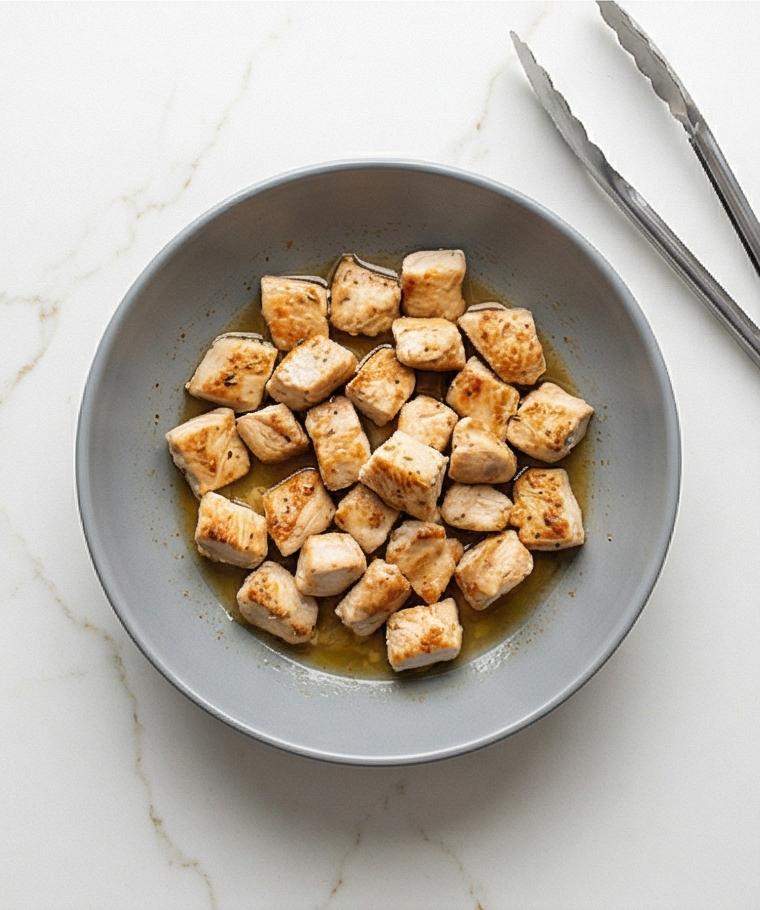
Step 4: Build a silky Alfredo sauce
Melt butter in a clean bowl and gently sweat minced garlic until fragrant but not browned; whisk in flour to form a pale roux, then gradually add whole milk, heavy cream and low-sodium chicken broth in a thin steady stream while whisking. Bring to a gentle simmer and reduce until the sauce lightly coats the back of a spoon; finish off the heat by whisking in finely grated Parmesan until the sauce becomes glossy, velvety and ribbon-like. Adjust seasoning with salt, pepper and a whisper of nutmeg; if it feels too thick, loosen it with a tablespoon or two of the reserved pasta water so it pours and clings. The sauce should nap the whisk with a smooth, clingy texture.
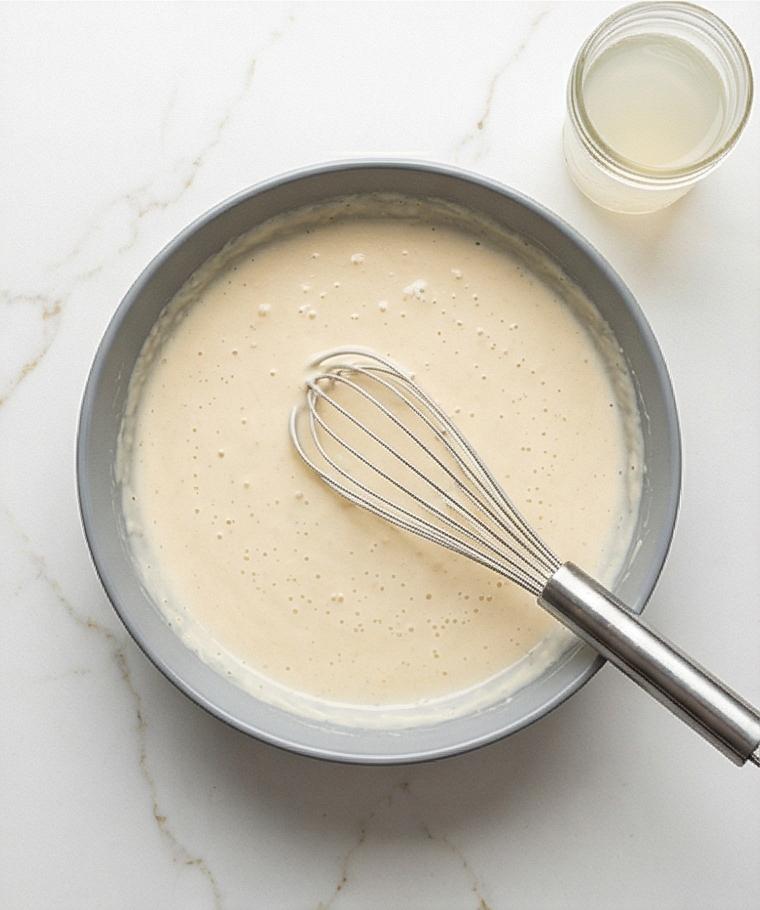
Step 5: Combine pasta, chicken and sauce, then assemble
In the matte grey mixing bowl combine the drained spaghetti with the golden chicken and pour the warm Alfredo sauce over top. Add the chopped fresh parsley and use tongs to gently toss until every strand is evenly coated and the chicken is distributed. Taste and adjust seasoning, remembering the topping cheese will add salt. Transfer the coated spaghetti into the prepared 9×13-inch rectangular baking dish, spreading into an even layer; gently tap the dish to settle the mixture and remove large air pockets. Top edge-to-edge with the shredded low-moisture mozzarella and the remaining finely grated Parmesan for an even cheesey crust, ready to bake.
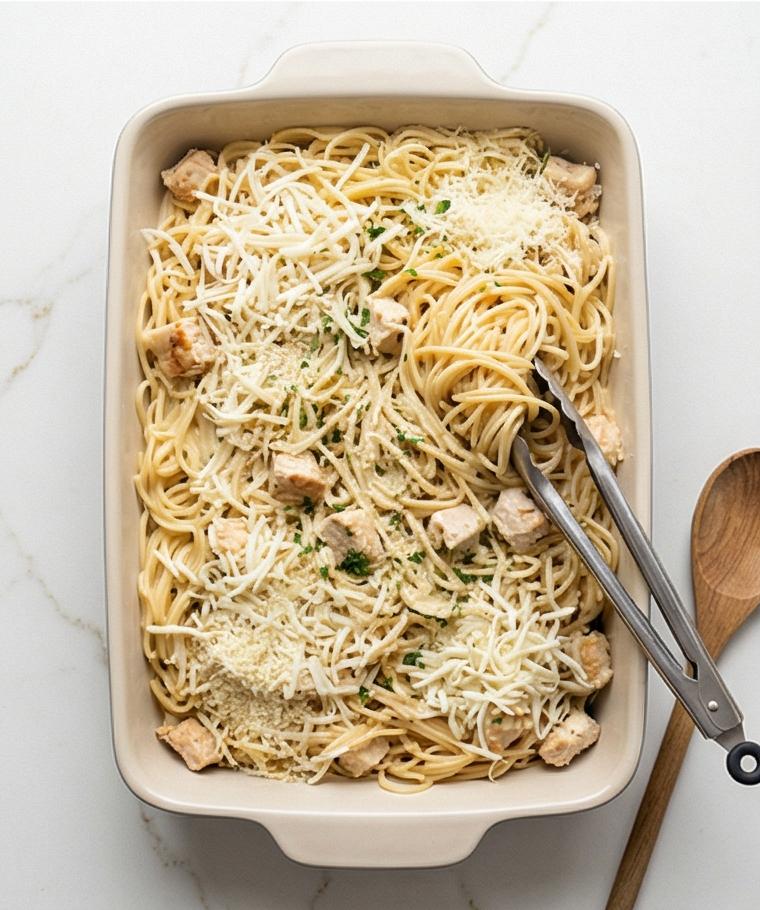
Step 6: Bake, rest and serve the finished casserole
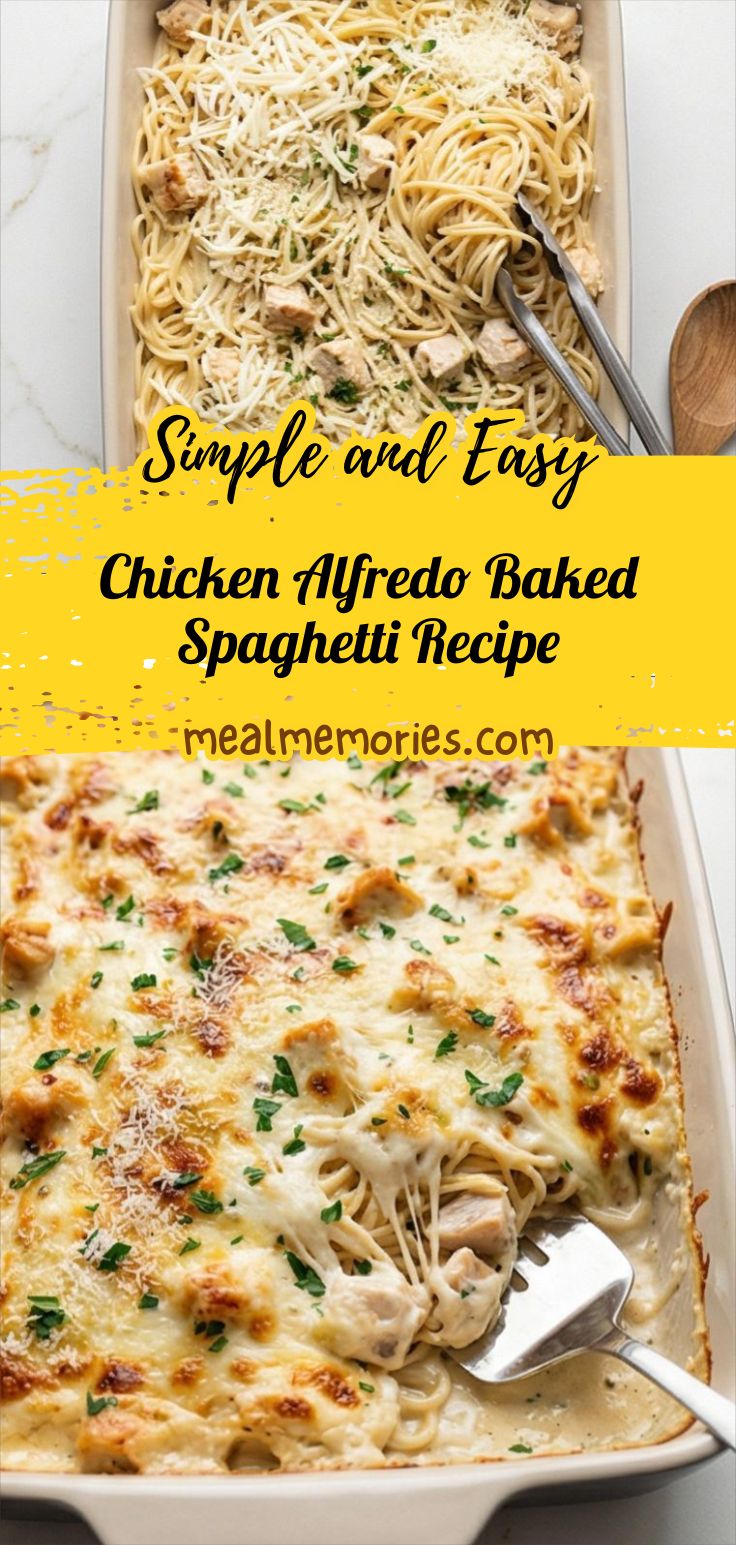
Bake the assembled dish until the cheese is fully melted, lightly golden in spots, and the edges are bubbling—optionally finish with a brief high broil for a deeper golden crust, watching carefully to avoid burning. Let the casserole rest for ten minutes so the sauce firms slightly for clean portions. Just before serving, sprinkle additional finely grated Parmesan and a little chopped parsley for freshness. Serve directly from the same rectangular baking dish so the geometry stays true: bubbling, golden-browned cheese, pockets of creamy Alfredo, and tender chicken and spaghetti peeking through.
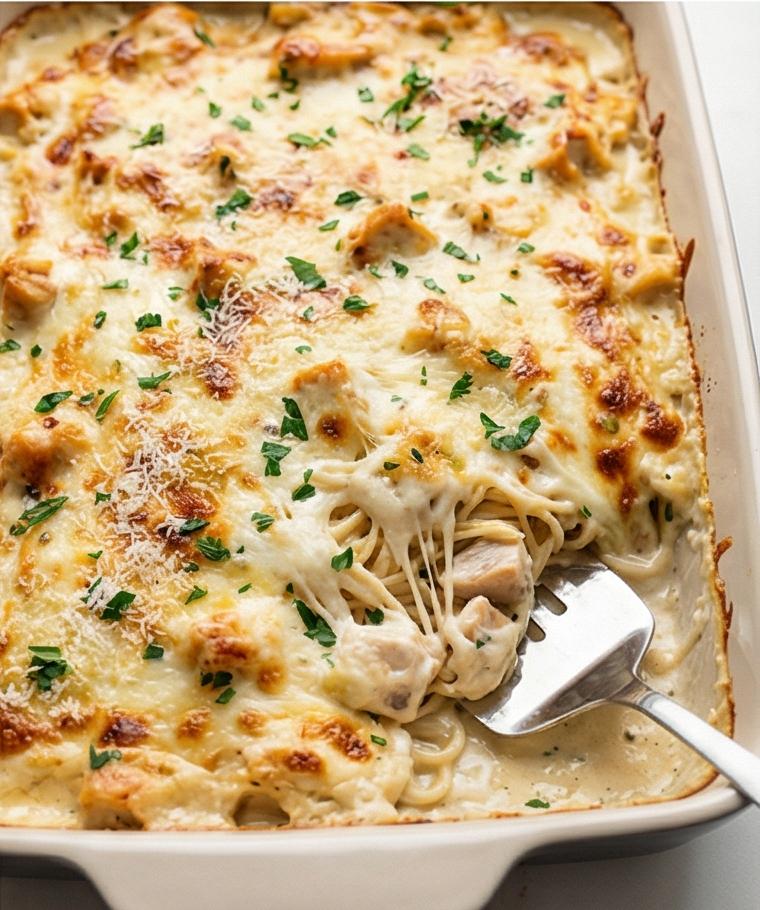
Making It Your Own
I like experimenting with this Chicken Alfredo Baked Spaghetti Recipe depending on the season. In summer I add roasted cherry tomatoes and basil in small batches so the brightness cuts through the richness. For a winter twist I swap in wilted spinach and a pinch of smoked paprika to add warmth.
If you need a vegetarian option, try cremini mushrooms and oven-roasted cauliflower instead of chicken. For a lighter version, reduce the heavy cream by half and stir in more low-sodium chicken broth or use whole milk. Gluten-free pasta works well too; just check cooking times and drain carefully before assembling.
How to Serve
When I host, I let the casserole rest while I prepare a simple salad and garlic bread. Serve the Chicken Alfredo Baked Spaghetti Recipe straight from the baking dish so everyone can help themselves to gooey cheese and tender strands. Plate it with a crisp green salad dressed in lemon vinaigrette to cut through the creaminess.
For a dinner party of eight, double the recipe and use two dishes, or keep the same recipe and supplement with sides like roasted vegetables and a loaf of crusty bread. Garnish with extra Parmesan and parsley, and offer crushed red pepper at the table for heat.
Storage and Reheating Tips
Store leftovers in an airtight container in the fridge for up to 3 days. Cool the casserole slightly before transferring to prevent excess moisture buildup.
To reheat, place portions in an oven-safe dish, cover loosely with foil, and warm at 325°F (160°C) until heated through, about 15 to 20 minutes. For single servings, microwave on medium power in 30-second bursts, stirring in between, and add a splash of milk if the sauce seems too thick.
Common Mistakes and How to Avoid Them
Overcooking the pasta can lead to a mushy bake. Stop the spaghetti a few minutes short of al dente so it finishes cooking in the oven. Keep some reserved pasta water to adjust sauce consistency.
Underseasoning the sauce is another trap. Taste before baking and remember the cheeses will add salt. If the chicken is crowded in the pan it will steam instead of browning, so give it space for a proper sear.
Final Thoughts and an Invitation
This Chicken Alfredo Baked Spaghetti Recipe is one of those meals that comforts and impresses with minimal fuss. If you try it, tweak a small element to make it your own and tell someone who appreciates good, simple food. I hope it becomes one of your go-to weeknight dishes too.
Frequently Asked Questions.
- Q: Can I use leftover or rotisserie chicken instead of cooking fresh chicken? A: Yes, using rotisserie or leftover chicken saves time and works well; fold it in at the assembly step so it warms through but does not dry out.
- Q: Can I make this ahead and bake later? A: You can assemble the casserole, cover it, and refrigerate for up to 24 hours; add a few extra minutes to the bake time and let it come toward room temperature before sliding it into the oven.
- Q: Is there a lighter alternative to heavy cream? A: Try halving the heavy cream and using extra milk or a mix of milk and low-fat Greek yogurt stirred in off heat; the texture will be slightly less luxurious but still satisfying.
- Q: Can I freeze the Chicken Alfredo Baked Spaghetti Recipe? A: It is possible but textures change; freeze in an airtight container before baking for up to 2 months and thaw overnight in the fridge before baking; you may need extra moisture when reheating.
- Q: How do I prevent the top from burning while getting it golden? A: Bake until bubbling and then broil for just a minute or two while watching closely; rotate the pan if your oven broils unevenly.
Chicken Alfredo Baked Spaghetti Recipe
Make Chicken Alfredo Baked Spaghetti Recipe tonight: bake creamy spaghetti with seared chicken for a golden, comforting meal.
Ingredients
Instructions
Step 1: Preheat and prepare the baking dish
Preheat the oven to 375°F (190°C) and lightly grease a 9x13-inch (23x33 cm) rectangular baking dish with a little cooking spray or neutral oil so the casserole releases cleanly after baking. While the oven comes to temperature, set out a large matte grey ceramic mixing bowl that will be your primary vessel for tossing; this same bowl will appear again later to keep the visual story consistent.
Step 2: Cook and rest the spaghetti
Bring a large pot of well-salted water to a rolling boil and cook the dried spaghetti until it’s just shy of al dente—about two minutes less than package directions. Reserve half a cup of the starchy pasta water, then drain the pasta thoroughly and toss briefly so the strands release steam and don’t clump. Place the warm, slightly glossy pasta into the matte grey mixing bowl and leave the reserved pasta water in a small clear glass jar nearby; the pasta will finish cooking in the oven as it basks in the warm sauce.
Step 3: Brown the seasoned chicken and set aside
Pat the chicken cubes dry and season evenly with salt, black pepper, Italian seasoning and garlic powder. In a thin film of olive oil the chicken becomes lightly golden with caramelized edges and opaque centers—transfer the cooked cubes and any flavorful juices into the same matte grey bowl for continuity. The cooked chicken should look plump, seared at the edges, and resting in its juices, ready to be folded into the pasta.
Step 4: Build a silky Alfredo sauce
Melt butter in a clean bowl and gently sweat minced garlic until fragrant but not browned; whisk in flour to form a pale roux, then gradually add whole milk, heavy cream and low-sodium chicken broth in a thin steady stream while whisking. Bring to a gentle simmer and reduce until the sauce lightly coats the back of a spoon; finish off the heat by whisking in finely grated Parmesan until the sauce becomes glossy, velvety and ribbon-like. Adjust seasoning with salt, pepper and a whisper of nutmeg; if it feels too thick, loosen it with a tablespoon or two of the reserved pasta water so it pours and clings. The sauce should nap the whisk with a smooth, clingy texture.
Step 5: Combine pasta, chicken and sauce, then assemble
In the matte grey mixing bowl combine the drained spaghetti with the golden chicken and pour the warm Alfredo sauce over top. Add the chopped fresh parsley and use tongs to gently toss until every strand is evenly coated and the chicken is distributed. Taste and adjust seasoning, remembering the topping cheese will add salt. Transfer the coated spaghetti into the prepared 9x13-inch rectangular baking dish, spreading into an even layer; gently tap the dish to settle the mixture and remove large air pockets. Top edge-to-edge with the shredded low-moisture mozzarella and the remaining finely grated Parmesan for an even cheesey crust, ready to bake.
Step 6: Bake, rest and serve the finished casserole
Bake the assembled dish until the cheese is fully melted, lightly golden in spots, and the edges are bubbling—optionally finish with a brief high broil for a deeper golden crust, watching carefully to avoid burning. Let the casserole rest for ten minutes so the sauce firms slightly for clean portions. Just before serving, sprinkle additional finely grated Parmesan and a little chopped parsley for freshness. Serve directly from the same rectangular baking dish so the geometry stays true: bubbling, golden-browned cheese, pockets of creamy Alfredo, and tender chicken and spaghetti peeking through.
Notes
- Reserve some pasta water to adjust sauce texture
- Stop the spaghetti a bit shy of al dente so it finishes cooking in the oven
- Let the casserole rest 10 minutes before slicing for cleaner portions
- Use freshly grated Parmesan for best melting and flavor
- Brown chicken in a single layer to get good caramelization