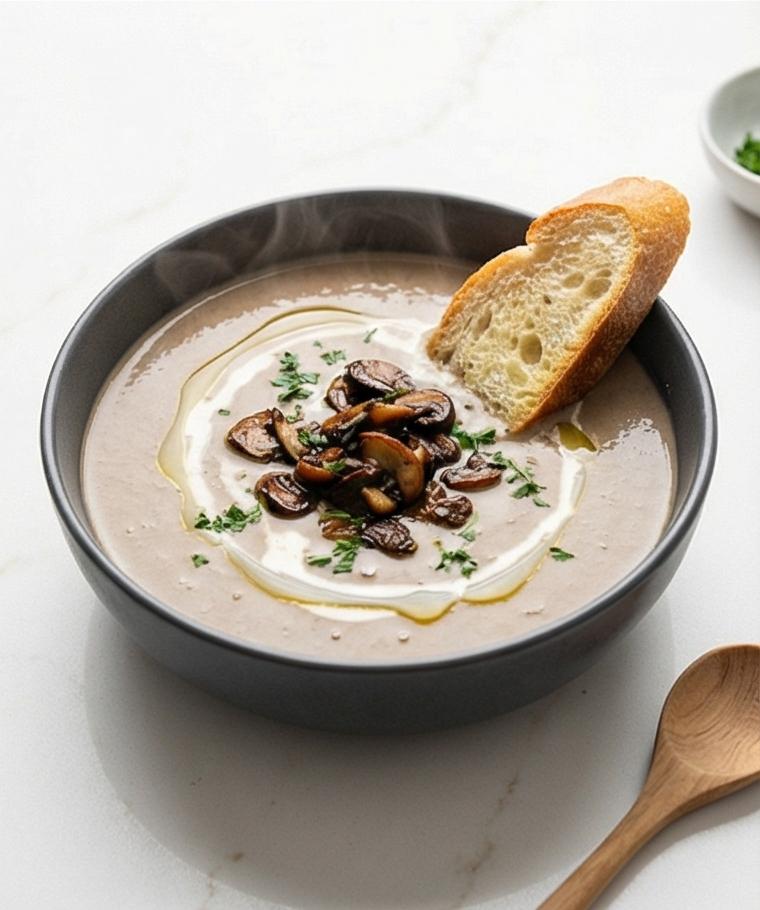
I fell for this Butternut Squash Soup Recipe the first chilly evening I roasted a squash for company and decided to turn the leftovers into soup. It has since become my go-to when I want something comforting that still feels thoughtful. The balance of sweet roasted squash and bright apple, plus a little cream, makes the bowl feel both cozy and sophisticated. If you love food that smells like autumn and tastes like a warm hug, this Butternut Squash Soup Recipe will become a favorite too.
How This Recipe Became My Rainy-Day Favorite
The first time I made this Butternut Squash Soup Recipe I remember the kitchen filling with the scent of caramelized squash and browned apple; it was the kind of aroma that softened the edges of a hard day. I was alone that night, but the small ritual of peeling, chopping and arranging the vegetables on a parchment-lined sheet felt meditative. When the oven door opened and the glossy, browned bits gleamed, I felt a little thrill of triumph. Blending the roasted mix into a silky soup and finishing it with a pat of butter and a drizzle of cream felt like a tiny celebration. Spoonfuls warmed me from the inside out and I promised myself I would make this for friends the next time we gathered. Every time I cook it now, the memory of that first bowl comes back—rich, sweet, a touch savory, and utterly comforting.
Primary Ingredients and Why They Matter
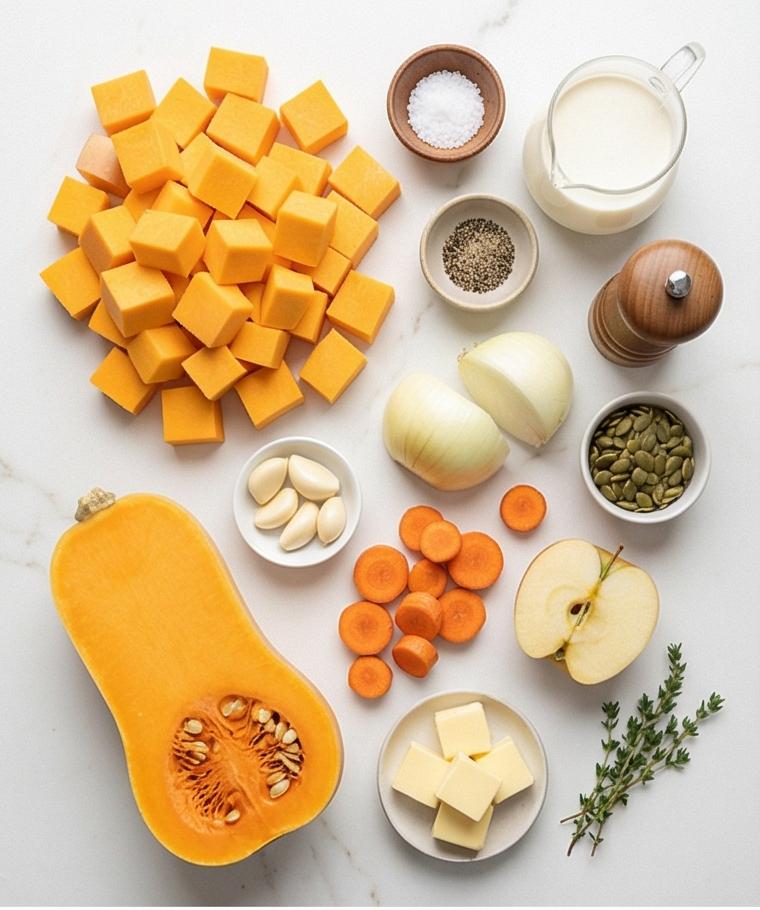
- Butternut squash: The star ingredient that brings sweet, creamy body. Choose a firm squash with a heavy feel and deep tan skin; substitute kabocha or pumpkin if needed.
- Tart apple: Adds bright acidity and a subtle fruity lift; Granny Smith works well. Pear can substitute for a milder sweetness.
- Yellow onion: Builds savory depth when roasted; shallot is a good swap for a gentler taste.
- Garlic: Adds aromatic warmth—roasted whole for mellow flavor. Omit for a milder profile.
- Vegetable or chicken broth: Creates the soup base; low-sodium lets you control seasoning. Use stock concentrate diluted if short on broth.
- Heavy cream and butter: Finish the texture with richness; use half-and-half or coconut milk for lighter or dairy-free versions.
Essential Kitchen Tools and Why They Help
A few simple tools make this Butternut Squash Soup Recipe a breeze and keep the process relaxed.
- Large rimmed baking sheet: Provides space for even roasting and browning; a rim helps catch any sticky juices.
- Sharp chef’s knife and sturdy peeler: Speed up prep and give consistent cube sizes for even roasting. A serrated peeler works for thick squash skin.
- Wooden spatula: Gentle on parchment and perfect for tossing and scraping those caramelized bits.
- Heavy-bottomed Dutch oven or soup pot: Promotes steady simmering and is ideal for blending back in the pot.
- Immersion blender (or countertop blender): Delivers that velvety finish. If using a countertop blender, blend in small batches and vent carefully.
Step-by-Step Preparation Guide
Step 1: Preheat and prep the sheet
Preheat the oven to 400°F (200°C) and line a large rimmed rectangular baking sheet with a sheet of parchment for easy cleanup. Lay out a clean wooden spatula and a rimmed measuring cup nearby so everything you need will be within reach when you assemble the vegetables.
Step 2: Peel, core and cut the produce, then assemble on the sheet
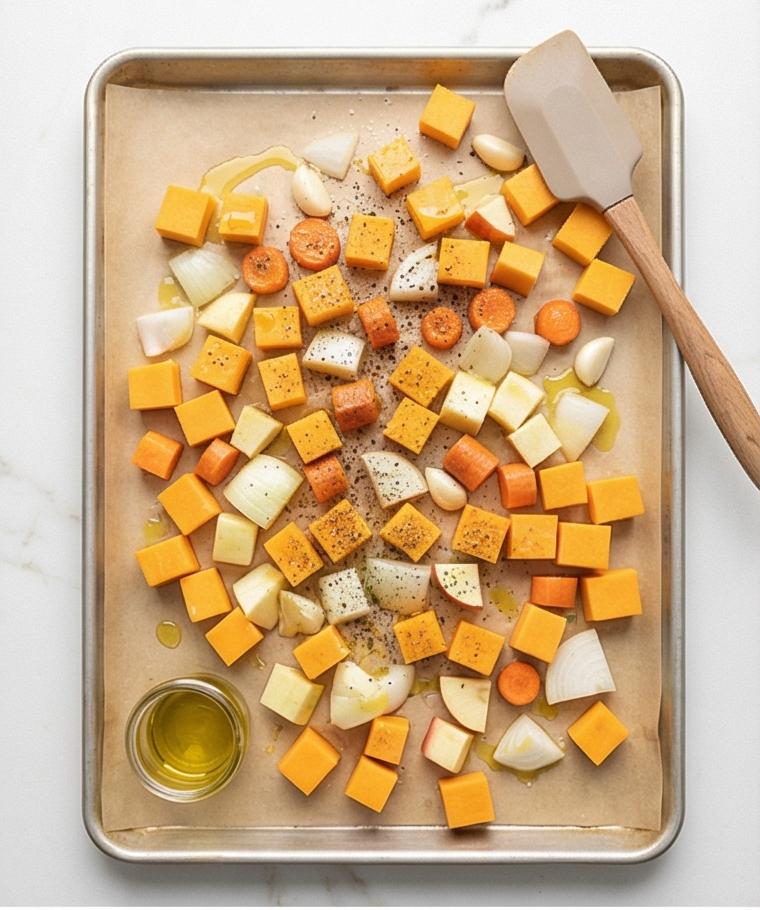
Peel and halve the butternut squash, scoop out the seeds, and cut the flesh into uniform 1-inch cubes; peel and roughly chop the onion, slice the carrot into 1/2-inch pieces, core and roughly chop the tart apple, and peel the garlic cloves leaving them whole. Place the cubed squash, chopped onion, carrot slices, chopped apple and whole garlic cloves directly onto the parchment-lined rimmed baking sheet. Drizzle with the extra-virgin olive oil from a small glass jar and sprinkle the measured kosher salt, freshly ground black pepper, chopped thyme, and a light dusting of ground cinnamon if using; toss briefly with the wooden spatula so everything sits evenly in a single layer, ready for roasting.
Step 3: Roast until caramelized and tender
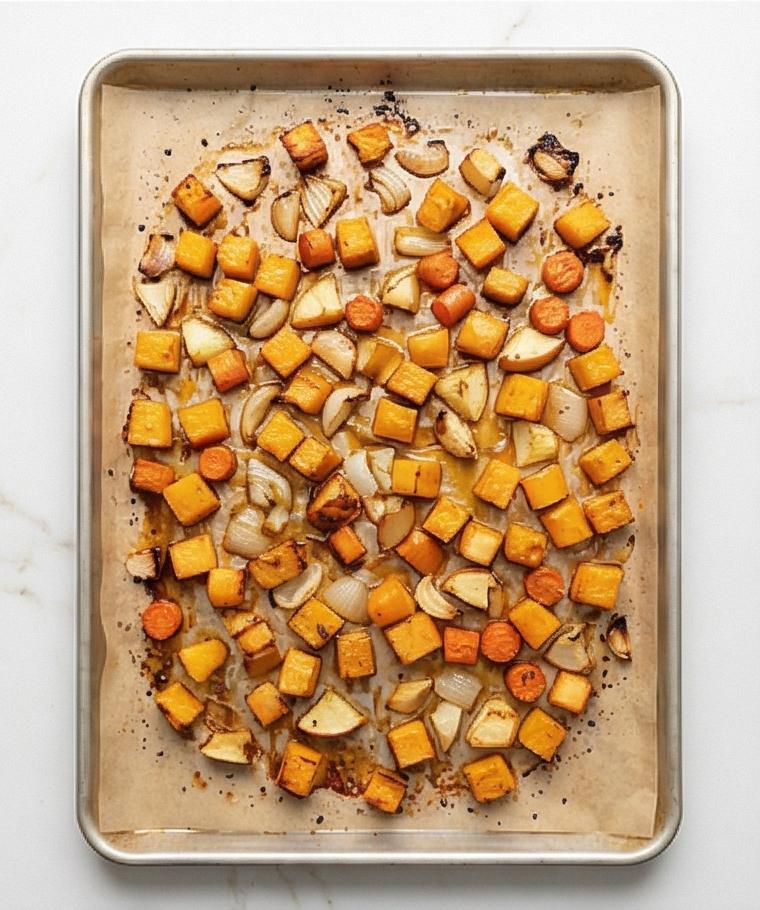
Roast the arranged vegetables in the preheated oven for about 30–35 minutes, stirring and turning once halfway through so the pieces brown evenly; you want soft, fork-tender squash with richly caramelized edges and slightly softened apple and onion. When the vegetables show glossy, browned spots and there are sticky browned juices on the parchment, remove the sheet and let the pan sit for a minute so the fond can be scraped—this concentrated, darkened caramelization is flavor gold.
Step 4: Scrape into a round heavy pot and add stock
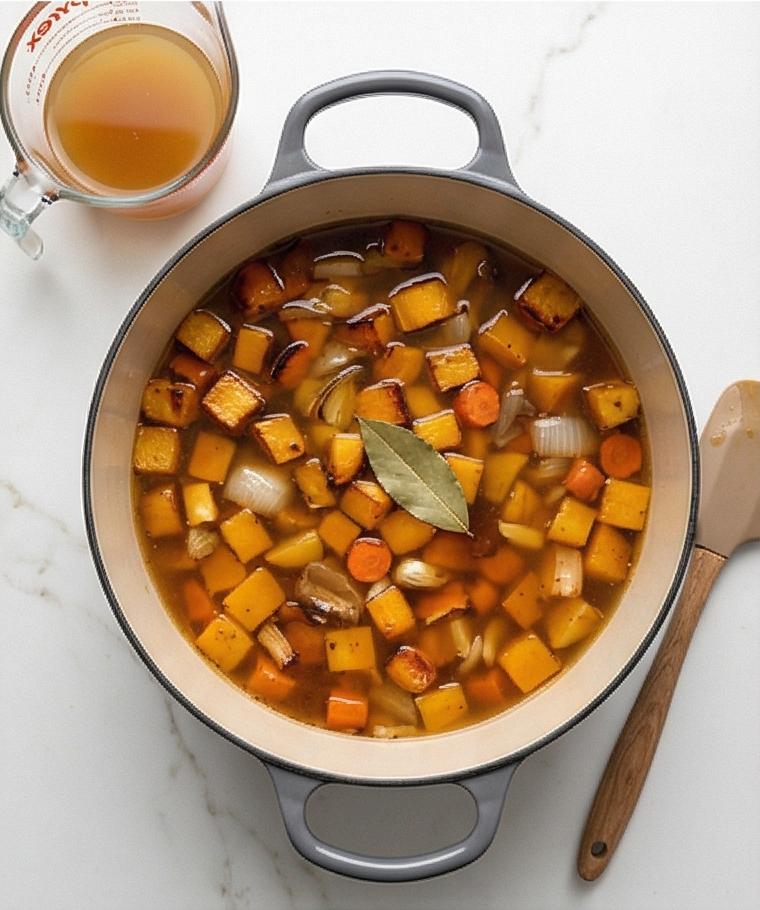
Use the wooden spatula to transfer the roasted vegetables and all the browned bits into a large round heavy-bottomed Dutch oven or soup pot on the surface (no stove visible). Pour in the measured low-sodium vegetable or chicken broth from a clear glass measuring jug and the cup of water, nestle in a bay leaf, and add the remaining pinch of salt; stir gently to combine so the deep-roasted syrupy bits dissolve into the liquid and create a savory base. Bring just to a simmer on the heat setting you prefer, then reduce to a low gentle simmer to let the flavors meld for 10–15 minutes.
Step 5: Cool slightly, blend to a velvety texture, finish with cream and butter
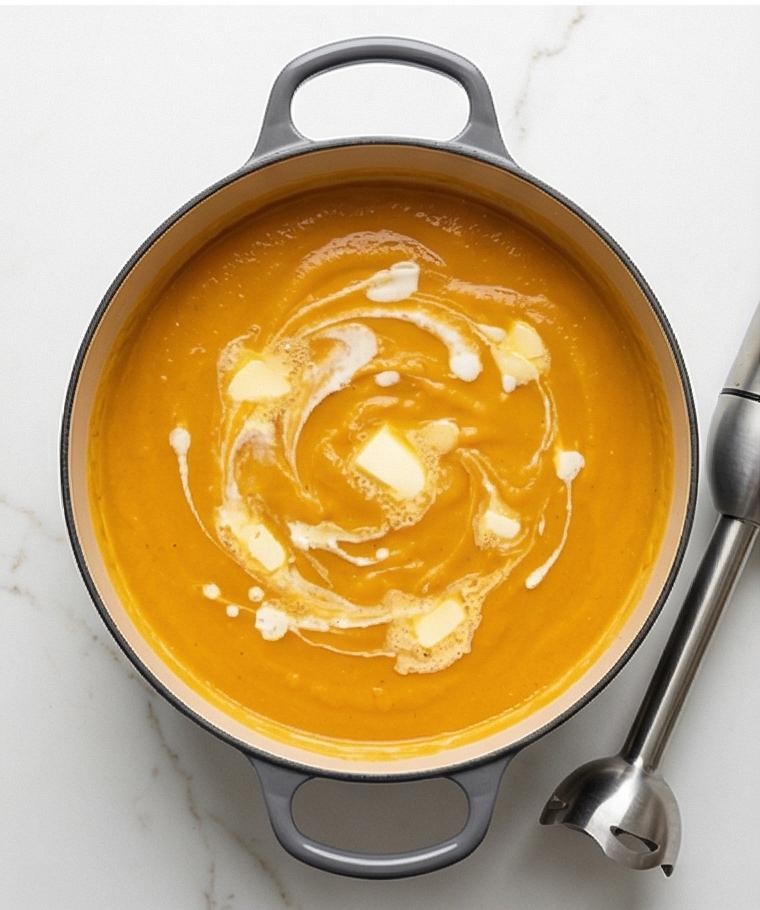
After removing the pot from the heat and discarding the bay leaf, let the mixture cool 5–10 minutes to make blending safe. Blend the soup until utterly smooth with an immersion blender (or in batches in a countertop blender), returning it to the round pot. Over low heat stir in room-temperature heavy cream and small pieces of unsalted butter, stirring until the butter melts and the texture is silk—check for a satin, spoon-coating viscosity and thin with additional broth or water a little at a time if needed. Taste and balance with maple syrup, lemon juice, nutmeg, and more salt or pepper as desired.
Step 6: Rest briefly and serve warm with garnishes
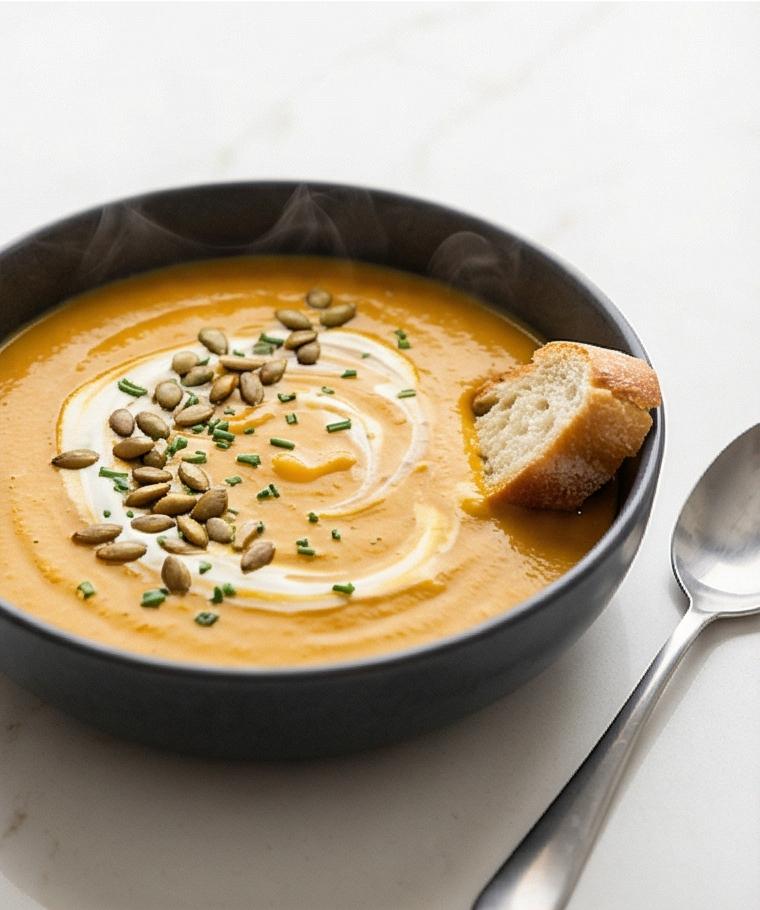
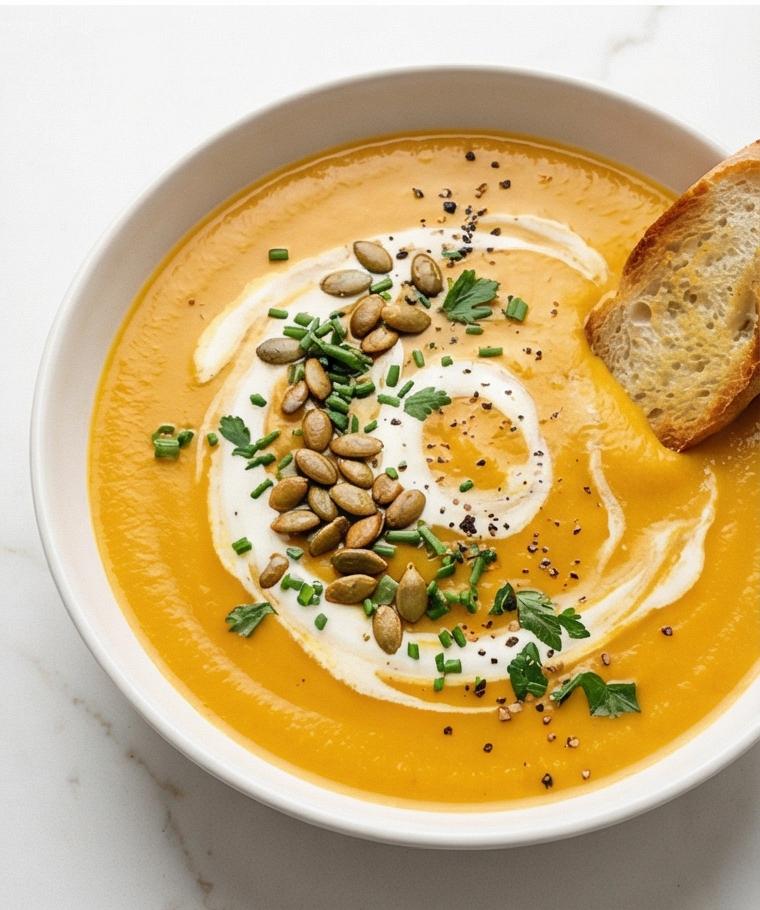
Let the soup rest 2–3 minutes to settle and thicken slightly, then ladle into warmed wide shallow bowls. Finish each bowl with a small swirl of heavy cream or crème fraîche, a scatter of toasted pumpkin seeds, a sprinkle of finely chopped chives or parsley, and a few quick grinds of black pepper; serve immediately with a slice of crusty baguette at the bowl’s edge.
Making It Your Own
I like to treat this soup like a playground for small experiments. If you want vegan bowls, swap the heavy cream and butter for full-fat coconut milk and a drizzle of olive oil for richness. For a smoky angle, stir in a teaspoon of smoked paprika or top each bowl with crisp pancetta or smoked bacon for non-vegans. In colder months I sometimes add a peeled, roasted pear instead of apple for floral sweetness. For a brighter, summery feel, finish with a splash more lemon juice and fresh herbs.
How to Serve
When I host, I ladle the Butternut Squash Soup Recipe into warmed shallow bowls and set a tray of garnishes so guests can customize. Offer bowls of toasted pumpkin seeds, crème fraîche or extra cream, chopped chives, and an olive oil drizzle. For a larger dinner party, double the recipe and serve from a covered Dutch oven on a buffet so people can help themselves. Pair the soup with a green salad and a crusty loaf for a light supper, or serve in small cups as a starter.
Storage and Reheating Tips
Cool the soup to room temperature before storing. Refrigerate in airtight containers for up to 4 days. For longer storage, freeze in portions for up to 3 months; leave a little headspace in the container because liquids expand when frozen.
To reheat, thaw overnight in the refrigerator if frozen. Warm gently on low heat, stirring often and adding a splash of broth or water if it feels too thick. Avoid boiling to keep the texture silky and taste bright.
Common Mistakes and How to Avoid Them
One common slip is under-roasting the squash and apple. Take the extra time so pieces get glossy, browned edges; that caramelization is where much of the flavor comes from.
Another issue is over-thinning the soup. Add liquid gradually when adjusting consistency and stop when the texture coats a spoon. Taste and adjust seasoning at the end, especially after adding cream or maple syrup.
Final Thoughts
Give this Butternut Squash Soup Recipe a try the next time you want something that feels like comfort but also a little special. It is forgiving, adaptable, and rewarding to make, and it rewards a gentle hand with seasoning and garnishes.
Frequently Asked Questions.
- What can I use instead of heavy cream? You can use half-and-half for a lighter finish, full-fat coconut milk for a dairy-free option, or omit cream and finish with a pat of butter if you tolerate dairy.
- Can I make this soup ahead of time? Yes. The soup stores well in the refrigerator for up to 4 days and freezes nicely for up to 3 months. Reheat gently and stir in a bit of broth if it thickens.
- How do I peel and cut a butternut squash safely? Use a sharp chef’s knife and a sturdy peeler; halve the squash first to create a stable flat surface, scoop seeds with a spoon, then cut and cube carefully.
- Is the apple necessary? The apple adds bright acidity and depth, but you can omit it or substitute pear for a softer sweetness.
- How can I make it spicier or more savory? Stir in a pinch of cayenne or smoked paprika, or top bowls with crisp bacon or toasted walnuts for texture and savory contrast.

Butternut Squash Soup Recipe
Make this Butternut Squash Soup Recipe now for a silky, cozy bowl of roasted squash and apple comfort.
Ingredients
Instructions
Step 1: Preheat and prep the sheet
Preheat the oven to 400°F (200°C) and line a large rimmed rectangular baking sheet with a sheet of parchment for easy cleanup. Lay out a clean wooden spatula and a rimmed measuring cup nearby so everything you need will be within reach when you assemble the vegetables.
Step 2: Peel, core and cut the produce, then assemble on the sheet
Peel and halve the butternut squash, scoop out the seeds, and cut the flesh into uniform 1-inch cubes; peel and roughly chop the onion, slice the carrot into 1/2-inch pieces, core and roughly chop the tart apple, and peel the garlic cloves leaving them whole. Place the cubed squash, chopped onion, carrot slices, chopped apple and whole garlic cloves directly onto the parchment-lined rimmed baking sheet. Drizzle with the extra-virgin olive oil from a small glass jar and sprinkle the measured kosher salt, freshly ground black pepper, chopped thyme, and a light dusting of ground cinnamon if using; toss briefly with the wooden spatula so everything sits evenly in a single layer, ready for roasting.
Step 3: Roast until caramelized and tender
Roast the arranged vegetables in the preheated oven for about 30–35 minutes, stirring and turning once halfway through so the pieces brown evenly; you want soft, fork-tender squash with richly caramelized edges and slightly softened apple and onion. When the vegetables show glossy, browned spots and there are sticky browned juices on the parchment, remove the sheet and let the pan sit for a minute so the fond can be scraped—this concentrated, darkened caramelization is flavor gold.
Step 4: Scrape into a round heavy pot and add stock
Use the wooden spatula to transfer the roasted vegetables and all the browned bits into a large round heavy-bottomed Dutch oven or soup pot on the surface (no stove visible). Pour in the measured low-sodium vegetable or chicken broth from a clear glass measuring jug and the cup of water, nestle in a bay leaf, and add the remaining pinch of salt; stir gently to combine so the deep-roasted syrupy bits dissolve into the liquid and create a savory base. Bring just to a simmer on the heat setting you prefer, then reduce to a low gentle simmer to let the flavors meld for 10–15 minutes.
Step 5: Cool slightly, blend to a velvety texture, finish with cream and butter
After removing the pot from the heat and discarding the bay leaf, let the mixture cool 5–10 minutes to make blending safe. Blend the soup until utterly smooth with an immersion blender (or in batches in a countertop blender), returning it to the round pot. Over low heat stir in room-temperature heavy cream and small pieces of unsalted butter, stirring until the butter melts and the texture is silk—check for a satin, spoon-coating viscosity and thin with additional broth or water a little at a time if needed. Taste and balance with maple syrup, lemon juice, nutmeg, and more salt or pepper as desired.
Step 6: Rest briefly and serve warm with garnishes
Let the soup rest 2–3 minutes to settle and thicken slightly, then ladle into warmed wide shallow bowls. Finish each bowl with a small swirl of heavy cream or crème fraîche, a scatter of toasted pumpkin seeds, a sprinkle of finely chopped chives or parsley, and a few quick grinds of black pepper; serve immediately with a slice of crusty baguette at the bowl's edge.
Notes
- Roast the squash and apple until deeply caramelized for maximum flavor
- Taste and adjust salt after adding cream and maple syrup
- Freeze in portions and thaw overnight before gently reheating