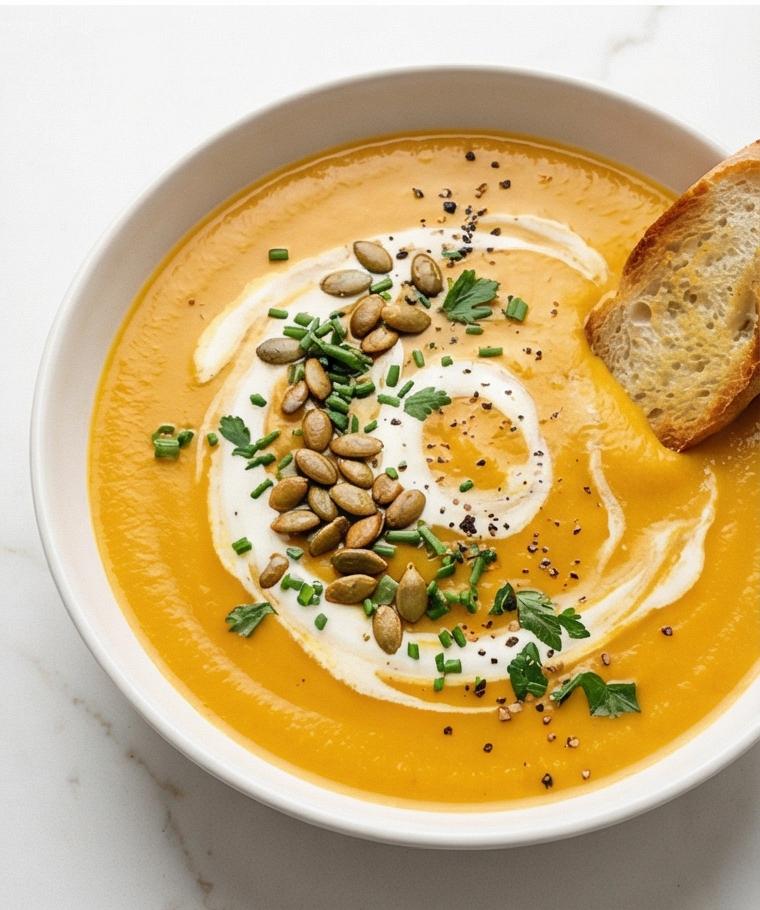
I make this Tomato Soup Recipe on slow Sundays when the light in my kitchen is soft and there’s time to coax flavor out of simple things. It started as a comfort project and became a go-to whenever I want something warm, bright, and endlessly forgiving. I love how the tomatoes concentrate into something silky yet straightforward, and how a bit of cream can turn it into a bowl of quiet luxury. This Tomato Soup Recipe is one of those recipes that feels like a hug and also like a little kitchen lesson about patience and balance.
How This Tomato Soup Recipe Became My Rainy-Day Favorite
The first time I made this Tomato Soup Recipe I remember the sound of the cans being opened, the bright smell of tomatoes, and the small, steady rhythm of stirring. I was tired after a long day and wanted something fast but honest. As the soffritto softened, the kitchen filled with an onion-sweet, carrot-earthy scent that felt like permission to slow down. When the tomato paste darkened and bloomed, the aroma shifted, warm and savory, and I realized how much a little caramelized paste changes everything. Serving it with torn basil and crunchy garlic croutons felt celebratory, even though the effort was humble. Each spoonful was both familiar and new, and since then this Tomato Soup Recipe has been my answer to chilly afternoons, last-minute guests, and the need for uncomplicated comfort.
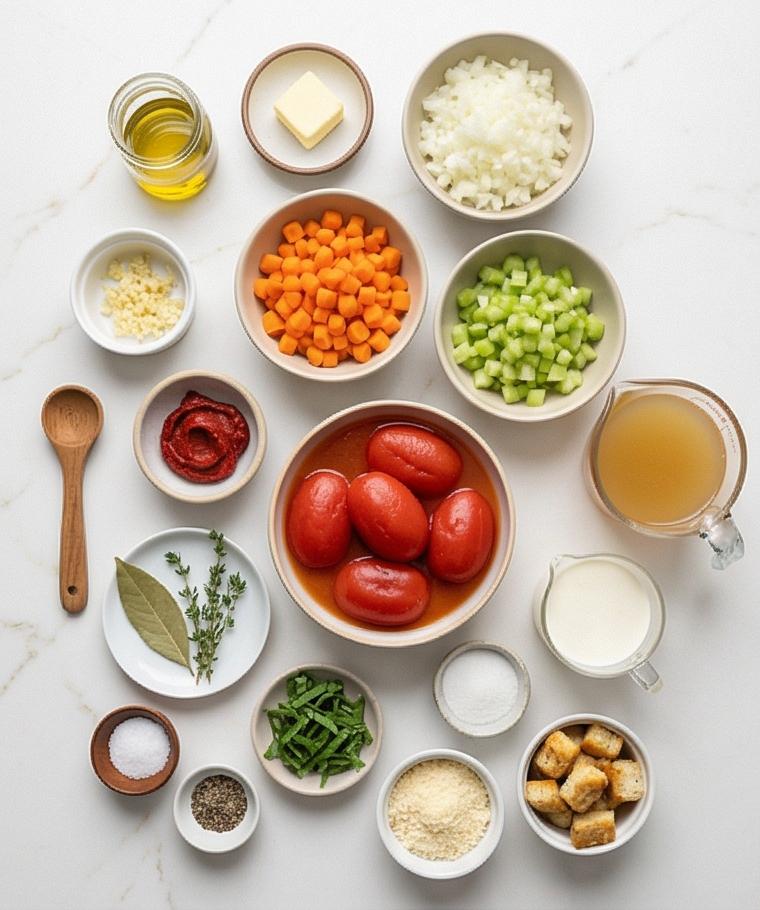
Main Ingredients and What They Do
- Extra-virgin olive oil and unsalted butter: Provide fat and mouthfeel; use all olive oil if dairy-free or ghee for a nuttier note.
- Yellow onion, carrot, celery: Build the aromatic base; substitute shallot for onion and omit celery if you dislike it.
- Garlic and tomato paste: Add depth and umami; roast garlic for a sweeter finish.
- Whole peeled tomatoes: The backbone of the soup; pick good-quality canned tomatoes, San Marzano-style if available.
- Vegetable or chicken broth: Controls salt and body; use low-sodium to manage seasoning.
- Cream and basil: Finish and brighten; use coconut milk for a dairy-free version and fresh basil for aromatic lift.
Essential Kitchen Tools and Why They Matter
A few reliable tools make this Tomato Soup Recipe easy and consistent. A heavy, enameled pot gives even heat and prevents scorching during the long simmer, while a wooden spoon is gentle on the pan and perfect for breaking down tomatoes. An immersion blender speeds the finish and keeps you from juggling hot batches, though a countertop blender works fine if you blend in cooled batches. A fine-mesh strainer is optional if you prefer ultra-silky soup. If you use a smaller pot, watch the simmer and stir more often to avoid sticking. These alternatives keep the recipe flexible so you can work with what you own.
Step-by-Step Preparation Guide.
Step 1: Sweat the aromatics into a soft soffritto
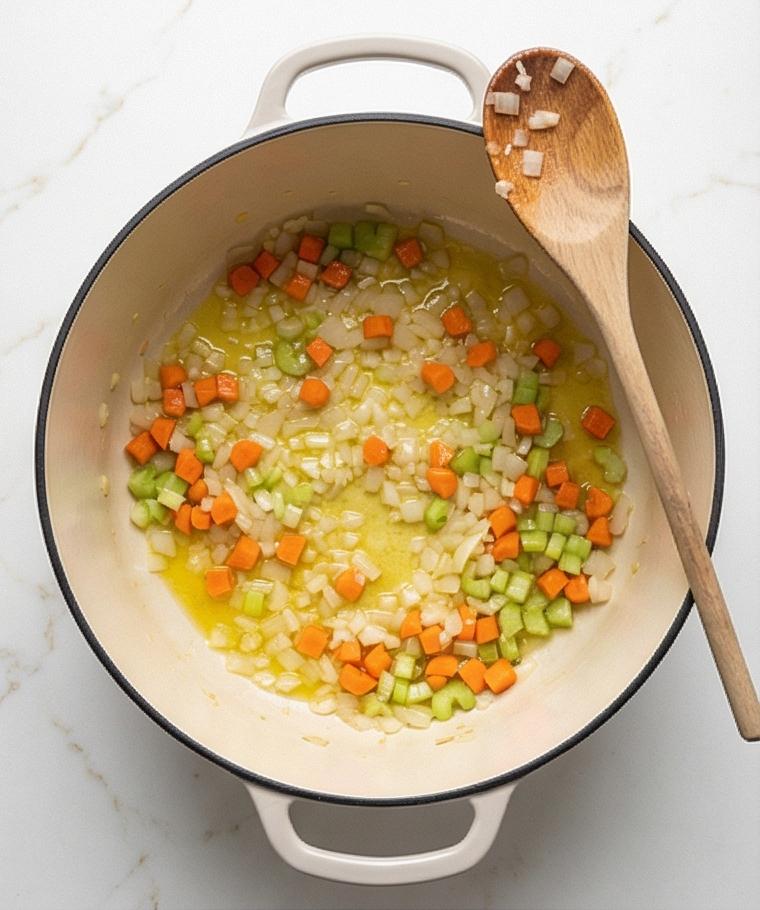
Heat the oil and butter in a heavy, enameled 4-quart pot until the butter melts and the fat shimmers. Add the finely chopped yellow onion, diced carrot, and diced celery and stir to coat — keep the heat medium so the vegetables soften and the onion turns translucent without browning. Cook patiently, stirring occasionally, until the mixture is tender, glossy with fat, and smelling sweet and vegetal; the carrot should still hold tiny shape but be pliant. This is the foundational texture: soft, slightly yielding, and evenly translucent.
Step 2: Bloom garlic and deepen the tomato paste
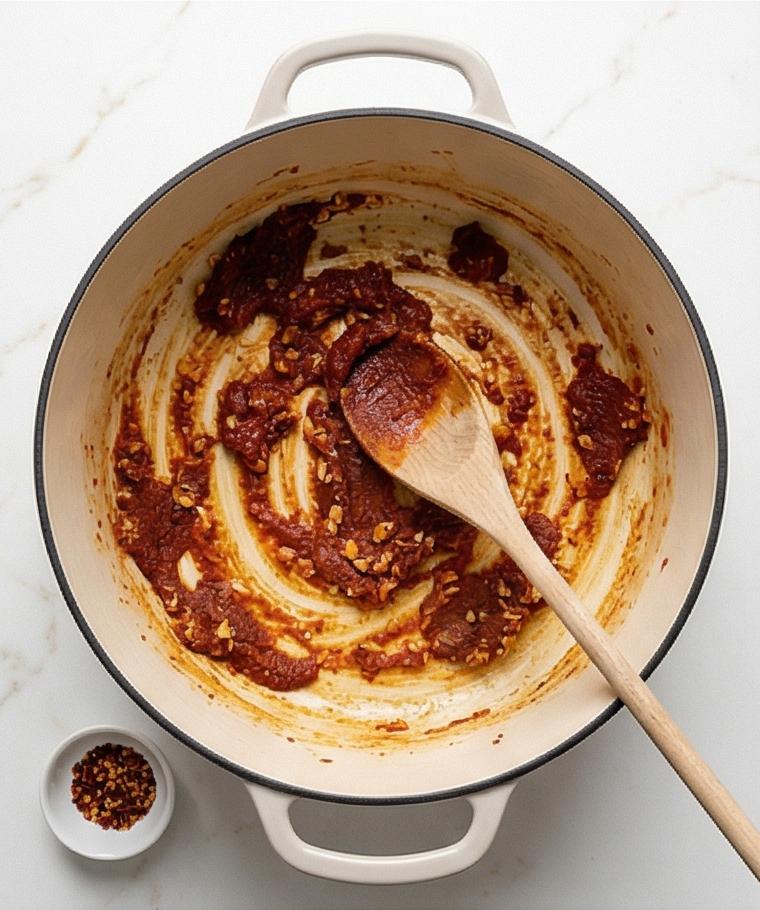
Push the softened vegetables to one side and stir in the minced garlic and tomato paste, along with a whisper of crushed red pepper if you like gentle heat. Stir constantly until the garlic becomes fragrant and the tomato paste darkens slightly — a richer, concentrated reddish-brown that clings to the wooden spoon and the pot’s sides. Be careful not to let the garlic brown; the scene should show glossy, slightly caramelized paste streaks and the first real umami shift in color and aroma.
Step 3: Add tomatoes, broth, and aromatics; bring to a gentle simmer
Add the whole peeled tomatoes with their juices and use a wooden spoon to break them into large pieces as they settle into the pot; pour in the vegetable broth and water so the mixture loosens into a chunky, juice-rich state. Scatter in the sugar, bay leaf, and thyme sprigs; season with kosher salt and cracked black pepper and stir to combine. Bring the pot just up to a gentle simmer so the surface shows small, steady bubbles — the texture becomes coarser now, bright tomato flesh suspended in savory liquid, flecked with herbs.
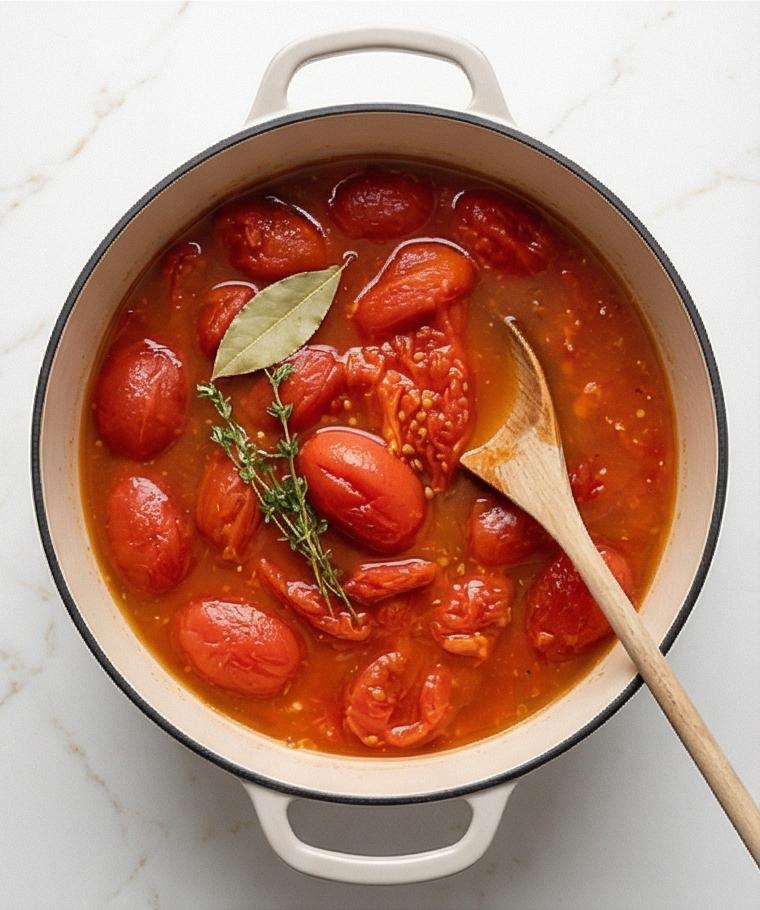
Step 4: Simmer until the vegetables melt and flavors marry
Partially cover the pot and simmer gently, maintaining low steady bubbling, until the carrots are utterly tender and the tomatoes have broken down, about 25–30 minutes. The soup will thicken slightly as water reduces and skins loosen; remove the bay leaf and any thyme stems and taste a piece of carrot to confirm silkiness. The finished simmered pot should read as a cohesive, softened mash of tomato and cooked vegetables — the rough, chunky state that signals it’s ready for puréeing.
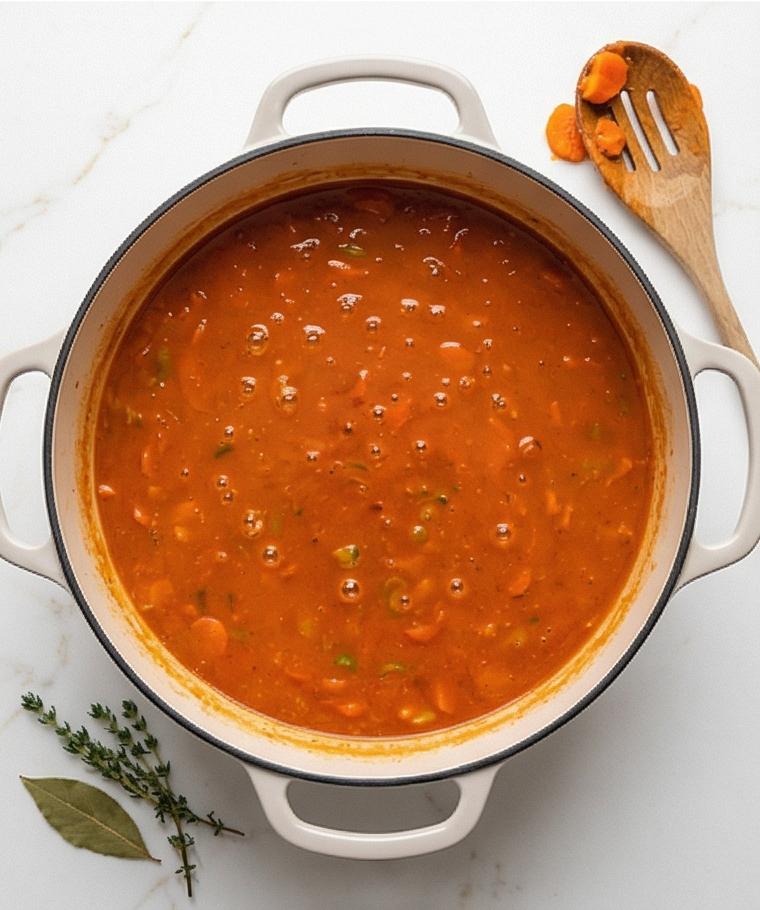
Step 5: Purée, finish with cream and basil, and plate for serving
Carefully purée the soup until completely smooth using an immersion blender or by working in batches in a countertop blender; the finished texture should be velvety, free of large pieces, and glossy. Return to low heat and, if using, stir in room-temperature heavy cream until the color becomes a uniform, creamy orange-red; brighten with a teaspoon of balsamic vinegar and fold in the thinly sliced basil. Adjust salt and pepper to taste. To serve, ladle the hot soup into warm shallow bowls, finish each with a small drizzle of extra-virgin olive oil, a scatter of grated Parmesan, a few garlic croutons, and extra basil leaves. The surface should show a silky sheen with delicate oil beads and a soft cream swirl.
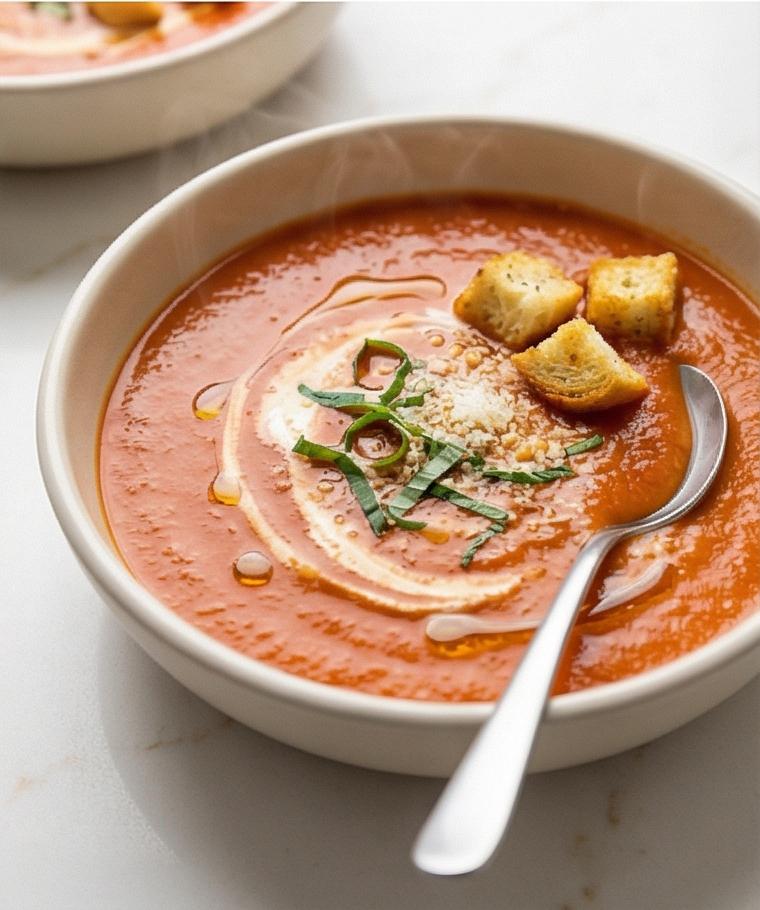
Making It Your Own
Try a smoky twist by adding a splash of roasted red pepper puree or a spoonful of chipotle in adobo for a regional spin. For a dairy-free Tomato Soup Recipe, stir in full-fat coconut milk instead of cream and finish with bright basil. In spring, swap dried thyme for tarragon and add a pinch of lemon zest for lift. For a heartier bowl, fold in cooked white beans or serve over toasted sourdough with melted provolone. Small experiments like these keep the core recipe familiar while letting you tailor flavor, texture, and dietary needs.
How to Serve
When I host, this Tomato Soup Recipe stars on a simple menu. Serve in warm bowls and offer grated Parmesan, a drizzle of olive oil, and garlic croutons at the table so guests can customize. For a dinner party of eight, double the recipe and keep it in a covered slow cooker on low to stay warm without reducing too much. For a lunch for two, halve the recipe and serve with a crisp green salad and toasted bread. Garnishes like torn basil or a spoonful of pesto add color and freshness, and small bowls of add-ins let everyone personalize their bowl.
Storage and Reheating Tips
Cool the soup to room temperature before refrigerating to preserve texture and flavor. Store in airtight containers for up to 4 days; if you added cream, give the soup a gentle stir before cooling and when reheating.
To reheat, warm slowly over low heat, stirring occasionally to prevent scorching. If the soup thickened in the fridge, loosen with a splash of broth or water and finish with a quick stir of fresh basil or a teaspoon of vinegar to brighten it.
Common Mistakes and How to Avoid Them
Undersalting is common, especially with low-sodium broth. Taste and adjust at the end, adding salt a little at a time. Overcooking the aromatics will mute their sweetness, so keep heat moderate while sweating the vegetables.
Rushing the tomato paste browning step loses depth. Give it time to darken and become glossy before adding liquids. And if you puree hot soup in a countertop blender, vent the lid slightly and work in small batches to avoid pressure build-up.
Final Thoughts and an Invitation
This Tomato Soup Recipe is forgiving, bright, and endlessly adaptable. I hope you try it this week, tweak a version that fits your pantry, and make it your own. Send a note about your favorite twist; I love hearing how a small change makes a recipe feel like yours.
Frequently Asked Questions.
- What if I only have tomato puree, can I use that? Yes, you can substitute tomato puree for whole tomatoes but adjust liquid so the soup isn’t too thin and taste for seasoning.
- Can I make this Tomato Soup Recipe ahead of time? Absolutely, it keeps well in the fridge for up to 4 days and the flavors often deepen overnight.
- How do I make the soup dairy-free? Swap the heavy cream for full-fat coconut milk or omit it and finish with extra olive oil for richness.
- Will the soup thicken after refrigeration? Yes, it will tighten up in the fridge; loosen with a little broth or water while reheating.
- Can I freeze this soup? Yes, freeze in airtight containers for up to 3 months; leave out the cream if you plan to freeze and add it when reheating.
Tomato Soup Recipe
Make Tomato Soup Recipe from scratch for a velvety, comforting bowl—ready in about 45 minutes.
Ingredients
Instructions
Step 1: Sweat the aromatics into a soft soffritto
Heat the oil and butter in a heavy, enameled 4-quart pot until the butter melts and the fat shimmers. Add the finely chopped yellow onion, diced carrot, and diced celery and stir to coat — keep the heat medium so the vegetables soften and the onion turns translucent without browning. Cook patiently, stirring occasionally, until the mixture is tender, glossy with fat, and smelling sweet and vegetal; the carrot should still hold tiny shape but be pliant. This is the foundational texture: soft, slightly yielding, and evenly translucent.
Step 2: Bloom garlic and deepen the tomato paste
Push the softened vegetables to one side and stir in the minced garlic and tomato paste, along with a whisper of crushed red pepper if you like gentle heat. Stir constantly until the garlic becomes fragrant and the tomato paste darkens slightly — a richer, concentrated reddish-brown that clings to the wooden spoon and the pot’s sides. Be careful not to let the garlic brown; the scene should show glossy, slightly caramelized paste streaks and the first real umami shift in color and aroma.
Step 3: Add tomatoes, broth, and aromatics; bring to a gentle simmer
Add the whole peeled tomatoes with their juices and use a wooden spoon to break them into large pieces as they settle into the pot; pour in the vegetable broth and water so the mixture loosens into a chunky, juice-rich state. Scatter in the sugar, bay leaf, and thyme sprigs; season with kosher salt and cracked black pepper and stir to combine. Bring the pot just up to a gentle simmer so the surface shows small, steady bubbles — the texture becomes coarser now, bright tomato flesh suspended in savory liquid, flecked with herbs.
Step 4: Simmer until the vegetables melt and flavors marry
Partially cover the pot and simmer gently, maintaining low steady bubbling, until the carrots are utterly tender and the tomatoes have broken down, about 25–30 minutes. The soup will thicken slightly as water reduces and skins loosen; remove the bay leaf and any thyme stems and taste a piece of carrot to confirm silkiness. The finished simmered pot should read as a cohesive, softened mash of tomato and cooked vegetables — the rough, chunky state that signals it’s ready for puréeing.
Step 5: Purée, finish with cream and basil, and plate for serving
Carefully purée the soup until completely smooth using an immersion blender or by working in batches in a countertop blender; the finished texture should be velvety, free of large pieces, and glossy. Return to low heat and, if using, stir in room-temperature heavy cream until the color becomes a uniform, creamy orange-red; brighten with a teaspoon of balsamic vinegar and fold in the thinly sliced basil. Adjust salt and pepper to taste. To serve, ladle the hot soup into warm shallow bowls, finish each with a small drizzle of extra-virgin olive oil, a scatter of grated Parmesan, a few garlic croutons, and extra basil leaves. The surface should show a silky sheen with delicate oil beads and a soft cream swirl.
Notes
- Use good-quality canned tomatoes for the best flavor.
- Adjust salt gradually, especially with low-sodium broth.
- For dairy-free, replace cream with coconut milk or skip it and finish with olive oil.
- Cool completely before freezing and leave out cream if you plan to freeze.