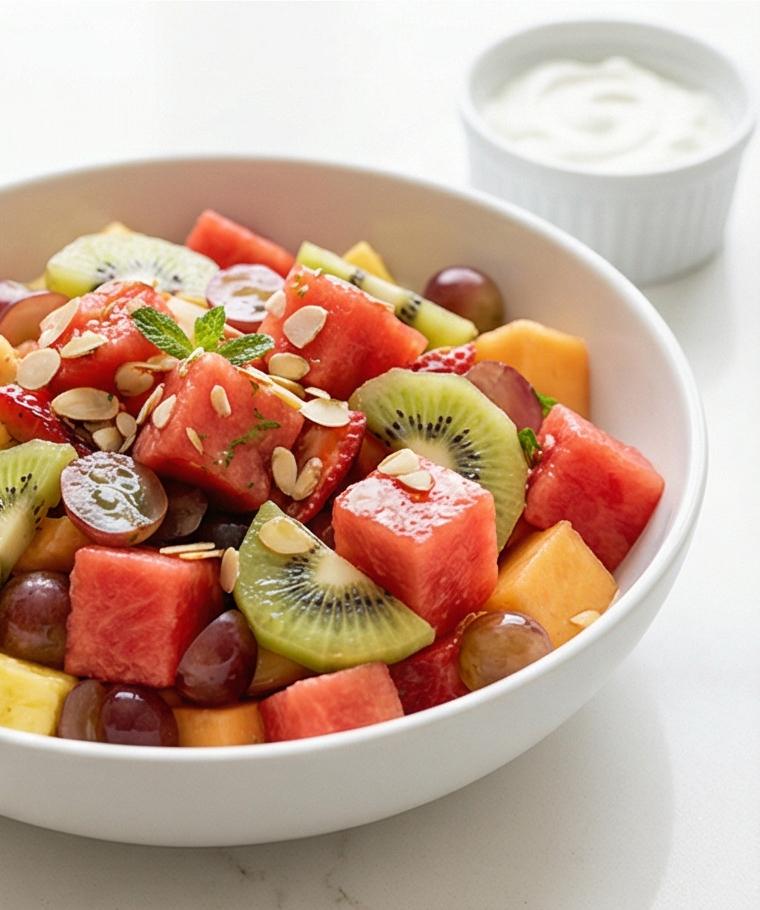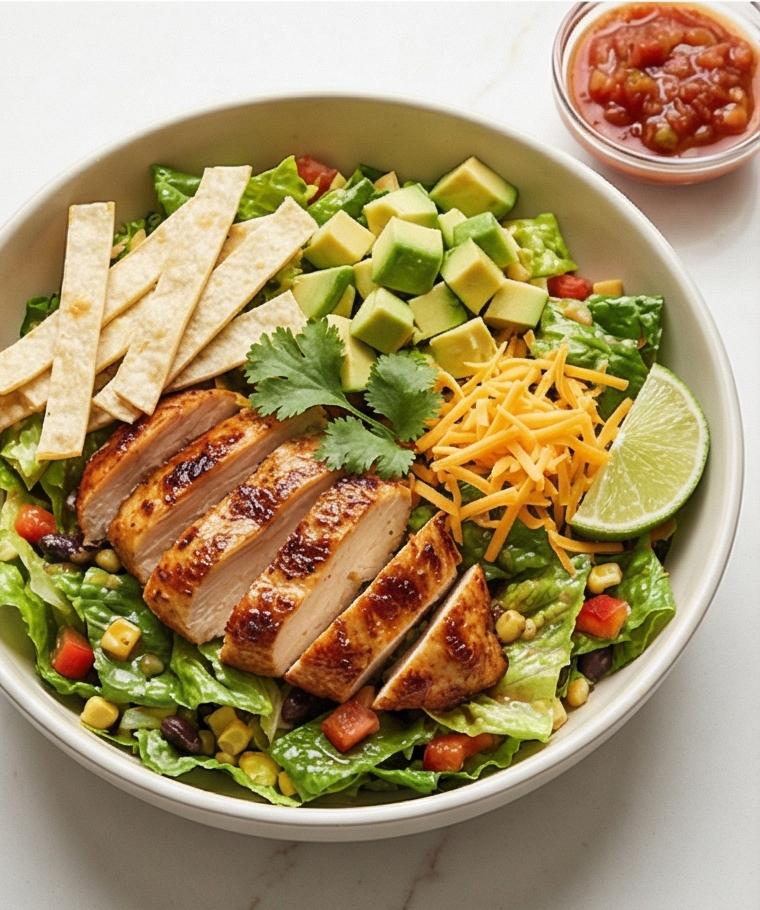
I fell for this Asian Chicken Salad Recipe the first time I tasted the balance of bright, tangy dressing against warm, seared chicken. I make it when friends drop by, when I need a fast weeknight win, and whenever I want something that feels both light and substantial. The Asian Chicken Salad Recipe is one of those dishes that travels well from fridge to table and somehow gets better the next day. You’ll notice the crunch, the herbs, and the lime all doing a little happy dance in your mouth.
How This Recipe Became My Rainy-Day Favorite
There was a slow, grey afternoon when I first perfected the Asian Chicken Salad Recipe in a tiny kitchen with a squeaky window. I remember the steam from the searing pan fogging the glass while the ginger and garlic filled the room; the scent felt like a warm invitation. I tossed the shredded cabbage and carrots until they glistened with dressing, then arranged slices of hot, caramelized chicken on top. A friend took the first bite and laughed—part surprise, part delight—and the kitchen suddenly felt sunnier. That day the salad became our comfort meal for low-energy evenings, a bright plate that somehow comforted and revived us at once. Even now, when rain taps the roof, making this salad feels like a small, celebratory ritual.
The Ingredients That Bring It All Together
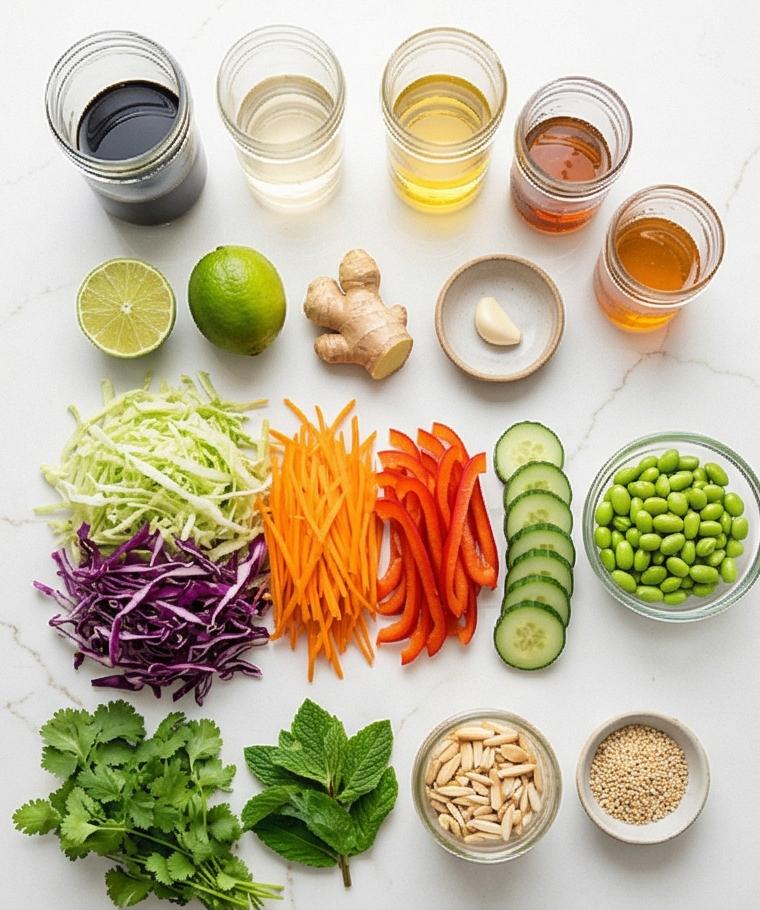
- Low-sodium soy sauce: Provides savory backbone and umami – use tamari for gluten-free needs.
- Rice vinegar: Adds bright acidity – apple cider vinegar can work in a pinch.
- Neutral oil: Gives body to the dressing – grapeseed or canola are best for neutral flavor.
- Toasted sesame oil: A little goes a long way for toasty aroma – use less if you prefer milder notes.
- Lime juice: Fresh is key for brightness – bottled juice is ok but less vibrant.
- Honey or light brown sugar: Balances acid – maple syrup is a substitute for a different sweetness profile.
- Fresh ginger and garlic: Give fresh, sharp aromatics – powdered is weaker.
- Chicken (breasts or thighs): Protein and warmth – thighs stay juicier.
- Cabbage, carrots, bell pepper, cucumber, scallions: Crunch and color – swap or add napa cabbage for a softer bite.
- Edamame, cilantro, mint: Freshness and texture – parsley can replace cilantro if needed.
- Almonds, sesame seeds, crispy noodles: Crunch finish – toasted pepitas or peanuts are great alternatives.
Kitchen Tools You’ll Reach For
Start with a quick intro: having the right tools makes this Asian Chicken Salad Recipe effortless. Good knives and bowls speed things up and help the salad stay vibrant.
- Chef’s knife: For shredding cabbage and slicing chicken evenly – a sharp blade saves time and keeps textures clean.
- Cutting board: A sturdy board prevents slipping – use separate boards for produce and raw chicken.
- Mixing bowls: A large bowl for tossing plus a smaller one for the reserved marinade – glass or ceramic are ideal.
- Cast-iron or heavy skillet: For a golden sear on the chicken – alternative is a stainless pan.
- Measuring spoons/cups and microplane: For exact dressing balance and finely grated ginger.
- Tongs and salad servers: To toss without bruising the vegetables – chopsticks work in a pinch.
Step-by-Step Preparation Guide
Step 1: Make the dressing and reserve a marinade portion
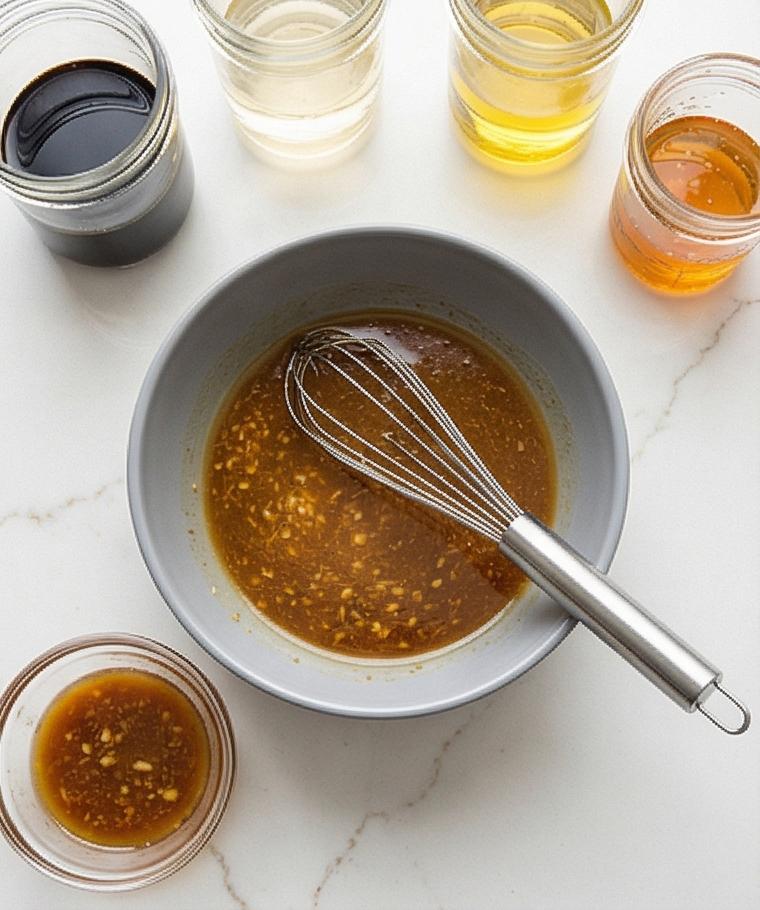
In a medium matte grey ceramic bowl, whisk together the soy sauce, rice vinegar, neutral oil, toasted sesame oil, lime juice and honey until the sweetener is fully dissolved and the mixture looks smooth and slightly glossy. Fold in the grated fresh ginger, minced garlic, sriracha (if using), salt and pepper until the dressing is emulsified and fragrant. Spoon exactly a small 3-tablespoon portion into a tiny glass bowl to become the chicken marinade, cover that bowl, and leave the larger bowl of dressing at room temperature, whisking briefly if it settles before use.
Step 2: Marinate, sear, rest and slice the chicken
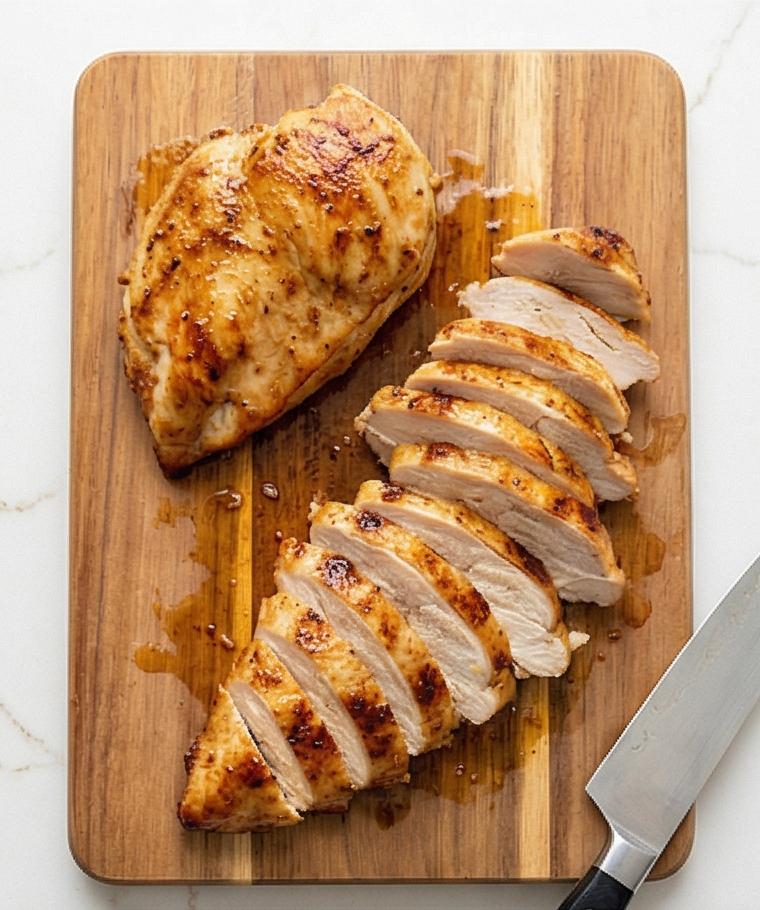
Place the chicken in a shallow glass dish and pour the reserved 3-tablespoon marinade over it, turning to coat. Refrigerate for at least 20 minutes if you like, then discard excess marinade before cooking. After pan-searing until a deep golden crust forms, transfer the hot chicken to a wooden cutting board, let it rest so the juices redistribute, then slice across the grain into thin, juicy strips with a slightly caramelized exterior — set aside on the board, tented briefly so it stays warm and glossy.
Step 3: Assemble the shredded salad base
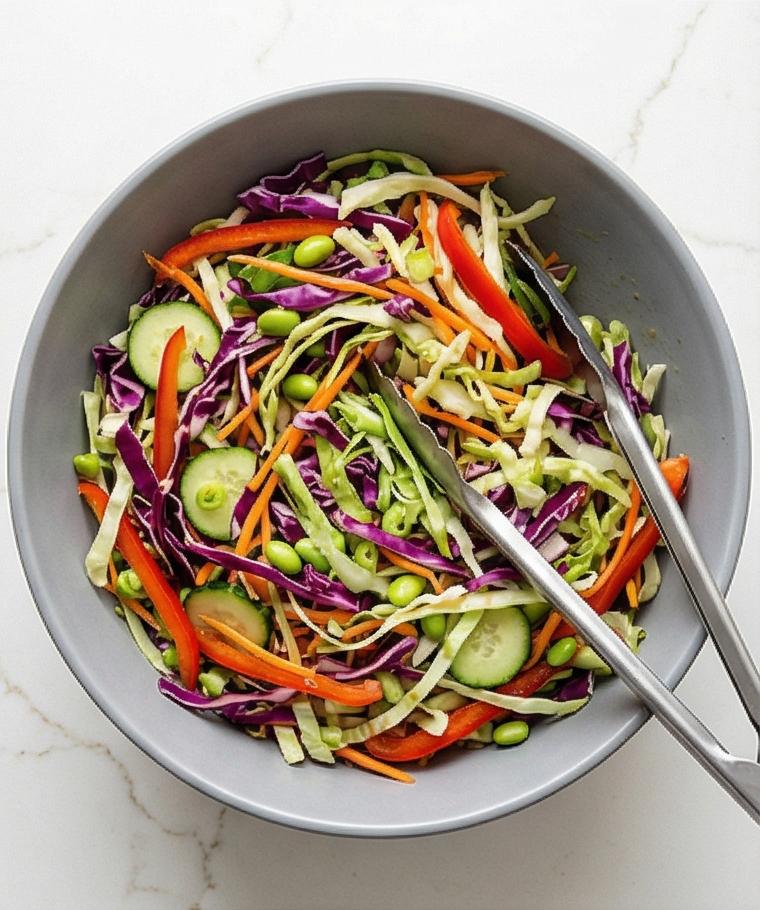
In the same matte grey ceramic bowl used for the dressing, combine the finely shredded green cabbage, shredded red cabbage, shredded carrots, very thinly sliced red bell pepper, halved-and-sliced seedless cucumber, and the thinly sliced green onions. Use tongs to lift and toss the vegetables so the pile reads as airy, crisp, and feather-light — the shredded cabbage should look dense but individual strands should still sparkle and separate.
Step 4: Add edamame and fresh herbs
Fold the cooled shelled edamame, roughly chopped cilantro and chopped mint (if using) into the cabbage mix so the salad base gains pops of green and herb texture without any dressing yet; keep the crunchy toppings separate so they remain pristine and crunchy when added later. Describe the bowl as bright, layered, and waiting for dressing — no dressing is added in this step.
Step 5: Toast the nuts and sesame seeds
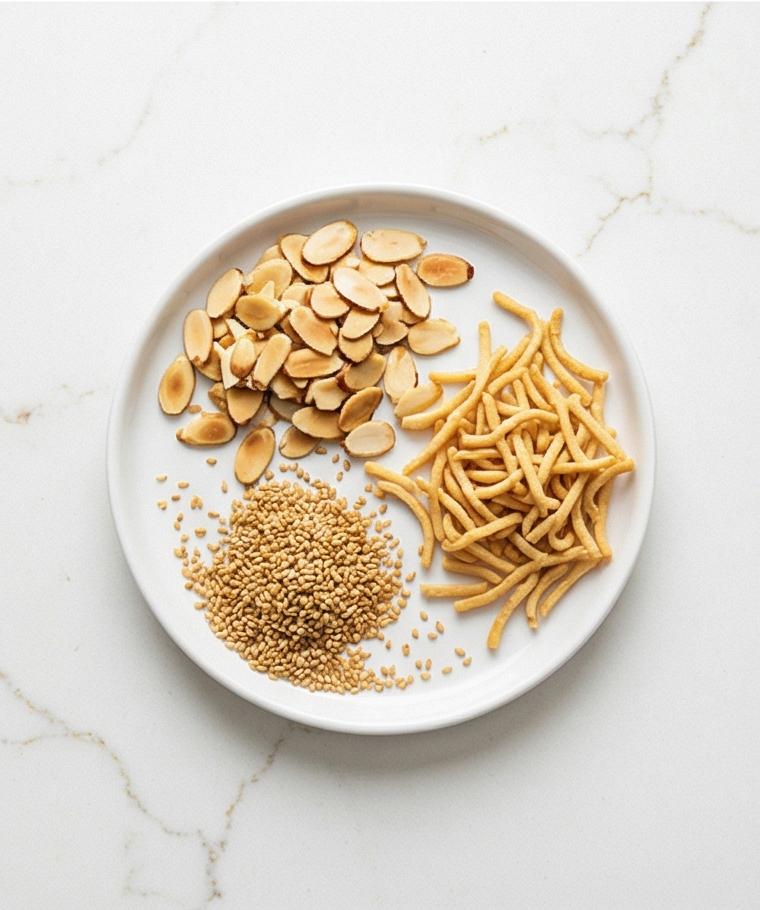
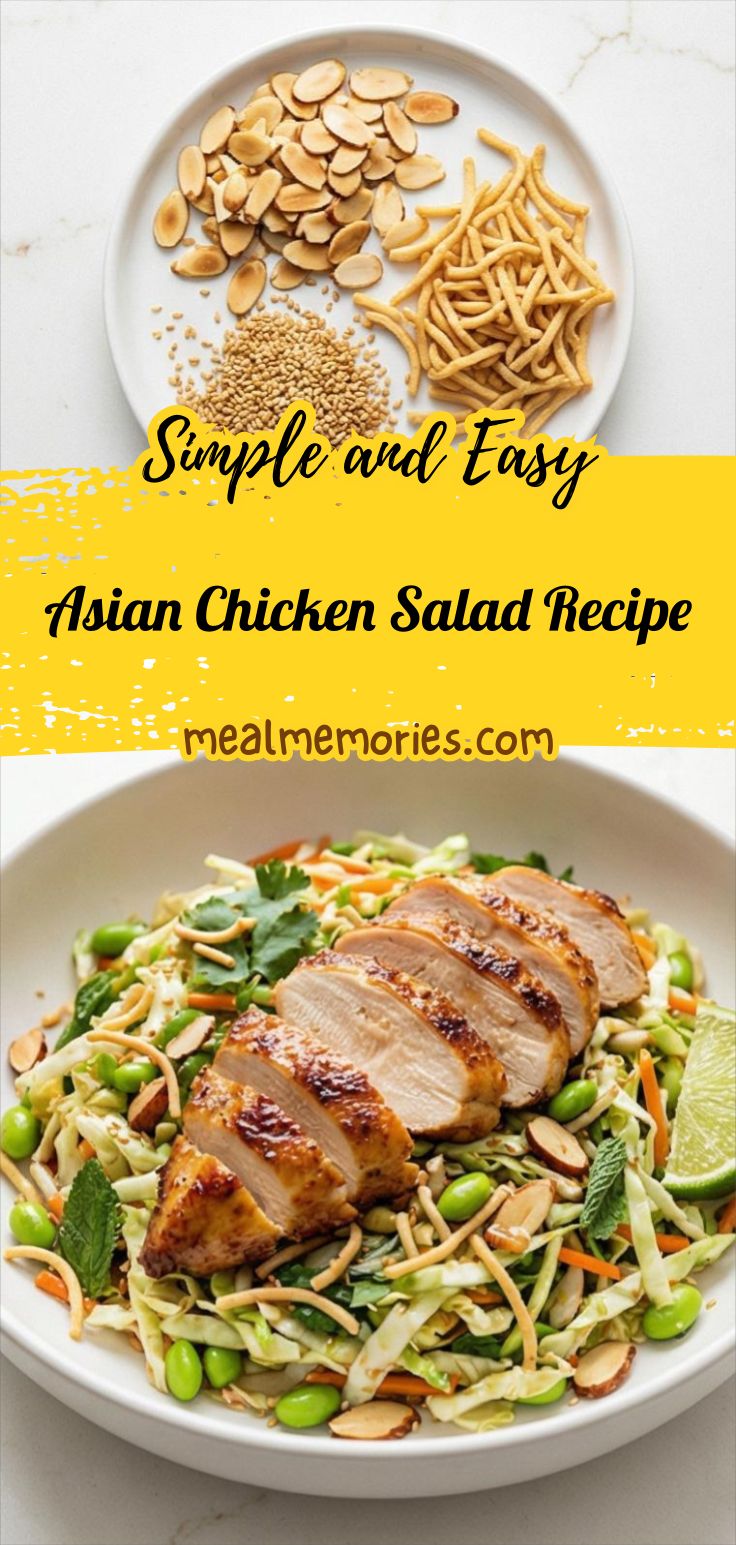
Toast the sliced or slivered almonds with the sesame seeds in a dry skillet until the almonds are just golden and the sesame seeds are fragrant, then immediately transfer them to a small white plate to cool so they retain a dry, crunchy sheen and nutty amber color. Keep the crispy chow mein noodles or fried wonton strips aside on the same plate so the crunch components are grouped and ready.
Step 6: Dress, finish with crunch, plate and serve
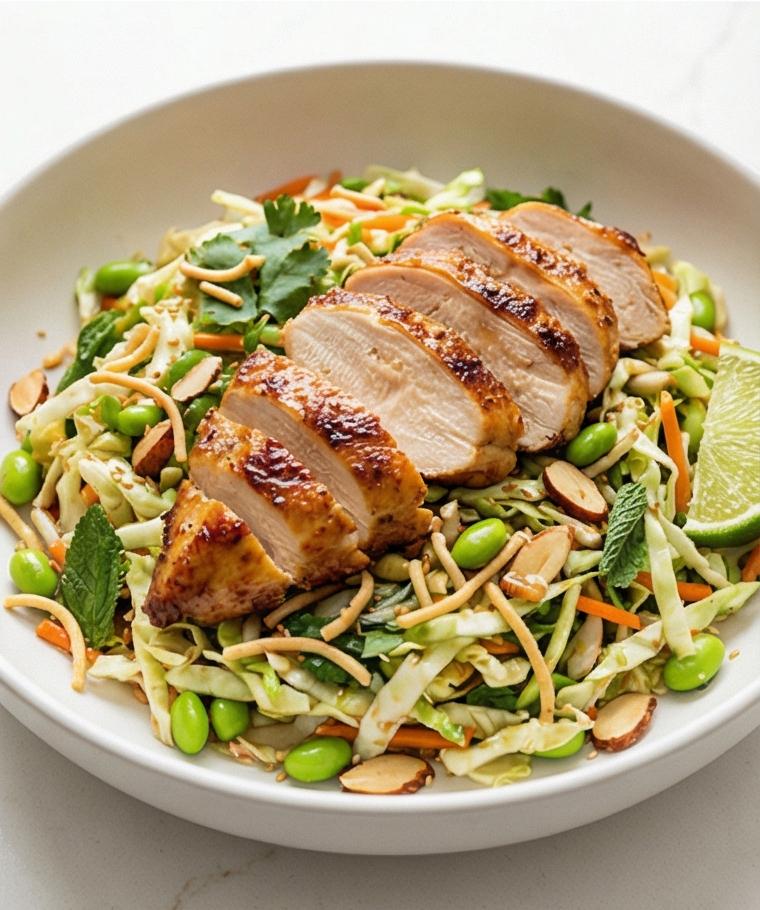
Just before serving, pour about two-thirds of the dressing over the cabbage-herb mixture and toss thoroughly with the tongs until the vegetables are evenly and lightly coated — glossy but crisp. Sprinkle the cooled toasted almonds and sesame seeds plus the crispy noodles over the dressed salad and toss gently to distribute without crushing the crunch. Arrange the warm sliced chicken over or folded into the salad; if the chicken looks a touch dry, drizzle a little of the remaining dressing over it. Divide between shallow, wide serving bowls and offer lime wedges for squeezing.
Making It Your Own
I like to swap ingredients as experiments and keep notes. Try grilled shrimp in place of chicken for summer nights, or go roasted tofu for a vegetarian switch – both soak up the dressing beautifully. For a lower-sodium version, use low-sodium soy and add a touch more lime and honey to balance. When stone-fruit is in season, diced peaches tossed in add a sweet-sour pop that surprised everyone. If you want a nut-free version, skip almonds and use roasted chickpeas for crunch – they hold up well and stay crunchy even after dressing.
How to Serve
Think of this as a party-ready main or a generous side. For a dinner party, toss the base with dressing just before guests arrive so it stays crisp, then place toasted almonds and crispy noodles in separate bowls so people can add crunch to taste. To stretch the salad for a crowd, serve the shredded base family-style and offer extra warm sliced chicken on a platter – guests can help themselves. For lunchboxes, pack dressing separately and add nuts just before eating so the crunch holds.
Storage and Reheating Tips
Leftovers store well when components are kept separate. Transfer leftover chicken and dressing to individual containers and the shredded vegetables to another – they’ll keep textures longer this way.
When reheating, warm the chicken gently in a skillet over medium-low heat so it does not dry out. Re-toss the veggies with a little extra dressing if they seem drier than you like, and always add crunchy toppings right before serving.
Common Slip-Ups and How to Avoid Them
One common mistake is overdressing the cabbage – that makes it soggy. Toss lightly and add more dressing at the table if needed. Another is under-seasoning the chicken; taste the reserved marinade before discarding any leftover, and adjust salt and lime so the chicken shines.
Final Thoughts and a Warm Invite
If you love contrast in a bowl – crunchy, tangy, herby, and warm – this Asian Chicken Salad Recipe will become a weekday favorite. Give it a try tonight and tweak the variations to make it yours. I can’t wait to hear which swaps you try.
Frequently Asked Questions.
- Can I make this salad ahead of time? Yes, you can prep most components a day ahead – keep dressing and crunch separate until serving.
- What can I use instead of chicken? Grilled shrimp, roasted tofu, or thinly sliced steak all work great with the dressing.
- Is there a gluten-free option? Use tamari or a gluten-free soy substitute and check your crunchy toppings to ensure they’re gluten-free.
- How do I keep the salad crunchy for lunch? Pack the dressing and crunchy toppings separately and add them right before eating.
- Can I make this spicier? Yes, increase the sriracha or add thinly sliced fresh chilies to taste.
Asian Chicken Salad Recipe
Make Asian Chicken Salad Recipe for a bright, crunchy weeknight meal with seared chicken and tangy dressing.
Ingredients
Instructions
Step 1: Make the dressing and reserve a marinade portion
In a medium matte grey ceramic bowl, whisk together the soy sauce, rice vinegar, neutral oil, toasted sesame oil, lime juice and honey until the sweetener is fully dissolved and the mixture looks smooth and slightly glossy. Fold in the grated fresh ginger, minced garlic, sriracha (if using), salt and pepper until the dressing is emulsified and fragrant. Spoon exactly a small 3-tablespoon portion into a tiny glass bowl to become the chicken marinade, cover that bowl, and leave the larger bowl of dressing at room temperature, whisking briefly if it settles before use.
Step 2: Marinate, sear, rest and slice the chicken
Place the chicken in a shallow glass dish and pour the reserved 3-tablespoon marinade over it, turning to coat. Refrigerate for at least 20 minutes if you like, then discard excess marinade before cooking. After pan-searing until a deep golden crust forms, transfer the hot chicken to a wooden cutting board, let it rest so the juices redistribute, then slice across the grain into thin, juicy strips with a slightly caramelized exterior — set aside on the board, tented briefly so it stays warm and glossy.
Step 3: Assemble the shredded salad base
In the same matte grey ceramic bowl used for the dressing, combine the finely shredded green cabbage, shredded red cabbage, shredded carrots, very thinly sliced red bell pepper, halved-and-sliced seedless cucumber, and the thinly sliced green onions. Use tongs to lift and toss the vegetables so the pile reads as airy, crisp, and feather-light — the shredded cabbage should look dense but individual strands should still sparkle and separate.
Step 4: Add edamame and fresh herbs
Fold the cooled shelled edamame, roughly chopped cilantro and chopped mint (if using) into the cabbage mix so the salad base gains pops of green and herb texture without any dressing yet; keep the crunchy toppings separate so they remain pristine and crunchy when added later. Describe the bowl as bright, layered, and waiting for dressing — no dressing is added in this step.
Step 5: Toast the nuts and sesame seeds
Toast the sliced or slivered almonds with the sesame seeds in a dry skillet until the almonds are just golden and the sesame seeds are fragrant, then immediately transfer them to a small white plate to cool so they retain a dry, crunchy sheen and nutty amber color. Keep the crispy chow mein noodles or fried wonton strips aside on the same plate so the crunch components are grouped and ready.
Step 6: Dress, finish with crunch, plate and serve
Just before serving, pour about two-thirds of the dressing over the cabbage-herb mixture and toss thoroughly with the tongs until the vegetables are evenly and lightly coated — glossy but crisp. Sprinkle the cooled toasted almonds and sesame seeds plus the crispy noodles over the dressed salad and toss gently to distribute without crushing the crunch. Arrange the warm sliced chicken over or folded into the salad; if the chicken looks a touch dry, drizzle a little of the remaining dressing over it. Divide between shallow, wide serving bowls and offer lime wedges for squeezing.
Notes
- Marinate the chicken for at least 20 minutes for better flavor.
- Toast nuts just until golden to avoid bitterness.
- Keep crunchy toppings separate until serving to preserve texture.
- Use tamari for a gluten-free version.
- Pack dressing separately for lunch to keep salad crisp.