Fried Calamari Recipe
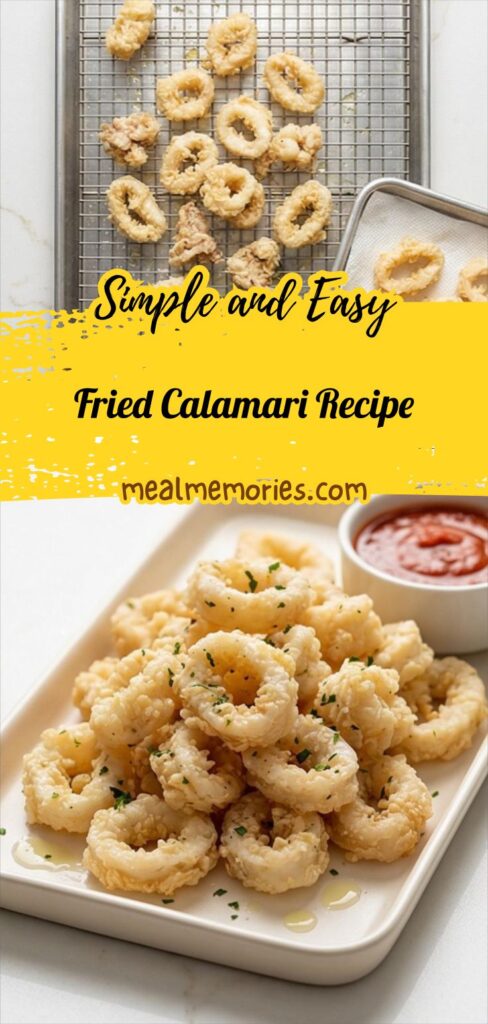
Make Fried Calamari Recipe: crisp, tender rings with zesty lemon and garlic aioli for easy sharing.
Ingredients
- 1 1/2 pounds (680 g) cleaned squid (calamari) bodies and tentacles, tubes sliced into 1/2-inch (1.25 cm) rings
- 1 cup (240 ml) whole milk or buttermilk, cold
- 1 large garlic clove, lightly crushed
- 1 teaspoon fine sea salt, for the milk soak
- 1 cup (130 g) all-purpose flour
- 1/2 cup (80 g) fine semolina flour or fine yellow cornmeal
- 1/4 cup (30 g) cornstarch
- 1 1/2 teaspoons fine sea salt, for the coating
- 1 teaspoon sweet paprika
- 1/2 teaspoon garlic powder
- 1/2 teaspoon freshly ground black pepper
- 1/4 teaspoon cayenne pepper (optional, for heat)
- 4 cups (960 ml) neutral oil with a high smoke point (such as peanut, canola, or sunflower oil), for deep-frying
- 1 medium lemon, cut into wedges, for serving
- 2 tablespoons (8 g) fresh flat-leaf parsley, finely chopped
- 1 cup (240 ml) marinara sauce or garlic aioli, for serving (optional)
Instructions
Step 1: Clean and Slice the Squid
Start by rinsing the squid under cold running water, pulling the tentacles away from the body, discarding the clear quill and innards, and gently peeling any purplish skin if you prefer. Pat every piece very dry with paper towels, then slice the tubes crosswise into neat 1/2‑inch (1.25 cm) rings while leaving the tentacles whole. Arrange the cleaned rings and tentacles in a single layer on a paper‑towel–lined tray and chill briefly in the refrigerator so they stay compact and dry while you prepare the next elements. This step is all about clean, dry surfaces and precise, uniform cuts so the final fry cooks evenly.
Step 2: Milk Soak to Tenderize
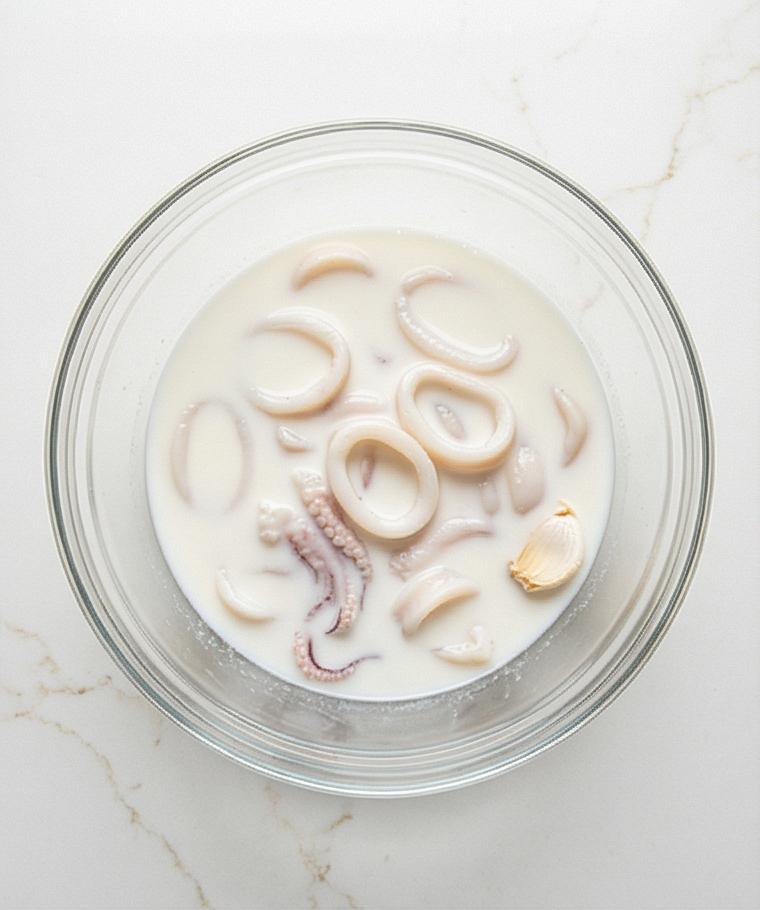
In a medium clear glass mixing bowl combine cold whole milk (or buttermilk), a lightly crushed garlic clove, and a teaspoon of fine sea salt; stir until the salt dissolves. Submerge the prepared squid fully in this aromatic milk bath, cover, and refrigerate for 30–60 minutes. Visually you should see pale rings and tentacles floating in silky milk with a single garlic clove resting against the glass – the milk makes the flesh plump and glossy while softening the strong ocean note.
Step 3: Whisk the Dry Coating to a Uniform Dust
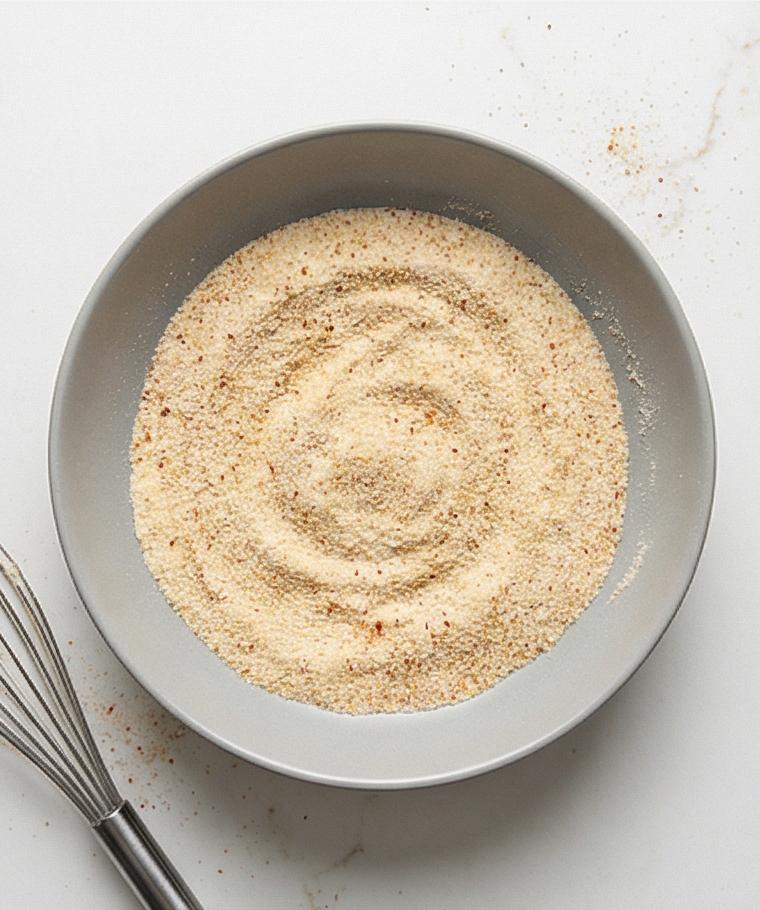
While the squid soaks, combine the dry coating: all‑purpose flour, fine semolina (or fine yellow cornmeal), cornstarch, salt, sweet paprika, garlic powder, freshly ground black pepper, and an optional pinch of cayenne. Whisk them in a shallow matte grey ceramic bowl until the powder is a single, evenly speckled mass — fine gritty semolina visible against the pale flour, fine red flecks of paprika, and a dry, satiny matte texture overall. This bowl becomes the dedicated dredging vessel, its low sides perfect for tossing pieces to achieve a thin, even, clingy crust.
Step 4: Dry, Dredge, and Arrange for Frying
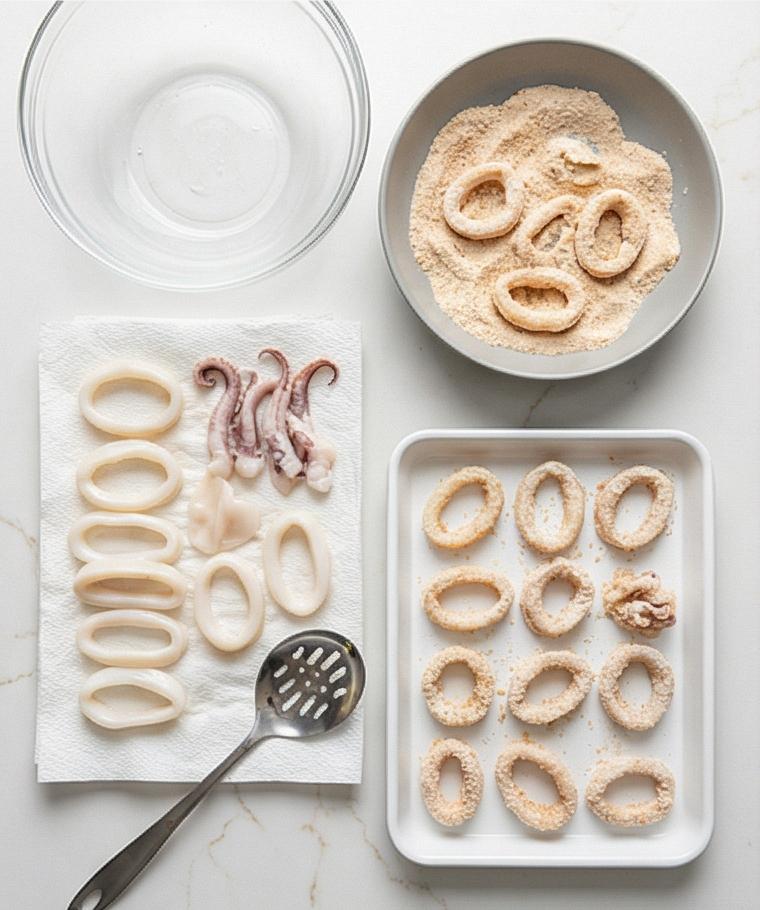
Lift the squid from the milk bath, letting excess drip back into the bowl; discard the liquid and garlic. Pat every ring and tentacle thoroughly on fresh paper towels until the surface is matte and free of beads of moisture — this is critical for a confident, sizzle‑dry fry. Working in small handfuls, press each piece into the seasoned flour in the same matte grey ceramic dredging bowl so the coating adheres uniformly; shake off excess and arrange the coated pieces in a single layer on a clean plate or tray, the rough textured, pale golden coating matte and slightly granular to the touch. Keep batches small and the coated pieces separated so the flour stays crisp and dry.
Step 5: Fry, Drain, and Hold Warm on a Rack
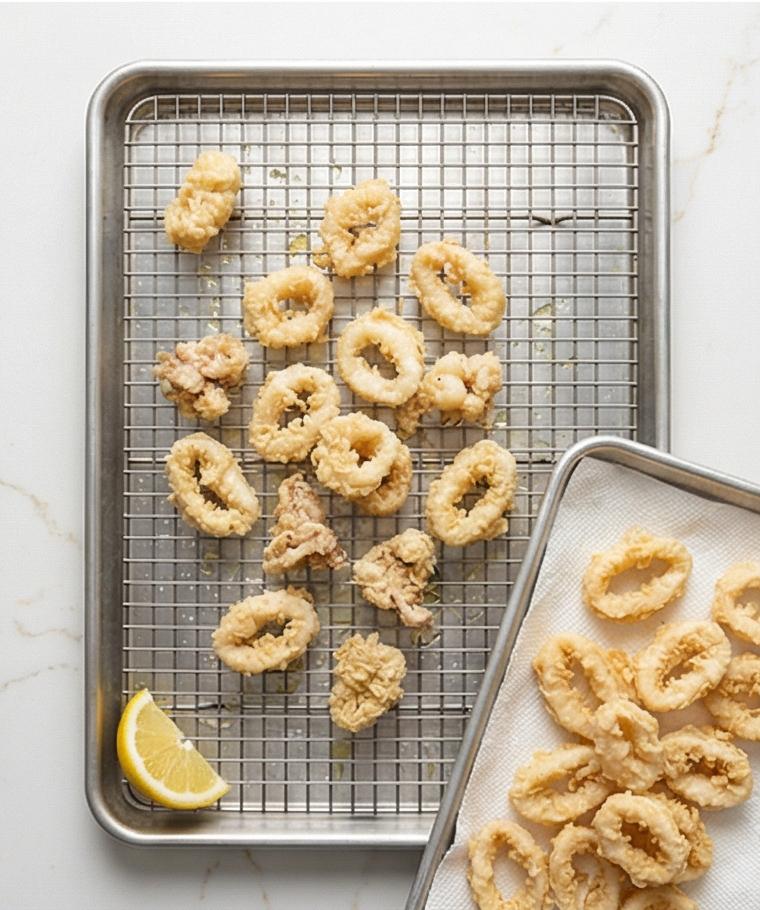
After frying small batches until pale golden and crisp (short, hot fry for each batch), transfer the freshly fried calamari with a slotted spoon to a paper‑towel–lined tray to shed immediate oil, then move the pieces to a wire rack set over a rectangular rimmed baking sheet to finish draining and stay crisp. The visual milestone is a neat rectangular composition: a low stainless rimmed tray with a flat wire rack holding a scattering of airy, craggy, pale‑gold calamari rings and tentacles, tiny oil beads glinting, and a light dusting of salt beginning to dissolve on peaks. This rectangular tray geometry will inform the final serving vessel.
Step 6: Final Plated Rectangular Presentation — Serve Hot
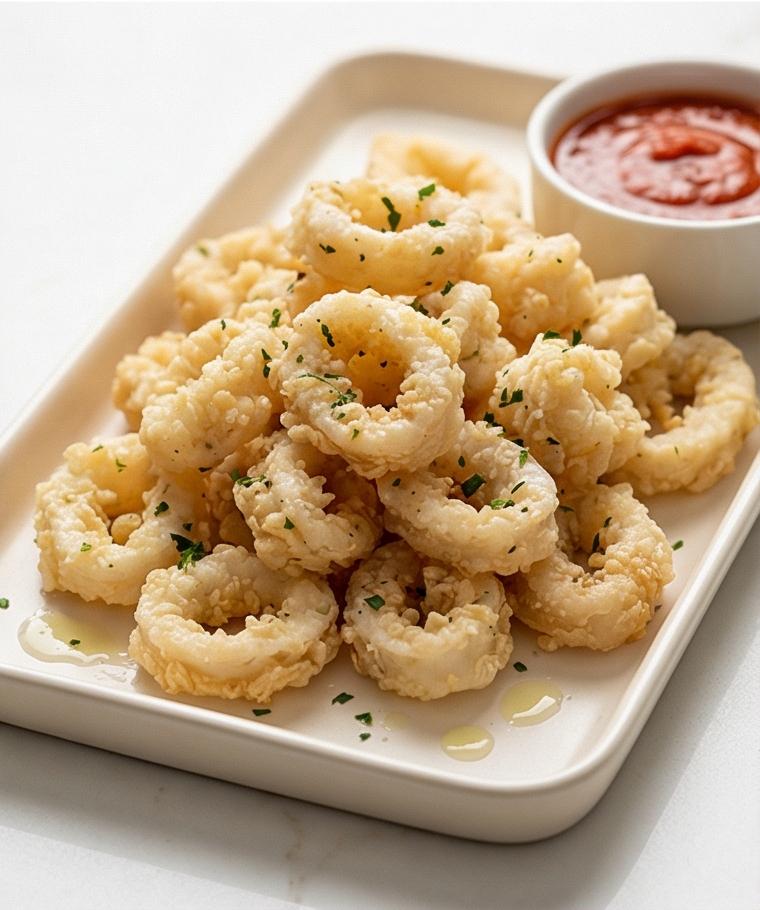
Transfer the hot calamari to a warm, rectangular matte white serving tray (matching the rimmed sheet geometry) lined with a fresh sheet of parchment: a dense pile of crisp, pale‑gold rings and tentacles with craggy, fractal crust texture, topped with finely chopped fresh flat‑leaf parsley for bright green contrast, lemon wedges arranged along one long edge, and a small shallow ramekin of marinara or garlic aioli set recessed into one corner. The final image is very close, eye‑level and intimate — steam hints, sharply defined crunchy edges, moist interior glimpses, and a tactile, ready‑to‑squeeze lemon wedge at the front.
Notes
- Pat the squid very dry before dredging to ensure a crisp crust.
- Fry in small batches to maintain oil temperature and crispness.
- Use a thermometer or test with a small pinch of flour to keep oil at the right heat.
- Serve immediately with lemon and a simple dipping sauce like aioli or marinara.
- Consume leftovers within 24 hours and reheat in an oven or air fryer to re-crisp.