Tiramisu Recipe
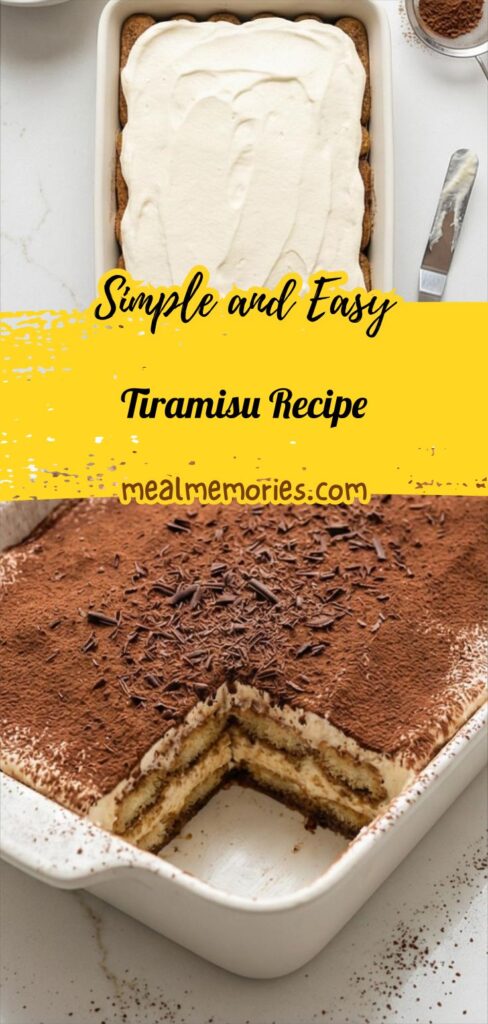
Make Tiramisu Recipe tonight: soak ladyfingers, whip mascarpone mousse, and chill for a silky, classic dessert.
Ingredients
- 1 1/2 cups (360 ml) freshly brewed strong espresso or very strong coffee, hot then cooled to room temperature
- 1/2 cup (120 ml) Marsala wine, divided (1/3 cup or 80 ml for the coffee soak, 3 tablespoons or 45 ml for the mascarpone cream)
- 3 tablespoons (45 ml) dark rum or coffee liqueur (such as Kahlúa), optional, for the coffee soak
- 2 teaspoons (10 ml) pure vanilla extract, divided (1 teaspoon for the coffee soak, 1 teaspoon for the mascarpone cream)
- 6 large egg yolks (about 110 g), at room temperature
- 3/4 cup (150 g) granulated sugar, divided (1/2 cup or 100 g for the yolks, 1/4 cup or 50 g for the whipped cream)
- 1/8 teaspoon fine sea salt
- 16 ounces (450 g) mascarpone cheese, cold but pliable (not icy cold)
- 1 1/2 cups (360 ml) cold heavy whipping cream (about 36% fat), straight from the refrigerator
- 3–4 tablespoons (18–24 g) unsweetened cocoa powder, plus more for final dusting
- 7 ounces (200 g) crisp Italian savoiardi ladyfingers (about 40–45 pieces), at room temperature
- 1 ounce (30 g) dark chocolate (60–70% cocoa), for shaving on top (optional)
- Extra unsweetened cocoa powder, for serving (optional)
- Extra Marsala wine or dark rum, 1–2 tablespoons (15–30 ml), to drizzle on top just before serving (optional)
Instructions
Step 1: Make the coffee-marsala soak
Combine the cooled strong espresso with 1/3 cup Marsala, the optional dark rum or coffee liqueur, and a splash of vanilla in a wide, shallow glass or ceramic bowl until the liquids are evenly blended. Let the mixture come fully to room temperature so the savoiardi will be moistened but never soggy; this bowl should sit uncovered while you move on to the egg work, a wide shallow vessel holding a dark, glossy liquid with gentle surface ripples.
Step 2: Cook the zabaglione to ribbons
Whisk egg yolks, half the sugar, a pinch of fine salt and the remaining measured Marsala together until smooth, then continue whisking off-heat after heating until the mixture becomes pale, thick and ribbony. The result is a warm, glossy zabaglione that falls in slow, velvety ribbons — thick but still pourable and glossy, with a sheen like soft custard. Set it aside to cool until barely warm so it won’t break the mascarpone.
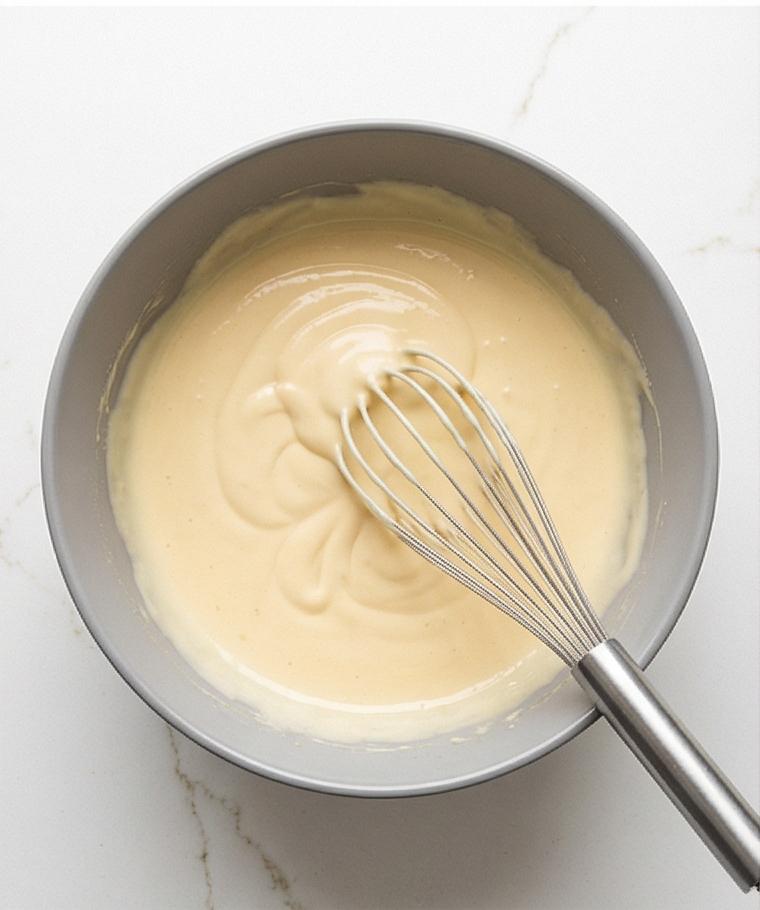
Step 3: Soften mascarpone and marry with zabaglione
Place the cold-but-pliable mascarpone into a single modern matte grey mixing bowl and gently fold the slightly warm zabaglione in two to three additions, stirring slowly until the blend is silky and lump-free. The finished mixture should read as silky, dense cream — smooth ivory with a faint gold cast from the egg — resting in the same matte grey bowl with a small rubber spatula showing gentle sweep marks across the surface.
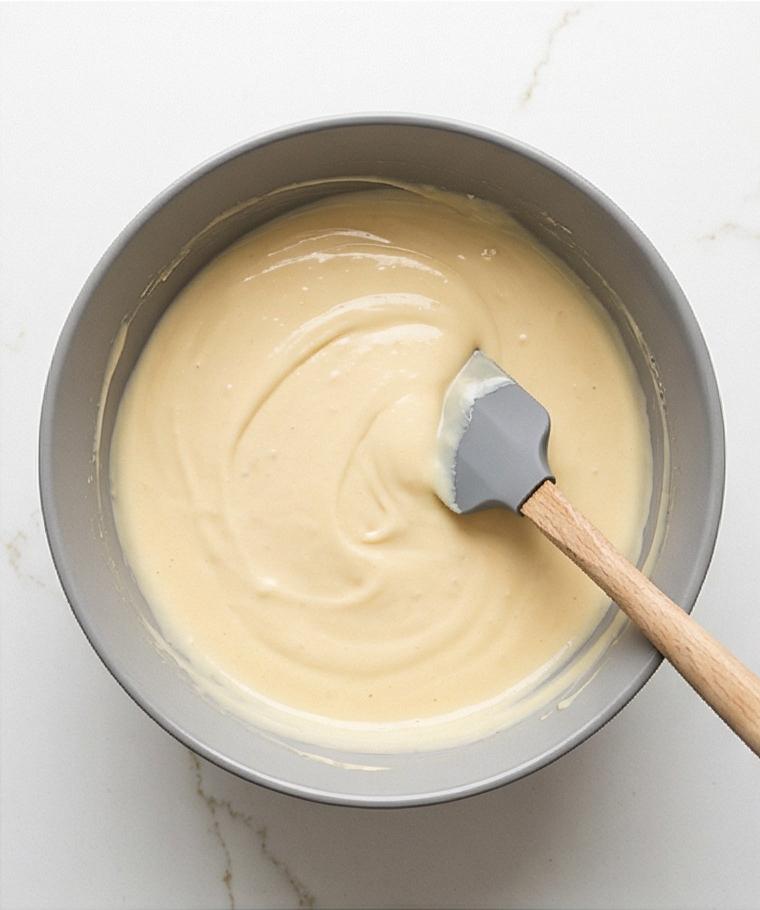
Step 4: Whip cream and create the mousse texture
Chill a separate bowl and whip the cold heavy cream with the remaining sugar and vanilla to medium–firm peaks: glossy soft peaks that still yield slightly at the tips. Fold one-third of this whipped cream into the mascarpone base to lighten it, then fold in the rest in two additions using broad strokes so the final texture is a pillowy, dense mousse — airy but still held together, satin-smooth with visible soft folds and airy pockets. Display the partially folded bowl with the whisk resting nearby to show the staged texture.
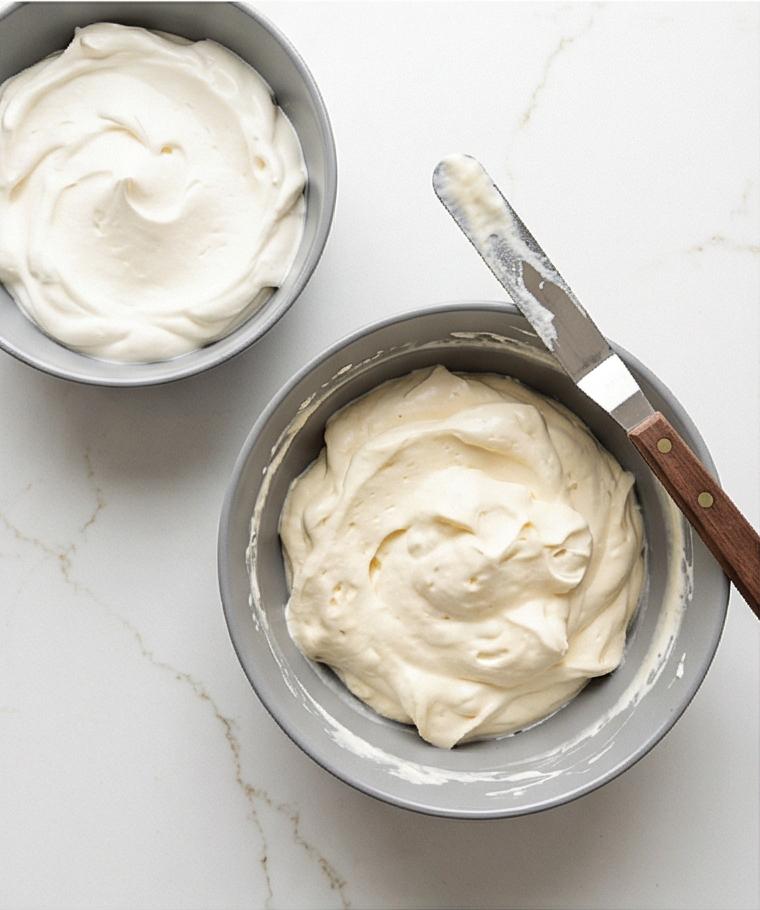
Step 5: Arrange for assembly and dip the ladyfingers
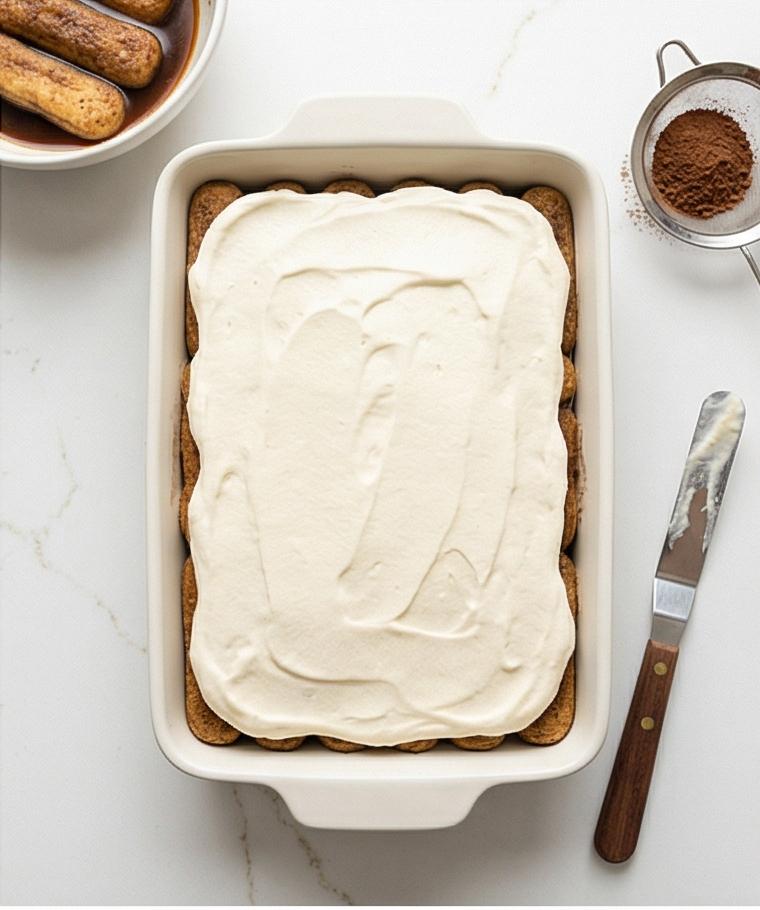
Quickly restir the coffee soak so flavors are even. Working with one or two savoiardi at a time, dip each cookie about one second per side so the exterior is moist but the interior remains slightly firm; shake off excess over the bowl and arrange a snug single layer in the rectangular 9×13 dish. Keep the dipping bowl, open package of ladyfingers, the grey mixing bowl of cream and an offset spatula close by — everything staged and ready for layering.
Step 6: Build the layers and first dusting
Spoon half of the mascarpone mousse over the first ladyfinger layer and spread to an even 1/2–3/4-inch thickness with the spatula, smooth the surface, then dust a generous, even veil of unsweetened cocoa through a fine sieve. Repeat the quick dipping and arrange the remaining savoiardi into a second snug layer, then spread the remaining cream evenly on top and smooth or create soft swoops as you prefer. The pan should read as an even, rectangular block of cream–cookie–cream with a thin cocoa veil on the mid-layer.
Step 7: Chill until set
Cover the dish lightly and refrigerate for at least six hours (ideally 8–24 hours) so the ladyfingers soften into a cake-like interior while the cream firms into a mousse that still feels yielding to the touch when cold.
Step 8: Final finish before serving
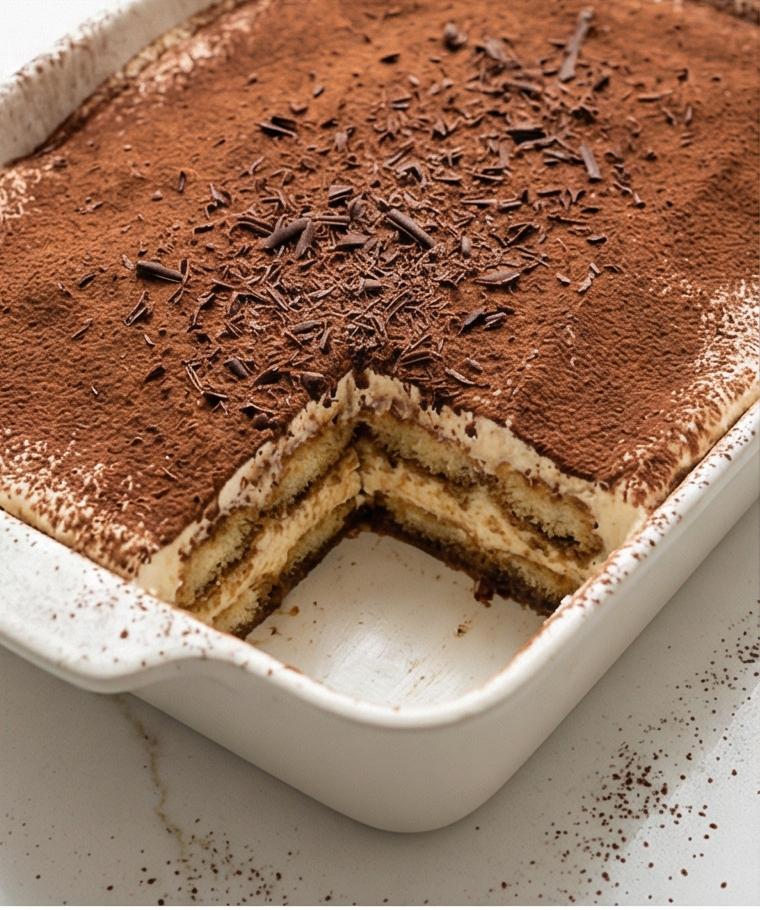
Just before serving, dust the top generously and evenly with unsweetened cocoa through the fine sieve, and optionally shave dark chocolate over the surface and very sparingly drizzle an extra tablespoon or two of Marsala or rum for an aromatic lift. Use a hot, wiped knife for clean cuts when serving — the surface should show a velvety cocoa cloak with delicate chocolate curls and a slight glossy sheen where the shavings land.
Step 9: Storage and safety notes
Cover and refrigerate leftovers promptly and consume within 2–3 days; because this dessert contains eggs and dairy, do not leave it at room temperature for more than 1–2 hours in total. Tiramisu does not freeze well — refrigeration preserves the mousse texture and the soft, soaked ladyfingers.
Notes
- Use very fresh eggs and handle the zabaglione gently to avoid curdling.
- Let mascarpone warm slightly so it folds smoothly with the zabaglione.
- Don’t oversoak the ladyfingers; quick dips preserve texture.
- Chill at least 6 hours, ideally 8-24 hours, for best flavor melding.
- Store covered in the refrigerator and consume within 2-3 days.